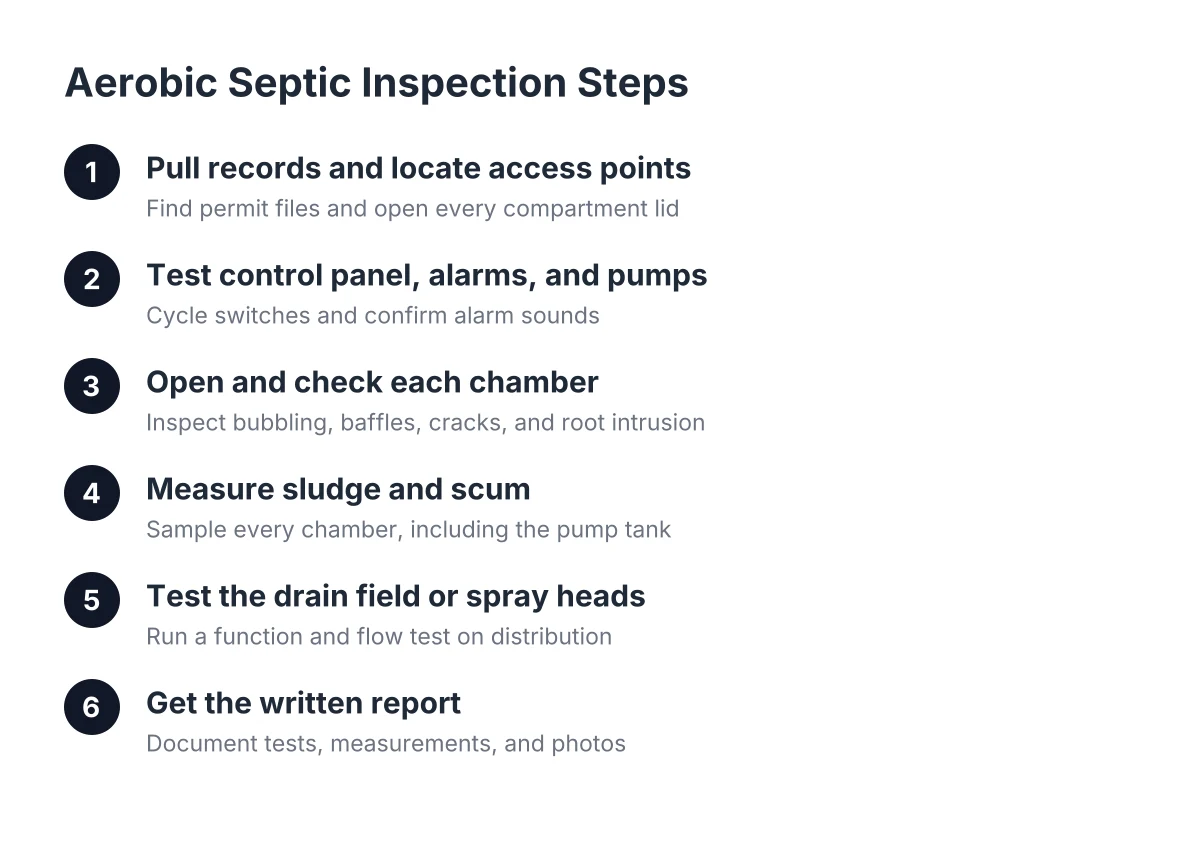
If your Hesperia property has an aerobic septic system, an aerobic septic system inspection works differently than the check a conventional gravity tank gets. Understanding the aerobic septic inspection steps will help you recognize what thorough work looks like. Aerobic systems have pumps, air compressors, alarms, and multiple chambers, and every one of those parts needs to be opened, tested, and documented. That documentation matters, too. Buyers, sellers, and lenders often want a written report on system condition before a sale or refinance closes, and a proper inspection produces exactly that: a documented record from a crew that knows High Desert soil and the quirks these systems develop here.
This guide walks through the inspection step by step, so you know what a thorough job looks like, what it should include, and where a corner-cutting provider will skip work you are paying for.
Why Aerobic Systems Need a Different Inspection
A conventional septic system has two main components, a tank and a drain field, according to the U.S. Environmental Protection Agency. The tank settles solids, and the drain field disperses the clarified liquid into the soil. There are no moving parts.
An aerobic system adds machinery. It typically has a trash tank, an aeration chamber where air gets pumped into the wastewater, a clarifier, and a pump tank, plus a control panel with alarms. More parts mean more things that can fail quietly. That is why the EPA recommends alternative systems with pumps, float switches, or mechanical components be inspected once a year, while the average household system needs a professional inspection at least once every three years.
The purpose of a routine aerobic inspection is threefold: catch problems before they start, identify problems that already exist, and extend the working life of the system. With repair or replacement typically running $5,000 to $15,000 according to the U.S. Environmental Protection Agency, a yearly inspection is cheap insurance.
Here is what a complete aerobic septic inspection covers, in the order a careful crew works.
Step 1: Pull the Records and Locate Every Access Point
Start with paperwork. If you bought the house recently and have no records, tell the inspector up front. San Bernardino County permit files sometimes show the original system layout, and a crew that offers septic tank locating can find buried lids without tearing up half the yard.
An aerobic system has several compartments, and a thorough inspection opens every one of them: the trash tank, the aeration unit, the clarifier, and the pump tank. If a provider only pops one lid and calls it done, that is not an inspection. It is a glance.
Step 2: Test the Control Panel, Alarms, and Pumps
Before anything gets opened, the technician tests the electrical side. That means cycling every switch on the control panel and pressing the pump test button to confirm the pump kicks on and the alarm actually sounds.
This step matters because the alarm is your only early warning. If the aerator dies and the alarm is also dead, the system can run septic for weeks before you smell anything. By then the damage to the treatment process is done.
Step 3: Open and Check Each Chamber
Next, the crew opens each compartment and looks at what is happening inside. In a healthy aerobic system, the aeration chamber should show visible bubbling from the air supply. On the other side of the dividing wall, the clarifier should look still and calm. Bubbling where it should be still, or stillness where it should bubble, points to a failed diffuser, a bad compressor, or a breach in the dividing wall.
The inspector also checks the physical condition of each tank: cracks, root intrusion, and the baffles at the inlet and outlet. According to University of Nebraska-Lincoln Extension, those baffles force solids to settle instead of floating out toward the drain field, so a broken baffle is a direct threat to the rest of the system. Photos of the tank interior should go in your report.
Aerobic Septic System Inspection Steps: Measuring Sludge and Scum
This is the step most often skipped. Every chamber gets sampled and measured for scum and sludge levels, including the pump tank. Homeowners assume the pump tank stays clean because it only holds treated water. In practice, sludge builds up there too, and a sludge-choked pump tank will burn out the pump.
If solids are high, the fix is septic tank pumping. Some homeowners schedule pumping and the inspection together, which saves a second trip. For context, Angi reports septic tank pumping averages $427, with a range of $250 to $1,250 or more depending on tank size and location.
Step 5: Test the Drain Field or Spray Heads
Treatment does not end at the tank. The inspector runs a function and flow test to confirm the drain field or spray distribution is accepting water the way it should. Hesperia's sandy, fast-draining High Desert soil is generally forgiving, but compacted areas, driveway traffic over lateral lines, and years of solids carryover can still choke a field.
Warning signs the inspector watches for include:
- Wet or spongy ground over the drain field in a climate this dry
- Sewage odor near the tank or field
- Slow drains or gurgling inside the house
- Standing water or unusually green grass in one strip of the yard
Any of these on your own property means call a professional now, not at your next scheduled visit. A backup rarely fixes itself.
Step 6: Get the Written Report
The inspection ends with documentation, and this is where the report earns its keep. A useful septic system inspection report lists what was opened, measured sludge and scum levels per chamber, pump and alarm test results, photos of tank interiors, and the condition of baffles and the drain field. It flags anything that needs repair now versus items to watch. Following these aerobic septic inspection steps produces documentation that protects both buyer and seller.
If you are selling, refinancing, or buying, that written record is what escrow officers and lenders actually want to see. For example, suppose a Hesperia homeowner lists a house with an aerobic system and no service records since 2019. In that scenario, a documented 2026 inspection with photos and measurements can keep a nervous buyer at the table, while a verbal "it looked fine" does nothing.
What This Costs and How Long It Takes
Aerobic septic system inspection cost varies with tank access, number of chambers, and whether pumping happens the same day. Providers price it differently, so ask for the number up front and ask what it includes. A standalone inspection usually takes a couple of hours on site; add pumping and you should plan for longer. Digging to find unmarked lids adds time, which is another reason septic tank locating up front pays off.
Be honest about the trade-off: an aerobic system will always cost more to maintain than a conventional gravity system. Keeping a conventional system healthy through routine pumping is the cheapest path, because it helps you avoid ever needing the upgrade. If you already have an aerobic system, yearly inspections are the price of keeping it alive.
How to Choose an Inspector in Hesperia, CA
Homeowners in Hesperia, CA worried about upsells should ask three questions before booking:
- Will you open and measure every chamber, including the pump tank, or only the main lid?
- Does the report include photos, measurements, and pump and alarm test results in writing?
- If you find a problem, will you show it to me on site before quoting a repair?
A fair quote spells out what is included and what costs extra, such as digging for buried lids or same-day pumping. A provider who answers those three questions directly is one you can put on a recurring schedule and stop thinking about, which is the whole point.
Also know the limits of any inspection. An inspector can assess condition and function, but permits, new installations, and county sign-offs involve the local health department, and repairs to failed components are a separate job. When an inspection turns up a failed aerator or a saturated field, get a licensed professional involved before spending anything.
Ready to Put Your System on a Schedule
If your aerobic system has gone more than a year without a documented inspection, or you have no idea when the tank was last pumped, now is the time to fix that. A local Hesperia crew can locate your tank, open every chamber, test the pumps and alarms, and hand you a written report you can file, show a lender, or hand to a buyer. Reach out to schedule an inspection or get an estimate, and get your septic system off your worry list.
If you need your septic tank serviced, Hesperia Septic can help.
Prefer to talk it through? Call (760) 249-7872 — a quick call is usually the fastest way to get a straight answer for your situation.
Leave a Reply