Blog

  • Septic Tank Replacement Cost in Hesperia: What Really Drives the Number

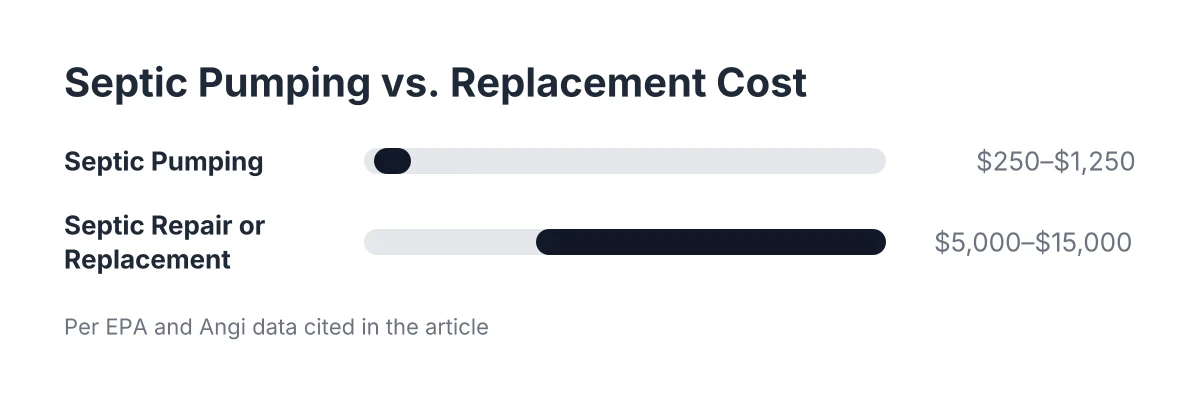
    Bar chart comparing septic tank pumping cost to septic replacement cost ranges
    Pumping and replacement sit at opposite ends of the septic cost spectrum, per EPA and Angi figures cited in this guide.

    If you own a rental or small property in Hesperia and a tenant just called about a smell in the yard or drains that will not clear, the first number that jumps into your head is septic tank replacement cost. That fear is understandable. Replacement is the expensive outcome, and plenty of articles throw big numbers around without explaining what the number is made of or whether you even need one. This guide breaks down what a replacement actually costs in parts, what pushes the price up or down in the High Desert, and how to tell whether the symptom you are looking at points to septic replacement or pumping. Understanding the difference between septic tank replacement and pumping is essential before panic sets in.

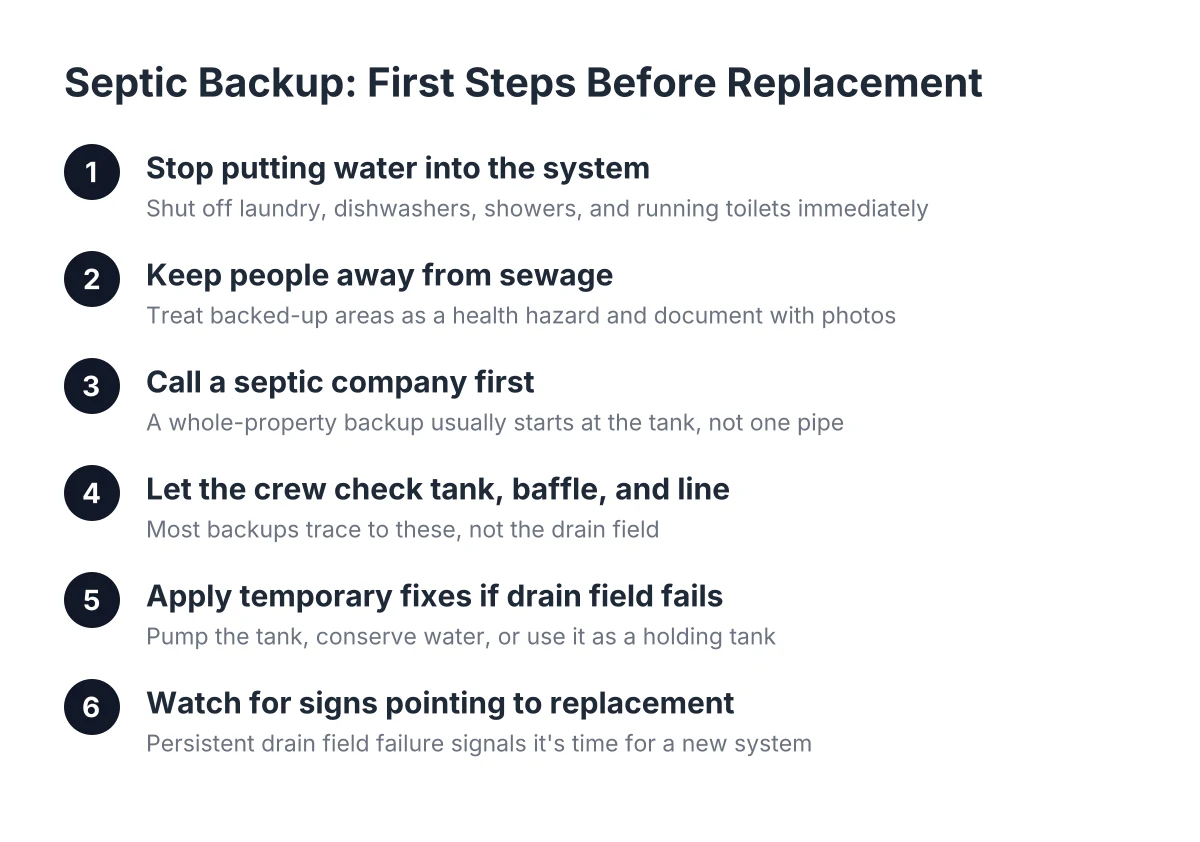
    Here is the honest framing up front. Most septic complaints that land on a property owner's phone do not end in replacement. They end in septic tank pumping, a cleared line, or a repair to one component. However, some do end in replacement, and the gap between the two outcomes is large. According to the U.S. Environmental Protection Agency, septic repair or replacement typically costs between $5,000 and $15,000. Compare that to pumping, which Angi data puts at a $427 average, with a range of $250 to $1,250 or more depending on tank size and location. Knowing which side of that gap you are on, before panic sets in, is the whole game.

    Why the Replacement Number Scares People, and Why It Should Not Decide Anything Yet

    A septic system is simple in concept. According to the U.S. Environmental Protection Agency, a conventional system has two main components: a septic tank that lets solids settle out of wastewater, and a drain field that disperses the clarified liquid into the soil. One pipe carries everything from the house to the tank. Solids stay in the tank until a pump truck removes them. Liquid flows out to perforated pipes in the drain field.

    That two-part design matters for cost, because the two parts fail differently and cost different amounts to fix. A tank that is full of solids is a pumping job. A tank with a cracked lid might be a top replacement, a fraction of full replacement cost. Additionally, a drain field that has stopped absorbing water is the scenario where septic tank replacement cost estimates start climbing toward the top of the EPA range, because soil work is the expensive part.

    In other words, the symptom your tenant reports does not tell you the price. The component behind the symptom does. So before you budget for the worst case, it helps to understand what the worst case is actually made of.

    Cost Breakdown for Septic Replacement and Pumping Services

    Replacement is not one line item. When a system genuinely needs to be replaced, the project breaks into distinct cost categories, and each one moves independently based on your property. A realistic breakdown looks like this:

    • The tank itself. Concrete, plastic, or fiberglass, sized to the home. The tank is a significant piece, but on many jobs it is not the biggest piece.
    • Permits and testing. San Bernardino County requires permitting for septic work, and a percolation test is standard before a new system goes in. According to University of Nebraska-Lincoln Extension, a perc test must be performed before installing a septic system to confirm the soil drains well enough for the system to function.
    • Drain field materials. Chambers or gravel and perforated pipe, a distribution or junction box, clean-outs, and risers. If the drain field is part of the replacement, this category can rival or exceed the tank.
    • Excavation and equipment. Trenching, backfill, and machine time. Hesperia's soil is often forgiving to dig, but rock, caliche layers, or deep trenches add hours.
    • Site-specific extras. A pump chamber and pump if gravity will not carry flow to the field, re-plumbing if the tank has to move, and hauling away the old tank if it is removed rather than abandoned in place.

    That last bullet trips up a lot of owners. Suppose a landlord decides to relocate a tank to make room for a garage addition. The tank itself might be the cheapest part of that project. Re-plumbing the house connection, redesigning the drain field for the new location, and adding a pump system because the new spot sits uphill can double or triple the job compared to a straight swap in the same hole. Relocation is a redesign, not a replacement.

    Removal versus abandonment also shifts the number. Pulling the old tank out of the ground costs more than pumping it dry, crushing or filling it, and leaving it buried, which is why septic tank removal and replacement cost quotes run higher than replace-in-place quotes.

    How Hesperia and California Conditions Shift the Price

    Septic tank replacement cost in California carries a few local wrinkles worth knowing. First, septic is less common statewide than you might guess. According to the U.S. Environmental Protection Agency, about 10 percent of California homes are on septic, one of the lowest shares in the country, compared with highs of 55 percent in Vermont. The High Desert is an exception; large lots and limited sewer reach mean septic is normal here, especially for older rentals and cabins.

    Second, the regulatory layer is real. California regulates onsite wastewater through local agencies, and in Hesperia that means county-level permitting, site evaluation, and inspection before a new system is approved. Installation is also a separate trade from pumping. As the New Hampshire Department of Environmental Services notes about its own state, becoming a licensed septic installer requires certification beyond a pumping operation, including knowledge of soil types, percolation rates, and system design. The structure is similar in California: the crew that pumps your tank and the contractor that installs a new one are often different licenses doing different work. A pumping and inspection visit is how you find out whether you need the second one at all.

    Third, desert soil cuts both ways. Sandy, fast-draining ground can make for straightforward drain fields. However, hardpan layers, rock, and lots with odd slopes can force deeper trenches or pump systems, and that is where High Desert quotes separate from the national averages you see in articles written for New Jersey or Florida.

    Symptom by Symptom: Pump-Out Problem or Replacement Problem?

    This is the section to read before you authorize anything. Each symptom below shows up constantly on rental properties, and each one has a cheap explanation and an expensive one. The goal of septic system troubleshooting at this stage is not to fix anything yourself; it is to walk into the service call knowing which questions to ask.

    Slow drains throughout the property

    Slow drains across every fixture usually point to the septic side, not a single clogged pipe. The cheap explanation is a tank full of solids or a clogged outlet filter, both resolved with septic tank pumping and cleaning. The expensive explanation is a drain field that can no longer accept water, which backs flow up into the tank and then the house.

    One useful clue: if drains slow down gradually over weeks, suspect the tank filling up. If the system was pumped recently and drains are already slow again, the water has nowhere to go, and that points toward the drain field. A tank that needs pumping every few months instead of every few years is a system telling you its field is failing.

    Septic tank smell in the yard

    A sewage smell outdoors can come from a vent, a loose riser lid, or a tank at capacity. Those are minor. A smell concentrated over the drain field, especially paired with soggy ground, suggests effluent surfacing because the soil is saturated or biologically clogged. That is a drain field failure symptom, and it is the one that moves you from pumping territory toward repair or replacement territory.

    Wet spots or lush green stripes over the system

    Grass that grows greener and faster in stripes over the drain field lines, or standing water over the tank or field when nothing has been irrigated, means wastewater is rising instead of absorbing. In Hesperia, where yards are dry most of the year, a persistent wet spot is hard to miss and hard to explain away. A one-time wet spot after heavy tenant use might recover after pumping and reduced water load. A wet spot that returns every week will not.

    Sewage backing up into tubs or floor drains

    Backups into the lowest fixtures are the urgent version of all of the above. The cause could still be simple, such as a full tank or a blocked line between house and tank, and emergency septic pumping often gets the property usable the same day. The pumping visit also doubles as diagnosis: once the tank is open, a crew can see whether the inlet is blocked, whether the tank was overfull, and whether water is flowing back in from the field, which is the red flag for field failure.

    A Realistic Scenario: The Rental That Smelled on Turnover

    Say a landlord owns a three-bedroom rental on a half-acre in Hesperia, bought eight years ago with the original septic system from the 1970s. During a turnover walkthrough, the landlord notices a sewage smell near the back fence and a patch of damp soil where nothing drains. The last pump-out was four years ago, under the previous tenants.

    The cheap outcome in that scenario: the tank is simply full. A pumping and inspection visit, somewhere in the $250 to $1,250 range Angi reports for typical jobs, empties the tank, the crew confirms the field accepts water, and the smell disappears. The landlord puts the property back on a pumping schedule and re-leases on time.

    The expensive outcome: the crew pumps the tank and watches liquid seep back in from the drain field side. The field on a 50-year-old system has reached the end of its life. Now the landlord is looking at a perc test, a county permit, and a new field or full system, landing somewhere in the EPA's $5,000 to $15,000 repair-or-replacement range, possibly higher depending on the site. The unit sits vacant during permitting and construction.

    Same smell, two outcomes separated by thousands of dollars. The only way to know which one you have is to get the tank opened and inspected. This is also the point where honest limits matter: a pumping crew can tell you what the tank and field are doing, but designing and installing a replacement system is engineered, permitted work, and you should get a qualified installer and the county involved before committing to a number.

    Why Pumping Is the Cheapest Line in the Whole Budget

    Here is the part that matters most for anyone holding rental property on septic. The single biggest driver of premature septic replacement cost is deferred maintenance. Solids that never get pumped out of the tank eventually flow into the drain field, clog the soil, and kill the field years before its time. Additives and treatments do not remove solids; when they fail to fix a buildup problem, the endgame is often full system replacement.

    The math is lopsided. Pumping averages $427 per visit according to Angi. Replacement runs $5,000 to $15,000 according to the EPA. A rental that gets pumped on schedule for twenty years costs a fraction of one field replacement. For an active family of four, Penn State Extension advises pumping every two to three years because of higher solids and water production, and a full rental household behaves the same way whether or not the owner lives there. The EPA also recommends a professional inspection at least every three years for standard systems, and once a year for alternative systems with pumps, floats, or other mechanical parts.

    For a small portfolio owner, that translates into a short checklist:

    1. Find out when each septic-served unit was last pumped. If no record exists, schedule a pumping and inspection and start the record now.
    2. Put every unit on a recurring schedule based on household size and what the crew finds in the tank, not on a guess.
    3. Keep the service receipts. They document habitability maintenance, support proper-disposal records, and help at sale or refinance. Waste pumped from residential tanks is hauled to a sewage treatment plant for disposal, as the New Hampshire Department of Environmental Services describes, and your receipt is the paper trail.
    4. Treat any repeat symptom between pump-outs, such as a returning smell or wet spot, as a field question, not a pumping question.

    One more decision rule worth stealing: if you are buying an older Hesperia property with its original septic system, price the likely replacement into your offer. A system that has run for decades may have little life left, and the seller's working drains today do not promise working drains next year.

    What to Do This Week If You Are Seeing Warning Signs

    Start with information, not construction. If a tenant reports slow drains, a smell, or a wet spot, the first call is for septic tank pumping and inspection, not a replacement bid. Pumping is cheap relative to everything else, it often resolves the symptom outright, and it is the only way to see what the tank and field are actually doing. A local Hesperia crew can locate the tank if you do not know where it is, open it, pump it, and tell you whether water is behaving normally.

    Then decide based on what the open tank shows. A full tank with a healthy field means you were one maintenance visit away from normal, and your real cost was a few hundred dollars plus a calendar reminder. Backflow from the field, repeated backups shortly after pumping, or surfacing effluent means it is time to bring in the county and a licensed installer to scope a repair or replacement, with the EPA's $5,000 to $15,000 range as your planning anchor as of 2026.

    Either way, you have replaced a scary unknown number with a specific diagnosis. For a property owner who cannot be on site for every tenant call, that is the difference between managing a maintenance item and funding an emergency.

    If you need your septic tank serviced, Hesperia Septic can help.

    Prefer to talk it through? Call (760) 249-7872 — a quick call is usually the fastest way to get a straight answer for your situation.
    Related Reading

  • Septic Tank Replacement Process: Timeline and What to Expect in Hesperia

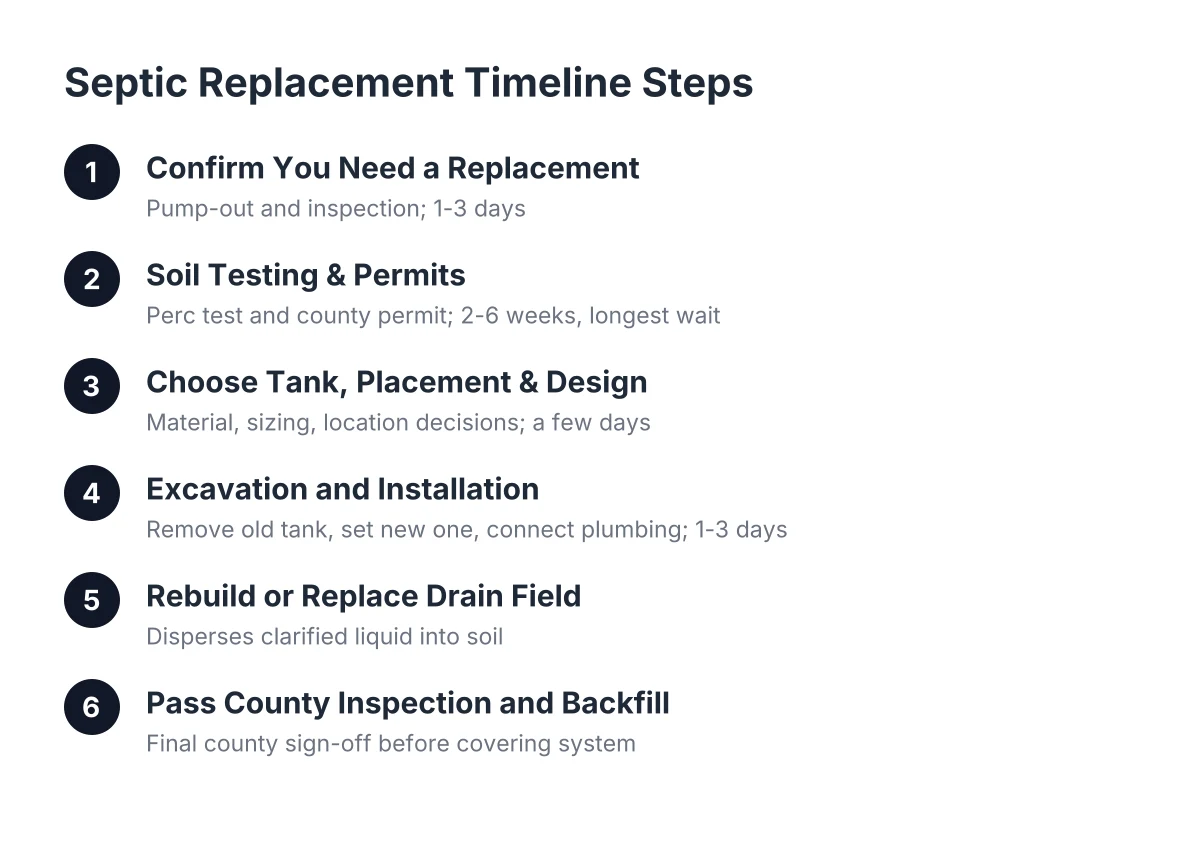
    Steps in the septic replacement timeline from inspection to final county inspection
    The septic tank replacement process in Hesperia follows seven steps, from confirming the need to final inspection.

    If your septic tank is cracked, your drain field has failed, or sewage keeps backing up no matter how often you pump, you are probably asking what the septic tank replacement process actually looks like. Understanding the septic replacement timeline and steps ahead of time keeps the project from dragging on and keeps you from paying for work you do not need. The honest answer is that most septic problems in Hesperia do not require a new system. A backup is often solved with septic tank pumping or a modest repair. But when replacement really is needed, knowing the steps ahead of time keeps the project from dragging on and keeps you from paying for work you do not need.

    This guide walks through the full process step by step, from confirming the system is truly beyond repair to the final inspection, with realistic timing for each stage in San Bernardino County.

    Step 1: Confirm You Actually Need a Replacement

    Before anyone digs, make sure replacement is the right call. This matters because the cost gap is huge. According to Angi, septic tank pumping averages $427, ranging from $250 to $1,250 or more depending on tank size and location. The EPA estimates septic tank repair or replacement typically costs between $5,000 and $15,000. That is a decision worth slowing down for, even during a backup.

    A typical residential septic system has two main components, according to US EPA: a tank that clarifies wastewater and a drain field that disperses the clarified liquid into the soil. Which part failed changes everything.

    Start with a pump-out and inspection. Pumping the tank first makes inspection easier, since nobody can evaluate cracks, baffles, or inlet and outlet pipes through three feet of wastewater. A thorough inspection should check:

    • The tank itself for cracks, which often come from vehicles driving over it or from age-related brittleness in the material
    • The baffles and inlet and outlet connections
    • The drain field for standing water, sewage odor, or wet spots that never dry out in High Desert soil
    • Whether the backup clears after pumping and stays clear

    For example, say a Hesperia homeowner has sewage coming up in the tub on a Saturday night. Emergency septic pumping stops the backup that day. If the tank refills and backs up again within days, and the drain field stays soggy, that points toward septic drain field failure rather than a full tank. In that scenario, replacement talk is justified. If the system runs fine for years after one pump-out, it never was.

    Timeline for this step: one to three days, including the pump-out and inspection.

    Step 2: Soil Testing, Permits, and Your Septic Replacement Timeline Steps

    San Bernardino County requires permits for septic system replacement, and the county will want to know your soil can handle a new drain field. A percolation test must be performed before installing a septic system to determine how well the soil drains water, according to University of Nebraska-Lincoln Extension. In the High Desert, sandy soil often drains well, but hardpan layers or caliche can complicate things, so do not skip this.

    Your installer or a soils professional digs test holes, runs the perc test, and submits the results with your permit application. Keep in mind that pumping and installing are different trades. Becoming a licensed septic installer requires certification beyond a pumping operation, including exams on soil type, percolation rates, system design, and local regulations, according to New Hampshire Department of Environmental Services. Make sure whoever designs your replacement holds the right installer credentials for California.

    Timeline for this step: expect two to six weeks as of 2026, depending on county review times and how fast the perc test gets scheduled. This is usually the longest wait in the whole project, and it is mostly outside your installer's control.

    Step 3: Choose the Tank, Placement, and Design

    Once permits are moving, decisions get concrete. You will choose between tank materials, typically concrete or plastic, and confirm sizing based on your home's bedroom count and county requirements. If you run a restaurant or RV park, this is also where grease trap or holding tank capacity gets sized to your actual use, not a guess.

    Placement matters more than most owners expect. A common approach is to set the new tank uphill from or adjacent to the old one, as long as all pipe connections stay properly aligned. This can let the crew keep your plumbing runner short and avoid tearing up more yard than necessary. Also think ahead: if you plan a home addition or a new building pad, tell your designer now, because construction over the system area forces relocation later.

    Timeline for this step: often overlaps with permitting, so budget a few days of decisions rather than added weeks. One caveat on timing: tank delivery and county inspection scheduling sit outside the installer's hands, and either one can push your start date.

    Step 4: Excavation and Installation Steps for Septic Replacement

    Installation day is faster than most people expect. A typical crew pumps and decommissions the old tank, excavates the new site, sets the tank, and connects the plumbing in one to three working days for a straightforward residential job.

    Here is the usual sequence:

    1. Pump and remove or abandon the old tank per county rules, which may mean crushing it in place and backfilling or hauling it out.
    2. Excavate the new pit to grade, with room to work around the tank.
    3. Set the tank level on a prepared base so it does not shift or crack.
    4. Connect the inlet line from the house and the outlet line to the drain field.
    5. Compact the fill around the pipe penetrations thoroughly; loose fill at those connection points settles and damages the pipes, a detail noted by Onsite Installer.
    6. Install risers and lids so future septic tank pumping does not require digging.

    Ask for risers even if the old tank did not have them. They save you money on every future service visit because the crew can locate and open the tank without excavation. Following proper septic replacement timeline steps during excavation ensures the installation goes smoothly.

    Timeline for this step: one to three days of active work, weather permitting.

    Step 5: Rebuild or Replace the Drain Field

    If the drain field failed, this is the bigger half of the job. After separation in the tank, wastewater flows through perforated lateral pipes into the drain field, where it filters through gravel or stone and then sand and soil layers, according to U.S. Environmental Protection Agency. A new field means trenching those lateral lines, laying pipe and gravel or chambers, and grading the surface.

    In Hesperia, the perc test results from Step 2 determine how long and how deep the trenches run. Poor-draining spots mean a larger field or an alternative design. Drain field materials, including chambers, pipe, a junction box, and clean-outs, make up a distinct chunk of the project cost alongside the tank, the permit, and equipment.

    Timeline for this step: two to five additional days when a full field goes in with the tank.

    Step 6: Pass the County Inspection and Backfill

    Do not backfill before the county inspector signs off. San Bernardino County wants to see the tank, connections, and drain field lines open in the trench. Scheduling this inspection can add a few days of waiting with the hole open, so plan for it and keep kids and pets away from the excavation.

    Once the inspector approves, the crew backfills, compacts, and grades the site. Expect disturbed ground over the tank and field; it settles over the first year, and you may need to add soil once or twice.

    Timeline for this step: one to four days, driven mostly by inspector availability.

    Step 7: Protect the New System So You Never Repeat This Process

    The septic tank replacement process ends with the inspection, but the system's lifespan starts with how you treat it. Routine pumping and maintenance is what keeps a new system from becoming another replacement in fifteen years instead of thirty or more.

    The U.S. Environmental Protection Agency recommends a professional inspection at least every three years for the average household, and once a year for alternative systems with pumps, float switches, or mechanical parts. For an active family of four, Penn State Extension notes that pumping every two to three years is generally advisable. In addition, keep vehicles off the tank and field, record where everything sits, and watch water use during heavy-guest weekends.

    How Long the Whole Septic Tank Replacement Process Takes

    Start to finish, a full replacement in Hesperia commonly runs four to ten weeks, with most of that spent on permits and inspections rather than digging. The physical work, tank and drain field together, is often under two weeks. External factors can stretch this; supply disruptions have pushed septic installation waits to six months or more in bad years, so get on an installer's schedule early if your system is limping rather than fully failed.

    One honest limitation: no article can diagnose your system from a distance. Soil conditions, tank condition, and drain field health vary lot to lot, so have a septic professional inspect before you commit to replacement. More than one in five U.S. households rely on septic or small cluster systems, according to U.S. Environmental Protection Agency, and the majority of their problems get solved with pumping and maintenance, not a new system. Make sure yours truly needs one before the excavator shows up.

    If you need your septic tank serviced, Hesperia Septic can help.


    Prefer to talk it through? Call (760) 249-7872 — a quick call is usually the fastest way to get a straight answer for your situation.
    Related Reading

  • Factors Affecting Septic Replacement Cost in Hesperia, CA: Tank Size, Soil, and Site

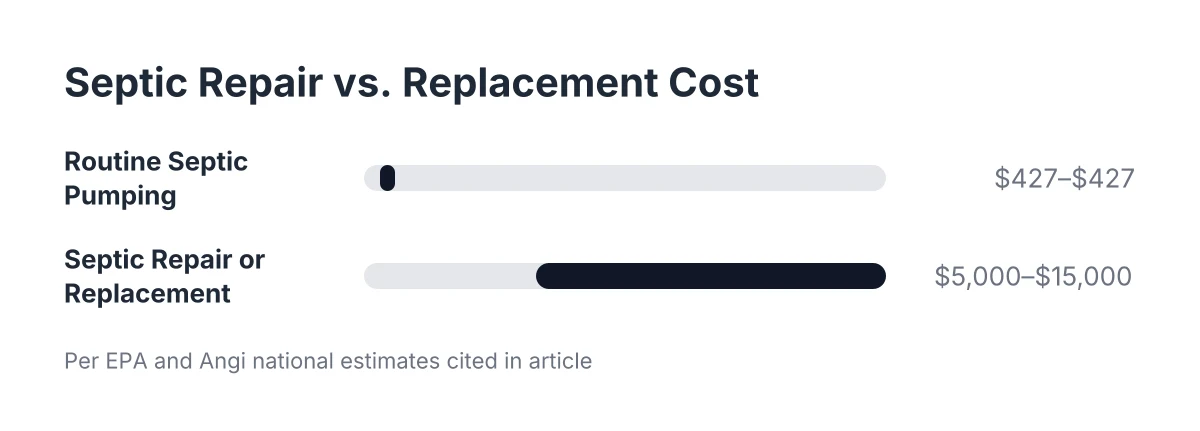
    Cost range chart comparing septic pumping to septic replacement cost factors
    The EPA and Angi data show why confirming failure matters before paying for replacement.

    If your septic system is failing and pumping no longer solves the problem, the next question is what replacement will actually cost. Understanding the septic replacement cost factors affecting the project is essential; they come down to tank size, soil conditions, where the system sits on your property, and local permitting. This guide walks through each one so you can read a bid, spot an upsell, and know when replacement is truly necessary versus when a pump-out or minor repair gets you years more service.

    One honest point before the list: most septic problems do not require replacement. A full tank, a clogged inlet baffle, or a backed-up line often gets resolved with septic tank pumping and a careful inspection. Replacement enters the picture when the tank is cracked beyond repair or the drain field has failed, which no amount of pumping can fix. The U.S. Environmental Protection Agency estimates septic repair or replacement typically costs $5,000 to $15,000, while routine pumping averages $427 according to Angi data. That gap is exactly why you should confirm failure before anyone talks replacement.

    Here are the eight biggest factors affecting septic replacement pricing for Hesperia, CA homeowners, in roughly the order they shape the bid.

    1. Tank Size and Bedroom Count: Core Septic Replacement Cost Factors

    Tank size is the first line item on any replacement bid. Larger households produce more wastewater, so counties size replacement tanks based on the home, usually by bedroom count rather than by what the old tank happened to be. A bigger tank means more material, a bigger excavation, and heavier equipment to set it.

    This is one place an older Hesperia home can surprise you. Suppose a homeowner bought a three-bedroom house with a tank installed decades ago when the home had two bedrooms. The county may require the replacement tank to be sized for the home as it stands today, not as it was built. That is not an upsell; it is a sizing rule, and a legitimate installer will show you the requirement in writing.

    2. Soil Conditions and the Percolation Test

    Soil is the single biggest wildcard in High Desert replacement pricing. Before a new system goes in, a percolation test must be dug and performed to measure how well the soil drains water, which ensures the system will function properly, according to University of Nebraska-Lincoln Extension. In Hesperia, that test can come back anywhere from fast-draining sand to tight, compacted layers or caliche-like hardpan that barely absorbs anything.

    Soil that drains poorly means a larger drain field, deeper trenches, or in some cases an engineered system instead of a conventional one. Each of those moves the price up. Site-specific soil and depth conditions, not labor or the tank itself, are usually what push a replacement from the low end of the range toward the high end.

    3. Drain Field Size and Condition: Key Septic Replacement Cost Factors

    A conventional septic system has two main components: the septic tank and the drain field, according to the U.S. Environmental Protection Agency. The drain field is often the more expensive half to replace. If your tank cracked but the drain field still percolates, you may only need a new tank. If the drain field itself has failed, saturated soil and sewage odors in the yard are the usual giveaways, and the field has to be rebuilt or relocated.

    Drain field costs scale with trench footage, gravel or chamber materials, piping, junction boxes, and clean-outs. Therefore, two neighbors on the same street can get bids thousands of dollars apart simply because one needs a tank swap and the other needs a full field.

    4. Where the System Sits on Your Property

    Location on the lot drives equipment time and sometimes the whole design. A tank near the driveway with clear access costs less to replace than one behind a block wall, under mature landscaping, or beneath a patio poured by a previous owner. Crews may need smaller equipment, hand digging, or demolition and restoration, and all of that shows up on the bid.

    In addition, if you are planning an addition or a garage that overlaps the existing system, the county can require the system to move. The costs and factors governing septic replacement grow significantly when relocation is needed, since moving a septic tank usually means redesigning the whole system and re-plumbing the line from the house, and county approval is not guaranteed. Homeowners regularly underestimate this, so get the septic question answered before you finalize construction plans.

    5. Gravity Flow vs. a Pump System

    If the new drain field has to sit uphill from the tank or farther away than gravity can carry wastewater, the design needs a pump chamber and pump. Adding a pump system meaningfully increases cost over a straightforward gravity-fed replacement, between the extra tank or chamber, the pump itself, electrical work, and controls.

    Pump systems also change your maintenance picture. The U.S. Environmental Protection Agency advises that alternative systems with pumps, float switches, or mechanical components should be inspected once a year, versus at least every three years for a standard system. For a planner who wants a maintenance schedule they do not have to think about, that difference is worth weighing when comparing design options.

    6. Permits and San Bernardino County Requirements

    Replacement in Hesperia runs through San Bernardino County permitting, and the permit process shapes both cost and timeline. Expect the permit fee itself, plus the cost of the percolation test, any required site plans, and inspections at set stages of the work. As of 2026, no reputable installer will set a tank without the permit in hand, because the county inspects the work before it gets buried.

    Permitting is also your protection against unnecessary work. The county reviews the design, so a system that is oversized or relocated without reason has to be justified on paper. If a bid skips permitting to save money, walk away; an unpermitted system can stall a future home sale or refinance inspection cold.

    7. Tank Material and What Gets Hauled Away

    Concrete and plastic tanks price differently, and the right choice depends on site access and soil. Tank shapes and configurations also vary by region, with some areas using rectangular concrete tanks and others circular designs, according to the International Code Council. Your installer should explain why they are quoting one material over another, not just hand you a number.

    Demolition and disposal matter too. The old tank has to be pumped out, then crushed in place or removed, and the waste is trucked to a sewage treatment plant for disposal rather than handled on site, according to New Hampshire Department of Environmental Services. Backfill, compaction around the pipe penetrations, and grading all take time. Fill around pipe connections needs thorough compaction to prevent settling that damages the line later, so a careful crew spends longer on this step than a cheap bid allows for.

    8. How Failure Shows Up: Replacement vs. a Pump-Out

    Before you accept any replacement bid, confirm the system has actually failed. These signs point toward replacement rather than routine septic tank pumping:

    • Sewage backing up into drains shortly after the tank was pumped
    • Standing water or persistent wet, smelly spots over the drain field
    • A tank with visible cracks, often from vehicles driving over it or age-related brittleness
    • Drain field soil that fails a percolation test
    • Repeated backups over months despite pumping and line clearing

    However, if the only symptom is slow drains or a tank that has not been pumped in years, start with pumping and a septic system inspection. More than one in five U.S. households rely on septic systems, according to the U.S. Environmental Protection Agency, and most of them never need early replacement because routine pumping keeps solids out of the drain field. For an active family of four, Penn State Extension notes that pumping every two to three years is generally advisable.

    What a Realistic Hesperia Replacement Scenario Looks Like

    Say a homeowner in Hesperia, CA bought a 1980s house five years ago with no septic records. Backups keep returning even after pumping, and an inspection finds the drain field saturated. In that scenario, the bid would cover a percolation test, San Bernardino County permits, a new properly sized tank, a new drain field matched to the soil results, excavation, disposal of the old tank, and final grading. If the soil drains well and gravity flow works, the project lands toward the lower end of the EPA's $5,000 to $15,000 range; tight soil or a required pump system pushes it higher.

    Every lot is different, and no article can price your specific site. A percolation test and an in-person evaluation are the only honest way to quote a septic system replacement, so treat any firm number given over the phone with suspicion. That said, knowing the factors affecting septic replacement cost puts you in a strong position: you can ask why the drain field is sized the way it is, whether gravity flow is possible, and what the permit covers. Those three questions alone will tell you whether you are dealing with a straight shooter.

    If you are not sure your system has failed, start smaller. Schedule septic tank pumping and an inspection first, get the tank's condition and the drain field's performance in writing, and make the repair-or-replace decision with facts instead of fear.

    If you need your septic tank serviced, Hesperia Septic can help.

    Prefer to talk it through? Call (760) 249-7872 — a quick call is usually the fastest way to get a straight answer for your situation.
    Related Reading

  • Signs Your Septic System Needs Replacement vs. Repair: An Honest Checklist

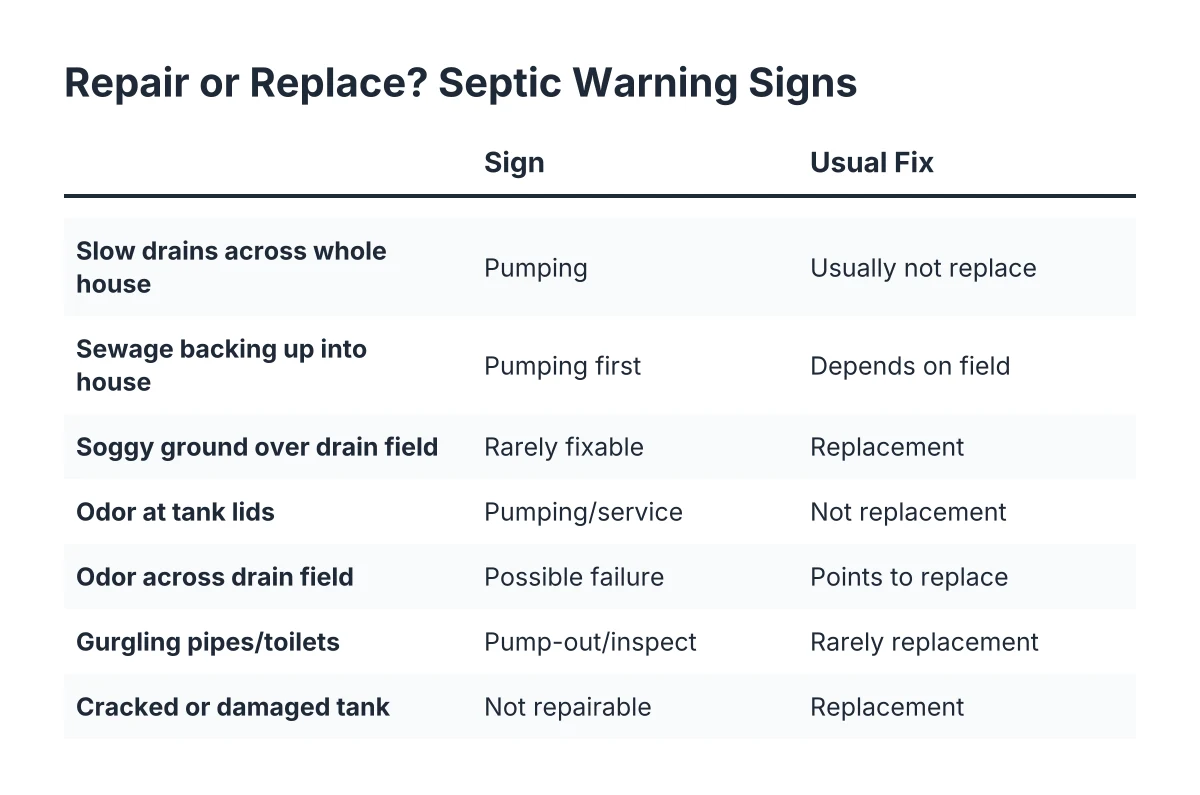
    Checklist comparing septic system signs pointing to repair versus replacement
    Matching common septic symptoms to the likely fix, as outlined in this guide.

    Here is the fear most homeowners have: someone shows up, looks at the yard for five minutes, and says the whole system is shot. The truth is that most septic problems do not require replacement. Reading the signs your septic system is giving you—learning to recognize the repair versus replacement signs—and matching each sign to the right fix, is how you avoid paying for a new system you did not need. This guide walks through eight warning signs, and for each one, it tells you plainly whether it usually points to pumping, a repair, or a true replacement.

    One number worth knowing up front. The EPA estimates septic tank repair or replacement typically costs between $5,000 and $15,000, far more than routine pumping, according to the U.S. Environmental Protection Agency. By comparison, the cost of septic tank pumping averages $427, ranging from $250 to $1,250 or more depending on tank size and location, according to Angi. That gap is exactly why it pays to know which problem you actually have before you agree to anything.

    How a Septic System Fails, in Plain Terms

    Before the list, a quick picture helps. A conventional septic system has two main parts: the septic tank and the drain field, according to the U.S. Environmental Protection Agency. A single pipe carries everything from your household drains into the tank, where solids settle out and get removed later by pumping. The remaining liquid flows out to perforated pipes in the drain field, where soil absorbs and filters it.

    That split matters for your wallet. Tank-side problems are often fixable with pumping, a new baffle, or a lid or riser repair. Drain field problems are the ones that push you toward septic system replacement, because once soil stops absorbing water, there is no cheap way to force it. Keep that distinction in mind as you go through the signs below.

    1. Slow Drains Across the Whole House

    Slow drains in every fixture, not just one sink, are usually the first sign your septic tank needs to be pumped, not replaced. When the tank fills with solids, wastewater has nowhere to go and the whole house slows down at once. One slow sink is a clog; every slow drain is a septic signal.

    However, here is the honest caveat. If you had the tank pumped recently and the drains slowed down again within weeks, the problem is probably past the tank. A tank that refills with backed-up water fast often means the drain field is not accepting liquid. Pumping first is still the right move, because it is the cheapest test; just pay attention to how quickly the problem returns.

    2. Sewage Backing Up Into the House

    A sewage backup into tubs, showers, or floor drains is an emergency, but it is not automatically a death sentence for the system. In many Hesperia homes, a backup traces to a tank that has simply gone too long between pump-outs, or to a blocked line between the house and the tank. Emergency septic pumping relieves the pressure and buys time to diagnose the real cause.

    The replacement question comes afterward. If the backup happened because the drain field can no longer take water, pumping only resets the clock for a few weeks. A crew that pumps the tank and then watches how water behaves afterward can tell you which situation you are in. Be wary of anyone who quotes a full replacement during the backup itself, before the tank has even been emptied and inspected.

    3. Soggy Ground or Standing Water Over the Drain Field

    Wet, spongy soil or pooling water over the drain field, especially in the High Desert where the ground is normally dry, is one of the strongest signs of septic drain field failure. Clarified liquid should disperse underground. When it surfaces instead, the soil below has stopped absorbing it, often because solids escaped the tank for years and clogged the field.

    Therefore, this sign deserves more weight than the others on this list. A chronically soggy drain field usually cannot be restored with pumping alone. Health departments generally require a failed absorption field to be properly replaced rather than patched with aftermarket additives sold as permanent fixes. Some operators try bacterial or enzyme treatments as a remedial step first, and that can be a reasonable conversation, but if the field keeps surfacing water, replacement is the realistic path.

    4. Strong Sewage Odor in the Yard That Keeps Coming Back

    A sewage smell near the tank lids is often a pumping problem; a persistent smell spread across the drain field is often a failure problem. Odor right at the tank usually means the tank is full or a lid or riser needs attention. Both are routine service calls, not replacement projects.

    In contrast, an odor that hangs over the leach lines after a recent pump-out suggests effluent is sitting near the surface instead of soaking in. Combined with soggy ground, that points toward the drain field. On its own, after one hot week or one heavy laundry day, it may just mean you are due for septic tank pumping and a look at the baffles.

    5. Gurgling Pipes and Toilets That Do Not Flush Right

    Gurgling sounds from toilets and sinks mean air is fighting its way through water somewhere it should not be. This is one of the earliest signs your septic system is struggling, and it almost never means replacement by itself. A full tank, a partial blockage in the main line, or a venting issue can all cause it.

    For example, say a homeowner in Hesperia bought the house three years ago, has no idea when the tank was last pumped, and now hears the toilet gurgle after every shower. In that scenario, the smart first step is a pump-out and inspection, which is a few hundred dollars, not a five-figure project. The gurgling is the system asking for maintenance before it becomes an emergency.

    6. A Cracked or Damaged Tank

    A cracked tank is one of the few tank-side problems that genuinely points to replacement rather than repair. Cracks commonly come from vehicles driving or parking over the tank, or from age as older materials turn brittle. A cracked tank can leak wastewater into the soil or let groundwater in, and neither problem stays small.

    Here is the nuance worth knowing. A tank found cracked during a home inspection may still be functioning; the house drains fine and nothing smells. Even so, it typically gets replaced once discovered, because a known structural failure is not something an inspector, a lender, or a county will sign off on. If you are buying a home in Hesperia, a septic inspection before closing is how you find this out while the seller can still share the cost.

    7. The System Keeps Needing Pump-Outs Far Too Often

    Needing the tank pumped much more often than your household size should require is a pattern sign, not a single event. For an active family of four, pumping every two to three years is generally advisable, according to Penn State Extension. If a similar household needs pumping every few months just to keep drains moving, water is not leaving the tank the way it should.

    As a result, frequent pump-outs become an expensive way to rent time on a failing drain field. Each visit works, briefly, because the tank is empty again. But the underlying absorption problem never improves. Track your pumping dates. If the interval keeps shrinking, start planning for replacement on your schedule instead of waiting for the backup that forces it on someone else's.

    8. Old Age Plus No Service Records

    An aging system with no maintenance history is a risk sign even when nothing is visibly wrong. Septic systems fail gradually; the warning signs usually appear well before sewage surfaces in the yard or backs up into the house. But a system that was never pumped or inspected may have been pushing solids into the drain field for decades, quietly using up its lifespan.

    This matters because more than one in five U.S. households depend on individual septic systems or small community cluster systems to treat their wastewater, according to the U.S. Environmental Protection Agency, and many of those owners inherited systems with zero paperwork. The fix is not panic; it is a baseline. The average household should have its septic system inspected at least once every three years by a professional, per the U.S. Environmental Protection Agency, and systems with pumps or float switches should be checked once a year. One inspection turns an unknown system into a known one.

    Signs That Point to Septic Tank Repair, Replacement, or Maintenance

    The signs your septic system shows can be sorted into three rough buckets. Use this as a sanity check before any big decision:

    • Usually pumping or minor repair: slow drains house-wide, gurgling fixtures, odor at the tank lids, a first-time backup with no yard symptoms.
    • Could go either way, needs diagnosis: backups that return soon after pumping, odors that persist after service, a shrinking interval between pump-outs.
    • Usually replacement: standing water or soggy soil over the drain field, a cracked tank, a drain field that stays saturated after the tank is emptied and given time.

    Next, insist on sequence. The honest order of operations is pump first, inspect second, and only then talk about replacement if the evidence supports it. Pumping is the cheap diagnostic; it empties the tank so someone can actually see the baffles, the liquid levels, and how fast water returns. Any replacement recommendation made without that step is a guess, and you should not pay replacement money for a guess.

    One limitation to be upfront about: no article can diagnose your specific system. Soil conditions, tank condition, and drain field layout vary from one Hesperia property to the next, and a real assessment requires someone opening the tank and looking. In San Bernardino County, a septic system replacement also runs through local permitting, and new drain fields depend on a percolation test that shows how well your soil drains, a requirement noted by University of Nebraska-Lincoln Extension. Installation itself requires licensing beyond what a pumping operation carries, so expect a replacement project to involve more parties and paperwork than a service call.

    The Bottom Line for Hesperia Homeowners

    Most of the signs your septic system gives you point to maintenance, not replacement. Slow drains, gurgling, and tank-side odors are the system asking for a pump-out. Soggy drain fields, cracked tanks, and problems that return right after service are the signs that point to bigger work.

    The homeowners who come out ahead are the ones who act on the early signs. A pumping schedule you set once and stop thinking about costs a few hundred dollars every few years. Ignoring the early signals until sewage is in the hallway is how a maintenance item turns into a five-figure replacement on an emergency timeline. If anything on this list sounds like your house in 2026, a pump-out and inspection is the low-cost way to find out which bucket you are in.

    If you need your septic tank serviced, Hesperia Septic can help.

    Prefer to talk it through? Call (760) 249-7872 — a quick call is usually the fastest way to get a straight answer for your situation.
    Related Reading

  • Emergency Septic Backup Solutions: Temporary Fixes Before Replacement in Hesperia

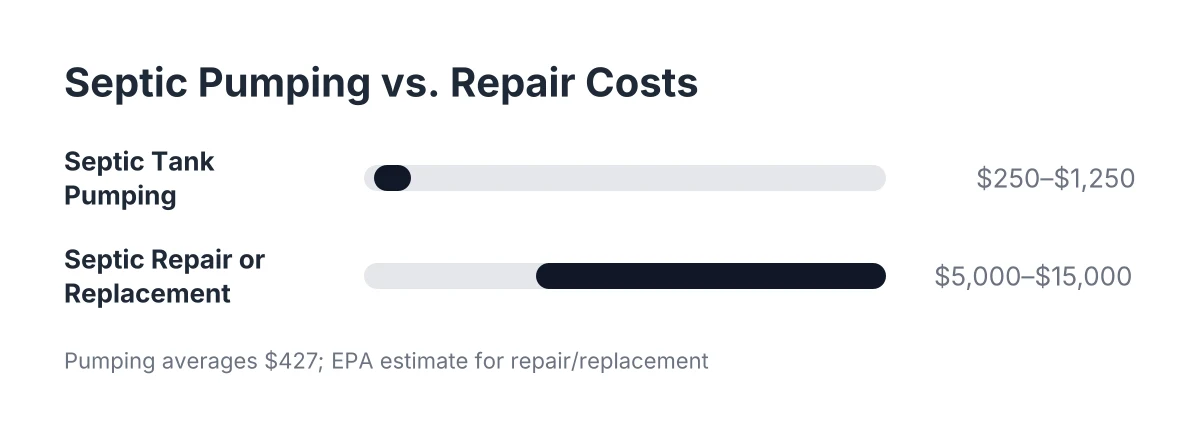
    Steps for handling a septic backup temporary fix before replacement in Hesperia
    The recommended sequence for handling a septic backup before assuming full replacement is needed.

    Sewage is coming up in the tub, a tenant is texting photos of a wet spot in the yard, or the health inspector just flagged your property. You need emergency septic backup solutions right now, but here is the part most articles skip: a backup does not automatically mean your septic system is dead. A septic backup temporary fix is often all that stands between a minor expense and full system replacement. Many backed-up systems in Hesperia get back to normal with a pump-out and a minor fix. Some need full replacement. The honest answer is that you often cannot know which one you have until the tank is opened and inspected, and anyone who quotes you a new system over the phone before looking is guessing.

    This guide walks through what to do in the first hours of a backup, the temporary measures that buy you time, and the specific signs that tell you replacement is truly on the table. It is written for property owners who are not always on-site, including landlords and small business operators in the High Desert, as well as homeowners dealing with their first septic emergency.

    Step 1: Stop Putting Water Into the System

    The single most useful thing you can do in the first ten minutes costs nothing. Stop all water use. Every gallon that goes down a drain has to go somewhere, and right now that somewhere is your floor or your yard.

    Shut off laundry, dishwashers, and showers. If the property is a rental, call or text the tenants and tell them to hold off on water use until a crew arrives. According to the U.S. Environmental Protection Agency, a single leaky or running toilet can push as much as 200 gallons of extra water per day into a septic system. If a toilet is running, close its supply valve at the wall.

    For a restaurant or commercial property, this is harder; you may need to limit operations for a few hours. However, continuing to run water into a backed-up tank turns a messy afternoon into contaminated flooring and a much bigger bill.

    Step 2: Keep People Away From Sewage, Inside and Out

    Raw sewage carries bacteria and should be treated as a health hazard, not just a mess. Keep kids, pets, and tenants away from any backed-up fixture or wet area in the yard. Do not try to mop up standing sewage with household towels you plan to keep.

    In addition, if you are a landlord managing this remotely, document the situation. Ask the tenant for photos with timestamps. That record helps you with habitability questions later, and it gives the septic crew useful information before they roll a truck.

    Step 3: Call a Septic Company First, Not a Plumber

    This step saves people real money. When the whole house backs up, or multiple drains slow down at once, the problem is almost always at the tank or beyond it, not in one pipe. A septic service company can open the tank, check the levels, and tell you where the blockage actually is.

    A plumber makes sense when one fixture is clogged and everything else drains fine. For a whole-property backup on a septic system, calling a plumber first often means paying for a service call that ends with "you need your tank pumped." Start with the septic crew; if they confirm the tank is fine and the clog is in your house plumbing, then bring in a plumber.

    In Hesperia and the surrounding High Desert, that call usually means emergency septic pumping plus an inspection while the tank is open. If nobody knows where the tank is, which is common on rental properties and land bought without records, septic tank locating is part of the same visit.

    Step 4: Understand What the Crew Checks Before Anyone Says "Replace"

    A backup has a short list of likely causes, and a good crew works through them in order. Here is the diagnostic sequence that should happen before the word replacement enters the conversation:

    1. Tank level. Is the tank simply full? Most emergency backup calls trace back to a tank that went years past its service interval, letting sludge and scum build up until wastewater had nowhere to go. A pump-out fixes this.
    2. Inlet baffle. According to the Washington State Department of Health, a clogged inlet baffle is a common cause of septic backups and should be one of the first things checked. This is a minor repair, not a system failure.
    3. The line between house and tank. Roots, grease, or a sag in the pipe can block flow. Again, fixable without touching the drain field.
    4. The drain field itself. If the tank is at a normal level after pumping but water will not leave it, or the ground over the field is soggy and smells, the drain field is the suspect. This is where replacement conversations legitimately begin.

    A conventional system has two main components, the septic tank and the drain field, according to the U.S. Environmental Protection Agency. Problems in the first three items above live in or before the tank and rarely require replacement. Only the fourth points toward major work.

    Step 5: Quick Temporary Fixes for Backups When the Drain Field Fails

    Suppose the crew confirms the bad news: the drain field is saturated and not absorbing water the way it should. Even then, you do not have to sign for a new system that afternoon. There are legitimate short-term measures that keep a property usable while you plan, permit, and budget.

    • Pump the tank and conserve hard. Pumping empties the tank and resets the clock. With strict water conservation, shorter showers, spaced-out laundry, fixed leaks, a household can often run for a stretch on a freshly pumped tank even with a weak drain field.
    • Use the tank as a temporary holding tank. When a drain field has failed and replacement is not immediate, scheduling periodic pump-outs and treating the tank as a holding tank is a recognized stopgap. It costs money each visit, but it keeps the property habitable while permits and contractors line up.
    • Rest the field. Soil sometimes recovers partially if you cut the load on it. Combined with pumping, reduced flow gives a marginal field its best chance.
    • Consider bacterial or enzyme treatments cautiously. These are sometimes tried on a flagged drain field before committing to replacement. Results vary, and health departments do not accept them as a permanent fix for a failed absorption system. Treat them as a maybe, not a plan.

    These emergency septic backup solutions are bridges, not destinations. If the field has truly failed, the endpoint is replacement, and the local health department will require a real fix rather than additives. The value of the bridge is time: time to get a San Bernardino County permit, a soil evaluation, and a fair price instead of a panic decision.

    Step 6: Know the Signs That Point Past Temporary Fixes to Replacement

    Replacement becomes the honest recommendation when backups repeat after proper pumping and the drain field cannot be revived. Watch for this pattern: the tank gets pumped, everything works for a few weeks or months, then the same slow drains and gurgling return. That cycle usually means wastewater is not leaving the tank because the soil absorption area has failed. A septic backup temporary fix only works if the underlying cause is temporary; when the drain field is exhausted, no amount of pumping or conservation will bring it back.

    Other signals include standing water or lush green strips over the drain field in an otherwise dry High Desert yard, sewage odor outdoors that returns after pumping, and a tank that refills with groundwater shortly after being emptied. Septic systems also tend to fail suddenly rather than announce themselves gradually, which is why the first backup often feels like it came from nowhere.

    Cost context matters here. The EPA estimates septic repair or replacement typically runs between $5,000 and $15,000, far more than routine pumping. That gap is exactly why you should insist on the diagnostic steps above before agreeing to major work, and it is also why repeated emergency pump-outs stop making financial sense once a field is confirmed dead. At some point the holding-tank strategy costs more per year than financing the fix. When the numbers reach that crossover, septic system replacement is the cheaper path, not the expensive one.

    One honest limitation: no article can tell you from a distance whether your specific field is recoverable. Soil conditions, system age, and how the property is used all matter, and in 2026 San Bernardino County permitting and soil testing requirements shape what a replacement even looks like on your lot. Get an on-site inspection before committing either way.

    Step 7: Set Up the System So the Next Emergency Does Not Happen

    Once the immediate crisis is handled, put the system on a schedule instead of waiting for the next backup. According to the U.S. Environmental Protection Agency, the average household should have its septic system inspected at least every three years, and Penn State Extension notes that an active family of four generally benefits from pumping every two to three years.

    For non-residential operators, the same logic applies with different intervals. A restaurant grease trap on an inspector's radar, an RV holding tank before a season of trips, or a rental property you manage from another city all run better on a standing service arrangement than on emergency calls. Say you own a Hesperia rental and the tenants report slow drains every eighteen months; in that scenario, a scheduled pumping and inspection rhythm costs less than the pattern of after-hours emergencies, tenant complaints, and cleanup it replaces.

    More than one in five U.S. households depend on septic or small cluster systems, according to the U.S. Environmental Protection Agency, and the ones that avoid emergencies are mostly the ones on a schedule. The best of all emergency septic backup solutions is the maintenance plan that keeps you from needing one.

    The Bottom Line for Hesperia Property Owners

    A backup is a symptom, not a diagnosis. Stop the water, keep people clear, and get a septic crew to open the tank before anyone talks replacement. Most backups resolve with pumping or a minor fix like a cleared inlet baffle. When the drain field has genuinely failed, temporary measures like a septic backup temporary fix, conservation, scheduled pump-outs, and resting the field buy you the time to replace it on your terms instead of in a panic. That is the difference between an expensive weekend and an expensive mistake.

    If you need your septic tank serviced, Hesperia Septic can help.


    Prefer to talk it through? Call (760) 249-7872 — a quick call is usually the fastest way to get a straight answer for your situation.
    Related Reading

  • Septic Tank Pumping Schedule for Hesperia Businesses, Rentals, and Holding Tanks

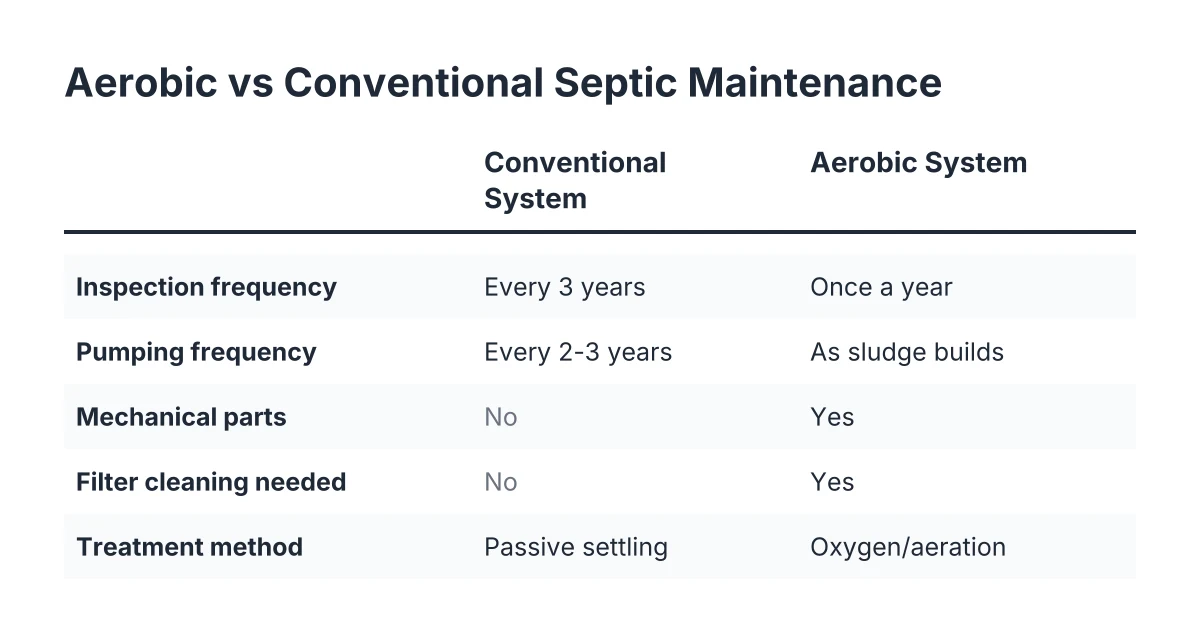
    Cost range chart comparing septic tank pumping to septic repair or replacement expenses
    Routine septic tank pumping costs far less than the repair or replacement bills it helps prevent.

    If you run a restaurant, manage a rental, or operate an RV park around Hesperia, septic tank pumping is one of those jobs you want on a calendar, not on a crisis list. The goal of this guide is simple: give you straight answers on timing, cost ranges, and what a visit involves, so you can set a schedule once and stop babysitting the problem. No upsell pressure, no vague "it depends" with nothing behind it. Just how a local crew that pumps tanks for a living thinks about scheduling in the High Desert.

    This matters more when you are not on-site every day. A homeowner notices a slow drain in their own shower. A landlord hears about it three days later from a tenant, and a restaurant owner hears about it from a health inspector. Additionally, a schedule fixes that gap.

    Why a Pumping Schedule Beats Waiting for Symptoms

    The hard truth about septic systems is that visible symptoms show up after the damage has started. By the time drains slow, odors rise, or sewage surfaces near the tank, solids have usually been pushing past the outlet baffle toward the drain field for a while. Scheduled pumping removes those solids before they travel.

    The math backs this up. According to Angi data, septic tank pumping averages $427, with a range of $250 to $1,250 or more depending on tank size and location. Compare that to the U.S. Environmental Protection Agency's estimate of $5,000 to $15,000 for septic repair or replacement. A pump-out every few years is cheap insurance against a five-figure bill.

    There is a flip side, and an honest company will tell you about it. Pumping too often wastes money. A tank serving a lightly used rental or a seasonal cabin does not fill with solids at the same rate as a busy household or a working kitchen. The right schedule sits between those two mistakes, and it depends on tank size, usage, and what goes down the drains.

    Think of it the way you think of oil changes on a work truck. You do not wait for the engine to knock. You also do not change the oil every two weeks. Furthermore, you pick an interval that matches how hard the vehicle works, then you stick to it.

    How Often Septic Tank Pumping Should Happen

    For a typical household, pumping the septic tank every two to three years is generally advisable for an active family of four, according to Penn State Extension, because more people means more solids and more water. The EPA also recommends a professional inspection at least once every three years for the average household. For many properties, pairing the pump-out with the inspection on the same visit is the practical move.

    Usage changes the interval, though, and non-residential properties rarely match the "average household" profile. Here is how the main variables shift the schedule:

    • Occupancy. A four-bedroom rental with six tenants fills a tank far faster than the same house with a retired couple. More people, shorter interval.
    • Garbage disposals. Homes with disposals generate far more sludge. The Massachusetts Department of Environmental Protection recommends annual pumping for households with disposals, regardless of tank size. If your rental has one, plan accordingly or remove it.
    • Tank size. A smaller tank reaches its solids limit sooner. If you do not know the size, the crew can usually tell you at the first pump-out, and that number anchors every future scheduling decision.
    • System type. Alternative systems with pumps, float switches, or other mechanical parts should be inspected once a year, per the EPA, which naturally sets a tighter service rhythm.
    • Business use. Grease traps and holding tanks run on much shorter cycles than residential tanks, often monthly or quarterly. More on that below.

    One more thing worth checking: some localities require pump-outs at set intervals regardless of tank condition. Rules vary, so confirm what applies to your specific property with San Bernardino County rather than relying on general guidance alone. A good local service will know the common requirements and remind you when records matter.

    A Simple Starting Schedule You Can Adjust

    If you are taking over a property and have no service history, a reasonable approach is to schedule a pump-out and inspection now, then set the next interval based on what the crew finds. If the tank was heavily loaded, shorten the interval. Notably, if it was mostly liquid, you can likely stretch it. Two visits of real data beat any generic chart.

    For grease traps, the health department and your trap's size drive the schedule more than anything else. Many restaurants land on monthly or quarterly service, but your inspector's expectations and how much fryer and dish volume you run should set the final number.

    Seasonal Timing for Pumping in the High Desert

    Hesperia's climate changes the scheduling conversation compared to wetter regions. We do not deal with frozen ground or spring flooding the way northern states do, which means pumping can happen year-round here. Still, the seasons give you natural windows worth using.

    Spring and early summer are smart for RV parks, campgrounds, and seasonal properties. Suppose you run a small RV park off Highway 395 and your busy season starts around Memorial Day. Getting holding tanks and the main septic system pumped in April or early May means you enter peak season with full capacity, instead of discovering a near-full tank during a holiday weekend when every pumper in the High Desert is booked.

    Summer brings heavy water use, which stresses a system that is already near capacity. High occupancy at rentals, more laundry, and more guests all push additional water through the tank. If a tank is loaded with solids going into summer, the extra flow is what pushes those solids into the drain field. Pumping before your heaviest use period, not after, is the pattern that protects the field.

    Fall suits landlords who want systems serviced before holiday gatherings fill rental houses with guests. It is also the natural window to winterize RV holding tanks and get a final pump-out before cabins or trailers sit idle.

    Winter in the High Desert is workable for pumping, and schedules are often more open. If your interval lands in January, there is no reason to wait. The one seasonal caution: after heavy rain, saturated soil around the tank and drain field can complicate a visit, so a dry week is easier for everyone.

    The deeper point for a non-residential operator is this: schedule around your business calendar, not just the calendar year. Pump before your busy season, before inspections, and before vacancies turn over, so service never collides with revenue.

    What a Septic Tank Pumping Visit Includes

    A standard septic tank pumping visit covers locating and uncovering the tank access, pumping out the liquids and solids with a vacuum truck, checking the baffles and tank condition while it is empty, and hauling the waste for legal disposal. The visit typically runs under an hour once the lid is exposed, though access problems can extend it.

    Here is the sequence in more detail, because knowing it helps you prep the site when you cannot be there yourself:

    1. Locating the tank. If you know where the lids are, mark them. If not, the crew can locate the tank, which is a common add-on for owners who just took over a property with no records.
    2. Exposing the access. Buried lids need to be dug up. Some companies include shallow digging; deep burial or hard ground can add labor. Installing risers after the first visit makes every future pump-out faster and cheaper.
    3. Pumping the tank. The truck removes scum, liquid, and sludge. A full pump-out takes everything, not just the liquid layer; removing the settled sludge is the entire point of the service.
    4. Checking the tank. With the tank empty, the crew can see the inlet and outlet baffles, which stop solids from floating out toward the drain field, according to University of Nebraska-Lincoln Extension. A cracked baffle found now is a small fix; found later, it can mean a damaged drain field.
    5. Hauling and disposal. The waste is trucked to a treatment facility for disposal, as the New Hampshire Department of Environmental Services describes; nothing is processed or dumped on-site. If you need disposal documentation for compliance records, ask for it when you book. That paperwork matters for restaurants and anyone answering to a health inspector.

    What usually costs extra: locating a lost tank, deep digging, riser installation, repairs discovered during the visit, and emergency or after-hours response. A fair quote separates the pump-out price from these extras so you can compare apples to apples.

    Service When You Are Not On-Site

    Landlords and out-of-area owners should know that pumping does not require you to stand in the yard. If the crew has gate access, lid locations, and a contact number, the visit can happen while you run your actual business. Say a landlord in Victorville owns a rental in Hesperia and a tenant reports a sewage smell; in that scenario, the owner can authorize service by phone, the tenant provides access, and the owner gets the report and disposal record afterward. That is the arrangement to set up with your vendor before the first emergency, not during it.

    Grease Traps, RV Holding Tanks, and Rental Septic Schedules

    Non-residential accounts run on different clocks, and lumping them in with household advice causes problems. Each category deserves its own schedule.

    Grease traps. Restaurant grease traps fill with fats, oils, and grease much faster than a septic tank fills with household solids. If an inspector has already flagged your trap, you need two things: a prompt pump-out and a documented recurring schedule you can show at the next inspection. Monthly or quarterly service is the common rhythm, tuned to your trap size and kitchen volume. The recurring schedule is what keeps the citation from repeating.

    RV and holding tanks. Holding tanks have no drain field; everything that goes in stays until it is pumped. That makes the schedule purely a function of capacity and use. A park operator should track fill rates during peak season and book standing service rather than calling when tanks are already near the top, because peak season is exactly when same-day slots are scarce.

    Rental properties. The scheduling risk with rentals is information lag. Tenants rarely report slow drains early, and turnover erases institutional memory about the last pump-out. Put the septic service date in your property records the same way you track water heater age, and schedule the next pump-out at move-out or on a fixed interval, whichever comes first.

    For all three, the operational win is the same: one local septic tank pumping service that knows your properties, holds your service history, and shows up on a standing schedule without you driving it each time.

    Warning Signs That Mean Pump Now, Not Next Quarter

    A schedule prevents most emergencies, but systems still throw warnings. Call for service promptly if you or a tenant notices any of these:

    • Drains running slow throughout the building, not just one fixture
    • Gurgling sounds from drains or toilets
    • Sewage odors inside, near the tank, or over the drain field
    • Wet, soggy, or unusually green ground above the tank or field
    • Sewage backing up into the lowest drains in the building
    • A grease trap odor strong enough that customers notice it

    An active backup or overflow is an emergency, and searching for 24 hour septic pumping is a reasonable response in that moment. Even then, the fix starts with pumping the tank to relieve pressure, followed by figuring out why it backed up. A backup in a recently pumped tank usually points to a clog, a baffle problem, or a struggling drain field, and diagnosing that is professional work, not a DIY job.

    To be clear about limits: pumping solves a full tank, but it does not cure a failed drain field or a collapsed line. If problems return quickly after a pump-out, you need an inspection and possibly repair work, and an honest crew will tell you that instead of selling you another pump-out.

    Choosing a Pumping Service for Recurring Work

    When you search for septic tank pumping near me or a pump out service in Hesperia, you will find a mix of local crews, national call centers, and directory pages. For recurring commercial or rental work, the fit questions are different than for a one-time residential job. Ask these three things:

    1. Do you handle my kind of account? Confirm the company services grease traps, holding tanks, or rental properties, not just owner-occupied homes. A crew that already pumps restaurant traps understands inspection documentation; one that does not will learn on your dime.
    2. Can you provide disposal records? Waste must be hauled to a treatment facility, and you may need proof for health code or habitability compliance. A company that handles disposal properly can document it without hesitation.
    3. Will you put me on a schedule? The entire value for a busy operator is not having to remember. Ask whether they track service intervals and reach out when you are due, and whether service can happen with site access but without you present.

    On price, expect quotes in line with general market ranges; Angi puts the national average for a residential pump-out at $427, with larger tanks, difficult access, and commercial work landing higher. A fair quote in 2026 names the base pump-out price, states what counts as extra, and does not change once the truck arrives. Be cautious of any quote that is far below the market range, since the difference often reappears as on-site add-ons.

    Putting Your Schedule on Paper

    Here is the whole system, condensed. Pump and inspect on a regular interval: every two to three years is the common residential baseline, annually with a garbage disposal, and monthly to quarterly for grease traps and busy holding tanks. Time the visit ahead of your heavy season, whether that is summer RV traffic, holiday rental occupancy, or a scheduled health inspection. Keep the service date, tank size, and disposal records in your property file.

    Then let the schedule run. The property owners who never deal with septic emergencies are not lucky; they pump on a calendar and fix small findings while the tank is already open. If your Hesperia property, restaurant, or park is due, or you have no idea when it was last pumped, that uncertainty is itself the signal. Reach out to a local Hesperia septic crew, get the tank pumped and looked at, and set the next date before the truck leaves. One phone call now turns septic from a recurring fire drill into a line item you barely think about.

    If you need your septic tank serviced, Hesperia Septic can help.

    Prefer to talk it through? Call (760) 249-7872 — a quick call is usually the fastest way to get a straight answer for your situation.
    Related Reading

  • Aerobic Septic System Pumping Schedule: Maintenance and Cleaning Requirements

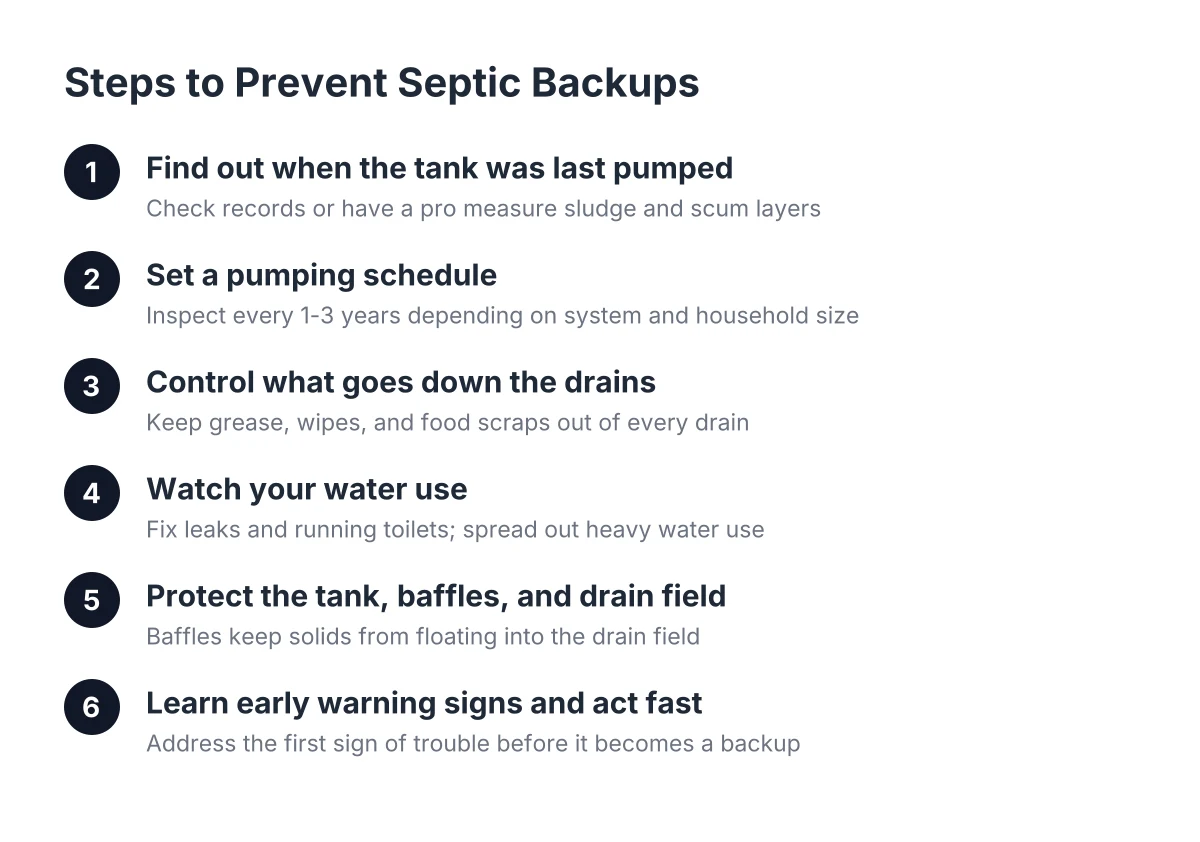
    Comparison chart of septic system pumping schedule for aerobic vs conventional systems
    Aerobic septic systems need more frequent inspection and mechanical upkeep than conventional tanks.

    If your property has an aerobic septic system, your septic system pumping schedule looks different from the one your neighbor with a standard tank follows. Aerobic systems have motors, air pumps, sprayers, and filters that need regular attention, not just a pump-out every few years. This guide walks through how aerobic systems work, how often they need pumping and cleaning, what a service visit involves, and what it tends to cost, with straight answers from the perspective of a crew that pumps tanks in Hesperia and the High Desert every day.

    This matters double if you just bought land, or you are about to close on a property, and nobody handed you a single service record. Plenty of High Desert parcels change hands with no paperwork on the septic at all. You may not even know whether the system is a standard tank or an aerobic unit until someone opens a lid and looks.

    What Makes an Aerobic Septic System Different

    An aerobic septic system treats wastewater with oxygen. An air pump pushes air into a treatment chamber, which feeds bacteria that break down waste faster and more completely than the bacteria in a standard tank. The result is cleaner effluent, which is why counties sometimes require aerobic systems on lots with poor soil, small drain field areas, or high water tables.

    Compare that to a conventional system. According to the US EPA, a typical residential septic system has two main parts: a tank that clarifies wastewater and a drain field that disperses the clarified liquid into the ground. The tank does its work passively. Solids sink, grease floats, and liquid flows out the middle toward the drain field. No motors, no electricity, no moving parts.

    An aerobic system adds machinery to that picture. Most aerobic units include some mix of the following:

    • A trash tank or pretreatment compartment where solids settle first
    • An aeration chamber with an air compressor or blower
    • A clarifier where treated water settles before leaving the system
    • A pump tank with a float switch and effluent pump
    • In some setups, a chlorinator or UV unit to disinfect, plus spray heads or drip lines

    Every one of those parts can wear out, clog, or fail. That is the trade-off: better treatment in exchange for more maintenance. A standard tank mostly asks for pumping. An aerobic system asks for pumping plus ongoing care of its mechanical parts.

    How Often an Aerobic System Needs Pumping and Inspection

    An aerobic septic system still builds up sludge, so it still needs periodic pumping, generally on a similar cycle to a conventional tank or slightly more often depending on use. The bigger difference is inspection. According to the U.S. Environmental Protection Agency, alternative septic systems with electrical float switches, pumps, or mechanical components should generally be inspected once a year.

    Hold that against the baseline for conventional systems. The EPA recommends that the average household have its septic system inspected at least once every three years by a professional. In addition, Penn State Extension notes that for an active family of four, pumping the tank every two to three years is generally advisable, since more people means more solids and more water moving through the system.

    So the honest comparison looks like this:

    1. Conventional system: professional inspection at least every three years, pumping on a cycle driven by tank size and household size, commonly every few years.
    2. Aerobic system: inspection once a year because of the mechanical parts, pumping as sludge accumulates, plus filter cleaning and component checks along the way.

    The reason frequency is not one-size-fits-all is simple. Pump too rarely and solids build up, escape the tank, and clog the drain field or spray lines. Pump too often and you spend money removing material that was not causing a problem yet. Tank size and the number of people in the home drive the right interval, which is why a crew that opens the tank and measures the sludge layer gives you a better answer than any chart.

    Building a Septic System Pumping Schedule When You Have No Records

    A realistic septic system pumping schedule for a property with no history starts with a baseline visit, then sets the interval from what the crew finds. If you bought land in Hesperia and the seller could not even point to the tank, you cannot schedule maintenance for a system you cannot find. The first step is a septic tank locating service to find and mark the tank and lids.

    Once the tank is open, the crew can tell you a lot fast. The depth of the sludge and scum layers hints at how long it has been since the last pump-out. The presence of an air pump, spray heads, or a control panel tells you whether you own an aerobic unit. From there, a written inspection report gives you something concrete for a purchase decision, a county permit, or your own files.

    For example, suppose a buyer is in escrow on two and a half acres outside Hesperia. There is no visible lid, no riser, and the seller says the system "always worked fine." In that scenario, a locate-and-inspect visit might reveal an aerobic unit with a dead air compressor and a trash tank that has not been pumped in years. That is not a reason to panic; it is leverage. The buyer can now negotiate repairs or a price adjustment before closing instead of inheriting the bill blind.

    What Happens During an Aerobic System Service Visit

    A full aerobic service visit covers more than sucking liquid out of a tank. Effective septic tank pumping removes the settled sludge at the bottom and the floating scum layer at the top, because those solids, not the liquid, cause most system problems. A pump-out that only removes liquid leaves the problem behind.

    On an aerobic system, a thorough visit typically includes:

    • Opening all compartments, including the trash tank, aeration chamber, and pump tank
    • Pumping out sludge and scum, not just the liquid in the middle
    • Checking the air compressor or blower for proper operation
    • Cleaning or checking the effluent filter and diffusers
    • Testing float switches and the effluent pump
    • Checking the chlorinator or disinfection unit if the system has one
    • Looking for root intrusion, corrosion, cracks, and signs of past overflow

    Afterward, the waste does not stay on your property. According to the New Hampshire Department of Environmental Services, septic waste pumped from residential tanks is hauled by truck to a sewage treatment plant for disposal. The truck leaving your driveway full is the end of your involvement.

    One honest note on limits: a pumping crew can service and inspect a system, but major design changes, drain field replacement, or new installation fall under separate licensing. The New Hampshire Department of Environmental Services points out that becoming a licensed septic installer requires certification beyond a pumping operation, including exams on soil type, percolation rates, and system design. If your inspection turns up a failed drain field, you will need an installer and likely the county involved, and a good pumping crew will say so plainly.

    What to Put in the Tank After Pumping

    After a pump-out, the best thing to put in your septic tank is nothing. Normal household use restores the bacteria the system needs within days; flushing and running water reintroduces everything the biology requires. Additive products that promise to "recharge" or "clean" the tank are not a substitute for pumping and can disturb the balance.

    This goes double for aerobic systems. The aeration chamber is a managed biological environment, and harsh chemicals, heavy bleach use, or miracle additives can knock down the bacteria doing the treatment work. The safest maintenance approach is a regular professional pumping and inspection cycle, not products poured down the drain.

    Signs Your Aerobic System Needs Attention Now

    The clearest signs an aerobic septic system needs service are alarm activity, odor, surfacing water, and slow drains. Aerobic units usually have a control panel with an alarm light or buzzer, and that alarm is the system telling you a pump, float, or compressor has a problem. Do not silence it and move on.

    Watch for these specific warning signs:

    • The alarm light or buzzer activates. This often means a failed air pump, a stuck float, or high water in the pump tank.
    • The system goes quiet. An aerobic unit makes a low hum from the compressor. Silence can mean the aerator died, and the system is now operating as a worse version of a standard tank.
    • Strong sewage odor near the tank or spray area. Properly treated aerobic effluent has little odor; a strong smell suggests the treatment process has stalled.
    • Gray or black water surfacing, or spray heads putting out foul water. Solids may be escaping into parts of the system meant only for treated liquid.
    • Slow drains or gurgling inside the house. The classic sign of a tank full of solids or a blocked outlet.

    If sewage is already backing up into the house, that has moved past maintenance into emergency septic pumping territory. A backup rarely fixes itself, and continuing to run water into a failed system pushes solids toward the drain field, where the real money gets spent.

    Aerobic Maintenance Costs Compared to a Standard Pump-Out

    Aerobic system maintenance costs more over time than conventional tank care, because you are paying for annual inspections and occasional parts on top of pumping. For the pumping itself, according to Angi data, septic tank pumping averages $427, with a range from $250 to $1,250 or more depending on tank size and location. That figure covers the pump-out; aerobic components are a separate line.

    Over a few years, the math might look like this as a rough illustration, not a quote. Say a conventional tank gets pumped once every three years. An aerobic system over the same stretch might need that same pump-out, three annual inspections, a filter cleaning or two, and eventually a replacement air compressor. Each item is modest on its own, but the total runs meaningfully higher than conventional upkeep.

    However, skipping maintenance to save money is the expensive path on either system type. The EPA estimates septic repair or replacement typically costs between $5,000 and $15,000, far more than routine pumping. A dead aerator left unfixed for a year can send poorly treated water and solids into spray lines or a drain field, turning a few hundred dollars of upkeep into a five-figure replacement. This is the core reason more than one in five U.S. households that rely on septic systems, per the EPA, are told the same thing by every health department: pump on schedule, because the tank is cheap to maintain and the drain field is not.

    When you compare septic tank pumping services, ask whether the crew works on aerobic units specifically. Some septic tank pumping companies near me searches surface outfits that handle standard residential septic pumping well but do not touch aerobic components, filters, or control panels. For an aerobic system, you want one crew that can pump the tank and check the machinery in the same visit.

    Setting a Pumping Schedule for Your Septic System and Sticking to It

    A dependable septic system pumping schedule for an aerobic unit combines annual professional inspection with pumping based on measured sludge buildup. Treat it like an oil change for the property. You would not run a truck 100,000 miles on one oil change because it "seemed fine," and the same logic applies to a tank you cannot see into.

    Here is a practical framework you can set up this year and run from 2026 forward:

    1. Establish the baseline. If you have no records, schedule a locate, pump-out, and inspection. Get everything in writing, including tank location, system type, and condition notes.
    2. Put the annual inspection on the calendar. For aerobic systems, once a year, per EPA guidance for systems with pumps and mechanical parts.
    3. Set the pumping interval from the inspection. The crew measures sludge and scum each visit and tells you whether this is a pump year or a check year. For a busy household of four, expect the two-to-three-year range Penn State Extension describes as a starting point.
    4. Log everything. Dates, what was pumped, what was replaced, and sludge levels. If you ever sell the property, that folder answers the exact questions you could not get answered when you bought it.
    5. Respond to alarms and odors immediately. The schedule handles normal wear; the alarm handles failures. Both matter.

    The payoff for a Hesperia property owner is predictability. Regular pumping is the single most effective thing you can do to extend the life of the whole system, and a known schedule turns septic care from a surprise expense into a planned one. Whether you have owned the home for fifteen years or you are still waiting on escrow paperwork for a parcel with a mystery tank, the path is the same: find the tank, learn the system, set the schedule, and keep the records the next owner will wish they had.

    If you need your septic tank serviced, Hesperia Septic can help.

    Prefer to talk it through? Call (760) 249-7872 — a quick call is usually the fastest way to get a straight answer for your situation.
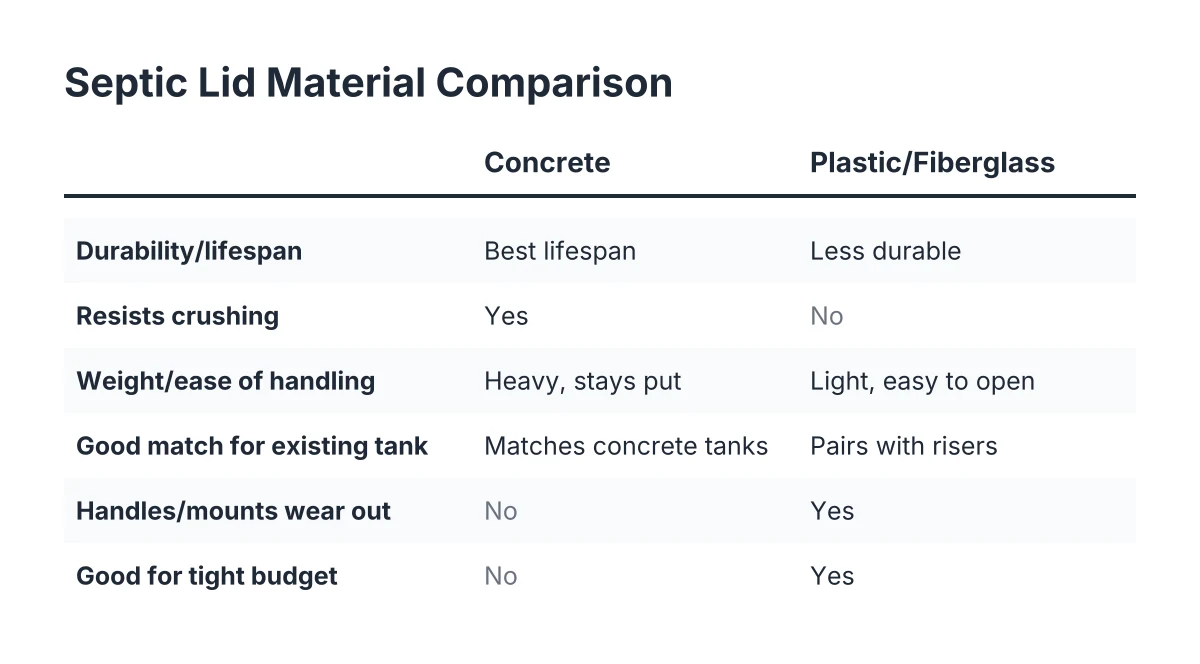
    Related Reading

  • How to Prevent Septic Clogs and Backups: Maintenance Steps That Actually Work

    Numbered steps showing how to prevent septic backups and tank clogs
    Following these maintenance steps in order helps prevent septic backups before they start.

    Most septic backups do not come out of nowhere. They build for months, usually because solids filled the tank or something went down a drain that should not have. The good news is that you can prevent septic backups with a short list of habits and a pumping schedule you set once and stop thinking about. This guide walks through the steps in order, with the common mistakes that cause problems for homeowners and small landlords in Hesperia and the High Desert.

    This matters more than most people realize. According to the U.S. Environmental Protection Agency, more than one in five U.S. households depend on individual septic systems or small community cluster systems to treat their wastewater. The same agency estimates septic repair or replacement typically costs $5,000 to $15,000, far more than routine pumping. Prevention is the cheap option.

    Step 1: Find Out When the Tank Was Last Pumped

    Start here, because everything else depends on it. The main way septic systems fail is slow and predictable: solids build up in the tank over years, then overflow into the drain field lines and clog them. Once drain field lines are clogged with solids, they usually cannot be cleaned out; they have to be replaced. Pumping on schedule is what stops that chain of events before it starts.

    If you just bought a house in Hesperia, check your closing documents for a septic inspection report or a pumping receipt. Ask the seller's agent if nothing turns up. For a rental property, check your own maintenance records and ask long-term tenants whether a pump truck has been out.

    However, if you cannot confirm a date, assume the tank is due. A septic service can open the lid, measure the sludge and scum layers, and tell you how full it actually is. That reading is more useful than any guess based on calendar years.

    Step 2: Strategies to Prevent Septic Backups

    A written schedule is the single best way to prevent septic backups. The U.S. Environmental Protection Agency recommends a professional inspection at least once every three years for the average household, and once a year for alternative systems with pumps, float switches, or other mechanical parts. For an active family of four, Penn State Extension notes that pumping every two to three years is generally advisable because of higher solids and liquid production.

    Your actual interval depends on tank size and how many people use the system. A retired couple can often go longer between pumpings than a four-person family or a fully occupied rental. The practical move:

    • Get the tank pumped and measured once to establish a baseline.
    • Ask the crew how fast solids are building, and set your interval from that.
    • Put the next service date on your calendar, or ask the septic company to track it.
    • Keep every receipt and inspection note in one folder per property.

    For landlords, that paper trail does double duty. It answers tenant complaints, supports a pre-lease turnover inspection, and shows a buyer the system was maintained if you ever sell.

    Step 3: Control What Goes Down the Drains

    Most septic problems trace back to what gets flushed or poured, with grease at the top of the list. Grease cools, hardens, and coats the inlet pipe and baffle. Wipes, even ones labeled flushable, do not break down the way toilet paper does. Over time these items form the clogs that turn into backups.

    Keep these out of every drain on a septic system:

    • Cooking grease, fats, and oils
    • Wipes of any kind, paper towels, and feminine products
    • Coffee grounds, eggshells, and heavy food scraps
    • Cat litter, cigarette butts, and dental floss
    • Paint, solvents, and large amounts of bleach or drain cleaner

    In addition, skip the additive products that promise to keep your tank healthy. A septic tank is a biological system that runs itself when it is not overloaded. Regular pumping does more for it than any bottle of enzymes, and harsh chemicals can kill the bacteria the tank depends on.

    For rental properties, this step is about tenants, not you. A one-page "what not to flush" sheet in the lease packet and a magnet on the fridge cost almost nothing. Say a landlord owns a three-bedroom rental near Main Street in Hesperia; a tenant who pours fryer grease down the kitchen sink every week can clog the inlet line in a year, and the landlord eats the service call. In that scenario, ten minutes of tenant education at move-in would have prevented the whole problem.

    Step 4: Watch Your Water Use, Including the Leaks You Can't Hear

    Every gallon that goes down a drain has to pass through the tank and soak into the drain field. Flood the system and solids get stirred up and pushed toward the outlet before they can settle. Crews call this hydraulic overloading, and it is one of the fastest ways to send solids into a drain field.

    A single leaky or running toilet can add as much as 200 gallons of extra water per day to a septic system, according to the U.S. Environmental Protection Agency. That is a huge, silent load. Fixing a running toilet is one of the cheapest septic repairs you will ever make.

    Beyond leaks, spread out heavy water use:

    • Run laundry across the week instead of five loads on Saturday.
    • Fix dripping faucets and running toilets as soon as you notice them.
    • Direct roof gutters and yard drainage away from the tank and drain field.
    • Do not let irrigation soak the drain field area.

    Step 5: Protect the Tank, Baffles, and Drain Field

    The parts of your system you cannot see need protection too. Inside the tank, a baffle at both the inlet and the outlet keeps solids from floating straight through; the University of Nebraska-Lincoln Extension describes these as downward-facing tees that force solids to settle to the bottom. A clogged inlet baffle is a common cause of septic backups, and according to the Washington State Department of Health it should be one of the first things checked when a line into the tank blocks up.

    Therefore, ask the crew to check both baffles every time the tank is pumped. A cracked or missing baffle is a cheap fix at pump-out time and an expensive one after solids reach the drain field.

    Above ground, keep weight and roots away:

    • Never drive or park vehicles over the tank or drain field.
    • Keep trees and deep-rooted shrubs away from the lines; roots find pipe joints.
    • Know where your tank and field are. If you do not, a septic tank locating service can map them so nobody builds a shed or pours a slab on top.

    Step 6: Learn the Early Warning Signs and Act on the First One

    Catching a problem early is the difference between a pump-out and a drain field replacement. Watch for these septic system warning signs:

    1. Slow drains throughout the house, not just one fixture
    2. Gurgling sounds from toilets or drains after you run water
    3. Sewage odor in the yard, especially near the tank or drain field
    4. A wet spot or unusually green, spongy grass over the drain field
    5. Sewage backing up into the lowest drains in the house

    One slow sink is usually a plumbing clog. Every drain slowing at once points to the tank or the line feeding it. Repeated backups at the same spot, like a clog that keeps forming at the same bend in the inlet pipe, signal a chronic blockage, not bad luck. That pattern is where basic septic system troubleshooting ends and a professional diagnosis begins.

    For septic symptoms, call a septic service first, not a plumber. A septic crew can open the tank, check the baffles and liquid level, and tell you whether the problem is the tank, the inlet line, or the drain field. If the tank checks out, then the issue is in your household plumbing and a plumber is the right call. Be realistic about the limits of prevention too; if the drain field itself is failing, no amount of pumping will fix it, and you will need a professional evaluation of repair or replacement options.

    The Payoff: A System You Don't Have to Worry About

    Preventing septic backups comes down to four habits: pump on a schedule, keep grease and wipes out of the drains, control water use, and act on the first warning sign instead of the third. None of it is complicated. For a Hesperia homeowner or a small landlord with a few septic-served rentals, an afternoon spent setting up a pumping schedule in 2026 is what keeps you from ever meeting the emergency side of this business.

    If you need your septic tank serviced, Hesperia Septic can help.


    Prefer to talk it through? Call (760) 249-7872 — a quick call is usually the fastest way to get a straight answer for your situation.
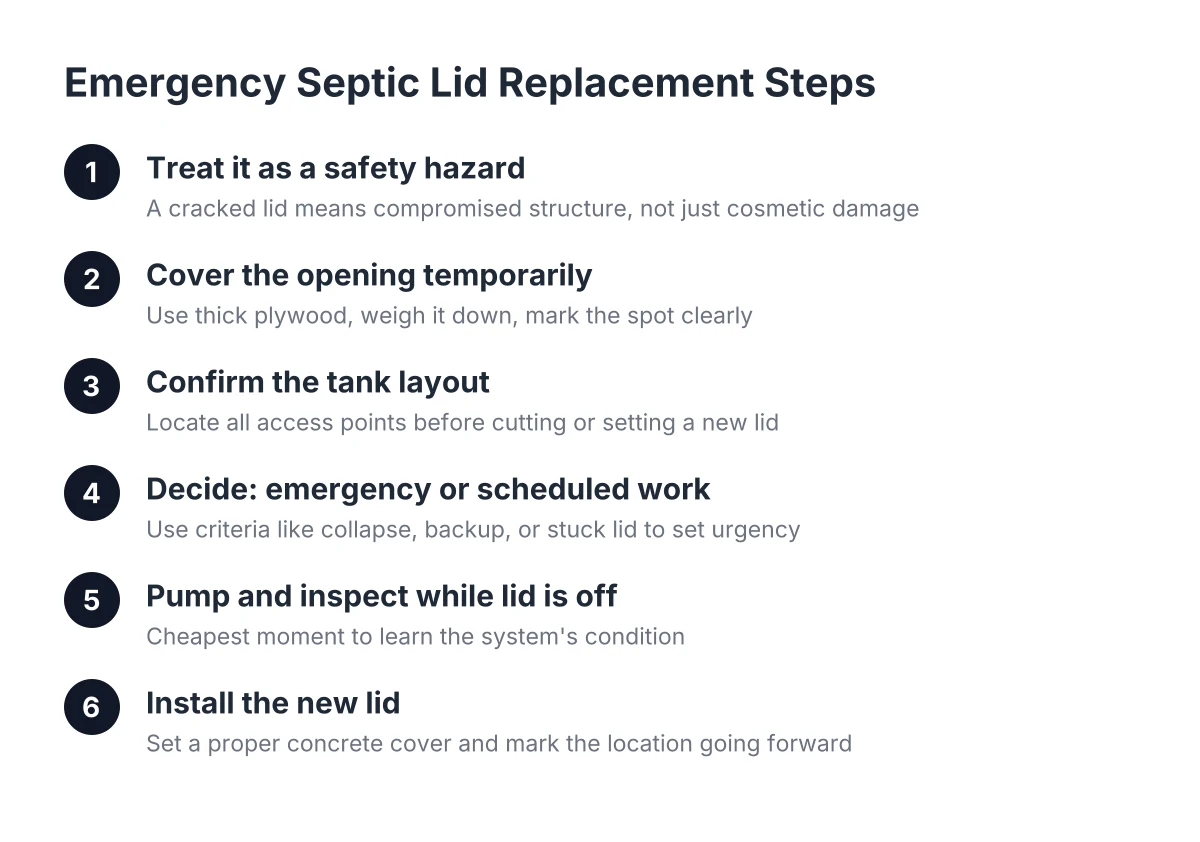
    Related Reading

  • Septic Tank Cover Replacement in Hesperia, CA: Concrete vs. Plastic vs. Fiberglass

    Comparison checklist of concrete versus plastic and fiberglass septic lid materials
    How concrete, plastic, and fiberglass septic lids compare, as outlined in this guide.

    If you just found a cracked, sunken, or missing lid on your tank, your first question is what to put back in its place. Septic tank cover replacement comes down to three main materials: concrete, plastic, and fiberglass. A clear septic lid material comparison helps you weigh the trade-offs. Each one behaves differently under High Desert sun, shifting soil, and the weight of whatever crosses your yard. This FAQ walks homeowners in Hesperia, CA through the trade-offs so you can make the call before a crew shows up, not while they are standing over an open tank.

    What are the main material options for septic tank cover replacement?

    The three common materials for septic tank cover replacement are concrete, heavy-duty plastic (often called poly), and fiberglass. Concrete is the traditional choice for the rectangular concrete tanks common in many regions, while plastic and fiberglass lids usually pair with risers that bring the access point up to grade. Most older tanks in the Hesperia area were built with concrete lids, so a like-for-like concrete replacement is the default starting point.

    According to International Code Council, septic tank shapes and configurations vary by region; some areas use rectangular concrete tanks and others use circular tanks. That matters because the lid has to match the opening you actually have, not the one in a product photo.

    Concrete vs. Plastic vs. Fiberglass: Which Lid Material Comparison Matters Most?

    Concrete is the most durable and longest-lasting cover material for most residential tanks, which is why many installers prefer it. A properly made concrete lid resists crushing, holds up to decades of sun exposure, and will not warp or become brittle the way some plastics can. It is also the natural match for an existing concrete tank, since the fit and weight distribution were designed together.

    One detail surprises a lot of homeowners: the tank itself is solid, reinforced concrete, but access lids are often a lighter foam-core design covered in concrete. That keeps the lid removable for septic tank pumping without a crane, while still giving you a concrete surface that lasts.

    The downside is weight and handling. A concrete cover is not something one person slides aside to peek in the tank, and that is partly the point. It stays put.

    When does a plastic or fiberglass lid make sense?

    Plastic and fiberglass lids make sense when you are adding a riser, working with a poly tank, or dealing with unusual site conditions or a tight budget. They are light, easy to open for future pumping and inspections, and many models bolt or screw down for child safety. If your tank sits deep and you are tired of digging every three to five years, a riser with a plastic lid is a practical upgrade.

    However, plastic has known weak points. Plastic handles snap off when pulled, and screw mounting points on risers and covers wear out over time, which can force a second replacement later. When comparing septic lid material options, durability under soil and foot traffic tends to favor concrete over plastic components. Plastic tanks and components also tend not to last as long as concrete and are more prone to crushing. For a lid that will sit under soil, foot traffic, or occasional equipment, concrete usually wins on lifespan.

    How much does septic tank cover replacement cost in Hesperia, CA?

    The cost of septic tank cover replacement depends on the material, the size and shape of the opening, how deep the lid sits, and whether a riser is added at the same time. As an illustrative range only, a straightforward lid swap often lands in the low hundreds of dollars, while adding a riser system or pouring a custom concrete lid costs more. Ask for a written quote based on your actual tank before agreeing to anything.

    For perspective, replacing a lid is a small job compared to what happens when a damaged system goes unaddressed. The EPA estimates septic tank repair or replacement typically costs between $5,000 and $15,000, according to U.S. Environmental Protection Agency figures. A cover is one of the cheapest parts of the whole system to fix. Replacing just the lid is also far cheaper than replacing the tank itself; a crew can pour a custom concrete lid to fit an existing opening rather than touching the tank box.

    Many homeowners pair the lid work with a scheduled pumping visit, since the tank is already exposed. According to Angi data, septic tank pumping averages $427, with a range of $250 to $1,250 or more depending on tank size and location.

    Can I replace a septic tank lid myself?

    You can measure a lid and buy a stock plastic cover yourself, but most septic tank lid replacement jobs belong with a professional crew. An open tank is a fall hazard and a gas hazard, and a mis-sized or badly seated cover can let soil, debris, or a child into the tank. Concrete lids are also heavy enough to injure someone without the right equipment.

    There are a few things a homeowner can safely handle:

    • Marking the lid location and keeping vehicles and heavy equipment off it
    • Checking visible lids for cracks, chips, sinking, or movement a couple of times a year
    • Keeping soil, landscaping fabric, and decorations from burying the access point
    • Calling a pro immediately if a lid is cracked through, missing, or wobbles underfoot

    If the lid has collapsed, or you smell sewage or see a wet spot near the tank, treat it as urgent. At that point you may be looking at more than a cover problem, and an inspection should come before any parts get ordered.

    What does a professional septic lid and material comparison during replacement include?

    A professional septic tank cover replacement visit includes locating the tank, exposing the opening, measuring it, removing the damaged lid safely, and setting a properly fitted new cover. If the old lid was buried deep, the crew may recommend a riser so the next pumping does not require excavation. Good crews also protect the opening during the work so debris does not fall into the tank, then backfill and compact carefully.

    Suppose a homeowner in Hesperia calls because the pumping crew found a concrete lid cracked in half, say on a 1980s tank buried about a foot down. In that scenario, a typical crew would measure the opening, quote a matching concrete cover or a poured replacement, and offer a riser upgrade as an option rather than a requirement. The homeowner picks based on budget and how often they want to dig.

    Things that usually cost extra: septic tank locating when no records exist, deep excavation, riser installation, and any pumping or cleaning done during the same visit.

    Does Hesperia's climate affect which cover material to choose?

    High Desert conditions favor durable materials. Intense sun, big day-to-night temperature swings, and dry, sandy soil are hard on exposed plastic, which can grow brittle over years of UV exposure. Concrete shrugs off the sun, and a buried concrete lid is largely indifferent to surface temperature swings. When making a septic lid material comparison in this climate, concrete typically outperforms plastic over the long term.

    Soil movement matters too. According to Onsite Installer, fill around tank penetrations should be compacted thoroughly to prevent settling and damage, and the same care applies when backfilling over a replaced lid. Loose desert sand that settles unevenly can leave a lid unsupported at one edge, which is how cracks start.

    How do I choose a septic company for lid or cover work?

    Choose a local, septic-focused company that will look at your actual tank before quoting a fixed price. A fair quote names the material, the size, whether a riser is included, and what excavation and backfill are covered. Be cautious of anyone who pushes a full tank or system replacement before inspecting the lid and opening; a broken cover alone rarely means the tank is failing.

    Three questions worth asking before you book:

    1. Will you match my existing concrete opening, or do you recommend a riser, and why?
    2. What is included in the price: locating, digging, the cover itself, and backfill?
    3. Can you pump or inspect the tank on the same visit while it is open?

    That last question saves money. The U.S. Environmental Protection Agency recommends a professional inspection at least once every three years, and combining trips means you dig once instead of twice.

    Should I replace the cover or wait until my next pumping?

    Replace a cracked, sinking, or missing cover now rather than waiting for your next scheduled pumping. A compromised lid is a safety issue for kids, pets, and anyone walking the yard, and an open path for soil and debris to enter the tank. A hairline crack in a lid that still sits solidly can sometimes wait for a professional opinion, but any lid that moves, sags, or has a visible gap should not.

    If you are already dealing with a septic backup or slow drains on top of a bad lid, get the whole system looked at in one visit. The lid may be the visible symptom of a tank that has not been pumped in years.

    For homeowners in Hesperia, CA weighing concrete against plastic or fiberglass, the short version is this: concrete for longevity and a like-for-like fit on an older tank, plastic or fiberglass with a riser for easy future access. A local septic crew that pumps, inspects, and replaces covers can look at your tank, quote the options side by side, and handle the swap in a single visit. If your lid is cracked or missing, reach out to a Hesperia septic service to get an estimate and get the tank sealed up safely.

    If you need your septic tank serviced, Hesperia Septic can help.

    Prefer to talk it through? Call (760) 249-7872 — a quick call is usually the fastest way to get a straight answer for your situation.

    Related Reading

  • Emergency Septic Tank Lid Replacement in Hesperia: Cracked Cover Risks and Fixes

    Six-step process diagram for emergency septic lid replacement from hazard to installation
    The step-by-step process for safely handling a cracked or missing septic tank lid, as covered in this guide.

    A cracked or missing septic tank cover is not a "get to it next month" problem. An emergency septic lid replacement exists as a service for one reason: an open or failing lid is a fall-in hazard, a gas leak point, and an open door for dirt and debris to enter your tank. If you just bought High Desert land with no septic records and found a crumbling concrete cover, or no cover at all, this guide walks you through exactly what to do, in order, until the lid is safely replaced.

    This is written for the person who has already decided to fix it. You are not weighing options anymore. You need the hole covered safely today and a proper concrete lid installed as soon as the crew can get there.

    Step 1: Treat the Broken Lid as a Safety Hazard, Not a Repair Item

    First, understand what you are dealing with. A septic tank is a buried concrete box full of wastewater, and the lid is the only thing between the surface and a drop of several feet into liquid. A cracked lid, or a lid someone replaced with a rock, a board, or a trash can lid, can shift or collapse under the weight of a child, a pet, or an adult stepping on it.

    Concrete lids are heavy but structurally fragile. Gas buildup inside the tank corrodes some lids from the inside, so a cover can look solid on top while it is brittle underneath. That is why a lid that "seems fine except for one crack" still counts as an emergency septic tank lid situation. The crack tells you the structure is compromised; you cannot see how far the damage goes.

    Keep everyone away from the area right now. Rope it off, move vehicles, and keep kids and dogs on the other side of the yard until the opening is secured.

    Step 2: Cover the Opening Temporarily and Correctly

    Next, put a safe temporary cover over the tank opening. Do not balance the broken lid pieces back over the hole, and do not use a loose object like a rock or a plastic bin lid. Those dislodge easily, and a dislodged cover over an open tank is the single most dangerous condition a septic system can have on a residential lot.

    Here is what a safe temporary cover looks like:

    • A sheet of plywood at least 3/4 inch thick, large enough to overlap the opening by a foot on every side
    • A thin layer of dirt or gravel on top of the plywood to weigh it down and keep it from sliding
    • Something heavy on the corners if wind is a factor, which it often is in Hesperia
    • A visible marker, like a stake or a cone, so nobody drives or mows over the spot

    This is a bridge, not a fix. Plywood degrades, and it will not support a vehicle. It buys you a safe day or two until a proper concrete septic tank cover goes in.

    Step 3: Confirm What You Actually Have Under the Ground

    Before anyone can cut, cast, or set a new lid, you need to know the tank layout. This is the step that trips up land buyers with no records. If the previous owner left you nothing, you may not know whether the broken cover you found is the main access lid, a secondary compartment lid, or an old riser someone abandoned.

    Septic tank shapes and configurations vary regionally; some areas use rectangular concrete tanks while others use circular tanks, according to the International Code Council. A rectangular tank in the High Desert often has more than one access opening. Finding one broken lid does not mean you have found the whole tank.

    A septic tank locating service handles this. The crew traces the line from the house, probes carefully to find the tank edges, and marks every access point. Careful probing matters here: jabbing a probe rod straight down onto a lid with force can punch through a brittle cover and make the emergency worse. If you are probing yourself, work around the edges, not on top of the lid.

    For example, suppose you just closed on two acres outside Hesperia with a 1970s house and zero septic paperwork. You find a cracked concrete disc near the back porch and assume that is the tank. A locate could show the disc is a cleanout cover, and the actual tank with its failing lid sits 30 feet away under a woodpile. Replacing the wrong cover would have left the real hazard untouched.

    Step 4: Emergency Septic Lid Replacement or Scheduled Work

    Now decide how fast this has to move. Not every damaged cover needs same-day work, but some do. Use these criteria:

    1. The tank is open or the cover has collapsed. This is an emergency. Secure it per Step 2 and get a crew out as fast as possible.
    2. The lid is cracked but intact and the tank is not backing up. Schedule the replacement promptly, keep the area roped off, and do not let anyone stand on the lid.
    3. Sewage is backing up into the house along with the lid damage. You need septic backup and overflow response, not just a new cover. The lid gets handled as part of the emergency pumping visit.
    4. The lid will not come off for a needed pump-out. Sometimes a corroded lid cannot be pried loose. In that case, breaking the old lid and replacing it with a new one is an accepted approach; it is destructive on purpose so the tank can be serviced.

    If your situation is number 3, mention the backup when you call. A clogged inlet baffle is a common cause of septic backups and should be one of the first things checked when troubleshooting a blocked line into the tank, according to the Washington State Department of Health. The crew will want lid access to check it, which is another reason the cover work and the pumping usually happen in the same visit.

    Step 5: Get the Tank Pumped and Inspected While the Lid Is Off

    Once the old lid is off, the tank is open anyway. This is the cheapest moment you will ever have to learn the condition of a system you know nothing about. Have the tank pumped and inspected before the new lid goes on.

    For a land buyer with no records, this single visit answers the questions that have been hanging over the purchase: how full the tank is, whether the baffles are intact, whether the walls show damage, and whether the outlet toward the drain field looks right. A properly built outlet sits lower than the inlet so only liquid, not floating solids, leaves toward the drain field, according to University of Nebraska-Lincoln Extension. An inspector can see that with the lid off.

    The cost math supports doing it now. According to Angi data, septic tank pumping averages $427, ranging from $250 to $1,250 or more depending on tank size and location. Compare that with the EPA estimate that septic tank repair or replacement typically runs $5,000 to $15,000. A pump-and-inspect while the tank is already open is a small line item next to the surprise of a failed system you did not check.

    Ask for the findings in writing. If you are still in escrow, a written inspection report is what your lender or the county will want to see, and it gives you leverage if the system turns out to be in bad shape.

    Step 6: Installing an Emergency Septic Tank Lid Replacement

    The replacement itself is the fastest part. An emergency septic tank lid replacement means either fitting a precast cover sized to the opening or pouring a custom concrete lid to match an odd or older opening. Custom pours matter on older High Desert tanks, where openings do not always match modern precast sizes. Replacing just the lid this way costs far less than replacing the tank itself.

    If your lid sits deep below grade, this is also the time to ask about a riser. A riser brings the access point up to ground level with a secure cover, so the next pump-out does not require digging. One trade-off to know: plastic riser lids with molded handles can snap when pulled, and screw mounting points wear over time, so a riser cover is a maintenance item too, not a forever part.

    Whatever cover goes on, confirm it is fully secured before the crew leaves. Every screw or fastener goes back in so the lid cannot be dislodged by a curious kid or a shifting load of soil. Also confirm the fill around the lid and any pipe penetrations gets compacted; loose backfill settles and stresses the connections, a point installation guides from Onsite Installer stress for exactly this reason.

    Step 7: Mark the Location and Set a Simple Maintenance Rhythm

    Finally, do the thing the previous owner never did for you: record where everything is. Sketch the tank location, lid positions, and the line from the house. Measure from two fixed points, like house corners. Take photos before the dirt goes back. Future you, or a future buyer, will not have to hire a locate crew to find what you already uncovered.

    Then put the system on a schedule. The EPA recommends a professional inspection at least once every three years for the average household, and once a year for systems with pumps, floats, or other mechanical parts. In addition, watch household water use; a single leaky or running toilet can push as much as 200 gallons of extra water per day into a septic system, according to the U.S. Environmental Protection Agency, and that kind of load shortens the life of everything downstream of your new lid.

    When an Emergency Septic Lid Job Needs More Than a Cover

    Sometimes the broken lid is a symptom, not the whole problem. If the crew finds a collapsed baffle, cracked tank walls, standing water over the drain field, or sewage surfacing in the yard, the fix goes beyond a new cover. At that point you need a full system assessment before spending more money, especially if you are mid-purchase and can still negotiate.

    Skip the shortcut fixes while you sort it out. Additives marketed to dissolve sludge lack strong scientific backing, according to Washington State University Extension, and they will not repair a structural problem. A cracked cover and a struggling tank both come down to the same answer: get eyes on the system, get it pumped, and get a proper concrete lid set and secured. Anything less leaves an open hole in your yard and an open question over your property.

    If you need your septic tank serviced, Hesperia Septic can help.


    Prefer to talk it through? Call (760) 249-7872 — a quick call is usually the fastest way to get a straight answer for your situation.

    Related Reading