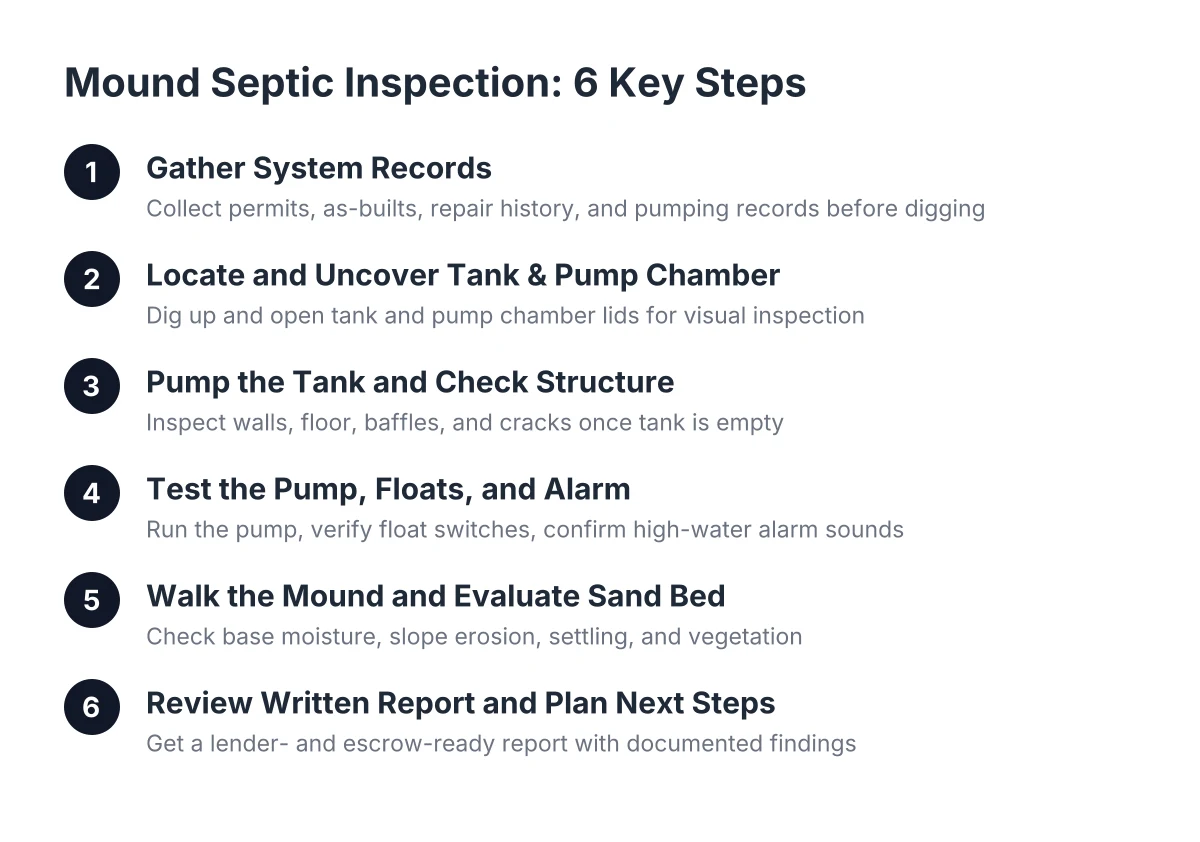
A mound septic inspection follows a different playbook than an inspection on a standard buried tank and drain field. Mound systems sit above grade, use pumps and float switches, and depend on a sand bed that has to stay in good shape. If you are buying, selling, refinancing, or managing a property with one of these systems, a documented inspection report is what lenders, escrow officers, and county reviewers actually want to see. This guide walks through how a proper mound inspection works, step by step, so you know what to expect and what a thorough report should contain.
First, some context. Why would you need a mound septic system in the first place? These systems get installed where the soil cannot absorb wastewater at standard depth, usually because of high groundwater, shallow bedrock, or soil that fails a percolation test. According to University of Nebraska-Lincoln Extension, a perc test must be dug and performed before installing any septic system to confirm the soil drains well enough; when it does not, an above-grade mound is one of the common answers. That is worth knowing because the same soil limits that forced the mound design are the limits an inspector has to work around.
Is a mound septic system bad? No. It is a legitimate engineered fix for difficult ground. However, it has more moving parts than a conventional system, which is exactly why its inspection is more involved.
Step 1: Gather System Records Before Anyone Digs
Start by pulling together whatever paper trail exists. A good inspector wants the age of the property, the original permit or as-built drawing, past repair history, and how often the tank has been pumped. Topography matters too; a mound on a hilltop behaves differently than one in a low spot.
For a landlord or small business owner who just took over a property, this step often turns up nothing. That is fine, but say so up front. If no records exist, the crew may need to add septic tank locating to the visit, and the county health department may have a permit file you can request in advance.
In addition, tell the inspector why you need the report. A routine health check, a home sale, and a refinance each call for slightly different documentation. Lender- and escrow-ready reports name the components checked, describe their condition, and note anything that failed, so the person reading it two counties away can make a decision without calling anyone.
Step 2: Locate and Uncover the Tank and Pump Chamber
Next, the crew locates the septic tank and, on a mound system, the separate pump chamber or dosing tank that pushes effluent uphill to the mound. Both lids get dug up and opened. A visual check of the inlet and outlet sides catches problems that a surface-only walkthrough misses entirely.
This is where mound systems differ most from conventional ones. According to U.S. Environmental Protection Agency, a conventional septic system has two main components, a tank and a drain field. A mound system adds a pump, floats, an alarm, and pressurized distribution piping between those two components. Every one of those extras is a potential failure point, and every one belongs in the report.
Step 3: Pump the Tank and Check Its Structure
A meaningful inspection includes septic tank pumping, not just a peek through the lid. With the tank empty, the inspector can see the walls and floor, check for cracks, look for evidence the tank has ever leaked, and confirm the baffles are intact and doing their job. Photos of the tank interior go into the report as proof of condition.
Roots near or inside the tank get flagged here too. On High Desert lots, a lone shade tree planted too close to the system is a common culprit. If the tank was pumped recently and you can document it, some inspectors will work from that record instead; ask before you pay for pumping twice.
For budgeting purposes, Angi data puts the average cost of septic tank pumping at $427, with a range from $250 to $1,250 or more depending on tank size and location. The inspection itself is a separate line item, so get both numbers in writing before the visit.
Step 4: Test the Pump, Floats, and Alarm
This step does not exist on a gravity system, and it is the heart of a mound septic system inspection. The inspector runs the pump, verifies the float switches trigger at the right levels, and confirms the high-water alarm actually sounds. A dead alarm is one of the most common silent failures; the pump quits, nobody hears anything, and the first sign of trouble is sewage backing up into the building.
The electrical hookup gets a look as well. Corroded splices, a tripped breaker, or a pump drawing abnormal current all point to a repair before failure rather than after. Because of these mechanical components, the U.S. Environmental Protection Agency recommends that alternative systems with pumps, float switches, or electrical parts be inspected once a year, compared to at least once every three years for the average household system.
Step 5: Walk the Mound and Evaluate the Sand Bed
Now the inspector moves to the mound itself. A healthy mound looks like a grassy rise with even vegetation and firm, dry ground at the base. The inspector checks the base for excessive moisture, examines the slope for erosion or settling, and looks for trees or deep-rooted shrubs growing on or near the mound. Any of those signs points to a system heading toward trouble.
Wet, spongy ground at the toe of the mound usually means effluent is surfacing instead of soaking in. Lush green stripes in an otherwise dry High Desert yard tell the same story. Both go into the report with photos, because a buyer's lender will want to see the evidence, not just a checkbox.
What a Function and Flow Test Adds to a Mound Septic Inspection
A function and flow test sends water through the system while the inspector watches how the mound accepts it. Water runs from the building, the pump doses the mound, and the inspector confirms effluent distributes evenly through the pressurized lines rather than pooling or backing up. On a mound, uneven distribution often means a clogged lateral or a failing pump, and catching it early is far cheaper than rebuilding the bed.
Step 6: Review the Written Report and Plan Next Steps
Finally, insist on a written report, not a verbal thumbs-up. For a sale, refinance, or county permit question, the document is the deliverable. A complete mound septic inspection report should include:
- System type, tank size if known, and component locations, ideally with a sketch
- Tank condition after pumping, including photos and notes on cracks, leaks, baffles, and roots
- Pump, float, and alarm test results
- Mound surface and base condition, with photos of any wet spots, erosion, or vegetation issues
- Function and flow test results
- Any repairs recommended, ranked by urgency
- Disposal documentation for the pumped waste, which matters if you need compliance records
That last item is easy to overlook. Suppose you are a landlord in Hesperia who manages the property from out of the area, and a tenant reports a smell near the mound. In that scenario, you want a crew that can inspect without you on site, send a report you can forward to your property manager or the county, and keep the disposal paperwork on file. The report does the babysitting so you do not have to.
The financial case for doing this on schedule is blunt. The EPA estimates septic repair or replacement typically costs between $5,000 and $15,000, far more than routine pumping or an annual check. A mound rebuild sits at the expensive end of that range because sand, pumps, and engineered piping all cost more than gravity trenches.
How to Maintain a Mound Septic System Between Inspections
Maintaining a mound septic system between inspections comes down to protecting the pump and the sand bed. Keep vehicles, livestock, and heavy equipment off the mound, since compaction ruins the bed. Direct roof and surface drainage away from it. Never ignore the alarm; a sounding alarm means the pump chamber is filling and you have limited time before a backup.
Watch water use inside the building too. A mound doses effluent in measured amounts, so a week of laundry marathons or a leaking toilet can overwhelm it faster than a conventional drain field. Spreading out heavy water use is free insurance.
A routine septic system inspection on the schedule your system type calls for, annual for pumped systems, catches most mound problems while they are still pump repairs instead of bed replacements. That cadence fits how proactive owners already operate: a reminder on the calendar, a modest bill, and a paper trail that makes the next sale or refinance painless.
One honest limit: an inspection reads the system's current condition, and no inspector can guarantee how long a mound will last afterward, especially one nearing the end of its design life. If your report shows a saturated bed or a repeatedly failing pump, bring in a licensed septic designer or your county health department before spending on piecemeal fixes. In 2026, most High Desert counties still require permits and their own inspections for septic repairs or replacements, so loop them in early rather than after the work starts.
If you need your septic tank serviced, Hesperia Septic can help.
Prefer to talk it through? Call (760) 249-7872 — a quick call is usually the fastest way to get a straight answer for your situation.
Leave a Reply