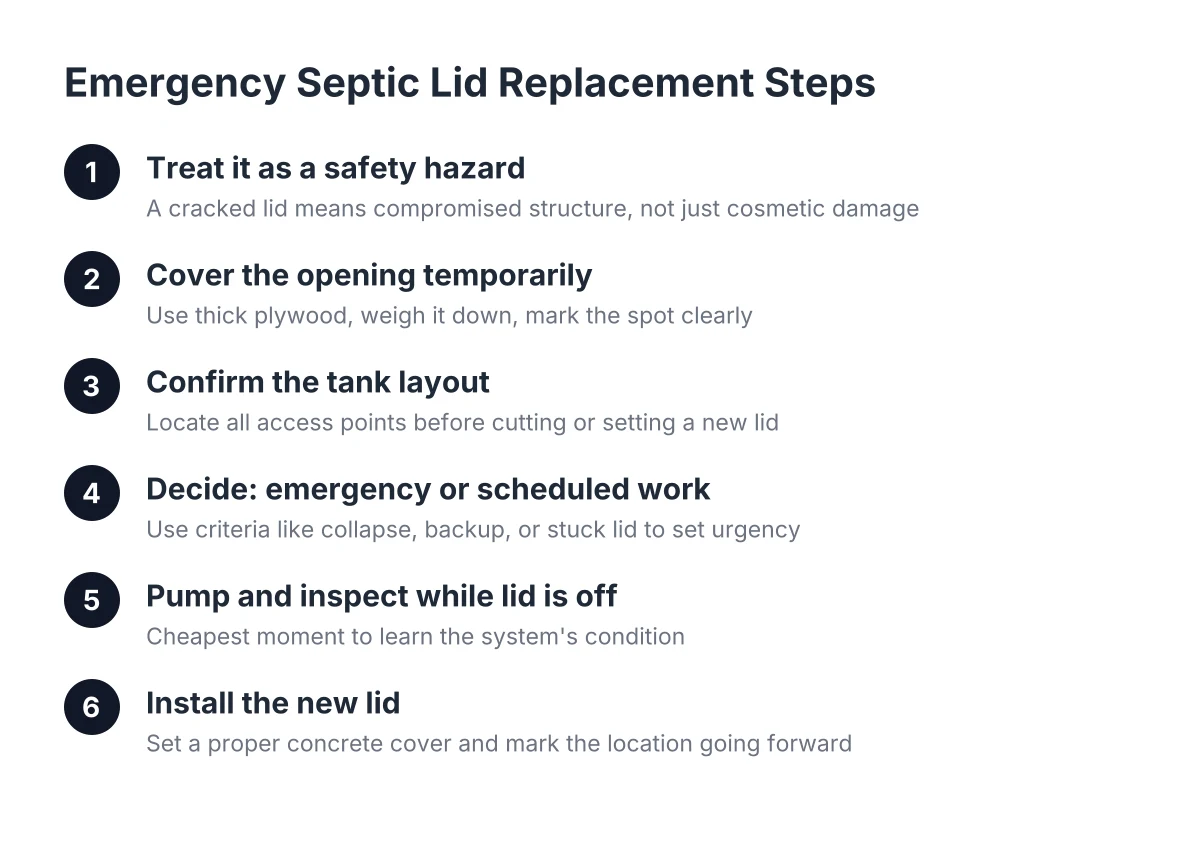
A cracked or missing septic tank cover is not a "get to it next month" problem. An emergency septic lid replacement exists as a service for one reason: an open or failing lid is a fall-in hazard, a gas leak point, and an open door for dirt and debris to enter your tank. If you just bought High Desert land with no septic records and found a crumbling concrete cover, or no cover at all, this guide walks you through exactly what to do, in order, until the lid is safely replaced.
This is written for the person who has already decided to fix it. You are not weighing options anymore. You need the hole covered safely today and a proper concrete lid installed as soon as the crew can get there.
Step 1: Treat the Broken Lid as a Safety Hazard, Not a Repair Item
First, understand what you are dealing with. A septic tank is a buried concrete box full of wastewater, and the lid is the only thing between the surface and a drop of several feet into liquid. A cracked lid, or a lid someone replaced with a rock, a board, or a trash can lid, can shift or collapse under the weight of a child, a pet, or an adult stepping on it.
Concrete lids are heavy but structurally fragile. Gas buildup inside the tank corrodes some lids from the inside, so a cover can look solid on top while it is brittle underneath. That is why a lid that "seems fine except for one crack" still counts as an emergency septic tank lid situation. The crack tells you the structure is compromised; you cannot see how far the damage goes.
Keep everyone away from the area right now. Rope it off, move vehicles, and keep kids and dogs on the other side of the yard until the opening is secured.
Step 2: Cover the Opening Temporarily and Correctly
Next, put a safe temporary cover over the tank opening. Do not balance the broken lid pieces back over the hole, and do not use a loose object like a rock or a plastic bin lid. Those dislodge easily, and a dislodged cover over an open tank is the single most dangerous condition a septic system can have on a residential lot.
Here is what a safe temporary cover looks like:
- A sheet of plywood at least 3/4 inch thick, large enough to overlap the opening by a foot on every side
- A thin layer of dirt or gravel on top of the plywood to weigh it down and keep it from sliding
- Something heavy on the corners if wind is a factor, which it often is in Hesperia
- A visible marker, like a stake or a cone, so nobody drives or mows over the spot
This is a bridge, not a fix. Plywood degrades, and it will not support a vehicle. It buys you a safe day or two until a proper concrete septic tank cover goes in.
Step 3: Confirm What You Actually Have Under the Ground
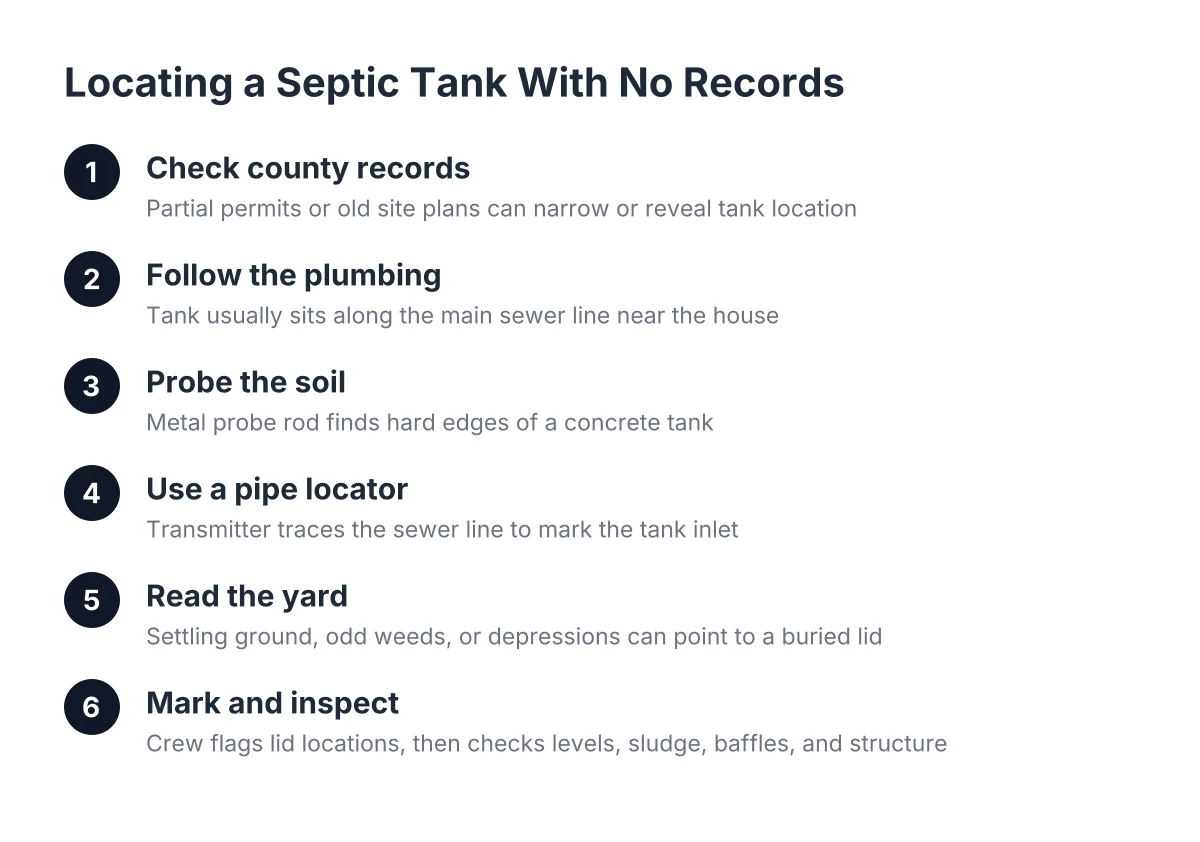
Before anyone can cut, cast, or set a new lid, you need to know the tank layout. This is the step that trips up land buyers with no records. If the previous owner left you nothing, you may not know whether the broken cover you found is the main access lid, a secondary compartment lid, or an old riser someone abandoned.
Septic tank shapes and configurations vary regionally; some areas use rectangular concrete tanks while others use circular tanks, according to the International Code Council. A rectangular tank in the High Desert often has more than one access opening. Finding one broken lid does not mean you have found the whole tank.
A septic tank locating service handles this. The crew traces the line from the house, probes carefully to find the tank edges, and marks every access point. Careful probing matters here: jabbing a probe rod straight down onto a lid with force can punch through a brittle cover and make the emergency worse. If you are probing yourself, work around the edges, not on top of the lid.
For example, suppose you just closed on two acres outside Hesperia with a 1970s house and zero septic paperwork. You find a cracked concrete disc near the back porch and assume that is the tank. A locate could show the disc is a cleanout cover, and the actual tank with its failing lid sits 30 feet away under a woodpile. Replacing the wrong cover would have left the real hazard untouched.
Step 4: Emergency Septic Lid Replacement or Scheduled Work
Now decide how fast this has to move. Not every damaged cover needs same-day work, but some do. Use these criteria:
- The tank is open or the cover has collapsed. This is an emergency. Secure it per Step 2 and get a crew out as fast as possible.
- The lid is cracked but intact and the tank is not backing up. Schedule the replacement promptly, keep the area roped off, and do not let anyone stand on the lid.
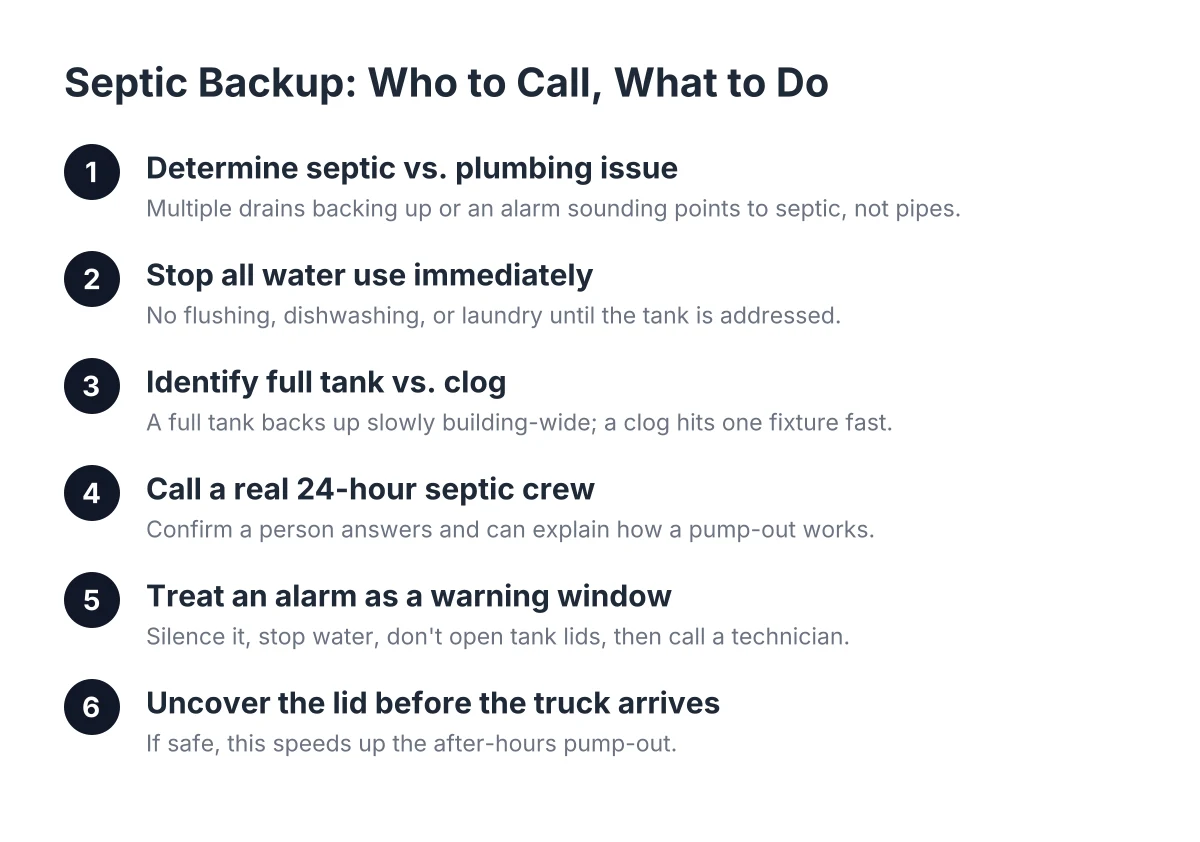
- Sewage is backing up into the house along with the lid damage. You need septic backup and overflow response, not just a new cover. The lid gets handled as part of the emergency pumping visit.
- The lid will not come off for a needed pump-out. Sometimes a corroded lid cannot be pried loose. In that case, breaking the old lid and replacing it with a new one is an accepted approach; it is destructive on purpose so the tank can be serviced.
If your situation is number 3, mention the backup when you call. A clogged inlet baffle is a common cause of septic backups and should be one of the first things checked when troubleshooting a blocked line into the tank, according to the Washington State Department of Health. The crew will want lid access to check it, which is another reason the cover work and the pumping usually happen in the same visit.
Step 5: Get the Tank Pumped and Inspected While the Lid Is Off
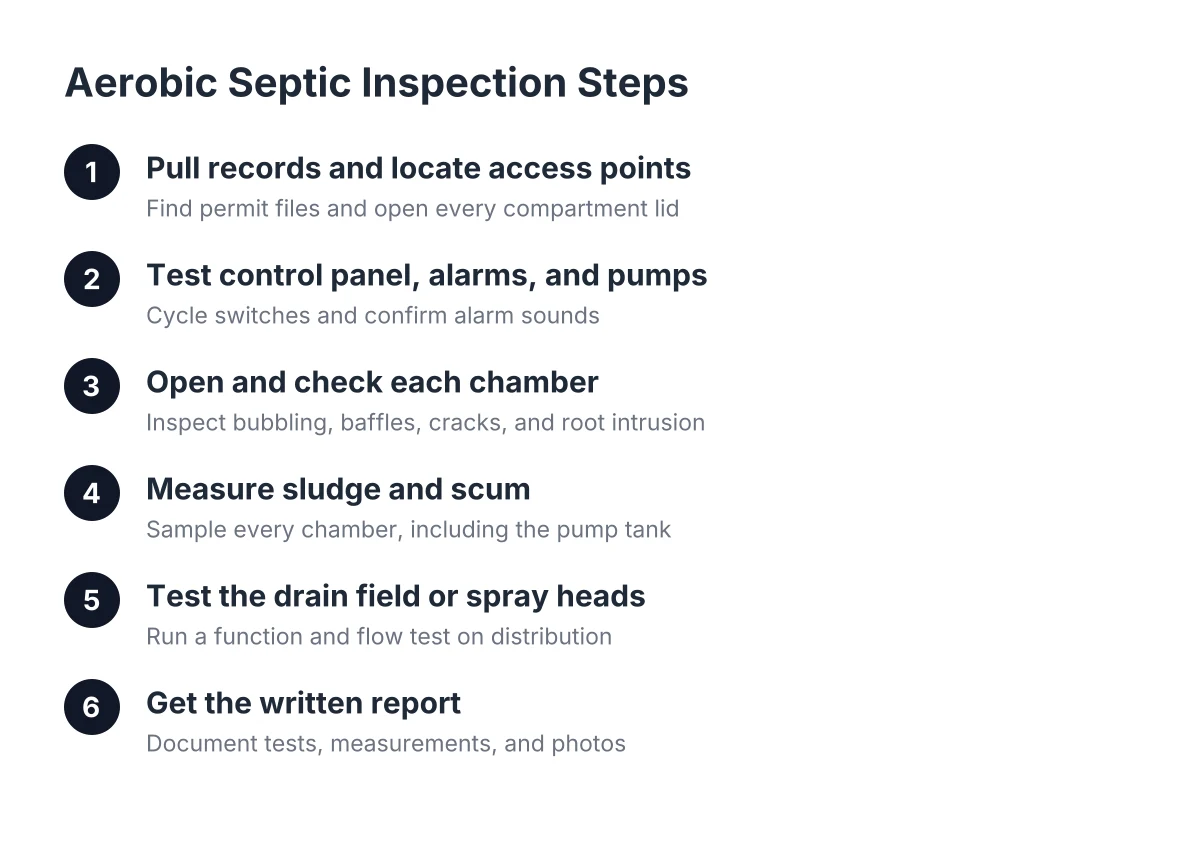
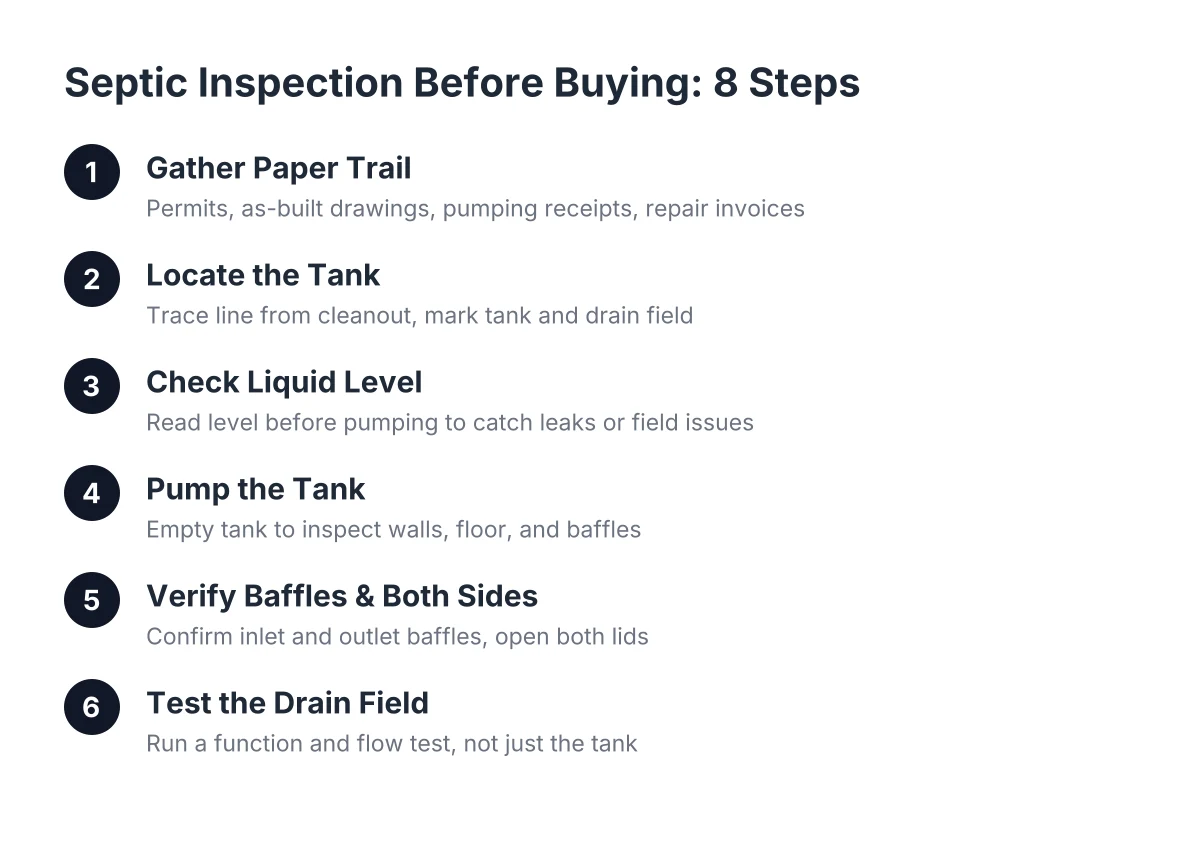
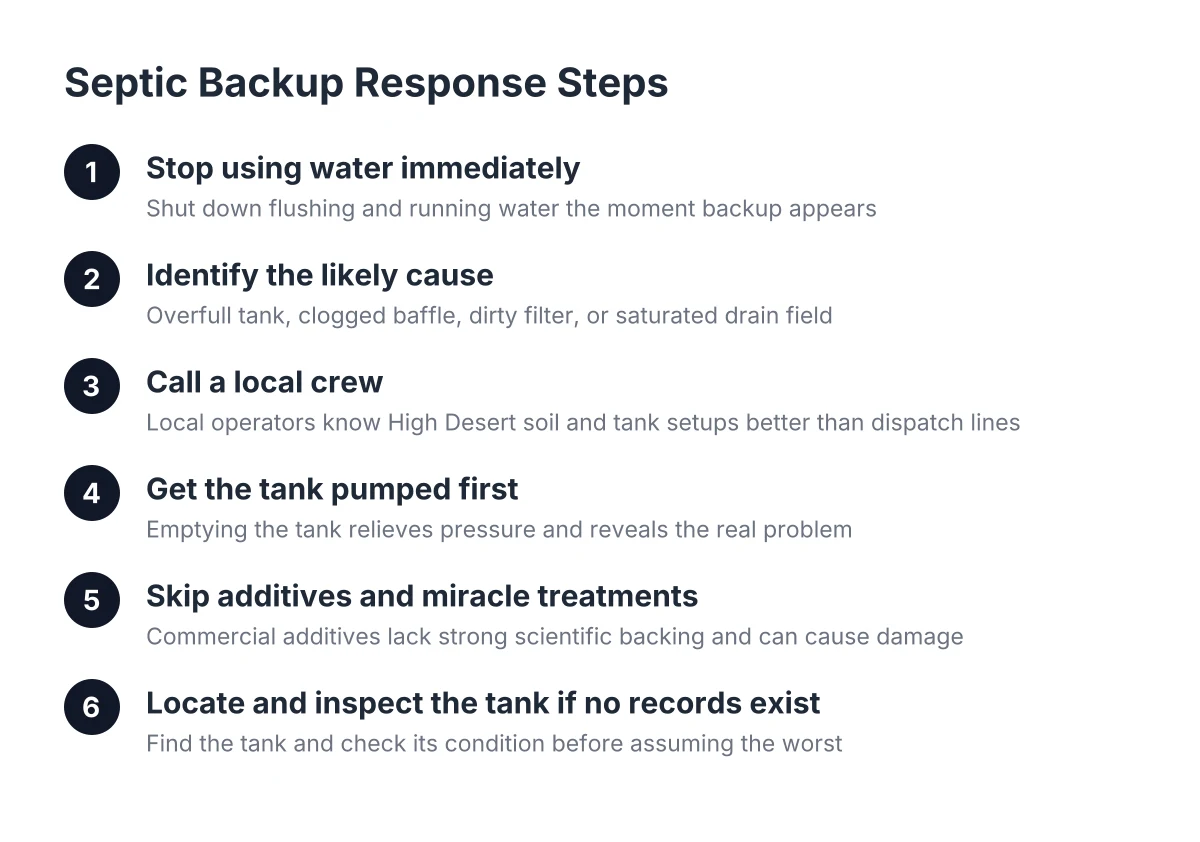
Once the old lid is off, the tank is open anyway. This is the cheapest moment you will ever have to learn the condition of a system you know nothing about. Have the tank pumped and inspected before the new lid goes on.
For a land buyer with no records, this single visit answers the questions that have been hanging over the purchase: how full the tank is, whether the baffles are intact, whether the walls show damage, and whether the outlet toward the drain field looks right. A properly built outlet sits lower than the inlet so only liquid, not floating solids, leaves toward the drain field, according to University of Nebraska-Lincoln Extension. An inspector can see that with the lid off.
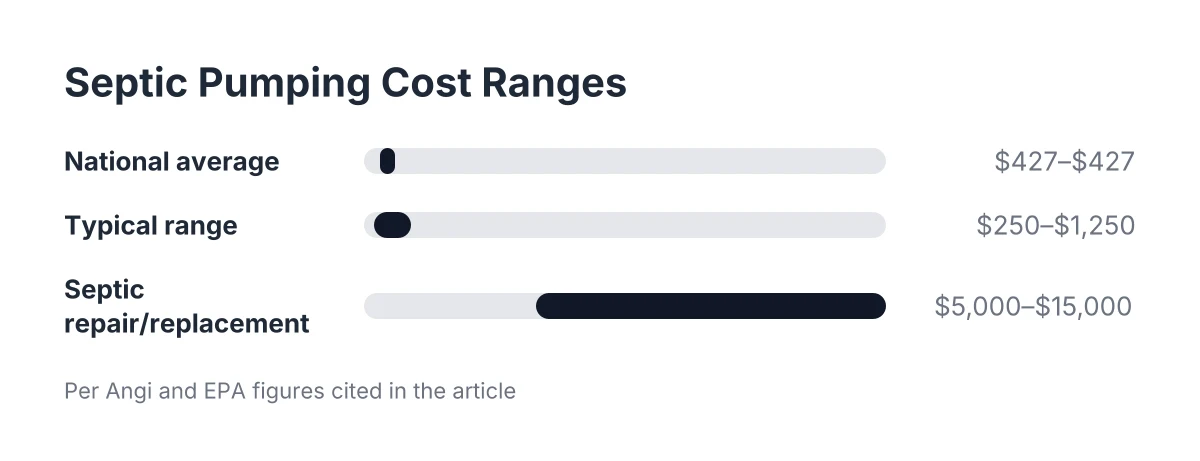
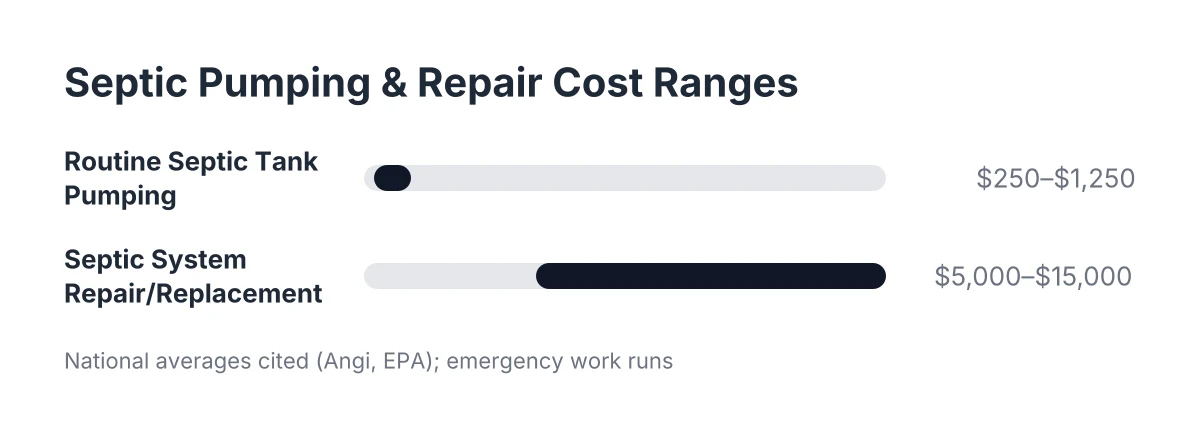
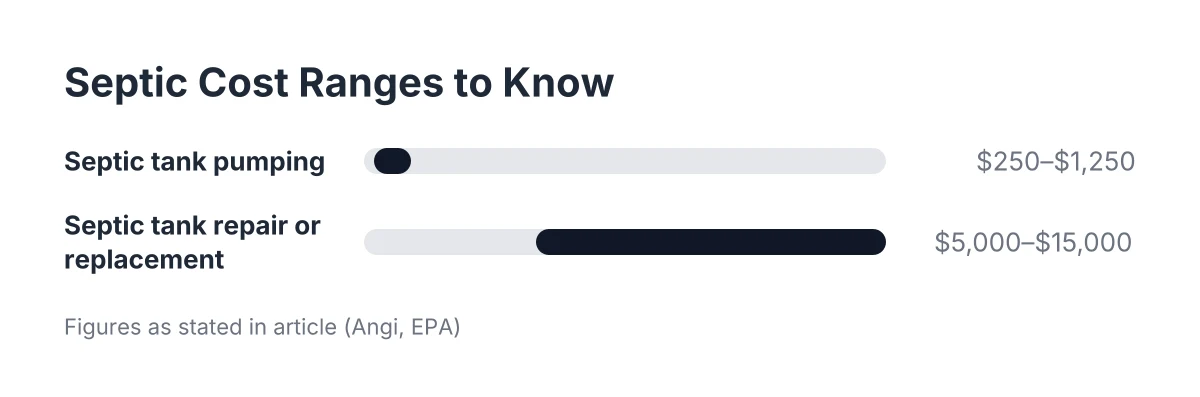
The cost math supports doing it now. According to Angi data, septic tank pumping averages $427, ranging from $250 to $1,250 or more depending on tank size and location. Compare that with the EPA estimate that septic tank repair or replacement typically runs $5,000 to $15,000. A pump-and-inspect while the tank is already open is a small line item next to the surprise of a failed system you did not check.
Ask for the findings in writing. If you are still in escrow, a written inspection report is what your lender or the county will want to see, and it gives you leverage if the system turns out to be in bad shape.
Step 6: Installing an Emergency Septic Tank Lid Replacement
The replacement itself is the fastest part. An emergency septic tank lid replacement means either fitting a precast cover sized to the opening or pouring a custom concrete lid to match an odd or older opening. Custom pours matter on older High Desert tanks, where openings do not always match modern precast sizes. Replacing just the lid this way costs far less than replacing the tank itself.
If your lid sits deep below grade, this is also the time to ask about a riser. A riser brings the access point up to ground level with a secure cover, so the next pump-out does not require digging. One trade-off to know: plastic riser lids with molded handles can snap when pulled, and screw mounting points wear over time, so a riser cover is a maintenance item too, not a forever part.
Whatever cover goes on, confirm it is fully secured before the crew leaves. Every screw or fastener goes back in so the lid cannot be dislodged by a curious kid or a shifting load of soil. Also confirm the fill around the lid and any pipe penetrations gets compacted; loose backfill settles and stresses the connections, a point installation guides from Onsite Installer stress for exactly this reason.
Step 7: Mark the Location and Set a Simple Maintenance Rhythm
Finally, do the thing the previous owner never did for you: record where everything is. Sketch the tank location, lid positions, and the line from the house. Measure from two fixed points, like house corners. Take photos before the dirt goes back. Future you, or a future buyer, will not have to hire a locate crew to find what you already uncovered.
Then put the system on a schedule. The EPA recommends a professional inspection at least once every three years for the average household, and once a year for systems with pumps, floats, or other mechanical parts. In addition, watch household water use; a single leaky or running toilet can push as much as 200 gallons of extra water per day into a septic system, according to the U.S. Environmental Protection Agency, and that kind of load shortens the life of everything downstream of your new lid.
When an Emergency Septic Lid Job Needs More Than a Cover
Sometimes the broken lid is a symptom, not the whole problem. If the crew finds a collapsed baffle, cracked tank walls, standing water over the drain field, or sewage surfacing in the yard, the fix goes beyond a new cover. At that point you need a full system assessment before spending more money, especially if you are mid-purchase and can still negotiate.
Skip the shortcut fixes while you sort it out. Additives marketed to dissolve sludge lack strong scientific backing, according to Washington State University Extension, and they will not repair a structural problem. A cracked cover and a struggling tank both come down to the same answer: get eyes on the system, get it pumped, and get a proper concrete lid set and secured. Anything less leaves an open hole in your yard and an open question over your property.
If you need your septic tank serviced, Hesperia Septic can help.
Prefer to talk it through? Call (760) 249-7872 — a quick call is usually the fastest way to get a straight answer for your situation.