Tag: aerobic septic system

  • How Much Does Septic Tank Cost?

    septic system cost

    How much does a septic tank cost? The honest answer depends on what your system needs, because septic system cost swings on three things: whether you need pumping, a repair, or a full replacement; the size and condition of your tank; and how hard it is to reach on your property. Anyone who quotes you a firm number before knowing those three things is guessing. This guide walks through each factor in plain language so you can tell which side of the price line you sit on. By the end, you will know exactly what to have ready to get a real number for your Hesperia property.

    What Drives the Cost of Septic Tank Pumping

    Scope: pumping, repair, or replacement

    This is the biggest fork in the road. Routine septic tank pumping is the low end of the scale. A repair to a lid, baffle, or pipe sits in the middle. Replacing a tank, or installing a new tank and leach field, is the expensive end because it involves excavation, materials, permits, and inspection. Before you assume the worst, read when pumping solves the problem versus when a repair is needed. Many backups and slow drains trace back to a full tank, not a broken one.

    Tank size and how full it is

    A bigger tank holds more waste, and more waste means more time and more disposal volume when the truck arrives. If your tank has gone years without service, the solids layer at the bottom takes longer to break up and remove, which adds labor. You can usually tell which side you are on by your service history. Regular pumping on a schedule keeps each visit at the routine end. A tank that has been ignored until it backed up will cost more to handle.

    Access and dig conditions

    The crew has to find your tank, uncover the lids, and get the truck's hose to it. A tank with risers at grade level, a clear driveway, and a short hose run is the cheap version. A tank buried under two feet of soil, hidden under a deck, or sitting far from where the truck can park pushes the price up. If you do not know where your tank is, septic tank locating is a service on its own, and it comes before any pumping can happen.

    Condition of the tank and drain field

    An aging concrete tank with a cracked lid, a failed baffle, or a leach field that no longer absorbs water changes the job entirely. A pumping visit can reveal these problems, which is one reason an inspection matters before you buy or sell a property. Material choice matters too when replacement is on the table. Our guide to concrete septic tanks and how they compare to plastic and fiberglass covers what each material means for lifespan and price.

    System type

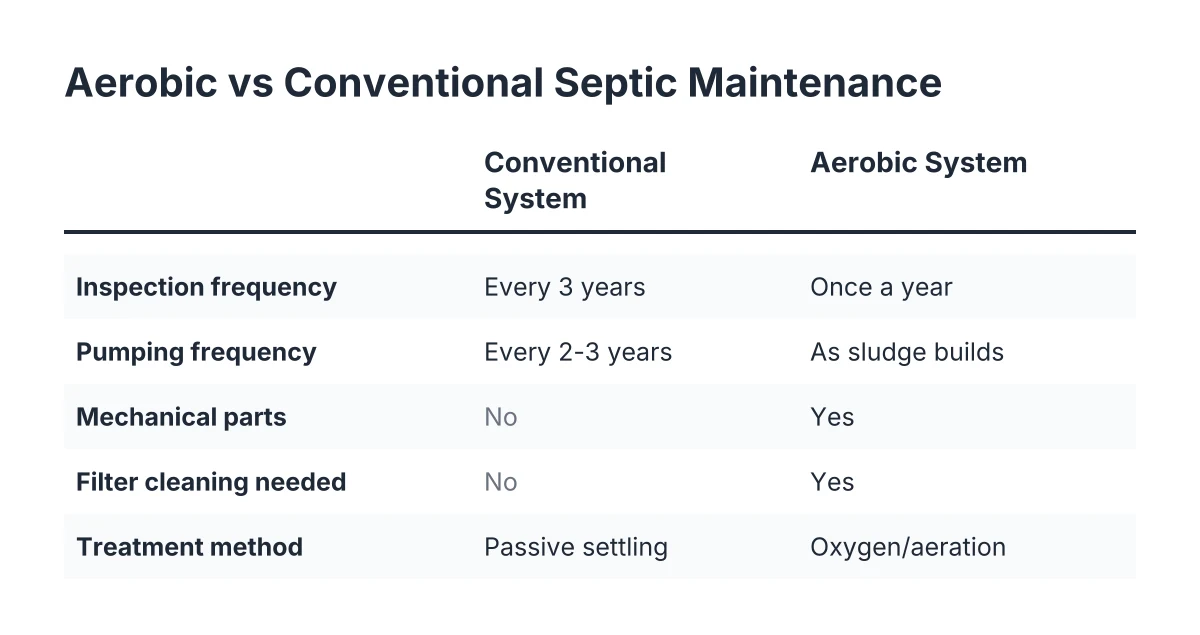
    A standard gravity septic system is the simplest and cheapest kind to install and maintain. An aerobic system, which uses a motor and air pump to treat waste more actively, costs more to install and more to keep running because it has mechanical parts that need service. If you are pricing a new install, the type of system your soil and county requirements allow will shape the number more than almost anything else. If you are comparing system styles from scratch, our breakdown of septic versus cesspool systems explains the tradeoffs.

    Timing and urgency

    An emergency call for a septic backup on a weekend costs more than a scheduled weekday pumping. Sewage in the house or standing in the yard forces the work to happen now, on the provider's overtime clock. If your system is merely due for service, scheduling ahead keeps you in the routine pricing tier and out of the emergency one.

    Cost Factor Table

    Factor Pushes the price down when… Pushes it up when…
    Scope of work The tank just needs routine pumping You need repairs, a new tank, or a full tank and leach field install
    Tank size and fill level The tank is average size and serviced on schedule The tank is large or has gone years between pumpings
    Access Lids are at grade and the truck parks close The tank is buried, hidden, or far from truck access
    Tank and field condition Tank and drain field are sound Baffles, lids, or the leach field need work
    System type It is a standard gravity system It is an aerobic system with pumps and motors
    Timing You schedule service ahead of trouble It is an emergency backup on a night or weekend

    How to Get an Accurate Septic Tank Estimate

    You do not need to be a septic expert to get a solid quote. You just need to hand the provider the right facts. Have these ready:

    • Tank location and access. Do you know where the lids are? Are they exposed or buried? How close can a truck get?
    • Service history. When was the tank last pumped? If you have no records, say so; that changes what the crew plans for.
    • Symptoms. Slow drains, gurgling, odors, wet spots in the yard, or a full backup all point to different scopes of work.
    • Property details. Number of bedrooms and bathrooms, and whether the home is your full-time residence or a rental.

    A good quote spells out what is included: pumping the tank, digging to reach lids, disposal of the waste, and a basic look at the tank's condition while it is open. It should also state what triggers extra charges. Estimates differ between providers because some quote a bare pumping price and add fees for digging, extra volume, or disposal later, while others fold everything into one number. That is why two quotes for the same job can look far apart on paper. Our guide to hidden fees septic companies charge in Hesperia shows the line items to ask about before anyone starts digging.

    The fastest way to a personalized number is the Septic Tank Pumping Cost Calculator. Answer a few questions about your tank and property and get an estimate built for your situation, not a generic figure.

    Ways to Keep the Cost Down

    Pump on a schedule, not after a backup. Routine pumping is the cheapest thing you will ever do for your septic system. Waiting until sewage backs up into the house converts a routine visit into an emergency call plus cleanup, and it can push solids into the drain field, where the expensive damage happens. Understanding the factors that drive septic tank cost helps you prioritize this preventative maintenance.

    Expose your own lids before the crew arrives. If you know where the tank is and you are able to dig, uncovering the lids yourself removes the digging labor from the bill. Ask first so you dig in the right spot.

    Get two or three itemized quotes. Not to grind the lowest bidder, but to see what each provider includes. A quote that lists digging, disposal, and inspection separately tells you more than a single vague number.

    Fix small problems while the tank is open. A cracked lid or a failing baffle costs less to handle during a pumping visit than as a separate trip later. Ask the crew what they see while the tank is exposed.

    Watch what goes down the drain. Grease, wipes, and heavy garbage disposal use fill a tank faster and stress the drain field. Slower fill means longer stretches between pumpings and a leach field that lasts.

    Cost Questions People Ask

    What does septic tank replacement cost?

    Replacement is the top of the price scale because it means excavation, a new tank, permits, and inspection, and often new plumbing connections. The final number depends on tank material, tank size, soil conditions, and how deep the crews have to dig. Before budgeting for replacement, get the tank inspected; some "failed" tanks just need pumping and a repair.

    What does it cost to install a septic tank and leach field?

    A full install is priced by the whole system, not just the tank. The leach field is often the larger share because it requires soil testing, trenching, and enough yard space to lay the lines. Lot size, soil drainage, and county permit requirements in the High Desert all move the number, so an on-site evaluation is the only way to get a real figure.

    How much does an aerobic septic system cost compared to a standard one?

    More, both upfront and over time. An aerobic system adds an air pump, a motor, and sometimes a spray or drip distribution setup, and those parts need ongoing service. Standard gravity systems have no moving parts, which is why they stay cheaper for the life of the system. Aerobic systems earn their keep on lots where soil or space rules out a conventional leach field.

    Why do septic quotes vary so much between companies?

    Because they are not always quoting the same job. One company's number may cover pumping only, while another includes digging to the lids, disposal fees, and a condition check. When you compare quotes, compare the line items, not just the totals. The lowest headline septic tank cost can end up the highest bill once the add-ons land.

    The Bottom Line

    Your price comes down to scope, tank size and access, and how urgent the job is, and no honest provider can name a number without those facts. Gather two or three itemized quotes, ask what each one includes, and use the Septic Tank Pumping Cost Calculator to get a number matched to your property. A scheduled pumping today is the cheapest version of this job you will ever see.

    If you need your septic tank serviced, Hesperia Septic can help.

    Related Reading

  • How Much Does Septic System Replacement Cost?

    septic system replacement cost

    Septic system replacement is one of the bigger checks a homeowner will ever write, and the honest answer is that no page on the internet can tell you your number without seeing your property. Your septic system cost hinges mostly on three things: how big the system needs to be, what kind of soil sits under your yard, and whether you need a full replacement or just a new drain field. Anyone quoting a firm price before checking those things is guessing. By the end of this guide, you will know exactly what drives the price, what a real quote should include, and how to get an accurate number for your own property.

    What Drives the Septic System Cost

    Every septic system replacement quote comes down to a handful of real, physical factors. Here are the ones that matter most.

    System size

    A septic tank and drain field are sized to the home they serve. More bedrooms and more bathrooms mean more wastewater, which means a bigger tank and a larger drain field. Bigger components mean more material, more digging, and more labor. If you live in a two-bedroom house, you are on the cheaper side of this factor. A five-bedroom home with a big family pushes the price up. Local rules usually set the minimum size based on bedroom count, so this is not something you can shrink to save money.

    Soil and site conditions

    The drain field only works if the soil can absorb water. Before a new system goes in, most areas require a soil test, often called a perc test, to measure how fast water drains through your ground. Sandy soil that drains well keeps the system simple and the price lower. Heavy clay, rock, or a high water table can force a larger drain field or a different system design, and that raises the cost. Here in the High Desert around Hesperia, soil varies from lot to lot, so a test on your property is the only way to know which side of this factor you are on.

    System type: conventional vs. aerobic

    A conventional gravity system is the simplest setup: wastewater flows from the tank to the drain field on its own. When the site allows it, this is usually the least expensive option. If your soil or lot cannot support a conventional system, you may need an aerobic septic system, which uses a motor to add air and treat wastewater more aggressively. Aerobic septic system cost runs higher because the equipment is more complex and it needs electricity and ongoing maintenance. Your soil test and local health department rules will tell you which type you need.

    Full replacement vs. partial replacement

    Sometimes the tank fails but the drain field is fine. Sometimes it is the other way around. Replacing only the failed part costs less than the cost to install septic tank and leach field together as a full system. An inspection can tell you what actually failed. A tank that is cracked or collapsing needs replacement, but a drain field that is soggy or backing up might be saturated, clogged, or truly dead. Knowing which parts still work is the difference between a partial job and a full one.

    Access and excavation

    Replacement means heavy equipment digging in your yard. An open, easy-to-reach yard keeps the work fast. A tank buried under a driveway, patio, mature landscaping, or a tight side yard adds demolition, hand digging, or specialty equipment, and every one of those adds to the bill. Walk your property and ask yourself: could an excavator drive straight to the tank and drain field area? If yes, you are on the cheaper side.

    Permits and inspections

    A septic replacement requires permits, a design that meets county health requirements, and inspections along the way. Permit costs vary by county and by system type, and an engineered design for a difficult lot costs more than a standard layout. This is not a corner to cut. A system installed without permits can block a home sale later and may have to be dug up and redone.

    Cost Factor Table

    Factor Pushes the price down when… Pushes it up when…
    System size The home has fewer bedrooms and bathrooms The home is large or household water use is heavy
    Soil conditions Soil drains well and passes the perc test easily Soil is clay, rocky, or the water table is high
    System type A conventional gravity system works on your lot The site requires an aerobic or engineered system
    Scope of work Only the tank or only the drain field needs replacing The whole system has failed and must be rebuilt
    Site access Equipment can reach the work area easily The tank sits under concrete, landscaping, or a tight yard
    Permits and design A standard design meets county requirements The lot needs an engineered plan and extra inspections

    How to Get an Accurate Septic System Cost Estimate

    The fastest way to a real number is to give an estimator real information. Before you call anyone, gather what you can:

    • Your system's history. When was the tank last pumped? Have you had backups, slow drains, or wet spots over the drain field? How old is the system, if you know?
    • Property records. Some counties keep a record of the original septic permit, which shows the tank location, tank size, and drain field layout. That saves the estimator time and guesswork.
    • What failed. If you have had an inspection or a septic tank pumping visit recently, share what the crew found. A pumped and inspected tank tells an estimator far more than a description over the phone.

    A good replacement quote should be written, not verbal, and it should spell out the tank size and material, the drain field size and layout, permit and design fees, excavation, and cleanup. If a quote is one line with one number, ask what it covers.

    Estimates differ between providers for real reasons: different assumptions about your soil, different system designs, and different levels of included work. One quote might include restoring your yard afterward while another leaves you with a dirt field. Compare the scope, not just the bottom line.

    For a quick, personalized starting point on the service side, try the Septic Tank Pumping Cost Calculator. It gives you a number based on your situation instead of a generic figure, and pumping plus inspection is often the first step in figuring out whether you need a replacement at all.

    Ways to Keep the Cost Down

    You cannot control your soil, but you can control how you approach the project.

    • Confirm the diagnosis before you commit. A septic backup does not always mean a dead system. A full tank, a clogged line, or a saturated drain field can mimic total failure. A septic tank pumping and inspection is a small expense compared to replacing a system that could have been saved.
    • Replace only what failed. If the inspection shows the tank is sound but the drain field is done, ask for a quote on the drain field alone. Do not let anyone bundle a full replacement without explaining why each part needs to go.
    • Get two or three written quotes. Prices vary between contractors, and so does what they include. Comparing detailed quotes protects you from both overpaying and from a lowball bid that grows once the digging starts.
    • Do not wait for the emergency. A system replaced on your schedule costs less stress and often less money than one replaced after sewage backs into the house. If your system is showing warning signs, start getting quotes now while you can still plan.
    • Protect the new system. Regular septic tank pumping and sensible water habits are the cheapest insurance there is. The most expensive septic system cost is the second replacement you pay for because the first system was neglected.

    Cost Questions People Ask

    Is the cost of septic tank replacement different from replacing the whole system?

    Yes. Replacing just the tank is a smaller job than replacing the tank plus the drain field. The drain field usually involves more digging and more area, so a full system replacement costs meaningfully more than a tank swap. An inspection tells you which job you are actually facing.

    Why does aerobic septic system cost more than a conventional system?

    An aerobic system uses a motor and air pump to treat wastewater, while a conventional system relies on gravity and soil. The extra equipment costs more to buy and install, needs electricity, and requires ongoing maintenance. You typically only need one if your soil or lot cannot support a conventional drain field.

    Does homeowners insurance cover septic replacement?

    Usually not for normal wear, age, or neglect, which is how most systems fail. Some policies cover sudden, specific damage, so it is worth a call to your insurer. Do not count on insurance in your budget; plan as if you are paying out of pocket, then treat any coverage as good news.

    Can I just keep pumping the tank instead of replacing the system?

    Sometimes, for a while. If the drain field is saturated but not destroyed, frequent septic tank pumping can buy time and let the field rest. But if the system has truly failed, pumping becomes a recurring band-aid, and the money adds up fast. A crew that pumps and inspects your tank can tell you which situation you are in.

    The Bottom Line

    Your septic system cost depends on your home's size, your soil, the type of system your lot requires, and how much of the old system can be saved. Nobody can give you an honest number without looking at your property, so gather your system's history, get two or three detailed written quotes, and start with the Septic Tank Pumping Cost Calculator if you want a quick read on the first step. The homeowners who pay the least are the ones who diagnose before they dig.

    If you need your septic tank serviced, Hesperia Septic can help.

    Prefer to talk it through? Call (760) 249-7872 — a quick call is usually the fastest way to get a straight answer for your situation.

    Related Reading

  • How Much Does Septic System Troubleshooting Cost?

    septic system cost

    There is no single honest answer to the question of septic system cost, because the price depends on what is actually wrong. A tank that just needs pumping is a different job than a drain field that has stopped taking water, and the gap between those two bills is wide. The three things that move the price most are what the problem turns out to be, how hard your tank is to reach, and whether you are calling on a normal schedule or in the middle of a backup. This guide walks through each of those factors in plain terms, so by the end you will know exactly what to tell a septic company to get a real number for your Hesperia property instead of a guess.

    What Drives the Septic System Cost of Troubleshooting

    Septic pricing is not random. When a crew quotes your job, they are weighing a handful of specific things. Here are the ones that matter.

    What the problem actually is

    This is the biggest lever by far. Slow drains and a sewage smell can mean a full tank that needs septic tank pumping, a clogged line, a failed baffle, or a drain field that is saturated and done. Pumping and cleaning sit at the low end of the scale. Repairs to tank components cost more. A full replacement of the tank or the leach field is the expensive version, and it is a different category of project entirely. You can get a rough read on which side you are on by the symptoms: if the problem started suddenly and the tank has not been pumped in years, pumping may solve it. If water pools over the drain field or the problem keeps coming back after pumping, you are likely looking at something bigger. An inspection tells you for sure, which is why troubleshooting usually starts there.

    How accessible your tank is

    Every septic job starts with finding and opening the tank. If your lids are at grade and you know where they are, the crew gets to work fast. If the tank is buried under two feet of soil, a patio, or landscaping, someone has to locate it and dig it up first, and that labor goes on the bill. Additionally, if you have no idea where your tank is, septic tank locating is its own step. Walk your yard before you call. If you can point to the lids, say so; it makes your quote tighter and cheaper.

    Emergency timing versus scheduled service

    A backup on a Saturday night costs more to fix than the same problem handled on a scheduled weekday visit. Emergency septic pumping means a crew drops what it is doing and comes out, and that urgency is priced in. You do not always get to choose; sewage backing into a tub is not a wait-until-Tuesday problem. But if your symptoms are early, slow drains, gurgling, a smell in the yard, calling before it becomes an overflow keeps you on the cheaper side of this line.

    Tank condition and how long it has been

    A tank pumped on a regular schedule empties fast. A tank that has been neglected for many years builds up a hardened layer of solids that takes extra time and effort to break up and remove, which is where septic tank cleaning goes beyond simple pumping. If you cannot remember the last time your tank was pumped, budget for the more involved version. If you have receipts from a service in recent memory, say so when you call.

    How much diagnosis the job needs

    Sometimes the problem is obvious. Sometimes it takes a septic system inspection to figure out whether the issue is in the tank, the line between the house and the tank, or the drain field. Diagnostic work adds cost up front, but it is usually money well spent because it keeps you from paying for the wrong fix. Guessing wrong on a septic problem is far more expensive than an inspection.

    Whether repair or replacement is on the table

    Queries like "cost of septic tank replacement" and "cost to install septic tank and leach field" describe a different project than troubleshooting. Replacement involves excavation, permits, materials, and sometimes soil testing, and each of those adds cost that a pump-out never touches. An aerobic septic system cost question is bigger still, since aerobic systems add mechanical components a conventional gravity system does not have. The honest news: most septic problems do not end in replacement. Get the system inspected before you assume the worst.

    Cost Factor Table

    Factor Pushes the price down when… Pushes it up when…
    Nature of the problem The tank just needs pumping or cleaning The drain field or tank itself has failed
    Tank access Lids are exposed and you know where they are The tank must be located and dug up
    Timing You schedule service before a crisis You need emergency response for a backup or overflow
    Tank condition The tank has been pumped on a regular schedule Solids have hardened after years of neglect
    Diagnosis needed Symptoms clearly point to one cause The crew must inspect and test to find the failure
    Repair vs. replacement A component fix restores the system The tank or leach field needs full replacement

    How to Get an Accurate Septic System Cost Estimate

    Phone estimates for septic work are educated guesses until someone sees your system. But you can make that guess much sharper by having the right information ready when you call.

    Before you pick up the phone, gather what you can:

    • Your symptoms, specifically. Slow drains in one bathroom is different from sewage in the yard. Describe what you see, where, and when it started.
    • Tank location, if you know it. Point to the lids or the general area. If you have no idea, say that too, so locating is quoted up front instead of appearing as a surprise line item.
    • Service history. When was the tank last pumped? Even a rough year helps.
    • Property details. Home size, number of people living there, and anything sitting on top of where the tank might be, like a deck or driveway.

    A good quote should tell you what is included and what is not. Ask whether the price covers digging to reach the lids, whether locating is extra, what happens to the price if the tank needs cleaning beyond a standard pump-out, and what an inspection costs if the pump-out does not solve the problem. A quote that answers those questions is worth more than a lower number that answers none of them.

    Estimates differ between providers for real reasons: different disposal costs, different equipment, different assumptions about your tank. That is why two or three quotes beat one. When the quotes disagree, ask each company what they assumed. The one that asked you the most questions before quoting is usually the one that priced your actual job instead of a generic one.

    Ways to Keep the Cost Down

    You cannot coupon your way out of a septic problem, but you can avoid paying the expensive version of it.

    • Call at the first symptom, not the flood. Slow drains and gurgling are your warning window. Scheduled septic tank pumping costs less than an emergency call for a backup, and it may prevent the backup entirely.
    • Keep your tank on a pumping schedule. Regular septic tank service and maintenance is the single cheapest thing in this entire guide. It prevents the hardened buildup that makes cleaning harder, and it protects the drain field, which is the part you least want to replace.
    • Know where your tank is. Mark the lids or keep a sketch of the location. Every future service call gets faster and cheaper when the crew is not hunting for your tank.
    • Get two or three quotes for anything beyond routine pumping. For a repair or replacement, quotes can vary a lot. Comparing them costs you nothing but a few phone calls.
    • Pay for an inspection before a big repair. A septic system inspection that confirms the real problem protects you from paying for a fix that does not fix anything.

    Cost Questions People Ask

    What does septic tank cost mean for pumping versus replacement?

    They are different questions with different answers. Pumping is routine service: a truck, a crew, and a few hours. Replacement means excavation, a new tank, permits, and often drain field work, so it lands in a much higher bracket. When you search "septic tank cost," decide first which problem you actually have, and let an inspection settle it if you are not sure.

    Why does the cost to install septic tank and leach field vary so much?

    Because the ground itself is part of the price. Soil type, lot layout, local permit requirements, and how well your soil absorbs water all change the design and the labor. Two neighbors in Hesperia can get different quotes for the same reason two lots can have different soil. The only accurate number comes from someone who has looked at your property.

    Is an aerobic septic system cost higher than a conventional one?

    Generally yes, because aerobic systems add mechanical parts, an air pump and treatment components, that a conventional gravity system does not have. Those parts also mean ongoing maintenance a basic tank never needs. Whether you need one usually comes down to your soil and local requirements, not preference, so ask during your site evaluation.

    Will pumping my tank fix a backup?

    Sometimes, and it is usually the right first step. If the tank was simply full, pumping solves it. If the backup returns quickly after pumping, the problem is likely downstream in the line or the drain field, and pumping alone will not cure it. A crew that pumps your tank can usually tell you a lot about what they see inside, which points to the next step.

    The Bottom Line

    The honest septic system cost picture is this: routine septic tank pumping is affordable and predictable, repairs cost more, and replacement is the expensive outcome that regular maintenance exists to prevent. You cannot know which category you are in from a search result; you know it from an inspection of your actual tank. Get two or three quotes, have your symptoms and tank location ready when you call, and act while the problem is still small.

    If you need your septic tank serviced, Hesperia Septic can help.

    Related guide: septic system troubleshooting — Complete Guide

    Related Reading

  • How Much Does Septic Tank Pumping Cost?

    cost of septic tank replacement

    If you searched for septic tank cost or the cost of septic tank replacement, you have probably seen pages full of made-up averages. We will not do that here. What you pay for septic tank pumping in Hesperia hinges on a few real things: the size and condition of your tank, how hard it is to reach, and whether you are calling for routine service or an emergency backup. By the end of this page you will know exactly which of those factors apply to your property and how to get an accurate number from a local crew instead of guessing.

    What Drives the Cost of Septic Tank Replacement and Pumping

    No two septic calls are the same. Here are the factors that move the price on real jobs, and how to tell which side of each one you are on.

    Tank size and how full it is

    A bigger tank holds more waste, and more waste means more time on site and more volume to haul away. That raises the price. If you do not know your tank size, check your home's original permit paperwork or a past pumping receipt. If the tank is overfull or has been neglected for years, expect the job to take longer than a routine pump-out, which also pushes the cost up.

    How easy the tank is to reach

    The truck has to park close enough for the hose to reach your tank, and the crew has to get to the access lid. A tank with an exposed riser near the driveway is the cheap end of this factor. A tank buried under two feet of dirt, hidden under a deck, or sitting far from where a truck can park costs more. If nobody knows where your tank is, septic tank locating adds a step before pumping can even start. Walk your yard before you call. If you can point to the lid, you are on the low side.

    Routine service versus a septic backup

    Scheduled septic tank pumping on a system that is working is the least expensive version of this service. A septic backup or overflow is the expensive version. Emergency septic pumping often happens after hours or on weekends, the crew is working around sewage instead of a calm yard, and there may be cleanup and inspection work on top of the pumping itself. If your drains are still flowing, you are on the cheaper side. If sewage is coming up in the tub, you are not.

    Condition of the system

    Pumping empties the tank. It does not fix a cracked tank, a failed baffle, or a saturated drain field, which is the underground area where wastewater soaks into the soil. If an inspection during pumping finds damage, repairs are a separate cost. In the worst case, the conversation shifts from pumping to the cost of septic tank replacement, which is a different job entirely: excavation, a new tank, possibly a new leach field, and permits. Regular pumping is what keeps you on the cheap side of this factor.

    Extra work beyond the pump-out

    Some visits are pumping only. Others include septic tank cleaning, where the crew washes down solids stuck to the tank walls, or a full septic system inspection. Grease trap pumping and RV or holding tank pumping are separate services with their own scope. More scope means more time, and more time means a higher bill. Decide what you actually need before you call, and say so.

    Local site conditions

    Hesperia and the High Desert have their own soil, lot sizes, and driveway layouts. Long rural driveways, soft sand where a heavy truck can get stuck, and deep-set tanks all add difficulty. A local crew that works these properties can look at your setup and price it accurately instead of quoting a generic figure that falls apart on site.

    Cost Factor Table

    Factor Pushes the price down when… Pushes it up when…
    Tank size and fill level The tank is standard size and pumped on a regular schedule The tank is large, overfull, or has gone years without service
    Access The lid is exposed or shallow and the truck can park nearby The tank is deeply buried, hidden, or far from truck access
    Type of call It is scheduled, routine septic tank pumping It is an emergency backup or overflow, especially after hours
    System condition The tank and drain field are healthy Damage turns up and repairs or replacement enter the picture
    Scope of work You need a straightforward pump-out only You add cleaning, inspection, locating, or grease trap service
    Site conditions The property has firm ground and easy layout Soft sand, long driveways, or tight spots slow the crew down

    How to Get an Accurate Cost of Septic Tank Replacement Estimate

    The fastest way to a real number is a short phone call with the right details ready. Here is what to gather first:

    • Tank location. Do you know where the lid is? Is it exposed, or buried?
    • Tank size, if you know it. Check permit records or an old pumping receipt.
    • Last service date. A tank pumped three years ago prices differently than one nobody has touched in fifteen.
    • What is happening right now. Routine maintenance, slow drains, or active septic backup?
    • Property access. Can a pump truck get within hose reach of the tank?

    A good quote should tell you what is included: the pumping itself, whether disposal of the waste is covered, whether a basic inspection comes with it, and what would count as extra. Ask directly. If a company will not say what is in the price, that is your answer about how the final invoice will go.

    Estimates differ between providers for real reasons. Some quote a base price and add fees for digging, locating, or extra volume. Others build those into one number. Neither approach is wrong, but you cannot compare quotes until you know what each one covers. Get the scope in writing, even if it is just a text message or email listing what the price includes.

    Ways to Keep the Cost Down

    You cannot control your soil or your tank size, but you can control these:

    1. Pump on a schedule, not in a crisis. Routine septic tank pumping is the cheap version of this service. Emergency septic pumping after a backup is the expensive version, and it often comes with cleanup on top. Regular service is the single biggest lever you have.

    2. Know where your tank is before the truck arrives. If the crew has to spend an hour locating and digging to the lid, you pay for that hour. Find the lid, mark it, and consider installing a riser so future visits start faster.

    3. Get two or three quotes with the same scope. Tell each company the same details and ask what is included. Comparing a bare pump-out price against an all-in price tells you nothing. Comparing like for like tells you a lot.

    4. Do not put off small problems. Slow drains and wet spots over the drain field are early warnings. Catching a failing component early keeps you in repair territory. Ignoring it long enough puts you into the cost of septic tank replacement, which no amount of quote shopping makes cheap.

    5. Watch what goes down the drain. Grease, wipes, and heavy garbage disposal use fill a tank with solids faster. Slower buildup means fewer pump-outs over the life of the system.

    Cost Questions People Ask

    Why can't anyone give me a septic system cost over the phone?

    An honest company can give you a ballpark once they know your tank size, access, and situation, but the final number depends on what they find on site. A tank that turns out to be buried deeper than expected, or fuller than described, changes the work. Companies that quote one firm price sight unseen tend to make up the difference with add-on fees later.

    Is the cost to install septic tank and leach field the same as pumping?

    No, they are different jobs by an order of magnitude in scope. Pumping empties and services your existing tank. Installing a new septic tank and leach field means excavation, materials, permits, and inspections, and it is what you face when a system fails for good. Regular pumping exists to keep you away from that job for as long as possible.

    Does an aerobic septic system cost more to service?

    Aerobic systems, which use air to break down waste faster than a standard tank, have more parts: pumps, aerators, and sometimes sprinklers. More parts mean more things to inspect and maintain, so ongoing service usually costs more than a basic gravity system. If you have one, tell the company when you call so the quote reflects the right system.

    Will pumping fix my septic backup?

    Sometimes. If the backup happened because the tank is full, pumping solves it. If the real problem is a clogged line, a failed baffle, or a saturated drain field, pumping buys you time but the symptom comes back. That is why a backup call often includes an inspection, so you find out whether you are done or whether there is a repair conversation ahead.

    The Bottom Line

    Septic tank pumping prices come down to tank size, access, and whether you called before or after the backup. Skip the pages of invented averages, gather your tank details, and get two or three written quotes with the same scope so you can compare them honestly. If you are in Hesperia or the surrounding High Desert, a quick call with your property details is the fastest path to a real number.

    If you need your septic tank serviced, Hesperia Septic can help.

    Related Reading