If you own a home on septic in Hesperia, or you're about to buy one, the jargon piles up fast. This septic system troubleshooting glossary breaks down the terms you'll hear from inspectors, pumpers, and real estate agents into plain English. Use it to understand a quote line by line, describe your problem clearly on the phone, and spot warning signs before they turn into a backup in your yard. Every entry here takes less than thirty seconds to read.
- Septic Tank
- Drain Field
- Baffle
- Effluent
- Riser
- Inlet and Outlet Pipes
- The 3 Types of Septic Systems
- Aerobic Treatment Unit
- Septic Backup
- Sludge and Scum Layers
- Root Intrusion
- Hydraulic Overload
- Drain Field Failure
- Maintenance Tasks in a Septic System Troubleshooting Plan
- Septic Tank Cleaning
- When a Septic System Troubleshooting Inspection Is Required
- Tank Locating
The Parts of Your System
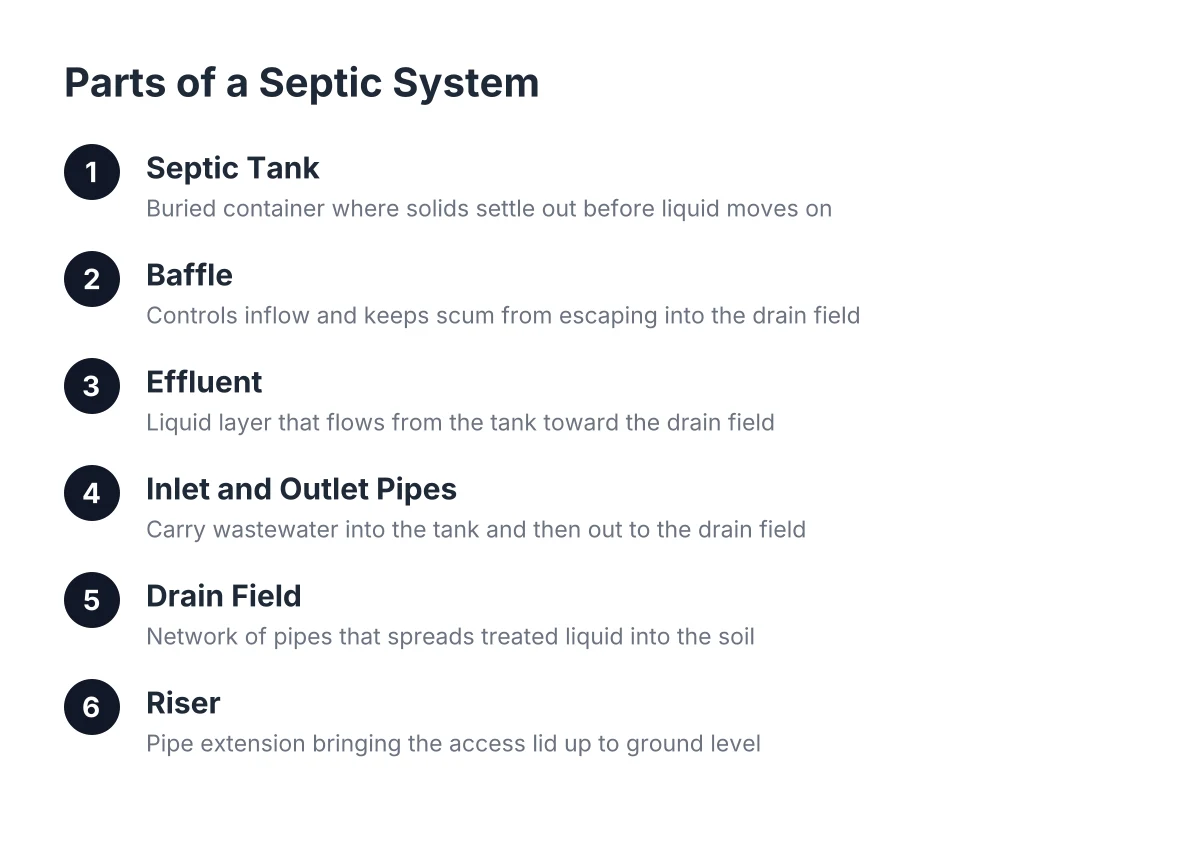
Septic Tank
A septic tank is a buried, watertight container that holds all the wastewater leaving your house so solids can settle out before the liquid moves on. Heavy solids sink to the bottom as sludge, grease floats to the top as scum, and the liquid in the middle flows out to the drain field. The tank does not make waste disappear; it stores solids until septic tank pumping removes them. If a provider says your tank is "at capacity," they mean the solids have built up enough to push into places they should not go.
Drain Field
A drain field is the network of buried pipes or trenches that spreads treated liquid from your septic tank into the soil. It is also called a leach field or absorption field, and it is usually the most expensive part of the whole system to replace. Soggy grass, standing water, or a sewage smell over this area often means the field is failing or the tank is overdue for pumping. Protecting the drain field is the main reason regular septic tank pumping matters.
Baffle
A baffle is a fitting inside the septic tank that controls how wastewater flows in and out. The inlet baffle slows incoming water so it does not stir up settled solids, and the outlet baffle keeps floating scum from escaping into the drain field. A broken or missing outlet baffle lets solids reach the drain field, which can clog it. If an inspection report flags a damaged baffle, ask whether it can be repaired at the same visit.
Effluent
Effluent is the liquid wastewater that flows out of the septic tank toward the drain field after the solids have settled out. It is not clean water, but it is clear enough for the soil to finish treating it. When a pro talks about "effluent levels" or an "effluent filter," they are talking about this liquid layer in the middle of your tank. Cloudy or solid-heavy effluent is a sign the tank needs attention.
Riser
A riser is a pipe extension that brings the septic tank's access lid up to ground level. Without one, a crew has to dig down to the buried lid every time they pump, which adds labor to every visit. If a quote includes installing a riser, that is a one-time cost that makes every future septic tank pumping faster and cheaper to access. Many older Hesperia properties have tanks with no risers at all.
Inlet and Outlet Pipes
Inlet and outlet pipes are the lines that carry wastewater from your house into the septic tank and then from the tank out to the drain field. The inlet pipe is where most clogs between the house and tank happen, often from roots or flushed items that should not have been flushed. If a provider says the problem is "in the line" rather than "in the tank," pumping alone may not fix it. This distinction matters for figuring out whether you have roots, a clog, or a full tank.
Types of Septic Systems
The 3 Types of Septic Systems
The three main types of septic systems are conventional gravity systems, pressure distribution systems, and alternative or advanced treatment systems. A conventional gravity system uses slope alone to move wastewater from the tank to the drain field, and it is the most common setup on residential lots. A pressure distribution system adds a pump to push effluent evenly across the drain field, which is common where the soil or lot layout does not allow gravity flow. Alternative systems add extra treatment steps, such as sand filters or aerobic units, for lots with poor soil or high groundwater. Knowing which type you have tells you what can break; a gravity system has no pump to fail, while the other two do.
Aerobic Treatment Unit
An aerobic treatment unit is a septic system that pumps air into the tank so oxygen-loving bacteria can break down waste faster than a standard tank. These systems treat wastewater more thoroughly but have moving parts, including an air pump, that need maintenance. If you are buying a home with one, ask for its service records the same way you would ask for a car's. They still need pumping; the air does not remove settled solids.
Problems and Warning Signs
Septic Backup
A septic backup is wastewater flowing the wrong way, out of drains, toilets, or the tank itself, instead of moving through the system. It usually shows up first in the lowest drains in the house, like a floor drain or a ground-floor shower. A backup is the loudest signal a septic system sends, and it means something downstream is full, blocked, or broken. If sewage is already coming up, treat it as urgent and get a backup and overflow response rather than waiting.
Sludge and Scum Layers
Sludge and scum are the two solid layers that build up inside every septic tank; sludge is the heavy material on the bottom, and scum is the grease and light material floating on top. Pumping removes both. When a pro measures these layers during an inspection, they are checking how close the solids are to the outlet pipe. Thick layers mean pumping is due; thin layers mean you have time.
Root Intrusion
Root intrusion means tree or shrub roots have grown into your septic pipes or tank through joints and cracks. Roots follow moisture, and a septic line is a steady water source, so this is a common cause of slow drains and repeat clogs. Pumping the tank will not fix roots in a line; that takes cutting or repair work. If your drains slow down every year around the same season, roots are a prime suspect.
Hydraulic Overload
Hydraulic overload means more water is entering the septic system than the tank and drain field can handle at once. Back-to-back laundry loads, a leaking toilet, or a houseful of holiday guests can all cause it. The symptoms look like a failing system, gurgling drains and soggy ground, but the fix may be as simple as spacing out water use. A good troubleshooter rules this out before recommending bigger work.
Drain Field Failure
Drain field failure means the soil around your drain field can no longer absorb effluent, so wastewater pools on the surface or backs up into the tank. It is the most serious diagnosis in septic system troubleshooting because repair often means digging and replacing part of the field. Standing water, lush green stripes of grass, and a persistent sewage odor over the field are the classic signs. Years of skipped pumping is a leading cause, which is why knowing the signs your tank needs pumping protects the most expensive part of your system.
Service, Inspection, and Paperwork
Maintenance Tasks in a Septic System Troubleshooting Plan
Septic tank pumping is the removal of sludge, scum, and liquid from your tank using a vacuum truck. It is the core maintenance task for any septic system, the one that keeps solids from escaping into the drain field. A pumping visit typically includes locating the tank, opening the access lid, and pumping out the contents. If a quote calls it "pumping" versus "cleaning," ask what each includes, because the words are not always used the same way.
Septic Tank Cleaning
Septic tank cleaning means removing everything from the tank, including the compacted sludge on the bottom, not just the liquid on top. Some operators use "pumping" and "cleaning" interchangeably, and some charge differently for each, so it pays to ask. A tank that has gone many years without service may need cleaning rather than a quick pump. Getting the full contents out gives the pro a clear look at the tank's condition.
When a Septic System Troubleshooting Inspection Is Required
A septic inspection is a professional evaluation of your tank, baffles, liquid levels, and drain field condition, usually tied to a home sale or a suspected problem. It answers the questions pumping alone cannot: is the tank cracked, are the baffles intact, and is the drain field accepting water. Buyers in Hesperia should treat an inspection as standard due diligence on any septic property. The report also creates a paper trail you can use in negotiations.
Tank Locating
Tank locating is the process of finding a buried septic tank and its access lids when no one knows where they are. Older properties often have no records, no risers, and no visible clues. A crew may use probes, records, or electronic tools to find the tank before any pumping can happen. If your quote includes a locating charge, that is why; you cannot pump what you cannot find.
Using These Terms
You now know what the words on a septic quote or inspection report actually mean, so read the next one line by line and ask about anything that is not itemized. Sharper questions, like "is the problem in the tank or in the line," get you sharper answers and better pricing clarity. When you are weighing whether to handle something yourself, this septic system troubleshooting glossary pairs well with a look at when DIY makes sense and when to call a pro.
If you need your septic tank serviced, Hesperia Septic can help.
Leave a Reply