
Tag: aerobic treatment unit

  • Septic Tank Cost Terms Explained: A Plain-English Glossary

    septic tank cost glossary

    If you own a home in Hesperia with a septic system, or you are about to buy one, the quotes and inspection reports can read like a foreign language. This septic tank cost glossary breaks down the terms you will hear from pumping crews, inspectors, and real estate agents into plain English. Use it to read a quote line by line, ask better questions on the phone, and spot a problem before it turns into a backup in your yard. Every entry starts with a one-sentence definition you can understand on its own.

    • Septic Tank
    • Drain Field
    • Baffle
    • Scum and Sludge Layers
    • Riser
    • Effluent Filter
    • Cesspool
    • The 3 Types of Septic Systems
    • Conventional Gravity System
    • Aerobic Treatment Unit (ATU)
    • Septic Tank Pumping
    • What Affects Septic Tank Cost
    • Hydro Jetting
    • Emergency Pumping
    • Trip Fee
    • Dump Fee (Disposal Fee)
    • Septic Inspection
    • Grease Trap

    The Parts of Your System

    Septic Tank

    A septic tank is a buried, watertight container that catches everything that goes down your drains and separates it into layers: solids sink, grease floats, and liquid flows out the other end. It is the heart of the whole system and the part that gets pumped. Most quotes you see for septic tank pumping are priced around emptying this tank. If a buyer's inspection turns up a concrete tank of unknown age, this inspection checklist for concrete tanks walks through what to look for before you close.

    Drain Field

    A drain field is the network of buried pipes or trenches that spreads the liquid leaving your septic tank into the soil, where it filters naturally. It is also called a leach field. This is the expensive part of the system to replace, so protecting it is the main reason regular pumping matters. If a provider says your drain field is failing, ask them to show you the evidence, such as soggy ground, sewage odor, or water that will not drain from the tank.

    Baffle

    A baffle is a barrier inside the septic tank that keeps floating grease and scum from escaping into the drain field. Tanks have an inlet baffle where waste enters and an outlet baffle where liquid leaves. A broken or missing baffle lets solids reach the drain field, which shortens its life. Inspectors check baffles during pumping, and a quote that mentions baffle repair usually means the crew saw damage when the tank was open.

    Scum and Sludge Layers

    Scum and sludge are the two layers that build up inside a septic tank: scum is the floating layer of grease and light solids, and sludge is the heavy layer that settles on the bottom. The space between them is the liquid that flows out to the drain field. When those layers grow too thick, the tank needs pumping. A crew that measures these layers before quoting extra work is giving you real information, not a guess.

    Riser

    A riser is a pipe extension that brings your septic tank's access lid up to ground level so nobody has to dig every time the tank needs service. Without risers, the crew may have to excavate to reach the lids, and digging adds labor to the bill. Installing risers during a pumping visit often pays for itself over time. If your quote includes a line for digging, ask whether adding risers would make future visits cheaper.

    Effluent Filter

    An effluent filter is a screen on the tank's outlet that catches small solids before they can wash into the drain field. Not every tank has one, but where present it needs occasional cleaning, usually during pumping. A clogged filter can back sewage up into the house even when the tank itself is fine. If a provider mentions cleaning or replacing the filter, that is routine, not an upsell.

    Cesspool

    A cesspool is an older type of waste pit that collects sewage without a separate tank and drain field, letting liquid seep straight into the surrounding soil. Some older High Desert properties still have them. They fill faster and fail sooner than modern systems, which affects both service frequency and long-term cost. If you are weighing the two, this comparison of septic systems versus cesspools covers the differences that matter to a buyer.

    Types of Septic Systems

    The 3 Types of Septic Systems

    The three types of septic systems most homeowners encounter are conventional gravity systems, pressure distribution systems, and alternative or engineered systems. A conventional gravity system lets waste flow downhill from the tank to the drain field with no pump. A pressure distribution system uses a pump to push liquid evenly across the drain field, common where the ground is flat or the field sits uphill. Alternative systems, such as mound or aerobic treatment units, are engineered for difficult soil and cost more to install, service, and repair. Knowing which type you have changes what maintenance costs to expect, so ask your inspector to name it in writing.

    Conventional Gravity System

    A conventional gravity system is a septic setup where wastewater flows from the house to the tank to the drain field entirely by gravity, with no pumps or electronics. It is the simplest and usually the cheapest type to maintain because there are fewer parts that can fail. Most standard septic tank pumping quotes assume this kind of system. If yours has a pump chamber or control panel, mention it when you call so the quote matches the work.

    Aerobic Treatment Unit (ATU)

    An aerobic treatment unit is a septic system that adds air to the tank so oxygen-loving bacteria can break down waste faster and cleaner than a standard tank. ATUs have motors, air pumps, and sometimes alarms, which means more parts to service and more service visits. If a property listing mentions an ATU, budget for ongoing maintenance beyond simple pumping. Ask any provider whether they service ATUs before booking, since not every pumping crew handles them.

    Service, Pricing, and Paperwork

    Septic Tank Pumping

    Septic tank pumping is the process of using a vacuum truck to remove the built-up sludge, scum, and liquid from your septic tank. It is the single most common septic service and the baseline for most quotes you will collect. Pumping on a regular schedule protects the drain field, which is where the big money hides. When solids escape into the field, the fix jumps from a routine pumping bill to a major repair, so the overall septic tank cost picture depends more on the drain field than the tank itself.

    What Affects Septic Tank Cost

    Septic tank cost varies based on several factors including system type, tank size, soil conditions, and whether the tank needs locating or digging. On older Hesperia properties with no records, the crew may use probes, flushable transmitters, or old permit sketches to find the tank. Locating work takes real time before any pumping starts, which is why it appears as its own line on a quote. If you know where your lids are, say so when you call; it can shrink the job.

    Hydro Jetting

    Hydro jetting means clearing a clogged pipe with a high-pressure stream of water instead of a cable or snake. Crews sometimes recommend it for the line between the house and the tank when grease or roots have built up. It is a separate service from pumping, so expect it as its own line item if it appears on your quote. Ask what the crew found in the line that makes jetting necessary before you approve it.

    Emergency Pumping

    Emergency pumping is a septic tank pumping visit scheduled outside normal hours or on short notice because sewage is backing up or about to. It typically costs more than a planned visit because the crew is dropping other work to get to you. A slow drain today is cheaper to handle than a backup on a holiday weekend. If your tank is due, booking ahead is the easiest way to avoid paying the emergency rate.

    Trip Fee

    A trip fee is a charge some companies add just for driving a truck to your property, separate from the cost of the actual work. It is one of the most common surprise line items on a septic invoice. Always ask whether the quoted price includes travel, digging, and dump fees or whether those get added later. This pricing guide to hidden septic fees in Hesperia lists the add-on charges to ask about before the truck rolls.

    Dump Fee (Disposal Fee)

    A dump fee is the charge for legally disposing of the waste the truck pumps out of your tank, since crews must haul it to an approved treatment facility. Some companies fold this into the pumping price; others list it separately. Neither approach is wrong, but you want to know which one you are looking at before comparing quotes. Two quotes that look far apart can land in the same place once disposal is counted.

    Septic Inspection

    A septic inspection is an evaluation of the tank, baffles, liquid levels, and drain field to judge the system's condition, often ordered during a home sale. It is different from pumping, though the two are often done together because an empty tank is easier to inspect. For buyers, an inspection report is the best defense against inheriting a failing system with no paper trail. If a seller has no service records, this guide on choosing between pumping and repair with no records explains how to read what the tank itself tells you.

    Grease Trap

    A grease trap is a container that catches fats, oils, and grease from a kitchen's drains before they reach the septic system or sewer. They are standard in restaurants and some larger properties, and they need their own pumping schedule. Grease trap pumping is a separate service from septic tank pumping, with its own line on a quote. If your property has one, mention it when booking so the crew brings the right setup.

    Using These Terms

    You now have the working vocabulary to read a septic quote line by line and ask what each charge covers, from trip fees to baffle repairs. Keep this glossary handy when you compare service providers, and do not hesitate to ask a crew to explain any term they use; a good one will. For the full picture of what pumping and service run, see the complete guide to what a septic tank costs.

    If you need your septic tank serviced, Hesperia Septic can help.
    Related Reading

  • Septic System Troubleshooting Terms Explained: A Plain-English Glossary

    septic system troubleshooting glossary

    If you own a home on septic in Hesperia, or you're about to buy one, the jargon piles up fast. This septic system troubleshooting glossary breaks down the terms you'll hear from inspectors, pumpers, and real estate agents into plain English. Use it to understand a quote line by line, describe your problem clearly on the phone, and spot warning signs before they turn into a backup in your yard. Every entry here takes less than thirty seconds to read.

    • Septic Tank
    • Drain Field
    • Baffle
    • Effluent
    • Riser
    • Inlet and Outlet Pipes
    • The 3 Types of Septic Systems
    • Aerobic Treatment Unit
    • Septic Backup
    • Sludge and Scum Layers
    • Root Intrusion
    • Hydraulic Overload
    • Drain Field Failure
    • Maintenance Tasks in a Septic System Troubleshooting Plan
    • Septic Tank Cleaning
    • When a Septic System Troubleshooting Inspection Is Required
    • Tank Locating

    The Parts of Your System

    Septic Tank

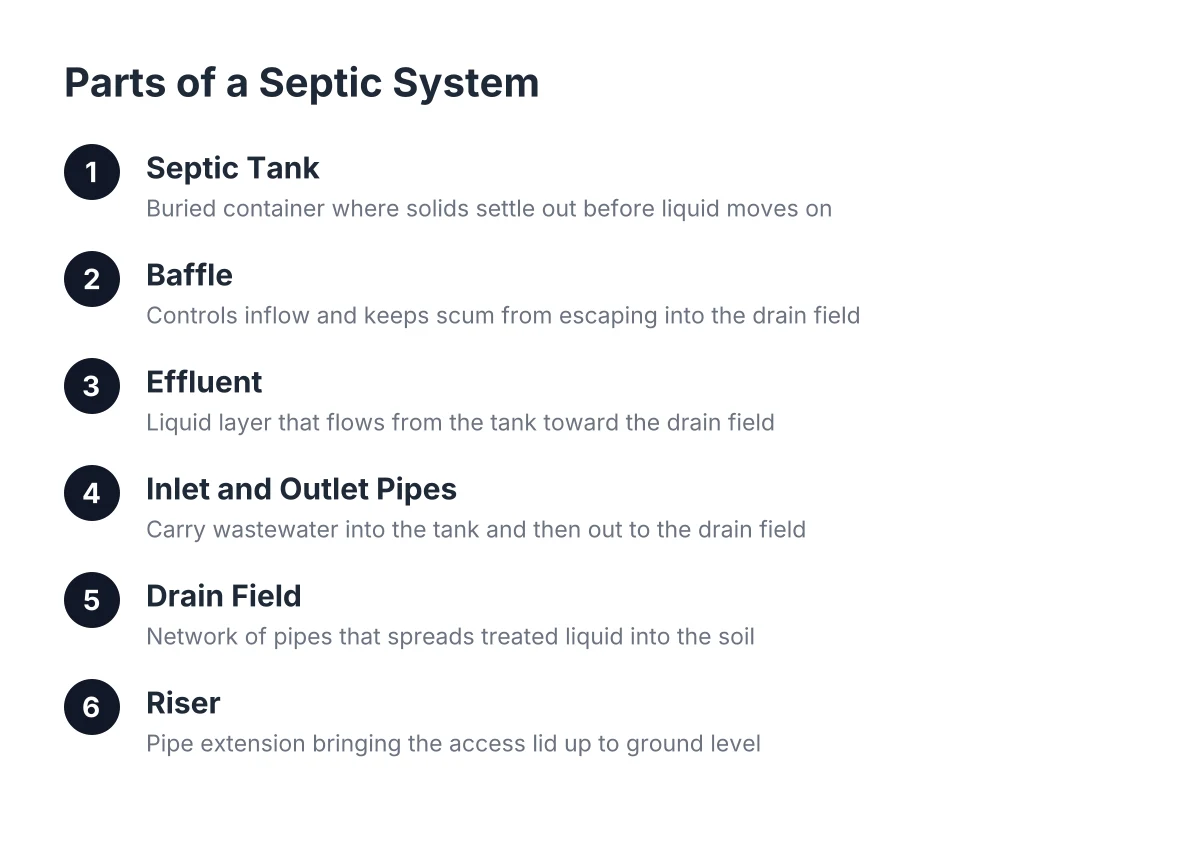
    A septic tank is a buried, watertight container that holds all the wastewater leaving your house so solids can settle out before the liquid moves on. Heavy solids sink to the bottom as sludge, grease floats to the top as scum, and the liquid in the middle flows out to the drain field. The tank does not make waste disappear; it stores solids until septic tank pumping removes them. If a provider says your tank is "at capacity," they mean the solids have built up enough to push into places they should not go.

    Drain Field

    A drain field is the network of buried pipes or trenches that spreads treated liquid from your septic tank into the soil. It is also called a leach field or absorption field, and it is usually the most expensive part of the whole system to replace. Soggy grass, standing water, or a sewage smell over this area often means the field is failing or the tank is overdue for pumping. Protecting the drain field is the main reason regular septic tank pumping matters.

    Baffle

    A baffle is a fitting inside the septic tank that controls how wastewater flows in and out. The inlet baffle slows incoming water so it does not stir up settled solids, and the outlet baffle keeps floating scum from escaping into the drain field. A broken or missing outlet baffle lets solids reach the drain field, which can clog it. If an inspection report flags a damaged baffle, ask whether it can be repaired at the same visit.

    Effluent

    Effluent is the liquid wastewater that flows out of the septic tank toward the drain field after the solids have settled out. It is not clean water, but it is clear enough for the soil to finish treating it. When a pro talks about "effluent levels" or an "effluent filter," they are talking about this liquid layer in the middle of your tank. Cloudy or solid-heavy effluent is a sign the tank needs attention.

    Riser

    A riser is a pipe extension that brings the septic tank's access lid up to ground level. Without one, a crew has to dig down to the buried lid every time they pump, which adds labor to every visit. If a quote includes installing a riser, that is a one-time cost that makes every future septic tank pumping faster and cheaper to access. Many older Hesperia properties have tanks with no risers at all.

    Inlet and Outlet Pipes

    Inlet and outlet pipes are the lines that carry wastewater from your house into the septic tank and then from the tank out to the drain field. The inlet pipe is where most clogs between the house and tank happen, often from roots or flushed items that should not have been flushed. If a provider says the problem is "in the line" rather than "in the tank," pumping alone may not fix it. This distinction matters for figuring out whether you have roots, a clog, or a full tank.

    Types of Septic Systems

    The 3 Types of Septic Systems

    The three main types of septic systems are conventional gravity systems, pressure distribution systems, and alternative or advanced treatment systems. A conventional gravity system uses slope alone to move wastewater from the tank to the drain field, and it is the most common setup on residential lots. A pressure distribution system adds a pump to push effluent evenly across the drain field, which is common where the soil or lot layout does not allow gravity flow. Alternative systems add extra treatment steps, such as sand filters or aerobic units, for lots with poor soil or high groundwater. Knowing which type you have tells you what can break; a gravity system has no pump to fail, while the other two do.

    Aerobic Treatment Unit

    An aerobic treatment unit is a septic system that pumps air into the tank so oxygen-loving bacteria can break down waste faster than a standard tank. These systems treat wastewater more thoroughly but have moving parts, including an air pump, that need maintenance. If you are buying a home with one, ask for its service records the same way you would ask for a car's. They still need pumping; the air does not remove settled solids.

    Problems and Warning Signs

    Septic Backup

    A septic backup is wastewater flowing the wrong way, out of drains, toilets, or the tank itself, instead of moving through the system. It usually shows up first in the lowest drains in the house, like a floor drain or a ground-floor shower. A backup is the loudest signal a septic system sends, and it means something downstream is full, blocked, or broken. If sewage is already coming up, treat it as urgent and get a backup and overflow response rather than waiting.

    Sludge and Scum Layers

    Sludge and scum are the two solid layers that build up inside every septic tank; sludge is the heavy material on the bottom, and scum is the grease and light material floating on top. Pumping removes both. When a pro measures these layers during an inspection, they are checking how close the solids are to the outlet pipe. Thick layers mean pumping is due; thin layers mean you have time.

    Root Intrusion

    Root intrusion means tree or shrub roots have grown into your septic pipes or tank through joints and cracks. Roots follow moisture, and a septic line is a steady water source, so this is a common cause of slow drains and repeat clogs. Pumping the tank will not fix roots in a line; that takes cutting or repair work. If your drains slow down every year around the same season, roots are a prime suspect.

    Hydraulic Overload

    Hydraulic overload means more water is entering the septic system than the tank and drain field can handle at once. Back-to-back laundry loads, a leaking toilet, or a houseful of holiday guests can all cause it. The symptoms look like a failing system, gurgling drains and soggy ground, but the fix may be as simple as spacing out water use. A good troubleshooter rules this out before recommending bigger work.

    Drain Field Failure

    Drain field failure means the soil around your drain field can no longer absorb effluent, so wastewater pools on the surface or backs up into the tank. It is the most serious diagnosis in septic system troubleshooting because repair often means digging and replacing part of the field. Standing water, lush green stripes of grass, and a persistent sewage odor over the field are the classic signs. Years of skipped pumping is a leading cause, which is why knowing the signs your tank needs pumping protects the most expensive part of your system.

    Service, Inspection, and Paperwork

    Maintenance Tasks in a Septic System Troubleshooting Plan

    Septic tank pumping is the removal of sludge, scum, and liquid from your tank using a vacuum truck. It is the core maintenance task for any septic system, the one that keeps solids from escaping into the drain field. A pumping visit typically includes locating the tank, opening the access lid, and pumping out the contents. If a quote calls it "pumping" versus "cleaning," ask what each includes, because the words are not always used the same way.

    Septic Tank Cleaning

    Septic tank cleaning means removing everything from the tank, including the compacted sludge on the bottom, not just the liquid on top. Some operators use "pumping" and "cleaning" interchangeably, and some charge differently for each, so it pays to ask. A tank that has gone many years without service may need cleaning rather than a quick pump. Getting the full contents out gives the pro a clear look at the tank's condition.

    When a Septic System Troubleshooting Inspection Is Required

    A septic inspection is a professional evaluation of your tank, baffles, liquid levels, and drain field condition, usually tied to a home sale or a suspected problem. It answers the questions pumping alone cannot: is the tank cracked, are the baffles intact, and is the drain field accepting water. Buyers in Hesperia should treat an inspection as standard due diligence on any septic property. The report also creates a paper trail you can use in negotiations.

    Tank Locating

    Tank locating is the process of finding a buried septic tank and its access lids when no one knows where they are. Older properties often have no records, no risers, and no visible clues. A crew may use probes, records, or electronic tools to find the tank before any pumping can happen. If your quote includes a locating charge, that is why; you cannot pump what you cannot find.

    Using These Terms

    You now know what the words on a septic quote or inspection report actually mean, so read the next one line by line and ask about anything that is not itemized. Sharper questions, like "is the problem in the tank or in the line," get you sharper answers and better pricing clarity. When you are weighing whether to handle something yourself, this septic system troubleshooting glossary pairs well with a look at when DIY makes sense and when to call a pro.

    If you need your septic tank serviced, Hesperia Septic can help.

    Related Reading

  • Septic Tank Pumping Terms Explained: A Plain-English Glossary

    septic tank pumping glossary

    If you own a home on septic in Hesperia, sooner or later a quote or an inspection report will throw a word at you that you have never heard. This septic tank pumping glossary translates that jargon into plain English so you can read a quote line by line, ask the right questions, and spot a problem before it becomes a backup in your hallway. Each entry starts with a short, standalone definition, then explains why the term matters when you are hiring someone. Keep it open while you compare estimates or talk to a provider on the phone.

    • Septic Tank
    • Drain Field
    • Inlet and Outlet Baffles
    • Scum, Sludge, and Effluent
    • Riser
    • Grease Trap
    • What Are the 3 Types of Septic Systems
    • Conventional Gravity System
    • Aerobic Treatment Unit (ATU)
    • Mound System
    • Septic Tank Pumping vs. Cleaning
    • How to Prepare Your Tank for Vacuum Truck Service
    • Tank Locating
    • What's Involved in Backfilling and Site Restoration
    • Emergency Pumping
    • Septic Backup
    • Septic Inspection
    • Pumping Schedule

    Parts of Your Septic System

    Septic Tank

    A septic tank is a buried, watertight container that receives everything that goes down your drains and holds it so solids can separate from liquid. Heavy solids sink to the bottom, grease floats to the top, and the liquid in the middle flows out to the drain field. The tank does not make waste disappear; it only stores and separates it. That is why every tank eventually needs septic tank pumping to remove the buildup before it overflows into your yard or backs up into the house.

    Drain Field

    A drain field is the network of buried pipes or trenches that spreads the liquid leaving your septic tank into the soil, where it filters naturally. It is also called a leach field. The drain field is usually the most expensive part of a septic system to replace, so protecting it is the whole point of regular pumping. If a provider says your drain field is saturated or failing, expect the conversation to go beyond a routine pump-out.

    Inlet and Outlet Baffles

    Baffles are fittings inside the septic tank that direct incoming waste downward and keep floating scum from escaping into the drain field. The inlet baffle sits where your house pipe enters the tank; the outlet baffle sits where liquid exits. A missing or broken outlet baffle lets solids reach the drain field and clog it. A good provider checks the baffles during pumping and tells you if one needs repair.

    Scum, Sludge, and Effluent

    Scum, sludge, and effluent are the three layers inside a working septic tank: scum is the floating layer of grease and light solids, sludge is the heavy layer on the bottom, and effluent is the liquid in between. Only the effluent is supposed to leave the tank. When the scum and sludge layers grow too thick, the tank is due for pumping. If a provider measures these layers before quoting, that is a sign they are sizing the job honestly rather than guessing.

    Riser

    A riser is a pipe extension that brings the septic tank lid up to ground level so the tank can be opened without digging. If your tank has no risers, expect the crew to locate the lids and dig to reach them, which adds time to the job. Many homeowners add risers during a pump-out so the next visit is faster and cheaper. Ask whether digging is included in the quote or billed separately.

    Grease Trap

    A grease trap is a small tank that catches fats, oils, and grease from kitchen drains before they reach the septic system or sewer. Grease traps are common at restaurants but also appear on some residential properties. They need pumping on their own schedule because grease hardens and clogs lines. If you have one, mention it when you book so the crew brings what they need to pump both.

    Types of Septic Systems

    What Are the 3 Types of Septic Systems

    The three types of septic systems most people mean are conventional gravity systems, pressure distribution systems, and alternative or engineered systems. A gravity system is the classic setup: waste flows downhill from the house to the tank to the drain field with no pump. A pressure distribution system uses a pump to push effluent evenly across the drain field, common where the soil or slope will not allow gravity flow. Alternative systems, such as mound or aerobic treatment units, add extra treatment steps for difficult sites. Knowing your type matters because pumps, alarms, and extra chambers change what a service visit involves.

    Conventional Gravity System

    A conventional gravity system is a septic setup where wastewater flows from house to tank to drain field entirely by slope, with no pump. It is the simplest and most common residential design. Because there are no mechanical parts, service usually means pumping the tank and checking the baffles. If your home sits on flat or gently sloping ground, there is a good chance this is what you have.

    Aerobic Treatment Unit (ATU)

    An aerobic treatment unit is a septic system that pumps air into the waste to help bacteria break it down faster and more completely than a standard tank. ATUs have motors, air pumps, and sometimes alarms, so they need more attention than a gravity system. If your quote mentions an ATU, expect the visit to involve more than opening a lid and pumping. Tell the provider up front so they schedule the right equipment.

    Mound System

    A mound system is an alternative septic design that builds the drain field above ground level in a raised bed of sand and gravel. Mounds are used where the soil is too shallow, too dense, or too close to groundwater for a buried drain field. They rely on a pump to move effluent uphill into the mound. If you have one, the pump chamber is another component that needs checking during service.

    The Pumping Visit

    Septic Tank Pumping vs. Cleaning

    Pumping means removing the liquid and floating solids from a septic tank, while cleaning means removing everything, including the compacted sludge stuck to the bottom and walls. Providers sometimes use the words loosely, so ask which one the quote covers. A tank that has gone years without service may need full cleaning, not just a quick pump. Our breakdown of pumping versus cleaning for Hesperia homeowners walks through how to tell which service you should book.

    How to Prepare Your Tank for Vacuum Truck Service

    A vacuum truck is the tanker truck that suctions waste out of your septic tank through a large hose and hauls it to a licensed disposal site. Hose length matters: if the truck cannot park close to your tank, the crew may need extra hose or a different access plan. Mention long driveways, gates, or soft ground when you book. That one detail can prevent a wasted trip.

    Tank Locating

    Tank locating is the process of finding a buried septic tank when no one knows where the lids are. Crews use records, probes, or electronic locators to pinpoint the tank before digging. This comes up often with older homes and new buyers who inherited a system with no paperwork. If you cannot point to your lids, ask for locating as part of the visit so the quote reflects the real work.

    What's Involved in Backfilling and Site Restoration

    Backfilling means putting the soil back over the tank lids after the crew has finished pumping. If the lids had to be dug out, backfilling is the last step before the yard looks normal again. Confirm whether the quote includes digging and backfilling or just the pumping itself. It is one of the most common gaps between a low quote and the final bill.

    Emergency Pumping

    Emergency pumping is a same-day or urgent septic tank pump-out booked because sewage is backing up into the home or surfacing in the yard. It usually costs more than a scheduled visit because the crew rearranges the day to get there. Slow drains, gurgling pipes, and wet spots over the tank are the warning signs that show up first. Catching them early is how you book a routine visit instead; these signs your septic tank needs pumping now are the ones to watch.

    Septic Backup

    A septic backup is sewage flowing the wrong way, out of your drains and into the house, usually through the lowest fixtures like a shower or floor drain. Backups happen when the tank is full, a line is clogged, or the drain field cannot absorb any more liquid. Stop running water immediately and call a septic provider, not just a plumber, since the fix often starts at the tank. A full tank is the most common cause, and pumping it is often the first step in the response.

    Septic Inspection

    A septic inspection is a check of the tank, baffles, and drain field condition, often done during a home sale or alongside a pump-out. An inspection during pumping is worth asking for because the tank must be open and empty to see the baffles and walls clearly. Buyers in particular should ask for one before closing on a home with a septic system. It turns an unknown buried system into a known quantity.

    Pumping Schedule

    A pumping schedule is the interval at which a septic tank should be emptied, based on tank size, household size, and water use. There is no single right number for every home, which is why blanket rules can mislead you. A provider who asks about your household before recommending an interval is doing it right. This step-by-step pumping schedule guide shows how to work out an interval that fits your house instead of a generic rule.

    Using These Terms

    You now have enough vocabulary to read a septic quote line by line and know what each charge covers, from locating and digging to the pump-out itself. Keep this septic tank pumping glossary handy the next time a provider mentions baffles, risers, or your drain field, and ask them to point to the exact item on the quote. A homeowner who knows these terms gets clearer answers, and this glossary exists so you can be that homeowner.

    If you need your septic tank serviced, Hesperia Septic can help.

    Related guide: septic tank pumping — Complete Guide

    Related Reading