Tag: septic tank pumping

  • Septic Replacement vs. Repair: When Hesperia, CA Homes Need to Replace, Not Fix

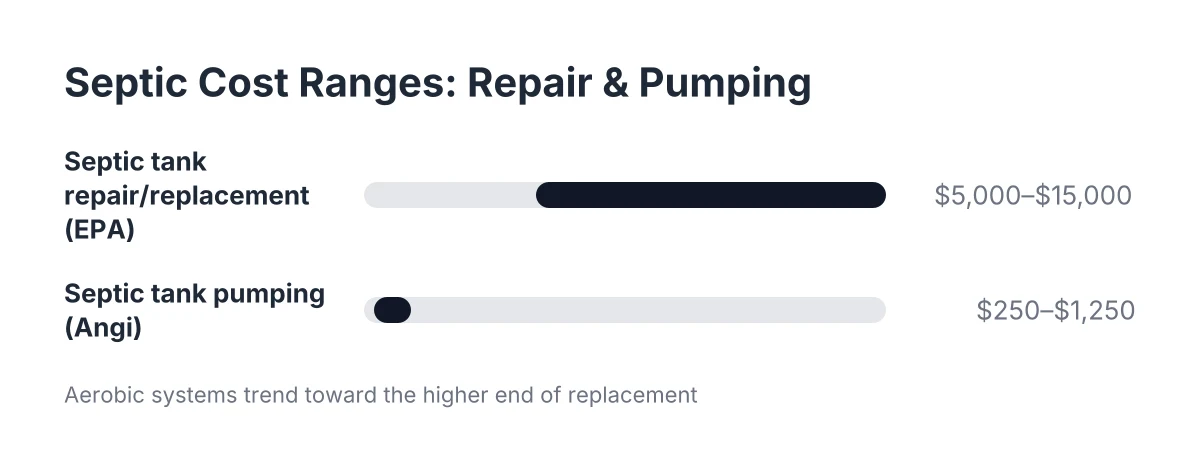
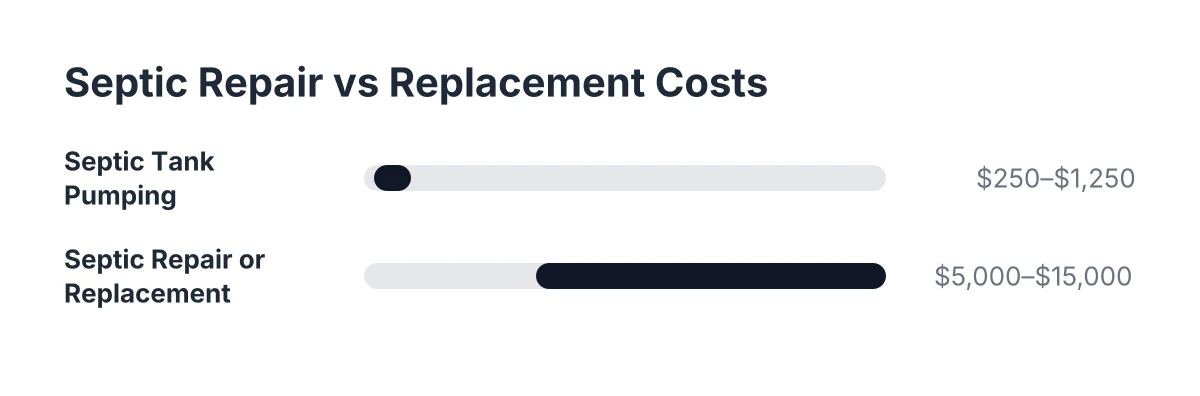
    Cost range chart comparing septic tank pumping to septic repair vs replacement expenses
    Routine pumping is a modest expense, but full septic repair or replacement costs far more, per Angi and EPA figures cited in this guide.

    If your septic system keeps acting up, you are probably weighing the same question every property owner in your spot asks: should you pursue a septic repair vs replacement, or can a pump-out and a small fix get things working again? The honest answer is that most septic problems in Hesperia, CA do not require a new system. However, some do, and knowing the difference protects you from paying for a replacement you did not need, or throwing money at pumping when the drain field is already gone.

    This guide walks through how a septic crew actually decides between repair and replacement, which signs point to a failing system versus a full tank, what the replacement process looks like in the High Desert, and how to avoid getting upsold by fear.

    Why the Repair-or-Replace Question Matters So Much

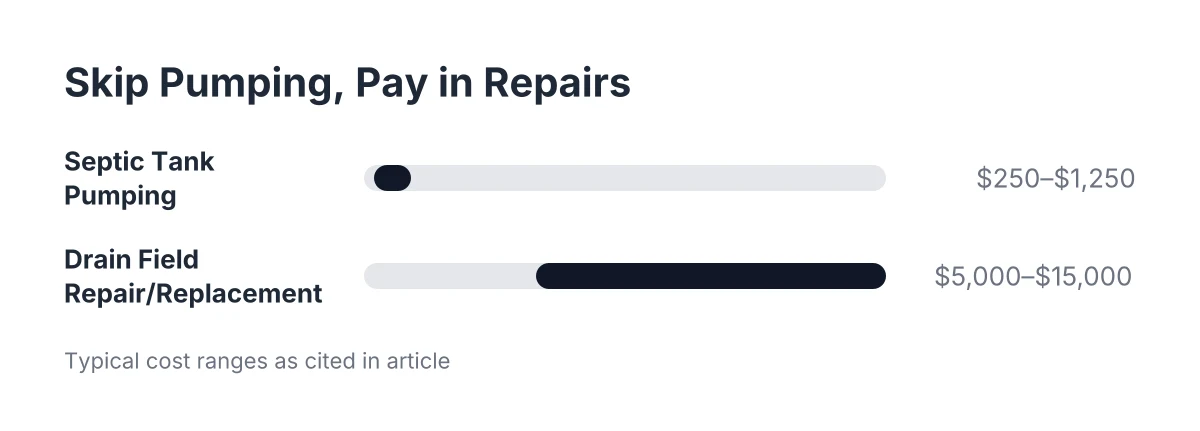
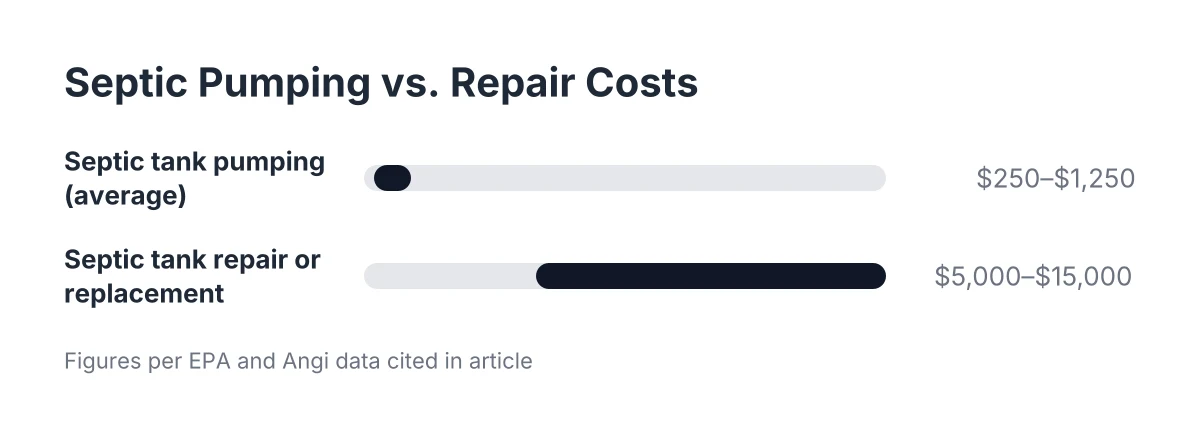
    The stakes are different depending on which side of the line you land on. Routine septic tank pumping is a modest, predictable expense. According to Angi, septic tank pumping averages $427, with a typical range of $250 to $1,250 or more depending on tank size and location.

    A full septic system replacement sits in a different category entirely. The EPA estimates septic tank repair or replacement typically costs between $5,000 and $15,000, far more than routine pumping, according to U.S. Environmental Protection Agency figures. That gap is exactly why you want a clear-eyed diagnosis before anyone starts digging up your yard.

    It also explains the fear many homeowners carry into this decision. Nobody wants to be told their system is dead when a $400 pump-out would have solved it. On the flip side, paying for pump-out after pump-out on a failed drain field just delays a replacement you will eventually have to make anyway, with extra money spent along the way.

    How a Septic System Fails, and Which Part Usually Goes First

    A conventional septic system consists of two main components: the septic tank and the drain field, according to U.S. Environmental Protection Agency. The tank clarifies wastewater by letting solids settle. The drain field, sometimes called the leach field or soil absorption area, disperses the clarified liquid into the ground.

    Understanding that split is the key to the whole repair-versus-replace question. Tanks and drain fields fail in different ways, and they carry different price tags.

    Tank problems tend to be fixable. A cracked lid, a broken baffle, a damaged inlet pipe, or roots intruding at a connection point can usually be repaired without touching the rest of the system. For example, a broken septic pipe gets fixed by cutting out the damaged section and installing new pipe, not by patching the old one in place. That is a repair job, not a replacement job.

    Drain field problems are the ones that push a system toward replacement. Soil around the trench lines can clog with biological buildup over decades. Once the soil stops absorbing water, no amount of pumping the tank will fix it. The tank fills back up, and wastewater has nowhere to go. Replacing a failed drain field is expensive precisely because it means digging up or abandoning the old trench lines and installing new ones in fresh soil.

    How Septic Repair vs Replacement Decisions Happen in Practice

    A trained septic crew decides between repair and replacement by finding where the failure lives. If the problem sits inside the tank or the pipes, repair usually wins. If the drain field soil can no longer absorb water, replacement becomes the realistic fix. The pattern of your backups tells most of the story.

    Here is the practical logic a crew works through on site:

    • One backup, tank is full, no standing water in the yard. This is almost always a pumping call. The tank filled up on schedule and needs service, nothing more.
    • Backup returns weeks or months after a pump-out. Now the drain field is suspect. A healthy system should go years between pump-outs, not months.
    • Soggy ground or sewage odor over the drain field, especially in dry High Desert weather. Water surfacing above the trenches means the soil is rejecting effluent. That points toward drain field failure.
    • Slow drains throughout the house right after a recent pumping. If the tank was just emptied and the house still drains poorly, the blockage or failure is downstream of the tank.
    • Visible damage found during inspection. A cracked tank, collapsed baffle, or crushed pipe is a specific, repairable defect if the rest of the system checks out.

    The repeated-backup pattern deserves emphasis. When a septic company keeps getting called back to pump the same tank every few months, the tank is not the problem. The drain field has stopped doing its job, and at that point replacement, not another pump-out, is the honest recommendation.

    One caution on the other side: a flagged drain field is not automatically a dead drain field. Sometimes a system that looks failed responds to reduced water use, resting the field, or remedial treatment before anyone commits to full excavation. However, health departments generally require full replacement of a truly failed absorption system rather than accepting aftermarket restoration products as a permanent fix. Treat remedial measures as a possible reprieve, not a substitute for a real diagnosis.

    Signs Your Septic System Needs Replacing, Not Another Pump-Out

    The signs of true system failure cluster around one theme: the ground can no longer accept water. Watch for these patterns over time, not just once:

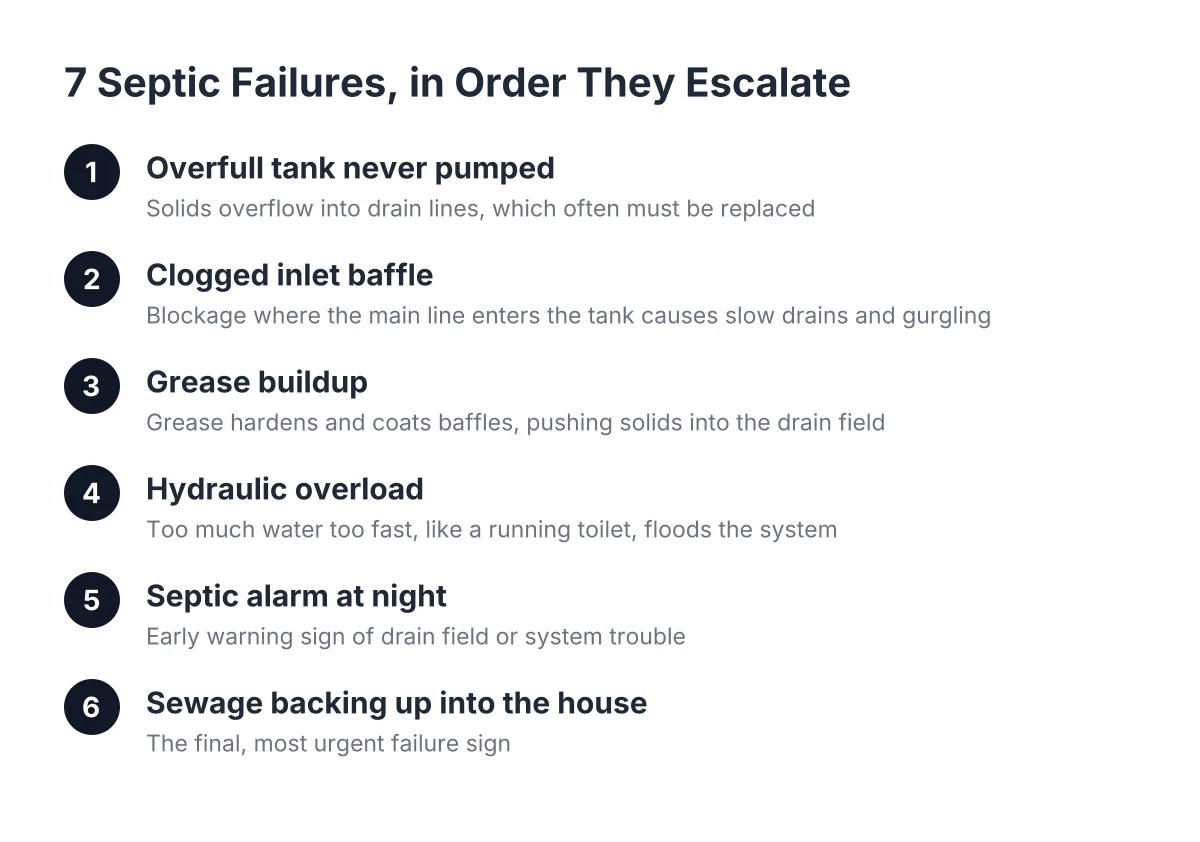
    1. You need pumping far more often than you used to. For an active family of four, pumping every two to three years is generally advisable, according to Penn State Extension. If you are calling every six months, something downstream is failing.
    2. Wet spots or unusually green grass over the drain field. In Hesperia's dry climate, a lush green stripe in an otherwise brown yard is a red flag, not good luck.
    3. Sewage odors outdoors that come back after every pumping.
    4. Gurgling drains and slow flushing that pumping only fixes briefly.
    5. Standing water or effluent surfacing in the yard. At this stage the system is failing openly, and it becomes a health concern for your family and neighbors.
    6. The system is decades old with no repair history. Every septic system has a lifespan. A drain field installed when the house was built in the 1970s has likely used up its useful life, even if the tank itself is sound.

    Age matters more than most homeowners expect. If you just bought an older home in Hesperia with the original system and no service records, plan as if major work is coming. Buyers of older homes are wise to factor likely replacement costs into the purchase negotiation, because a decades-old system may simply be at the end of its run.

    When Repair or Pumping Solves It, and Replacement Would Be an Upsell

    Repair or routine septic tank pumping solves the problem whenever the failure is contained to one fixable part and the drain field still absorbs water. A full tank, a broken baffle, a root-invaded pipe, or a crushed line near the tank are all repairs. None of them justify replacing a working system.

    This is the section for the skeptical homeowner, and skepticism here is healthy. Some situations that sound scary are routine:

    • A first-time backup in a house you just bought. Suppose you closed on a Hesperia home last spring, the previous owner left no records, and now the shower is backing up. The most likely explanation is a tank that has not been pumped in years, not a dead system. Pump it first, inspect it, then decide.
    • Odor near the tank lids. Often a seal or riser issue, not system failure.
    • A single slow drain. That is usually a plumbing clog inside the house, not a septic problem at all.
    • Solids buildup in the tank. Pumping and cleaning handle this. It only becomes a replacement issue if buildup is ignored for years and solids migrate into the drain field.

    A fair way to test any replacement recommendation is to ask the crew to show you the evidence. Where is the water surfacing? What did the tank look like when opened? How fast did the tank refill after pumping? A legitimate diagnosis has observable facts behind it. If the answer is vague pressure to sign today, get a second opinion. Any honest local septic service in Hesperia, CA expects that question and can answer it in plain terms.

    There is a real limitation to acknowledge here: no article can diagnose your specific system. Soil conditions, system age, tank condition, and household water use all interact, and the repair-versus-replace call sometimes requires opening the tank and probing the field. Use this guide to ask sharper questions, not to skip the professional inspection.

    The Septic Tank Replacement Process in the High Desert

    If the diagnosis genuinely points to replacement, here is what the process looks like for property owners in Hesperia and the surrounding High Desert. Knowing the steps ahead of time removes most of the uncertainty.

    Step 1: Inspection and Diagnosis

    Everything starts with confirming what failed. That usually means locating the tank, pumping it so the inside can be seen, checking baffles and pipes, and evaluating the drain field. Septic tank locating matters more than people expect; on older Hesperia properties, nobody alive may know exactly where the components sit.

    Step 2: Permits Through San Bernardino County

    Septic work in Hesperia runs through San Bernardino County requirements. Replacement is not a handshake job; permits document that the new system meets current standards. As of 2026, expect the permitting step to involve site evaluation and approval before excavation starts. In some jurisdictions, a failed conventional gravel-and-pipe drain field cannot simply be rebuilt as-is; the property may be required to upgrade to a more advanced system, which raises cost. Confirm current county requirements before budgeting.

    Step 3: Soil Testing

    Before a new drain field goes in, the soil has to prove it drains. A percolation test must be performed before installing a septic system to determine how well the soil absorbs water, according to University of Nebraska-Lincoln Extension. High Desert soil varies from sandy washes to hard-packed layers, so this test drives where and how large the new field will be.

    Step 4: Design and Installation

    Installation is specialized work beyond pumping. Becoming a licensed septic installer requires certification and licensing beyond a pumping operation, including knowledge of soil types, percolation rates, system design, and local regulations, according to New Hampshire Department of Environmental Services. A pumping and service company may handle diagnosis, pumping, and coordination while a licensed installer performs the excavation and system construction.

    During installation, details matter. For example, after a new tank is set, fill material around pipe penetrations should be compacted thoroughly to prevent settling that damages the connection, per Onsite Installer. Sloppy backfill is a common cause of early failures at otherwise new systems.

    Step 5: Final Inspection and Restoration

    The county inspects the completed work before backfill in most cases, then the yard gets restored. Keep every document from this process. The next owner of your home, or the next crew that services the system, will thank you.

    One more planning note: home additions and remodels can force this issue too. If a planned garage or room addition sits over the existing tank or drain field, the system may need relocation or replacement even if it works fine today. Check system location before you design an addition, not after.

    What Repair and Replacement Cost in 2026

    Concrete numbers help you plan, so here is the honest picture as of 2026. Routine septic tank pumping averages $427 nationally, ranging from $250 to $1,250 or more, according to Angi. Minor repairs like a baffle or a pipe section typically land above a pump-out but well below system work.

    Full replacement is the big number. The U.S. Environmental Protection Agency estimates septic repair or replacement typically runs $5,000 to $15,000. Drain field replacement drives the high end because of excavation, materials, soil work, and permitting. Local factors in Hesperia, including soil conditions, system size, and county requirements, move the final figure, so treat these as planning ranges rather than quotes.

    Here is an illustrative scenario. Say a Hesperia homeowner has paid for three emergency pump-outs in one year at a few hundred dollars each, and the tank refills within weeks every time. In that scenario, another year of repeat pumping could cost over a thousand dollars while the drain field stays dead. Putting that money toward diagnosis and a planned septic system replacement gets the problem actually solved, on the homeowner's schedule instead of during a holiday backup.

    Maintenance: The Cheapest Answer to the Replace-or-Repair Septic Question

    The best outcome in the whole septic replacement, repair, or replace decision is never facing it at all. Routine maintenance and pumping is what keeps homeowners out of forced-replacement territory. Solids that stay in the tank never reach the drain field, and a drain field that never clogs can serve the property for decades.

    The maintenance baseline is simple. The average household should have its septic system inspected at least once every three years by a professional, according to U.S. Environmental Protection Agency. Alternative systems with pumps, float switches, or mechanical parts should be inspected once a year, per the same source. Pair inspections with pumping on a schedule that fits your household size and water use.

    This matters to more people than you might think. More than one in five U.S. households depend on individual septic systems or small community cluster systems to treat their wastewater, according to U.S. Environmental Protection Agency. In Hesperia and across the High Desert, where homes sit beyond centralized sewer lines, that share runs high. Homes in cities typically connect to municipal sewage treatment; septic systems serve areas without that service, per Environmental Finance Center Network.

    If you just bought a house and have no idea when the tank was last pumped, do this in order:

    1. Have the tank located and opened.
    2. Pump it and inspect the tank, baffles, and pipes while it is empty.
    3. Ask the crew for a plain assessment of the drain field's condition.
    4. Set a pumping schedule based on what they find, then put it on the calendar and stop thinking about it.

    That first pump-and-inspect visit resets the clock. From then on, you have records, a schedule, and a local crew who knows your system.

    The Bottom Line for Hesperia, CA Property Owners

    Most septic problems end with pumping or a targeted repair. Replacement is the right call in a narrower set of cases: a drain field that no longer absorbs water, repeated backups that return quickly after pumping, effluent surfacing in the yard, or a decades-old system at the end of its lifespan. When those signs stack up, repeated pumping is money spent delaying the inevitable.

    Ask for evidence before agreeing to a replacement. Ask for a real diagnosis before assuming another pump-out will hold. Between those two questions sits the honest middle ground, and a straightforward local septic crew in Hesperia, CA should be comfortable answering both.

    If you need your septic tank serviced, Hesperia Septic can help.

    Prefer to talk it through? Call (760) 249-7872 — a quick call is usually the fastest way to get a straight answer for your situation.


    Related Reading

  • Septic Inspection vs. Pumping: When to Schedule Each Service Separately

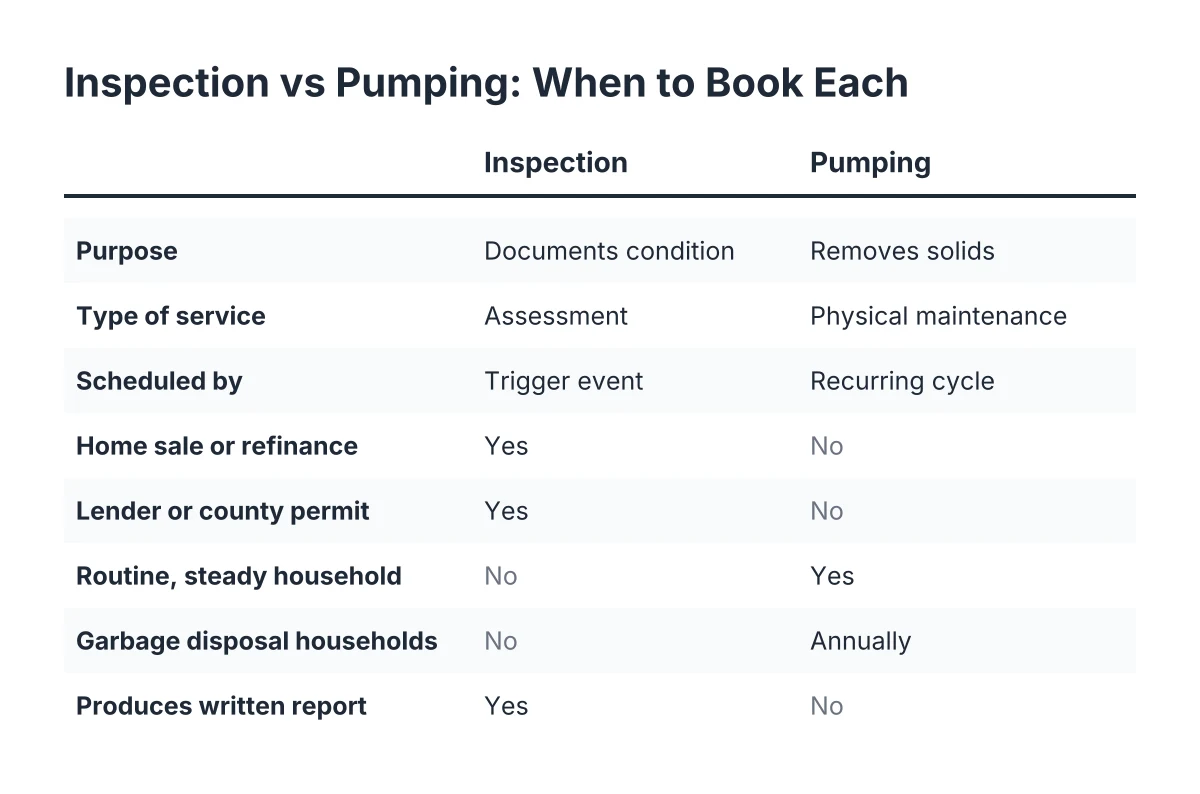
    Comparison checklist of septic inspection vs pumping schedule triggers and purposes
    Key differences between septic inspection and pumping, as outlined in this guide.

    If you own property in Hesperia, whether it is a home, a rental, or a small business on septic, you have probably wondered whether you need an inspection, a pumping, or both. Understanding the right inspection vs pumping schedule matters more than most owners realize. Schedule them wrong and you either pay twice for overlapping work or miss the one visit that would have caught a problem before it became a sewage backup. This guide breaks down what each service does, when to book them separately, when to combine them, and how the answer changes if you need documented reports for a home sale, a refinance, a lender, or a health inspector.

    The short version up front: pumping removes waste, and inspection documents condition. One keeps the system working. The other proves it works, in writing, to a buyer, an escrow officer, a lender, or a county reviewer. Owners in the High Desert often need both, but not always at the same time, and not on the same schedule.

    Inspection and Pumping Are Two Different Jobs

    A septic inspection and a septic tank pumping solve two different problems, even though the same crew often performs both. Pumping is physical maintenance; a truck removes the sludge and scum that build up in your tank over time. Inspection is an assessment; a technician evaluates the tank, the pipes, and the drain field, then documents what they find.

    According to the U.S. Environmental Protection Agency, a conventional septic system has two main components: the septic tank and the drain field. Pumping only touches the first one. All household drains feed a single pipe into the tank, where solids settle out and get removed by pumping, while the liquid flows out to perforated pipes in the drain field, according to US EPA. A pump truck cannot fix or even fully evaluate that second half of the system. That is inspection work.

    Here is the practical difference for a Hesperia property owner:

    • Pumping empties the tank of accumulated solids so wastewater keeps flowing and solids do not escape into the drain field.
    • Inspection checks tank condition, baffles, inlet and outlet pipes, liquid levels, and signs of drain field trouble, then produces a written report.
    • Pumping is routine maintenance you schedule on a recurring cycle.
    • Inspection is due diligence you schedule around a trigger: a sale, a refinance, a permit, a tenant complaint, or a suspected problem.

    Once you see them as separate jobs with separate purposes, the scheduling question gets easier to answer.

    When an Inspection Should Come First, Without Pumping

    Schedule a standalone septic system inspection when you need documented condition before a transaction or a decision, not when the tank is simply due for service. Buyers, sellers, lenders, and escrow officers all want the same thing: a written record of what is in the ground and whether it works. A pump-out receipt does not answer that question. An inspection report does.

    Common situations where inspection leads and pumping waits:

    1. Buying a home or land in the High Desert. If the seller has no service records, an inspection tells you what you are inheriting before you sign. High Desert soil drains differently across short distances, and a system that looks fine on paper can hide a drain field near the end of its life.
    2. Selling a home on septic. A pre-listing inspection lets you fix small issues on your own timeline instead of during escrow, when every repair becomes a negotiation.
    3. Refinancing or lender requirements. Some lenders want documentation that the septic system functions before they close. A dated, written inspection report satisfies that request in a way a verbal "it seems fine" never will.
    4. Permits and county requirements. Additions, remodels, or new construction near an existing system often require documentation of the system's location and condition. County requirements vary, so confirm what your specific project needs before assuming a general report will do.
    5. Taking over a rental property. Say a landlord buys a four-unit property outside Hesperia with no septic records at all. An inspection establishes a baseline: tank location, tank condition, and drain field health. That baseline becomes the starting point for a realistic maintenance plan, instead of guessing until a tenant calls about a smell.

    In each of these cases, the point of the visit is the report, not the pump-out. The inspector documents access points, measures sludge and scum layers, checks that the outlet sits lower than the inlet so only liquid leaves the tank, and notes any red flags in the yard above the drain field. For an escrow file or a lender, that document is the product.

    One caveat: if the inspector finds the tank so full that they cannot evaluate the baffles or outlet, pumping may become necessary mid-inspection anyway. Plan for that possibility in your budget when the system has no service history.

    When Pumping Should Come First, Without a Full Inspection

    Book septic tank pumping on its own when the tank is due for routine service and nothing about the system has changed. If your household size is steady, drains run normally, the yard smells fine, and you pumped on schedule last time, you likely do not need a formal inspection report attached to every pump-out.

    Pumping is the oil change of septic ownership. According to Penn State Extension, an active family of four generally benefits from pumping every two to three years because of higher solids and liquid production. Households with garbage disposals generate more sludge; the Massachusetts Department of Environmental Protection recommends annual pumping for those homes regardless of tank size. Your exact interval depends on tank size and how many people use the system, so a smaller household on a large tank can often stretch longer between visits.

    Standalone pumping also makes sense for:

    • Grease traps at restaurants and food businesses. Grease trap pumping runs on its own cycle, driven by kitchen volume and health code, not by the condition questions an inspection answers. If a health inspector flagged your trap, you need it pumped and documented, and you need a disposal record for your compliance file.
    • RV and holding tanks. A holding tank has no drain field to inspect. It fills, you pump it. Cabin owners and RV operators around Hesperia mostly need a reliable pump-out schedule, not a condition report.
    • Emergency backups. When sewage is backing into the house, pumping the tank relieves the immediate pressure. The diagnostic questions come after the crisis, not during it.

    A worthwhile habit: even during a routine pump-out, a good crew looks at what the empty tank reveals. Cracks, corrosion, root intrusion, and a saturated drain field all show themselves more clearly with the tank empty. That informal look is not a formal inspection report, but it often catches problems early.

    Building a Schedule: Inspection vs Pumping Frequency

    A workable septic system care plan pairs a recurring pumping cycle with periodic professional inspections, then adds one-off inspections whenever a transaction or a symptom demands documentation. The U.S. Environmental Protection Agency recommends the average household have its septic system inspected at least once every three years by a professional. Alternative systems with pumps, float switches, or mechanical parts should be inspected once a year, according to the U.S. Environmental Protection Agency.

    Here is a practical framework for 2026 planning:

    1. Set your pumping interval. Start from household size and tank size. A family of four on a standard tank lands in the two-to-three-year range per Penn State Extension. Adjust based on what the crew finds at each pump-out. Heavy sludge at two years means shorten the interval; a light tank means you can stretch it.
    2. Anchor inspections to the pumping visit when possible. Because an inspection-only visit often costs close to what pumping does, combining them on the same visit usually gives you more value per truck roll. The tank gets emptied and evaluated in one appointment, and you get gases released and a check for corrosion or root intrusion while the tank is open.
    3. Add standalone inspections for triggers. A sale, a refinance, a permit application, a new tenant complaint, or drains that slow across the whole house each justify an inspection outside the regular cycle.
    4. Check local requirements. Some jurisdictions require pump-outs or inspections at set intervals regardless of the system's actual condition. Verify what applies to your Hesperia property rather than relying only on general guidance.
    5. Keep every record. Pump-out receipts, disposal documentation, and inspection reports belong in one folder. For landlords and business operators, that folder is your habitability and health-code paper trail. For homeowners, it becomes the service history that makes your home easier to sell later.

    The reason to formalize this instead of waiting for symptoms is simple: symptoms arrive late. By the time drains slow or the yard smells, solids may already be pushing into the drain field. Scheduled visits catch buildup before it travels, which is why a maintenance calendar beats a nose test every time.

    What a Documented Inspection Report Should Contain

    An inspection report worth handing to a lender or escrow officer documents the system's components, their condition, and the inspector's findings in writing, with dates. If you are ordering a septic inspection for a home sale, ask up front what the report will include. A one-line "system OK" note will not survive scrutiny from a buyer's agent or an underwriter.

    A useful report typically covers:

    • Tank location and access. Where the tank sits, how it was accessed, and whether locating work was needed. Properties with no records sometimes require septic tank locating before anything else can happen.
    • Tank condition. Material, visible cracks or corrosion, baffle condition, and inlet and outlet pipe condition. According to University of Nebraska-Lincoln Extension, the outlet pipe must sit lower than the inlet, since solids float on the liquid and only liquid should exit toward the drain field. An inspector confirms that geometry still holds.
    • Sludge and scum measurements. How full the tank was, which feeds directly into your future pumping interval.
    • Liquid level observations. A level above the outlet suggests the drain field is not accepting water; a level below suggests a leak.
    • Drain field indicators. Soggy ground, surfacing effluent, unusually green strips of vegetation, or odors over the field.
    • Recommendations and date. What needs attention, what looks sound, and when the evaluation happened.

    Context matters to the findings, so expect a thorough inspector to ask questions before the visit: the age of the house, repair history, how often the tank was pumped in the past, and where the property sits, whether on a rise or in a low spot. Those answers shape what they look for once they open the lids.

    High Desert conditions add their own wrinkles. Soil that drains fast in one part of a parcel can drain slowly a hundred feet away, which is why a percolation test is required before installing any new system, according to University of Nebraska-Lincoln Extension, and why the local health department typically inspects as part of installation, per Caroline County Health Department. An inspector who knows how Hesperia-area soil behaves reads drain field symptoms differently than someone working from a generic checklist.

    What Skipping Either Service Ends Up Costing

    Skipping pumping lets solids overflow into the drain field, and skipping inspections lets hidden damage compound until it surfaces as a backup or a failed escrow. Both mistakes trade a modest, scheduled cost for a large, unscheduled one. The math is lopsided.

    According to Angi, septic tank pumping averages $427, with a typical range of $250 to $1,250 depending on tank size and location. Compare that to repair or replacement: the EPA estimates septic repair or replacement typically costs between $5,000 and $15,000. A decade of on-schedule pumping costs less than a single drain field failure.

    For a hypothetical example, suppose a Hesperia homeowner goes eight years without pumping because nothing seemed wrong. Solids fill the tank, then start flowing out with the liquid and clogging the drain field gravel. The first visible symptom is sewage backing into the shower on a Saturday. Emergency pumping relieves the backup, but the inspection that follows finds a saturated drain field that no amount of pumping will fix. In that scenario, a few skipped service visits turned into a five-figure replacement.

    The reverse mistake costs money too. Pumping a lightly used tank every year wastes service calls, and paying for a full documented inspection at every routine pump-out adds cost without adding information. The goal is not maximum service; it is matched service, with each visit doing a job you actually need done.

    There are also limits to what any schedule can promise. An inspection is a snapshot of condition on one date, not a warranty against future failure, and unusual situations, such as a suspected collapsed tank or a system with no locatable components, call for professional evaluation before anyone commits to a plan.

    Quick Decision Guide: Which Service Do You Book This Time?

    When you are staring at the phone deciding what to ask for, run through this list:

    • Selling, buying, or refinancing? Book an inspection. Expect pumping may be added if the tank is too full to evaluate.
    • Tank due on your regular cycle, no symptoms? Book pumping. Ask the crew to note anything unusual they see in the empty tank.
    • Hit your inspection year on the calendar? Combine inspection with pumping in one visit to get full value from the appointment.
    • Sewage backup, alarm sounding, or odors in the house? Book emergency pumping first. Schedule the diagnostic inspection once the immediate problem is relieved.
    • Health inspector flagged your grease trap? Book grease trap pumping and keep the disposal documentation for your compliance records.
    • New rental or land purchase with no records? Book locating plus inspection to establish a baseline, then set the recurring maintenance schedule from what the report shows.
    • RV or cabin holding tank? Book pumping on a usage-based cycle; no drain field means no field inspection needed.

    Treat the two services as tools with different jobs. Pumping keeps the system alive. Inspection tells you, and everyone who needs proof, exactly where the system stands. Owners in Hesperia who schedule each one deliberately, instead of lumping them together or skipping both, spend less over the life of the system and never find themselves explaining a surprise to an escrow officer or a health inspector.

    If you need your septic tank serviced, Hesperia Septic can help.

    Related Reading

  • Septic Backup Overflow: When to Make the Emergency Call in Hesperia, CA

    septic backup overflow call

    Sewage is coming up in the tub, or a wet, smelly patch just appeared over your tank, and you need to know what to do in the next ten minutes. This guide walks you through the septic backup overflow call step by step: what to stop doing right now, what to check before you dial, and how to tell whether you need a truck tonight or can wait until morning. It is written for Hesperia homeowners and small landlords who need a straight answer, not a sales pitch.

    One thing to know up front. Backups are common, not a personal failure. The EPA estimates that at least 23,000 to 75,000 sanitary sewer overflow events occur annually in the United States, according to U.S. Environmental Protection Agency figures. The difference between a bad night and a ruined floor usually comes down to how fast you act in the first hour.

    Step 1: Stop All Water Going Down the Drain

    First, shut off every source of water entering your drains. Not the drinking water; the wastewater. Every flush, shower, and dishwasher cycle sends more water into a tank that has nowhere to put it. That water has to go somewhere, and right now "somewhere" is your tub, your floor drain, or your yard.

    Do these right away:

    • Stop flushing toilets, even for "just one more."
    • Turn off the washing machine and dishwasher mid-cycle if they are running.
    • Ask everyone in the house, or your tenants, to hold off on showers and sinks.
    • If a toilet is actively overflowing, shut the small valve behind it at the wall.

    For a rental property, call your tenants and be direct: no water down any drain until a crew clears it. Every gallon they run is a gallon that can end up on the floor you will pay to repair. As a reference for how fast water adds up, a single running toilet alone can push as much as 200 gallons of extra water per day into a septic system, according to U.S. Environmental Protection Agency data.

    Step 2: Figure Out Where the Backup Is Showing Up

    Next, take two minutes to note exactly where the problem is appearing. This is the single most useful thing you can tell a septic company on the phone, and it changes what kind of visit you need.

    Look for these patterns:

    • Sewage in the lowest drain in the house (tub, shower, or floor drain): classic sign the tank is full or the main line to the tank is blocked. Water backs up at the lowest point first.
    • Wet, soggy, or smelly area in the yard over the tank or drain field: the tank may be overflowing at the lids, or the drain field is not absorbing water.
    • Septic alarm going off: if you have a system with a pump, the alarm means the water level is too high. It is a warning, not yet a flood, so you have a little time.
    • One slow toilet, everything else fine: this may be a simple clog in a branch line, which is plumber territory, not a septic emergency.

    Only one fixture acting up usually means a clog. Everything backing up at once usually means the tank or the line to it. Write down what you see; you will use it in Step 4.

    Step 3: Keep People and Pets Away From the Sewage

    Before you make any calls, deal with the health side. Raw sewage carries bacteria you do not want tracked through a house. Keep kids and pets away from any wet spots inside or out. Do not try to mop up standing sewage bare-handed, and do not run a shop vac into it unless you know how you will safely dump it.

    If this is a rental, tell your tenants in writing to avoid the affected area. That message protects them and shows you responded promptly, which matters if there is ever a dispute about habitability.

    One caution: do not open the septic tank lids yourself to "check the level." Tanks produce gases that can knock a person out, and an open lid is a fall hazard. Leave lid work to the crew.

    Step 4: Decide Who Gets the Septic Backup Overflow Call

    Here is the fork in the road most people hit at 8pm: do you call a plumber or a septic company? Plenty of Hesperia homeowners search "plumbing emergency near me" or "24 hour plumber," get someone on the phone, and hear "we don't really do septic." That wasted hour hurts.

    Use this rule of thumb:

    1. Call a septic company first if the whole house is backing up, sewage is surfacing in the yard, the alarm is sounding, or you already know the tank has not been pumped in years. A septic crew can pump the tank, which is the one thing a plumber's snake cannot do.
    2. Call a plumber if a single fixture is clogged and everything else drains fine. That is a pipe problem inside the house, not a tank problem.
    3. When in doubt, describe the symptoms to a septic company and let them tell you honestly whether it is their job. A legitimate local outfit will say so if it sounds like an interior plumbing clog.

    The advantage of pumping first is that it buys immediate relief either way. An empty tank stops the backup tonight, and it lets the crew see the tank's condition, which is where the real diagnosis starts. The trade-off: if the true problem is a collapsed line between the house and the tank, pumping alone will not fix it, and you may still need a plumber or excavation afterward.

    What to Say When You Make the Septic Backup Overflow Call

    When you get a septic company on the phone, give them the facts from Step 2 in this order:

    • Where the sewage is appearing (inside, yard, or both)
    • Whether an alarm is going off
    • When the tank was last pumped, if you know
    • Whether you know where the tank lids are

    That last one matters more than people expect. If nobody has opened the tank in years, the crew may need to locate the tank and dig to the lids before they can pump, which adds time. Companies that offer septic tank locating handle this routinely, but telling them up front means they arrive with the right expectations and equipment.

    In addition, ask two direct questions before anyone rolls a truck: what does an after-hours visit run compared to a daytime visit, and what happens if pumping alone does not solve it? An honest local company will answer both plainly. Vague answers on price at night are your cue to try the next number on the list. Searching "septic tank pumping near me within 20 mi" and calling a Hesperia-based crew rather than a national dispatch line usually gets you a straighter answer, because the person quoting is the person driving.

    Step 5: Judge Whether This Can Wait Until Morning

    Not every backup needs a midnight truck, and after-hours emergency septic service typically costs more than a scheduled daytime visit. Sorting your situation honestly can save real money.

    Call for a truck now if:

    • Sewage is actively entering living space and rising
    • You cannot shut off the water source feeding the backup
    • The property has tenants with no usable bathroom
    • Sewage is pooling where children, pets, or neighbors can reach it

    You can likely wait for the first morning slot if:

    • The alarm is on but nothing is backing up yet, and you can stop water use overnight
    • The backup stopped once everyone quit running water
    • The wet spot in the yard is stable, contained, and away from foot traffic

    Suppose you own a rental on the east side of Hesperia and your tenant calls at 9pm saying the tub has two inches of gray water in it. You tell them to stop all water use, the level holds, and the tub slowly drains over the next hour. In that scenario, a first-thing-tomorrow pump often makes more sense than a night call, and your tenant keeps a working bathroom by morning. However, if the level keeps rising with all water off, the tank is likely surcharged and you should get a crew out that night.

    Step 6: Have the Crew Pump, Then Get a Straight Diagnosis

    When the truck arrives, the crew will locate and open the tank, pump it down, and look at what the empty tank tells them. This is where you learn whether tonight was a one-time event or the first symptom of a bigger problem.

    Ask the crew to walk you through what they see:

    • Tank was simply full of solids: the most common cause, and the best outcome. Regular septic tank pumping going forward usually prevents a repeat.
    • Water flows back into the tank from the drain field side: the drain field may be saturated or failing. That is a bigger conversation, and pumping becomes a temporary relief valve rather than a fix.
    • Inlet or outlet baffle damage, or a blocked line: a repair item, usually far cheaper than field work if caught early.

    Get the findings in writing on the invoice, especially if you are a landlord. Documented condition notes help with taxes, with tenant communication, and with deciding whether a property needs a follow-up septic system inspection. Be wary of anyone who jumps straight from one backup to "you need a whole new system" without showing you evidence in the tank; a failing drain field has specific, visible signs a crew can point to. If replacement genuinely is on the table, get a second opinion, because the EPA estimates septic repair or replacement typically runs $5,000 to $15,000, far more than routine pumping, according to U.S. Environmental Protection Agency figures.

    Step 7: Set Up a Schedule So the Next Overflow Call Never Happens

    Finally, turn tonight's emergency into a maintenance plan. Backups almost always announce themselves in advance: slow drains, gurgling, odors, lush green stripes over the drain field. A tank pumped on schedule rarely overflows.

    Two habits cover most of it. Put pumping on a recurring calendar based on what the crew recommends for your household or rental occupancy. In addition, get the system looked at periodically; the average household should have its septic system inspected at least once every three years by a professional, according to U.S. Environmental Protection Agency guidance. For landlords with multiple septic properties around the High Desert, staggering inspections across the portfolio means you catch a tired drain field during a routine visit instead of during a tenant's dinner party.

    A limitation worth stating plainly: this guide covers triage, not diagnosis. Recurring backups, sewage that returns days after a pump, or standing water over the drain field all need a professional on site, because those problems live underground where no checklist can see them. The goal of the septic backup overflow call is to stop the damage tonight and get honest eyes on the system, so the next call you make is a scheduled one.

    If you need your septic tank serviced, Hesperia Septic can help.


    Related Reading

  • Septic Tank Cost Terms Explained: A Plain-English Glossary

    septic tank cost glossary

    If you own a home in Hesperia with a septic system, or you are about to buy one, the quotes and inspection reports can read like a foreign language. This septic tank cost glossary breaks down the terms you will hear from pumping crews, inspectors, and real estate agents into plain English. Use it to read a quote line by line, ask better questions on the phone, and spot a problem before it turns into a backup in your yard. Every entry starts with a one-sentence definition you can understand on its own.

    • Septic Tank
    • Drain Field
    • Baffle
    • Scum and Sludge Layers
    • Riser
    • Effluent Filter
    • Cesspool
    • The 3 Types of Septic Systems
    • Conventional Gravity System
    • Aerobic Treatment Unit (ATU)
    • Septic Tank Pumping
    • What Affects Septic Tank Cost
    • Hydro Jetting
    • Emergency Pumping
    • Trip Fee
    • Dump Fee (Disposal Fee)
    • Septic Inspection
    • Grease Trap

    The Parts of Your System

    Septic Tank

    A septic tank is a buried, watertight container that catches everything that goes down your drains and separates it into layers: solids sink, grease floats, and liquid flows out the other end. It is the heart of the whole system and the part that gets pumped. Most quotes you see for septic tank pumping are priced around emptying this tank. If a buyer's inspection turns up a concrete tank of unknown age, this inspection checklist for concrete tanks walks through what to look for before you close.

    Drain Field

    A drain field is the network of buried pipes or trenches that spreads the liquid leaving your septic tank into the soil, where it filters naturally. It is also called a leach field. This is the expensive part of the system to replace, so protecting it is the main reason regular pumping matters. If a provider says your drain field is failing, ask them to show you the evidence, such as soggy ground, sewage odor, or water that will not drain from the tank.

    Baffle

    A baffle is a barrier inside the septic tank that keeps floating grease and scum from escaping into the drain field. Tanks have an inlet baffle where waste enters and an outlet baffle where liquid leaves. A broken or missing baffle lets solids reach the drain field, which shortens its life. Inspectors check baffles during pumping, and a quote that mentions baffle repair usually means the crew saw damage when the tank was open.

    Scum and Sludge Layers

    Scum and sludge are the two layers that build up inside a septic tank: scum is the floating layer of grease and light solids, and sludge is the heavy layer that settles on the bottom. The space between them is the liquid that flows out to the drain field. When those layers grow too thick, the tank needs pumping. A crew that measures these layers before quoting extra work is giving you real information, not a guess.

    Riser

    A riser is a pipe extension that brings your septic tank's access lid up to ground level so nobody has to dig every time the tank needs service. Without risers, the crew may have to excavate to reach the lids, and digging adds labor to the bill. Installing risers during a pumping visit often pays for itself over time. If your quote includes a line for digging, ask whether adding risers would make future visits cheaper.

    Effluent Filter

    An effluent filter is a screen on the tank's outlet that catches small solids before they can wash into the drain field. Not every tank has one, but where present it needs occasional cleaning, usually during pumping. A clogged filter can back sewage up into the house even when the tank itself is fine. If a provider mentions cleaning or replacing the filter, that is routine, not an upsell.

    Cesspool

    A cesspool is an older type of waste pit that collects sewage without a separate tank and drain field, letting liquid seep straight into the surrounding soil. Some older High Desert properties still have them. They fill faster and fail sooner than modern systems, which affects both service frequency and long-term cost. If you are weighing the two, this comparison of septic systems versus cesspools covers the differences that matter to a buyer.

    Types of Septic Systems

    The 3 Types of Septic Systems

    The three types of septic systems most homeowners encounter are conventional gravity systems, pressure distribution systems, and alternative or engineered systems. A conventional gravity system lets waste flow downhill from the tank to the drain field with no pump. A pressure distribution system uses a pump to push liquid evenly across the drain field, common where the ground is flat or the field sits uphill. Alternative systems, such as mound or aerobic treatment units, are engineered for difficult soil and cost more to install, service, and repair. Knowing which type you have changes what maintenance costs to expect, so ask your inspector to name it in writing.

    Conventional Gravity System

    A conventional gravity system is a septic setup where wastewater flows from the house to the tank to the drain field entirely by gravity, with no pumps or electronics. It is the simplest and usually the cheapest type to maintain because there are fewer parts that can fail. Most standard septic tank pumping quotes assume this kind of system. If yours has a pump chamber or control panel, mention it when you call so the quote matches the work.

    Aerobic Treatment Unit (ATU)

    An aerobic treatment unit is a septic system that adds air to the tank so oxygen-loving bacteria can break down waste faster and cleaner than a standard tank. ATUs have motors, air pumps, and sometimes alarms, which means more parts to service and more service visits. If a property listing mentions an ATU, budget for ongoing maintenance beyond simple pumping. Ask any provider whether they service ATUs before booking, since not every pumping crew handles them.

    Service, Pricing, and Paperwork

    Septic Tank Pumping

    Septic tank pumping is the process of using a vacuum truck to remove the built-up sludge, scum, and liquid from your septic tank. It is the single most common septic service and the baseline for most quotes you will collect. Pumping on a regular schedule protects the drain field, which is where the big money hides. When solids escape into the field, the fix jumps from a routine pumping bill to a major repair, so the overall septic tank cost picture depends more on the drain field than the tank itself.

    What Affects Septic Tank Cost

    Septic tank cost varies based on several factors including system type, tank size, soil conditions, and whether the tank needs locating or digging. On older Hesperia properties with no records, the crew may use probes, flushable transmitters, or old permit sketches to find the tank. Locating work takes real time before any pumping starts, which is why it appears as its own line on a quote. If you know where your lids are, say so when you call; it can shrink the job.

    Hydro Jetting

    Hydro jetting means clearing a clogged pipe with a high-pressure stream of water instead of a cable or snake. Crews sometimes recommend it for the line between the house and the tank when grease or roots have built up. It is a separate service from pumping, so expect it as its own line item if it appears on your quote. Ask what the crew found in the line that makes jetting necessary before you approve it.

    Emergency Pumping

    Emergency pumping is a septic tank pumping visit scheduled outside normal hours or on short notice because sewage is backing up or about to. It typically costs more than a planned visit because the crew is dropping other work to get to you. A slow drain today is cheaper to handle than a backup on a holiday weekend. If your tank is due, booking ahead is the easiest way to avoid paying the emergency rate.

    Trip Fee

    A trip fee is a charge some companies add just for driving a truck to your property, separate from the cost of the actual work. It is one of the most common surprise line items on a septic invoice. Always ask whether the quoted price includes travel, digging, and dump fees or whether those get added later. This pricing guide to hidden septic fees in Hesperia lists the add-on charges to ask about before the truck rolls.

    Dump Fee (Disposal Fee)

    A dump fee is the charge for legally disposing of the waste the truck pumps out of your tank, since crews must haul it to an approved treatment facility. Some companies fold this into the pumping price; others list it separately. Neither approach is wrong, but you want to know which one you are looking at before comparing quotes. Two quotes that look far apart can land in the same place once disposal is counted.

    Septic Inspection

    A septic inspection is an evaluation of the tank, baffles, liquid levels, and drain field to judge the system's condition, often ordered during a home sale. It is different from pumping, though the two are often done together because an empty tank is easier to inspect. For buyers, an inspection report is the best defense against inheriting a failing system with no paper trail. If a seller has no service records, this guide on choosing between pumping and repair with no records explains how to read what the tank itself tells you.

    Grease Trap

    A grease trap is a container that catches fats, oils, and grease from a kitchen's drains before they reach the septic system or sewer. They are standard in restaurants and some larger properties, and they need their own pumping schedule. Grease trap pumping is a separate service from septic tank pumping, with its own line on a quote. If your property has one, mention it when booking so the crew brings the right setup.

    Using These Terms

    You now have the working vocabulary to read a septic quote line by line and ask what each charge covers, from trip fees to baffle repairs. Keep this glossary handy when you compare service providers, and do not hesitate to ask a crew to explain any term they use; a good one will. For the full picture of what pumping and service run, see the complete guide to what a septic tank costs.

    If you need your septic tank serviced, Hesperia Septic can help.

    Related Reading

  • Septic System Replacement Terms Explained: A Plain-English Glossary

    septic system replacement glossary

    If you own or are buying a home in Hesperia with a septic system, sooner or later you will hear terms that sound like another language. This article breaks down the key terminology in a septic system replacement glossary to help you understand what a contractor is proposing, ask sharper questions, and spot warning signs before they become expensive. Use it to decode the words you will see on quotes, inspection reports, and permit paperwork into plain English. Every entry stands on its own, so you can jump straight to the term that confused you.

    • Septic System
    • The 3 Types of Septic Systems
    • Septic Tank
    • Drain Field
    • Leach Line
    • Effluent
    • Septic System Inspection
    • Septic Tank Locating
    • Percolation Test (Perc Test)
    • Baffle
    • Septic Backup
    • Abandonment (Tank Abandonment)
    • Tank Capacity
    • Riser
    • Distribution Box (D-Box)
    • Septic Tank Pumping
    • Septic Tank Cleaning
    • Scum and Sludge Layers
    • Grease Trap

    System Basics

    Septic System

    A septic system is a private, on-site setup that treats your home's wastewater instead of a city sewer line. It usually has two main parts: a buried tank that catches solids and a drain field that filters the liquid into the soil. Most homes in Hesperia and the surrounding High Desert rely on one. Knowing the parts helps you understand which piece of your system a contractor is talking about, because replacing a tank and replacing a drain field are different jobs with different costs.

    The 3 Types of Septic Systems

    The three main types of septic systems are conventional gravity systems, pressure distribution systems, and alternative or engineered systems. A gravity system lets wastewater flow downhill from the tank to the drain field with no pump. A pressure distribution system uses a pump to push liquid evenly across the drain field, which helps on flat lots or shallow soil. Alternative systems, such as mound or aerobic treatment units, add extra treatment steps for difficult sites. Which type your property needs affects the price and complexity of a septic system replacement project more than almost any other factor.

    Septic Tank

    A septic tank is the buried, watertight container that receives everything that goes down your drains. Solids settle to the bottom as sludge, grease floats to the top as scum, and the liquid in the middle flows out to the drain field. Tanks are most often concrete or plastic, and each material has trade-offs covered in our concrete vs. plastic septic tank comparison. If a contractor says your tank is cracked or collapsed, that means the container itself has failed, not just filled up.

    Drain Field

    A drain field is the network of buried, perforated pipes that spreads treated liquid from the septic tank into the soil. It is also called a leach field or absorption field. The soil does the final cleaning, filtering the water before it rejoins the groundwater. Drain fields fail when soil clogs or solids escape the tank, and a failed drain field is one of the most common reasons a whole system needs replacement rather than repair.

    Leach Line

    A leach line is one of the individual perforated pipes inside a drain field. Contractors sometimes quote work by the line, such as "adding two leach lines," which means extending the field rather than replacing it. If your quote mentions leach lines, ask whether the work is an addition to the existing field or a full rebuild. That distinction changes the scope a lot.

    Effluent

    Effluent is the liquid wastewater that leaves the septic tank after solids have settled out. It is not clean water, but it has had the heavy material removed so the drain field can handle it. When an inspector says effluent is "surfacing," that means partially treated wastewater is rising into your yard, which is a serious failure sign. Our guide to signs your septic system needs replacement covers what surfacing and other red flags mean.

    Inspection and Diagnosis

    Septic System Inspection

    A septic system inspection is a professional check of the tank, pipes, and drain field to find out what condition they are in. Inspectors look at liquid levels, tank structure, baffles, and how well the drain field accepts water. Buyers often order one before closing on a home. An inspection report is the document that tells you whether pumping will solve your problem or whether you are looking at a bigger project.

    Septic Tank Locating

    Septic tank locating means finding exactly where the tank and its access points sit underground. Many older Hesperia properties have no records showing where the tank is buried. Locating matters because a crew cannot pump, inspect, or replace what it cannot find, and digging in the wrong spot wastes time and tears up your yard. If a provider lists locating as a line item, that is normal for properties without site records.

    Percolation Test (Perc Test)

    A percolation test, or perc test, measures how fast water soaks into the soil on your property. A tester digs holes, fills them with water, and times how quickly the level drops. The result tells designers whether the ground can absorb wastewater and how big the drain field must be. Slow-draining soil can push you toward a larger field or an engineered system, which raises costs when a septic system replacement becomes necessary.

    Baffle

    A baffle is a barrier inside the septic tank that keeps floating scum and settled sludge from escaping into the drain field. Tanks have an inlet baffle where waste enters and an outlet baffle where liquid leaves. A broken outlet baffle lets solids flow into the drain field and clog it. Replacing a baffle is a repair; the damage a missing baffle causes over time is what leads to replacement.

    Septic Backup

    A septic backup is wastewater flowing the wrong way, coming up through drains, toilets, or tubs inside the house. It usually means the tank is full, a line is blocked, or the drain field can no longer absorb water. A backup is an urgent problem, and emergency septic tank pumping can relieve the pressure fast. But repeated backups after pumping point to a failing system, not a full one.

    Replacement and Installation Work

    Abandonment (Tank Abandonment)

    Tank abandonment is the process of taking an old septic tank permanently out of service, usually by pumping it empty, then crushing it or filling it with sand or gravel. Most areas require proper abandonment when a tank is replaced, so check your local code. An empty tank left in the ground can collapse under weight, which is a safety hazard. If a replacement quote includes abandonment, that is a sign the contractor plans to handle the old tank correctly.

    Tank Capacity

    Tank capacity is the amount of wastewater a septic tank can hold, measured in gallons. Capacity requirements are usually tied to the number of bedrooms in the home, since bedrooms predict water use. An undersized tank fills fast and sends solids to the drain field too soon. If you are sizing a new tank, our septic tank capacity guide for Hesperia homes walks through how sizing works.

    Riser

    A riser is a vertical pipe that extends the septic tank's access lid up to ground level. Without one, a crew has to dig down to the tank every time it needs pumping or inspection. Adding risers during a replacement is a small upgrade that saves digging costs on every future service visit. If your quote includes risers, that is a convenience item, not padding.

    Distribution Box (D-Box)

    A distribution box is a small buried box that splits the flow from the septic tank evenly among the drain field's leach lines. If the box tilts or clogs, one line takes all the flow and wears out early while the others sit dry. A failed distribution box can make a healthy drain field look dead. Replacing a D-box alone is far cheaper than replacing the field, so it is worth asking whether yours was checked.

    Ongoing Service Terms

    Septic Tank Pumping

    Septic tank pumping is the removal of accumulated sludge and scum from the tank using a vacuum truck. It is the core maintenance task that keeps solids from escaping into the drain field. Regular septic tank pumping is the cheapest thing you can do to delay replacement. When pumping stops solving your problems, that shift is the signal that the system itself, not the tank's contents, is the issue.

    Septic Tank Cleaning

    Septic tank cleaning means removing everything from the tank, including the compacted sludge stuck to the bottom and walls, not just the liquid a basic pump-out takes. Some providers use "pumping" and "cleaning" loosely, so ask what the quote covers. A full cleaning also gives an inspector a clear view of the tank's walls and baffles. That visibility matters when you are deciding between repair and replacement.

    Scum and Sludge Layers

    Scum and sludge layers are the two solid layers inside a working septic tank: scum is the grease and light material floating on top, and sludge is the heavy material settled on the bottom. Service techs measure both layers to judge whether the tank needs pumping. Thick layers that build back fast after pumping can point to heavy household use or an undersized tank.

    Grease Trap

    A grease trap is a container that catches fats, oils, and grease from kitchen drains before they reach the septic system. Grease is one of the fastest ways to clog a tank and drain field. Grease trap pumping keeps that material out of the system. Homes with heavy kitchen use, or properties with commercial kitchens, benefit most from having one serviced regularly.

    Using These Terms

    You now have enough vocabulary to read a septic quote line by line and know whether you are looking at a pump-out, a repair, or a full rebuild. Keep this septic system replacement glossary handy when you talk to providers, and do not hesitate to ask what a specific line item covers. If costs are your next question, our septic system replacement cost guide explains what drives the price up or down.

    If you need your septic tank serviced, Hesperia Septic can help.

    Related Reading

  • Septic System Troubleshooting Terms Explained: A Plain-English Glossary

    septic system troubleshooting glossary

    If you own a home on septic in Hesperia, or you're about to buy one, the jargon piles up fast. This septic system troubleshooting glossary breaks down the terms you'll hear from inspectors, pumpers, and real estate agents into plain English. Use it to understand a quote line by line, describe your problem clearly on the phone, and spot warning signs before they turn into a backup in your yard. Every entry here takes less than thirty seconds to read.

    • Septic Tank
    • Drain Field
    • Baffle
    • Effluent
    • Riser
    • Inlet and Outlet Pipes
    • The 3 Types of Septic Systems
    • Aerobic Treatment Unit
    • Septic Backup
    • Sludge and Scum Layers
    • Root Intrusion
    • Hydraulic Overload
    • Drain Field Failure
    • Maintenance Tasks in a Septic System Troubleshooting Plan
    • Septic Tank Cleaning
    • When a Septic System Troubleshooting Inspection Is Required
    • Tank Locating

    The Parts of Your System

    Septic Tank

    A septic tank is a buried, watertight container that holds all the wastewater leaving your house so solids can settle out before the liquid moves on. Heavy solids sink to the bottom as sludge, grease floats to the top as scum, and the liquid in the middle flows out to the drain field. The tank does not make waste disappear; it stores solids until septic tank pumping removes them. If a provider says your tank is "at capacity," they mean the solids have built up enough to push into places they should not go.

    Drain Field

    A drain field is the network of buried pipes or trenches that spreads treated liquid from your septic tank into the soil. It is also called a leach field or absorption field, and it is usually the most expensive part of the whole system to replace. Soggy grass, standing water, or a sewage smell over this area often means the field is failing or the tank is overdue for pumping. Protecting the drain field is the main reason regular septic tank pumping matters.

    Baffle

    A baffle is a fitting inside the septic tank that controls how wastewater flows in and out. The inlet baffle slows incoming water so it does not stir up settled solids, and the outlet baffle keeps floating scum from escaping into the drain field. A broken or missing outlet baffle lets solids reach the drain field, which can clog it. If an inspection report flags a damaged baffle, ask whether it can be repaired at the same visit.

    Effluent

    Effluent is the liquid wastewater that flows out of the septic tank toward the drain field after the solids have settled out. It is not clean water, but it is clear enough for the soil to finish treating it. When a pro talks about "effluent levels" or an "effluent filter," they are talking about this liquid layer in the middle of your tank. Cloudy or solid-heavy effluent is a sign the tank needs attention.

    Riser

    A riser is a pipe extension that brings the septic tank's access lid up to ground level. Without one, a crew has to dig down to the buried lid every time they pump, which adds labor to every visit. If a quote includes installing a riser, that is a one-time cost that makes every future septic tank pumping faster and cheaper to access. Many older Hesperia properties have tanks with no risers at all.

    Inlet and Outlet Pipes

    Inlet and outlet pipes are the lines that carry wastewater from your house into the septic tank and then from the tank out to the drain field. The inlet pipe is where most clogs between the house and tank happen, often from roots or flushed items that should not have been flushed. If a provider says the problem is "in the line" rather than "in the tank," pumping alone may not fix it. This distinction matters for figuring out whether you have roots, a clog, or a full tank.

    Types of Septic Systems

    The 3 Types of Septic Systems

    The three main types of septic systems are conventional gravity systems, pressure distribution systems, and alternative or advanced treatment systems. A conventional gravity system uses slope alone to move wastewater from the tank to the drain field, and it is the most common setup on residential lots. A pressure distribution system adds a pump to push effluent evenly across the drain field, which is common where the soil or lot layout does not allow gravity flow. Alternative systems add extra treatment steps, such as sand filters or aerobic units, for lots with poor soil or high groundwater. Knowing which type you have tells you what can break; a gravity system has no pump to fail, while the other two do.

    Aerobic Treatment Unit

    An aerobic treatment unit is a septic system that pumps air into the tank so oxygen-loving bacteria can break down waste faster than a standard tank. These systems treat wastewater more thoroughly but have moving parts, including an air pump, that need maintenance. If you are buying a home with one, ask for its service records the same way you would ask for a car's. They still need pumping; the air does not remove settled solids.

    Problems and Warning Signs

    Septic Backup

    A septic backup is wastewater flowing the wrong way, out of drains, toilets, or the tank itself, instead of moving through the system. It usually shows up first in the lowest drains in the house, like a floor drain or a ground-floor shower. A backup is the loudest signal a septic system sends, and it means something downstream is full, blocked, or broken. If sewage is already coming up, treat it as urgent and get a backup and overflow response rather than waiting.

    Sludge and Scum Layers

    Sludge and scum are the two solid layers that build up inside every septic tank; sludge is the heavy material on the bottom, and scum is the grease and light material floating on top. Pumping removes both. When a pro measures these layers during an inspection, they are checking how close the solids are to the outlet pipe. Thick layers mean pumping is due; thin layers mean you have time.

    Root Intrusion

    Root intrusion means tree or shrub roots have grown into your septic pipes or tank through joints and cracks. Roots follow moisture, and a septic line is a steady water source, so this is a common cause of slow drains and repeat clogs. Pumping the tank will not fix roots in a line; that takes cutting or repair work. If your drains slow down every year around the same season, roots are a prime suspect.

    Hydraulic Overload

    Hydraulic overload means more water is entering the septic system than the tank and drain field can handle at once. Back-to-back laundry loads, a leaking toilet, or a houseful of holiday guests can all cause it. The symptoms look like a failing system, gurgling drains and soggy ground, but the fix may be as simple as spacing out water use. A good troubleshooter rules this out before recommending bigger work.

    Drain Field Failure

    Drain field failure means the soil around your drain field can no longer absorb effluent, so wastewater pools on the surface or backs up into the tank. It is the most serious diagnosis in septic system troubleshooting because repair often means digging and replacing part of the field. Standing water, lush green stripes of grass, and a persistent sewage odor over the field are the classic signs. Years of skipped pumping is a leading cause, which is why knowing the signs your tank needs pumping protects the most expensive part of your system.

    Service, Inspection, and Paperwork

    Maintenance Tasks in a Septic System Troubleshooting Plan

    Septic tank pumping is the removal of sludge, scum, and liquid from your tank using a vacuum truck. It is the core maintenance task for any septic system, the one that keeps solids from escaping into the drain field. A pumping visit typically includes locating the tank, opening the access lid, and pumping out the contents. If a quote calls it "pumping" versus "cleaning," ask what each includes, because the words are not always used the same way.

    Septic Tank Cleaning

    Septic tank cleaning means removing everything from the tank, including the compacted sludge on the bottom, not just the liquid on top. Some operators use "pumping" and "cleaning" interchangeably, and some charge differently for each, so it pays to ask. A tank that has gone many years without service may need cleaning rather than a quick pump. Getting the full contents out gives the pro a clear look at the tank's condition.

    When a Septic System Troubleshooting Inspection Is Required

    A septic inspection is a professional evaluation of your tank, baffles, liquid levels, and drain field condition, usually tied to a home sale or a suspected problem. It answers the questions pumping alone cannot: is the tank cracked, are the baffles intact, and is the drain field accepting water. Buyers in Hesperia should treat an inspection as standard due diligence on any septic property. The report also creates a paper trail you can use in negotiations.

    Tank Locating

    Tank locating is the process of finding a buried septic tank and its access lids when no one knows where they are. Older properties often have no records, no risers, and no visible clues. A crew may use probes, records, or electronic tools to find the tank before any pumping can happen. If your quote includes a locating charge, that is why; you cannot pump what you cannot find.

    Using These Terms

    You now know what the words on a septic quote or inspection report actually mean, so read the next one line by line and ask about anything that is not itemized. Sharper questions, like "is the problem in the tank or in the line," get you sharper answers and better pricing clarity. When you are weighing whether to handle something yourself, this septic system troubleshooting glossary pairs well with a look at when DIY makes sense and when to call a pro.

    If you need your septic tank serviced, Hesperia Septic can help.

    Related Reading

  • Septic Tank Maintenance Terms Explained: A Plain-English Glossary

    septic tank maintenance glossary

    If you own a home on septic in Hesperia, or you're buying one, the quotes and inspection reports can read like another language. This septic tank maintenance glossary breaks down the words pumpers, inspectors, and real estate agents throw around, in plain English. Use it to read a quote line by line, ask better questions on the phone, and spot a problem before it turns into a backup. Every entry stands on its own, so you can jump straight to the word that confused you.

    • Septic Tank
    • Drain Field
    • Inlet and Outlet Baffles
    • Effluent
    • Riser
    • Scum and Sludge Layers
    • Septic Tank Pumping
    • Septic Tank Cleaning and Maintenance
    • Septic Inspection
    • Septic Tank Locating
    • Grease Trap Pumping
    • Emergency Septic Pumping
    • Septic Backup
    • Drain Field Failure
    • Hydro Jetting
    • Holding Tank
    • Access Lid

    Parts of Your Septic System

    Septic Tank

    A septic tank is a buried, watertight container that catches everything that drains out of your house and holds it long enough for solids to settle. Heavy solids sink to the bottom as sludge, grease floats to the top as scum, and the liquid in the middle flows out to the drain field. The tank does not make waste disappear; it just separates it. That is why regular septic tank pumping matters. Solids build up over time, and once they fill too much of the tank, they push out into places they should never go.

    Drain Field

    A drain field is the network of buried pipes or trenches where liquid from your septic tank soaks into the soil. It is also called a leach field. The soil does the final cleaning work, filtering the water before it rejoins the ground. Drain fields are the most expensive part of a septic system to replace, so most maintenance advice, including regular pumping, exists to protect this one component. Soggy grass or wet spots over the field are a warning sign worth acting on.

    Inlet and Outlet Baffles

    A baffle is a fitting inside the septic tank that controls how wastewater enters and leaves. The inlet baffle slows incoming water so it does not stir up the tank. The outlet baffle blocks floating scum from escaping into the drain field. If an inspector says a baffle is broken or missing, take it seriously. Without a working outlet baffle, grease and solids flow straight to the drain field and shorten its life.

    Effluent

    Effluent means the liquid wastewater that leaves the septic tank after solids have settled out. It is the middle layer in the tank, below the floating scum and above the settled sludge. Effluent is what flows to your drain field. When a provider talks about effluent quality or an effluent filter, they mean keeping that liquid as free of solids as possible so the soil can handle it.

    Riser

    A riser is a pipe extension that brings your septic tank's access lid up to ground level. Without one, the crew has to dig down to the buried lid every time the tank needs pumping or inspection. If a quote includes installing a riser, that is a one-time cost that makes every future visit faster and cheaper on labor. Many older Hesperia properties have tanks with no risers at all, which is why septic tank locating is sometimes the first step of a job.

    Scum and Sludge Layers

    Scum is the layer of grease, oils, and floating debris on top of the liquid in a septic tank, and sludge is the layer of settled solids on the bottom. Together they tell a pumper how full your tank actually is. A tank can look fine from the lid while sludge quietly rises toward the outlet. Measuring these layers is how a provider decides whether you need pumping now or can wait, which is the honest core of septic tank maintenance.

    Services and What They Involve

    Septic Tank Pumping

    Septic tank pumping is the removal of sludge, scum, and liquid from your tank using a vacuum truck. It is the single most common septic service and the backbone of keeping a system healthy. Pumping resets the tank so solids have room to settle again instead of escaping to the drain field. If you have never seen the work itemized, this breakdown of septic tank pumping prices in Hesperia walks through what a pumping visit actually includes.

    Septic Tank Cleaning and Maintenance

    Septic tank cleaning means removing everything from the tank, including the compacted sludge stuck to the bottom and walls, not just the liquid on top. Some companies use "pumping" and "cleaning" interchangeably, and some charge differently for each, so ask which one a quote covers. A tank that has gone many years without service often needs a full cleaning rather than a quick pump. If a provider mentions extra time to break up hardened sludge, that is usually why.

    Septic Inspection

    A septic inspection is an evaluation of the tank, baffles, liquid levels, and often the drain field to judge the system's condition. Home buyers order inspections before closing, and owners order them when something seems off. An inspection tells you whether you are looking at routine service or a bigger repair. Getting one before you buy a property on septic can save you from inheriting someone else's failing drain field.

    Septic Tank Locating

    Septic tank locating is the process of finding a buried tank when no one knows where it is. Older homes often have no records, no risers, and no visible lids. A provider may probe the yard, follow the main drain line from the house, or use locating tools. If your quote includes a locating charge, it means the crew expects to spend time finding the tank before any pumping can start.

    Grease Trap Pumping

    Grease trap pumping is the removal of built-up fats, oils, and grease from a trap that catches them before they reach the septic system. Grease is one of the worst things for a septic tank because it does not break down and it clogs drain fields. Even without a formal trap, your kitchen habits matter. This guide on kitchen grease habits that cut septic system pumping cost covers what to keep out of the drain.

    Emergency Septic Pumping

    Emergency septic pumping is an urgent service call for a tank that is overflowing, backing up into the house, or about to. It costs more than scheduled service because the truck comes on short notice, sometimes after hours. The most reliable way to stay off the emergency list is a regular schedule, which this septic pumping maintenance plan for Hesperia lays out. A backup rarely gives much warning, so the terms in the next section help you catch trouble early.

    Problems, Warning Signs, and Quote Language

    Septic Backup

    A septic backup is wastewater flowing the wrong way, out of a full or blocked septic system and into your drains, tub, or toilet. It usually starts at the lowest drain in the house. A backup means the system has nowhere to send water, whether from a full tank, a clogged line, or a failed drain field. Slow drains and gurgling toilets often show up first. Treat those as the system asking for help, not a quirk to live with.

    Drain Field Failure

    Drain field failure means the soil around your leach field can no longer absorb wastewater, so the water surfaces in the yard or backs up into the tank. Common causes include years of solids escaping an overfull tank, grease buildup, and crushed pipes from vehicles driving over the field. Failure is the outcome every routine service is designed to prevent, because replacing a drain field costs far more than years of pumping. Sewage smell or lush, wet grass over the field are the classic signs.

    Hydro Jetting

    Hydro jetting is cleaning a clogged pipe with a high-pressure stream of water. In septic work, it usually targets the line between the house and the tank, or lines feeding the drain field. If a provider recommends jetting on top of pumping, it means the blockage is in a pipe, not just a full tank. Ask which line they plan to jet and why, so you understand what the added cost buys.

    Holding Tank

    A holding tank is a sealed tank that stores wastewater with no drain field, so everything that goes in must be pumped out. RVs, some cabins, and certain job sites use holding tanks. Unlike a septic tank, a holding tank fills fast and needs pumping on a regular basis by design. If a listing or quote says "holding tank" instead of "septic system," expect ongoing pumping as a normal cost of the property.

    Access Lid

    An access lid is the cover over the opening a crew uses to inspect and pump your septic tank. Most tanks have one or two lids, and they may sit under a foot or more of dirt. Quotes sometimes include a digging or excavation line item for exposing buried lids. Knowing where your lids are, and adding risers if you can, keeps that line item off future invoices. A full rundown of what routine visits cover is in this overview of septic tank service and maintenance in Hesperia.

    Using These Terms

    With these definitions, you can read a septic quote line by line and know whether the septic tank maintenance glossary helps you understand whether "cleaning," "locating," or "jetting" belongs on it. You can also describe a problem on the phone in the words a pumper actually uses, which gets you a straighter answer. Keep this reference handy the next time a report or estimate lands in your inbox.


    If you need your septic tank serviced, Hesperia Septic can help.

    Related Reading

  • Emergency Septic Service Terms Explained: A Plain-English Glossary

    emergency septic service glossary

    If you're dealing with a backed-up septic system in Hesperia, the last thing you need is a quote full of words you've never heard. This emergency septic service glossary breaks down the terms you'll hear on the phone, see on an estimate, or read in an inspection report. Use it to understand what a provider is actually proposing, ask sharper questions, and spot a problem before it turns into a mess in your yard. Every entry starts with a plain definition you can read in a few seconds.

    • Septic Tank
    • Drain Field
    • Baffle
    • Inlet and Outlet Pipes
    • Riser
    • Scum and Sludge
    • Septic Tank Pumping
    • Septic Tank Cleaning
    • Septic Backup
    • Septic Overflow
    • Septic Inspection
    • Hydro Jetting
    • Grease Trap Pumping
    • Vacuum Truck
    • Access Fee or Digging Fee
    • Gallons Pumped
    • Emergency Service Call
    • Septic Tank Locating

    The Parts of Your System

    Septic Tank

    A septic tank is a buried, watertight container that holds all the wastewater from your house so solids can settle out before the liquid moves on. Everything from your toilets, sinks, and showers flows into it. Solids sink to the bottom, grease floats to the top, and the water in the middle drains out to the yard. When a provider talks about septic tank pumping, this tank is what they're emptying. If you don't know where yours is, that's a common situation, and locating a tank with no records is a normal first step.

    Drain Field

    A drain field is the network of buried pipes that spreads treated liquid from your septic tank into the soil. It's also called a leach field. The soil filters the water as it soaks in. A failing drain field often shows up as soggy grass, standing water, or sewage smells in the yard. Drain field problems cost far more to fix than a routine pumping, so pay attention when a provider mentions it.

    Baffle

    A baffle is a barrier inside your septic tank that keeps solids and grease from flowing out into the drain field. Most tanks have one at the inlet and one at the outlet. A broken or missing baffle lets solids escape, and that can clog the drain field over time. If an inspector flags a damaged baffle, ask whether it can be repaired before the damage spreads downstream.

    Inlet and Outlet Pipes

    The inlet pipe carries wastewater from your house into the septic tank, and the outlet pipe carries liquid from the tank to the drain field. A clog in the inlet backs sewage up toward the house. A clog in the outlet backs the whole tank up. Knowing which pipe is blocked tells you a lot about where the real problem sits and what the fix will involve.

    Riser

    A riser is a vertical pipe that extends your septic tank's access lid up to ground level. Without one, a crew has to dig down to reach the tank every time it needs service. Adding a riser costs money once but can save digging fees on every future visit. If a quote includes digging charges, ask whether a riser makes sense for your property.

    Scum and Sludge

    Scum is the layer of grease and floating material at the top of your septic tank, and sludge is the layer of settled solids at the bottom. The clear liquid between them is called effluent. Pumping removes all three layers, not just the liquid. If a provider measures your scum and sludge levels during an inspection, they're checking how full the tank is and how urgently it needs service.

    Common Emergency Septic Service Scenarios

    Septic Tank Pumping

    Septic tank pumping is the process of removing everything inside your tank, including liquids, sludge, and scum, using a vacuum truck. It's the core maintenance task for any septic system. Regular pumping keeps solids from building up and escaping into the drain field. Most quotes you get will be built around this service, so it helps to know what pumping actually costs in Hesperia before you call.

    Septic Tank Cleaning

    Septic tank cleaning means removing the compacted sludge stuck to the bottom and walls of the tank, going beyond a standard pump-out. Some companies use pumping and cleaning to mean the same thing, and others charge them as separate line items. Ask which one a quote covers. If your tank hasn't been serviced in years, cleaning may be the honest recommendation.

    Septic Backup

    A septic backup is sewage flowing the wrong way, coming up through drains, toilets, or tubs inside your house instead of flowing out to the tank. It usually means the tank is full, a pipe is clogged, or the drain field can't accept more water. A backup is the most common reason people call for emergency septic service, because sewage inside the house can't wait for a scheduled appointment. When facing this emergency septic service situation, these seven symptoms tell you whether you're headed for one.

    Septic Overflow

    A septic overflow is sewage surfacing outside, pooling above the tank or drain field in your yard. It's the outdoor version of a backup. Overflows signal that the system can't handle the water it's receiving, and the wet spots are raw sewage, so keep kids and pets away. A provider responding to an overflow will usually pump the tank first, then figure out why it overflowed.

    Septic Inspection

    A septic inspection is a professional check of your tank, baffles, and drain field to find out what condition the system is in. Inspections matter most when you're buying a home or when a problem keeps coming back after pumping. A good inspection tells you whether you have a maintenance issue or a repair issue. That difference can mean thousands of dollars, so don't skip it on a home purchase.

    Hydro Jetting

    Hydro jetting means clearing a clogged pipe with a high-pressure stream of water. Providers use it on stubborn blockages in the line between your house and the tank. It's a pipe-clearing service, not a tank-emptying service, so it often appears as a separate charge. If a quote includes jetting, ask which pipe is clogged and why pumping alone won't fix it.

    Grease Trap Pumping

    Grease trap pumping is the removal of built-up fats and oils from a grease trap, which is a container that catches kitchen grease before it reaches the septic system or sewer. Grease traps are most common at restaurants and commercial kitchens. If you run a food business on a septic system, the trap needs its own pumping schedule separate from the tank.

    Quotes, Costs, and Paperwork

    Vacuum Truck

    A vacuum truck is the tanker truck that suctions waste out of your septic tank through a large hose. It's sometimes called a pump truck. The hose has a limited reach, so how close the truck can park to your tank affects the job. If your tank sits far from the driveway, mention that when you call so the crew brings enough hose.

    Access Fee or Digging Fee

    An access fee is a charge for the extra work of reaching your septic tank lid, usually by digging it up. Tanks without risers are often buried under one to three feet of soil. This is one of the most common surprise line items on a septic bill, so ask upfront whether digging is included in the quoted price. Cost guides like this breakdown of emergency septic pricing explain which extras tend to show up on invoices.

    Gallons Pumped

    Gallons pumped is the volume of waste removed from your tank, and many companies price the job by it. A quote might cover a set number of gallons with an added charge beyond that. Ask whether the quoted price assumes a specific tank size and what happens if yours holds more. This one question prevents most billing surprises.

    Emergency Service Call

    An emergency service call is a visit scheduled outside normal business hours or on short notice because sewage is actively backing up or overflowing. Emergency calls usually cost more than scheduled maintenance because the crew drops other work to get there. If your situation can safely wait until morning, say so, because you may pay less. If sewage is in the house, it's an emergency, and the extra cost beats water damage.

    Septic Tank Locating

    Septic tank locating is the process of finding a buried tank when no one knows where it is. Crews use records, probes, or equipment that traces the sewer line from the house. Locating matters for older Hesperia properties where paperwork got lost decades ago. Expect it as a separate line item if you can't point to your tank lid.

    Using These Terms

    You now know enough to read a septic quote line by line and ask what each charge covers. When a provider mentions a baffle, a digging fee, or gallons pumped, you'll know what they mean and what it implies for the bill. Keep this glossary of emergency septic service terms handy the next time you're on the phone with a septic company, and you won't be the one nodding along to words you don't understand.


    If you need your septic tank serviced, Hesperia Septic can help.

    Related Reading

  • How Much Does Septic Tank Locating Cost?

    cost of septic tank replacement

    How much does septic tank locating cost? The honest answer depends on three things: how much information you already have about your system, how deep your tank sits, and how hard your property is to work on. Nobody can quote you a real number over the internet, and the folks who post exact prices are guessing. Locating is also the cheap first step compared to bigger work; if you are researching the cost of septic tank replacement, finding the tank comes first and costs a fraction of it. Understanding the cost of septic tank replacement requires starting with locating and assessment. By the end of this page, you will know exactly what drives the price and how to get an accurate number for your Hesperia property.

    What Drives the Cost of Septic Tank Locating

    Every quote you get comes down to how much time and effort it takes a crew to find your tank. Here are the factors that actually move the price.

    How Much You Already Know About Your System

    If you have a permit record, an old inspection report, or even a hand-drawn sketch from a previous owner, the job gets faster. Faster means cheaper. If all you know is that a septic tank exists somewhere on your lot, the crew starts from scratch, and the price reflects that extra search time. Check with the San Bernardino County records office or dig through your closing paperwork before you call. Anything that narrows the search area works in your favor.

    Depth of the Tank and Its Lid

    A tank lid a few inches under the grass is a quick find and an easy uncover. A lid buried under a couple feet of compacted High Desert soil takes real digging. Deeper tanks push the price up because the crew spends more time excavating, and they may need equipment beyond a shovel. You often will not know your depth until the crew probes for it, which is one reason estimates come with some built-in flexibility.

    What Is Sitting on Top of the Tank

    This is the factor homeowners underestimate most. If your tank sits under open dirt or lawn, access is simple. If a previous owner poured a patio, built a deck, planted a tree, or laid pavers over the tank area, the crew has to work around or through that. Obstacles raise the price, and in extreme cases they change the scope of the job entirely. Walk your yard and think about what was added after the house was built. That is often where the tank hides.

    The Size and Layout of Your Property

    A small lot with a short run from the house to the tank means a small search area. A larger property, or one where the plumbing exits the house in an unusual spot, means more ground to cover. More ground means more probing, more time, and a higher bill. If your home sits on acreage, expect the search to take longer than it would on a standard city lot.

    Whether the Job Is an Emergency

    If your drains are backing up right now and you need the tank found and pumped today, expect to pay more than a homeowner who scheduled a locate two weeks out. Emergency and after-hours work costs more across every trade, and septic is no exception. If your system is working fine and you just want to find the tank before a sale or an inspection, scheduling ahead keeps this factor on your side.

    Whether Locating Is Bundled with Other Work

    Many people need the tank located because they need it pumped, inspected, or repaired. When locating is the first step of a bigger job, some providers fold part of the locate cost into the overall service. When it is a standalone visit, you pay for the trip and the labor on its own. Ask how the quote is structured either way, so you know what you are comparing.

    Cost Factor Table

    Factor Pushes the price down when… Pushes it up when…
    Existing records You have permits, sketches, or old service reports The tank's location is a complete mystery
    Tank depth The lid sits close to the surface The lid is buried deep and needs real excavation
    Surface obstacles The tank sits under open dirt or grass A patio, deck, tree, or pavers cover the area
    Property size The lot is small with a short pipe run The property is large or the layout is unusual
    Timing You schedule the visit in advance You need same-day or emergency service
    Job scope Locating is part of a pumping or inspection visit Locating is a standalone trip

    How to Get an Accurate Septic Tank Locating Estimate

    The fastest way to a real number is to give the provider real information. Before you call, gather what you can:

    • Any permits, inspection reports, or drawings that mention the septic system
    • The age of your home, if you know it
    • What is on the surface where you suspect the tank sits
    • Whether the system is working, slow, or backed up
    • Whether you also need pumping, cleaning, or an inspection

    A good quote should tell you what is included: the search, the digging to expose the lid, and whether marking or mapping the tank's location is part of the price. It should also spell out what changes the number, like a deeper tank than expected or a lid under concrete. If a quote is one flat figure with no conditions, ask what happens when the job turns out harder than planned.

    Estimates differ between providers for honest reasons. Some crews bring locating equipment; others probe by hand. Some charge a trip fee; others build it into the labor rate. Additionally, some quote locating alone, while others quote it as part of a pumping visit. Comparing two or three quotes side by side shows you which structure fits your situation. For a personalized starting point before you make calls, run your details through our Septic Tank Pumping Cost Calculator. It will not replace an on-site quote, but it gets you a number built on your property instead of a generic figure.

    If you want more detail on what the work itself involves, our page on septic tank locating in Hesperia walks through the process step by step.

    Ways to Keep Septic Tank Replacement Costs in Perspective

    You cannot change where your tank is buried, but you can control several things that shape the final price.

    • Dig up your records first. County permit files, escrow paperwork, and past service invoices can cut the search area down to a few square feet. That is billable time you do not pay for.
    • Schedule it, do not survive it. A planned locate costs less than an emergency call during a septic backup. If your drains are slowing down, act now instead of waiting for the overflow.
    • Bundle it with service you already need. If your tank is due for septic tank pumping anyway, having it located and pumped in one visit usually beats paying for two separate trips.
    • Mark the location once you have it. Ask the crew to note measurements from fixed points like the house corner. Better yet, install a riser or marker. You pay to find the tank once, not every time.
    • Compare two or three quotes. Prices vary by how each provider structures the job. A few phone calls with the same information given to each one shows you the real market for your specific property.

    Cost Questions People Ask

    How does locating cost compare to the cost of replacing a septic tank?

    They are not in the same league. Locating is a search-and-dig task measured in hours; replacement means excavating and installing a whole new tank, with permits and heavy equipment. If you are budgeting for possible replacement, the locate is the small first step that tells you what you are actually dealing with. Sometimes a located and pumped tank turns out fine, and the replacement conversation ends there.

    Do I pay for locating if the crew cannot find the tank?

    Ask this before you book, because policies differ. Most of the time a crew can find the tank by following the main sewer line out from the house, but ask how the provider handles a search that runs long. A clear answer up front beats a surprise on the invoice.

    Is locating included when I pay for septic tank pumping?

    Sometimes. If your tank's lid is already exposed or clearly marked, pumping quotes usually assume easy access. If the crew has to find and dig up the lid first, that work may be a separate line item. When you call for a pumping estimate, say up front that you do not know where the tank is. That way the quote covers the whole job.

    Why did I get two estimates that are far apart?

    Different assumptions, mostly. One provider may assume a shallow lid and open ground; another may price in the risk of deep digging or surface obstacles. Ask each one what their number includes and what would change it. Once you compare the quotes on the same assumptions, the gap usually shrinks or explains itself.

    The Bottom Line

    The price to locate your septic tank comes down to how much you already know, how deep the tank sits, and what is covering it. Gather your records, get two or three quotes with the same information given to each, and use the cost calculator for a personalized starting number. A scheduled locate on your terms will always beat an emergency search during a backup.

    If you need your septic tank serviced, Hesperia Septic can help.

    Related Reading

  • Emergency Septic Pump Cost in Hesperia, CA: What You’ll Actually Pay

    Cost range chart comparing emergency septic pump cost to septic system replacement cost
    Emergency septic pumping typically falls within standard pumping ranges, but repair or replacement costs far more, per Angi and EPA data cited in this guide.

    Sewage is backing up into your tub, or the septic alarm just started screaming at 11 p.m., and the first two questions in your head are the right ones: how fast can someone get here, and what will this septic pump cost me? This guide answers both for Hesperia and the surrounding High Desert. It walks through what to do in the next ten minutes, what emergency pumping usually costs compared to a scheduled visit, and what drives the price up or down on your specific property. If you just bought land out here and have no records of where the tank even sits, there is a section for you too, because an unknown tank changes both the timeline and the bill.

    First, Stop the Backup From Getting Worse

    Before you think about cost, stop feeding the system. Every gallon that goes down a drain right now ends up in a tank that has no room left. That means the water has to go somewhere, and the lowest drain in the house is usually where it comes out.

    Here is the short version of septic backup triage:

    1. Stop using water. No flushing, no laundry, no dishwasher, no showers. Turn off the washing machine mid-cycle if you have to.
    2. If your system has a pump and the alarm is going off, press the silence button if there is one, but do not unplug the pump or breaker unless sewage is actively surfacing.
    3. Keep people and pets away from any wet ground or pooling sewage in the yard. Raw sewage carries bacteria you do not want tracked into the house.
    4. Do not open the tank lid yourself. Septic gases are dangerous, and an open tank is a fall hazard.
    5. Call a local septic crew, not a general plumber first. A backup at the tank needs a pump truck; a plumber's snake cannot empty a full tank.

    That last point matters for your wallet. People in a panic often call emergency plumbing services first, pay a service call fee, and then get told they need a septic company anyway. If sewage is coming up in multiple drains at once, or the yard over the tank is wet, the problem is almost always the tank or drain field, not a single clogged pipe. An emergency plumber is the right call when one fixture is blocked; a septic crew is the right call when the whole house backs up.

    What Does Emergency Septic Pumping Cost in Hesperia?

    Emergency septic pumping in Hesperia generally costs more than a scheduled pump-out because you are paying for a truck and crew outside normal hours, often the same night. According to Angi data, the cost of septic tank pumping averages $427, ranging from $250 to $1,250 or more depending on tank size and location. After-hours or emergency work typically lands in the upper part of that range or above it.

    There is no single fixed number for Hesperia, and any company that quotes you an exact price before seeing the property is guessing. However, the pattern is consistent. A straightforward daytime pump-out with an exposed lid sits near the lower end. A midnight call with a buried lid, a tank that has not been pumped in a decade, and sewage in the house pushes toward the higher end.

    The honest way to think about emergency septic service pricing is as two parts: the base pumping job, plus whatever the emergency conditions add. Those add-ons usually include after-hours dispatch, digging to find and expose a buried lid, extra pumping time for a badly overfilled tank, and cleanup-related work like clearing the line between the house and the tank.

    One more comparison worth holding onto while you decide how fast to act. The EPA estimates septic tank repair or replacement typically costs between $5,000 and $15,000, far more than routine pumping. A backup you address tonight with a pump truck can become a drain field failure if wastewater keeps pushing solids into the field for another week. Paying an emergency premium on pumping is cheap next to replacing a system.

    What Drives Septic Pump Cost Up or Down

    The cost of pumping a septic tank in an emergency comes down to five factors: tank size, how full and neglected the tank is, whether the lid is accessible, the time of day, and how far the truck has to travel. Each one moves the price in a predictable direction, so you can roughly place your own situation before anyone arrives.

    Tank size and how full it is

    Bigger tanks hold more waste, and more waste means more time on site and more volume hauled to a disposal facility. Some companies price partly by volume, which is why you will see references to septic pumping cost per gallon in national guides. A tank that has gone years without service also builds a thick sludge layer that takes longer to break up and pump out than the contents of a regularly maintained tank.

    Access to the tank and lid

    If your lid sits at grade under a riser, the crew parks, opens it, and pumps. If the lid is buried under a foot of High Desert dirt, someone has to find it and dig it out first, and that labor gets added to the bill. Long hose runs matter too. A tank 150 feet from the nearest spot a truck can park takes more setup than one next to the driveway.

    Timing and urgency

    Nights, weekends, and holidays cost more everywhere, and septic is no exception. As of 2026, after-hours dispatch fees remain the single most common line item that separates an emergency invoice from a scheduled one. If the situation allows, and sometimes it does, waiting until morning can trim the bill. Sewage actively entering the house does not allow it. A slow drain and a faint odor sometimes do.

    Location within the High Desert

    Hesperia proper is straightforward for a local crew. Remote parcels off dirt roads out toward the edges of the High Desert add drive time, and rough access can limit which trucks can reach the tank at all. This is one reason searching "septic pump cost near me" gives such scattered answers; the same job can price differently five miles apart.

    Pumping Cost vs. Pump Replacement Cost: Two Different Bills

    Septic pumping and septic pump replacement are two different jobs with two different price ranges, and people mix them up constantly when searching. Pumping means a truck removes the waste from your tank. Pump replacement means swapping out a mechanical effluent or sewage pump inside certain systems, which is a parts-and-labor repair, not a pump-out.

    This distinction matters most if your septic alarm is going off. An alarm usually means the liquid level in a pump chamber is too high. That can happen for two reasons:

    • The tank or chamber is simply full, and pumping solves it.
    • The mechanical pump has failed, and the chamber filled up because nothing is moving water out.

    If it turns out you need a new pump, the question shifts from pumping fees to how much a septic pump costs to replace, which depends on the pump type, chamber depth, and electrical work involved. A crew responding to an alarm call should be able to tell you on site which situation you have. Systems with pumps and float switches also need more frequent attention in general. The EPA recommends that alternative systems with electrical float switches, pumps, or mechanical components be inspected once a year, compared with at least once every three years for a standard gravity system.

    The Hesperia Wrinkle: When Nobody Knows Where the Tank Is

    Emergencies get more expensive when the tank location is a mystery, and in the High Desert that happens often. Plenty of properties around Hesperia changed hands with no septic records, no as-built diagram, and no visible lid or riser anywhere on the lot. California has one of the lowest shares of homes on septic among U.S. states, at about 10 percent according to the U.S. Environmental Protection Agency, so records and local knowledge are thinner here than in heavy-septic states.

    Consider a realistic scenario. You closed on a two-acre Hesperia parcel in the fall, the seller shrugged when asked about the septic, and three months later the shower drain starts gurgling and backing up on a Saturday night. Nobody knows where the tank is. The crew now has to run a septic tank locating job before they can pump anything, tracing the sewer line from the house and probing to find the lid, then digging it out. That locate-and-dig work can add meaningful time and cost to the visit, sometimes a few hundred dollars on top of the pumping itself, depending on depth and ground conditions.

    Therefore, if you are buying land with no records right now, the cheapest emergency is the one you prevent before closing. A septic locate and inspection before you sign gives you three things:

    • The tank physically located and marked, so no future crew bills you to find it
    • A written picture of the system's condition you can use in the purchase decision
    • Leverage to negotiate if the inspection turns up a failing tank or drain field

    Buyers sometimes worry that a locate-and-inspect job delays escrow. In practice, it is a single site visit, and it is far less disruptive to a sale than discovering a failed system after you own it. If the inspection does turn up a bad system, that is exactly the information you paid for; a $5,000 to $15,000 replacement is the seller's negotiation problem before closing and yours after.

    What About Grease Traps, Holding Tanks, and RV Parks?

    Commercial backups follow the same logic but with a compliance clock attached. A restaurant grease trap overflowing on a Friday night is not just a mess; it is a health code problem that can shut down service. RV parks and campgrounds with holding tanks face the same math when a tank fills faster than expected during a busy weekend.

    For these accounts, the emergency-versus-scheduled cost gap is the whole argument for recurring service. A grease trap or holding tank pump-out on a monthly or quarterly schedule is a predictable line item. The same trap pumped as an after-hours emergency, with a dining room full of odor, costs more and risks revenue on top of it. Single-location operators around Hesperia are usually better served by a standing schedule with a local truck than by calling around every time the trap gets close to full.

    How to Get a Real Number Before the Truck Rolls

    You cannot pin down an exact emergency price from a search result, but you can get close with a two-minute phone call. When you call a local septic company, whether at 2 p.m. or 2 a.m., have answers ready for the questions that actually set the price.

    • Where is the sewage showing up: inside the house, in the yard, or both?
    • Do you know where the tank is, and is the lid exposed or buried?
    • When was the tank last pumped, if you know at all?
    • Does your system have a pump or an alarm panel, and is the alarm on now?
    • Can a truck get within reasonable hose distance of the tank area?

    A crew that answers the phone at night and walks you through those questions calmly is telling you something about how the job will go. In addition, ask them to separate the quote into the base pump-out and the emergency or access add-ons. That breakdown keeps the invoice from surprising you and lets you decide, for example, whether waiting until 7 a.m. saves enough to matter.

    Searches for residential septic services near me will surface national lead sites alongside local crews. The difference shows up at midnight. A national call center books a ticket; a local Hesperia operation knows the soil, the buried-lid problem, and how to find a tank on a parcel with no records.

    The Bottom Line on Emergency Septic Pump Cost

    Emergency septic pump cost in Hesperia runs higher than a scheduled pump-out, with national data from Angi putting routine pumping at a $427 average and a $250 to $1,250 range, and after-hours conditions pushing jobs toward the top of that range or past it. The biggest levers are tank size, neglect, lid access, timing, and location, and the biggest wildcard on High Desert properties is a tank nobody can find.

    Two moves protect your money. If sewage is backing up now, stop all water use and get a local pump truck dispatched; the emergency premium is small next to a drain field replacement. If you are buying property with no septic records, spend on a locate and inspection before closing so your first pump-out is a scheduled one, not a Saturday night dig. For anything beyond pumping, such as a failed pump, a collapsed lid, or a saturated drain field, get a professional evaluation before deciding on repairs, because the right fix depends on conditions no article can see from here.

    If you need your septic tank serviced, Hesperia Septic can help.

    Related Reading