Septic systems and cesspools are both ways to handle wastewater when a home isn't hooked up to city sewer, but they work very differently and aren't interchangeable choices anymore. When you're weighing septic vs cesspool, here's the short answer: a septic system is the modern standard almost everywhere today and works well for most properties, while a cesspool is an older, simpler pit that many areas no longer allow you to install new. If you're building, replacing a failed system, or dealing with a home that already has one of these, it helps to understand the difference before you spend money on pumping, repairs, or a full replacement. Homeowners in Hesperia and the High Desert usually deal with septic tanks, since that's what most local properties are built around. Understanding septic tank cost helps you make informed decisions about these systems. But it helps to know how a cesspool compares if you're buying an older property or trying to figure out what's actually in your yard.
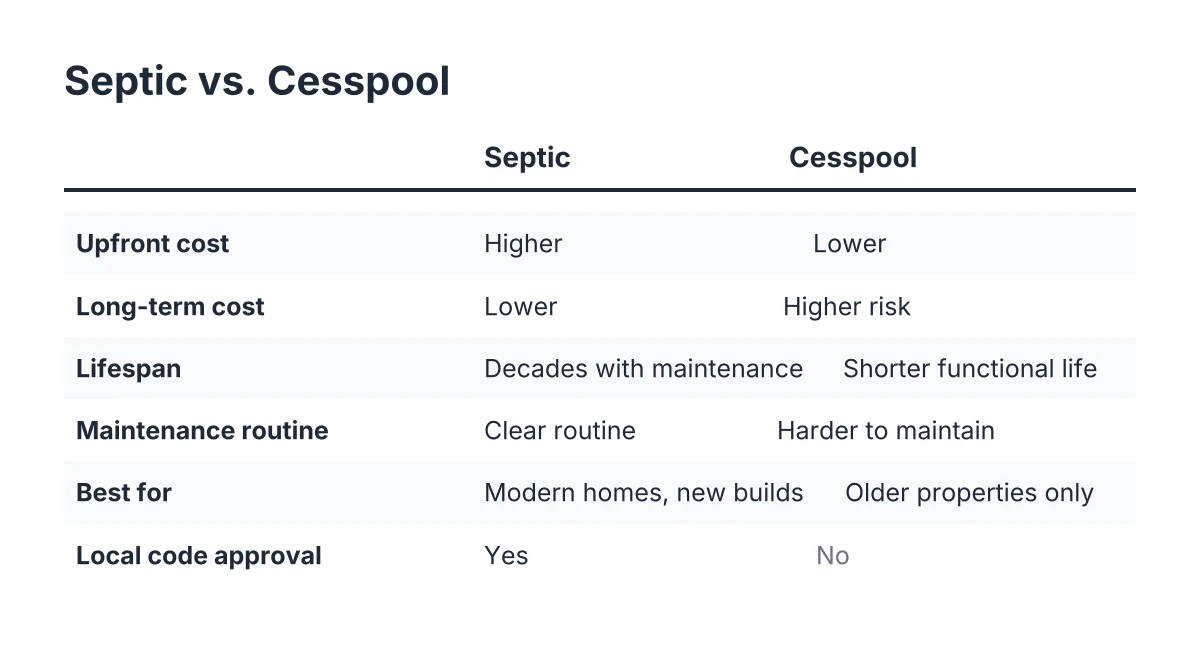
Comparison Table
| Criterion | Septic | Cesspool |
|---|---|---|
| Upfront cost | Higher upfront, more parts to install (tank, drain field, piping) | Lower upfront, simpler pit-style structure |
| Long-term cost | Lower long-term cost with regular septic tank pumping and care | Higher long-term risk, more prone to costly failures over time |
| Lifespan | Typically decades with proper maintenance | Generally shorter functional life, especially in dense soil |
| Maintenance | Routine septic tank pumping and inspection keeps it working | Harder to maintain, no true separation of solids and liquid |
| Best for | Most modern homes and properties needing a permitted system | Older properties already using one, rarely approved for new builds |
Septic vs Cesspool: Strengths and Trade-offs
A septic system is an underground tank paired with a drain field. Wastewater flows into the tank, solids settle out, and the remaining liquid moves out to the drain field, where the soil filters it naturally. This two-stage setup is why septic systems hold up well over time when crews pump and inspect them on a normal schedule. It's also why septic is the standard choice for new construction and replacements in most areas, including here in the High Desert.
The trade-off is that septic systems cost more to install because there's more to build: the tank itself, the drain field, and the piping that connects everything. They also need some attention. Skipping septic tank pumping for too long lets solids build up past what the tank can hold, which can cause a septic backup into the house or damage to the drain field that's expensive to fix. The good news is that this kind of trouble is largely preventable. Regular septic tank pumping, septic tank cleaning, and septic system inspections catch problems while they're still small and cheap to handle, instead of after they've turned into a septic backup or overflow.
Where septic really shines is long-term reliability. A well-maintained system can handle years of daily use without trouble. It's also the system most local code requires now, so if you're replacing anything or buying a property that needs work, septic is likely your only permitted option.
Cesspool: How It Compares to Septic vs Cesspool
A cesspool is a simpler setup: a pit or chamber in the ground that both holds waste and lets liquid seep out through its walls or bottom into the surrounding soil. There's no separate tank and drain field doing distinct jobs. It's all happening in one place. Because a cesspool has less built into it, it usually costs less to install and has fewer moving parts to think about.
That simplicity is also its biggest weakness. Without a tank to hold solids back, more waste ends up seeping directly into the surrounding ground. This means cesspools tend to clog, smell, and fail faster than septic systems, especially in soil that doesn't drain well. Many areas, including much of California, have restricted or banned new cesspool installations because of the risk they pose to groundwater and nearby wells. If you already have one on an older property, it can usually keep working for a while with pumping and care, but you're working with a system that most local rules won't let you rebuild or expand once it fails.
For most homeowners today, a cesspool isn't a system you'd choose to install new. It shows up mostly on older properties where owners installed it decades ago, before current rules existed.
Septic vs Cesspool: The Deciding Factors
Cost Drivers
Septic costs more upfront but saves you money over the long haul, while a cesspool is cheaper to install but risks bigger costs down the road. The extra cost of a septic system comes from building both a tank and a drain field, plus the piping that ties them together. A cesspool skips that separate drain field, which keeps initial costs down. But when it fails or needs replacing, you're often looking at a full system change since most areas no longer approve new cesspools for install.
Lifespan
Septic systems generally outlast cesspools by a wide margin when owners keep up with maintenance. A tank that gets regular septic tank pumping and an occasional inspection can serve a home for a long time, since crews remove the solids before they cause trouble. A cesspool doesn't have that same solids-management step, so it tends to clog and lose function sooner, especially with heavier household use or less permeable soil.
Installation and Local Rules
This factor settles the question for most people before cost or lifespan even come into play. If you're installing new or replacing a failed system, septic is likely your only real option, since most areas have moved away from approving new cesspools. A cesspool only stays relevant if your property already has one from years back and it's still working.
Maintenance
Both systems need some upkeep, but septic gives you a clear maintenance routine to follow. Septic tank pumping, tank cleaning, and periodic inspection are straightforward tasks that keep a septic system working the way it's supposed to. A cesspool is harder to maintain well because it has no separate tank holding solids apart from the rest of the system, so pumping it doesn't fix the underlying design limitation the way it does with septic.
Situational Fit
Your best fit usually comes down to what's already on the property and what your local rules allow. A newer home or a system that needs replacing almost always points to septic. An older property with an existing cesspool that's still working might not need immediate action, but it's worth having it inspected so you know what you're actually dealing with before it turns into an emergency septic backup or overflow.
Which Should You Choose?
Choose Septic if:
- You're building new or replacing a failed system
- You want a setup with a clear, manageable maintenance routine
- You're buying a home and want a system that meets current local requirements
- You'd rather pay more upfront for lower long-term risk
Choose Cesspool if:
- Your property already has a working cesspool and you're not doing new construction
- You understand it may need closer monitoring and won't be eligible for replacement in kind
- You're planning to have it inspected soon to see how much life it has left
Common Questions
Can I replace a cesspool with a new cesspool?
In most areas today, no. Rules around wastewater systems have tightened over the years, and most jurisdictions no longer approve cesspools for new installation because of the risk they pose to groundwater. If your cesspool fails, you'll likely be looking at a septic system as the replacement.
How do I know if I have a septic tank or a cesspool?
If your home is older, it's worth confirming this before you assume anything, since some properties still have a cesspool without the owner realizing it. A septic system inspection can identify what you actually have, locate the tank, and tell you its condition. Septic tank locating is a useful first step if you're not sure what's buried in your yard.
Which one needs pumping more often?
Both need waste removed periodically, but septic systems are built around a clear pumping and cleaning routine that keeps the tank working properly. When you're comparing septic vs cesspool for an existing property, keep in mind that a cesspool without a separate tank can be harder to service well. Pumping it doesn't fix the underlying design the way it does with a septic tank.
What happens if I ignore maintenance on either system?
Skipping maintenance on a septic tank or cesspool can lead to a septic backup or overflow that's messy and expensive to deal with. Warning signs include slow drains, gurgling pipes, standing water in the yard, or odors near the tank or pit. Catching problems early with routine septic tank pumping and inspection is far less disruptive than dealing with a full backup after the fact.
If you need your septic tank serviced, Hesperia Septic can help.
Related guide: septic tank cost — Complete Guide
Leave a Reply