Most people who call about a septic emergency in Hesperia have one thing in common. They did not know their system was in trouble until sewage backed up into a shower or the yard started to smell. An annual septic maintenance plan is the simplest way to stay off that list. It is not complicated, it is not expensive compared to a repair, and it works because septic problems build slowly and quietly. This guide walks through what a maintenance plan actually covers, what you should be doing between service visits, and why the math favors prevention every single time.
Why Septic Problems Never Announce Themselves Early
A septic system does its work underground and out of sight. That is the whole problem. By the time you see a symptom, the failure has usually been developing for months or years.
Here is how it goes wrong. Every conventional septic system has two main components, according to the U.S. Environmental Protection Agency: the septic tank itself and the drain field. The tank holds wastewater long enough for solids to settle to the bottom and grease to float to the top. Only the clarified liquid in the middle should flow out to the drain field, where the soil absorbs and filters it.
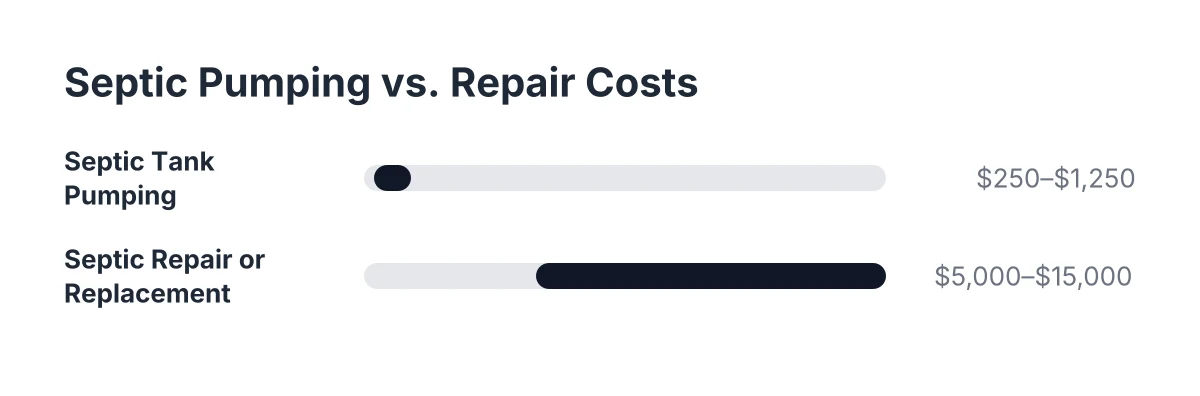
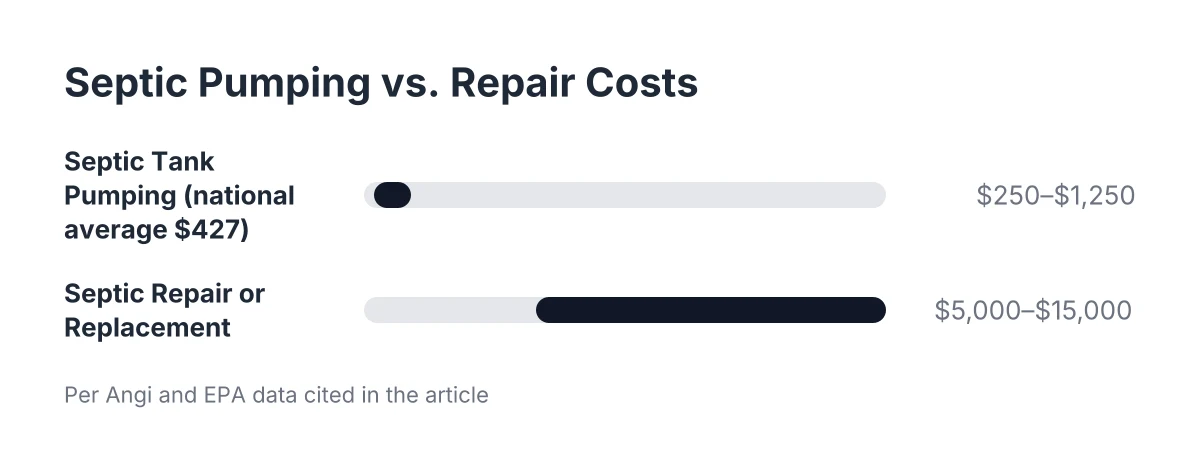
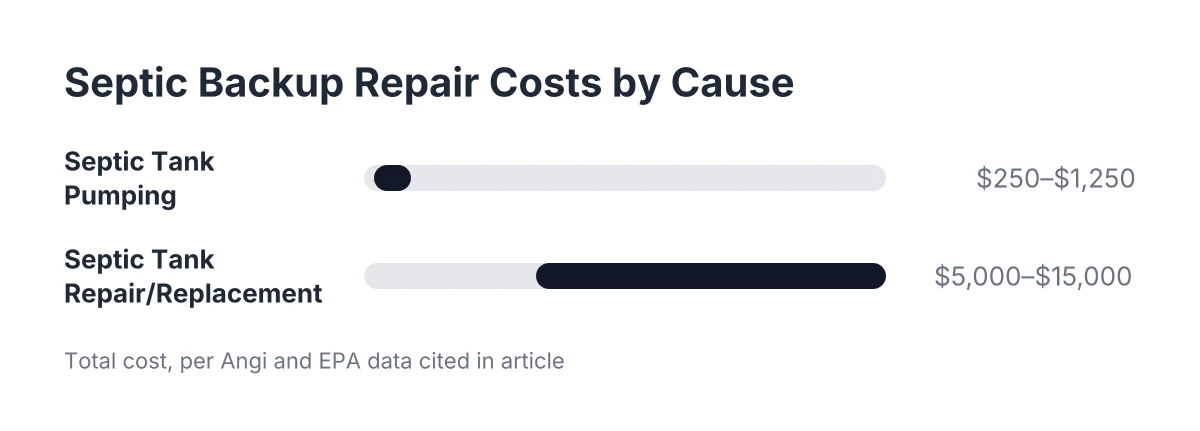
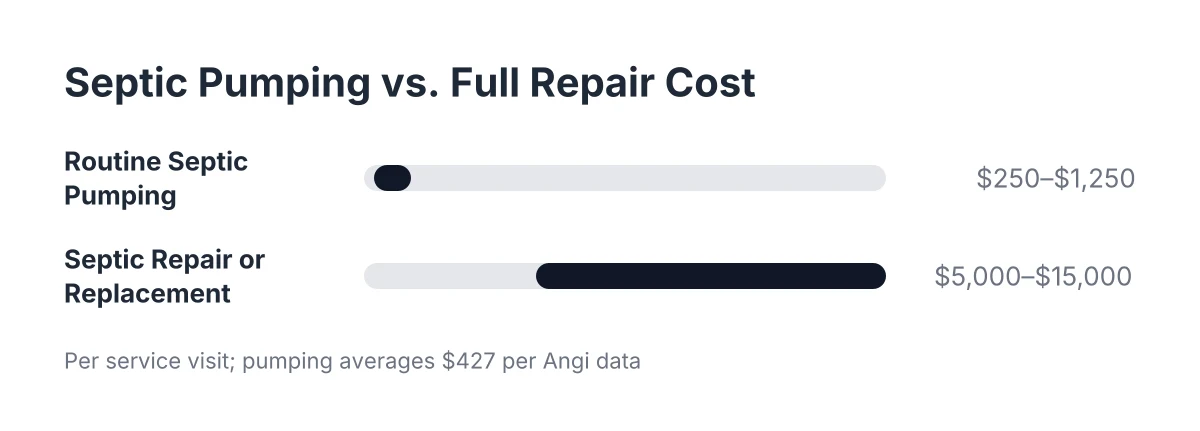
When the tank fills with too much sludge, that separation stops working. Solids start slipping past the outlet and into the drain field, where they clog the soil. The drain field cannot be pumped out or rinsed clean. Once it fails, you are looking at excavation and replacement, and the EPA estimates septic repair or replacement typically costs between $5,000 and $15,000. Routine pumping, by comparison, averages $427 according to Angi data, with a range of roughly $250 to $1,250 depending on tank size and location.
That gap is the entire argument for a maintenance plan. You are trading a modest, predictable service cost for protection against a repair bill that can hit five figures.
What an Annual Septic Maintenance Plan Actually Includes
An annual septic maintenance plan is a scheduled arrangement where a septic professional checks your system on a set calendar instead of waiting for you to notice trouble. The core pieces are a periodic inspection, sludge and scum level measurement, and pumping when the tank actually needs it. The plan replaces guesswork with a record.
Here is what a typical visit under a yearly septic maintenance program covers:
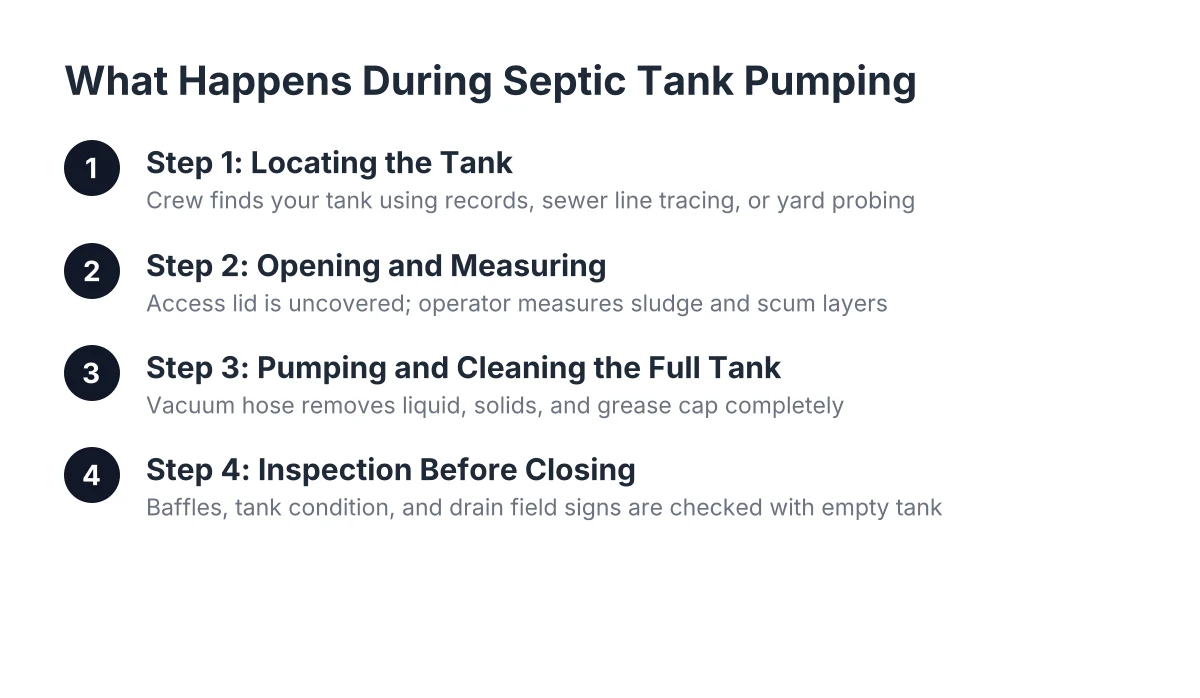
- Locating and opening the tank lid, or confirming access if a riser is installed
- Measuring the sludge layer on the bottom and the scum layer on top
- Checking the inlet and outlet baffles for damage or blockage
- Looking at the tank walls for cracks, corrosion, or root intrusion
- Walking the drain field area for soggy spots, odors, or unusually green grass
- Recording findings so you have a written history of the system
The baffles deserve a word here because most homeowners have never heard of them. According to University of Nebraska-Lincoln Extension, septic tanks use a baffle at both the inlet and outlet, a downward-facing tee that stops solids from floating out and forces them to settle. If a baffle breaks or rots away, solids flow straight to the drain field. An inspection catches that. Nothing else does, because a broken baffle causes no symptom inside the house until the drain field is already taking damage.
Not every visit ends in pumping. That is a feature, not a flaw. The point of a maintenance schedule is to pump when measurements say the tank needs it, and to skip it when the levels are fine. Either way, you know where you stand.
How Often Should a Septic System Be Serviced?
A septic system should be inspected by a professional at least once every three years, according to the U.S. Environmental Protection Agency, and pumped based on measured sludge levels rather than a guess. Alternative systems with pumps, float switches, or other mechanical parts should be inspected once a year per EPA guidance. Household size and habits move those numbers.
For pumping frequency, household load matters more than the calendar. According to Penn State Extension, an active family of four should generally pump every two to three years because of the higher volume of solids and liquid a busy household produces. A retired couple in the same house might stretch that interval; a family of six with teenagers will shorten it.
Garbage disposals change the math dramatically. Homes with disposals generate far more sludge, and the Massachusetts Department of Environmental Protection recommends annual pumping for those households regardless of tank size. If you run a disposal daily on a septic system, your tank is filling much faster than your neighbor's.
This is exactly why a fixed septic tank maintenance schedule beats waiting for symptoms. Slow drains, gurgling pipes, and yard odors are not early warnings. They are late-stage signs that solids have already moved where they should not be. A scheduled visit measures the sludge before it crosses that line.
The Everyday Habits That Decide Your System's Lifespan
The service visits are half the plan. The other half is what your household sends down the drain the rest of the year. A septic tank is a biological system; bacteria break down waste, and anything that kills those bacteria or clogs the tank works against you.
What Not to Flush With a Septic System
Keep this list short and absolute. If it did not come out of a human body and it is not septic-safe toilet paper, it does not go in the toilet:
- Wipes of any kind, even ones labeled "flushable"
- Feminine hygiene products, dental floss, and cotton swabs
- Paper towels and facial tissues
- Cat litter
- Medications, which harm the bacteria the tank depends on
- Cigarette butts
Kitchen and Laundry Rules
Grease and cooking oil are the biggest kitchen offenders. They float, build up the scum layer, and can slip into the drain field where they coat the soil. Pour grease into a can, let it harden, and trash it.
Spread laundry loads across the week instead of running five loads on Saturday. Flooding the tank with hundreds of gallons in one afternoon pushes water through before solids can settle. In addition, go easy on harsh drain cleaners and heavy bleach use; both kill the bacteria doing the work.
Protect the Drain Field
The drain field needs three things: no traffic, no roots, and no extra water. Never drive or park on it, even with a light vehicle. Keep trees and deep-rooted shrubs well away, since roots hunt for the moisture in those lines. Route roof gutters and landscape drainage away from the field so the soil is not saturated before your wastewater even arrives.
One more thing worth saying plainly: skip the additive products. Regular pumping and periodic professional inspection prevent septic problems; a jug of bacteria promising to let you skip pumping does not. There is no additive that removes sludge from a tank. Only a pump truck does that.
When You Have No Records at All
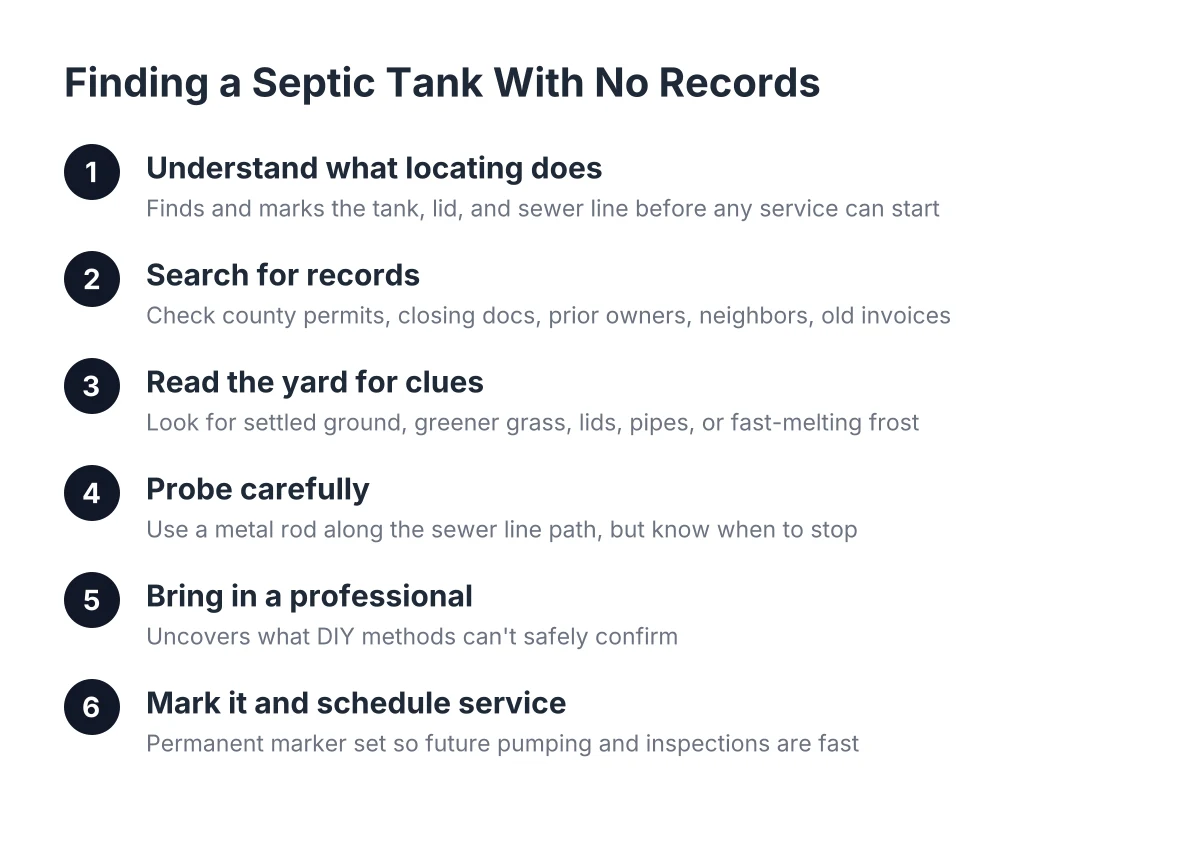
Plenty of High Desert properties change hands with zero septic paperwork. No pumping receipts, no permit drawings, sometimes not even a visible lid. If you just bought land or a home in Hesperia and the seller could not tell you where the tank is, you are not starting a maintenance plan; you are starting from scratch.
Suppose you close on a two-acre property off a dirt road outside Hesperia. The listing said "septic," the seller inherited the place and never lived there, and there is no riser or lid anywhere in sight. In that scenario, the first step is a septic tank locating service. A crew traces the sewer line from the house, finds the tank, and digs to expose the lid. From there, an inspection tells you the tank's condition, whether the baffles are intact, and how full it is.
That first locate-and-inspect visit becomes year zero of your maintenance record. Everything after it is documented: tank location marked, condition noted, pumping dates logged. If you ever sell, remodel, or pull a county permit, that paper trail answers the questions you could not answer when you bought the place. For buyers still in escrow, a written inspection report is also leverage; it either confirms the system is sound or gives you a repair number to negotiate with before closing.
What an Annual Septic Maintenance Plan Costs Compared to a Failure
The honest way to judge any maintenance plan is to put the numbers side by side. Pumping averages $427 according to Angi, and inspections are a fraction of that. Failure sits at the other end. The EPA puts typical repair or replacement between $5,000 and $15,000, and that figure does not include landscaping repair or the days your household spends without working drains.
Consider a hypothetical Hesperia homeowner who skips septic tank maintenance for eight years to save money. Say the tank needed pumping at year three and again at year six, so the "savings" total somewhere around $850 in skipped service. By year eight, solids have been washing into the drain field for years. The drains slow, then back up on a holiday weekend, and an emergency pump-out buys a few weeks. The diagnosis that follows is a saturated drain field, and the estimate lands in the EPA's repair range. In that scenario, avoiding two routine visits cost ten times what they would have.
Emergency calls also come with pressure that routine visits do not. When sewage is backing up into your tub, you are making a same-day decision under stress, often at a premium. A homeowner on a maintenance schedule makes the same decisions calmly, months ahead of any crisis.
There is one trade-off worth stating. If you are on a tight budget and your system is new, healthy, and lightly used, some plan visits will find nothing wrong. You are paying for confirmation. That is still cheaper than the alternative, but it is fair to know that prevention sometimes means paying to hear good news.
Signs Your System Is Already Past the Maintenance Stage
A maintenance plan prevents problems; it does not reverse ones already underway. Watch for these signs of septic system failure, and treat them as a reason to call a professional now rather than start a plan later:
- Drains running slow throughout the whole house, not just one fixture
- Gurgling sounds from toilets or drains after you run water
- Sewage odor inside the house or in the yard near the tank or drain field
- Wet, spongy ground or standing water over the drain field
- Grass over the drain field that is greener and taller than the rest of the yard
- Sewage backing up into tubs, showers, or floor drains
Any one of these means the system needs attention, and backing sewage means it needs attention today. However, a single slow drain is usually a plumbing clog, not a septic failure; do not panic over one sluggish sink. The pattern to worry about is the whole house acting up at once, because everything in the house meets at the septic tank.
Diagnosing why a system is failing takes a professional. A backed-up tank, a broken baffle, a crushed line, and a saturated drain field all produce similar symptoms above ground, and the fixes range from a routine pump-out to major excavation. This is not a guess-and-check project for a homeowner.
Building Your Plan: A Simple Starting Point for 2026
You do not need anything elaborate to start. Here is a realistic first-year sequence for a Hesperia homeowner, or a new owner with no records, putting an annual septic maintenance plan in place in 2026:
- Locate the tank if you do not already know where it is, and mark it. Consider a riser so future visits do not require digging.
- Get a baseline inspection with measured sludge and scum levels, and keep the written report.
- Pump if the measurements call for it, and log the date.
- Fix household habits: no wipes, no grease down the drain, spread out laundry, protect the drain field.
- Set the next inspection date based on your household size and system type, then put it on the calendar like a dental cleaning.
From year two onward, the plan mostly runs itself. A scheduled visit, a quick measurement, a pump-out every few years when the levels call for it. Your file grows, your system stays documented, and the odds of ever making a panicked weekend call drop toward zero.
The homeowners who end up on the emergency list are not careless people. They simply owned a system that never gave them a reason to think about it until the day it failed. A maintenance plan gives you that reason on your schedule, at routine prices, with time to decide. That is the whole pitch, and the numbers back it up.
If you need your septic tank serviced, Hesperia Septic can help.
Prefer to talk it through? Call (760) 249-7872 — a quick call is usually the fastest way to get a straight answer for your situation.