Tag: septic tank pumping

  • How Much Does Emergency Septic Service Cost?

    emergency septic service cost

    How much does emergency septic service cost? The honest answer depends on three things: how much waste is in your tank, how hard the tank is to reach, and whether the problem is a full tank or something bigger like a failing drain field. Anyone who quotes you a firm septic pump cost before knowing those three things is guessing. This guide walks through each factor in plain terms so you can tell which ones apply to your property. By the end, you will know exactly what to have ready to get a real number for your Hesperia home.

    What Drives the Cost of Emergency Septic Service

    Septic pricing is not random. A handful of factors decide most of the bill, and you can figure out where you stand on each one before you call anyone.

    Tank size and how full it is

    The bigger the tank, the more waste the truck has to haul away, and hauling is a large part of what you pay for. A small tank that is only half full takes less time and less disposal capacity than a large tank that is packed to the lid. You may not know your exact tank size, and that is fine. If you know how many bedrooms your home has, or if you have paperwork from a past pumping, that gives a provider enough to work with. More volume means a higher price. Less volume means a lower one.

    How hard the tank is to reach

    If your tank lids are exposed and the truck can park close, the crew gets right to work. If the lids are buried under two feet of dirt, hidden under a deck, or nobody knows where the tank is, someone has to find it and dig before pumping can start. That is labor, and labor raises the price. Walk your yard before you call. If you can see the lids or you know where they are, say so. If you have no idea, ask about septic tank locating, since finding the tank is a service in itself.

    Emergency timing versus scheduled service

    A backup at 7 p.m. on a Sunday costs more to handle than the same job booked for a weekday morning. After-hours and same-day calls pull a crew and a truck outside normal routing, and that shows up in the price. This is the trade-off at the heart of every emergency septic service call: you pay for speed. If sewage is coming up in your tub, speed is worth it. If the tank is full but nothing is backing up yet, you may be able to schedule for a regular slot and pay less.

    What the problem actually is

    Septic tank pumping fixes a full tank. It does not fix a crushed pipe, a clogged inlet baffle, or a drain field that has stopped absorbing water. If pumping alone solves your problem, you are on the low end of the range. If the crew pumps the tank and the backup returns in days, something else is wrong, and diagnosing and fixing it costs more. A septic system inspection can tell you which situation you are in before you spend money on repeat pumping that will not hold.

    How tank condition affects what you'll pay

    A tank that gets pumped on a regular schedule has manageable sludge. A tank that has been ignored for many years can have a thick, compacted layer of solids that takes extra time, water, and effort to break up and remove. Some jobs need septic tank cleaning, which goes beyond a standard pump-out to clear the buildup on the walls and floor of the tank. If you cannot remember the last time your tank was pumped, plan for the higher side.

    Local disposal and travel

    Every gallon pumped out of your tank has to go to a licensed disposal facility, and those facilities charge by volume. Distance matters too. A property in Hesperia near main roads is a shorter trip than a remote parcel out in the High Desert with a long dirt driveway. Local crews with nearby disposal options keep this part of the cost lower than an outfit trucking in from far away.

    Cost Factor Table

    Factor Pushes the price down when… Pushes it up when…
    Tank size and volume The tank is smaller or not completely full The tank is large or packed to the lid
    Access to the tank Lids are exposed and the truck can park close Lids are buried, under structures, or the tank must be located
    Timing You can schedule during regular weekday hours You need same-day or after-hours emergency response
    Scope of the problem Pumping alone solves it The drain field, pipes, or baffles also need work
    Tank condition The tank has been pumped on a regular schedule Years of buildup require full cleaning, not just pumping
    Location and disposal The property is close to main roads and disposal sites The property is remote with long travel each way

    How to Get an Accurate Septic Pumping Estimate

    You can turn a vague ballpark into a real quote with one short phone call, if you have the right details ready. Gather these before you dial:

    • What you are seeing. Slow drains, gurgling, sewage backing up inside, or standing water in the yard. Symptoms tell the crew whether this is a pump-out or a bigger repair.
    • Tank details, if you have them. Size, age, and the date of the last pumping. No paperwork? The number of bedrooms in your home is a useful stand-in.
    • Access information. Whether the lids are exposed, where the tank sits on the property, and how close a truck can get.
    • Timing. Whether you need someone now or can wait for a scheduled slot.

    A good quote spells out what is included: pumping the full tank, disposal fees, any digging to expose lids, and whether an inspection comes with the visit. If a quote is one flat number with no detail, ask what happens when the crew finds buried lids or a tank that needs cleaning instead of a simple pump-out. That is where surprise charges live.

    Estimates differ between providers for real reasons: disposal costs, travel distance, crew availability, and how each company handles digging and locating. That is why two quotes for the same tank can land far apart, and why comparing them line by line matters more than comparing the bottom numbers.

    The fastest way to a personalized number for your situation is the Septic Tank Pumping Cost Calculator. Plug in what you know about your tank and property and get an estimate built on your details, not a generic figure.

    Ways to Keep the Cost Down

    You cannot control tank size, but you can control several things that move the price.

    • Do not wait for the backup. The cost of septic tank pumping on a schedule is a fraction of what an overflow costs once sewage is in the house and you are paying emergency rates plus cleanup.
    • Expose your own lids. If you know where the tank is and the lids are shallow, digging them out yourself before the crew arrives can remove a labor charge from the bill. Skip this if you are unsure where to dig.
    • Schedule during regular hours when you can. If drains are slow but nothing is overflowing, booking a weekday slot instead of a night call keeps emergency pricing off the invoice.
    • Get two or three itemized quotes. For non-emergency work, comparing detailed quotes shows you which charges are standard and which are padding. In a true emergency, at least ask each provider what the total covers.
    • Pair pumping with an inspection. If something deeper is wrong, finding it during the same visit beats paying for a second pump-out in three months when the symptom comes back.

    Cost Questions People Ask

    What goes into septic pump replacement cost?

    If your system uses an effluent pump or lift pump to move wastewater, replacing that pump is a repair job separate from tank pumping. The price depends on the pump type, how hard it is to access, and whether wiring or floats also need work. An inspection identifies whether the pump is the actual problem before you pay to replace it. Get that diagnosis first, because a dead pump and a full tank can produce the same backup symptoms.

    Why do septic services near me show such different prices?

    Because the companies behind them have different costs. Disposal fees, travel distance from their yard to your property, and whether they handle digging and locating in-house all shape the quote. A local Hesperia crew has shorter travel and local disposal options, which is one reason local pricing can beat an outfit driving in from outside the High Desert. Compare what each quote includes, not just the final number.

    Does emergency pumping cost more than scheduled pumping?

    Usually, yes. Same-day and after-hours calls pull a truck outside its normal route, and that premium ends up on your bill. The work itself is the same. If your situation allows a scheduled visit, that is the cheaper path; if sewage is backing up into your home, the premium buys you a stopped emergency, which is what matters in the moment. You can read more about what an urgent call involves in our guide to emergency septic pumping in Hesperia.

    Will pumping the tank fix my septic backup for good?

    Only if a full tank caused the backup. If the drain field is saturated or a pipe is broken, the tank will fill again fast and the symptoms will return. That is why pairing pumping with an inspection is worth it when backups keep happening. Paying once to find the real cause beats paying for pump-out after pump-out.

    The Bottom Line

    Your price comes down to tank volume, access, timing, and whether pumping alone fixes the problem, and no one can give you an honest number without those details. Gather what you know about your tank, get two or three itemized quotes, and use the Septic Tank Pumping Cost Calculator for a fast estimate built on your property. If sewage is already backing up, skip the research and call now; the cheapest emergency is the one that ends quickly.

    If you need your septic tank serviced, Hesperia Septic can help.

    Related Reading

  • How Much Does Septic Tank Cost?

    septic system cost

    How much does a septic tank cost? The honest answer depends on what your system needs, because septic system cost swings on three things: whether you need pumping, a repair, or a full replacement; the size and condition of your tank; and how hard it is to reach on your property. Anyone who quotes you a firm number before knowing those three things is guessing. This guide walks through each factor in plain language so you can tell which side of the price line you sit on. By the end, you will know exactly what to have ready to get a real number for your Hesperia property.

    What Drives the Cost of Septic Tank Pumping

    Scope: pumping, repair, or replacement

    This is the biggest fork in the road. Routine septic tank pumping is the low end of the scale. A repair to a lid, baffle, or pipe sits in the middle. Replacing a tank, or installing a new tank and leach field, is the expensive end because it involves excavation, materials, permits, and inspection. Before you assume the worst, read when pumping solves the problem versus when a repair is needed. Many backups and slow drains trace back to a full tank, not a broken one.

    Tank size and how full it is

    A bigger tank holds more waste, and more waste means more time and more disposal volume when the truck arrives. If your tank has gone years without service, the solids layer at the bottom takes longer to break up and remove, which adds labor. You can usually tell which side you are on by your service history. Regular pumping on a schedule keeps each visit at the routine end. A tank that has been ignored until it backed up will cost more to handle.

    Access and dig conditions

    The crew has to find your tank, uncover the lids, and get the truck's hose to it. A tank with risers at grade level, a clear driveway, and a short hose run is the cheap version. A tank buried under two feet of soil, hidden under a deck, or sitting far from where the truck can park pushes the price up. If you do not know where your tank is, septic tank locating is a service on its own, and it comes before any pumping can happen.

    Condition of the tank and drain field

    An aging concrete tank with a cracked lid, a failed baffle, or a leach field that no longer absorbs water changes the job entirely. A pumping visit can reveal these problems, which is one reason an inspection matters before you buy or sell a property. Material choice matters too when replacement is on the table. Our guide to concrete septic tanks and how they compare to plastic and fiberglass covers what each material means for lifespan and price.

    System type

    A standard gravity septic system is the simplest and cheapest kind to install and maintain. An aerobic system, which uses a motor and air pump to treat waste more actively, costs more to install and more to keep running because it has mechanical parts that need service. If you are pricing a new install, the type of system your soil and county requirements allow will shape the number more than almost anything else. If you are comparing system styles from scratch, our breakdown of septic versus cesspool systems explains the tradeoffs.

    Timing and urgency

    An emergency call for a septic backup on a weekend costs more than a scheduled weekday pumping. Sewage in the house or standing in the yard forces the work to happen now, on the provider's overtime clock. If your system is merely due for service, scheduling ahead keeps you in the routine pricing tier and out of the emergency one.

    Cost Factor Table

    Factor Pushes the price down when… Pushes it up when…
    Scope of work The tank just needs routine pumping You need repairs, a new tank, or a full tank and leach field install
    Tank size and fill level The tank is average size and serviced on schedule The tank is large or has gone years between pumpings
    Access Lids are at grade and the truck parks close The tank is buried, hidden, or far from truck access
    Tank and field condition Tank and drain field are sound Baffles, lids, or the leach field need work
    System type It is a standard gravity system It is an aerobic system with pumps and motors
    Timing You schedule service ahead of trouble It is an emergency backup on a night or weekend

    How to Get an Accurate Septic Tank Estimate

    You do not need to be a septic expert to get a solid quote. You just need to hand the provider the right facts. Have these ready:

    • Tank location and access. Do you know where the lids are? Are they exposed or buried? How close can a truck get?
    • Service history. When was the tank last pumped? If you have no records, say so; that changes what the crew plans for.
    • Symptoms. Slow drains, gurgling, odors, wet spots in the yard, or a full backup all point to different scopes of work.
    • Property details. Number of bedrooms and bathrooms, and whether the home is your full-time residence or a rental.

    A good quote spells out what is included: pumping the tank, digging to reach lids, disposal of the waste, and a basic look at the tank's condition while it is open. It should also state what triggers extra charges. Estimates differ between providers because some quote a bare pumping price and add fees for digging, extra volume, or disposal later, while others fold everything into one number. That is why two quotes for the same job can look far apart on paper. Our guide to hidden fees septic companies charge in Hesperia shows the line items to ask about before anyone starts digging.

    The fastest way to a personalized number is the Septic Tank Pumping Cost Calculator. Answer a few questions about your tank and property and get an estimate built for your situation, not a generic figure.

    Ways to Keep the Cost Down

    Pump on a schedule, not after a backup. Routine pumping is the cheapest thing you will ever do for your septic system. Waiting until sewage backs up into the house converts a routine visit into an emergency call plus cleanup, and it can push solids into the drain field, where the expensive damage happens. Understanding the factors that drive septic tank cost helps you prioritize this preventative maintenance.

    Expose your own lids before the crew arrives. If you know where the tank is and you are able to dig, uncovering the lids yourself removes the digging labor from the bill. Ask first so you dig in the right spot.

    Get two or three itemized quotes. Not to grind the lowest bidder, but to see what each provider includes. A quote that lists digging, disposal, and inspection separately tells you more than a single vague number.

    Fix small problems while the tank is open. A cracked lid or a failing baffle costs less to handle during a pumping visit than as a separate trip later. Ask the crew what they see while the tank is exposed.

    Watch what goes down the drain. Grease, wipes, and heavy garbage disposal use fill a tank faster and stress the drain field. Slower fill means longer stretches between pumpings and a leach field that lasts.

    Cost Questions People Ask

    What does septic tank replacement cost?

    Replacement is the top of the price scale because it means excavation, a new tank, permits, and inspection, and often new plumbing connections. The final number depends on tank material, tank size, soil conditions, and how deep the crews have to dig. Before budgeting for replacement, get the tank inspected; some "failed" tanks just need pumping and a repair.

    What does it cost to install a septic tank and leach field?

    A full install is priced by the whole system, not just the tank. The leach field is often the larger share because it requires soil testing, trenching, and enough yard space to lay the lines. Lot size, soil drainage, and county permit requirements in the High Desert all move the number, so an on-site evaluation is the only way to get a real figure.

    How much does an aerobic septic system cost compared to a standard one?

    More, both upfront and over time. An aerobic system adds an air pump, a motor, and sometimes a spray or drip distribution setup, and those parts need ongoing service. Standard gravity systems have no moving parts, which is why they stay cheaper for the life of the system. Aerobic systems earn their keep on lots where soil or space rules out a conventional leach field.

    Why do septic quotes vary so much between companies?

    Because they are not always quoting the same job. One company's number may cover pumping only, while another includes digging to the lids, disposal fees, and a condition check. When you compare quotes, compare the line items, not just the totals. The lowest headline septic tank cost can end up the highest bill once the add-ons land.

    The Bottom Line

    Your price comes down to scope, tank size and access, and how urgent the job is, and no honest provider can name a number without those facts. Gather two or three itemized quotes, ask what each one includes, and use the Septic Tank Pumping Cost Calculator to get a number matched to your property. A scheduled pumping today is the cheapest version of this job you will ever see.

    If you need your septic tank serviced, Hesperia Septic can help.

    Related Reading

  • Septic Backup Causes: Roots, Clogs, or a Full Tank? How to Tell What You’ve Got

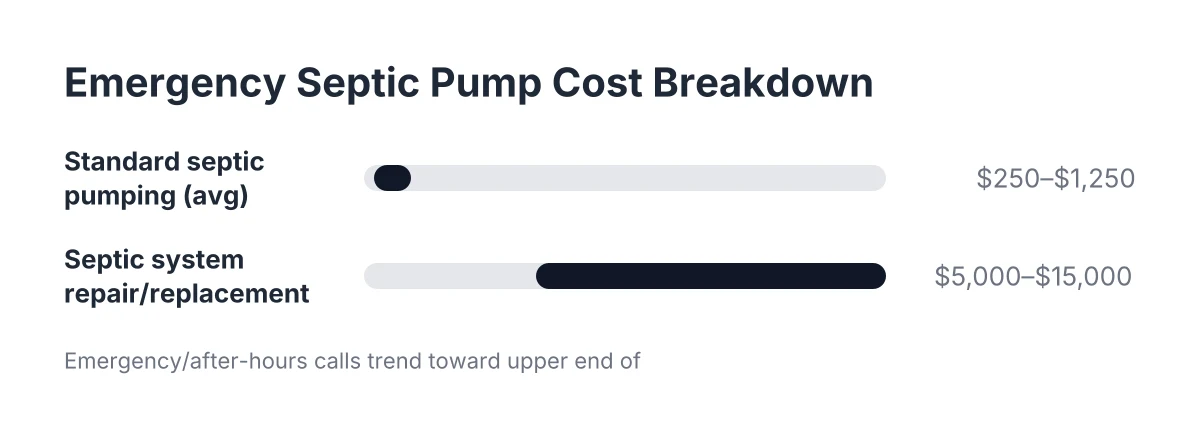
    Cost range chart comparing septic tank pumping versus repair costs to diagnose septic backup
    The cost of fixing a septic backup depends heavily on the cause, from a routine pump-out to a full repair.

    A backed-up septic system rarely announces the reason. Sewage rises in a shower drain, a toilet gurgles, or a tenant calls about a smell, and you have no idea whether you need a routine pump-out or a real repair. Sorting out septic backup causes takes some detective work, but the clues are usually there if you know where to look. To diagnose septic backup correctly, this guide walks through the three most common culprits—a full tank, a clog in the line, and tree root intrusion—and shows you how to read the symptoms so you can decide what to do before the situation gets worse.

    Here in Hesperia and the surrounding High Desert, septic systems do most of the wastewater work. According to the U.S. Environmental Protection Agency, more than one in five U.S. households depend on individual septic systems or small community cluster systems to treat their wastewater. Out here that share runs much higher, so knowing how to read your system is a practical skill, not a niche one.

    Why the Cause Matters Before You Call Anyone

    The cause of a septic backup decides both the fix and the cost. A full tank needs septic tank pumping, which is routine work. A clog in the line between the house and the tank might need a snake or jetting. Root intrusion or a failing drain field is a bigger conversation, sometimes involving excavation or replacement.

    Those price gaps are not small. According to Angi data, septic tank pumping averages $427, ranging from $250 to $1,250 or more depending on tank size and location. Meanwhile, the EPA estimates septic tank repair or replacement typically costs between $5,000 and $15,000. That is the difference between an afternoon appointment and a project you have to budget for.

    Therefore, spending ten minutes reading the symptoms before you pick up the phone pays off. You will describe the problem accurately, the crew will show up with the right equipment, and you will not pay for a pump-out that solves nothing because the real problem is roots in the outlet line.

    First, Rule Out the Simple Stuff: Is the Tank Just Full?

    A full septic tank is the most common reason a system backs up, and it is also the cheapest to fix. Solids build up in every tank over time. When the sludge layer gets deep enough, waste has nowhere to go, and it pushes back toward the house or out toward the drain field.

    Signs that point to a full tank rather than something worse:

    • Drains all over the house are slow, not just one fixture
    • Toilets gurgle or bubble after you flush
    • You cannot remember the last time the tank was pumped, or it has been more than a few years
    • Sewage odors show up near the tank lid or inside the house
    • The backup came on gradually over weeks, not overnight

    The pattern to notice is that a full tank affects the whole house. Every fixture drains into the same tank, so when the tank is the problem, everything slows down together. If only one sink or one toilet is misbehaving, the problem is more likely a localized clog in that fixture's line, which is a plumbing issue rather than a septic one.

    However, one hidden factor can fill a tank faster than you expect: excess water. According to the U.S. Environmental Protection Agency, a single leaky or running toilet can add as much as 200 gallons of extra water per day into a septic system. That extra flow stirs up solids and pushes them toward the outlet before the tank can settle them out. If your tank seems to fill quickly between pump-outs, check for running toilets and dripping fixtures before assuming the tank itself has failed.

    How to Diagnose Septic Backup Caused by Roots: Signs and Confirmation

    Root intrusion produces a different symptom pattern than a full tank. Roots grow into pipe joints, the tank inlet or outlet, and drain field lines, because that is where the moisture is. In the High Desert, where surface water is scarce, tree and shrub roots hunt for septic lines aggressively. A hairline gap in a pipe joint is an open invitation.

    Watch for these signs that roots, not a full tank, are behind the backup:

    1. Recurring backups after pumping. The tank gets pumped, everything works for a few weeks or months, then the same symptoms return. Roots blocking the inlet or outlet cause this cycle because pumping empties the tank but does not remove the obstruction.
    2. One line acts up while others work. Roots invade at a specific point. If the kitchen side of the house backs up but the bathrooms drain fine, a root mass in one branch line is a strong suspect.
    3. Unusually green or lush vegetation over the lines. In Hesperia's dry landscape, a green stripe over your sewer line or drain field stands out. Plants thriving there are often feeding on leaking wastewater.
    4. Gurgling that persists after pumping. Air trapped behind a partial root blockage keeps making noise even when the tank has plenty of capacity.
    5. A camera inspection shows it directly. This is the only way to know for certain. A septic system inspection with a camera can spot root hair, root masses, and the cracked joints they entered through.

    The honest answer is that you cannot confirm the cause of a septic backup from the surface alone. Symptoms narrow the odds, but a camera or a look inside the tank settles the question. If you have mature trees, especially thirsty species, within about 20 to 30 feet of your tank or lines, treat roots as a live possibility whenever backups recur.

    Why Roots Are a Bigger Problem Than a Clog

    A clog is debris; roots are a living, growing organism. Cut them back and they return through the same gap, usually thicker. Worse, the gap they entered through is itself damage. Roots widen cracks as they grow, and over time they can crush or separate pipe sections entirely.

    That is why root problems tend to escalate in cost the longer they wait. Early on, cutting the roots and repairing one joint may handle it. Left for years, the same intrusion can wreck a drain field, and drain field replacement sits at the top end of that $5,000 to $15,000 EPA repair estimate. Catching root intrusion during a routine septic system inspection is one of the strongest financial arguments for scheduled maintenance.

    Clogs and Blockages: The Middle Ground

    Between a full tank and root damage sits the ordinary clog. Grease, wipes, paper towels, feminine products, and food solids all cause blockages in the line between the house and the tank, or at the tank's inlet baffle. Clogs share some symptoms with root intrusion, which is why the two get confused.

    The main difference is history. A clog usually follows a specific event: a holiday weekend with a full house, a garbage disposal working overtime, or a tenant flushing things they should not. Root intrusion builds slowly and recurs. If your system worked fine for years and then backed up suddenly after heavy use, a clog is the likelier story.

    For non-residential properties, grease is the standout offender. A restaurant manager in Hesperia knows this pattern well: the health inspector flags the grease trap, drains in the kitchen slow down, and suddenly grease trap pumping becomes urgent instead of scheduled. Grease that escapes the trap hardens in downstream lines and behaves like a permanent clog. Putting grease trap pumping on a regular calendar, rather than waiting for an inspection citation, keeps that whole chain of problems from starting.

    Symptom-by-Symptom: What Each Warning Sign Usually Means

    Different symptoms point to different failures. Use this section as a quick translation table when you notice something off.

    Slow Drains Throughout the House

    Slow drains across every fixture usually mean the septic tank is full or the main line to the tank is restricted. When your whole house slows down at once, the shared component, the tank or main line, is the problem. Start with septic tank pumping and ask the crew to check the inlet and outlet baffles while the tank is open.

    If drains stay slow after a pump-out, the restriction is downstream or the drain field is not accepting water. That moves the conversation from routine service to diagnosis.

    Septic Tank Smell in the Yard

    A sewage smell in the yard points to wastewater reaching the surface, most often from a full tank, a failing drain field, or a leaking line. Odor near the tank lids alone can mean the tank is overdue for pumping. Odor spread across the drain field area, especially with damp ground, suggests the field is saturated or damaged.

    In desert soil, smells travel and surface moisture evaporates fast, so do not wait for standing water to take odor seriously. By the time you see pooling in Hesperia's climate, the underlying saturation is usually well established.

    Wet Spot Over the Septic Tank or Drain Field

    A wet spot over the septic tank or drain field means wastewater is escaping the system, and in the High Desert it is one of the clearest red flags you can get. Rain rarely explains soggy ground here. Effluent surfacing means the tank is overflowing, a line has broken, or the drain field can no longer absorb what the house sends it.

    Root damage is a frequent driver of this symptom. A root-cracked distribution line dumps water into one spot instead of spreading it across the field, and that spot turns wet and green. Treat any persistent wet area as urgent, keep kids and pets away from it, and get the system inspected before using more water than necessary.

    Sewage Backing Up Into the House

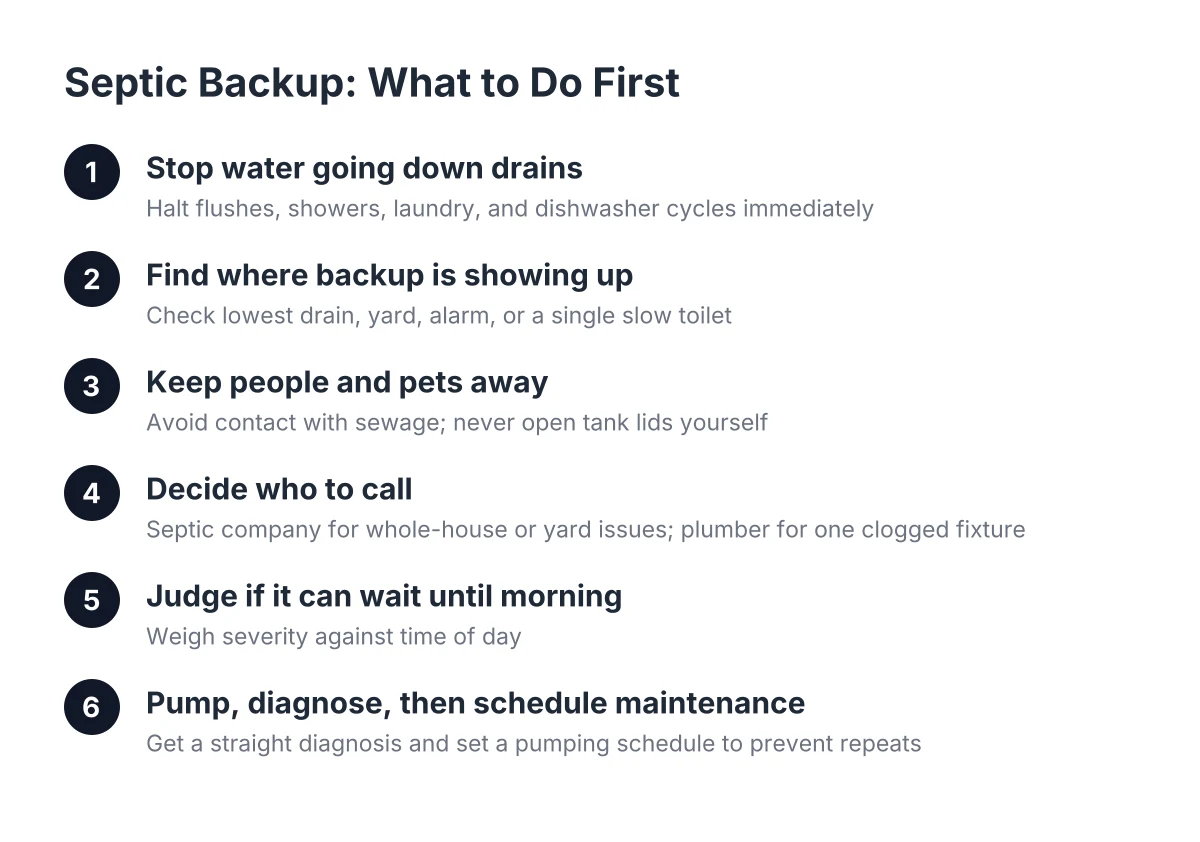
    Sewage in tubs, showers, or floor drains means the system has nowhere left to send wastewater, which makes it the most urgent symptom on this list. The lowest drains in the house back up first because gravity pushes overflow to them. Stop running water immediately; every flush and every load of laundry adds to what is already backing up.

    This is emergency territory regardless of cause. Emergency septic pumping can relieve the immediate pressure by emptying the tank, and what happens during that visit tells you a lot. If pumping restores normal flow, the tank was the problem. If water keeps backing up with an empty tank, the blockage or failure is elsewhere, and you have narrowed the diagnosis in one step.

    A Real-World Example: The Rental Property Callback

    Consider a scenario landlords with septic properties will recognize. You manage a rental in Hesperia, and tenants report a sewage smell and a slow shower. You schedule septic tank pumping, the crew empties the tank, and the tenants confirm everything works. Six weeks later, the same call comes in.

    At this point, the pattern itself is the diagnosis. A tank does not refill with solids in six weeks under normal use. Either something is loading the system abnormally, such as a running toilet adding water around the clock, or something structural is wrong, and with mature trees on many older High Desert lots, root intrusion at the tank outlet is a common finding. A camera inspection on the second visit costs far less than a third and fourth pump-out that solve nothing.

    For an owner who is not on-site, this is also the argument for working with one local crew that keeps records. When the same company pumped the tank last time, they can compare sludge levels, spot abnormal refill rates, and tell you whether you are dealing with maintenance or damage. That history is what turns a recurring fire drill into a managed system.

    How Professionals Diagnose Septic Backup and Sort Through Root Issues

    Professional diagnosis follows a process of elimination, and understanding it helps you evaluate what a crew tells you. Effective septic system troubleshooting starts at the tank because the tank reveals the most for the least effort. Here is the typical sequence:

    1. Locate and open the tank. On older properties, septic tank locating is sometimes step one, since buried lids and missing records are common.
    2. Check the levels. A tank overfull with liquid suggests the outlet or drain field is not taking water. A tank at normal level with a house that will not drain points to a blockage between house and tank.
    3. Inspect the baffles. Root hair at the inlet or outlet is visible evidence, and damaged baffles let solids escape into the drain field.
    4. Pump the tank and observe. Watching how the tank behaves during and after pumping, whether water flows back in from the drain field side, for example, narrows the cause further.
    5. Run a camera if needed. For recurring problems, a camera in the lines confirms roots, breaks, or bellies in the pipe that nothing else can prove.

    Ask any crew you hire which of these steps they performed and what they found. A good answer names specifics: sludge depth, baffle condition, where the water sat. A vague answer means you paid for a pump-out, not a diagnosis.

    One trade-off deserves honesty here. If the diagnosis lands on major root damage or drain field failure, pumping and root cutting are stopgaps, not cures, and you should get a repair assessment from a qualified professional before spending more on temporary fixes. Ongoing pump-outs on a failed field burn money without solving anything.

    Preventing the Next Backup

    Prevention looks different depending on which cause you are guarding against, so match the habit to the risk.

    • Against a full tank: put pumping on a schedule instead of waiting for symptoms. Your pumping history and household size determine the right interval, and a local crew that has seen your tank can recommend one based on actual sludge levels rather than a generic rule.
    • Against clogs: keep grease, wipes, and paper towels out of the drains. For commercial kitchens, keep grease trap pumping on a fixed calendar tied to your actual volume, not the inspection cycle.
    • Against roots: know where your lines run before planting anything, and keep water-hungry trees far from the tank and drain field. If mature trees already sit near the system, periodic camera inspections catch intrusion while it is still a joint repair instead of a field replacement.
    • Against water overload: fix running toilets and dripping fixtures promptly, and spread laundry loads across the week instead of running them back to back.

    For properties with pumps, float switches, or other mechanical components, the U.S. Environmental Protection Agency recommends inspection once a year. Standard gravity systems can go longer between inspections, but the principle holds: looking inside the tank on a schedule is how you find problems while they are still cheap.

    The Bottom Line: Read the Pattern, Then Act

    Septic backup causes — roots, clogs, and full tanks — account for most of the calls a septic crew in Hesperia takes, and each one leaves a different fingerprint. Whole-house slowdowns that build gradually point to a full tank. Sudden blockages after heavy use point to a clog. Recurring backups, lush green patches, and problems that survive a pump-out point to roots or drain field damage.

    Match your symptoms to those patterns before you call, and you will know whether you are scheduling routine septic tank pumping or asking for a diagnosis. Either way, acting on early warning signs is what separates a few hundred dollars of maintenance from a five-figure repair. The system tells you what is wrong; you just have to notice what it is saying.

    If you need your septic tank serviced, Hesperia Septic can help.
    Related Reading

  • DIY Septic Fixes vs. Professional Pumping: When Hesperia Homeowners Should Call

    Cost range chart comparing septic tank pumping to septic repair or replacement prices
    Routine pumping costs far less than the drain field repairs that follow a neglected septic system.

    You noticed a slow drain, a smell near the tank lid, or a soggy patch in the yard, and now you're weighing your options. The honest question behind every septic DIY vs professional decision is simple: which problems can you safely handle yourself, and which ones mean picking up the phone? This guide walks through the common septic warning signs Hesperia homeowners see, matches each symptom to its likely cause, and gives you a straight side-by-side comparison so you can decide before a small problem turns into a backup in your hallway.

    Septic systems are more common than most people think. According to U.S. Environmental Protection Agency, more than one in five U.S. households depend on individual septic systems or small community cluster systems to treat their wastewater. In the High Desert, that number runs higher. If you just bought a house in Hesperia and you're not sure when the tank was last pumped, you're in the largest group of people searching this topic.

    First, Match the Symptom to the Likely Cause

    Before you decide between doing it yourself and calling someone, figure out what you're actually looking at. Most septic system troubleshooting starts with one of five symptoms, and each one points to a different part of the system.

    • Slow drains in one fixture only. Usually a clogged branch line inside the house, not the septic system. This is the most DIY-friendly symptom on the list.
    • Slow drains in every fixture, especially the lowest ones. The tank is full or the main line to the tank is blocked. This points to septic tank pumping.
    • Septic tank smell in yard. Gases escaping from a full tank, a cracked lid, or a struggling drain field. Sometimes minor, sometimes an early failure sign.
    • Wet spot over septic tank or drain field. Wastewater surfacing means the tank is overflowing or the drain field can no longer absorb water. This is not a DIY situation.
    • Gurgling toilets or sewage backing up at the lowest drain. The system has nowhere to send water. Stop running water and call for emergency septic pumping.

    Keep this map in mind as you read the comparison below. The right answer depends less on your skill level and more on which symptom you have.

    What DIY Can Actually Handle

    DIY septic work covers the small stuff: single-fixture clogs, habits that protect the tank, and basic record keeping. Handled well, these tasks prevent most emergencies. Handled badly, or stretched beyond their limits, they hide a failing system until it backs up.

    Jobs a Homeowner Can Do Safely

    First, clear single-fixture clogs. If only the bathroom sink drains slowly, a hand auger or a plunger usually solves it. That clog lives in your house plumbing, not your septic tank.

    Second, manage what goes down the drain. Keep grease, coffee grounds, wipes, and harsh chemicals out of the system. Grease is the quiet killer here; it coats the tank and clogs drain field lines over time. Restaurant owners in Hesperia know this from their grease trap schedules, and the same logic applies at home on a smaller scale.

    Third, protect the drain field. Do not park vehicles, pour concrete, or plant deep-rooted trees over it. In High Desert soil, compaction from a single RV parked over the lines can shorten a drain field's life.

    Fourth, keep records. Write down the date of every pump-out, the tank location, and anything the crew tells you. If you just bought the house and have no records, that alone is a reason to schedule an inspection now rather than guess.

    Where DIY Stops Working

    However, DIY has a hard ceiling, and it sits right at the tank lid. Opening a septic tank exposes you to gases that can knock a person unconscious in seconds. Additives and "tank treatment" products do not replace pumping; solids still build up and must be physically removed. And no plunger fixes a full 1000 gallon septic tank. When the whole house drains slowly, you are past the DIY zone.

    Septic DIY vs Professional: Where the Pros Take Over

    Professional service earns its cost in three places: pumping, diagnosis, and anything touching the drain field. In every septic DIY vs professional assessment, these are the columns where the homeowner side of the table stays blank, because there is no safe home version of the work.

    Septic Tank Pumping and Cleaning

    Pumping removes the solids that DIY habits can only slow down. A pump truck, a trained crew, and proper disposal are the whole job; there is no rental-equipment shortcut. For a typical Hesperia home, this is the single service that resets the clock on almost every symptom caused by a full tank.

    Cost is the usual objection, so here are the real numbers. According to Angi, septic tank pumping averages $427, ranging from $250 to $1,250 or more depending on tank size and location. Compare that to repair or replacement, which the U.S. Environmental Protection Agency estimates typically costs between $5,000 and $15,000. Skipping a few hundred dollars of pumping to risk a five-figure drain field is the worst trade in home maintenance.

    Inspection and Diagnosis

    A professional inspection tells you what a symptom actually means. A wet spot over the tank could be a full tank, a broken baffle, or drain field failure symptoms, and each carries a different price tag and timeline. The U.S. Environmental Protection Agency recommends the average household have its septic system inspected at least once every three years; systems with pumps or float switches should be checked once a year.

    In addition, crews can handle septic tank locating. Plenty of Hesperia buyers close on a house with no idea where the tank sits or when it was last serviced. Finding the tank, checking sludge levels, and putting a date on the calendar turns an unknown into a maintenance schedule.

    Backups, Overflows, and Drain Field Problems

    Sewage backing up into the house, wastewater pooling in the yard, or every drain gurgling at once means the system has failed somewhere. These calls need emergency septic pumping and a proper diagnosis, not a weekend project. Digging into a drain field yourself can also create code problems, since repairs in San Bernardino County require permits and approved contractors.

    Side by Side: The Quick Comparison

    Here is the whole decision in one pass.

    • Single slow drain: DIY. Auger or plunge the fixture.
    • All drains slow: Professional. Schedule septic tank pumping.
    • Odor outside near the tank: Either. Check for a loose lid first; if the smell persists, book an inspection.
    • Odor inside the house: Professional. Gases indoors point to a venting or backup issue.
    • Wet or soggy spot over the tank or field: Professional. Surfacing wastewater is a health hazard.
    • Sewage backup indoors: Professional, urgently. Stop water use and call for backup and overflow response.
    • Routine prevention (habits, water use, records): DIY, every day.
    • Routine pumping and inspection: Professional, on a schedule you set once and stop thinking about.

    Notice the pattern. DIY wins on prevention and single-fixture problems. Professionals win the moment the symptom involves the tank, the drain field, or more than one drain.

    A Hesperia Example: The New Homeowner With No Records

    Consider a common local scenario. A family buys a home off Ranchero Road. The inspector mentioned the septic system at closing, but nobody knows when it was last pumped. Eight months in, the master shower starts draining slowly, and there's a faint smell near a concrete lid in the backyard.

    The DIY instinct says pour something down the drain and wait. The better move is a pump-out and inspection. If the tank is simply full, a few hundred dollars resets everything, and the crew can tell them the tank size and a sensible interval for next time. If the crew finds a damaged baffle instead, they caught it before it sent solids into the drain field, which is the difference between a small repair and a five-figure replacement.

    That is the septic DIY vs professional trade-off in real life. DIY buys time. Professional service buys information, and information is what keeps a septic system cheap to own.

    What Commercial and RV Park Owners Should Take From This

    The same logic applies with higher stakes for restaurants, small commercial kitchens, and RV parks around Hesperia. A grease trap or holding tank does not give polite warnings; it fails during service hours, in front of customers, with health code consequences attached.

    Therefore, the commercial version of DIY is even narrower: staff training on what goes down the drain, and a log of service dates. Everything else belongs on a recurring schedule with a local crew, whether that is monthly grease trap pumping for a busy kitchen or seasonal RV and holding tank pumping for a park. A vendor who shows up on the agreed date is worth more than any product poured into the trap between visits.

    One Honest Limitation on Both Sides

    No article can diagnose your specific system from a symptom list. Soil conditions, tank age, and household size all change the picture, and a crew standing over your open tank will always know more than a checklist. If two symptoms on this page overlap, or a fix you tried didn't hold, treat that as your signal to get eyes on the tank.

    Professional service has its own limit worth naming: pumping cannot revive a drain field that has already failed. If an inspection finds field failure, pumping buys time while you plan the repair, but it is not the cure. A trustworthy crew will tell you that plainly instead of selling you pump-outs forever.

    How to Choose: A Simple Rule for 2026

    If the problem lives at one fixture, or the fix is a habit, handle it yourself. If the problem involves the tank, the drain field, more than one drain, or anything you can smell from the yard, call a local septic crew.

    Then remove the decision entirely. Searching "septic tanks near me" during a backup is the worst time to pick a company. Instead, book an inspection now, ask the crew for a pumping interval based on your tank size and household, and put the next date on your calendar. As of 2026, the smartest approach for a Hesperia homeowner is not choosing one strategy over another; it is doing the daily prevention yourself and letting a scheduled local service handle everything below the lid.

    If you need your septic tank serviced, Hesperia Septic can help.

    Related Reading

  • 8 Signs Your Septic Tank Needs Pumping or Emergency Service Today

    Sequence of septic tank emergency signs from slow drains to alarm sounding
    The warning signs a septic tank needs pumping, ordered from earliest symptom to true emergency.

    A septic system rarely fails without warning. It sends up signals first, sometimes for weeks. The problem is that most people in Hesperia do not know which signals mean "schedule septic tank pumping soon" and which mean "get a crew out today before sewage ends up in the hallway." Understanding septic tank emergency signs helps you match the symptom to the likely cause and decide how fast to act. This guide walks through the signs your septic tank is full, backing up, or heading toward a bigger failure, so you can respond appropriately.

    That matters whether you live on the property or not. Homeowners usually notice trouble in the shower drain. Landlords and small business owners often hear about it secondhand, from a tenant texting about a smell or a health inspector flagging a grease trap. Either way, the symptoms below tell the same story.

    Here are the eight warning signs, roughly in order from "call soon" to "call now."

    1. Slow drains in every fixture, not just one

    One slow sink is usually a plumbing clog. Slow drains in every fixture at once, tubs, toilets, and sinks together, point to the septic system, not the pipes. When the tank fills past its working level or the outlet line clogs, the whole house drains against a backed-up tank, and everything slows down together.

    Run a quick test: flush a toilet on one end of the house while a sink drains on the other. If both struggle, the problem sits downstream of the house, in the tank or the drain field. This is one of the earliest and most reliable signs your septic tank needs to be pumped, and catching it here usually means a routine pump-out instead of an emergency call.

    2. Gurgling sounds from toilets and drains

    Gurgling is trapped air escaping through your plumbing because wastewater has nowhere to go. When the tank is full or the outlet is clogged, water pushes air back up the lines, and you hear it bubble through the toilet or a floor drain.

    Pay attention to timing. Gurgling after a laundry cycle or a long shower means the system is struggling with normal water volume. That is a full-tank symptom, and it tends to show up days or weeks before an actual backup. Treat it as your early warning, not background noise.

    3. Sewage smell in the yard or inside the house

    A septic tank smell in the yard, that rotten-egg odor near the tank lids or over the drain field, means gases or liquid are escaping where they should not. Outside, it often signals a tank at capacity or a leak at the lid or lines. Inside, odor from drains usually means gases are pushing back through the plumbing because the tank cannot vent or drain normally.

    For landlords, this is often the first septic tank emergency signs you hear about. A tenant in Hesperia reports "a sewer smell out back," and you are managing it from another city. Take that call seriously. Odor rarely resolves on its own, and it is one of the classic signs your septic tank is getting full or has a failing component. An inspection or pump-out now beats a habitability complaint later.

    4. A wet spot or extra-green grass over the tank or drain field

    In the High Desert, a soggy patch of ground that nobody is watering is hard to miss. A wet spot over the septic tank or drain field means liquid is surfacing instead of soaking into the soil. Sometimes the culprit is a tank so full that effluent escapes at the lid. Other times it is a saturated or failing drain field.

    Look for a strip of grass or weeds noticeably greener than everything around it, standing water with no irrigation source, or mushy soil near where the tank sits. These are textbook drain field failure symptoms. This one matters because pumping fixes a full tank, but a failed drain field is a different, larger project. According to the U.S. Environmental Protection Agency, septic repair or replacement typically runs $5,000 to $15,000, which is exactly why you want to catch problems while pumping can still solve them.

    5. Sewage backing up into tubs, showers, or floor drains

    Sewage in the house is the line between "schedule service" and "emergency." Wastewater always backs up at the lowest point first, usually a ground-floor tub, shower, or floor drain. If you see gray or black water rising there, the tank or main line is full and the system has nowhere left to send waste.

    Stop using water immediately. Every flush, load of laundry, and shower adds to what is already backing up. This is the point where emergency septic pumping is the right call, not a drain cleaner or a plunger. Backups are also a health issue; raw sewage indoors needs cleanup as well as pumping.

    6. Septic tank emergency signs: The alarm is going off

    If your system has an alarm, it exists for one reason: the liquid level in the tank is higher than it should be, or a pump has failed. Do not silence it and move on. An alarm gives you a short window, often less than a day of normal water use, before high water becomes a backup.

    Cut water use to the minimum and get the system looked at. Systems with pumps, float switches, or other mechanical parts also need more regular attention; the U.S. Environmental Protection Agency recommends inspecting those alternative systems once a year, compared with at least once every three years for a standard tank.

    7. You cannot remember the last pump-out, or you just took over the property

    Sometimes the biggest warning sign is not a symptom at all. It is a blank spot in the records. If you cannot answer "when was this tank last pumped," assume the answer is "too long ago." This comes up constantly with rental properties and small commercial buildings. A new owner takes over a Hesperia rental, the previous owner left no septic records, and nobody even knows where the tank is buried.

    In that situation, a septic inspection and tank locating visit answers the question directly. A crew finds the tank, checks sludge levels, and tells you whether you are due. That single visit turns an unknown into a maintenance schedule, which is exactly what an out-of-town landlord or restaurant manager wants: one less thing to babysit. Grease traps deserve the same treatment; if an inspector flagged yours, waiting only makes the citation worse.

    8. Extra water is overloading the system

    A septic tank can be "full" because of sludge, or because too much water is hitting it too fast. According to the U.S. Environmental Protection Agency, a single leaky or running toilet can send as much as 200 gallons of extra water per day into a septic system. That alone can push a marginal tank into backup territory.

    Before assuming the worst, check for these water sources:

    • A toilet that runs or hisses between flushes
    • A dripping faucet or a water softener that cycles constantly
    • Laundry habits, like running five loads back to back on a Saturday
    • Irrigation or roof runoff draining toward the tank or drain field

    Fixing the water problem sometimes buys the system relief. However, if symptoms continue after the extra water stops, sludge in the tank is the likely cause, and pumping is the fix.

    How do I know if my septic tank is full or actually failing?

    A full septic tank causes slow drains, gurgling, odors, and backups that improve immediately after septic tank pumping. A failing system shows the same symptoms, but they return within days or weeks of a pump-out, often with wet ground or sewage surfacing over the drain field. Pumping fixes full; it only postpones failing.

    That distinction is the whole point of septic system troubleshooting: match the symptom to the cause before spending money. As a rough guide, one or two early signs, slow drains and gurgling, usually mean the tank needs to be emptied. Multiple signs at once, especially odors plus wet ground plus backups, suggest the drain field or another component is involved.

    There is an honest limit to what you can diagnose from the surface, though. Sludge levels, baffle condition, and drain field saturation can only be confirmed by opening the tank. If symptoms persist after pumping, or you see sewage surfacing outdoors, bring in a professional rather than guessing. Older properties add another wrinkle; some old types of septic systems, like undersized single-compartment tanks or cesspools, fail in ways a modern tank does not, and they need an experienced eye.

    What to do when you spot the signs your septic tank is in trouble

    React based on severity, not panic. Early symptoms buy you time to schedule; backups and alarms do not.

    1. Sewage indoors or an alarm sounding: stop all water use and call for emergency septic pumping the same day.
    2. Odors, gurgling, or slow drains house-wide: cut back water use and schedule pumping within days, not weeks.
    3. Wet spots or surfacing sewage outside: keep people and pets away and request an inspection along with the pump-out.
    4. No records or a new property: schedule septic tank locating and an inspection to establish a baseline.

    Cost-wise, catching it early pays. According to Angi, septic tank pumping averages $427, typically ranging from $250 to $1,250 depending on tank size and location. Compare that with the EPA's $5,000 to $15,000 estimate for repair or replacement, and the math argues for acting on the first sign, not the fifth.

    One last note for anyone managing property with Spanish-speaking tenants: if a tenant mentions a problem with the "alcantarillado," that is sewer in Spanish, though on a septic property the complaint almost always traces back to the tank or drain field, not a city line. The signs your septic tank sends are the same in any language: slow drains, bad smells, wet ground, and backups. Read them early, and a Hesperia crew with a pump truck can usually handle the rest in a single visit.

    If you need your septic tank serviced, Hesperia Septic can help.

    Related Reading

  • How Much Does Septic System Replacement Cost?

    septic system replacement cost

    Septic system replacement is one of the bigger checks a homeowner will ever write, and the honest answer is that no page on the internet can tell you your number without seeing your property. Your septic system cost hinges mostly on three things: how big the system needs to be, what kind of soil sits under your yard, and whether you need a full replacement or just a new drain field. Anyone quoting a firm price before checking those things is guessing. By the end of this guide, you will know exactly what drives the price, what a real quote should include, and how to get an accurate number for your own property.

    What Drives the Septic System Cost

    Every septic system replacement quote comes down to a handful of real, physical factors. Here are the ones that matter most.

    System size

    A septic tank and drain field are sized to the home they serve. More bedrooms and more bathrooms mean more wastewater, which means a bigger tank and a larger drain field. Bigger components mean more material, more digging, and more labor. If you live in a two-bedroom house, you are on the cheaper side of this factor. A five-bedroom home with a big family pushes the price up. Local rules usually set the minimum size based on bedroom count, so this is not something you can shrink to save money.

    Soil and site conditions

    The drain field only works if the soil can absorb water. Before a new system goes in, most areas require a soil test, often called a perc test, to measure how fast water drains through your ground. Sandy soil that drains well keeps the system simple and the price lower. Heavy clay, rock, or a high water table can force a larger drain field or a different system design, and that raises the cost. Here in the High Desert around Hesperia, soil varies from lot to lot, so a test on your property is the only way to know which side of this factor you are on.

    System type: conventional vs. aerobic

    A conventional gravity system is the simplest setup: wastewater flows from the tank to the drain field on its own. When the site allows it, this is usually the least expensive option. If your soil or lot cannot support a conventional system, you may need an aerobic septic system, which uses a motor to add air and treat wastewater more aggressively. Aerobic septic system cost runs higher because the equipment is more complex and it needs electricity and ongoing maintenance. Your soil test and local health department rules will tell you which type you need.

    Full replacement vs. partial replacement

    Sometimes the tank fails but the drain field is fine. Sometimes it is the other way around. Replacing only the failed part costs less than the cost to install septic tank and leach field together as a full system. An inspection can tell you what actually failed. A tank that is cracked or collapsing needs replacement, but a drain field that is soggy or backing up might be saturated, clogged, or truly dead. Knowing which parts still work is the difference between a partial job and a full one.

    Access and excavation

    Replacement means heavy equipment digging in your yard. An open, easy-to-reach yard keeps the work fast. A tank buried under a driveway, patio, mature landscaping, or a tight side yard adds demolition, hand digging, or specialty equipment, and every one of those adds to the bill. Walk your property and ask yourself: could an excavator drive straight to the tank and drain field area? If yes, you are on the cheaper side.

    Permits and inspections

    A septic replacement requires permits, a design that meets county health requirements, and inspections along the way. Permit costs vary by county and by system type, and an engineered design for a difficult lot costs more than a standard layout. This is not a corner to cut. A system installed without permits can block a home sale later and may have to be dug up and redone.

    Cost Factor Table

    Factor Pushes the price down when… Pushes it up when…
    System size The home has fewer bedrooms and bathrooms The home is large or household water use is heavy
    Soil conditions Soil drains well and passes the perc test easily Soil is clay, rocky, or the water table is high
    System type A conventional gravity system works on your lot The site requires an aerobic or engineered system
    Scope of work Only the tank or only the drain field needs replacing The whole system has failed and must be rebuilt
    Site access Equipment can reach the work area easily The tank sits under concrete, landscaping, or a tight yard
    Permits and design A standard design meets county requirements The lot needs an engineered plan and extra inspections

    How to Get an Accurate Septic System Cost Estimate

    The fastest way to a real number is to give an estimator real information. Before you call anyone, gather what you can:

    • Your system's history. When was the tank last pumped? Have you had backups, slow drains, or wet spots over the drain field? How old is the system, if you know?
    • Property records. Some counties keep a record of the original septic permit, which shows the tank location, tank size, and drain field layout. That saves the estimator time and guesswork.
    • What failed. If you have had an inspection or a septic tank pumping visit recently, share what the crew found. A pumped and inspected tank tells an estimator far more than a description over the phone.

    A good replacement quote should be written, not verbal, and it should spell out the tank size and material, the drain field size and layout, permit and design fees, excavation, and cleanup. If a quote is one line with one number, ask what it covers.

    Estimates differ between providers for real reasons: different assumptions about your soil, different system designs, and different levels of included work. One quote might include restoring your yard afterward while another leaves you with a dirt field. Compare the scope, not just the bottom line.

    For a quick, personalized starting point on the service side, try the Septic Tank Pumping Cost Calculator. It gives you a number based on your situation instead of a generic figure, and pumping plus inspection is often the first step in figuring out whether you need a replacement at all.

    Ways to Keep the Cost Down

    You cannot control your soil, but you can control how you approach the project.

    • Confirm the diagnosis before you commit. A septic backup does not always mean a dead system. A full tank, a clogged line, or a saturated drain field can mimic total failure. A septic tank pumping and inspection is a small expense compared to replacing a system that could have been saved.
    • Replace only what failed. If the inspection shows the tank is sound but the drain field is done, ask for a quote on the drain field alone. Do not let anyone bundle a full replacement without explaining why each part needs to go.
    • Get two or three written quotes. Prices vary between contractors, and so does what they include. Comparing detailed quotes protects you from both overpaying and from a lowball bid that grows once the digging starts.
    • Do not wait for the emergency. A system replaced on your schedule costs less stress and often less money than one replaced after sewage backs into the house. If your system is showing warning signs, start getting quotes now while you can still plan.
    • Protect the new system. Regular septic tank pumping and sensible water habits are the cheapest insurance there is. The most expensive septic system cost is the second replacement you pay for because the first system was neglected.

    Cost Questions People Ask

    Is the cost of septic tank replacement different from replacing the whole system?

    Yes. Replacing just the tank is a smaller job than replacing the tank plus the drain field. The drain field usually involves more digging and more area, so a full system replacement costs meaningfully more than a tank swap. An inspection tells you which job you are actually facing.

    Why does aerobic septic system cost more than a conventional system?

    An aerobic system uses a motor and air pump to treat wastewater, while a conventional system relies on gravity and soil. The extra equipment costs more to buy and install, needs electricity, and requires ongoing maintenance. You typically only need one if your soil or lot cannot support a conventional drain field.

    Does homeowners insurance cover septic replacement?

    Usually not for normal wear, age, or neglect, which is how most systems fail. Some policies cover sudden, specific damage, so it is worth a call to your insurer. Do not count on insurance in your budget; plan as if you are paying out of pocket, then treat any coverage as good news.

    Can I just keep pumping the tank instead of replacing the system?

    Sometimes, for a while. If the drain field is saturated but not destroyed, frequent septic tank pumping can buy time and let the field rest. But if the system has truly failed, pumping becomes a recurring band-aid, and the money adds up fast. A crew that pumps and inspects your tank can tell you which situation you are in.

    The Bottom Line

    Your septic system cost depends on your home's size, your soil, the type of system your lot requires, and how much of the old system can be saved. Nobody can give you an honest number without looking at your property, so gather your system's history, get two or three detailed written quotes, and start with the Septic Tank Pumping Cost Calculator if you want a quick read on the first step. The homeowners who pay the least are the ones who diagnose before they dig.

    If you need your septic tank serviced, Hesperia Septic can help.

    Prefer to talk it through? Call (760) 249-7872 — a quick call is usually the fastest way to get a straight answer for your situation.

    Related Reading

  • How Much Does Septic System Troubleshooting Cost?

    septic system cost

    There is no single honest answer to the question of septic system cost, because the price depends on what is actually wrong. A tank that just needs pumping is a different job than a drain field that has stopped taking water, and the gap between those two bills is wide. The three things that move the price most are what the problem turns out to be, how hard your tank is to reach, and whether you are calling on a normal schedule or in the middle of a backup. This guide walks through each of those factors in plain terms, so by the end you will know exactly what to tell a septic company to get a real number for your Hesperia property instead of a guess.

    What Drives the Septic System Cost of Troubleshooting

    Septic pricing is not random. When a crew quotes your job, they are weighing a handful of specific things. Here are the ones that matter.

    What the problem actually is

    This is the biggest lever by far. Slow drains and a sewage smell can mean a full tank that needs septic tank pumping, a clogged line, a failed baffle, or a drain field that is saturated and done. Pumping and cleaning sit at the low end of the scale. Repairs to tank components cost more. A full replacement of the tank or the leach field is the expensive version, and it is a different category of project entirely. You can get a rough read on which side you are on by the symptoms: if the problem started suddenly and the tank has not been pumped in years, pumping may solve it. If water pools over the drain field or the problem keeps coming back after pumping, you are likely looking at something bigger. An inspection tells you for sure, which is why troubleshooting usually starts there.

    How accessible your tank is

    Every septic job starts with finding and opening the tank. If your lids are at grade and you know where they are, the crew gets to work fast. If the tank is buried under two feet of soil, a patio, or landscaping, someone has to locate it and dig it up first, and that labor goes on the bill. Additionally, if you have no idea where your tank is, septic tank locating is its own step. Walk your yard before you call. If you can point to the lids, say so; it makes your quote tighter and cheaper.

    Emergency timing versus scheduled service

    A backup on a Saturday night costs more to fix than the same problem handled on a scheduled weekday visit. Emergency septic pumping means a crew drops what it is doing and comes out, and that urgency is priced in. You do not always get to choose; sewage backing into a tub is not a wait-until-Tuesday problem. But if your symptoms are early, slow drains, gurgling, a smell in the yard, calling before it becomes an overflow keeps you on the cheaper side of this line.

    Tank condition and how long it has been

    A tank pumped on a regular schedule empties fast. A tank that has been neglected for many years builds up a hardened layer of solids that takes extra time and effort to break up and remove, which is where septic tank cleaning goes beyond simple pumping. If you cannot remember the last time your tank was pumped, budget for the more involved version. If you have receipts from a service in recent memory, say so when you call.

    How much diagnosis the job needs

    Sometimes the problem is obvious. Sometimes it takes a septic system inspection to figure out whether the issue is in the tank, the line between the house and the tank, or the drain field. Diagnostic work adds cost up front, but it is usually money well spent because it keeps you from paying for the wrong fix. Guessing wrong on a septic problem is far more expensive than an inspection.

    Whether repair or replacement is on the table

    Queries like "cost of septic tank replacement" and "cost to install septic tank and leach field" describe a different project than troubleshooting. Replacement involves excavation, permits, materials, and sometimes soil testing, and each of those adds cost that a pump-out never touches. An aerobic septic system cost question is bigger still, since aerobic systems add mechanical components a conventional gravity system does not have. The honest news: most septic problems do not end in replacement. Get the system inspected before you assume the worst.

    Cost Factor Table

    Factor Pushes the price down when… Pushes it up when…
    Nature of the problem The tank just needs pumping or cleaning The drain field or tank itself has failed
    Tank access Lids are exposed and you know where they are The tank must be located and dug up
    Timing You schedule service before a crisis You need emergency response for a backup or overflow
    Tank condition The tank has been pumped on a regular schedule Solids have hardened after years of neglect
    Diagnosis needed Symptoms clearly point to one cause The crew must inspect and test to find the failure
    Repair vs. replacement A component fix restores the system The tank or leach field needs full replacement

    How to Get an Accurate Septic System Cost Estimate

    Phone estimates for septic work are educated guesses until someone sees your system. But you can make that guess much sharper by having the right information ready when you call.

    Before you pick up the phone, gather what you can:

    • Your symptoms, specifically. Slow drains in one bathroom is different from sewage in the yard. Describe what you see, where, and when it started.
    • Tank location, if you know it. Point to the lids or the general area. If you have no idea, say that too, so locating is quoted up front instead of appearing as a surprise line item.
    • Service history. When was the tank last pumped? Even a rough year helps.
    • Property details. Home size, number of people living there, and anything sitting on top of where the tank might be, like a deck or driveway.

    A good quote should tell you what is included and what is not. Ask whether the price covers digging to reach the lids, whether locating is extra, what happens to the price if the tank needs cleaning beyond a standard pump-out, and what an inspection costs if the pump-out does not solve the problem. A quote that answers those questions is worth more than a lower number that answers none of them.

    Estimates differ between providers for real reasons: different disposal costs, different equipment, different assumptions about your tank. That is why two or three quotes beat one. When the quotes disagree, ask each company what they assumed. The one that asked you the most questions before quoting is usually the one that priced your actual job instead of a generic one.

    Ways to Keep the Cost Down

    You cannot coupon your way out of a septic problem, but you can avoid paying the expensive version of it.

    • Call at the first symptom, not the flood. Slow drains and gurgling are your warning window. Scheduled septic tank pumping costs less than an emergency call for a backup, and it may prevent the backup entirely.
    • Keep your tank on a pumping schedule. Regular septic tank service and maintenance is the single cheapest thing in this entire guide. It prevents the hardened buildup that makes cleaning harder, and it protects the drain field, which is the part you least want to replace.
    • Know where your tank is. Mark the lids or keep a sketch of the location. Every future service call gets faster and cheaper when the crew is not hunting for your tank.
    • Get two or three quotes for anything beyond routine pumping. For a repair or replacement, quotes can vary a lot. Comparing them costs you nothing but a few phone calls.
    • Pay for an inspection before a big repair. A septic system inspection that confirms the real problem protects you from paying for a fix that does not fix anything.

    Cost Questions People Ask

    What does septic tank cost mean for pumping versus replacement?

    They are different questions with different answers. Pumping is routine service: a truck, a crew, and a few hours. Replacement means excavation, a new tank, permits, and often drain field work, so it lands in a much higher bracket. When you search "septic tank cost," decide first which problem you actually have, and let an inspection settle it if you are not sure.

    Why does the cost to install septic tank and leach field vary so much?

    Because the ground itself is part of the price. Soil type, lot layout, local permit requirements, and how well your soil absorbs water all change the design and the labor. Two neighbors in Hesperia can get different quotes for the same reason two lots can have different soil. The only accurate number comes from someone who has looked at your property.

    Is an aerobic septic system cost higher than a conventional one?

    Generally yes, because aerobic systems add mechanical parts, an air pump and treatment components, that a conventional gravity system does not have. Those parts also mean ongoing maintenance a basic tank never needs. Whether you need one usually comes down to your soil and local requirements, not preference, so ask during your site evaluation.

    Will pumping my tank fix a backup?

    Sometimes, and it is usually the right first step. If the tank was simply full, pumping solves it. If the backup returns quickly after pumping, the problem is likely downstream in the line or the drain field, and pumping alone will not cure it. A crew that pumps your tank can usually tell you a lot about what they see inside, which points to the next step.

    The Bottom Line

    The honest septic system cost picture is this: routine septic tank pumping is affordable and predictable, repairs cost more, and replacement is the expensive outcome that regular maintenance exists to prevent. You cannot know which category you are in from a search result; you know it from an inspection of your actual tank. Get two or three quotes, have your symptoms and tank location ready when you call, and act while the problem is still small.

    If you need your septic tank serviced, Hesperia Septic can help.
    Related guide: septic system troubleshooting — Complete Guide

    Related Reading

  • Holding Tank vs. Septic Tank: Which Is Right for You?

    Comparison chart of holding tank vs septic tank across cost, lifespan, installation, maintenance, and best use
    A side-by-side look at how holding tanks and septic tanks compare across the key decision factors covered in this guide.

    If you need a way to handle wastewater on a property without sewer access, your two main options are a holding tank or a septic tank. The short answer in the holding tank vs septic tank decision: a septic tank wins for most full-time homes because it treats waste on site and costs less to run over the years, while a holding tank wins for temporary setups, low-use properties, or lots where a drain field cannot be installed. A holding tank stores everything and must be pumped often. A septic tank separates solids and sends liquid to a drain field, so it needs pumping far less. Here in Hesperia and the High Desert, we pump both, and the right choice comes down to how you use the property.

    Criteria Holding Tank Septic Tank
    Upfront cost Lower, simpler install Higher, needs a drain field
    Long-term cost Higher, frequent pumping adds up Lower, occasional pumping and maintenance
    Lifespan Long tank life, but pumping never stops Long system life with regular care
    Maintenance Pump-outs on a tight, ongoing schedule Periodic pumping and inspections
    Best for RVs, cabins, job sites, temporary or low-use properties Full-time homes with room for a drain field

    Holding Tank vs Septic Tank: Strengths and Trade-offs

    A holding tank is exactly what it sounds like: a sealed tank that stores all the wastewater from your toilets, sinks, and drains. Nothing leaves the tank until a pump truck comes and hauls it away. There is no treatment happening and no drain field. It is a storage container, plain and simple.

    That simplicity is the strength. Installation is straightforward because you skip the drain field, which means a holding tank can work on small lots, rocky ground, or soil that fails a percolation test (the test that checks whether soil can absorb water). It is also a solid fit for places people do not live full time: RVs, cabins, seasonal properties, and construction sites. If your use is light or temporary, a holding tank keeps things simple.

    The trade-off is the pumping schedule. Because nothing drains out, the tank fills with everything you send down the pipe, and it fills fast in a household that showers, does laundry, and flushes daily. Every pump-out costs money, and those visits never stop as long as the property is in use. Let the tank get full and you risk a backup into the house. For a full-time home, that ongoing cost and constant attention usually make a holding tank the more expensive path over time.

    Septic Tank: Strengths and Trade-offs

    A septic tank is part of a system that treats wastewater on your property. Waste flows into the tank, where solids settle to the bottom and grease floats to the top. The liquid in the middle flows out to a drain field, a set of buried pipes that lets the water soak into the soil. The tank holds the solids, and that is what septic tank pumping removes.

    The strength is independence. Once installed, a septic system handles daily household wastewater on its own. You are not calling for a pump-out every few weeks. Most homes only need septic tank pumping every few years, depending on household size and tank size, and routine inspections catch small problems before they become a septic backup. Over the life of a full-time home, that adds up to lower cost and less hassle than hauling every gallon away.

    The trade-offs are upfront cost and site requirements. A septic system costs more to install because it includes the tank, the drain field, and the excavation for both. Your soil has to pass a percolation test, and you need enough space for the drain field. A septic system also depends on care. Skip pumping for too long and solids push into the drain field, which is the expensive part to fix. If your lot cannot support a drain field, a septic tank is off the table no matter how much you prefer it.

    Holding Tank vs Septic Tank: The Deciding Factors

    Cost drivers

    A holding tank costs less to install but more to own; a septic tank flips that. With a holding tank, the recurring pump-outs are the whole cost story, and in a full-time home they come often. With a septic tank, most of the money goes in at installation, and after that you pay for occasional pumping and inspections. The more wastewater your property produces, the faster the septic tank pulls ahead on total cost.

    Lifespan

    Both tanks can last for decades, but the ownership experience differs. A holding tank's life is measured in pump-outs; the tank itself holds up, but the service calls never end. A septic system, cared for with regular septic tank pumping and inspections, typically serves a home for decades. Neglect is the real lifespan killer for septic: a clogged drain field can mean digging up the yard.

    Installation

    A holding tank installs faster and works on lots where a septic system cannot. No drain field means no percolation test to pass and less excavation. A septic system needs suitable soil, enough space, and permits for the drain field layout. If your soil fails the perc test, the county may only allow a holding tank, and that decides the question for you.

    Maintenance

    A holding tank demands frequent, scheduled pump-outs; a septic tank asks for occasional pumping and a watchful eye. With a holding tank, staying on schedule is not optional, because a full tank backs up into the house. With a septic tank, maintenance means pumping every few years for most homes, plus a septic system inspection when something seems off, like slow drains or wet spots over the drain field. Either way, a local crew that pumps both makes the routine painless.

    Situational fit

    Match the tank to how you use the property, and the choice usually makes itself. Full-time family home with room for a drain field: septic tank. RV pad, weekend cabin, job site trailer, or a lot that failed its perc test: holding tank. In the High Desert, we see both all the time, and the properties that struggle are the ones where the tank type does not match the actual use.

    Which Should You Choose?

    Choose Holding Tank if:

    • The property is an RV, cabin, job site, or another low-use or temporary setup
    • Your lot failed a percolation test or lacks space for a drain field
    • You want the lowest upfront cost and can commit to a regular pump-out schedule
    • Local rules require one because a septic system is not permitted on your lot

    Choose Septic Tank if:

    • You live on the property full time and produce daily household wastewater
    • Your soil and lot can support a drain field
    • You want the lowest long-term cost and the least frequent service calls
    • You plan to stay in the home for years and want a system that works on its own

    For most Hesperia homeowners, the septic tank is the right call. The holding tank earns its place on properties where a septic system is impractical or the usage is light. Either way, the tank you choose only works as well as the pumping schedule behind it.

    Common Questions

    How often does each tank need pumping?

    A holding tank needs pumping whenever it fills, which can be every few weeks in a full-time household, since nothing drains out of it. A septic tank typically needs pumping every few years, depending on household size and tank size. If you are not sure where you stand, an inspection can tell you how full your tank is right now.

    Can I convert a holding tank to a septic system later?

    Sometimes, but it depends on your soil and your lot. A septic system needs a drain field, so your ground has to pass a percolation test and you need space for the pipes. If the county approves it, converting can cut your long-term pumping costs. Check with your local health department before you plan around it.

    Which one is cheaper overall?

    When weighing holding tank vs septic tank costs, the septic tank usually wins for a full-time home because pumping happens every few years instead of every few weeks. The holding tank costs less upfront, but the pump-out bills keep coming as long as the property is in use. For a seasonal cabin or RV pad, the math can flip, since a lightly used holding tank may only need occasional service.

    How do I know when my tank is full or having problems?

    Watch for slow drains, gurgling pipes, sewage smells near the tank, or wet spots in the yard. With a holding tank, those signs mean you need a pump-out now, before a septic backup reaches the house. With a septic tank, they can point to a full tank or a drain field problem, and an inspection can sort out which. If wastewater is already backing up, treat it as an emergency and call for pumping right away.

    If you need your septic tank serviced, Hesperia Septic can help.

    Related guide: RV holding tank pumping — Complete Guide

    Related Reading

  • Hidden Fees Septic Tank Companies Charge in Hesperia, CA: A Pricing Guide

    Process flow showing six questions property owners should ask septic tank companies to uncover hidden fees before service.
    Six critical questions to ask a septic company when requesting a quote for pumping service in Hesperia, CA.

    You called a septic company, they quoted one number on the phone, and the invoice came back higher. If you own rental property in Hesperia, CA, or you just bought land with a septic system nobody left records for, you have probably run into hidden septic fees already. This guide breaks down the hidden septic fees septic tank companies commonly add to a bill, which ones are legitimate charges for real work, and which ones are padding. By the end, you should be able to look at any septic quote and know exactly what you are paying for and why.

    The short version: most surprise charges come from work the phone quote never covered, like digging to reach a buried lid, pumping more gallons than expected, or hauling extra waste. A good local crew tells you about these possibilities before the truck shows up. A bad one waits until the tank is open and you have no leverage.

    Why Septic Quotes in Hesperia Rarely Match the Final Bill

    A phone quote for septic tank pumping is an estimate based on what the company can see, which at that point is nothing. They have not seen your tank, your lot, or your lids. In the High Desert, where lots are bigger, tanks are older, and records are thin, the gap between quote and invoice can be wide.

    Here is the core problem. The base price for septic tank pumping usually covers a standard tank with an accessible lid and a normal amount of waste. Everything outside that description costs extra. That is not automatically dishonest; digging through two feet of compacted desert soil is real labor. The dishonest part is when a company knows those extras are likely and quotes low anyway to win the call.

    For context on the baseline, according to Angi, septic tank pumping averages $427 nationally, with a range from $250 to $1,250 or more depending on tank size and location. If a quote comes in far below that range, ask what it excludes. The answer usually explains the whole business model.

    The Most Common Hidden Septic Fees Septic Tank Customers Report

    The add-on charges below show up on septic invoices across the country, and Hesperia is no exception. Some are fair when the work is real. Others exist to inflate a lowball quote. Knowing the difference is how you protect yourself.

    Digging and Lid Access Charges

    Many older Hesperia properties have septic tanks buried with no riser, which means the crew has to find the lid and dig down to it before any pumping starts. Companies charge for this by depth, by time, or by flat fee. It is legitimate work, but it should be disclosed as a possibility when you book, not revealed after the shovel comes out.

    If you do not know where your tank is, say so on the phone. Ask what septic tank locating costs and what digging runs per foot of depth or per hour. A straight answer up front is a good sign. A vague "we'll see when we get there" is not.

    Extra Gallon and Overage Fees

    Base pumping prices assume a certain tank size. However, if your tank turns out to be larger, or it is overfull because of a backup, the truck hauls more gallons and the price goes up. The fair version of this fee is disclosed as a per-gallon or per-size rate before the job. The unfair version is a surprise line item with no rate explained.

    This one hits land buyers hard. With no records, you may not know if the property has a 1,000-gallon concrete septic tank or something larger serving a house that was expanded over the years. Ask the company how they price by size and what happens if the tank is bigger than expected.

    Solids, Sludge, and "Heavy Waste" Surcharges

    A tank that has not been pumped in years builds up a thick sludge layer that takes longer to break up and remove. Some companies charge extra for this under names like heavy solids fee, back-flushing fee, or extra cleaning charge. Again, the work can be real. Breaking up compacted sludge takes time and water.

    The red flag is when this fee appears on every invoice regardless of tank condition. If a company cannot show you the tank and explain why the charge applies, push back. Any crew doing honest septic tank cleaning should be able to point into the open tank and show you what they are talking about.

    Disposal and Environmental Fees

    Waste from your tank has to be hauled to an approved disposal site, and that costs the company money. Some operators build disposal into their base price; others break it out as a separate line. Neither approach is wrong, but a disposal fee that was never mentioned on the phone is a classic hidden fees septic tank move. Ask directly: does your quote include disposal, or is that separate?

    Trip Charges and Fuel Surcharges

    Hesperia properties can sit well off paved roads, and some companies add trip charges for distance or fuel. A local Hesperia crew should rarely need this for jobs inside the immediate High Desert area. If you are quoted a trip charge for an address ten minutes from town, ask why.

    Emergency and After-Hours Markups

    Emergency septic pumping costs more than scheduled service, and that is reasonable. A crew coming out on a Sunday night for a septic backup is doing harder work on worse terms. What matters is that the emergency rate is stated when you call, not discovered on the invoice. If you own rentals, get the after-hours rate structure in writing before you ever need it. Tenant backups do not wait for business hours.

    What a Fair Septic Quote in Hesperia, CA Should Include

    A trustworthy quote names its assumptions and its exceptions. When you call for septic tank pumping in Hesperia, CA, the company should be able to walk through all of the following before scheduling:

    • The base price and what tank size it assumes
    • Whether locating the tank is included, and what it costs if not
    • Digging or lid access charges, stated per foot, per hour, or flat
    • The per-gallon or per-size rate if the tank is bigger than assumed
    • Whether waste disposal is included in the base price
    • Any surcharge for heavy solids, and what condition triggers it
    • Emergency or after-hours rates, if that applies to your situation
    • Whether a written report or invoice with findings is included

    If a company answers all eight without dodging, you are probably dealing with a straight operator. If they get cagey on two or more, keep calling around. Comparing quotes only works when every quote covers the same list.

    Buying Land With No Septic Records? Here Is What the Locate and Inspect Actually Costs You

    For a buyer with no septic records, a locate-and-inspect job typically runs a few hundred dollars and covers finding the tank, uncovering the lid, pumping it so the inspector can see the walls and baffles, and producing a written condition report. Compared to what you are risking on the purchase, it is one of the cheapest pieces of due diligence in the deal.

    Consider a realistic Hesperia scenario. You are in escrow on a two-acre lot with an older house, the seller cannot tell you where the tank is, and there is no riser visible anywhere on the property. A septic tank locating service traces the line from the house, marks the tank, and digs to the lid. The crew pumps the tank, and the inspection reveals whether the concrete septic tank is sound or cracked, whether the baffles are intact, and whether the drain field is taking water.

    Now weigh the two outcomes. If the system is healthy, you close with confidence and a document you can show your lender. If it is failing, you just learned something worth thousands in negotiating power. The EPA estimates septic repair or replacement typically costs between $5,000 and $15,000, and a full new system with a leach field can run higher depending on soil conditions and septic tank design. The cost to install a septic tank and leach field on High Desert soil is not a number you want to discover after closing.

    One honest limitation: a standard inspection cannot see everything. Buried pipe condition and long-term drain field performance sometimes only reveal themselves under real household use. A written report tells you the system's condition on inspection day, which is far better than nothing, but it is not a lifetime warranty. If the report flags anything marginal, bring in the county or a septic professional before you waive contingencies.

    How Landlords in Hesperia Can Lock In Pricing Before There Is a Problem

    Landlords with septic-served rentals in Hesperia should get a written rate sheet from a septic company before any tenant calls about slow drains. Knowing the base pumping price, the access charges, and the emergency markup in advance turns a 10 p.m. backup call from a financial unknown into a known cost you already budgeted.

    The math favors planning. According to the U.S. Environmental Protection Agency, the average household should have its septic system inspected at least once every three years by a professional, and systems with pumps or float switches should be inspected once a year. Putting your rentals on a schedule means you choose the timing, you avoid emergency rates, and your tenants never see a backup in the first place.

    In addition, watch your water bills between visits. The EPA notes a single leaky or running toilet can push as much as 200 gallons of extra water per day into a septic system. That kind of load overwhelms a tank and drain field fast, and it turns a routine pumping schedule into an emergency call. A spiking water bill at a rental is a septic warning sign, not just a plumbing annoyance.

    Finally, ask for itemized invoices on every job. If you own three or four septic properties, those invoices become your maintenance record, your tax documentation, and your evidence when a tenant dispute comes up. A company that resists itemizing is telling you something about how it prices.

    Questions That Expose Hidden Fees Septic Tank Companies Hope You Skip

    Five direct questions on the phone will surface most hidden septic fees operators rely on: what does the base price assume, what costs extra, what are the rates for those extras, is disposal included, and will the invoice itemize everything. Any company that hedges on those five is quoting to win the call, not to tell you the truth.

    Work through them in order:

    1. What tank size and access does your base price assume?
    2. What situations trigger extra charges, and what does each one cost?
    3. Is waste disposal included, or billed separately?
    4. If you find a problem mid-job, do you stop and get my approval before doing paid extra work?
    5. Will my invoice itemize every charge with a description?

    Question four matters most. The worst version of a hidden fee is work performed without authorization, then billed. A good crew opens the tank, shows you or photographs what they found, quotes the additional work, and waits for a yes. That single practice separates the companies worth keeping on speed dial from the ones worth avoiding.

    Comparing Septic Quotes the Right Way in 2026

    Comparing septic quotes means comparing total expected cost, not base price. As of 2026, the honest way to evaluate two quotes is to ask both companies the same eight-item list from earlier in this guide, write down every rate, and estimate the realistic total for your specific property, including likely digging and any size overage.

    For example, Company A quotes $300 base but charges separately for digging, disposal, and heavy solids. Company B quotes $475 with digging to a stated depth and disposal included. On a Hesperia property with a buried lid and a tank that has not been pumped in eight years, Company B is probably cheaper. The base price told you nothing; the assumptions told you everything.

    This is also where septic tank cost research pays off beyond a single job. Once you understand what drives the price, which is tank size, access, waste volume, disposal, and timing, you can spot a padded invoice from any company, on any property, for the rest of the time you own septic-served real estate.

    The Bottom Line for Hesperia Property Owners

    Hidden septic fees are not a reason to fear septic service; they are a reason to ask better questions. Nearly every surprise charge traces back to an assumption the phone quote made and nobody discussed. Digging, tank size, waste volume, disposal, and after-hours timing account for most of the gap between the number you heard and the number you paid.

    Therefore, control the conversation before the truck rolls. Tell the company what you know about your tank, admit what you do not know, and get every rate that could apply. Whether you are a land buyer trying to locate a tank before escrow closes or a landlord budgeting maintenance across a few rentals, the property owners who pay fair prices in Hesperia are the ones who made the company name its assumptions first.

    If you need your septic tank serviced, Hesperia Septic can help.

    Related Reading

  • Septic vs. Cesspool: Which Is Right for You?

    septic vs cesspool

    Septic systems and cesspools are both ways to handle wastewater when a home isn't hooked up to city sewer, but they work very differently and aren't interchangeable choices anymore. When you're weighing septic vs cesspool, here's the short answer: a septic system is the modern standard almost everywhere today and works well for most properties, while a cesspool is an older, simpler pit that many areas no longer allow you to install new. If you're building, replacing a failed system, or dealing with a home that already has one of these, it helps to understand the difference before you spend money on pumping, repairs, or a full replacement. Homeowners in Hesperia and the High Desert usually deal with septic tanks, since that's what most local properties are built around. Understanding septic tank cost helps you make informed decisions about these systems. But it helps to know how a cesspool compares if you're buying an older property or trying to figure out what's actually in your yard.

    Comparison Table

    Criterion Septic Cesspool
    Upfront cost Higher upfront, more parts to install (tank, drain field, piping) Lower upfront, simpler pit-style structure
    Long-term cost Lower long-term cost with regular septic tank pumping and care Higher long-term risk, more prone to costly failures over time
    Lifespan Typically decades with proper maintenance Generally shorter functional life, especially in dense soil
    Maintenance Routine septic tank pumping and inspection keeps it working Harder to maintain, no true separation of solids and liquid
    Best for Most modern homes and properties needing a permitted system Older properties already using one, rarely approved for new builds

    Septic vs Cesspool: Strengths and Trade-offs

    A septic system is an underground tank paired with a drain field. Wastewater flows into the tank, solids settle out, and the remaining liquid moves out to the drain field, where the soil filters it naturally. This two-stage setup is why septic systems hold up well over time when crews pump and inspect them on a normal schedule. It's also why septic is the standard choice for new construction and replacements in most areas, including here in the High Desert.

    The trade-off is that septic systems cost more to install because there's more to build: the tank itself, the drain field, and the piping that connects everything. They also need some attention. Skipping septic tank pumping for too long lets solids build up past what the tank can hold, which can cause a septic backup into the house or damage to the drain field that's expensive to fix. The good news is that this kind of trouble is largely preventable. Regular septic tank pumping, septic tank cleaning, and septic system inspections catch problems while they're still small and cheap to handle, instead of after they've turned into a septic backup or overflow.

    Where septic really shines is long-term reliability. A well-maintained system can handle years of daily use without trouble. It's also the system most local code requires now, so if you're replacing anything or buying a property that needs work, septic is likely your only permitted option.

    Cesspool: How It Compares to Septic vs Cesspool

    A cesspool is a simpler setup: a pit or chamber in the ground that both holds waste and lets liquid seep out through its walls or bottom into the surrounding soil. There's no separate tank and drain field doing distinct jobs. It's all happening in one place. Because a cesspool has less built into it, it usually costs less to install and has fewer moving parts to think about.

    That simplicity is also its biggest weakness. Without a tank to hold solids back, more waste ends up seeping directly into the surrounding ground. This means cesspools tend to clog, smell, and fail faster than septic systems, especially in soil that doesn't drain well. Many areas, including much of California, have restricted or banned new cesspool installations because of the risk they pose to groundwater and nearby wells. If you already have one on an older property, it can usually keep working for a while with pumping and care, but you're working with a system that most local rules won't let you rebuild or expand once it fails.

    For most homeowners today, a cesspool isn't a system you'd choose to install new. It shows up mostly on older properties where owners installed it decades ago, before current rules existed.

    Septic vs Cesspool: The Deciding Factors

    Cost Drivers

    Septic costs more upfront but saves you money over the long haul, while a cesspool is cheaper to install but risks bigger costs down the road. The extra cost of a septic system comes from building both a tank and a drain field, plus the piping that ties them together. A cesspool skips that separate drain field, which keeps initial costs down. But when it fails or needs replacing, you're often looking at a full system change since most areas no longer approve new cesspools for install.

    Lifespan

    Septic systems generally outlast cesspools by a wide margin when owners keep up with maintenance. A tank that gets regular septic tank pumping and an occasional inspection can serve a home for a long time, since crews remove the solids before they cause trouble. A cesspool doesn't have that same solids-management step, so it tends to clog and lose function sooner, especially with heavier household use or less permeable soil.

    Installation and Local Rules

    This factor settles the question for most people before cost or lifespan even come into play. If you're installing new or replacing a failed system, septic is likely your only real option, since most areas have moved away from approving new cesspools. A cesspool only stays relevant if your property already has one from years back and it's still working.

    Maintenance

    Both systems need some upkeep, but septic gives you a clear maintenance routine to follow. Septic tank pumping, tank cleaning, and periodic inspection are straightforward tasks that keep a septic system working the way it's supposed to. A cesspool is harder to maintain well because it has no separate tank holding solids apart from the rest of the system, so pumping it doesn't fix the underlying design limitation the way it does with septic.

    Situational Fit

    Your best fit usually comes down to what's already on the property and what your local rules allow. A newer home or a system that needs replacing almost always points to septic. An older property with an existing cesspool that's still working might not need immediate action, but it's worth having it inspected so you know what you're actually dealing with before it turns into an emergency septic backup or overflow.

    Which Should You Choose?

    Choose Septic if:

    • You're building new or replacing a failed system
    • You want a setup with a clear, manageable maintenance routine
    • You're buying a home and want a system that meets current local requirements
    • You'd rather pay more upfront for lower long-term risk

    Choose Cesspool if:

    • Your property already has a working cesspool and you're not doing new construction
    • You understand it may need closer monitoring and won't be eligible for replacement in kind
    • You're planning to have it inspected soon to see how much life it has left

    Common Questions

    Can I replace a cesspool with a new cesspool?

    In most areas today, no. Rules around wastewater systems have tightened over the years, and most jurisdictions no longer approve cesspools for new installation because of the risk they pose to groundwater. If your cesspool fails, you'll likely be looking at a septic system as the replacement.

    How do I know if I have a septic tank or a cesspool?

    If your home is older, it's worth confirming this before you assume anything, since some properties still have a cesspool without the owner realizing it. A septic system inspection can identify what you actually have, locate the tank, and tell you its condition. Septic tank locating is a useful first step if you're not sure what's buried in your yard.

    Which one needs pumping more often?

    Both need waste removed periodically, but septic systems are built around a clear pumping and cleaning routine that keeps the tank working properly. When you're comparing septic vs cesspool for an existing property, keep in mind that a cesspool without a separate tank can be harder to service well. Pumping it doesn't fix the underlying design the way it does with a septic tank.

    What happens if I ignore maintenance on either system?

    Skipping maintenance on a septic tank or cesspool can lead to a septic backup or overflow that's messy and expensive to deal with. Warning signs include slow drains, gurgling pipes, standing water in the yard, or odors near the tank or pit. Catching problems early with routine septic tank pumping and inspection is far less disruptive than dealing with a full backup after the fact.

    If you need your septic tank serviced, Hesperia Septic can help.

    Related guide: septic tank cost — Complete Guide

    Related Reading