Blog

  • How Often Does a Residential Septic Tank Need Pumping? A Hesperia Guide

    Cost range chart comparing residential septic tank pumping to septic repair or replacement
    Routine pumping costs far less than the repair or replacement bill that follows a neglected drain field, per Angi and EPA figures cited in this guide.

    If you own a home on septic in Hesperia, or you just bought High Desert land with no records and no idea where the tank even sits, the question comes down to timing. How often does the tank need pumping, and what happens if you wait too long? This guide walks through residential septic service scheduling in plain terms: the general rules, the factors that change them, and how to build a real schedule for a property with an unknown system. It also covers what to do if you missed the window and the tank is already backing up, because that is how many Hesperia homeowners first meet their septic system.

    The Short Answer on Pumping Frequency

    Most residential septic tanks need pumping on a recurring cycle measured in years, not decades. The right interval for your home depends on tank size, how many people live there, and how much water and solid waste the household sends down the drain.

    There is no single number that fits every property, and anyone who quotes one without seeing your system is guessing. However, the U.S. Environmental Protection Agency gives a useful baseline for the inspection side of the equation: the average household should have its septic system inspected at least once every three years by a professional. Pumping happens when that inspection, or the sludge level in the tank, says it is time.

    For homes with more complex setups, the schedule tightens. According to the U.S. Environmental Protection Agency, alternative septic systems with electrical float switches, pumps, or mechanical components should generally be inspected once a year. If your Hesperia property has a pump tank or an alarm panel on the wall of the garage, you are in that category.

    The takeaway is simple. Get the system inspected on a regular cycle, and let the measured sludge and scum levels drive the pumping decision, not a calendar guess.

    Why Pumping Frequency Matters More Than Homeowners Think

    Skipping pump-outs does not save money; it moves the cost from the tank to the drain field. Solids that should stay in the tank flow out into the drain field lines, clog the soil, and shorten the life of the most expensive part of the system.

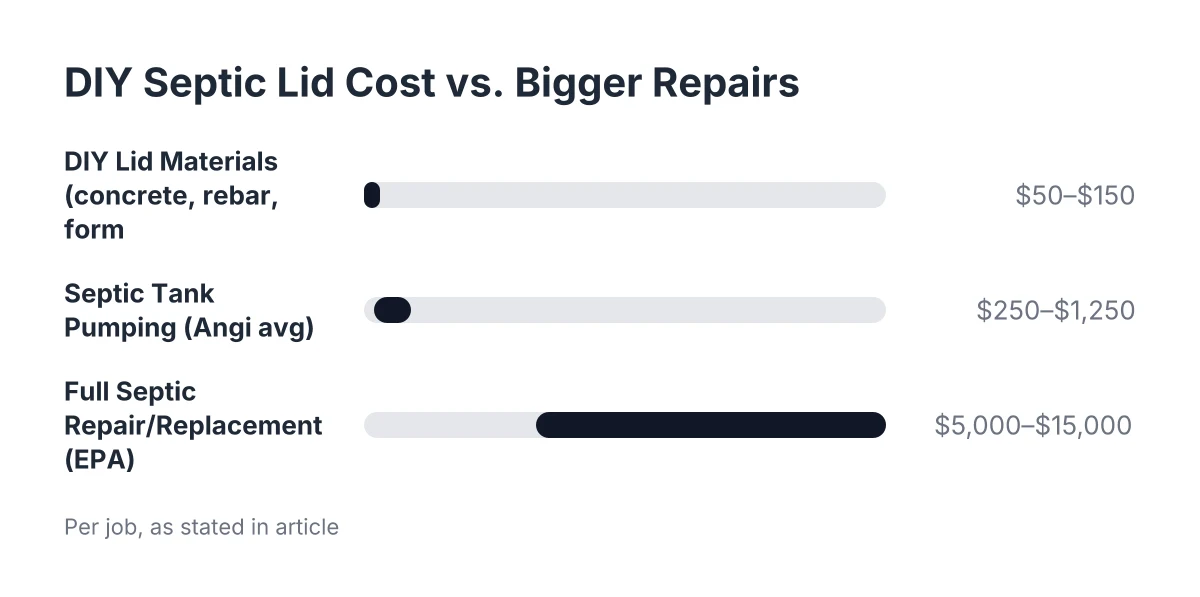
    Here is the math that makes the schedule worth keeping. According to Angi data, the cost of septic tank pumping averages $427, ranging from $250 to $1,250 or more depending on tank size and location. Compare that to the repair side: the EPA estimates septic tank repair or replacement typically costs between $5,000 and $15,000, far more than routine pumping. A missed pump-out that ruins a drain field can cost twenty times what the pump-out would have.

    This is not a rare problem. More than one in five U.S. households depend on individual septic systems or small community cluster systems to treat their wastewater, according to the U.S. Environmental Protection Agency. In Hesperia and across the High Desert, that share runs even higher, since large stretches of the area have no sewer at all. Out here, the septic tank is not backup infrastructure. It is the only infrastructure.

    What Changes the Schedule for Your Home

    Two houses on the same street in Hesperia can need pumping on completely different cycles. These are the factors that actually move the number.

    • Household size. More people means more wastewater and more solids. A family of five fills a tank far faster than a retired couple.
    • Tank size. A small tank serving a busy household fills sooner. If you do not know your tank size, an inspection can tell you.
    • Garbage disposal use. Ground food waste adds solids the tank was never sized for. Heavy disposal users often need pumping on a shorter cycle.
    • Water habits. Long showers, back-to-back laundry days, and leaky toilets push water through the tank faster than solids can settle.
    • What goes down the drain. Wipes, grease, and harsh chemicals either add solids or kill the bacteria that break waste down.
    • System age and type. Older tanks and systems with pumps or float switches need closer attention, on the once-a-year inspection cycle noted above.

    For example, suppose a family of six moves into a Hesperia home that a single previous owner lived in for a decade. The previous owner may have pumped the tank rarely and had no problems. The new family, sending three or four times the wastewater into the same tank, could hit capacity in a fraction of that time. Same tank, same soil, completely different schedule.

    Residential Septic Service for a Property With No Records

    Buying rural or High Desert property often means inheriting a septic system with zero paperwork. No pumping receipts, no as-built diagram, no county record worth much, and sometimes no visible lid or riser anywhere on the lot. You cannot build a pumping schedule for a tank you cannot find.

    The fix comes in a specific order, and it works whether you already own the property or you are still in escrow.

    1. Locate the tank. A septic tank locating service traces the sewer line from the house and finds the tank, even under dirt, gravel, or decades of landscaping. The crew marks the spot so you never have to search again.
    2. Expose and open the lid. Once the tank is found, the access lid gets uncovered. On older High Desert properties, that can mean digging through a foot or more of compacted soil.
    3. Inspect the system. A septic system inspection checks the tank's condition, the sludge and scum levels, the baffles, and how the drain field is taking water. This is the moment you learn what you actually bought.
    4. Pump if needed. If levels are high, pumping happens on the spot in most cases. An empty tank also lets the inspector see the walls and baffles clearly.
    5. Write it down. Get the tank location, size, and condition documented. That report becomes the first record the property has ever had, and it anchors every future service decision.

    If you are still deciding whether to close on the property, this same process gives you a written septic inspection for the home sale. A locate-and-inspect job feels like an added cost on a place you might not keep. Weigh it against the EPA's repair estimate above; finding a failed system before closing is the cheapest bad news you will ever get.

    One honest caveat: a locate and inspection tells you the system's condition today. It cannot guarantee how many years a drain field has left, and no honest crew will promise that. What it does is remove the biggest unknowns before your money is committed.

    Building a Residential Septic Service Schedule That Sticks

    Once you know where the tank is and what shape it is in, keeping the system healthy becomes a routine instead of a mystery. The goal is a schedule you set once and follow without thinking hard about it.

    Start with the inspection cycle. Standard gravity systems fit the EPA's guidance of a professional inspection at least once every three years. Systems with pumps, floats, or alarms should be looked at yearly. Put the next date somewhere you will see it, and keep every pumping receipt in the same folder as your locate report.

    Next, let measurements set the pumping date. During each inspection, the tech measures how much of the tank is sludge and scum versus liquid. When solids take up too much of the tank, it is time to pump. This measured approach beats guessing, because it reflects your actual household, not an average one.

    Between visits, protect the schedule with habits. Keep grease, wipes, and paint out of the drains. Spread laundry across the week instead of doing five loads on Saturday. Fix running toilets fast, since a constant trickle floods the tank around the clock. None of this replaces pumping, but all of it stretches the interval and protects the drain field.

    Finally, be careful about shopping on price alone. Searching for cheap septic tank pumping near me is understandable, but the cheapest quote sometimes means a partial pump-out that leaves solids behind, which shortens your interval and defeats the point. A full residential septic pumping that empties the tank and includes a look at the baffles is worth the difference.

    What If You Missed the Window and It's Backing Up Now?

    A septic backup means the system has run out of room and wastewater is taking the only exit it has left, usually the lowest drain in the house. Stop using water immediately, keep people away from any sewage, and call for a pump-out. Pumping the tank relieves the pressure and stops the backup in most full-tank situations.

    Many Hesperia homeowners learn their pumping schedule this way, in reverse. The tank was never pumped, or the pumping history left with the previous owner, and the first sign of trouble is a gurgling toilet at 9 p.m. or a wet, foul-smelling patch over the tank. In that moment, frequency charts do not help. Action does.

    Take these steps while you wait for a crew:

    • Stop all water use. No flushing, no laundry, no dishwasher, no showers. Every gallon you add makes the backup worse.
    • If sewage is coming up through a tub or floor drain, keep kids and pets out of that room and avoid touching the water.
    • If a septic alarm is sounding, silence it if the panel allows, but treat it as a stop-water order, not a snooze button.
    • Do not drive or park over the area where you think the tank sits. A heavy vehicle over a full, aging tank is a risk you do not need.
    • Note what happened first and when. Slow drains before the backup, odor in the yard, and alarm timing all help the crew diagnose faster.

    This is where working with a local emergency septic service matters, because a backup does not wait for business hours. A local Hesperia crew that answers the phone at night can talk you through those steps calmly and get a truck moving, instead of routing you through a national call center that has never seen High Desert soil.

    After the emergency pump-out, do not let the lesson slide. The backup told you your interval; whatever gap passed since the last pumping was too long. Cut it down, book the next inspection before the crew leaves the driveway, and the same crisis should not repeat.

    What a Full Service Visit Should Cover

    Pumping frequency only works if each visit does the whole job. When a truck comes out, whether for routine residential septic service or a same-day backup, a complete visit includes more than sticking a hose in the tank.

    Expect the crew to locate and open the access lid, measure the sludge and scum layers, and pump the tank fully, including breaking up and removing the solid layers rather than just skimming liquid. Septic tank cleaning at this level matters because leftover solids shorten your next interval. The tech should also check the inlet and outlet baffles, look for cracks or root intrusion, and note whether water is flowing back in from the drain field, which signals a saturated field.

    Ask for the findings in writing every time. Tank size, measured levels, condition notes, and a recommended next-service date turn each visit into a data point. For the land buyer who started with no records, three or four documented visits build a service history that protects the property's value and makes every future decision easier.

    Some situations still call for a specialist beyond routine pumping. If the drain field stays soggy after a pump-out, if sewage returns within days, or if the tank shows structural cracks, get a professional diagnosis before spending money on repeat pump-outs that will not hold.

    The Bottom Line for Hesperia Homeowners

    Pumping frequency is not a trivia answer; it is a schedule you build from your own tank, your own household, and a real inspection. Anchor it to the EPA's baseline of a professional inspection at least once every three years, tighter for systems with pumps and alarms. Let measured sludge levels set the pumping dates.

    If you bought property with no records, start with a locate and inspection so the schedule has a foundation. If the system is already backing up, stop the water, make the call, and treat the emergency as the start of a real maintenance routine rather than a one-time scare. As of 2026, a routine pump-out in the range Angi reports remains one of the cheapest forms of insurance a High Desert homeowner can buy, especially measured against a five-figure drain field replacement.

    If you need your septic tank serviced, Hesperia Septic can help.

    Related Reading

  • Septic Tank Cleaning Terms Explained: A Plain-English Glossary

    septic tank cleaning glossary

    If you own a home with a septic system in Hesperia or anywhere in the High Desert, you will run into words on quotes and inspection reports that nobody ever explained to you. This septic tank cleaning glossary breaks down the terms you actually meet when you call a provider, read an estimate, or watch a crew work in your yard. Each entry gives you a plain definition first, then tells you why the term matters for your wallet or your property. Use it to read a quote line by line, ask better questions, and spot a problem before it becomes a backup.

    • Septic Tank
    • Drain Field
    • Baffle
    • Riser
    • Inlet and Outlet
    • Scum Layer
    • Sludge
    • Effluent
    • Effluent Filter
    • Septic Tank Pumping
    • Pumping vs. Cleaning
    • Vacuum Truck
    • Septic Tank Locating
    • Backwash or Backflushing
    • Septic Backup
    • Slow Drains
    • Septic Inspection
    • Grease Trap

    Parts of Your Septic System

    Septic Tank

    A septic tank is a buried, watertight container that receives all the wastewater from your home and holds it long enough for solids to settle out. Most tanks are concrete, fiberglass, or plastic. Everything that goes down your drains ends up here first, so the tank's condition affects your whole system. If you have a concrete tank, this step-by-step maintenance guide covers how to keep it working longer.

    Drain Field

    A drain field is the network of buried pipes and gravel trenches where liquid wastewater from your septic tank soaks into the soil. It is also called a leach field. The drain field does the final cleanup by filtering wastewater through the ground. A failed drain field is one of the most expensive septic repairs, so protecting it with regular pumping is worth the effort.

    Baffle

    A baffle is a barrier inside your septic tank that keeps floating grease and scum from flowing out into your drain field. Tanks have an inlet baffle where wastewater enters and an outlet baffle where liquid leaves. If a baffle breaks or rots away, solids can escape and clog the drain field. A provider who checks your baffles during service is looking out for your system, not padding the bill.

    Riser

    A riser is a pipe that extends from the top of your buried septic tank up to ground level, capped with a lid you can open. Without a riser, a crew has to dig down to the tank lid every time they pump it. Adding a riser costs money up front but saves digging fees on every future visit. If your quote mentions "riser installation," that is what it means.

    Inlet and Outlet

    The inlet is where wastewater from your house enters the septic tank, and the outlet is where the settled liquid leaves for the drain field. Providers check both during service because a clog at either point causes backups. If a crew says your outlet is blocked, expect the conversation to turn to what has been going down your drains.

    What's Inside the Tank

    Scum Layer

    The scum layer is the floating mat of grease, oils, and light solids that sits on top of the liquid in your septic tank. It builds up over time and is one of the two layers a pumping crew measures to decide if your tank needs service. A thick scum layer that reaches the outlet baffle can push grease into your drain field, which is where real damage starts.

    Sludge

    Sludge is the layer of heavy solids that sinks and collects at the bottom of your septic tank. Bacteria break some of it down, but sludge always builds up over time and can only be removed by pumping. When sludge gets deep enough to reach the outlet, solids flow into the drain field and clog it. Sludge depth is the main number a provider uses to tell you whether your tank is due.

    Effluent

    Effluent is the liquid wastewater that flows out of your septic tank into the drain field after the solids have settled out. It sits between the scum on top and the sludge on the bottom. Clean, mostly clear effluent means your tank is doing its job. If a provider mentions cloudy effluent or solids in the effluent, your tank is overdue for service or has a broken part.

    Effluent Filter

    An effluent filter is a screen installed at the tank's outlet that catches small solids before they can reach the drain field. Not every tank has one. If yours does, it needs cleaning during routine service, and a provider may list that as a line item. It is cheap protection for the most expensive part of your system.

    The Service Itself and Common Cleaning Terms

    Septic Tank Pumping

    Septic tank pumping is the process of removing the liquid, sludge, and scum from your tank with a vacuum truck. It is the core maintenance task for any septic system, and skipping it is how drain fields fail. Most homeowners search for pumping when drains slow down or smells appear, but pumping on a schedule is cheaper than pumping in an emergency. This walkthrough of the pumping process shows what happens from the moment the truck arrives.

    Pumping vs. Cleaning

    Pumping means removing the liquid and loose solids from your tank, while cleaning goes further by removing the compacted sludge stuck to the bottom and walls. Some providers use the words interchangeably, so ask which one your quote covers. When you're comparing cleaning services in our septic tank cleaning glossary, full tank cleaning takes more time and effort than a basic pump-out, and the price usually reflects that. If your tank has gone years without service, cleaning is often what it actually needs; this cost guide explains what drives the price up or down.

    Vacuum Truck

    A vacuum truck is the tanker truck a septic crew uses to suck the contents out of your tank through a large hose. It is also called a pump truck. The truck needs to park within hose reach of your tank, so access matters. If your tank sits far from the driveway or behind a fence, mention it when you call so the crew arrives prepared.

    Septic Tank Locating

    Septic tank locating means finding exactly where your buried tank and its lids sit on your property. Many homeowners, especially recent buyers, have no idea where their tank is. A provider may use records, probing, or locating tools to find it. If nobody has ever shown you your tank lids, expect locating to be part of your first service call.

    Backwash or Backflushing

    Backflushing means spraying some of the pumped liquid back into the tank to break up hardened sludge so the vacuum can remove it. It is a normal part of a thorough pump-out, not the crew putting waste back in your tank. If you see it happen and worry, ask; a good crew will explain it on the spot.

    Problems and Paperwork

    Septic Backup

    A septic backup is wastewater flowing the wrong way, coming up through your drains, toilets, or lowest fixtures instead of leaving the house. It usually means the tank is full, a line is clogged, or the drain field can no longer accept water. A backup is the loudest warning your system gives you. Learn the quieter warnings first in this list of signs your tank needs pumping.

    Slow Drains

    Slow drains are fixtures throughout the house that empty sluggishly at the same time, which points to a septic problem rather than a single clogged pipe. One slow sink is a plumbing issue. Every drain slow at once means the tank or drain field is struggling. Catching this early can mean a routine pump-out instead of an overflow in your yard.

    Septic Inspection

    A septic inspection is an evaluation of your tank and system condition, checking levels, baffles, lids, and how the system handles water. Buyers often order one before closing on a home, and owners use them to catch problems early. An inspection is different from pumping, though the two are often done together since an empty tank is easier to examine.

    Grease Trap

    A grease trap is a container that catches fats, oils, and grease from kitchen drains before they reach the septic tank or sewer line. They are common at restaurants and some larger properties. Grease traps need their own pumping on a regular schedule. If your property has one, make sure your provider services it, since a full grease trap causes its own backups.

    Using These Terms

    You now know what the words on a septic quote actually mean, from sludge depth to riser installation. When a provider in Hesperia hands you an estimate, you can read each line, ask whether the price covers pumping or full cleaning, and understand the answer. That is the whole point of this glossary: fewer surprises, sharper questions, and a system that lasts longer because you knew what to ask for.

    If you need your septic tank serviced, Hesperia Septic can help.

    Related guide: septic tank cleaning — Complete Guide

    Related Reading

  • Septic Backup Overflow: When to Make the Emergency Call in Hesperia, CA

    septic backup overflow call

    Sewage is coming up in the tub, or a wet, smelly patch just appeared over your tank, and you need to know what to do in the next ten minutes. This guide walks you through the septic backup overflow call step by step: what to stop doing right now, what to check before you dial, and how to tell whether you need a truck tonight or can wait until morning. It is written for Hesperia homeowners and small landlords who need a straight answer, not a sales pitch.

    One thing to know up front. Backups are common, not a personal failure. The EPA estimates that at least 23,000 to 75,000 sanitary sewer overflow events occur annually in the United States, according to U.S. Environmental Protection Agency figures. The difference between a bad night and a ruined floor usually comes down to how fast you act in the first hour.

    Step 1: Stop All Water Going Down the Drain

    First, shut off every source of water entering your drains. Not the drinking water; the wastewater. Every flush, shower, and dishwasher cycle sends more water into a tank that has nowhere to put it. That water has to go somewhere, and right now "somewhere" is your tub, your floor drain, or your yard.

    Do these right away:

    • Stop flushing toilets, even for "just one more."
    • Turn off the washing machine and dishwasher mid-cycle if they are running.
    • Ask everyone in the house, or your tenants, to hold off on showers and sinks.
    • If a toilet is actively overflowing, shut the small valve behind it at the wall.

    For a rental property, call your tenants and be direct: no water down any drain until a crew clears it. Every gallon they run is a gallon that can end up on the floor you will pay to repair. As a reference for how fast water adds up, a single running toilet alone can push as much as 200 gallons of extra water per day into a septic system, according to U.S. Environmental Protection Agency data.

    Step 2: Figure Out Where the Backup Is Showing Up

    Next, take two minutes to note exactly where the problem is appearing. This is the single most useful thing you can tell a septic company on the phone, and it changes what kind of visit you need.

    Look for these patterns:

    • Sewage in the lowest drain in the house (tub, shower, or floor drain): classic sign the tank is full or the main line to the tank is blocked. Water backs up at the lowest point first.
    • Wet, soggy, or smelly area in the yard over the tank or drain field: the tank may be overflowing at the lids, or the drain field is not absorbing water.
    • Septic alarm going off: if you have a system with a pump, the alarm means the water level is too high. It is a warning, not yet a flood, so you have a little time.
    • One slow toilet, everything else fine: this may be a simple clog in a branch line, which is plumber territory, not a septic emergency.

    Only one fixture acting up usually means a clog. Everything backing up at once usually means the tank or the line to it. Write down what you see; you will use it in Step 4.

    Step 3: Keep People and Pets Away From the Sewage

    Before you make any calls, deal with the health side. Raw sewage carries bacteria you do not want tracked through a house. Keep kids and pets away from any wet spots inside or out. Do not try to mop up standing sewage bare-handed, and do not run a shop vac into it unless you know how you will safely dump it.

    If this is a rental, tell your tenants in writing to avoid the affected area. That message protects them and shows you responded promptly, which matters if there is ever a dispute about habitability.

    One caution: do not open the septic tank lids yourself to "check the level." Tanks produce gases that can knock a person out, and an open lid is a fall hazard. Leave lid work to the crew.

    Step 4: Decide Who Gets the Septic Backup Overflow Call

    Here is the fork in the road most people hit at 8pm: do you call a plumber or a septic company? Plenty of Hesperia homeowners search "plumbing emergency near me" or "24 hour plumber," get someone on the phone, and hear "we don't really do septic." That wasted hour hurts.

    Use this rule of thumb:

    1. Call a septic company first if the whole house is backing up, sewage is surfacing in the yard, the alarm is sounding, or you already know the tank has not been pumped in years. A septic crew can pump the tank, which is the one thing a plumber's snake cannot do.
    2. Call a plumber if a single fixture is clogged and everything else drains fine. That is a pipe problem inside the house, not a tank problem.
    3. When in doubt, describe the symptoms to a septic company and let them tell you honestly whether it is their job. A legitimate local outfit will say so if it sounds like an interior plumbing clog.

    The advantage of pumping first is that it buys immediate relief either way. An empty tank stops the backup tonight, and it lets the crew see the tank's condition, which is where the real diagnosis starts. The trade-off: if the true problem is a collapsed line between the house and the tank, pumping alone will not fix it, and you may still need a plumber or excavation afterward.

    What to Say When You Make the Septic Backup Overflow Call

    When you get a septic company on the phone, give them the facts from Step 2 in this order:

    • Where the sewage is appearing (inside, yard, or both)
    • Whether an alarm is going off
    • When the tank was last pumped, if you know
    • Whether you know where the tank lids are

    That last one matters more than people expect. If nobody has opened the tank in years, the crew may need to locate the tank and dig to the lids before they can pump, which adds time. Companies that offer septic tank locating handle this routinely, but telling them up front means they arrive with the right expectations and equipment.

    In addition, ask two direct questions before anyone rolls a truck: what does an after-hours visit run compared to a daytime visit, and what happens if pumping alone does not solve it? An honest local company will answer both plainly. Vague answers on price at night are your cue to try the next number on the list. Searching "septic tank pumping near me within 20 mi" and calling a Hesperia-based crew rather than a national dispatch line usually gets you a straighter answer, because the person quoting is the person driving.

    Step 5: Judge Whether This Can Wait Until Morning

    Not every backup needs a midnight truck, and after-hours emergency septic service typically costs more than a scheduled daytime visit. Sorting your situation honestly can save real money.

    Call for a truck now if:

    • Sewage is actively entering living space and rising
    • You cannot shut off the water source feeding the backup
    • The property has tenants with no usable bathroom
    • Sewage is pooling where children, pets, or neighbors can reach it

    You can likely wait for the first morning slot if:

    • The alarm is on but nothing is backing up yet, and you can stop water use overnight
    • The backup stopped once everyone quit running water
    • The wet spot in the yard is stable, contained, and away from foot traffic

    Suppose you own a rental on the east side of Hesperia and your tenant calls at 9pm saying the tub has two inches of gray water in it. You tell them to stop all water use, the level holds, and the tub slowly drains over the next hour. In that scenario, a first-thing-tomorrow pump often makes more sense than a night call, and your tenant keeps a working bathroom by morning. However, if the level keeps rising with all water off, the tank is likely surcharged and you should get a crew out that night.

    Step 6: Have the Crew Pump, Then Get a Straight Diagnosis

    When the truck arrives, the crew will locate and open the tank, pump it down, and look at what the empty tank tells them. This is where you learn whether tonight was a one-time event or the first symptom of a bigger problem.

    Ask the crew to walk you through what they see:

    • Tank was simply full of solids: the most common cause, and the best outcome. Regular septic tank pumping going forward usually prevents a repeat.
    • Water flows back into the tank from the drain field side: the drain field may be saturated or failing. That is a bigger conversation, and pumping becomes a temporary relief valve rather than a fix.
    • Inlet or outlet baffle damage, or a blocked line: a repair item, usually far cheaper than field work if caught early.

    Get the findings in writing on the invoice, especially if you are a landlord. Documented condition notes help with taxes, with tenant communication, and with deciding whether a property needs a follow-up septic system inspection. Be wary of anyone who jumps straight from one backup to "you need a whole new system" without showing you evidence in the tank; a failing drain field has specific, visible signs a crew can point to. If replacement genuinely is on the table, get a second opinion, because the EPA estimates septic repair or replacement typically runs $5,000 to $15,000, far more than routine pumping, according to U.S. Environmental Protection Agency figures.

    Step 7: Set Up a Schedule So the Next Overflow Call Never Happens

    Finally, turn tonight's emergency into a maintenance plan. Backups almost always announce themselves in advance: slow drains, gurgling, odors, lush green stripes over the drain field. A tank pumped on schedule rarely overflows.

    Two habits cover most of it. Put pumping on a recurring calendar based on what the crew recommends for your household or rental occupancy. In addition, get the system looked at periodically; the average household should have its septic system inspected at least once every three years by a professional, according to U.S. Environmental Protection Agency guidance. For landlords with multiple septic properties around the High Desert, staggering inspections across the portfolio means you catch a tired drain field during a routine visit instead of during a tenant's dinner party.

    A limitation worth stating plainly: this guide covers triage, not diagnosis. Recurring backups, sewage that returns days after a pump, or standing water over the drain field all need a professional on site, because those problems live underground where no checklist can see them. The goal of the septic backup overflow call is to stop the damage tonight and get honest eyes on the system, so the next call you make is a scheduled one.

    If you need your septic tank serviced, Hesperia Septic can help.


    Related Reading

  • Septic Tank Locating Terms Explained: A Plain-English Glossary

    septic tank locating glossary

    If you're trying to find a buried septic tank on your Hesperia property, the quotes and articles you read are full of terms nobody explains. This septic tank locating glossary breaks each one down in plain English so you can read an estimate line by line, ask sharper questions, and spot when a provider is talking about real work versus filler. Every definition stands on its own, so skim to the term you got stuck on and keep moving. Whether you just bought a home with no records or you need septic tank pumping and can't find the lid, these are the words you'll meet.

    • Flushable Transmitter
    • Pipe Locator (Receiver)
    • Soil Probe
    • Ground Penetrating Radar (GPR)
    • Cleanout
    • Septic Tank
    • Riser
    • Access Lid
    • Baffle
    • Drain Field (Leach Field)
    • Distribution Box (D-Box)
    • As-Built Drawing
    • Septic Permit Records
    • Probing and Exposing
    • Camera Inspection (Sewer Camera)
    • Locating Fee
    • Marking and Mapping

    Locating Equipment and Tools

    Flushable Transmitter

    A flushable transmitter is a small electronic device that gets flushed down a toilet and sends out a radio signal a technician can follow above ground. It rides the wastewater through your pipes and settles in the septic tank, and a handheld receiver traces its path across your yard. If a provider mentions one, it usually means your property has no records and no visible clues, so they need to follow the plumbing itself. It is one of the most reliable ways to find a tank under decades of landscaping. You can see how it compares to other tools in this guide to professional septic locating equipment.

    Pipe Locator (Receiver)

    A pipe locator is the handheld above-ground device that picks up the signal from a transmitter inside your pipes. The technician walks your yard with it, watching signal strength to map where the sewer line runs and where it ends at the tank. When a quote lists "electronic locating," this is usually the tool involved. It matters because electronic locating finds the tank without digging exploratory holes all over your lawn.

    Soil Probe

    A soil probe is a long metal rod a technician pushes into the ground to feel for the hard top of a buried tank or its lids. It is the simplest locating tool, and it works well once the search area is narrowed down. Probing confirms exactly where to dig before anyone puts a shovel in the ground. If a provider says they will "probe to confirm," that is a good sign they plan to dig one small hole instead of several.

    Ground Penetrating Radar (GPR)

    Ground penetrating radar is a machine that sends radio waves into the soil and reads the reflections to show buried objects like tanks, pipes, and lids. It looks like a push mower and builds a picture of what sits under your yard without breaking ground. GPR usually comes up on hard cases: concrete or paved-over yards, deep tanks, or properties where a flushed transmitter can't be used. Because it takes special equipment and training, a quote that includes GPR often signals a tougher, and typically pricier, search.

    Cleanout

    A cleanout is a capped pipe, usually near your house or in the yard, that gives direct access to your main sewer line. Locators love cleanouts because they can insert a transmitter or camera there instead of going through a toilet. If you can point a technician to your cleanout, you can shorten the job. Not every home has one that's easy to find, and some are buried too.

    Parts of the System They're Looking For

    Septic Tank

    A septic tank is a buried, watertight container, usually concrete, fiberglass, or plastic, that collects all the wastewater from your home. Solids settle to the bottom, and liquid flows out the other end to the drain field. Everything in a locating job aims at finding this tank and its access lids, because you can't pump or inspect what you can't reach. In the High Desert, tanks often sit under years of blown sand and landscaping, which is why locating is a service in the first place.

    Riser

    A riser is a vertical pipe that extends the tank's access opening up to ground level, capped with a lid you can see. If your tank has risers, future septic tank pumping visits skip the digging entirely. If it doesn't, expect the crew to dig down to the buried lids each time. Many homeowners add risers right after a locating job so they never have to pay to find the tank again.

    Access Lid

    An access lid is the removable cover on top of the septic tank that a crew opens to pump, clean, or inspect it. Many tanks have two or more lids, one over each compartment. Finding the tank is only half the job; the crew also needs to find and expose the lids. A quote that says "locate and expose lids" includes the digging, which is worth confirming before work starts.

    Baffle

    A baffle is a fitting inside the tank, at the inlet and outlet, that keeps floating solids from escaping into your pipes or drain field. Locators don't hunt for baffles, but inspectors check them once the tank is open. If a provider mentions a damaged baffle after opening your tank, that is a repair conversation, not a scare tactic. Broken baffles let solids clog the drain field, which is a far more expensive fix.

    Drain Field (Leach Field)

    A drain field is the network of buried, perforated pipes that spreads the liquid leaving your septic tank into the soil, where it filters naturally. You may also hear "leach field" or "leach lines," which mean the same thing. Locating jobs sometimes map the drain field too, since knowing where it sits keeps you from driving or building over it. Soggy grass or odors over this area often point to a septic backup building underground.

    Distribution Box (D-Box)

    A distribution box is a small buried box between the tank and the drain field that splits the outgoing water evenly among the leach lines. It is a common failure point, so inspectors often want to find it along with the tank. If a locating quote includes the D-box, the provider is mapping your whole system, not just the tank. That broader map costs more effort but saves guesswork later.

    The Process, Records, and Paperwork

    As-Built Drawing

    An as-built drawing is the diagram filed with the county when a septic system was installed, showing where the tank and drain field sit on the lot. It is the first thing worth checking before paying anyone to search, because a good as-built can turn a locating job into a five-minute walk. Many older Hesperia properties have no as-built on file, or the drawing no longer matches reality after remodels. When records are missing, professional locating serves as the practical fallback, and this article explains what locating does when your property has no records.

    Septic Permit Records

    Septic permit records are the county or health department files created when a system was permitted, installed, or repaired. They can include the as-built drawing, tank size, and installer notes. Ask your local records office before you book a search; even a partial record narrows where a crew has to look. No records at all is common on older rural properties, and it changes both the method and the cost of the job.

    Probing and Exposing

    Probing and exposing means confirming the tank's exact spot with a soil probe, then digging down by hand or machine to uncover the lids. Some quotes separate "locate" from "expose," and the digging can be its own line item. Depth matters here: a lid one foot down is a quick shovel job, while a lid three or four feet down takes real labor. Ask how deep they expect to dig and whether that digging is included in the price.

    Camera Inspection (Sewer Camera)

    A camera inspection means running a small waterproof camera through your sewer line to see the pipe's condition and, often, where it enters the tank. Paired with a locator, the camera head itself can be traced from above ground. Providers may suggest a camera when the line might be broken, root-clogged, or routed in an odd direction. It adds cost but answers two questions at once: where the tank is, and whether the pipe to it is sound.

    Locating Fee

    A locating fee is the charge for finding the tank, separate from the cost of pumping or repairs. Some companies fold it into a pumping visit; others bill it on its own, especially for hard searches involving GPR or long dig times. Ask up front whether the fee is credited toward septic tank pumping if you book both. For a fuller breakdown of what drives the price, see this septic tank locating cost guide.

    Marking and Mapping

    Marking and mapping means the technician flags the tank, lids, and lines with paint or stakes and gives you a simple sketch of where everything sits. This is the deliverable you should walk away with. Keep the sketch with your house papers; it saves the next crew, and your wallet, from repeating the search. If a provider doesn't offer any marking, ask for it before they leave.

    Key Terms in Septic Tank Locating and System Mapping

    Now a quote that says "electronically locate tank, probe and expose two lids, mark lines" reads as three concrete tasks instead of mystery jargon. You can ask what tool they'll use, how deep they expect the lids to be, and whether you'll get a sketch when they're done. That is usually the difference between a fair price and a confusing one.

    If you need your septic tank serviced, Hesperia Septic can help.

    Related guide: septic tank locating — Complete Guide

    Related Reading

  • Black Tank vs. Gray Tank: RV Holding Tank Differences That Matter at Pump-Out Time

    Comparison checklist of RV holding tank black water versus gray water differences
    How the two tanks in an RV holding tank system differ, as covered in this guide.

    If you own an RV, run a small campground, or keep a cabin in the High Desert, you deal with two kinds of waste water, and they do not behave the same. Your RV holding tank setup almost always includes a black water tank and a gray water tank, and knowing the difference changes how you use them, how often you need a pump-out, and what a mobile service crew actually does when the truck shows up. This guide walks through both tanks, side by side, with the details that matter for RV owners and property operators around Hesperia who need someone local to handle the mess.

    Plenty of pages online will sell you a replacement tank or a treatment chemical. That is not this article. This is about the service side: what each tank holds, why the black tank causes most of the emergencies, and how to get a mobile pump-out at an RV pad, a campground, or a remote cabin that other crews skip because it sits too far off the pavement.

    The Two Tanks in Every RV Holding Tank System

    An RV holding tank system splits waste into two separate tanks. The black water tank collects everything from the toilet, meaning sewage and toilet paper. The gray water tank collects everything else, meaning water from the shower, the bathroom sink, and the kitchen sink. They fill at different rates, smell different, and carry different risks when they back up.

    Most RVs also carry a third tank for fresh water, but that one holds clean water for drinking and washing. It never gets pumped by a waste service. When people search for RV tank pumping service near me, they are almost always dealing with the black tank, the gray tank, or both.

    Here is the short version of how the two waste tanks compare:

    • Black water tank: Toilet waste only. Smaller in many rigs, fills slower by volume but causes bigger problems. Solids can compact if the tank sits too long or gets dumped wrong.
    • Gray water tank: Sink and shower water. Often fills faster because showers and dishwashing use a lot of water. Carries grease, soap scum, food particles, and hair.
    • Valves: Each tank has its own dump valve, usually side by side near the sewer outlet. The black valve gets pulled first at dump time, then the gray, so the gray water rinses the hose.

    That last point matters more than most new owners realize. Pull the valves in the wrong order and you rinse your sewer hose with sewage instead of soapy sink water.

    Why the Camper Black Water Tank Causes Most Service Calls

    The black tank is where things go wrong. Gray water is unpleasant, but a camper black water tank holds raw sewage, and sewage does not forgive neglect. Three problems drive most of the service calls we see in the High Desert.

    Compacted solids and the dreaded pyramid

    If you leave the black valve open at a full-hookup site, liquid drains out constantly while solids stay behind. Over weeks, those solids build into a hard pile under the toilet drop. RV owners call it the pyramid of doom, and once it forms, a normal dump will not clear it. The tank needs a proper pump-out with rinsing, and sometimes repeated flushing, to break it up.

    Heat makes this worse. High Desert summers bake the contents of a parked rig. A trailer that sat at a Hesperia property through July with a half-full black tank can turn into a solid problem by September.

    Sensors that lie

    RV holding tank sensors read full when the tank is nowhere near full because waste and paper cling to the sensor probes. Owners then dump constantly, or worse, they stop trusting the gauge entirely and get surprised by an actual full tank. A thorough pump-out with a rinse helps clear sensor buildup, though stubborn sensors sometimes need a dedicated tank rinser or cleaner to read right again.

    Odor that will not quit

    A black tank that never gets fully emptied and rinsed develops a smell that treatment chemicals and deodorizer packets only mask. Treatments help break down waste between dumps, and they are worth using. However, they are not a substitute for actually getting the contents out of the tank.

    What the Gray Water Tank Does Differently

    Gray water sounds harmless compared to sewage, but it creates its own service problems, especially for the commercial side of this business. Kitchen sink water carries grease, and grease does in a gray tank exactly what it does in a restaurant grease trap: it cools, hardens, and coats everything.

    For an RV park or campground operator, gray water volume is the bigger planning issue. Guests shower daily and wash dishes constantly, so gray tanks and gray water holding systems fill faster than black tanks. A park with a central holding tank collecting gray water from multiple sites needs scheduled pumping, not crisis pumping. The math is the same as a restaurant grease trap on a monthly or quarterly route: a reliable recurring vendor beats an emergency call every time.

    For individual RV owners, the practical difference shows up at the dump station or during a mobile pump-out. Gray water can legally go only where sewage goes, into an approved dump point or a service truck. Dumping gray water on the ground is illegal in California, even though it looks like dishwater. Do not let the mild appearance fool you into a fine.

    When to Pump an RV Holding Tank Instead of Dumping It Yourself

    Call a mobile pump-out service when the rig cannot move, the tank has a problem a dump station cannot fix, or the property has no dump access. If your RV sits parked long-term on a Hesperia lot, has compacted solids, a stuck valve, or a failed sensor reading, a service truck coming to you beats towing the rig to a station.

    Plenty of RV owners handle routine dumps themselves at a station, and that is fine. The mobile service call makes sense in specific situations:

    1. The rig is parked long-term. A trailer used as a guest room or job-site quarters on a rural property fills its tanks without ever moving. Someone has to come to it.
    2. The black tank is compacted. A dump station drains liquid; it does not break up a solid pile. A pump truck with rinse capability can.
    3. You are prepping for a trip or storage. Leaving a black tank full through winter storage, or starting a long trip with tanks near capacity, invites exactly the problems described above.
    4. A valve failed. A stuck or broken RV holding tank valve means you cannot dump normally. A crew can often pump the tank through the top or work around the valve until you get a repair kit installed.
    5. The property is remote. Cabins and off-grid parcels around the High Desert often use holding tanks with no septic system at all. Those tanks have to be pumped on a schedule, full stop.

    Suppose a homeowner outside Hesperia keeps a travel trailer on the property for a relative, hooked to power and water but with no sewer connection. The tanks fill every couple of weeks depending on use. In that scenario, a recurring mobile pump-out visit is not a luxury; it is the only sanitation plan the setup has. The same logic applies to a small campground owner with a dozen sites and a shared holding tank, where a missed pump-out means closed restrooms and unhappy guests.

    How a Mobile RV Holding Tank Pump-Out Works

    A mobile RV holding tank pump-out is straightforward: a vacuum truck comes to your rig or property, connects a hose to the tank outlet, and pumps the contents into the truck for legal disposal. The whole visit for a standard RV usually takes well under an hour once the truck is positioned.

    Here is what a typical visit looks like, step by step:

    First, the crew locates the outlet. On an RV, that is the sewer connection where the black and gray valves sit. On a cabin or campground holding tank, it may be a buried access lid, which is why tank locating is sometimes part of the job on older properties.

    Next, the crew connects the vacuum hose and pumps the black tank first, then the gray. Pulling the black tank first means the gray water helps rinse the line, the same order you would use at a dump station.

    Then comes rinsing, if the tank needs it. Compacted solids, sensor buildup, and odor problems call for adding water and pumping again, sometimes more than once. This is the part a self-service dump cannot replicate, and it is where RV holding tank pumping earns its keep over a quick drain-and-go.

    Finally, the waste leaves in the truck for disposal at an approved facility. That matters in the High Desert, where the nearest legal dump point can be a long drive from a rural parcel. You are paying for the pumping and for the legal hauling, not just the vacuum.

    One honest limitation: a pump-out fixes a full or fouled tank, but it does not fix a cracked tank, a failed valve, or a plumbing leak inside the rig. If the crew finds physical damage, tank repair or replacement is a separate job, often for an RV shop. A good service will tell you that plainly instead of pretending a pump solves everything.

    How Often to Pump RV Holding Tanks

    How often to pump RV holding tanks depends on tank size, how many people use the rig, and whether it moves. A couple traveling in a motorhome might dump every three to five days on the road. A parked trailer housing two people full-time may need service every one to two weeks. Additionally, a seasonal cabin holding tank might go on a monthly or quarterly schedule.

    The honest answer is that usage drives everything, and no single interval fits every setup. A few signals tell you it is time regardless of the calendar:

    • The toilet flushes slowly or gurgles, which points to a black tank near capacity.
    • Water backs up into the shower pan, the classic sign of a full gray tank.
    • Odor gets stronger near drains despite treatment use.
    • The gauge reads full and stays full even after a dump, which suggests sensor buildup or compacted solids.

    For campground and RV park operators, guesswork is the enemy. As a result, most operators who run holding tanks land on a fixed schedule sized to their busiest weeks, then adjust seasonally. Snowbird season and summer weekends fill tanks fast in the High Desert; the slow months do not. A recurring route visit costs less in stress and closed restrooms than a Friday-afternoon emergency call ever will.

    Cost varies with tank size, access, and distance, so treat any figure as an estimate until someone sees the job. As a rough illustration, a single RV pump-out often lands somewhere in the low hundreds, while a large campground holding tank costs more because of volume and disposal. That range is an estimate, not a quote; access and condition move the number.

    Habits That Stretch the Time Between Pump-Outs

    Good tank habits will not eliminate service visits, but they space them out and prevent the expensive kind. Most of these take seconds and save you from the compacted-tank scenario entirely.

    • Keep the black valve closed until the tank is at least two-thirds full, even on full hookups. Liquid carries solids out; a drained tank leaves them behind.
    • Use plenty of water when you flush. Water is the cheapest tank treatment there is. Dry solids compact; wet solids pump out clean.
    • Use RV-safe toilet paper and a holding tank treatment suited to your climate. High Desert heat speeds up odor, so enzyme or bacterial treatments earn their cost here.
    • Never put grease down the kitchen sink. It hardens in the gray tank the same way it hardens in a restaurant grease trap, and it fouls sensors.
    • Rinse the black tank after dumping with a built-in flush system or a wand-style tank rinser when you can. Clean walls keep sensors honest.
    • Empty both tanks before storage. A tank that sits full through a Hesperia summer or a freezing winter night becomes next season's service call.

    However, when a tank already has compacted solids, a stuck valve, or a persistent sewage smell inside the rig, stop treating and start pumping. Chemicals cannot remove twenty gallons of hardened waste, and forcing a stuck valve usually breaks it.

    Finding RV Pump Out Service Near Hesperia and the High Desert

    Searching for RV pump out near me from a High Desert address returns a mixed bag: national directories, RV supply stores, and plumbers who do not actually run vacuum trucks. What you want is specific: a local crew with a pump truck that will drive to an RV pad, a campground, or a cabin road, hook up, and haul the waste away legally.

    A few questions sort the real services from the listings quickly:

    1. Do you come to the RV, or do I bring it to you? Mobile service is the whole point for parked rigs and remote tanks.
    2. Can you handle a cabin or campground holding tank, not just an RV? Bigger tanks need bigger capacity and sometimes tank locating on older properties.
    3. Do you offer recurring scheduled service? Park operators and long-term setups need a route visit, not a one-off.
    4. Where does the waste go? A legitimate service disposes at an approved facility and will say so without hesitation.
    5. Can you reach my property? Dirt roads, tight gates, and long hose pulls are normal in the High Desert. A crew that works here already knows that; a crew that hesitates does not.

    The same local crews that handle septic tank pumping for Hesperia homes usually run the equipment for holding tank work too, since the truck and the disposal process overlap. That is worth knowing if you already have a septic service you trust for the house; ask whether they pump RV and holding tanks before you start a new vendor search.

    The bottom line on black versus gray: the black tank is where emergencies start, the gray tank is where volume adds up, and both end up in the same truck at pump-out time. Learn your valves, keep water in the black tank, put the tanks on a schedule that matches your use, and keep a local mobile pump-out number saved before you need it. Out here, the rigs and cabins that never have a tank crisis are the ones that never let the tank become one.

    If you need your septic tank serviced, Hesperia Septic can help.

    Related Reading

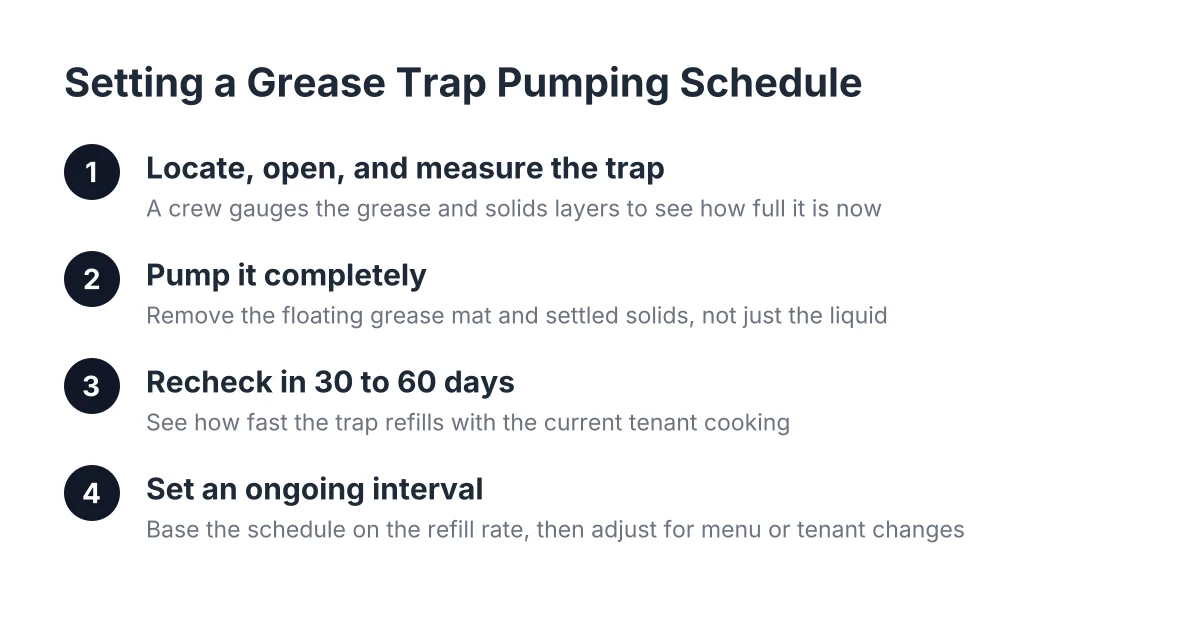
  • Grease Trap Pumping Terms Explained: A Plain-English Glossary

    grease trap pumping glossary

    If you own a property with a grease trap, the first quote you get can read like a foreign language. This grease trap pumping glossary breaks down the terms you will hear from providers, see on invoices, and find in inspection paperwork. Each entry starts with a plain definition you can read in seconds, then explains why the term matters to your wallet or your kitchen. Use it to read a quote line by line, ask sharper questions, and spot a problem before it becomes a backup.

    • Grease Trap
    • Grease Interceptor
    • FOG (Fats, Oils, and Grease)
    • Baffle
    • Inlet and Outlet Tees
    • How Grease Trap Pumping Works
    • Full Evacuation
    • Skimming
    • Grease Cap
    • Scraping and Cleaning
    • Hydro Jetting
    • The 25 Percent Rule
    • Manifest
    • Pumping Frequency
    • Effluent
    • Backup
    • Trap Locating

    The Trap Itself: Parts and Types

    Grease Trap

    A grease trap is a box installed in a drain line that catches fats, oils, and grease before they reach the sewer or septic system. Water flows through it slowly, so grease floats to the top and food solids sink to the bottom, while cleaner water exits the middle. Traps range from small under-sink units to large in-ground tanks. Knowing which type you have shapes everything else, including how often it needs service and what a provider will charge to pump it.

    Grease Interceptor

    A grease interceptor is a large grease trap, usually installed in the ground outside the building, that handles higher volumes of wastewater. Providers often use "trap" and "interceptor" interchangeably, but an interceptor is the bigger in-ground version. If a quote mentions an interceptor, expect a truck-based pump-out rather than a quick under-sink cleaning. Size drives cost, so ask the provider to confirm the capacity before you compare quotes.

    FOG (Fats, Oils, and Grease)

    FOG stands for fats, oils, and grease, the kitchen waste a grease trap exists to catch. FOG hardens as it cools, which is why it clogs pipes and coats the inside of drain lines. When a provider or inspector talks about "FOG levels" or "FOG discharge," they mean how much grease is getting past your trap. High FOG readings are the usual reason a property fails an inspection or gets a warning from the sewer authority.

    Baffle

    A baffle is a wall or plate inside a grease trap that slows water down and forces grease to separate from it. Baffles are what make a trap work; without them, grease would flow straight through. A damaged or missing baffle is a common finding during a pump-out, and it means the trap is passing grease downstream even if it looks clean. If a provider mentions a baffle problem, ask whether it needs repair before the next service.

    Inlet and Outlet Tees

    Inlet and outlet tees are the pipe fittings where wastewater enters and leaves a grease trap. The inlet tee directs incoming water downward so it does not stir up the grease layer, and the outlet tee pulls water from the middle of the trap where it is cleanest. Broken or clogged tees let grease escape into the drain line. A good provider checks both during a pump-out, and it is fair to ask if they did.

    The Service: What Actually Happens

    How Grease Trap Pumping Works

    A pump-out is the process of using a vacuum truck to remove the grease, solids, and water from a trap or interceptor. It is the core of any grease trap service and the line item you will see on most invoices. Some providers pump only the floating grease, while a full pump-out empties everything. The section below on full evacuation explains why that difference matters. If you are not sure how the whole visit works, the Hesperia grease trap pumping service page walks through it.

    Full Evacuation

    Full evacuation means removing all contents of the grease trap, including the grease layer, the solids on the bottom, and the water in between. This is the standard most inspectors and sewer authorities expect. The cheaper alternative, skimming, leaves solids behind and lets the trap fill up faster. If two quotes differ a lot in price, ask each provider whether they do a full evacuation. That one question often explains the gap.

    Skimming

    Skimming means removing only the floating grease layer from the top of a trap and leaving the water and solids behind. It costs less per visit but the trap refills faster, and settled solids keep building on the bottom. Some jurisdictions do not accept skimming as proper maintenance at all. If a low quote seems too good, skimming is often the reason.

    Grease Cap

    A grease cap is the hardened layer of fats, oils, and grease floating on top of the wastewater inside a trap. Providers measure its thickness to judge how full the trap is and whether it is overdue for service. A thick, crusted grease cap can take extra time and effort to break up and remove, which can affect the cost of the visit. If your provider mentions a heavy cap, that is a sign your service interval is too long.

    Scraping and Cleaning

    Scraping means physically cleaning the walls, baffles, and lid of the trap after pumping to remove stuck-on grease, which is part of thorough grease trap pumping maintenance. Pumping alone leaves a coating behind, and that residue speeds up the next buildup. Ask whether scraping is included in the quoted price or billed separately. Providers who skip it are not doing anything wrong exactly, but you should know what you are paying for. If you are tempted to handle the cleaning yourself, read this DIY grease trap cleaning guide before you decide.

    Hydro Jetting

    Hydro jetting means cleaning drain lines with a high-pressure water hose that scours grease and buildup off the pipe walls. It is a separate service from grease trap pumping, usually added when grease has escaped the trap and coated the lines downstream. If a provider recommends jetting, ask what they saw that justifies it, such as slow drains or grease in the outlet line. It is a legitimate add-on, but it should come with a reason.

    Rules, Measurements, and Paperwork

    The 25 Percent Rule

    The 25 percent rule is a common industry guideline that says a grease trap should be pumped once grease and solids fill a quarter of its total depth. Past that point, the trap loses its ability to separate grease, and FOG starts slipping into the drain line. Many sewer authorities use this rule as their enforcement standard. A provider who measures your trap against it is following standard practice, and it is a useful benchmark for setting your pumping and cleaning schedule.

    Manifest

    A manifest is the document that records what was pumped from your trap, how much, and where the waste was taken for disposal. It is your proof of proper service if an inspector ever asks. Legitimate providers issue one after every pump-out because grease waste must go to an approved disposal site. If a provider cannot or will not give you a manifest, treat that as a red flag.

    Pumping Frequency

    Pumping frequency means how often a grease trap needs to be emptied, which depends on the trap's size and how much grease your kitchen produces. There is no single right interval; a busy kitchen fills a trap faster than a light-use one. Your local sewer authority may set a minimum schedule, so check what applies to your property. Tracking how full the trap is at each service helps you and your provider dial in the right frequency instead of guessing.

    Effluent

    Effluent is the water that flows out of a grease trap after the grease and solids have separated inside it. Clean effluent means the trap is working; greasy effluent means FOG is escaping downstream. Inspectors sometimes sample effluent to check compliance. If a provider mentions your effluent quality, they are telling you whether the trap is doing its job, not upselling you.

    Backup

    A backup means wastewater rising out of drains, floor sinks, or the trap itself because a clog or a full trap has blocked the flow. It is the emergency scenario every grease trap owner wants to avoid, since it can shut down a kitchen and create a health hazard. Slow drains and sour odors usually show up first. If you are seeing early symptoms, these warning signs of a clogged grease trap can help you judge how urgent it is.

    Trap Locating

    Trap locating means finding a buried or hidden grease trap when the owner does not know where it is. Older properties often have in-ground traps with lids covered by soil, pavement, or landscaping. A provider may charge for locating time before pumping can start, so mention upfront if you do not know where your trap sits. Knowing the location before the truck arrives keeps the visit shorter and the bill smaller.

    Using These Terms

    You now know enough to read a grease trap quote line by line and ask the questions that separate a thorough service from a quick skim. Keep this grease trap pumping glossary handy the next time a provider or inspector uses a term you have not heard. Come back to it whenever a line item does not make sense, and ask the provider to explain it in plain words; a good one always will.

    If you need your septic tank serviced, Hesperia Septic can help.

    Related Reading

  • How to Locate Your Septic Tank Without Records: DIY Methods That Work

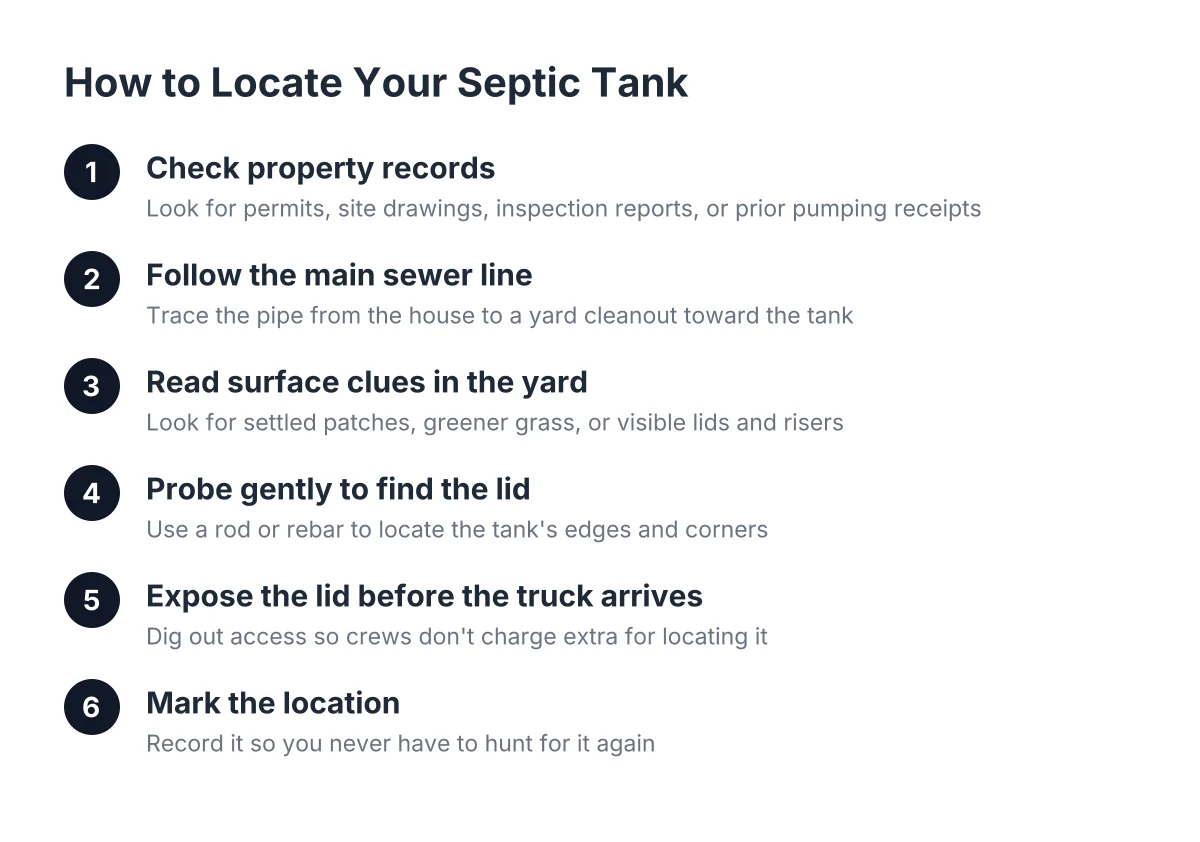
    Steps to locate septic tank yourself without records, from checking documents to marking it
    The six-step DIY process this guide walks through to find a septic tank without records.

    Plenty of High Desert homes changed hands with no septic paperwork at all. If you just bought a place in Hesperia, or you have owned yours for years and never needed to dig, you may have no idea where the tank sits. The good news is you can locate septic tank yourself with a few simple methods and tools, no records required. This guide walks through the process step by step, then covers when it makes sense to bring in a locating crew instead.

    Missing records are common on older High Desert properties. Some homes here were built decades before counties kept consistent septic permits on file. Others have records that show a tank exists but not where it was buried. Either way, you cannot schedule septic tank pumping, pass a pre-sale inspection, or plan a remodel until someone finds the lid.

    Step 1: Check for Records Before You Dig Anything

    Start with paperwork, even if you think none exists. A permit sketch or as-built diagram can save you hours of probing in the yard.

    Look in these places first:

    • Your home purchase documents, especially the inspection report and any seller disclosures
    • The San Bernardino County environmental health department, which may have a permit or as-built drawing on file
    • The company that pumped the tank last, if a neighbor or previous owner remembers the name
    • The original builder or a long-time neighbor with a similar floor plan

    Even a rough sketch helps. A diagram that shows the tank 15 feet off the back door narrows your search from the whole yard to a strip of dirt you can probe in an afternoon.

    However, do not be surprised if the county has nothing. Many Hesperia parcels predate consistent record keeping. If the paper trail is a dead end, move to the physical clues.

    Step 2: Follow the Main Sewer Line From the House

    Your main drain line points straight at the tank. Find where the sewer pipe exits the house and you have a direction to follow.

    First, locate the main cleanout. It is usually a capped pipe, 3 to 4 inches wide, sticking a few inches out of the ground near the foundation. In homes with a basement or crawl space, you can often see the main line itself and note which wall it exits through.

    Next, stand at that exit point and sight a straight line out into the yard. Septic installers almost always run the pipe straight to the tank to keep the fall consistent. Most tanks sit 10 to 25 feet from the house, though older installs vary.

    In addition, note the slope of your lot. Sewage moves by gravity, so the tank will be downhill from the house, never uphill. On a flat Hesperia lot that clue matters less, but on a sloped parcel it can rule out half the yard immediately.

    Step 3: Read the Yard for Surface Clues

    A buried tank often announces itself if you know what to look for. Walk the area along your sight line slowly and check for these signs:

    • A rectangular patch where grass or weeds grow greener or faster, fed by moisture below
    • A low spot or shallow depression where backfill settled over the tank
    • A bare or stressed patch of ground, since some tanks sit shallow enough to dry out the soil above them
    • Concrete lids, risers, or inspection pipes barely poking through the dirt
    • Areas snow melts first in winter, if you catch a rare High Desert snowfall

    For example, say a homeowner in Hesperia bought a 1978 ranch house with zero septic paperwork. In that scenario, a faint rectangular dip about 18 feet off the back bathroom wall, right along the line from the cleanout, would be the first place to probe. That combination of clues finds a lot of tanks.

    Desert landscaping makes this harder. Gravel yards and native scrub hide settling and green patches that a lawn would reveal. If the surface tells you nothing, you will need to probe.

    Step 4: Probe the Soil to Locate Your Septic Tank Lid

    A soil probe is the classic tool to locate a septic tank, and it is cheap. Any 4 to 5 foot metal rod with a handle works; hardware stores sell purpose-made probes for the price of a tank of gas.

    Work along your sight line from the cleanout, pushing the probe into the soil every couple of feet. Most tanks sit with their top 6 inches to 2 feet below grade. When the probe hits something flat and hard at a consistent depth, you have likely found the tank; concrete feels solid and unforgiving, while fiberglass or plastic gives a duller thud.

    Once you hit the tank, probe outward to trace its edges. Finding the corners tells you the tank's footprint and orientation, which helps you find the lid. On most tanks, the access lid sits over the inlet end, the outlet end, or the center. Probe for a slightly raised or distinct spot within the footprint.

    Two cautions here. Probe gently; older concrete lids can be brittle, and a hard jab can crack one. Also call 811 before any digging so buried gas, water, and electric lines get marked first. That call is free and it is the law before you excavate.

    Step 5: Use a Flushable Transmitter or Pipe Camera for Stubborn Tanks

    Sometimes probing fails. Caliche layers and rocky High Desert soil can stop a probe cold, and deep-set tanks sit below comfortable probing depth. When that happens, electronic locating tools take over.

    A flushable transmitter is a small radio beacon you flush down a toilet. It travels the sewer line and stops at the tank inlet, and a handheld receiver above ground pinpoints its position. Some homeowners rent these; septic crews carry them as standard equipment.

    Similarly, a pipe camera with a locating sonde can be fed through the cleanout. The camera shows the pipe's condition on the way, and the sonde lets the operator mark the line's path and the tank connection from the surface. This method has a bonus for anyone planning maintenance: you learn whether the line has root intrusion or bellies before they cause a septic backup.

    Therefore, if you have already spent a weekend probing with nothing to show for it, electronics are the logical next step. This is also where a professional septic tank locating service earns its fee, since the equipment, the experience reading desert soil, and the ability to expose and mark the lid come as one visit.

    Step 6: Expose, Confirm, and Mark the Location

    Finding the tank is only half the job. Now confirm it and record it so you never search again.

    Dig carefully by hand over the spot you identified until you expose the lid. Confirm it is the access lid, not just the tank top, since pumping requires an opening large enough for the hose. If the lid sits more than a few inches down, consider having a riser installed; a riser brings the access to grade so future septic tank pumping does not start with a shovel.

    Then document everything:

    1. Measure from two fixed points, such as house corners, to the lid center, and write the distances down
    2. Take photos of the open hole with the house in frame for reference
    3. Sketch a simple map showing the tank, the sewer line path, and the drain field direction if known
    4. Drop a pin on your phone's map app and save it
    5. Keep a copy with your house documents and give one to whoever pumps the tank

    As a result, the next crew that services the system drives up, opens the lid, and gets to work. No searching, no extra digging charges, no wasted trip.

    When to Call a Pro Instead of Doing It Yourself

    Call a professional when probing fails, when you suspect the tank sits under concrete or a structure, or when a sale or permit deadline gives you no time to experiment. A crew with transmitters, cameras, and desert digging experience can find, expose, and mark a tank in one visit instead of your several weekends.

    There are also situations where DIY carries real risk. A backup in progress means the tank may be full to the lid; opening it without the right setup exposes you to sewage and dangerous gases. Old steel or failing concrete tanks can have unsafe lids that collapse under weight. If anything about the tank looks compromised, stop and get a professional opinion before anyone stands over it.

    The trade-off is straightforward. DIY locating costs you time and a probe rod, and it works on most straightforward lots. Professional septic tank locating costs money but comes with the equipment and judgment to handle no-record properties, buried lids under hardscape, and tight timelines. Neither choice is wrong; it depends on your soil, your schedule, and how the first attempt goes.

    Why Finding the Tank Now Beats Finding It During an Emergency

    Locating the tank while nothing is wrong is the cheapest version of this job. According to the U.S. Environmental Protection Agency, more than one in five U.S. households depend on individual septic systems, and the EPA recommends a professional inspection at least once every three years. You cannot follow that schedule if nobody knows where the tank is.

    The cost math backs this up. Angi data puts the average cost of septic tank pumping at $427, with a typical range of $250 to $1,250 depending on tank size and location. Meanwhile, the EPA estimates septic repair or replacement typically runs $5,000 to $15,000. A neglected tank that fails because it was never found and never pumped lands on the expensive side of that gap.

    So take the afternoon. Follow the sewer line, read the yard, probe the soil, and locate your septic tank before it forces the issue with a backup on a holiday weekend. Mark it, map it, and put pumping on the calendar. That is the whole difference between routine maintenance and an emergency call.

    If you need your septic tank serviced, Hesperia Septic can help.


    Related Reading

  • Septic Tank Cost Terms Explained: A Plain-English Glossary

    septic tank cost glossary

    If you own a home in Hesperia with a septic system, or you are about to buy one, the quotes and inspection reports can read like a foreign language. This septic tank cost glossary breaks down the terms you will hear from pumping crews, inspectors, and real estate agents into plain English. Use it to read a quote line by line, ask better questions on the phone, and spot a problem before it turns into a backup in your yard. Every entry starts with a one-sentence definition you can understand on its own.

    • Septic Tank
    • Drain Field
    • Baffle
    • Scum and Sludge Layers
    • Riser
    • Effluent Filter
    • Cesspool
    • The 3 Types of Septic Systems
    • Conventional Gravity System
    • Aerobic Treatment Unit (ATU)
    • Septic Tank Pumping
    • What Affects Septic Tank Cost
    • Hydro Jetting
    • Emergency Pumping
    • Trip Fee
    • Dump Fee (Disposal Fee)
    • Septic Inspection
    • Grease Trap

    The Parts of Your System

    Septic Tank

    A septic tank is a buried, watertight container that catches everything that goes down your drains and separates it into layers: solids sink, grease floats, and liquid flows out the other end. It is the heart of the whole system and the part that gets pumped. Most quotes you see for septic tank pumping are priced around emptying this tank. If a buyer's inspection turns up a concrete tank of unknown age, this inspection checklist for concrete tanks walks through what to look for before you close.

    Drain Field

    A drain field is the network of buried pipes or trenches that spreads the liquid leaving your septic tank into the soil, where it filters naturally. It is also called a leach field. This is the expensive part of the system to replace, so protecting it is the main reason regular pumping matters. If a provider says your drain field is failing, ask them to show you the evidence, such as soggy ground, sewage odor, or water that will not drain from the tank.

    Baffle

    A baffle is a barrier inside the septic tank that keeps floating grease and scum from escaping into the drain field. Tanks have an inlet baffle where waste enters and an outlet baffle where liquid leaves. A broken or missing baffle lets solids reach the drain field, which shortens its life. Inspectors check baffles during pumping, and a quote that mentions baffle repair usually means the crew saw damage when the tank was open.

    Scum and Sludge Layers

    Scum and sludge are the two layers that build up inside a septic tank: scum is the floating layer of grease and light solids, and sludge is the heavy layer that settles on the bottom. The space between them is the liquid that flows out to the drain field. When those layers grow too thick, the tank needs pumping. A crew that measures these layers before quoting extra work is giving you real information, not a guess.

    Riser

    A riser is a pipe extension that brings your septic tank's access lid up to ground level so nobody has to dig every time the tank needs service. Without risers, the crew may have to excavate to reach the lids, and digging adds labor to the bill. Installing risers during a pumping visit often pays for itself over time. If your quote includes a line for digging, ask whether adding risers would make future visits cheaper.

    Effluent Filter

    An effluent filter is a screen on the tank's outlet that catches small solids before they can wash into the drain field. Not every tank has one, but where present it needs occasional cleaning, usually during pumping. A clogged filter can back sewage up into the house even when the tank itself is fine. If a provider mentions cleaning or replacing the filter, that is routine, not an upsell.

    Cesspool

    A cesspool is an older type of waste pit that collects sewage without a separate tank and drain field, letting liquid seep straight into the surrounding soil. Some older High Desert properties still have them. They fill faster and fail sooner than modern systems, which affects both service frequency and long-term cost. If you are weighing the two, this comparison of septic systems versus cesspools covers the differences that matter to a buyer.

    Types of Septic Systems

    The 3 Types of Septic Systems

    The three types of septic systems most homeowners encounter are conventional gravity systems, pressure distribution systems, and alternative or engineered systems. A conventional gravity system lets waste flow downhill from the tank to the drain field with no pump. A pressure distribution system uses a pump to push liquid evenly across the drain field, common where the ground is flat or the field sits uphill. Alternative systems, such as mound or aerobic treatment units, are engineered for difficult soil and cost more to install, service, and repair. Knowing which type you have changes what maintenance costs to expect, so ask your inspector to name it in writing.

    Conventional Gravity System

    A conventional gravity system is a septic setup where wastewater flows from the house to the tank to the drain field entirely by gravity, with no pumps or electronics. It is the simplest and usually the cheapest type to maintain because there are fewer parts that can fail. Most standard septic tank pumping quotes assume this kind of system. If yours has a pump chamber or control panel, mention it when you call so the quote matches the work.

    Aerobic Treatment Unit (ATU)

    An aerobic treatment unit is a septic system that adds air to the tank so oxygen-loving bacteria can break down waste faster and cleaner than a standard tank. ATUs have motors, air pumps, and sometimes alarms, which means more parts to service and more service visits. If a property listing mentions an ATU, budget for ongoing maintenance beyond simple pumping. Ask any provider whether they service ATUs before booking, since not every pumping crew handles them.

    Service, Pricing, and Paperwork

    Septic Tank Pumping

    Septic tank pumping is the process of using a vacuum truck to remove the built-up sludge, scum, and liquid from your septic tank. It is the single most common septic service and the baseline for most quotes you will collect. Pumping on a regular schedule protects the drain field, which is where the big money hides. When solids escape into the field, the fix jumps from a routine pumping bill to a major repair, so the overall septic tank cost picture depends more on the drain field than the tank itself.

    What Affects Septic Tank Cost

    Septic tank cost varies based on several factors including system type, tank size, soil conditions, and whether the tank needs locating or digging. On older Hesperia properties with no records, the crew may use probes, flushable transmitters, or old permit sketches to find the tank. Locating work takes real time before any pumping starts, which is why it appears as its own line on a quote. If you know where your lids are, say so when you call; it can shrink the job.

    Hydro Jetting

    Hydro jetting means clearing a clogged pipe with a high-pressure stream of water instead of a cable or snake. Crews sometimes recommend it for the line between the house and the tank when grease or roots have built up. It is a separate service from pumping, so expect it as its own line item if it appears on your quote. Ask what the crew found in the line that makes jetting necessary before you approve it.

    Emergency Pumping

    Emergency pumping is a septic tank pumping visit scheduled outside normal hours or on short notice because sewage is backing up or about to. It typically costs more than a planned visit because the crew is dropping other work to get to you. A slow drain today is cheaper to handle than a backup on a holiday weekend. If your tank is due, booking ahead is the easiest way to avoid paying the emergency rate.

    Trip Fee

    A trip fee is a charge some companies add just for driving a truck to your property, separate from the cost of the actual work. It is one of the most common surprise line items on a septic invoice. Always ask whether the quoted price includes travel, digging, and dump fees or whether those get added later. This pricing guide to hidden septic fees in Hesperia lists the add-on charges to ask about before the truck rolls.

    Dump Fee (Disposal Fee)

    A dump fee is the charge for legally disposing of the waste the truck pumps out of your tank, since crews must haul it to an approved treatment facility. Some companies fold this into the pumping price; others list it separately. Neither approach is wrong, but you want to know which one you are looking at before comparing quotes. Two quotes that look far apart can land in the same place once disposal is counted.

    Septic Inspection

    A septic inspection is an evaluation of the tank, baffles, liquid levels, and drain field to judge the system's condition, often ordered during a home sale. It is different from pumping, though the two are often done together because an empty tank is easier to inspect. For buyers, an inspection report is the best defense against inheriting a failing system with no paper trail. If a seller has no service records, this guide on choosing between pumping and repair with no records explains how to read what the tank itself tells you.

    Grease Trap

    A grease trap is a container that catches fats, oils, and grease from a kitchen's drains before they reach the septic system or sewer. They are standard in restaurants and some larger properties, and they need their own pumping schedule. Grease trap pumping is a separate service from septic tank pumping, with its own line on a quote. If your property has one, mention it when booking so the crew brings the right setup.

    Using These Terms

    You now have the working vocabulary to read a septic quote line by line and ask what each charge covers, from trip fees to baffle repairs. Keep this glossary handy when you compare service providers, and do not hesitate to ask a crew to explain any term they use; a good one will. For the full picture of what pumping and service run, see the complete guide to what a septic tank costs.

    If you need your septic tank serviced, Hesperia Septic can help.

    Related Reading

  • Septic Tank Locating Equipment: How Pros Find Buried Tanks With No Records

    Diagram of six steps in septic tank locating equipment process from paper trail to marking
    The six-step process professional crews use to find a septic tank with no records, as covered in this guide.

    If you own a Hesperia property with no septic records, the fastest path to a found tank is knowing what septic tank locating equipment the pros actually use and how each tool works. Older High Desert homes often changed hands three or four times before anyone thought to save a site map. The county may have nothing on file. That leaves you with a buried concrete tank somewhere in the yard and no lid in sight. This guide walks through the equipment step by step, in the order a professional crew typically uses it, so you know what to expect and how to help the process go faster.

    Step 1: Exhaust the Paper Trail Before Anyone Powers Up a Locator

    First, check every record source you can reach. Equipment is the answer when paperwork fails, but paperwork is free and sometimes fast.

    Look for these before scheduling a locate:

    • The property's original permit or "as-built" drawing from San Bernardino County Environmental Health
    • Home inspection or escrow documents from when you bought the house
    • Receipts from any past septic tank pumping visit; pumpers often note lid location
    • A previous owner or longtime neighbor who remembers where the truck parked

    Suppose you bought a 1978 ranch house off Ranchero Road five years ago and the seller handed you nothing. In that scenario, a county records request might turn up a rough sketch, or it might turn up empty. Either way, gather what exists. Even a partial drawing that shows which side of the house the tank sits on cuts locating time in half.

    If the paper trail dies, move to the physical clues, then the equipment.

    Step 2: Read the Yard the Way a Locator Tech Does

    Next, walk the property and note the signs a professional looks for before unloading a single tool. This step costs nothing and often narrows the search to a 200-square-foot patch.

    Watch for:

    • The point where the main sewer line exits the house, usually visible in the crawl space or at a cleanout
    • A patch of grass or weeds that grows greener or faster than the rest, common even in dry High Desert yards
    • A shallow depression or slight mound where soil settled over the tank after backfill
    • Old concrete fragments, riser rings, or a suspicious square of different-colored dirt

    The tank almost always sits along a straight line from where the sewer pipe leaves the house, typically 5 to 25 feet out. Mark that line with stakes or flags. Every tool in the next steps works faster when the search area is already narrow.

    Step 3: Probe the Ground With a Soil Probe Rod

    A soil probe is the simplest piece of septic tank locating equipment and often the first one out of the truck. It is a steel rod, usually four to five feet long, with a T-handle and sometimes a slightly bulged tip.

    The technician pushes the probe into the soil every couple of feet along the suspected line. Dirt gives way with steady resistance. A septic tank made of concrete stops the rod cold with a hard, flat clunk you can feel in your hands. Fiberglass and plastic tanks give a duller thud, so an experienced hand matters.

    However, Hesperia's soil creates a wrinkle here. Our decomposed granite and caliche layers can be hard enough to stop a probe on their own, which produces false positives. A pro learns to tell the difference between a caliche shelf and a tank lid by the sound and the way the rod skips. This is one reason a locate that looks simple on YouTube goes faster with someone who probes High Desert dirt every week.

    One caution: probing blind near a steel tank or an old cesspool can be risky, since corroded lids can collapse. If your home predates the 1970s and you have no idea what is down there, let a professional do the probing.

    Step 4: Send a Flushable Transmitter Down the Line

    When probing alone does not settle it, the crew moves to electronic septic tank locating equipment, and the workhorse is the flushable transmitter. This is a small waterproof beacon, about the size of a large pill capsule, that broadcasts a radio signal at a set frequency.

    Here is how a typical crew uses it:

    1. The technician flushes the transmitter down a toilet or drops it in through a cleanout.
    2. Water carries it along the sewer line toward the tank.
    3. Above ground, a handheld receiver picks up the signal and shows signal strength.
    4. The tech walks the yard, following the strongest reading until the transmitter stops moving.
    5. Where it stops is the tank inlet, and the crew marks that spot with paint or a flag.

    The transmitter usually parks itself at the tank's inlet baffle because the flow slows down there. From the inlet, the tech can estimate where the lid and the outlet sit based on typical tank layouts, then confirm with the probe from Step 3. As a result, digging is limited to one or two small test holes instead of trenching up half the yard.

    Step 5: Trace the Sewer Line With a Pipe Locator and Sonde

    Some properties fight back. Maybe the sewer line takes an unexpected turn around an old addition, or the transmitter hangs up on a root intrusion before reaching the tank. For those jobs, crews use a sonde on a push cable, paired with a pipe locator wand.

    A sonde works like the flushable transmitter, except it rides on the end of a semi-rigid cable the technician pushes through the line by hand. The receiver above ground tracks the sonde foot by foot, so the tech can paint the entire path of the pipe across the yard, including every bend. When the cable hits the tank baffle, the final signal marks the tank wall.

    In addition, this method tells you the depth of the line at each point, which matters before a remodel or a fence post project. If you are locating the tank because you plan to pour a slab, add a garage, or run irrigation, ask the crew to mark the full pipe run, not just the lid. It is the same visit and saves you a second locate later.

    Step 6: Confirm the Tank Location, Dig, and Mark It Permanently

    Finally, the crew confirms and exposes. Electronic tools narrow the target to a small circle; the shovel does the rest. The technician hand-digs a test hole at the marked spot, usually 12 to 36 inches down in this area, until steel or septic tank concrete appears.

    Once the lid is exposed, this is the moment to get the most from the visit:

    • Photograph the open hole with the house in the frame for reference
    • Measure from two fixed points, such as a house corner and a fence post, and write the distances down
    • Ask about adding a riser, which brings the lid access to grade so no one ever digs for it again
    • Have the tank pumped and inspected while it is open, since the hardest part of the job is already done

    The EPA recommends the average household have its septic system inspected at least once every three years, and more than one in five U.S. households rely on septic or small cluster systems. A found and marked tank is what makes that schedule realistic. Nobody keeps up with maintenance on a tank they cannot find.

    Why Professional Equipment Beats a Metal Detector for Tank Locating

    A common question from homeowners: can a metal detector from the garage find the tank? Usually not. Most tanks in the Hesperia area are concrete, and concrete gives a metal detector nothing to hit unless the lid has steel rebar or handles near the surface. Detectors also chirp on every buried nail, pipe scrap, and bottle cap in a yard that has seen fifty years of projects.

    By contrast, a professional septic tank locating service pairs the transmitter, the receiver, and local digging experience into one visit. The equipment finds the tank; the experience keeps the crew from probing through an inlet pipe or digging into an abandoned cesspool. On a property with no records, that combination is the difference between two marked flags in the yard and a weekend of random holes.

    There is a limit worth naming. Locating tells you where the tank is, not what condition it is in. A tank with a cracked lid, a failed baffle, or a saturated drain field needs an inspection to catch, and repair or replacement runs far beyond routine service; the EPA estimates $5,000 to $15,000 for repair or replacement, compared with routine pumping that Angi data puts at a $427 average. Finding the tank is Step 1 of staying on the cheap side of that math.

    Keep the Location From Getting Lost Again

    You did the locate once. Make sure the next owner, or future you, never has to repeat it. Sketch a simple site map with your two measured distances, store the photos with your house documents, and note the date of the pumping that followed. Then put the next service on the calendar so the tank gets attention on a schedule instead of during an emergency, which is exactly the outcome a maintenance-minded homeowner is after.

    If you need your septic tank serviced, Hesperia Septic can help.


    Related Reading

  • RV Holding Tank Pumping Terms Explained: A Plain-English Glossary

    rv holding tank pumping glossary

    If you own an RV or are shopping for one, the tank and pumping jargon piles up fast. This rv holding tank pumping glossary breaks down the terms you will meet in quotes, service calls, and owner forums into plain English. Use it to read an estimate line by line, ask a provider sharper questions, and spot a problem before it becomes a mess on your pad in Hesperia. Every entry stands on its own, so skip around as needed.

    • Black Water Tank
    • Gray Water Tank
    • Holding Tank
    • Tank Level Sensor
    • Dump Valve
    • Pump-Out and Tank Maintenance
    • Vacuum Truck
    • Mobile Pumping Service
    • Tank Rinse
    • Sludge
    • Dump Station
    • Septic Tank
    • Drain Field
    • The 3 Types of Septic Systems
    • Septic Backup
    • Effluent
    • Scum Layer
    • Riser

    The Tanks and Parts on Your RV

    Black Water Tank

    A black water tank is the holding tank on an RV that collects waste from the toilet only. It is the tank most people mean when they talk about "pumping the RV." Because it holds raw sewage, it needs regular emptying and occasional cleaning to control odor and buildup. When a provider quotes RV holding tank pumping, the black tank is usually the main job, and its size and condition drive most of the work.

    Gray Water Tank

    A gray water tank is the holding tank that collects used water from an RV's sinks and shower, but not the toilet. Gray water is dirtier than it sounds; soap scum and food grease build up on tank walls over time. Many owners empty the gray tank after the black tank so the soapy water helps rinse the sewer hose. If your quote lists both tanks, that is normal, not padding.

    Holding Tank

    A holding tank is any sealed tank that stores wastewater until someone pumps it out, with no drain field or treatment attached. RVs use holding tanks by design, and some rural properties use a large holding tank instead of a full septic system. The key difference from a septic tank is that nothing leaves a holding tank except by pump truck, so it fills faster and needs service on a schedule. If you are weighing the two setups for a property, this comparison of a holding tank vs. a septic tank walks through the tradeoffs.

    Tank Level Sensor

    A tank level sensor is the small probe inside an RV tank that tells your monitor panel how full the tank is. Sensors are famous for lying, because toilet paper and residue stick to them and trigger false "full" readings. If your panel says full right after a pump-out, the sensor probably needs cleaning, not the tank. Knowing this saves you from paying for service you do not need.

    Dump Valve

    A dump valve is the gate valve on an RV's waste outlet that you open to let a tank drain. Most RVs have one valve for the black tank and one for the gray tank, feeding a shared outlet. A valve that leaks or will not seal lets sewage sit in the outlet cap, which is the source of that surprise splash when you connect a hose. Mention a sticky or leaking valve to your provider before service so they can plan for it.

    The Pumping Process

    Pump-Out and Tank Maintenance

    A pump-out is the service of removing wastewater from a tank with a vacuum truck. For an RV, that means the crew connects a hose to your waste outlet or tank and pulls the contents into the truck for legal disposal. It is the core service on any invoice, and everything else, like rinsing or inspection, is added on top. Understanding RV holding tank pumping procedures helps you plan the timing and costs for this routine maintenance. If you want a sense of what drives the price, this guide to RV holding tank pumping cost covers the main factors.

    Vacuum Truck

    A vacuum truck is a service truck fitted with a large tank and a powerful pump that sucks wastewater out through a hose. It is the same class of truck used for septic tank pumping, sized down or up depending on the job. Access matters; the truck needs to park close enough for the hose to reach your RV or tank. If your rig sits behind a gate or down a tight driveway, tell the provider before they roll out.

    Mobile Pumping Service

    A mobile pumping service is a provider that comes to where your RV is parked instead of you driving to a dump station. This matters most when the RV cannot move, sits as a long-term residence, or is parked on private property. Crews that handle septic tank pumping often offer RV and holding tank pumping as part of the same route. Expect the quote to reflect the trip, not just the gallons.

    Tank Rinse

    A tank rinse is a freshwater flush of the tank after pumping to knock loose sludge and paper off the walls and sensors. A basic pump-out removes what flows; a rinse goes after what sticks. If odors linger or your sensors misread, ask whether a rinse is included or costs extra. It is a common add-on and worth asking about by name.

    Sludge

    Sludge means the thick layer of solids that settles to the bottom of any wastewater tank over time. In an RV black tank, hardened sludge is what causes stubborn odors, false sensor readings, and clogs at the outlet. Pumping alone may not remove a packed sludge layer; that is where rinsing or cleaning comes in. If a provider mentions heavy sludge, expect the job to take longer.

    Dump Station

    A dump station is a public or campground facility with a sewer inlet where RV owners empty their own tanks. It is the do-it-yourself alternative to a mobile pump-out. Dump stations work fine for travelers, but they are no help when the RV is parked long term or the owner cannot handle the hoses. Knowing both options exist helps you judge whether a service quote makes sense for your situation.

    Related Septic and Property Terms

    Septic Tank

    A septic tank is a buried tank that separates solids from wastewater and sends the liquid on to a drain field for treatment in the soil. Unlike a holding tank, a septic tank processes waste continuously, so it needs pumping less often. Homeowners in Hesperia and the High Desert commonly deal with both worlds: a septic system on the property and an RV with holding tanks parked beside the house. The same local crew can often service both.

    Drain Field

    A drain field is the network of buried, perforated pipes that spreads liquid from a septic tank into the soil for final treatment. It is the part of a septic system that fails most expensively, which is why providers care about protecting it. RVs have no drain field, which is exactly why their tanks must be pumped instead. If a provider asks about your drain field, they are checking whether you have a septic system or a straight holding tank.

    The 3 Types of Septic Systems

    The three types of septic systems most people mean are conventional gravity systems, pressure distribution systems, and alternative or engineered systems. A gravity system lets wastewater flow downhill from the tank to the drain field with no pump. A pressure distribution system uses a pump to push liquid evenly through the drain field, common where the soil or slope will not cooperate. Alternative systems add extra treatment steps, like aerobic units or mound systems, for difficult sites. Knowing which type you have helps a provider quote inspection or pumping work accurately.

    Septic Backup

    A septic backup is wastewater flowing the wrong way, back into drains, toilets, or the yard, because the tank or drain field cannot accept more. A full tank is the most common and cheapest cause, which is why pumping is the first call. Slow drains, gurgling, and sewage smell are the early warnings. Catching a backup early usually means a pump-out instead of a cleanup.

    Effluent

    Effluent means the liquid layer of wastewater that sits between the floating scum on top and the sludge on the bottom of a tank. In a septic system, effluent is what flows out to the drain field. In a holding tank or RV tank, everything, effluent included, stays put until pumped. The word shows up on inspection reports, so it helps to know it just means the liquid portion.

    Scum Layer

    A scum layer is the crust of grease, soap, and floating solids that forms on top of the liquid in a tank. Inspectors measure scum and sludge thickness to judge when a septic tank needs pumping. A thick scum layer in any tank means more material for the truck to haul and more cleaning to do. It is a normal term on service reports, not a sign something went wrong.

    Riser

    A riser is a pipe extension that brings a buried tank's access lid up to ground level. Without one, the crew has to dig to reach the tank, which adds time and labor to every service visit. Risers matter less for RVs, where the outlet is right at the rig, but they come up constantly for property holding tanks and septic tanks. If a quote includes locating or digging, ask whether adding a riser would make future visits cheaper.

    Using These Terms

    You now know enough to read a pumping quote line by line and ask what each item covers, whether a rinse is included, and which tank the price applies to. When a provider mentions sludge, sensors, or access, you will know what they mean and what it implies for the job. That is the whole point of this rv holding tank pumping glossary: fewer surprises, better questions, and a service call that goes the way you expected.

    If you need your septic tank serviced, Hesperia Septic can help.

    Related Reading