Blog

  • Grease Trap Pumping at Home: Kitchen Habits That Cut Septic System Pumping Cost

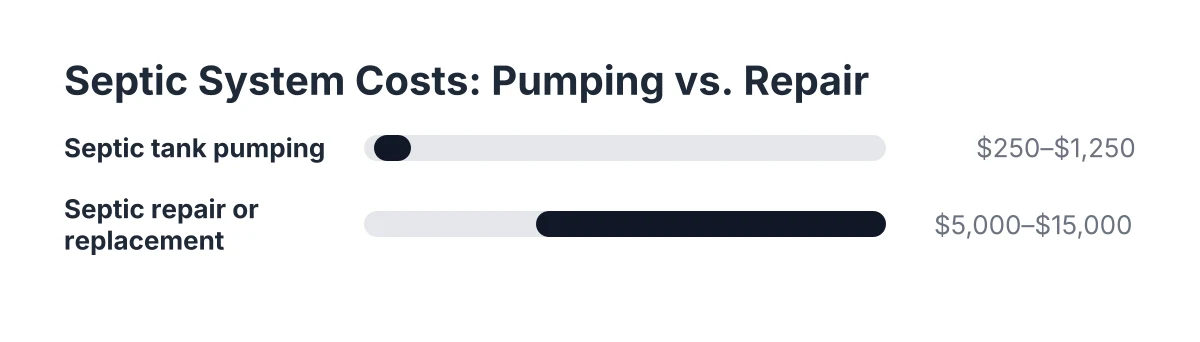
    Cost comparison chart: septic tank pumping ranges from $250–$1,250, while septic repair or replacement ranges from $5,000–$15,000.
    Routine pumping costs far less than emergency drain field repair, making kitchen grease habits a cost-effective lever for homeowners.

    If your kitchen drains through a grease trap or straight into a septic tank, the habits at your sink decide how often a pump truck shows up. Grease is the number one thing that shortens the time between pump-outs, and every extra visit adds to your septic system pumping cost over the life of the house. This guide answers the questions Hesperia homeowners and rental property owners ask most about grease, kitchen drains, and keeping a septic system out of emergency territory.

    The goal here is simple: practical upkeep that keeps you off the after-hours call list. A backed-up tub at 8pm is a bad way to learn where your grease has been going.

    What is a grease trap, and do homes in Hesperia have them?

    A grease trap is a small holding box on the kitchen drain line that catches fats, oils, and grease before they reach the septic tank or drain field. Most single-family homes in Hesperia do not have one; the septic tank itself does that job. However, some older properties, converted commercial buildings, and rental units with large kitchens do have a residential grease trap.

    If you own a rental property and you have never checked, look for a small access lid near the kitchen side of the building. A septic tank locating service can find both the tank and any trap if the property records are missing, which is common on older High Desert parcels.

    Either way, the maintenance logic is the same. Grease has to be caught, held, and pumped out before it moves downstream.

    Why does grease matter so much for a septic system?

    Grease matters because it never fully breaks down in a septic tank. Fats, oils, and grease float to the top and form a scum layer, and when that layer gets thick enough, grease escapes into the drain field and clogs the soil. A clogged drain field is the failure that turns a routine pumping bill into a major repair.

    The scale of the problem shows up clearly in commercial kitchens. According to Wastewater Digest, a single restaurant can release between 800 and 17,000 pounds of grease into the sewer system each year. A home kitchen produces far less, but a septic tank is also far smaller than a city sewer, so the grease you pour down the sink stays on your property.

    The cost gap is the reason to care. According to Angi data, septic tank pumping averages $427, ranging from $250 to $1,250 or more depending on tank size and location. The EPA estimates septic repair or replacement typically runs $5,000 to $15,000. Kitchen habits are the cheapest lever you have between those two numbers.

    How does grease affect septic system pumping cost over time?

    Grease raises your septic system pumping cost by filling the tank's scum layer faster, which shortens the interval between pump-outs. A household that pours bacon fat and fryer oil down the drain can need pumping years sooner than a neighbor with the same size tank and family. More visits per decade means more money spent on the same system.

    There is a second, bigger cost risk. Once grease pushes past the tank and into the drain field, no amount of pumping fixes the soil. At that point you are looking at drain field repair, and that is the $5,000 to $15,000 range the EPA describes, not a routine service call.

    For a small landlord with two or three septic-served rentals in Hesperia, this compounds. One tenant who treats the kitchen sink like a grease bin can quietly move a property from a predictable pumping schedule to an emergency septic pumping call during a lease turnover.

    What should never go down a kitchen drain on a septic system?

    Nothing greasy, fibrous, or chemical should go down a kitchen drain that feeds a septic tank. The tank depends on bacteria to break down waste, and grease smothers that process while solids fill the tank faster. Keep this list posted for family members or tenants:

    • Cooking oil, bacon grease, and pan drippings, even small amounts
    • Butter, shortening, mayonnaise, and salad dressing scraped from plates
    • Dairy-heavy liquids like gravy, cream sauces, and melted cheese
    • Coffee grounds and eggshells, which never break down
    • Fibrous scraps like celery, corn husks, and potato peels
    • Harsh drain cleaners and degreasers, which kill the bacteria the tank needs

    Instead, pour cooled grease into a can or jar, let it harden, and put it in the trash. Wipe greasy pans with a paper towel before washing. Scrape plates into the garbage, not the disposal.

    Garbage disposals deserve a special mention. Homes with disposals generate significantly more sludge, and the Massachusetts Department of Environmental Protection recommends annual pumping for such households regardless of tank size. If your rental has a disposal, budget for more frequent service or consider removing it at the next turnover.

    How often should a grease trap or septic tank be pumped?

    A residential grease trap needs pumping whenever grease and solids fill about a quarter of its depth, and a septic tank needs pumping on a schedule based on tank size, household size, and kitchen habits. There is no single interval that fits every Hesperia property. What matters is that someone checks the levels instead of waiting for a backup.

    A professional inspection is the honest way to set that schedule. The EPA recommends the average household have its septic system inspected at least once every three years. An inspection measures the scum and sludge layers, so you pump when the tank actually needs it, not on a guess.

    For landlords, tie the check to events you already manage: a pre-lease inspection at turnover, or a standing service visit for each property. Getting the schedule right is the core of septic tank maintenance, and it is what keeps pumping a planned line item instead of a surprise.

    What does grease trap pumping cost compared to septic system pumping cost?

    Grease trap pumping for a small residential trap generally costs less than a full septic tank pump-out because the trap holds far less volume. Septic system pumping cost is driven by tank size, how full the tank is, and how hard the lid is to access. A buried lid that needs locating and digging adds labor to any visit.

    If a crew is already on site pumping the tank, having the trap serviced in the same trip is usually cheaper than two separate visits. Ask for both when you schedule. When you search for septic tank service near me or septic maintenance near me, confirm the company handles grease trap pumping too; not every outfit does, and a plumbing generalist often will not.

    One trade-off worth naming: pumping more often than the tank needs wastes money, while stretching intervals to save on 2026 service costs risks the drain field. An inspection-based schedule beats both extremes.

    What are the warning signs that grease is winning?

    Slow kitchen drains, gurgling pipes, and a sewage smell near the sink or yard are the early signs that grease is building up in the trap, the tank, or the line between them. Wet, greasy patches over the drain field are a later and more serious sign. By the time sewage backs up into a tub, the problem has been building for months.

    Do not wait on these signs at a rental. Tenants often live with a slow drain for weeks before calling, so a "minor" complaint on the phone can mean a tank at capacity. A same-week pump and inspection is cheaper than a weekend backup response and a habitability complaint.

    If drains back up again shortly after a pumping, that points past the tank, possibly to a clogged line or a saturated drain field. That is the point to bring in a professional for a full septic system inspection rather than paying for repeat pump-outs that will not hold.

    Can I clean a residential grease trap myself?

    You can scoop a small under-sink grease trap yourself, but most homeowners and landlords should not. The work is unpleasant, the waste needs legal disposal, and a partial cleaning leaves hardened grease on the walls and baffles where clogs restart. A pump truck removes everything and can inspect the trap's condition at the same time.

    In-ground traps and septic tanks are not do-it-yourself territory at all. Tank gases are dangerous, and the waste must be hauled and disposed of properly. This is one place where searching septic repair near me and hiring a local septic crew is the safe and, over time, the cheaper move.

    The bottom line for Hesperia homeowners and landlords

    Grease control is the cheapest septic upkeep there is. A jar by the stove, a paper towel wipe before washing, and an inspection-based pumping schedule keep the scum layer thin and the drain field clean. Those habits stretch the years between pump-outs and keep your total septic system pumping cost as low as the system allows.

    Consider a real Hesperia scenario: a landlord with a three-bedroom rental pays for a routine pump-out in the $300 to $500 range at each long tenancy turnover and never hears from the tenant about drains. The same house with a fryer-happy tenant and no grease rules ends up with a Saturday backup, an emergency pumping call, and a drain field evaluation. Same tank, same soil, different kitchen habits.

    Set the schedule, post the do-not-flush list, and let a local crew measure the tank instead of guessing. That is how you stay off the emergency call list entirely.

    If you need your septic tank serviced, Hesperia Septic can help.
    Related Reading

  • Septic vs. Cesspool: Which Is Right for You?

    septic vs cesspool

    Septic systems and cesspools are both ways to handle wastewater when a home isn't hooked up to city sewer, but they work very differently and aren't interchangeable choices anymore. When you're weighing septic vs cesspool, here's the short answer: a septic system is the modern standard almost everywhere today and works well for most properties, while a cesspool is an older, simpler pit that many areas no longer allow you to install new. If you're building, replacing a failed system, or dealing with a home that already has one of these, it helps to understand the difference before you spend money on pumping, repairs, or a full replacement. Homeowners in Hesperia and the High Desert usually deal with septic tanks, since that's what most local properties are built around. Understanding septic tank cost helps you make informed decisions about these systems. But it helps to know how a cesspool compares if you're buying an older property or trying to figure out what's actually in your yard.

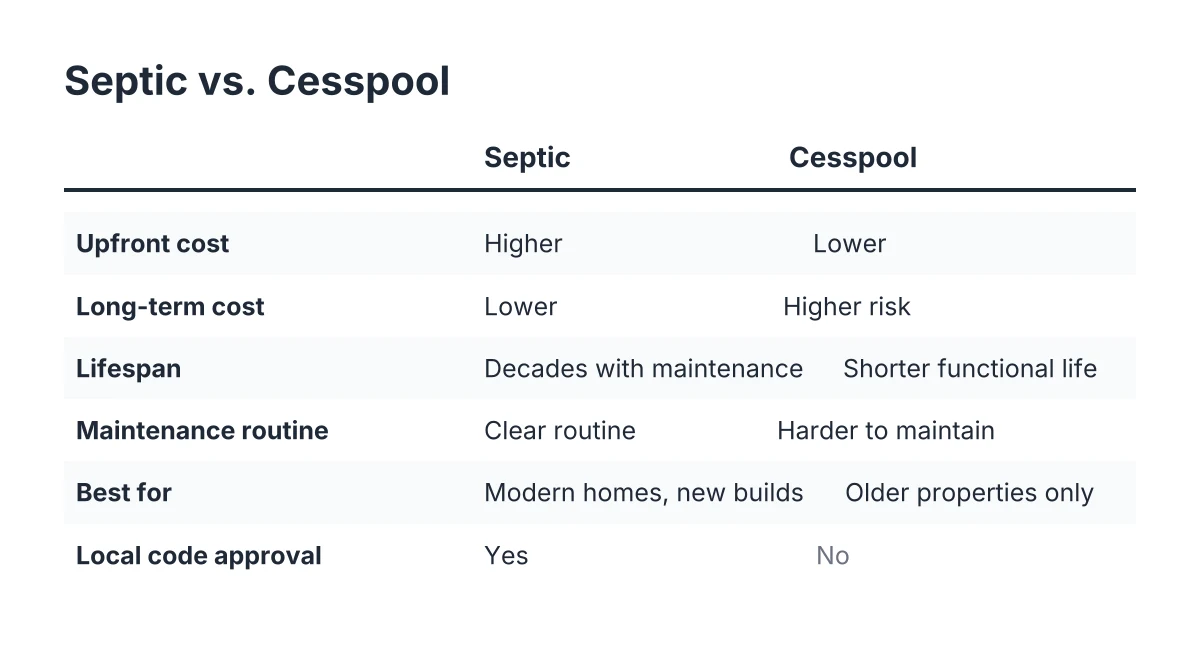
    Comparison Table

    Criterion Septic Cesspool
    Upfront cost Higher upfront, more parts to install (tank, drain field, piping) Lower upfront, simpler pit-style structure
    Long-term cost Lower long-term cost with regular septic tank pumping and care Higher long-term risk, more prone to costly failures over time
    Lifespan Typically decades with proper maintenance Generally shorter functional life, especially in dense soil
    Maintenance Routine septic tank pumping and inspection keeps it working Harder to maintain, no true separation of solids and liquid
    Best for Most modern homes and properties needing a permitted system Older properties already using one, rarely approved for new builds

    Septic vs Cesspool: Strengths and Trade-offs

    A septic system is an underground tank paired with a drain field. Wastewater flows into the tank, solids settle out, and the remaining liquid moves out to the drain field, where the soil filters it naturally. This two-stage setup is why septic systems hold up well over time when crews pump and inspect them on a normal schedule. It's also why septic is the standard choice for new construction and replacements in most areas, including here in the High Desert.

    The trade-off is that septic systems cost more to install because there's more to build: the tank itself, the drain field, and the piping that connects everything. They also need some attention. Skipping septic tank pumping for too long lets solids build up past what the tank can hold, which can cause a septic backup into the house or damage to the drain field that's expensive to fix. The good news is that this kind of trouble is largely preventable. Regular septic tank pumping, septic tank cleaning, and septic system inspections catch problems while they're still small and cheap to handle, instead of after they've turned into a septic backup or overflow.

    Where septic really shines is long-term reliability. A well-maintained system can handle years of daily use without trouble. It's also the system most local code requires now, so if you're replacing anything or buying a property that needs work, septic is likely your only permitted option.

    Cesspool: How It Compares to Septic vs Cesspool

    A cesspool is a simpler setup: a pit or chamber in the ground that both holds waste and lets liquid seep out through its walls or bottom into the surrounding soil. There's no separate tank and drain field doing distinct jobs. It's all happening in one place. Because a cesspool has less built into it, it usually costs less to install and has fewer moving parts to think about.

    That simplicity is also its biggest weakness. Without a tank to hold solids back, more waste ends up seeping directly into the surrounding ground. This means cesspools tend to clog, smell, and fail faster than septic systems, especially in soil that doesn't drain well. Many areas, including much of California, have restricted or banned new cesspool installations because of the risk they pose to groundwater and nearby wells. If you already have one on an older property, it can usually keep working for a while with pumping and care, but you're working with a system that most local rules won't let you rebuild or expand once it fails.

    For most homeowners today, a cesspool isn't a system you'd choose to install new. It shows up mostly on older properties where owners installed it decades ago, before current rules existed.

    Septic vs Cesspool: The Deciding Factors

    Cost Drivers

    Septic costs more upfront but saves you money over the long haul, while a cesspool is cheaper to install but risks bigger costs down the road. The extra cost of a septic system comes from building both a tank and a drain field, plus the piping that ties them together. A cesspool skips that separate drain field, which keeps initial costs down. But when it fails or needs replacing, you're often looking at a full system change since most areas no longer approve new cesspools for install.

    Lifespan

    Septic systems generally outlast cesspools by a wide margin when owners keep up with maintenance. A tank that gets regular septic tank pumping and an occasional inspection can serve a home for a long time, since crews remove the solids before they cause trouble. A cesspool doesn't have that same solids-management step, so it tends to clog and lose function sooner, especially with heavier household use or less permeable soil.

    Installation and Local Rules

    This factor settles the question for most people before cost or lifespan even come into play. If you're installing new or replacing a failed system, septic is likely your only real option, since most areas have moved away from approving new cesspools. A cesspool only stays relevant if your property already has one from years back and it's still working.

    Maintenance

    Both systems need some upkeep, but septic gives you a clear maintenance routine to follow. Septic tank pumping, tank cleaning, and periodic inspection are straightforward tasks that keep a septic system working the way it's supposed to. A cesspool is harder to maintain well because it has no separate tank holding solids apart from the rest of the system, so pumping it doesn't fix the underlying design limitation the way it does with septic.

    Situational Fit

    Your best fit usually comes down to what's already on the property and what your local rules allow. A newer home or a system that needs replacing almost always points to septic. An older property with an existing cesspool that's still working might not need immediate action, but it's worth having it inspected so you know what you're actually dealing with before it turns into an emergency septic backup or overflow.

    Which Should You Choose?

    Choose Septic if:

    • You're building new or replacing a failed system
    • You want a setup with a clear, manageable maintenance routine
    • You're buying a home and want a system that meets current local requirements
    • You'd rather pay more upfront for lower long-term risk

    Choose Cesspool if:

    • Your property already has a working cesspool and you're not doing new construction
    • You understand it may need closer monitoring and won't be eligible for replacement in kind
    • You're planning to have it inspected soon to see how much life it has left

    Common Questions

    Can I replace a cesspool with a new cesspool?

    In most areas today, no. Rules around wastewater systems have tightened over the years, and most jurisdictions no longer approve cesspools for new installation because of the risk they pose to groundwater. If your cesspool fails, you'll likely be looking at a septic system as the replacement.

    How do I know if I have a septic tank or a cesspool?

    If your home is older, it's worth confirming this before you assume anything, since some properties still have a cesspool without the owner realizing it. A septic system inspection can identify what you actually have, locate the tank, and tell you its condition. Septic tank locating is a useful first step if you're not sure what's buried in your yard.

    Which one needs pumping more often?

    Both need waste removed periodically, but septic systems are built around a clear pumping and cleaning routine that keeps the tank working properly. When you're comparing septic vs cesspool for an existing property, keep in mind that a cesspool without a separate tank can be harder to service well. Pumping it doesn't fix the underlying design the way it does with a septic tank.

    What happens if I ignore maintenance on either system?

    Skipping maintenance on a septic tank or cesspool can lead to a septic backup or overflow that's messy and expensive to deal with. Warning signs include slow drains, gurgling pipes, standing water in the yard, or odors near the tank or pit. Catching problems early with routine septic tank pumping and inspection is far less disruptive than dealing with a full backup after the fact.

    If you need your septic tank serviced, Hesperia Septic can help.
    Related guide: septic tank cost — Complete Guide

    Related Reading

  • Septic Tank Pumping Prices in Hesperia, CA: What Cleaning and Inspection Actually Involve

    septic tank pumping prices

    If you're standing in your Hesperia, CA yard looking at a wet spot that smells like sewage, or your toilets stopped flushing an hour ago, you want two things right now: someone who can fix it, and a straight answer on what it costs. This guide walks through what actually happens during professional septic tank pumping, cleaning, and inspection, how septic tank pumping prices are set, and what regular upkeep looks like so you never end up in this spot again. Understanding septic tank maintenance is the foundation of avoiding costly repairs. No sales pitch, just the process explained the way a local septic crew would explain it over the phone.

    Why the Process Matters More Than the Price Quote

    Most people searching for septic tank pumping near me have never watched the job get done. That makes it hard to tell a fair quote from a padded one, and it makes it easy for a bad operator to skip steps you're paying for.

    Here's the short version. A proper visit for septic tank pumping in Hesperia, CA removes everything from the tank: the liquid, the floating grease layer on top, and the settled sludge on the bottom. A rushed job pulls out the liquid and leaves the sludge behind. Your tank looks empty for a week, then the problem comes back, and you're paying twice.

    Therefore, knowing the steps below is worth more than any price list. When you can ask "are you removing the sludge layer or just pumping the liquid," you sound like someone who can't be shortchanged. That alone changes how the job goes.

    What Happens During a Professional Septic Tank Pumping Visit

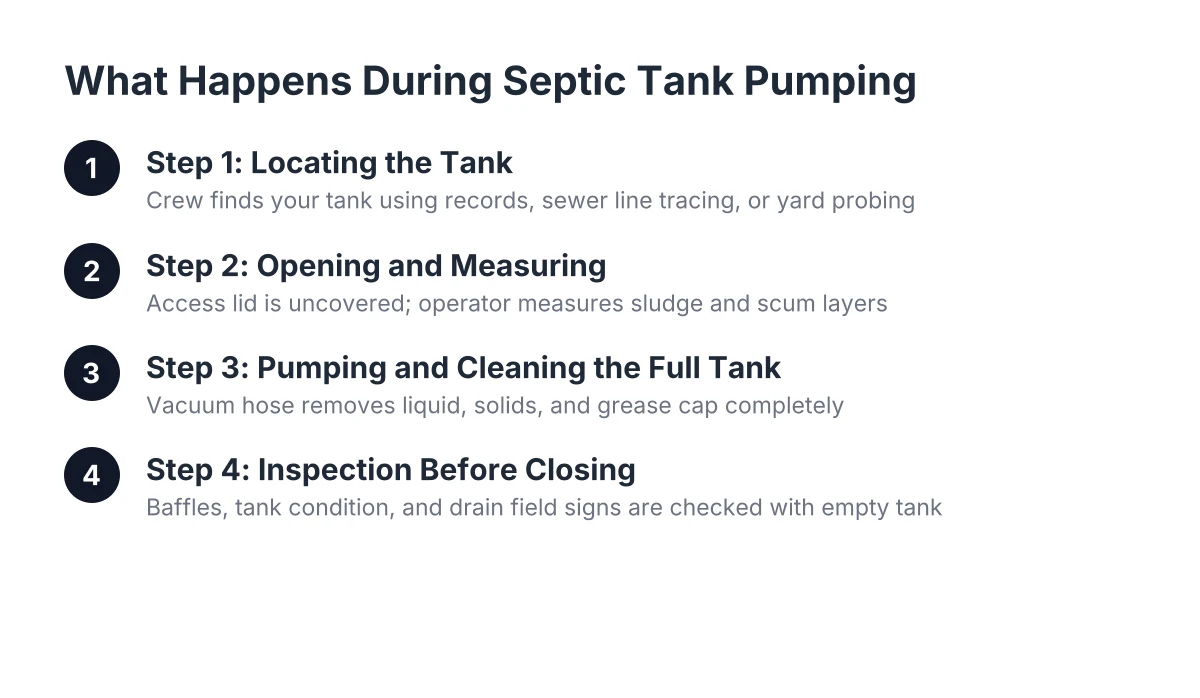
    A professional septic tank pumping visit follows a clear sequence: locate the tank, open the access lid, measure the sludge and scum layers, pump out all contents with a vacuum truck, break up and remove the settled solids, and check the tank's basic condition before closing it back up. The whole visit typically takes one to a few hours depending on tank access and condition.

    Here's each step in more detail, so you know what to expect when the truck pulls up to your Hesperia property.

    Step 1: Locating the Tank

    First, the crew has to find your tank. On newer Hesperia homes this is easy; the lid is at grade or under a few inches of soil, and county records or as-built drawings show where it sits. On older High Desert properties, the tank can be buried under decades of dirt, a patio, or landscaping nobody remembers installing.

    A septic crew that offers septic tank locating will probe the yard, follow the sewer line out from the house, or use records to narrow it down. If you've owned the home a while, sketch the tank location once it's found and keep that sketch. It saves time and money on every future visit.

    Step 2: Opening and Measuring

    Next, the crew uncovers the access lid and opens the tank. Before pumping anything, a good operator looks at what's inside. The tank holds three layers: a scum layer of grease and floating solids on top, liquid in the middle, and sludge on the bottom.

    The thickness of the sludge and scum layers tells the real story. Thick layers mean the tank was overdue; thin layers mean you're on a good schedule. This measurement is also your best evidence for how often your specific household needs pumping, which beats any generic rule of thumb.

    Step 3: Pumping and Cleaning the Full Tank

    Then the vacuum hose goes in. The truck pulls out the liquid first, but the job isn't done there. The crew uses the hose, and sometimes a tool to break up compacted sludge, to remove the solids from the bottom and the grease cap from the top.

    This is the difference between septic tank pumping and septic tank cleaning done right. Everything comes out. If someone quotes you a strangely low number and finishes in twenty minutes on a full tank, ask what they left behind.

    Step 4: The Inspection Before the Lid Goes Back On

    Finally, with the tank empty, the operator gets the only clear look anyone will have at your system for years. A basic inspection during pumping checks:

    • The inlet baffle, which keeps incoming waste from shooting across the tank
    • The outlet baffle or filter, which keeps solids from escaping into the drain field
    • Cracks, root intrusion, or signs the tank is deteriorating
    • Water flowing back into the tank from the drain field, which can signal a saturated or failing field
    • The condition of lids and risers

    For example, backflow from the outlet pipe is one of the earliest visible signs of drain field trouble. Catching it during a routine pump-out gives you options. Discovering it during a sewage backup on a Saturday night does not.

    How Septic Tank Pumping Prices Are Actually Set

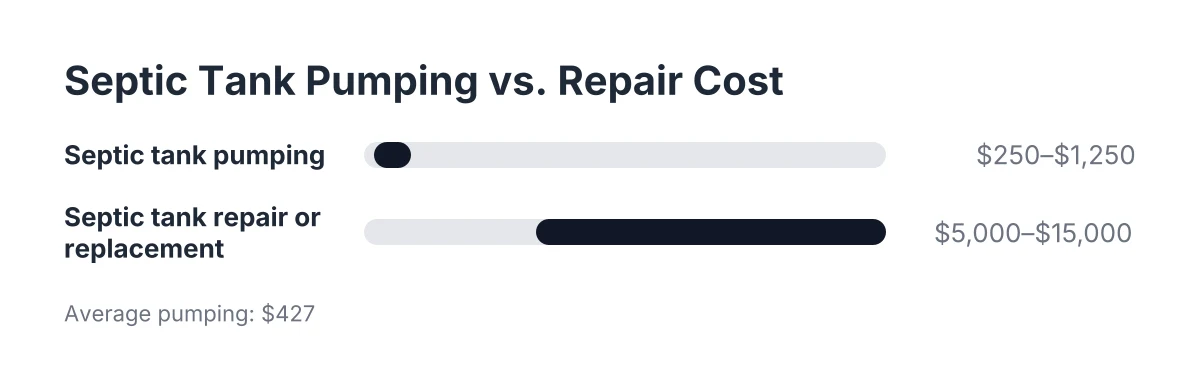
    Septic tank pumping prices depend on a handful of concrete factors: the size of your tank, how full it is, how hard the tank is to find and access, whether it's a routine visit or an emergency call, and local disposal fees for hauling the waste. According to Angi data, septic tank pumping averages $427 nationally, with a typical range of $250 to $1,250 or more depending on tank size and location.

    Let's break down what moves the number up or down in the High Desert:

    • Tank size. Bigger tanks hold more waste, take longer to pump, and fill more of the truck. Larger homes usually have larger tanks.
    • Tank condition. A tank that hasn't been pumped in ten years has thick, compacted sludge that takes longer to remove than a tank on a regular schedule.
    • Access. A lid at grade level costs less to service than a tank buried two feet down under landscaping. If the crew has to dig, expect that reflected in the price. Risers, which extend the lid to ground level, pay for themselves over a few visits.
    • Locating work. If nobody knows where the tank is, septic tank locating adds time before pumping even starts.
    • Timing. Emergency septic pumping at night or on a weekend generally costs more than a scheduled weekday visit. That's true across the industry, and it's the single best financial argument for staying on a maintenance schedule.

    However, be careful comparing quotes on price alone. A low quote that covers pumping liquid only, with sludge removal as a surprise add-on once the lid is open, often ends up costing more than an honest all-in number. Ask what the quote includes before the truck arrives.

    Septic Tank Pumping Prices vs. the Cost of Neglect

    Here's the comparison that matters more than any price list. The U.S. Environmental Protection Agency estimates that septic repair or replacement typically runs $5,000 to $15,000. Routine pumping, by contrast, sits in the hundreds. Skipping a few hundred dollars of maintenance to risk a five-figure septic system repair cost is a bad trade every time.

    Consider a scenario any Hesperia homeowner can picture. A family buys a home and never thinks about the septic tank because nothing seems wrong. Six years later, sludge has built up past the outlet, solids have been washing into the drain field the whole time, and the field soil is clogging. The first visible symptom is sewage backing up into the hall bathroom on a holiday weekend.

    At that point, the bill isn't one pump-out. It's an emergency call, plus a camera or inspection to diagnose the drain field, plus whatever repair the diagnosis shows. As a result, the cheapest septic service you will ever buy is the routine one you schedule before anything goes wrong.

    One honest caveat: pumping is maintenance, not a cure. If your drain field is already failing, pumping the tank buys you days or weeks, not a fix. A trustworthy operator will tell you that at the tank, and a drain field problem needs a professional diagnosis, not another pump-out.

    How Often Should You Pump and Inspect a Septic Tank?

    The U.S. Environmental Protection Agency recommends having the average household septic system inspected at least once every three years by a professional, and alternative systems with pumps, float switches, or other mechanical parts inspected once a year. Pumping frequency varies by household size, tank size, and water use, so let the sludge measurements from your last visit set your actual schedule.

    In addition, some households build sludge faster than average. Homes with garbage disposals send far more solids into the tank; the Massachusetts Department of Environmental Protection recommends annual pumping for households with disposals regardless of tank size. If you run a disposal daily, plan on a shorter interval than your neighbors.

    A simple septic maintenance schedule for a Hesperia home looks like this:

    1. Get the tank pumped and inspected now if you can't remember the last time it was done.
    2. Write down the date, the sludge and scum measurements, and anything the crew flagged.
    3. Set the next inspection based on those measurements, using the EPA's three-year interval as your outer limit.
    4. Keep the tank location sketch and service records with your house documents.

    That's the whole system. Four items, and it keeps most homeowners off the emergency-call list permanently.

    Daily Habits That Protect Your Tank and Drain Field

    Between pump-outs, what goes down your drains decides how fast the tank fills and how long the drain field lasts. The rules are simple, but they only work if everyone in the house follows them.

    Keep these out of a septic system:

    • Wipes of any kind, including ones labeled flushable
    • Grease, cooking oil, and fat washed down the kitchen sink
    • Paper towels, feminine products, and diapers
    • Paint, solvents, and harsh chemicals that kill the bacteria doing the work inside your tank
    • Coffee grounds and food scraps in volume

    Protect the drain field itself too. Never park or drive on it; vehicle weight compacts the soil and crushes pipes. Don't plant trees near it, since roots seek out the moisture in the lines. In addition, direct roof gutters and yard drainage away from the field, because a waterlogged field can't absorb wastewater from the house.

    Water use matters as well. Spreading laundry across the week instead of running five loads on Saturday gives the tank time to settle solids between surges. Fixing a running toilet stops hundreds of gallons a day from flooding the system for no reason.

    Warning Signs That Mean Call Someone Today

    The early signs of septic system failure are slow drains throughout the whole house, gurgling pipes, sewage odor indoors or in the yard, wet or unusually green patches over the tank or drain field, and a septic alarm sounding. Any one of these means the system needs attention; sewage backing up into tubs or floor drains means it needs attention today.

    Note the difference between one slow drain and every drain. One slow sink is usually a clog in that line, a plumber-type problem. Every fixture draining slowly at once points to the tank or the drain field, a septic problem. Many Hesperia homeowners learn this distinction the hard way after a plumber visit that couldn't fix the real issue.

    If sewage is already backing up, stop running water in the house. Every flush and every load of laundry adds to what's coming back at you. Then call a septic service, not a general plumber, and tell them what you're seeing: backup location, odors, wet spots, and whether an alarm is sounding. Those details help the crew show up ready.

    What to Ask Before You Book Septic Service in Hesperia, CA

    When you're comparing septic tank services prices from local operators, the questions you ask matter more than the number on the quote. A few minutes on the phone tells you a lot.

    Ask these before booking:

    • Does the quote cover pumping the full tank, including sludge and scum, or liquid only?
    • Is a basic inspection of baffles and tank condition included while the tank is open?
    • What do digging, locating, or extra-heavy sludge cost if they come up?
    • What are the disposal fees, and are they included?
    • For emergency calls, what's the after-hours difference, stated up front?

    A local, septic-focused crew should answer all of these plainly. Vague answers on what's included are how a $400 job becomes an $800 invoice. You're not being difficult by asking; you're being the kind of customer who gets straight treatment.

    Location matters too. A crew based in the High Desert knows Hesperia's soil, common tank setups, and local disposal requirements, and doesn't route your call through a national dispatch center that has never seen a drain field.

    The Bottom Line for Hesperia Homeowners

    Septic tank pumping prices are set by real, physical factors: tank size, sludge buildup, access, and timing. National data from Angi puts the average around $427, while the EPA pegs repair or replacement at $5,000 to $15,000. The gap between those two numbers is the entire argument for maintenance.

    A professional visit is more than emptying a tank. It's the sludge measurement that sets your real schedule, the baffle check that protects your drain field, and the early warning if something bigger is developing. Done on schedule, it's a routine expense in the hundreds. Skipped for years, it becomes an emergency in the thousands.

    So if you can't remember the last time your tank was pumped, that's your answer. Get it pumped and inspected, write down what the crew finds, and put the next date on the calendar. That one habit is what separates homeowners who never think about their septic system from homeowners searching for emergency septic pumping at 8pm on a Saturday.

    If you need your septic tank pumped, Hesperia Septic can help.

    Related Reading

  • Signs Your Septic Tank Needs Pumping Now, and How to Never Get There

    septic tank cleaning

    Most septic emergencies in Hesperia do not start at 8pm on a Saturday. They start months earlier, with a slow drain nobody mentioned, a wet spot in the yard everyone stepped around, and a septic tank cleaning that kept getting pushed to next month. By the time sewage is backing up into the tub, the system has been asking for help for a long time. This guide covers both ends of that story: the warning signs that mean you need a truck out today, and the plain, practical upkeep that keeps you off the emergency-call list entirely.

    Here is the honest version of how this works. A septic system is not a mystery box. It is a tank, a set of pipes, and a drain field, and each one gives you signals before it fails. Learn the signals, keep a simple septic tank maintenance schedule, and you can go years without ever making a panicked phone call.

    The Warning Signs That Mean Your Tank Is Full or Failing

    Some septic problems can wait until Monday. Others cannot. Knowing the difference saves you money and, in the worst cases, saves your floors.

    Signs you need septic tank cleaning today

    Sewage backing up into a tub, shower, or floor drain is the clearest sign a septic tank needs emergency pumping today. Standing sewage or a strong sewage smell inside the house means waste has nowhere to go, and every flush makes it worse. Stop running water and call for emergency septic pumping.

    Here are the signs that mean same-day or next-day service, not a note on the calendar:

    • Sewage coming up in the lowest drain in the house, usually a tub or shower
    • Toilets that gurgle or refuse to flush in more than one bathroom at once
    • A wet, soggy, or foul-smelling patch of ground over the tank or drain field
    • Sewage surfacing in the yard, especially after laundry or showers
    • A septic alarm going off, if your system has one
    • Drains throughout the house running slow at the same time

    One bad drain is usually a plumbing clog. Every drain acting up at once is a septic problem. That distinction matters, because a lot of Hesperia homeowners call a regular plumber first, hear “we don’t really do septic,” and lose a day while the backup gets worse.

    Signs you have a few weeks, not a few hours

    Slow drains that improve after light water use, occasional gurgling, or a faint outdoor odor near the tank lid are early warnings, not emergencies. They usually mean the tank is filling with sludge and losing capacity. Schedule septic tank cleaning soon, before the next heavy-use weekend turns a warning into a backup.

    Grass that grows greener and faster in one strip of the yard is another quiet signal. That strip often sits over a drain field that is receiving liquid it should not be receiving. In the High Desert, where most yards run dry, an unexplained lush patch stands out fast.

    What Actually Happens Inside the Tank

    Every drop of water that leaves your house lands in the septic tank first. Solids sink to the bottom and become sludge. Grease and soap scum float to the top. The liquid in the middle flows out to the drain field, where the soil filters it.

    The problem is simple math. Sludge and scum never leave on their own. They build up until the liquid layer in the middle shrinks, and then one of two things happens. Either solids push out into the drain field and clog it, or the tank fills completely and waste backs up toward the house.

    That is why septic tank cleaning exists. Pumping removes the sludge and scum before they reach the outlet. It is the single cheapest thing you can do for the system, and skipping it is how a few hundred dollars becomes a five-figure repair.

    The cost gap is not small. According to Angi, septic tank pumping averages $427, with a typical range of $250 to $1,250 depending on tank size and location. Compare that to what happens when a neglected tank ruins the drain field: the EPA estimates septic tank repair or replacement typically costs between $5,000 and $15,000. One number is routine upkeep. The other is a construction project in your yard.

    How Often to Pump a Septic Tank

    Most households should have a professional inspect the septic system at least once every three years, according to the U.S. Environmental Protection Agency, with pumping scheduled based on what that inspection finds. Systems with pumps, float switches, or other mechanical parts should be inspected once a year, per the same EPA guidance.

    However, “how often to pump septic tank” does not have one universal answer, and anyone who gives you a single number without asking questions is guessing. The right interval depends on:

    1. Household size. More people means more water and more solids. A family of six fills a tank far faster than a retired couple.
    2. Tank size. A small tank serving a big household needs attention more often than a large tank serving a small one.
    3. Garbage disposal use. Homes with garbage disposals generate significantly more sludge; the Massachusetts Department of Environmental Protection recommends annual pumping for such households regardless of tank size.
    4. Water habits. Long showers, back-to-back laundry days, and leaky toilets all push water through the tank faster than solids can settle.

    The practical move is to have the tank pumped, ask the crew how full it was, and set your next date from there. If the tank was near capacity, shorten the interval. If it had plenty of room, you can stretch it. After two or three cycles you will know your house’s real number instead of a generic one.

    What Not to Flush With a Septic System

    A septic system can safely handle three things: human waste, toilet paper, and wastewater. Everything else either clogs the tank, kills the bacteria that break down waste, or passes through to clog the drain field. The shorter your list of exceptions, the longer your system lasts.

    The repeat offenders that fill Hesperia tanks early:

    • “Flushable” wipes, which do not break down no matter what the package says
    • Cooking grease and fats poured down the kitchen sink
    • Coffee grounds, eggshells, and food scraps through the disposal
    • Feminine hygiene products, dental floss, and cotton swabs
    • Paint, solvents, and harsh drain cleaners
    • Cat litter, even the kinds labeled flushable

    Grease deserves its own warning. It cools, hardens, and builds a scum layer that eats tank capacity and coats pipes. Restaurant kitchens have grease traps and scheduled grease trap pumping for exactly this reason; a home kitchen has neither, so the tank absorbs everything you pour. Keep a can by the stove, pour grease into it, and throw it in the trash.

    Chemical drain cleaners are the other quiet killer. The tank depends on live bacteria to digest solids. Dump enough bleach, antibacterial cleaner, or caustic drain opener down the pipes and you sterilize the tank, and then the solids stop breaking down at all.

    Septic tank cleaning products and additives: do they replace pumping?

    No septic tank cleaning product, powder, or additive removes the sludge sitting at the bottom of your tank. Additives may claim to boost bacteria or dissolve solids, but the physical waste has to be pumped out through a hose into a truck. There is no shortcut in a bottle.

    A healthy tank already contains all the bacteria it needs, supplied free of charge by everyone in the house. Some homeowners spend years buying monthly septic tank additive powder while the sludge layer keeps rising, then face a backup anyway. If you enjoy using an additive and it is septic-safe, it probably does no harm. Just never let it replace pumping on a schedule.

    Drain Field Care: Protecting the Part You Cannot Pump

    The drain field is the one part of your septic system that cannot be pumped, cleaned, or easily fixed. Once soil clogs with solids or gets crushed, the common fix is digging up the yard and building a new field. Protecting it costs nothing; replacing it costs thousands.

    Drain field maintenance is mostly about what you keep away from it:

    • Never park or drive vehicles over the drain field. This includes RVs, trailers, and delivery trucks, which are common culprits on larger High Desert lots.
    • Keep trees and deep-rooted shrubs at a distance. Roots hunt for the moisture in drain field lines and crack them open.
    • Direct rain gutters and yard drainage away from the field. Saturated soil cannot absorb wastewater.
    • Do not build sheds, patios, or paved areas over the field. The soil needs air to treat wastewater.
    • Spread out water use. Run laundry across the week instead of six loads on Sunday, so the field never gets flooded all at once.

    In addition, know where your tank and field actually are. Plenty of Hesperia homeowners bought their house without a septic map and have no idea what sits under which patch of dirt. A septic tank locating service can mark it once, and then every future pump-out, inspection, and landscaping decision gets easier.

    A Septic Maintenance Schedule You Will Actually Keep

    The best septic maintenance schedule is the one simple enough to follow for twenty years. You do not need a binder. You need a few recurring reminders and one page of records.

    Here is a realistic version for 2026:

    1. Monthly, two minutes. Walk the yard over the tank and drain field. Look for wet spots, odors, or unusually green grass. Fix any running toilets or dripping faucets, since constant water flow works the system around the clock.
    2. Every three years, or yearly with mechanical parts. Have the system professionally inspected, in line with EPA guidance. The inspector measures sludge levels and tells you whether pumping is due now or can wait.
    3. On the inspector’s recommendation. Schedule septic tank cleaning before the tank is critically full, not after. Cleaning a tank at 70 percent full is maintenance. Cleaning it after a backup is triage.
    4. Ongoing. Keep the flush list short, keep grease out of the sink, and keep vehicles off the field.
    5. Always. Write down every pump-out and inspection date, the company, and what they found. That record tells you your real pumping interval and pays for itself when you sell the house.

    For example, consider a common Hesperia scenario. A family buys a home on a half-acre lot, never gets told when the tank was last pumped, and hosts Thanksgiving three years later. Twelve guests, two days of showers and dishes, and by Friday morning sewage is standing in the hall bathtub. An emergency crew pumps the tank and finds it packed solid, with wipes matted through the outlet. The pump-out itself might have cost a few hundred dollars on a Tuesday in October. Instead they paid for emergency septic pumping on a holiday weekend, plus a follow-up visit to check whether solids had pushed into the drain field. Every part of that was avoidable with one calendar reminder.

    When Pumping Is Not Enough: Recognizing Real Failure

    Sometimes a backup returns days after the tank is pumped, and that pattern points past the tank. If the tank fills again within days, or sewage keeps surfacing over the drain field after pumping, the problem is likely a failed field, a broken line, or a collapsed baffle. That is septic tank repair territory, not a cleaning problem.

    Signs of septic system failure that pumping alone will not fix:

    • Backups that come back within days or weeks of a pump-out
    • Sewage or standing water over the drain field even in dry weather
    • Water flowing back into the tank from the field side during pumping
    • Strong sewage odors that never fully go away

    This is where you should be careful with anyone quick to sell a full replacement. A slow field is not always a dead field; sometimes a crushed pipe, root intrusion, or a failed baffle is the real issue, and those repairs cost a fraction of a new system. Ask the crew to show you what they found, in plain terms, before you agree to major work. A trustworthy local septic operator would rather explain the problem over an open tank lid than pressure you into the biggest ticket.

    One honest limitation: no article can diagnose your yard from a distance. Soil conditions, tank condition, and system age vary from lot to lot across Hesperia and the High Desert, so treat this guide as a framework and let an on-site inspection make the final call.

    The Short Version

    A septic system fails slowly, then all at once. The homeowners who never end up searching “24 hour septic service” at midnight are the ones who watch for slow drains and wet spots, keep wipes and grease out of the pipes, protect the drain field from tires and roots, and put septic tank cleaning on a schedule instead of waiting for a reason.

    Routine pumping runs a few hundred dollars. A drain field replacement runs thousands, per the EPA’s estimates, and comes with an excavator in your yard. The gap between those two outcomes is not luck. It is a calendar reminder and a short list of habits, starting today.

    If you need your septic tank serviced, Hesperia Septic can help.
    Related Reading