Author: Logan Minium

  • Red Flags During Septic Inspection That Signal a Failing System in Hesperia

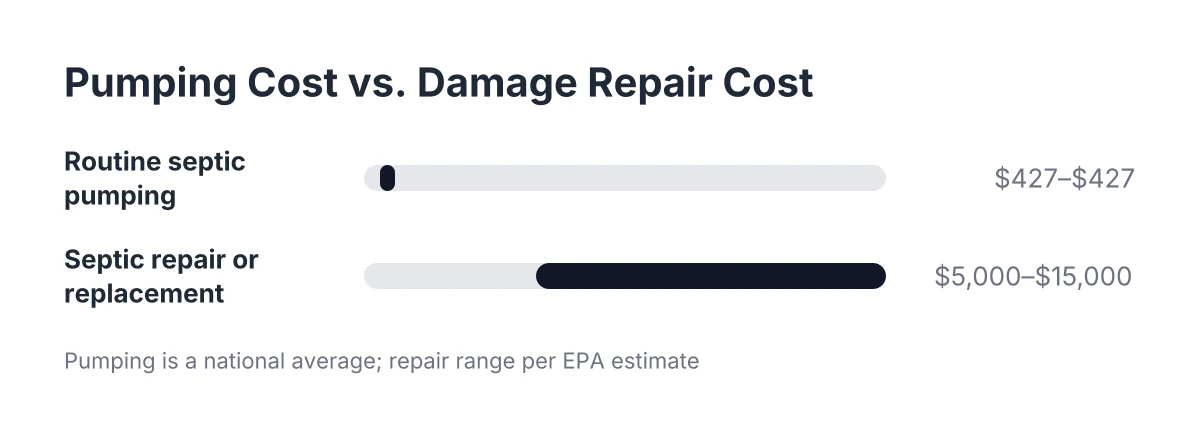
    Cost range chart showing $5,000–$15,000 septic repair estimates from septic inspection red flags
    Failing drain fields and tank issues found during inspection often fall in this repair-or-replacement range, per the EPA.

    If you are buying High Desert property with no septic records, or you are a homeowner scheduling a routine checkup, understanding septic inspection red flags matters more than anything else in the report. A tank can look fine from the surface and still be one wet winter away from failure. This guide walks through the specific warning signs inspectors look for, what each one means for the system's future, and how to weigh them when you are making a purchase decision or planning maintenance. The goal is a documented, lender-ready picture of the system before money changes hands, written by people who know how Hesperia soil and older High Desert systems behave.

    Why Septic Condition Matters Before You Buy or Refinance

    More than one in five U.S. households depend on individual septic systems or small community cluster systems to treat their wastewater, according to U.S. Environmental Protection Agency. In California the share is lower, about 10 percent statewide per the same source, but out here in the High Desert, septic is the norm rather than the exception. Rural parcels around Hesperia often run on systems that are decades old, and many changed hands without a single service record following them.

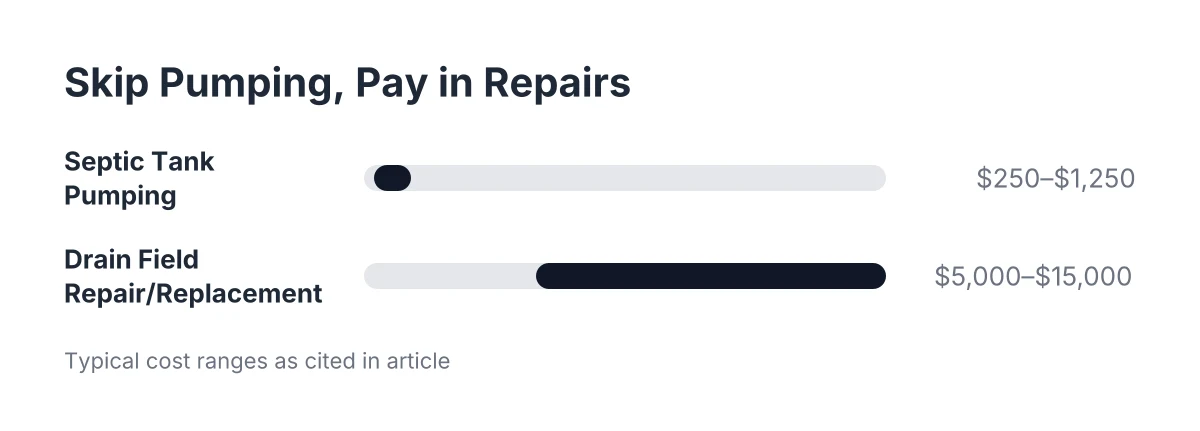
    That gap in paperwork is exactly why an inspection exists. Lenders and escrow officers want documented condition, not the seller's word. Buyers want to know whether the $5,000 to $15,000 repair-or-replacement range the U.S. Environmental Protection Agency estimates for septic systems is a risk they are inheriting. A written septic system inspection report answers that question in a form a lender, a county office, or your own file cabinet can use.

    For routine maintainers, the stakes are smaller but the logic is the same. The U.S. Environmental Protection Agency recommends the average household have its system inspected at least once every three years, and alternative systems with pumps or float switches once a year. Catching a warning sign at year three is a service call. Catching it at year eight can be an excavation.

    What a Septic Inspection Actually Covers

    A full septic system inspection covers more than lifting a lid. Before an inspector can flag anything, they have to find the system, open it, and see it working. On a property with no records, that first step is often the hardest part of the job.

    A thorough inspection in the Hesperia area typically includes:

    • Locating the tank and marking its position, along with the lid or riser
    • Uncovering and opening the access lids
    • Measuring the scum and sludge layers inside the tank
    • Checking the inlet and outlet baffles or tees for damage
    • Inspecting the tank walls for cracks, corrosion, and root intrusion
    • Running water in the house to confirm flow into the tank
    • Evaluating the drain field area for wet spots, odors, or unusually green growth
    • Documenting everything in a written report with findings and photos

    Some inspections happen alongside septic tank pumping, and there is a good reason for that. An inspector cannot see cracks in a tank wall or a failed baffle through three feet of sludge. Pumping the tank first gives a clear view of the structure, which is why many buyers schedule locate, pump, and inspect as one visit rather than three.

    If you are buying a property on a private well, the septic and well inspection cost is often quoted together during escrow. The two systems get inspected separately, but coordinating them saves time when a closing date is bearing down on you.

    The Biggest Warning Signs in Septic Inspection

    The most serious red flags during a septic inspection are sewage backing up into the home, standing water or sewage odor over the drain field, a tank that will not hold liquid at its normal level, and damaged baffles that let solids escape into the field. Any one of these points toward failure risk rather than routine wear.

    Below is what each major warning sign means and why inspectors treat it seriously.

    Standing Water or Odor Over the Drain Field

    Soggy ground, sewage smell, or a stripe of lush green grass over the drain field in an otherwise dry Hesperia yard is one of the clearest failure signals there is. Our soil out here drains fast when it is healthy. When wastewater surfaces instead of soaking in, the field is no longer treating effluent, and that is the expensive half of the system.

    Drain field failure is the finding that most often lands in the $5,000 to $15,000 replacement range the U.S. Environmental Protection Agency cites. On a purchase, this red flag alone can justify renegotiating price or walking away.

    Liquid Level That Is Too High or Too Low

    Inside the tank, the liquid should sit at the level of the outlet pipe. If the inspector opens the lid and finds liquid above the outlet, the drain field is not accepting water the way it should. That backup pressure is an early sign of a saturated or failing field, even when the yard above still looks dry.

    The opposite finding matters too. If the level sits well below the outlet, the tank may be leaking wastewater into the surrounding soil through a crack or a failed seam. Either direction, an abnormal level is a structural question that a quick glance would never catch.

    Backup or Slow Drainage Inside the House

    Slow drains, gurgling toilets, or wastewater backing up into a tub during the water test point to a blockage or a system that cannot keep up. Sometimes the cause is simple, such as a full tank that just needs septic tank pumping. Other times the line between house and tank is broken or root-choked.

    An inspector's job is to tell those cases apart, because the fix ranges from a routine pump-out to trenching and pipe replacement. A backup during inspection should never be waved off as a one-time clog.

    Damaged or Missing Baffles

    The baffles, or tees, at the tank's inlet and outlet keep floating scum inside the tank and direct flow correctly. When the outlet baffle rusts away or breaks off, solids flow straight into the drain field and clog it from the inside. Older concrete tanks in the High Desert commonly show corroded baffles, and it is a cheap fix if caught early. Left alone, it quietly destroys the field.

    Cracks, Root Intrusion, or a Deteriorating Tank

    Once the tank is pumped, the inspector can see the walls. Cracks in concrete, corrosion holes in steel, and roots pushing through seams all mean the tank itself is compromised. Roots are a common finding on older Hesperia parcels where trees were planted years ago without anyone knowing where the tank sat. A cracked tank can sometimes be repaired; a collapsing one cannot.

    Sludge Levels That Say the System Was Neglected

    Sludge depth tells a story that no seller disclosure will. A tank that measures nearly full of solids has gone years without service, and a neglected tank usually means a stressed drain field. For a buyer with no records, sludge measurement is the closest thing to a maintenance history you will ever get on that property.

    Red Flags During Septic Checks on Land With No Records

    On a parcel with no septic paperwork, the red flags during septic evaluation start before the lid ever comes off. The absence of any visible lid, riser, or cleanout is itself a caution sign. It usually means the system has not been serviced in a long time, because a pumping crew would have needed access.

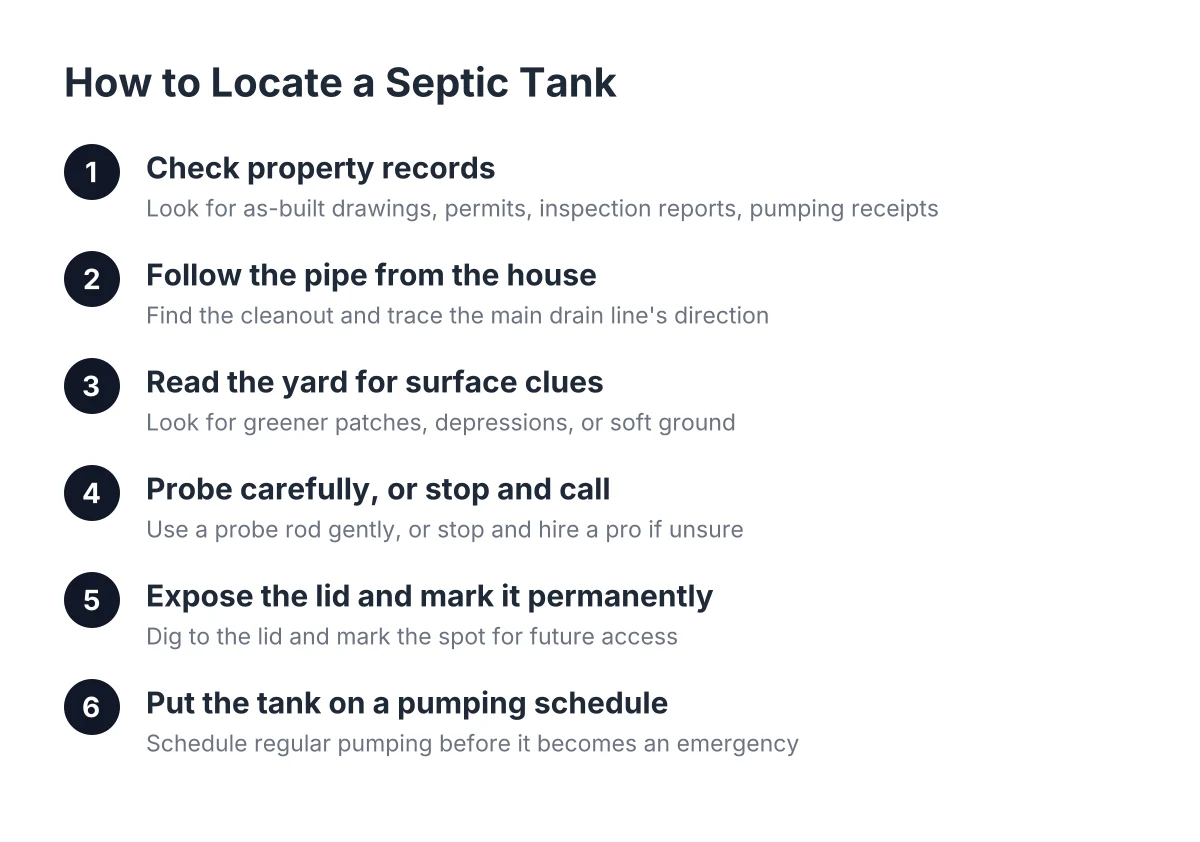
    Suppose you are in escrow on a two-acre Hesperia parcel. The seller says the septic "works fine" but cannot point to the tank, and there is no permit on file with the county. In that scenario, a septic tank locating service comes out first, traces the line from the house, probes, and marks the tank position. Then the crew uncovers the lid, pumps the tank so the structure is visible, and performs the inspection. What might have been three mysteries, where is it, when was it serviced, and does it work, becomes one written report you can hand to your lender.

    Watch for these record-gap warning signs during a purchase:

    1. No visible lids, risers, or cleanouts anywhere on the lot
    2. A seller who cannot say when the tank was last pumped
    3. No county permit or as-built diagram on file
    4. Additions or extra bathrooms built after the original system, which may mean the tank is undersized for the home
    5. An old cesspool or homemade system rather than a permitted tank and drain field

    None of these findings automatically kills a deal. However, each one shifts risk toward the buyer, and together they are the strongest argument for getting a professional inspection before closing rather than after.

    One honest trade-off: a locate-and-inspect visit costs money on a property you might not end up buying, and it can add a few days to escrow. Weigh that against the repair figures above. Spending a few hundred dollars to avoid inheriting a five-figure drain field replacement is the kind of math that favors the inspection almost every time. Septic inspection cost varies with access, tank condition, and whether pumping is included, so get a clear scope when you call.

    What Belongs in a Lender-Ready Inspection Report

    A useful report does more than say pass or fail. Escrow officers, lenders, and county offices in San Bernardino County want documented specifics they can file. When you schedule an inspection for a home sale or refinance in 2026, ask what the written report will include before you book.

    A solid report should contain:

    • The tank's located position, marked on the property
    • Tank material and observed structural condition
    • Measured sludge and scum levels
    • Condition of inlet and outlet baffles
    • Liquid level relative to the outlet
    • Drain field observations, including any surfacing or odor
    • Whether the tank was pumped during the visit
    • Photos of the open tank and any problem areas
    • Clear notes on repairs needed or recommended

    If a report you are handed during a sale lacks these basics, treat the thin report itself as a red flag. A one-line "system operational" note tells a lender almost nothing and tells you even less.

    Also confirm local requirements early. County septic inspection requirements can apply to certain transactions, permits, or remodels, and rules change. Your escrow officer or the county environmental health office can confirm what applies to your specific transaction; an inspection crew can meet the requirement, but the county defines it.

    When a Red Flag Means Repair, and When It Means Walk Away

    Not every warning sign carries the same weight, and this is where a balanced read of the report protects you from both overreacting and underreacting.

    Findings that are usually fixable at reasonable cost include a full tank that needs pumping, a broken lid, a damaged baffle, and minor root intrusion at a pipe joint. For a routine maintainer, these are exactly the problems a three-year inspection cycle is designed to catch while they are still small.

    Findings that signal real failure risk include a saturated drain field, sewage surfacing in the yard, a structurally cracked or collapsing tank, and an unpermitted homemade system. For a buyer, these justify a price renegotiation, a seller-funded repair before closing, or walking away. For an owner, they mean it is time to plan and budget rather than wait for a backup on a holiday weekend.

    Here is an illustrative example of how the same red flag reads differently by situation. Say an inspection finds a corroded outlet baffle. For a homeowner who pumps on schedule, that is a straightforward repair and the drain field is likely still healthy. For a buyer looking at a tank that also measures packed with sludge, that same baffle finding suggests solids have been washing into the field for years, and the field's condition becomes the real question. Context decides what a finding costs.

    Interpreting borderline findings is where professional judgment earns its keep. Soil conditions, system age, and household size all change what a given measurement means, so put marginal calls in front of an inspector who works these systems locally rather than guessing from a checklist.

    How Often to Inspect So Red Flags Never Surprise You

    Most households should have a septic system inspected at least once every three years, according to U.S. Environmental Protection Agency, and systems with pumps, float switches, or other mechanical parts about once a year. Pairing that schedule with septic tank pumping as needed keeps the tank visible, the records current, and the surprises rare.

    Regular inspection also builds the paper trail that today's land buyers wish they had. Every documented visit becomes part of the property's history. When you eventually sell or refinance, a folder of dated reports answers the questions a buyer's lender will ask before they are asked.

    Searching for septic inspection near me works, but for High Desert properties, local matters more than proximity alone. Hesperia's sandy soil, older tanks, and rural parcels with no records create failure patterns that differ from systems in wetter climates. An inspector who sees these systems every week knows which red flags during septic visits out here are routine wear and which ones mean the drain field is on borrowed time. That judgment, written into a report you can hand to a lender, is what you are actually paying for.

    If you need your septic tank serviced, Hesperia Septic can help.

    Related Reading

  • Emergency Septic Service Terms Explained: A Plain-English Glossary

    emergency septic service glossary

    If you're dealing with a backed-up septic system in Hesperia, the last thing you need is a quote full of words you've never heard. This emergency septic service glossary breaks down the terms you'll hear on the phone, see on an estimate, or read in an inspection report. Use it to understand what a provider is actually proposing, ask sharper questions, and spot a problem before it turns into a mess in your yard. Every entry starts with a plain definition you can read in a few seconds.

    • Septic Tank
    • Drain Field
    • Baffle
    • Inlet and Outlet Pipes
    • Riser
    • Scum and Sludge
    • Septic Tank Pumping
    • Septic Tank Cleaning
    • Septic Backup
    • Septic Overflow
    • Septic Inspection
    • Hydro Jetting
    • Grease Trap Pumping
    • Vacuum Truck
    • Access Fee or Digging Fee
    • Gallons Pumped
    • Emergency Service Call
    • Septic Tank Locating

    The Parts of Your System

    Septic Tank

    A septic tank is a buried, watertight container that holds all the wastewater from your house so solids can settle out before the liquid moves on. Everything from your toilets, sinks, and showers flows into it. Solids sink to the bottom, grease floats to the top, and the water in the middle drains out to the yard. When a provider talks about septic tank pumping, this tank is what they're emptying. If you don't know where yours is, that's a common situation, and locating a tank with no records is a normal first step.

    Drain Field

    A drain field is the network of buried pipes that spreads treated liquid from your septic tank into the soil. It's also called a leach field. The soil filters the water as it soaks in. A failing drain field often shows up as soggy grass, standing water, or sewage smells in the yard. Drain field problems cost far more to fix than a routine pumping, so pay attention when a provider mentions it.

    Baffle

    A baffle is a barrier inside your septic tank that keeps solids and grease from flowing out into the drain field. Most tanks have one at the inlet and one at the outlet. A broken or missing baffle lets solids escape, and that can clog the drain field over time. If an inspector flags a damaged baffle, ask whether it can be repaired before the damage spreads downstream.

    Inlet and Outlet Pipes

    The inlet pipe carries wastewater from your house into the septic tank, and the outlet pipe carries liquid from the tank to the drain field. A clog in the inlet backs sewage up toward the house. A clog in the outlet backs the whole tank up. Knowing which pipe is blocked tells you a lot about where the real problem sits and what the fix will involve.

    Riser

    A riser is a vertical pipe that extends your septic tank's access lid up to ground level. Without one, a crew has to dig down to reach the tank every time it needs service. Adding a riser costs money once but can save digging fees on every future visit. If a quote includes digging charges, ask whether a riser makes sense for your property.

    Scum and Sludge

    Scum is the layer of grease and floating material at the top of your septic tank, and sludge is the layer of settled solids at the bottom. The clear liquid between them is called effluent. Pumping removes all three layers, not just the liquid. If a provider measures your scum and sludge levels during an inspection, they're checking how full the tank is and how urgently it needs service.

    Common Emergency Septic Service Scenarios

    Septic Tank Pumping

    Septic tank pumping is the process of removing everything inside your tank, including liquids, sludge, and scum, using a vacuum truck. It's the core maintenance task for any septic system. Regular pumping keeps solids from building up and escaping into the drain field. Most quotes you get will be built around this service, so it helps to know what pumping actually costs in Hesperia before you call.

    Septic Tank Cleaning

    Septic tank cleaning means removing the compacted sludge stuck to the bottom and walls of the tank, going beyond a standard pump-out. Some companies use pumping and cleaning to mean the same thing, and others charge them as separate line items. Ask which one a quote covers. If your tank hasn't been serviced in years, cleaning may be the honest recommendation.

    Septic Backup

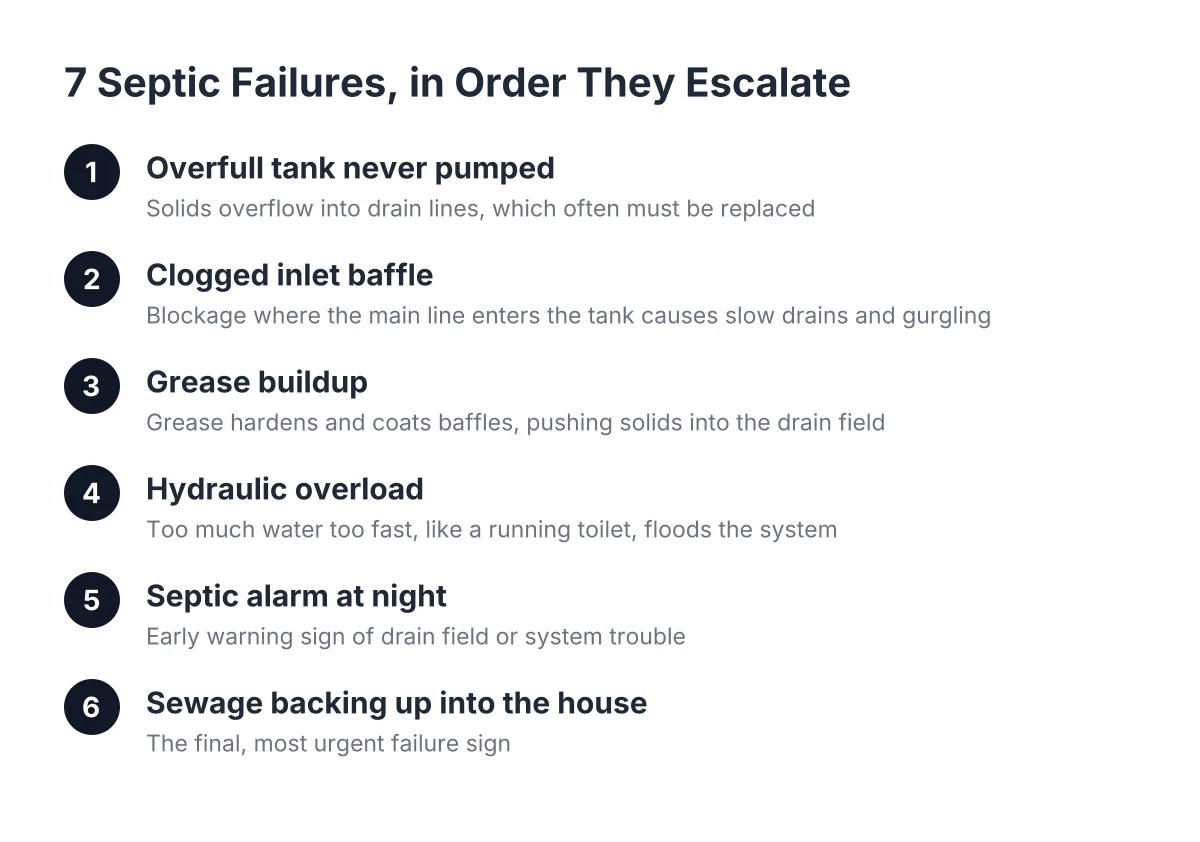
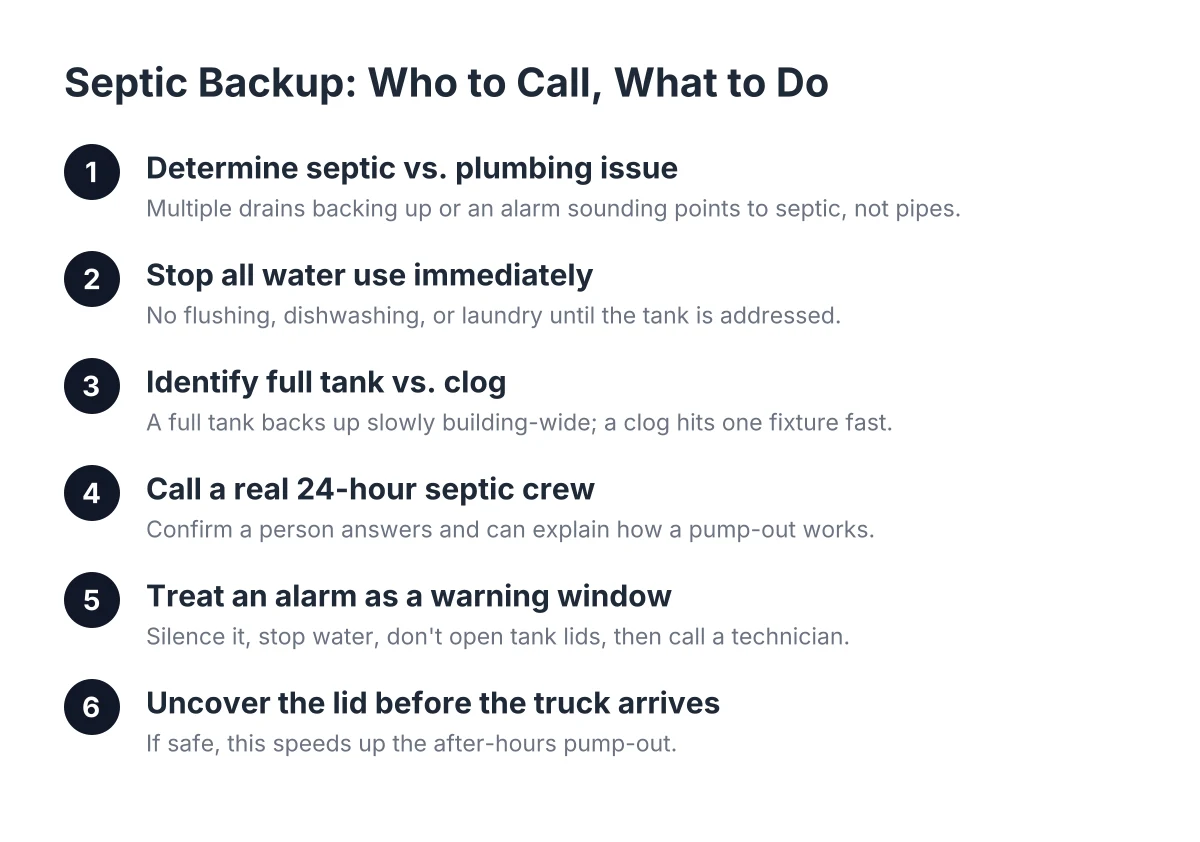
    A septic backup is sewage flowing the wrong way, coming up through drains, toilets, or tubs inside your house instead of flowing out to the tank. It usually means the tank is full, a pipe is clogged, or the drain field can't accept more water. A backup is the most common reason people call for emergency septic service, because sewage inside the house can't wait for a scheduled appointment. When facing this emergency septic service situation, these seven symptoms tell you whether you're headed for one.

    Septic Overflow

    A septic overflow is sewage surfacing outside, pooling above the tank or drain field in your yard. It's the outdoor version of a backup. Overflows signal that the system can't handle the water it's receiving, and the wet spots are raw sewage, so keep kids and pets away. A provider responding to an overflow will usually pump the tank first, then figure out why it overflowed.

    Septic Inspection

    A septic inspection is a professional check of your tank, baffles, and drain field to find out what condition the system is in. Inspections matter most when you're buying a home or when a problem keeps coming back after pumping. A good inspection tells you whether you have a maintenance issue or a repair issue. That difference can mean thousands of dollars, so don't skip it on a home purchase.

    Hydro Jetting

    Hydro jetting means clearing a clogged pipe with a high-pressure stream of water. Providers use it on stubborn blockages in the line between your house and the tank. It's a pipe-clearing service, not a tank-emptying service, so it often appears as a separate charge. If a quote includes jetting, ask which pipe is clogged and why pumping alone won't fix it.

    Grease Trap Pumping

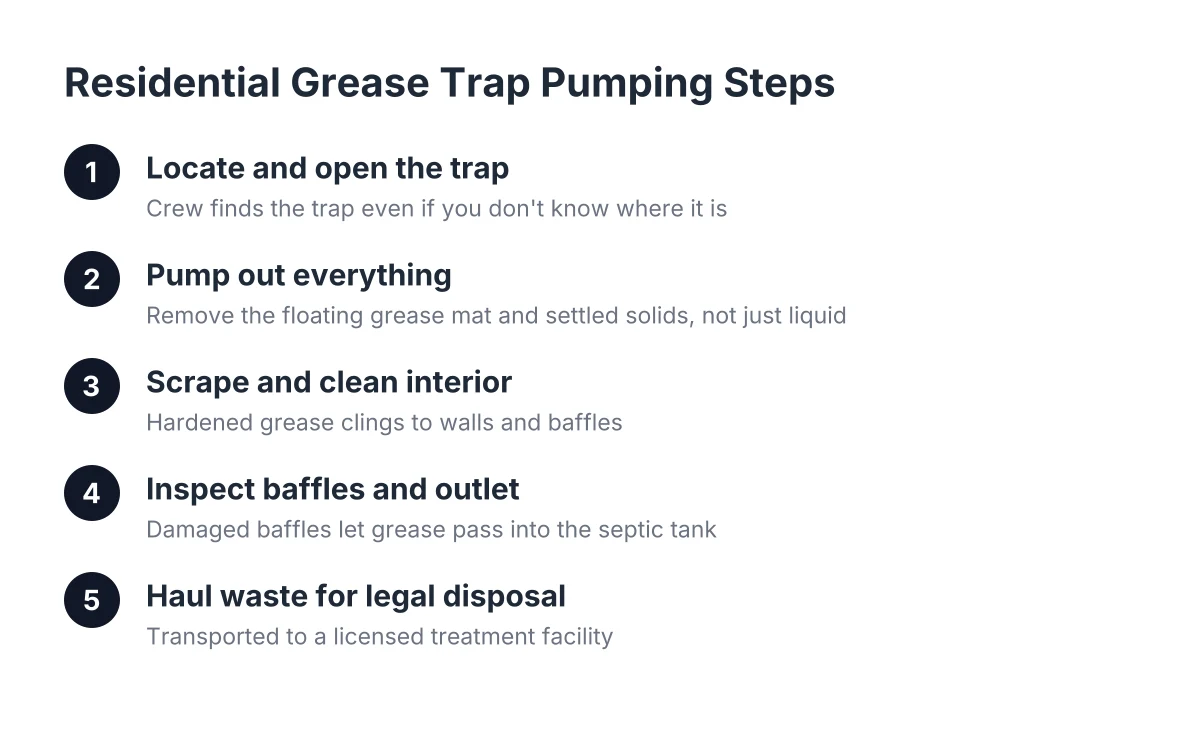
    Grease trap pumping is the removal of built-up fats and oils from a grease trap, which is a container that catches kitchen grease before it reaches the septic system or sewer. Grease traps are most common at restaurants and commercial kitchens. If you run a food business on a septic system, the trap needs its own pumping schedule separate from the tank.

    Quotes, Costs, and Paperwork

    Vacuum Truck

    A vacuum truck is the tanker truck that suctions waste out of your septic tank through a large hose. It's sometimes called a pump truck. The hose has a limited reach, so how close the truck can park to your tank affects the job. If your tank sits far from the driveway, mention that when you call so the crew brings enough hose.

    Access Fee or Digging Fee

    An access fee is a charge for the extra work of reaching your septic tank lid, usually by digging it up. Tanks without risers are often buried under one to three feet of soil. This is one of the most common surprise line items on a septic bill, so ask upfront whether digging is included in the quoted price. Cost guides like this breakdown of emergency septic pricing explain which extras tend to show up on invoices.

    Gallons Pumped

    Gallons pumped is the volume of waste removed from your tank, and many companies price the job by it. A quote might cover a set number of gallons with an added charge beyond that. Ask whether the quoted price assumes a specific tank size and what happens if yours holds more. This one question prevents most billing surprises.

    Emergency Service Call

    An emergency service call is a visit scheduled outside normal business hours or on short notice because sewage is actively backing up or overflowing. Emergency calls usually cost more than scheduled maintenance because the crew drops other work to get there. If your situation can safely wait until morning, say so, because you may pay less. If sewage is in the house, it's an emergency, and the extra cost beats water damage.

    Septic Tank Locating

    Septic tank locating is the process of finding a buried tank when no one knows where it is. Crews use records, probes, or equipment that traces the sewer line from the house. Locating matters for older Hesperia properties where paperwork got lost decades ago. Expect it as a separate line item if you can't point to your tank lid.

    Using These Terms

    You now know enough to read a septic quote line by line and ask what each charge covers. When a provider mentions a baffle, a digging fee, or gallons pumped, you'll know what they mean and what it implies for the bill. Keep this glossary of emergency septic service terms handy the next time you're on the phone with a septic company, and you won't be the one nodding along to words you don't understand.


    If you need your septic tank serviced, Hesperia Septic can help.

    Related Reading

  • Prepurchase Septic Inspection Checklist for High Desert Property Buyers

    Steps in a prepurchase septic inspection checklist for High Desert property buyers
    The field portion of a prepurchase septic inspection follows this sequence, from records to plumbing tests.

    Buying property in Hesperia or anywhere in the High Desert means you might be buying a septic system too. Before you close, you need a prepurchase septic inspection checklist that produces documented, lender-ready proof of what you are getting. This guide walks through that checklist step by step, from records to tank to drain field, so buyers, sellers, and lenders can see the system's real condition before money changes hands. It is written with High Desert soil and system quirks in mind, because a checklist built for wet-climate properties misses half of what matters out here.

    This matters more in California than most buyers realize. According to the U.S. Environmental Protection Agency, only about 10 percent of California homes sit on septic systems, compared with highs of 55 percent in Vermont. That means most buyers, agents, and even some lenders in this state have never dealt with one. If you are buying a rental, a small commercial site, or an RV park property out here, the burden of due diligence falls on you.

    Why a Prepurchase Septic Inspection Checklist Protects the Deal

    A written checklist turns a vague "the seller says it works fine" into a documented record that escrow, lenders, and future health inspectors will accept. Verbal assurances do not survive a dispute. A dated inspection report with tank measurements, component conditions, and pumping records does.

    The financial stakes are lopsided. The U.S. Environmental Protection Agency estimates septic repair or replacement typically costs between $5,000 and $15,000, far more than routine pumping or an inspection. A checklist that catches a failing drain field before closing gives you leverage to negotiate the price down, require repairs, or walk away. Skip it, and that repair bill becomes yours the day escrow closes.

    For non-residential buyers, the stakes stack higher. Suppose you are buying a small restaurant building in Hesperia with both a septic tank and a grease trap. A health inspector can flag that grease trap within weeks of you opening. If your prepurchase septic inspection checklist never covered it, you inherit a compliance problem along with the keys. The same logic applies to an RV park with holding tanks or a rental duplex where tenants will call you, not the seller, when drains slow down.

    High Desert conditions add their own wrinkles. Sandy and rocky soil, caliche layers, wide temperature swings, and older systems installed decades ago with thin or missing paperwork all show up in this area. An inspection built around those realities looks different from a generic checklist pulled off the internet, and the report it produces holds up better when a lender asks questions.

    Start With Records Before Anyone Opens a Lid

    The paper trail comes first because it tells the inspector where to look and tells you what the seller actually knows. Request these documents from the seller or their agent early, ideally when you open escrow, so gaps surface while you still have time to act.

    Here is what to collect:

    • The original septic installation permit and as-built diagram from San Bernardino County, if one exists
    • Pumping receipts from the last several service visits, with dates and the company that did the work
    • Any repair records, such as a replaced baffle, new lid, riser installation, or drain field work
    • Records of any septic system inspection done before, including the report itself, not just a mention of it
    • For commercial properties, grease trap pumping manifests and waste disposal documentation
    • Well records, if the property has a private well, since well and septic placement affect each other

    Missing records are common on High Desert properties, and they are not automatically a deal-breaker. However, a property with no permit on file, no pumping history, and a seller who cannot say where the tank is deserves extra scrutiny. In that case, septic tank locating becomes the first field task; a crew traces the line from the house and finds the tank before anything else can be checked.

    One note on who does the work. California does not run a single statewide septic inspection license the way some states do, so requirements vary by county and by the type of report needed. Ask any inspector directly what qualifications and permits apply to your transaction, and confirm with San Bernardino County what documentation your specific deal requires. If your lender or the county has specific requirements, get those in writing before you schedule anything.

    The Field Checklist: What Gets Inspected On-Site

    The on-site portion of a prepurchase septic inspection covers the tank, its components, the drain field, and the plumbing that feeds it. Expect the visit to include opening the tank, measuring what is inside, and running water through the system. A drive-by look at the yard is not an inspection, no matter what a seller offers.

    Locating and Opening the Tank

    First, the inspector confirms where the tank actually sits. On older Hesperia properties, lids can be buried under a foot or more of soil, a shed, a concrete patio, or landscaping added by a previous owner. A tank that cannot be accessed cannot be inspected, and access problems themselves belong in your report because you will face them at every future pumping.

    Once the lids are exposed, the inspector checks their condition. Cracked concrete lids, corroded metal lids, and missing risers all get noted. These are usually modest fixes, but they matter for safety and for the cost of ongoing service.

    Measuring Sludge, Scum, and Liquid Levels

    With the tank open, the inspector measures the sludge layer on the bottom and the scum layer floating on top. These measurements show whether the tank has been pumped on a reasonable schedule or neglected. A tank packed with sludge suggests solids may have already pushed into the drain field, which is where the expensive damage happens.

    The liquid level tells its own story. A level above the outlet pipe can signal a clogged outlet or a saturated drain field. A level below the outlet can point to a leaking tank, which in sandy High Desert soil can drain quietly for years without anyone noticing a wet spot on the surface.

    Many inspections are scheduled alongside septic tank pumping, because pumping the tank empty lets the inspector see the walls, baffles, and inlet and outlet tees directly. If the tank has not been pumped recently, plan for this. As a rough national benchmark, Angi data puts the average cost of septic tank pumping at $427, with a range from $250 to $1,250 or more depending on tank size and location. Treat that as context, not a quote; your property and access conditions drive the real number.

    Checking Baffles, Tees, and Tank Structure

    Baffles and tees direct flow inside the tank and keep solids from escaping into the drain field. Concrete baffles in older tanks erode over time, and a missing outlet baffle is one of the most common findings on aging systems. It is also one of the cheapest problems to catch before closing and one of the most expensive to discover afterward, once the drain field has been taking solids for a few years.

    The inspector also looks at the tank structure itself: cracks in concrete, root intrusion at seams, and signs of past overflow around the lids. On steel tanks, which still turn up on older desert parcels, rust and collapse risk go straight to the top of the report.

    Evaluating the Drain Field

    The drain field is where most septic failures live, and it is the hardest part to see. The inspector walks the field area looking for soggy ground, unusually green vegetation in an otherwise dry yard, surfacing wastewater, or odors. In the High Desert, a lush green patch over the leach lines in July is a red flag, not a landscaping win.

    A load test adds more information. Running a controlled volume of water through the system shows whether the drain field accepts and disperses flow the way it should. Slow acceptance, backup at the tank, or water surfacing in the yard during the test all point to a field at or near the end of its life. Given that replacement sits in that $5,000 to $15,000 range the EPA cites, this single test can be the most valuable line on the checklist.

    Testing the Plumbing Connection

    Finally, the inspector runs water from inside the building: flushing toilets, running sinks, and watching how quickly everything moves. Slow drains across the whole building suggest a system problem; a single slow fixture usually points to interior plumbing instead. Distinguishing between the two keeps you from blaming the septic system for a $150 drain snake job, or worse, blaming the plumbing for a failing tank.

    Extra Prepurchase Septic Inspection Checklist Items for Commercial and Rental Properties

    Non-residential properties carry inspection items a house checklist never mentions. If you are buying a building with a commercial kitchen, a rental with multiple units, or land with RV hookups, add these to the standard list.

    For a property with a commercial kitchen:

    1. Locate and open the grease trap or grease interceptor, and measure the grease layer inside.
    2. Confirm whether the trap discharges to the septic system or to a separate holding arrangement, since kitchen grease reaching a septic tank shortens its life.
    3. Ask for grease trap pumping manifests, which health inspectors expect to see; missing manifests suggest the trap has been ignored.
    4. Check the trap's condition and access, because a trap under a fixed prep table gets skipped, and skipped traps get cited.

    For rental properties, focus on capacity and history. A duplex or triplex puts more daily flow through a system than the single-family use it may have been designed for. Ask the inspector to note tank capacity relative to the number of units and to flag any history of backups. Say you are a landlord in Riverside buying a two-unit rental in Hesperia; a documented inspection report means that when a tenant calls about a smell six months in, you know whether you are looking at a maintenance issue or a problem the seller should have disclosed.

    For RV parks, campgrounds, or parcels with hookups, verify what each dump station or holding tank connects to. Holding tanks with no leach field need pumping on a schedule, and that recurring cost belongs in your operating budget from day one. Confirm the size and access of every tank on the parcel, because "there's a tank out by the back pads somewhere" is not something you want to hear after closing.

    If the property also has a private well, coordinate the two evaluations. Buyers searching for well and septic inspection near me are on the right track; separation distance between the well and the septic components affects both water safety and what the county will allow if the system ever needs work. An inspector who knows local conditions can flag a separation problem that a generalist would walk right past.

    Reading the Report and Using It in Escrow

    A useful septic inspection report states what was found, what it means, and what it will likely take to fix. Look for tank location and access notes, sludge and scum measurements, component conditions, drain field observations, load test results, and photos. Findings should be sorted by urgency: fine as-is, monitor, repair soon, or failing.

    Vague language is the warning sign. "System appeared functional at time of inspection" with no measurements behind it tells a lender nothing and gives you nothing to negotiate with. Ask questions until every line of the report is something you could explain to your lender or your own future health inspector.

    Then put the report to work. Depending on findings, you can:

    • Ask the seller to complete repairs before closing, with receipts
    • Negotiate a credit or price reduction sized to the documented repair estimate
    • Require a pump-out and reinspection as a condition of the sale
    • Walk away from a system that needs full replacement the seller will not address

    Timing matters here. Schedule the inspection early in your contingency period, not the week before closing. If the report turns up a failing drain field, you need time to get repair estimates, renegotiate, or exit the deal cleanly. A report delivered three days before close pressures you into accepting problems you would otherwise negotiate.

    Keep the report after closing too. For a commercial buyer, it becomes the baseline for your compliance file. For a landlord, it documents system condition at the start of your ownership, which matters if habitability questions ever come up. Either way, it tells your service crew where everything is, which saves locating fees on every future visit.

    What Happens After You Buy

    Closing on the property starts the maintenance clock, and the inspection report is your starting map. The EPA recommends a professional inspection at least once every three years for a typical household system, and once a year for systems with pumps, float switches, or other mechanical components. Commercial use, heavy rental occupancy, or a grease trap tightens that schedule further.

    Set the recurring service up front rather than waiting for a problem. A restaurant operator who puts grease trap pumping on a fixed schedule stops thinking about it until the manifest arrives for the compliance file. A landlord who schedules routine septic tank pumping based on the tank size and occupancy noted in the inspection report avoids the 9 p.m. tenant call about a backup. That is the whole point of doing the checklist right the first time; the same document that protected the transaction now runs the maintenance plan.

    One honest limitation: even a thorough inspection is a snapshot. An inspector cannot see inside buried leach lines or predict exactly when a thirty-year-old drain field will quit. What the prepurchase septic inspection checklist gives you is documented current condition, known risks, and a defensible record, which is a far stronger position than hoping the seller was right. For anything the report flags as uncertain, such as suspected root intrusion or a marginal load test, bring in a local septic professional for a closer look before you sign.

    Buying property on septic in the High Desert does not have to be a gamble. Work the checklist, insist on measurements instead of assurances, add the commercial items if they apply, and use the report as your negotiating document. The buyers who get burned are the ones who treated the septic system as the seller's word. The ones who do fine are the ones who made it a line item, inspected it like the five-figure asset it is, and filed the paperwork.

    If you need your septic tank serviced, Hesperia Septic can help.

    Related Reading

  • What to Inspect Before Buying High Desert Property With a Septic System

    Process diagram of septic tank inspection steps for High Desert property buyers
    The key steps a documented septic tank inspection follows before you buy High Desert property.

    You found the property. Maybe it is a house on a couple acres outside Hesperia, or a lot with a well and an old manufactured home. The seller says the septic works fine. There are no records, no permits on file, and no visible lid anywhere in the yard. Before you sign anything, you need a septic tank inspection that produces a written, documented report you can hand to your lender, your escrow officer, or the county. This guide walks through exactly what that means, what an inspector actually checks, and why High Desert soil makes some of this different than what you will read in a generic national article.

    Why "The Seller Says It Works" Is Not Enough

    A septic system is buried. That single fact explains most of the risk you are taking on. A roof with missing shingles shows itself. A furnace that will not fire shows itself. Additionally, a septic tank that is cracked, undersized, or sitting over a failing drain field can look perfectly fine from the surface for years.

    Here is the problem with taking the seller's word for it. Most sellers are not lying; they genuinely do not know. If the system has never backed up into the house while they lived there, they assume it is healthy. However, a tank can be one heavy laundry weekend away from failure and still drain normally on the day you walk the property.

    The stakes are not small. The U.S. Environmental Protection Agency estimates septic repair or replacement typically costs between $5,000 and $15,000, far more than routine pumping. On some High Desert lots with difficult access or soil that will not pass a percolation test, a full drain field replacement can run higher than that. That is the number you are gambling with when you skip the inspection to keep escrow moving.

    In California, septic-served homes are less common than in much of the country. According to the U.S. Environmental Protection Agency, only about 10 percent of California homes are on septic systems, compared with 55 percent in states like Vermont. As a result, many California buyers, agents, and even some lenders have never dealt with one. That knowledge gap is exactly where expensive surprises live, and it is why the burden of due diligence falls on you.

    The No-Records Problem, and Why It Is So Common in Hesperia

    Plenty of properties in Hesperia and the surrounding High Desert were built decades ago, sold several times, and passed along with no septic paperwork at all. The county may have a permit on file, or it may not. The original owner may have added a second tank or moved the drain field without telling anyone. Older tanks were often buried deep with no riser, so there is nothing to see at grade.

    For example, suppose a buyer is in escrow on a 1970s home on a half acre off Ranchero Road. The seller inherited the place and never lived in it. Nobody knows where the tank is. The disclosure form says "septic, condition unknown." In that scenario, the buyer has two choices: close blind and hope, or get the tank located, opened, and inspected before contingencies expire.

    Locating comes first, and it matters more than most buyers expect. A crew can find a buried tank by tracing the main sewer line from the house, probing likely spots, or running a locator device through the line from a cleanout. Once the tank is found, they mark it, dig to the lid, and open it. Only then can anyone tell you anything real about condition.

    If you are the buyer, get the locate and the inspection done as one visit. Splitting them into separate appointments burns days you do not have inside a contingency window.

    What a Septic Tank Inspection Actually Includes

    A septic tank inspection is a physical, opened-lid evaluation of the tank and the system it feeds, not a glance at the yard. The inspector locates and uncovers the tank, checks liquid levels before and after pumping, examines the tank structure and baffles, and evaluates how the drain field is accepting water. The result is a documented report on system condition.

    That last part matters. A drive-by opinion is worthless in a real estate transaction. What you need is documentation, and a proper inspection produces it.

    Here is what a thorough inspection covers, step by step:

    • Locate and mark the tank. If there is no visible lid or riser, the crew finds the tank first, then digs to expose the access.
    • Check liquid level before opening. A level above the outlet pipe suggests the drain field is not taking water. A level below normal can mean the tank is leaking.
    • Pump the tank. You cannot inspect what you cannot see. Pumping empties the tank so the inspector can look at the walls, floor, and baffles. This is why septic tank inspection and pumping are usually done together on a purchase.
    • Inspect the tank structure. Cracks, root intrusion, corroded rebar in older concrete tanks, and deteriorated baffles all show up once the tank is empty.
    • Check the inlet and outlet baffles. These direct flow and keep solids out of the drain field. Missing or broken baffles are one of the most common and most fixable findings.
    • Evaluate the drain field. The inspector looks for standing water, unusually green or soggy patches, sewage odor at the surface, and how the field responds when water runs from the house.
    • Run water from the house. Flushing toilets and running fixtures confirms the line from the house to the tank flows properly and shows how the system handles real use.
    • Document everything. Photos, measured observations, and a written report you can attach to your purchase file.

    Some systems also have an inspection port or inspection pipe near the drain field, a capped vertical pipe that lets an inspector check for liquid ponding in the field itself. If the property has one, that pipe cap gets pulled and checked. Many older High Desert systems do not have them, which makes the open-tank evaluation and the surface check of the field even more important.

    One honest caveat: no inspection can see everything. Drain field lines run underground for dozens of feet, and an inspector reports what the evidence shows on that day. A system can pass inspection and still fail years later under heavier use than the sellers ever put on it. A good report tells you condition and risk; it is not a lifetime warranty, and nobody honest will sell it as one.

    What High Desert Soil Does to Septic Systems

    Hesperia sits on a mix of sandy, fast-draining soil and pockets of harder, compacted ground, and the difference matters enormously for a septic system. Sandy soil drains quickly, which is generally good for a drain field. Compacted or clay-heavy pockets drain slowly, and a drain field built over them struggles from day one.

    An inspector who works this area every week knows the local patterns. They know which neighborhoods sit on decomposed granite that percolates well and which ones sit on caliche-like hardpan that does not. They know that older systems out here were sometimes sized for a small weekend cabin, not the four-bedroom family home that later replaced it. In addition, they know what desert heat and freeze-thaw cycles do to older concrete tanks, which can spall and crack in ways an out-of-area inspector might not recognize.

    This local knowledge changes what a report says. A generic checklist inspection might note "drain field accepting water." A local inspection can add context: this field is in fast soil and has capacity to spare, or this field is in marginal ground and is one added bathroom away from trouble. That second kind of finding is what actually helps you negotiate or walk away.

    How a Septic Tank Inspection Report Works in Escrow

    A septic tank inspection report is a written document that states where the tank is, what condition the tank and drain field are in, what was pumped and observed, and what repairs or concerns the inspector found. Lenders, escrow officers, and county offices accept it as evidence of system condition for a home sale, refinance, or permit.

    Buyers worry that ordering an inspection will delay escrow. In practice, the opposite is usually true. The delays happen when a buyer waits until the last week of contingencies, then discovers nobody knows where the tank is. Locating, digging, pumping, and inspecting can happen in a single visit once scheduled, and a written report typically follows shortly after. Ordering early in the contingency period is what keeps the timeline safe.

    The report gives you three practical levers in a transaction:

    1. A pass gives you confidence to close. You know the location of the tank, its condition, and roughly what maintenance it needs. That is worth documenting even on a clean system, because you will own that information forever.
    2. A problem finding gives you negotiating power. If the inspection turns up a cracked tank or a saturated drain field, you can ask the seller to repair it, credit you at closing, or reduce the price. Without a report, you have no standing to ask for anything.
    3. A failure finding lets you walk away with your deposit. If your contract includes an inspection contingency, a documented failed system is grounds to exit. That is the whole point of doing this before the contingency expires, not after.

    Some buyers hesitate at the septic tank inspection cost, especially on a property they might not keep. Think of it as a fraction of a percent of the purchase price spent to rule out a five-figure liability. For scale, Angi reports that septic tank pumping alone averages $427 nationally, ranging from $250 to $1,250 or more depending on tank size and access. An inspection with locating adds to that, but it remains small money against a $5,000 to $15,000 repair you did not see coming.

    Requirements also vary by county and lender. As of 2026, some lenders require a septic evaluation before funding a loan on a septic-served property, and San Bernardino County has its own permit and records processes. Check what your specific lender and the county require early, because those requirements set your timeline, not the other way around.

    How Long Does a Septic Inspection Take?

    A full septic inspection with locating and pumping usually takes a few hours on site, though the exact time depends on how hard the tank is to find and how deep the lids are buried. A tank with an exposed riser goes fast. Furthermore, a deep tank with no records and no visible access takes longer because the crew has to locate it and dig by hand.

    Several factors stretch or shrink the visit:

    • Whether the tank location is known or has to be found from scratch
    • How deep the lids are buried, and whether there is one lid or several
    • Tank size and how full it is when the crew arrives
    • Access for the pump truck, which matters on long dirt driveways and fenced lots
    • Whether the drain field shows problems that need extra evaluation

    Plan for a half day and you will rarely be surprised. The written report follows the site visit, so build a few days of buffer between the inspection date and your contingency deadline.

    Red Flags You Can Spot Yourself Before You Pay for Anything

    You are not qualified to pass or fail a septic system from the surface, and neither is anyone else. However, you can spot warning signs on a walkthrough that tell you an inspection is not optional on this particular property. If you see any of these, do not close without a professional evaluation:

    • A patch of grass or weeds that is greener and lusher than everything around it, especially in the desert where nothing else is green
    • Soggy or spongy ground anywhere between the house and the property line
    • Sewage odor outside, near a cleanout, or inside the house
    • Slow drains in every fixture, not just one sink
    • Gurgling from toilets or drains when other fixtures run
    • A seller who cannot or will not say when the tank was last pumped
    • No visible lid, riser, or inspection port anywhere on the lot, combined with no county records

    None of these prove the system has failed. Each one raises the odds that it has, or that it is close. A do-it-yourself surface check is a screening tool, not a substitute for an opened-tank professional septic system inspection, particularly when the tank has structural issues that only show once it is pumped and the walls are visible.

    The Bottom Line for Buyers With No Records

    Buying High Desert property with an unknown septic system is not reckless if you do it in the right order. Locate the tank. Open it. Pump it. Inspect it. Get the findings in writing before your contingency period ends. That sequence turns an invisible five-figure risk into a known quantity you can price, negotiate, or reject.

    Once you own the place, keep the habit. The U.S. Environmental Protection Agency recommends a professional inspection at least once every three years for a standard system, and once a year for alternative systems with pumps, float switches, or other mechanical parts. The inspection report from your purchase becomes the baseline record the property never had, including a marked tank location that the next owner, or the next service crew, will thank you for.

    The buyers who get burned out here are not the ones who bought properties with old systems. They are the ones who bought blind. A few hours with a local crew, a pump truck, and a shovel is what separates the two.

    If you need your septic tank serviced, Hesperia Septic can help.

    Related Reading

  • How Much Does Septic Tank Cleaning Cost?

    cost of septic tank replacement

    How much does septic tank cleaning cost? The honest answer depends on three things: the size of your tank, how easy it is to reach, and how long it has been since the last pumping. Nobody can hand you an accurate number without knowing those details, and the difference between routine cleaning and the cost of septic tank replacement is the difference between a maintenance bill and a construction project. This guide walks through what actually drives the price for Hesperia homeowners, so by the end you will know exactly how to get a real quote instead of a guess.

    What Drives the Cost of Septic Tank Cleaning

    Every honest quote comes down to a handful of factors. Here are the ones that matter most, and how to tell which side of each one you are on.

    Tank Size

    Bigger tanks hold more waste, and more waste means more time on site and more volume hauled away. A larger home usually has a larger tank, which pushes the price up. If you have your home's original permit paperwork or a past pumping receipt, the tank size is often listed there. If you do not know your size, say so when you call; a good septic company can figure it out on site.

    How Full the Tank Is

    A tank that gets pumped on a regular schedule costs less to service than one that has gone years without attention. When solids build up and harden, cleaning takes longer and requires more work to break up the sludge layer. If you cannot remember the last time your tank was pumped, or you are already seeing backups and slow drains, expect the job to sit on the higher end. Our guide to the warning signs your septic tank needs pumping can help you judge how far along things are.

    Access to the Tank

    The crew has to find your tank, uncover the lid, and get the truck's hose to it. A tank with a riser at ground level and a clear path from the driveway is a quick job. A tank buried under two feet of dirt, hidden under a deck, or sitting far from where the truck can park takes more labor. If you do not know where your tank is, septic tank locating is a service we offer, and finding it before the pump truck arrives keeps the visit efficient.

    Routine Cleaning vs. an Emergency

    A scheduled septic tank cleaning on a Tuesday morning costs less than an emergency call when sewage is backing up into your shower. Emergency septic pumping means a crew responds outside the normal schedule, and backup and overflow response often involves more than just pumping. If your system is still working, booking service before it fails is the single biggest lever you control.

    Condition of the System

    Sometimes pumping reveals a bigger problem: a cracked tank, a failed baffle, or a drain field that no longer absorbs water. The drain field is the buried network of pipes that lets treated water soak into the soil. The true cost of replacing a septic tank system stems from excavation, new installation, permits, and drain field work—expenses that far exceed routine cleaning. Repair or replacement is a different category entirely, and replacement pricing depends on soil, permits, and excavation, which is why no page can honestly quote it. A septic system inspection during pumping tells you where your system stands before you are forced to find out the hard way.

    Extra Services on the Same Visit

    Some visits are just pumping. Others add an inspection, tank locating, or work on a second tank or grease trap. Each added service adds to the bill, but bundling them into one visit usually beats paying for separate trips. Decide what you want checked before the truck arrives.

    Cost Factor Table

    Factor Pushes the price down when… Pushes it up when…
    Tank size The tank is small or standard for the home The tank is large or the property has multiple tanks
    Time since last pumping The tank is on a regular pumping schedule Years have passed and solids have hardened
    Access The lid has a riser and the truck can park close The lid is deeply buried, hidden, or far from truck access
    Timing Service is scheduled before a problem starts Sewage is already backing up and it is an emergency call
    System condition Pumping is all the system needs The inspection finds damage or drain field trouble
    Scope of visit The job is pumping only You add locating, inspection, or grease trap service

    How to Get an Accurate Cleaning Estimate

    The fastest path to a real number is a short phone conversation with specifics. Before you call, gather what you can:

    • Tank size, if you know it. Check old receipts or your county permit records.
    • When it was last pumped. Even a rough year helps.
    • Where the tank sits. Front yard, back yard, under landscaping, unknown.
    • What you are seeing. Slow drains, odors, wet spots over the drain field, or nothing at all.

    A good quote spells out what is included: pumping the full tank (not just the liquid layer), disposal of the waste, and whether locating or digging to the lid costs extra. If a quote seems low, ask what happens when the crew finds a buried lid or a fuller tank than expected. Vague quotes grow on site; detailed quotes hold.

    Estimates differ between providers because each company prices disposal, drive time, and labor differently. That is normal. What matters is that the quote matches your actual tank and situation, not a generic figure. For a personalized starting point, try our Septic Tank Pumping Cost Calculator, then confirm the number with a phone call.

    If you want to know what you are paying for, our walkthrough of how septic tank pumping works step by step shows what the crew does on site.

    Strategies to Lower Replacement and Maintenance Costs

    You cannot change your tank size, but you control more of the price than you might think.

    1. Pump on a schedule, not on a crisis. Routine service costs less than emergency response, and it prevents the drain field damage that turns a pumping bill into a replacement project.
    2. Know where your tank is before the truck arrives. Mark the lid, or install a riser so future visits skip the digging. Access is one of the easiest price factors to fix once.
    3. Get two or three quotes with the same details. Give each company identical information so you compare real numbers, not guesses against guesses.
    4. Bundle work into one visit. If you want an inspection or a grease trap pumped, schedule it with the cleaning instead of paying for a second trip.
    5. Watch what goes down the drain. Grease, wipes, and heavy garbage disposal use fill the tank faster, which means paying for septic tank pumping more often than you should.

    Cost Questions People Ask

    Why is replacing a septic tank so much more expensive than cleaning one?

    Cleaning is a service call: a truck, a crew, and a few hours. Replacement is excavation, a new tank, permits, and often drain field work, which makes the cost of replacing a septic system a construction expense rather than a maintenance one. Regular septic tank cleaning exists partly to keep you out of that category.

    Does an inspection add to the cost, and is it worth it?

    Adding a septic system inspection to a pumping visit costs more than pumping alone, but it is the only way to check the tank's condition while it is empty. Finding a failing baffle early costs far less than finding it after a backup. If your system is older or you just bought the home, the inspection usually earns its price.

    Why did I get such different quotes from different companies?

    Providers price labor, drive time, and disposal differently, and some quotes leave out digging, locating, or disposal fees that get added on site. Ask each company exactly what the price includes and what triggers extra charges. The most useful quote is the most detailed one, not the lowest one.

    Will insurance cover septic pumping or repairs?

    Routine pumping is maintenance, and homeowner policies generally treat maintenance as your responsibility. Coverage for damage varies by policy and by cause, so check with your insurer before assuming anything. Budget for pumping the way you budget for other regular home upkeep.

    The Bottom Line

    Septic tank pumping costs come down to tank size, access, and how long you waited, and the only accurate number is one based on your actual property. Run your details through the cost calculator, then get two or three detailed quotes and compare what each one includes. Scheduling service before a backup is the cheapest version of this job you will ever get.

    If you need your septic tank serviced, Hesperia Septic can help.

    Related Reading

  • How Much Does Septic System Inspection Cost?

    how much does a septic inspection cost

    How much does a septic inspection cost? The honest answer depends on three things: how deep the inspection goes, whether your tank needs to be located and dug up first, and whether the tank has to be pumped so the inspector can see inside it. Anyone who quotes you a flat number before asking about those three things is guessing. This guide walks through each factor in plain language, so by the end you will know exactly what to tell a local septic company to get a real price for your property in Hesperia.

    What Drives the Cost of Septic System Inspection

    How Deep the Inspection Goes

    A basic visual check and a full inspection are two different jobs. A basic check looks at the tank, the water levels, and the flow from the house. Additionally, a full inspection adds the drain field, the baffles inside the tank, and sometimes a load test where water runs through the system to see how it handles real use. More time on site and more steps mean a higher price. If you are buying a home, lenders and buyers usually want the full version. If you just want a health check on a system you already own, the basic version may be all you need.

    Whether the Tank Has to Be Found First

    You cannot inspect a tank you cannot find. On older Hesperia properties, the tank lids are often buried under dirt, gravel, or landscaping, and nobody has a map. Septic tank locating adds time to the job, and digging down to the lids adds labor on top of that. If you know where your lids are and they sit at or near the surface, you are on the cheap side of this factor. If the last owner left no records and the yard gives no clues, budget for the locating work.

    Whether Pumping Is Part of the Job

    An inspector cannot see cracks, baffle damage, or root intrusion through several feet of wastewater. Many full inspections include septic tank pumping for that reason, and pumping is its own line item. If your tank was pumped recently and you have the paperwork, some inspectors can work with that. If the tank is full or has never been pumped in memory, expect the pumping cost to ride along with the inspection cost. This is usually the single biggest swing in the total.

    The Condition of the System

    A healthy system gets inspected and signed off. A system with a backup, standing water over the drain field, or a collapsed lid turns an inspection into a diagnosis. Troubleshooting takes longer, and a septic backup may need emergency response before an inspection can even happen. You can read the early signs yourself: slow drains throughout the house, gurgling, sewage smells in the yard, or soggy ground near the tank all point toward the more expensive visit.

    Access to the Tank

    Where the tank sits on your lot matters. A tank near the driveway with clear access keeps the job simple. A tank behind a fence, under a deck, or far from where a truck can park adds hose runs, hand digging, or extra setup. Walk your property before you call. If a truck can get within a reasonable distance of the tank and nothing is built on top of it, access will not push your price up much.

    Whether the Inspection Is for a Real Estate Sale

    Real estate inspections carry more paperwork. Escrow deadlines, written reports, and sometimes county requirements add scope beyond the inspection itself. A routine maintenance inspection for your own peace of mind is the lighter, cheaper version. If a sale is involved, say so up front; the quote should reflect the report and documentation the transaction needs.

    Cost Factor Table

    Factor Pushes the price down when… Pushes it up when…
    Inspection depth You only need a basic visual check You need a full inspection with drain field and load testing
    Tank locating You know where the lids are and they are exposed The tank must be located and dug up with no records to go on
    Pumping The tank was recently pumped with paperwork to prove it The tank is full and must be pumped so the inspector can see inside
    System condition The system drains normally with no symptoms There is a backup, odor, or standing water to diagnose
    Access The tank is near the driveway with clear truck access The tank sits behind fences, decks, or far from parking
    Purpose It is a routine check on your own home It is a real estate sale with reports and deadlines attached

    How to Get an Accurate Inspection Price Estimate

    The fastest way to a real number is a short phone call where you already have the answers ready. Before you call, gather what you can: when the tank was last pumped, where the lids are (if you know), whether you are seeing any symptoms, and whether the inspection is for a sale or for maintenance. The more of that you can answer, the tighter the quote.

    A good quote spells out what is included. It should say whether pumping is part of the price, whether locating and digging are extra, what parts of the system get checked, and what kind of report you get at the end. Quotes differ between providers mostly because they define the job differently; one company's "inspection" may be a ten-minute look while another's includes pumping and a drain field check. Compare the scope, not just the number at the bottom.

    Since pumping is often the biggest piece of the total, the Septic Tank Pumping Cost Calculator is a quick way to get a personalized number for that part of the job. For a closer look at what the inspection itself covers, see our page on septic system inspection in Hesperia.

    Ways to Keep the Cost Down

    • Find your lids before the crew arrives. If you can point to the tank, or better yet expose the lids yourself, you skip the locating and digging charges entirely.
    • Combine the inspection with pumping you already need. If the tank is due for pumping anyway, having one crew do both in one visit costs less than two separate appointments.
    • Do not wait for symptoms. A septic system inspection on a working system is the cheap version. The same visit after a septic backup means diagnosis, cleanup, and possibly emergency rates.
    • Get two or three quotes with matching scope. Ask each company the same questions: is pumping included, is locating extra, and what does the report cover? Matching scope is the only way the comparison means anything.
    • Keep your records. A paper trail of past pumping and service dates can shrink the job. Some inspectors will accept recent pumping paperwork instead of pumping again.

    Cost Questions People Ask

    How much does a septic and well inspection cost together?

    Wells and septic systems are separate systems, usually inspected by different specialists, so the well inspection cost is its own line item on top of the septic side. If you are buying rural property in the High Desert, ask whether the companies you call handle both or whether you need two appointments. Either way, price each scope separately so you can compare quotes cleanly.

    Does the inspection price include pumping the tank?

    Sometimes, and this is the first question to ask any company you call. A full inspection often requires an empty tank so the inspector can check the walls and baffles, which means pumping costs get bundled in. If a quote seems unusually low, it probably excludes pumping, and you may face that charge on site.

    Is a septic inspection worth it when buying a home?

    Yes, because the alternative is finding out about a failing drain field after closing, when the repair or replacement bill is yours alone. The cost to install a new septic tank and leach field is a major project, far beyond what any inspection costs. An inspection is the cheapest insurance you can buy against inheriting that problem.

    Why do septic inspection quotes vary so much between companies?

    Because "inspection" is not a standardized job. One company quotes a quick visual check, another quotes a full inspection with pumping, locating, and a written report. Ask each company to list exactly what their price includes, then compare those lists side by side.

    The Bottom Line

    The price of a septic inspection hinges on scope, tank access, and whether pumping rides along, not on some number pulled from a chart. Get two or three quotes with matching scope, have your tank's history ready when you call, and use the pumping cost calculator to pin down the biggest variable before you talk to anyone. A real number is one phone call away.

    If you need your septic tank serviced, Hesperia Septic can help.

    Related Reading

  • How Much Does Septic Tank Locating Cost?

    cost of septic tank replacement

    How much does septic tank locating cost? The honest answer depends on three things: how much information you already have about your system, how deep your tank sits, and how hard your property is to work on. Nobody can quote you a real number over the internet, and the folks who post exact prices are guessing. Locating is also the cheap first step compared to bigger work; if you are researching the cost of septic tank replacement, finding the tank comes first and costs a fraction of it. Understanding the cost of septic tank replacement requires starting with locating and assessment. By the end of this page, you will know exactly what drives the price and how to get an accurate number for your Hesperia property.

    What Drives the Cost of Septic Tank Locating

    Every quote you get comes down to how much time and effort it takes a crew to find your tank. Here are the factors that actually move the price.

    How Much You Already Know About Your System

    If you have a permit record, an old inspection report, or even a hand-drawn sketch from a previous owner, the job gets faster. Faster means cheaper. If all you know is that a septic tank exists somewhere on your lot, the crew starts from scratch, and the price reflects that extra search time. Check with the San Bernardino County records office or dig through your closing paperwork before you call. Anything that narrows the search area works in your favor.

    Depth of the Tank and Its Lid

    A tank lid a few inches under the grass is a quick find and an easy uncover. A lid buried under a couple feet of compacted High Desert soil takes real digging. Deeper tanks push the price up because the crew spends more time excavating, and they may need equipment beyond a shovel. You often will not know your depth until the crew probes for it, which is one reason estimates come with some built-in flexibility.

    What Is Sitting on Top of the Tank

    This is the factor homeowners underestimate most. If your tank sits under open dirt or lawn, access is simple. If a previous owner poured a patio, built a deck, planted a tree, or laid pavers over the tank area, the crew has to work around or through that. Obstacles raise the price, and in extreme cases they change the scope of the job entirely. Walk your yard and think about what was added after the house was built. That is often where the tank hides.

    The Size and Layout of Your Property

    A small lot with a short run from the house to the tank means a small search area. A larger property, or one where the plumbing exits the house in an unusual spot, means more ground to cover. More ground means more probing, more time, and a higher bill. If your home sits on acreage, expect the search to take longer than it would on a standard city lot.

    Whether the Job Is an Emergency

    If your drains are backing up right now and you need the tank found and pumped today, expect to pay more than a homeowner who scheduled a locate two weeks out. Emergency and after-hours work costs more across every trade, and septic is no exception. If your system is working fine and you just want to find the tank before a sale or an inspection, scheduling ahead keeps this factor on your side.

    Whether Locating Is Bundled with Other Work

    Many people need the tank located because they need it pumped, inspected, or repaired. When locating is the first step of a bigger job, some providers fold part of the locate cost into the overall service. When it is a standalone visit, you pay for the trip and the labor on its own. Ask how the quote is structured either way, so you know what you are comparing.

    Cost Factor Table

    Factor Pushes the price down when… Pushes it up when…
    Existing records You have permits, sketches, or old service reports The tank's location is a complete mystery
    Tank depth The lid sits close to the surface The lid is buried deep and needs real excavation
    Surface obstacles The tank sits under open dirt or grass A patio, deck, tree, or pavers cover the area
    Property size The lot is small with a short pipe run The property is large or the layout is unusual
    Timing You schedule the visit in advance You need same-day or emergency service
    Job scope Locating is part of a pumping or inspection visit Locating is a standalone trip

    How to Get an Accurate Septic Tank Locating Estimate

    The fastest way to a real number is to give the provider real information. Before you call, gather what you can:

    • Any permits, inspection reports, or drawings that mention the septic system
    • The age of your home, if you know it
    • What is on the surface where you suspect the tank sits
    • Whether the system is working, slow, or backed up
    • Whether you also need pumping, cleaning, or an inspection

    A good quote should tell you what is included: the search, the digging to expose the lid, and whether marking or mapping the tank's location is part of the price. It should also spell out what changes the number, like a deeper tank than expected or a lid under concrete. If a quote is one flat figure with no conditions, ask what happens when the job turns out harder than planned.

    Estimates differ between providers for honest reasons. Some crews bring locating equipment; others probe by hand. Some charge a trip fee; others build it into the labor rate. Additionally, some quote locating alone, while others quote it as part of a pumping visit. Comparing two or three quotes side by side shows you which structure fits your situation. For a personalized starting point before you make calls, run your details through our Septic Tank Pumping Cost Calculator. It will not replace an on-site quote, but it gets you a number built on your property instead of a generic figure.

    If you want more detail on what the work itself involves, our page on septic tank locating in Hesperia walks through the process step by step.

    Ways to Keep Septic Tank Replacement Costs in Perspective

    You cannot change where your tank is buried, but you can control several things that shape the final price.

    • Dig up your records first. County permit files, escrow paperwork, and past service invoices can cut the search area down to a few square feet. That is billable time you do not pay for.
    • Schedule it, do not survive it. A planned locate costs less than an emergency call during a septic backup. If your drains are slowing down, act now instead of waiting for the overflow.
    • Bundle it with service you already need. If your tank is due for septic tank pumping anyway, having it located and pumped in one visit usually beats paying for two separate trips.
    • Mark the location once you have it. Ask the crew to note measurements from fixed points like the house corner. Better yet, install a riser or marker. You pay to find the tank once, not every time.
    • Compare two or three quotes. Prices vary by how each provider structures the job. A few phone calls with the same information given to each one shows you the real market for your specific property.

    Cost Questions People Ask

    How does locating cost compare to the cost of replacing a septic tank?

    They are not in the same league. Locating is a search-and-dig task measured in hours; replacement means excavating and installing a whole new tank, with permits and heavy equipment. If you are budgeting for possible replacement, the locate is the small first step that tells you what you are actually dealing with. Sometimes a located and pumped tank turns out fine, and the replacement conversation ends there.

    Do I pay for locating if the crew cannot find the tank?

    Ask this before you book, because policies differ. Most of the time a crew can find the tank by following the main sewer line out from the house, but ask how the provider handles a search that runs long. A clear answer up front beats a surprise on the invoice.

    Is locating included when I pay for septic tank pumping?

    Sometimes. If your tank's lid is already exposed or clearly marked, pumping quotes usually assume easy access. If the crew has to find and dig up the lid first, that work may be a separate line item. When you call for a pumping estimate, say up front that you do not know where the tank is. That way the quote covers the whole job.

    Why did I get two estimates that are far apart?

    Different assumptions, mostly. One provider may assume a shallow lid and open ground; another may price in the risk of deep digging or surface obstacles. Ask each one what their number includes and what would change it. Once you compare the quotes on the same assumptions, the gap usually shrinks or explains itself.

    The Bottom Line

    The price to locate your septic tank comes down to how much you already know, how deep the tank sits, and what is covering it. Gather your records, get two or three quotes with the same information given to each, and use the cost calculator for a personalized starting number. A scheduled locate on your terms will always beat an emergency search during a backup.

    If you need your septic tank serviced, Hesperia Septic can help.

    Related Reading

  • What Happens During Septic Tank Inspection and Cleaning in Hesperia, CA

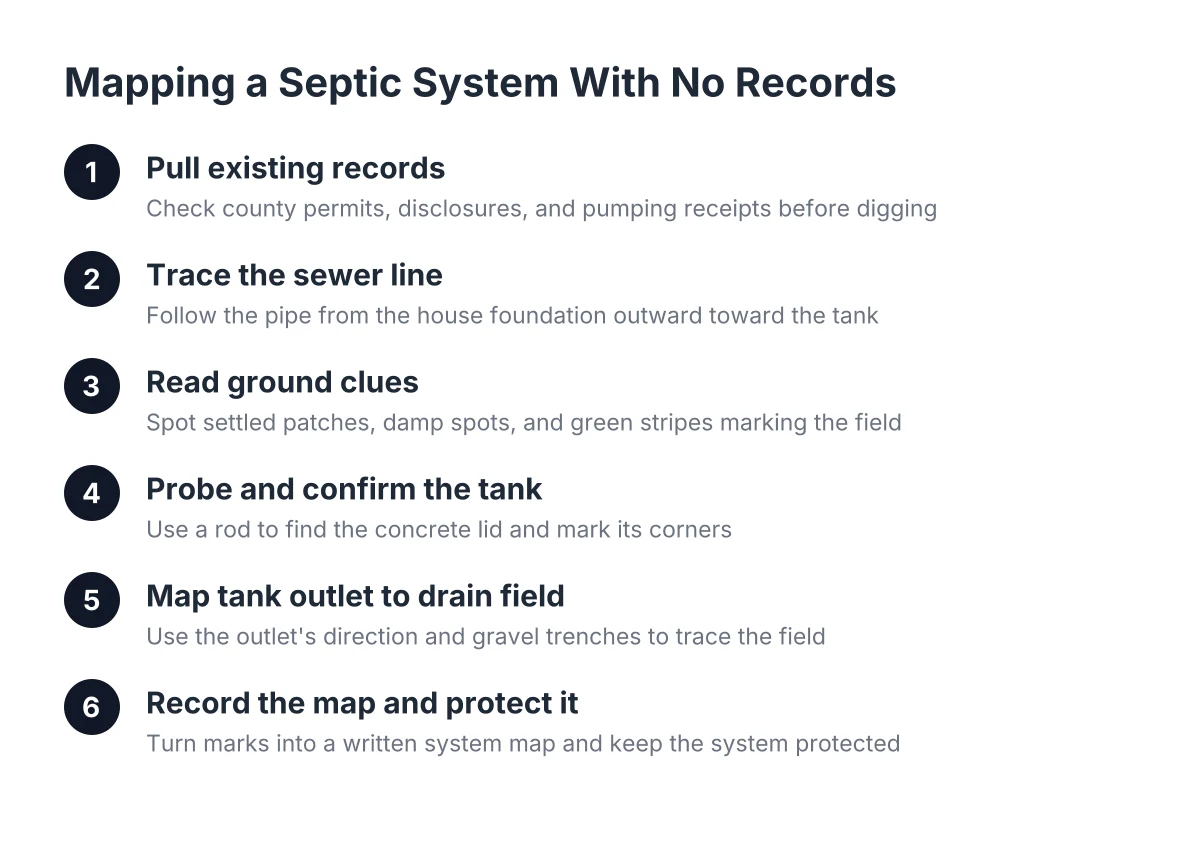
    Steps showing how a crew performs a septic tank locate inspection with no records
    How a crew locates and inspects a buried septic tank on a Hesperia property with no records, as described in this guide.

    If you just bought land in Hesperia, or you own a rental on septic and the seller left you nothing, you need to know exactly what happens during septic tank locate inspection and cleaning before you spend money or sign anything. There are no records. There may be no visible lid. Maybe a tenant is calling about slow drains, or an alarm you have never heard before is buzzing at 9 p.m. This guide walks through the entire process, step by step, from locating a buried tank on an unfamiliar lot to what the crew actually does once the lid comes off. The goal is simple: when the truck shows up, you know what to expect, what to ask, and what the paperwork should say when it is over.

    Why Buyers and Small Landlords End Up Here With No Records

    More than one in five U.S. households depend on individual septic systems or small community cluster systems to treat their wastewater, according to the U.S. Environmental Protection Agency. In the High Desert, that share is much higher. Most homes and rentals in Hesperia sit on septic, not sewer.

    However, records are another story. County permit files for older properties are often incomplete or missing. Previous owners may never have pumped the tank, or they pumped it and kept no receipts. Sellers sometimes will not confirm anything about septic condition, and they are not always required to.

    That leaves you, the buyer or landlord, holding the risk. A tank that has not been pumped in a decade, a cracked lid buried under two feet of sand, or a failing drain field can turn a good deal into a bad one. The EPA estimates septic repair or replacement typically costs between $5,000 and $15,000, far more than routine pumping. Knowing what you are dealing with before closing, or before a tenant moves in, is the whole point of a septic tank locate inspection.

    Step One: How a Crew Locates and Inspects a Septic Tank With No Map

    Finding a buried septic tank on a lot with no records is a solvable problem, and it happens more often than you would think in Hesperia. A local crew combines a few methods, usually in this order:

    • Check county records first. Even a partial permit or an old site plan narrows the search area. Sometimes it shows the tank location outright.
    • Follow the plumbing. The main sewer line leaves the house through the foundation or crawl space. The tank almost always sits along that line, typically within a short run of the house.
    • Probe the soil. A thin metal probe rod pushed into the ground finds the hard edges of a concrete tank. In High Desert sand, this works well.
    • Use a pipe locator. A small transmitter sent down the cleanout traces the sewer line electronically. The crew follows the signal above ground and marks where it ends, which is the tank inlet.
    • Read the yard. A patch of ground that settles differently, greener weeds in a dry lot, or an old depression can all point to a buried lid.

    Once the tank is found, the crew marks the corners and the lid locations. For a land buyer, ask them to mark it with paint or flags and note the location in writing. That marked location alone has value for any future remodel, addition, or permit application, since the county will want to know where the system sits relative to any new construction.

    One honest caveat: on large rural parcels with no structure connected, or where the line was abandoned, locating can take longer and may not succeed on the first visit. A crew should tell you that upfront rather than guess.

    What Happens During a Septic Tank Inspection

    A septic tank inspection is a physical check of the tank, its components, and the ground around it, done with the lid open. The crew measures sludge and scum levels, checks the baffles at the inlet and outlet, looks for cracks or root intrusion, and observes how liquid flows into the tank. You should get the findings in writing.

    Here is the sequence in practice:

    1. Expose the lids. If there is no riser at grade, the crew digs down to the access lids. In Hesperia soil this is usually shovel work, not machinery.
    2. Check the liquid level before pumping. This matters. A level above the outlet pipe suggests the drain field is not absorbing water. A level far below normal can point to a leaking tank. This one reading tells an inspector a lot.
    3. Measure sludge and scum. The solid layer on the bottom and the grease layer on top get measured against the tank depth. Heavy buildup means the tank is overdue for pumping.
    4. Inspect the baffles and tees. These direct flow inside the tank. A rusted or broken outlet baffle lets solids escape into the drain field, which is how drain fields die early.
    5. Run water from the house. Flushing toilets and running fixtures confirms the line flows freely into the tank and shows whether anything backs up.
    6. Look at the tank structure. Cracked concrete, a sagging lid, or exposed rebar all go in the report. This is also where a crew flags collapse risk. Older concrete tanks can deteriorate to the point where a lid or wall gives way, and a collapsing tank is a genuine safety hazard for anyone walking above it.

    For a purchase decision, ask for a written report that covers tank condition, measured levels, baffle condition, and any drain field concerns observed. Lenders and county offices in 2026 increasingly want documentation, not a verbal thumbs up. As a reference point for maintenance planning, the U.S. Environmental Protection Agency recommends a professional septic tank locate inspection at least once every three years for a typical household, and once a year for systems with pumps, float switches, or other mechanical parts.

    What Happens During Septic Tank Pumping and Cleaning

    Septic tank pumping removes the accumulated sludge, scum, and liquid from the tank through a vacuum hose connected to a pump truck. Cleaning goes a step further; the crew breaks up the compacted sludge layer, often by backflushing liquid into the tank, so the vacuum can pull out solids that a quick pump would leave behind.

    The distinction matters for a buyer with no records. A tank that has sat for ten years has a hardened sludge blanket on the bottom. Sucking off the liquid and leaving that blanket behind is not a real service. A proper cleaning stirs and removes it, and the crew can then see the tank floor and walls, which makes the inspection more reliable.

    During the visit, expect the following:

    • The truck parks as close to the tank as access allows, and the crew runs hose to the open lid.
    • Pumping typically takes under an hour for a standard residential tank once the lid is exposed, though buried lids and long hose runs add time.
    • The crew notes what comes out. Lots of grease points to kitchen habits or a rental where tenants pour fat down the drain. Wipes and non-flushables point to the same conversation you may need to have with tenants.
    • After pumping, the empty tank gets a visual check that is impossible when it is full. Cracks below the liquid line, root intrusion, and floor condition are all visible now.

    On price, national data gives a rough anchor. According to Angi, septic tank pumping averages $427, ranging from $250 to $1,250 or more depending on tank size and location. If you are searching "septic services near me prices" for a Hesperia property, treat those figures as a national ballpark, not a quote; access, digging, and tank condition move the number.

    A Realistic Scenario: The Rental With a Mystery Tank

    Consider a common Hesperia situation. You own a three-bedroom rental off Ranchero Road, bought two years ago with no septic disclosure. The tenant texts on a Friday: the shower is draining slow and there is a gurgle in the kitchen sink. You have no idea where the tank is, when it was last pumped, or whether the problem is the tank or the drain field.

    A septic tank locate inspection visit answers all three questions in one trip. The crew traces the line, finds the tank fifteen feet off the back porch, and digs to the lids. The liquid level is at the top of the outlet, and the sludge measurement shows the tank is past due. They pump and clean it, the drains recover, and the written report notes a sound tank with a worn outlet baffle to watch.

    As a landlord, you now have three things you did not have Friday morning: a marked tank location for the property file, a service record that starts the maintenance clock, and a documented baseline you can hand to a property manager or the next buyer. The tenant has working drains by the weekend, which is what keeps a lease intact.

    When It Cannot Wait: Backups, Alarms, and Overflows

    Sometimes the inspection and the emergency are the same visit. Sewage backing up into a tub, a septic alarm sounding at night, or wet ground pooling over the tank means the system is telling you it is full or failing right now. This is where emergency septic service differs from a scheduled job: the crew triages first, pumps to relieve the immediate pressure, and then inspects to find out why it happened.

    If you are in that situation tonight, take these steps before the truck arrives:

    1. Stop using water. No flushing, no laundry, no dishwasher. Every gallon in makes the backup worse.
    2. Keep people and pets away from any surfacing sewage. It is a health hazard, and saturated ground over an old tank can be unstable.
    3. Do not open the tank yourself. Septic gases are dangerous in enclosed spaces, and an unsupported dig around an old concrete tank risks a lid failure. On the related question people search, a septic tank does not explode under normal conditions, but the gases inside are hazardous and occasionally flammable, which is one more reason lid work belongs to a crew with the right equipment.
    4. Note what you saw first. Which drain backed up, what the alarm panel says, and where water is pooling. This shortens diagnosis when the crew arrives.

    Many people in a backup start by searching "emergency plumbing near me" or "24 hour plumber near me." A plumber can clear a clog inside the house, but if the tank is full or the drain field is saturated, snaking the line only buys hours. A pump truck is what relieves a full tank, so if the property is on septic, a septic crew is usually the right first call.

    What Happens During Septic Tank Reporting, and What to Do With It

    The paperwork after a septic tank locate inspection is where the visit pays off for a buyer or landlord. What happens during septic tank reporting is straightforward: the crew documents the tank location, measured levels, component condition, what was pumped, and any repairs recommended, and you keep that record with the property file.

    Use the report differently depending on your situation:

    • Buying before closing: Attach the report to your due diligence file. A documented bad system is a negotiating point, not a dead deal; repair estimates in the $5,000 to $15,000 range the EPA cites give you real numbers to bring to the seller.
    • Planning a remodel or addition: The marked tank and line location tells your contractor and the county where you can and cannot build. Setbacks from the tank and drain field affect where an ADU or addition can go.
    • Managing a rental: Start a simple log. Date of pumping, condition notes, and tenant instructions about what not to flush. When you sell the property, that log answers the exact questions you could not get answered when you bought it.

    One trade-off to be honest about: a locate and inspection costs money on a property you might not keep, and it can add a few days to escrow if lids have to be dug up. Weigh that against buying blind. On a system where replacement runs five figures, the inspection is the cheapest information in the whole transaction. And if the report turns up structural damage, a failed drain field, or signs of a partial collapse, get a second professional opinion before authorizing major repair work; that is a decision worth two sets of eyes.

    The Bottom Line for Hesperia Properties Without Records

    A missing septic record is a fixable problem, not a mystery you have to live with. A local Hesperia crew can locate the tank, open it, measure what is inside, pump and clean it properly, and hand you a written report, usually in a single visit. For a buyer, that report turns an unknown into a line item. For a small landlord, it turns a tenant complaint into a documented, closed ticket.

    The pattern that costs High Desert property owners real money is the opposite one: skip the locate, skip the inspection, and find out about the system when sewage is already in the hallway. At that point you are paying for an emergency pump, possible cleanup inside the unit, and the same inspection you deferred. Getting eyes inside the tank early, and knowing exactly what happens during septic tank service before you need it urgently, is how you stay on the cheap side of that line.

    If you need your septic tank serviced, Hesperia Septic can help.

    Related Reading

  • How Much Does Grease Trap Pumping Cost?

    grease trap installation cost

    How much does grease trap pumping cost? The honest answer depends on three things: the size of your trap, how full and hardened the grease inside it is, and how easy it is for a pump truck to reach it. Anyone quoting you a firm number before knowing those three things is guessing. This guide also touches on grease trap installation cost for readers weighing a new trap against servicing an old one, since the two questions often come up together. By the end, you will know exactly what drives the price and how to get a real number for your property in Hesperia.

    What Drives the Cost of Grease Trap Pumping

    Grease trap pumping is priced on the work in front of the crew, not a flat menu. Here are the factors that move the number, and how to tell which side of each one you are on.

    Trap Size and Capacity

    Bigger traps hold more waste, and more waste means more time on site and more volume hauled away. A small under-sink trap in a home kitchen is a shorter job than a large in-ground interceptor outside a commercial kitchen. If you do not know your trap size, check any paperwork from when it was installed, or look for a capacity marking on the lid or tank. A pumping company can also measure it on the first visit, and that number stays useful for every service after.

    How Full and How Hardened the Grease Is

    Grease that gets pumped on a regular schedule comes out as a soft layer. Grease that has sat for years hardens into a thick cap that takes extra time, water, and effort to break up and remove. The longer you wait between services, the more the pumping costs climb. If you cannot remember the last time your trap was pumped, plan on the higher end of any quote you get.

    Access to the Trap

    Pump trucks carry heavy hoses, and every extra foot of hose adds time. A trap with a clear lid near a driveway is a fast job. A trap buried under landscaping, behind a locked gate, or deep inside a building takes longer to reach and longer to service. Walk the path from the street to your trap. If a truck can park close and the lid opens without digging, you are on the cheap side of this factor.

    Condition of the Trap Itself

    Sometimes the crew opens a trap and finds a cracked baffle, a corroded lid, or a trap that was undersized from the start. Repairs and replacements are separate from pumping, and this is where grease trap installation questions enter the picture. Installing a new trap involves excavation, the trap itself, plumbing connections, and permits, so it sits in a different price bracket than routine pumping. A good pumping visit doubles as an inspection that tells you whether your trap has years left or is nearing replacement.

    Disposal and Hauling

    Pumped grease does not vanish. It gets hauled to an approved disposal site, and disposal fees are part of what you pay. Distance to the disposal facility and the volume hauled both matter. This is one reason quotes differ between companies: their disposal arrangements differ. You cannot control this factor directly, but you can ask each company whether disposal is included in the quote or billed separately.

    Emergency Timing

    A backed-up grease trap flooding a kitchen on a Saturday night costs more to handle than a scheduled weekday appointment. Emergency and after-hours work pulls a crew off their route or out of their off time, and the price reflects that. If your trap is not yet overflowing, scheduling ahead is the single easiest way to stay on the lower end of the cost range.

    Cost Factor Table

    Factor Pushes the price down when… Pushes it up when…
    Trap size The trap is small, like an under-sink unit The trap is a large in-ground interceptor
    Grease condition Grease is soft from regular pumping Grease has hardened into a thick cap after years of neglect
    Access The lid is exposed and close to truck parking The trap is buried, fenced off, or far from where a truck can park
    Trap condition The trap is sound and correctly sized Baffles, lids, or the tank itself need repair or replacement
    Disposal Hauled volume is low and disposal is nearby Volume is high or disposal fees run higher
    Timing You schedule the service ahead of time You need emergency or after-hours pumping during a backup

    How to Get an Accurate Price Estimate

    You can get a solid quote over the phone if you have the right details ready. Before you call, gather what you can of the following:

    • The size or capacity of your trap, if you know it
    • When it was last pumped, even a rough guess
    • Where the trap sits and whether the lid is easy to open
    • Any symptoms, like slow drains, smells, or a backup

    A good quote should spell out what is included: the pumping itself, disposal fees, and any charge for extra time if the grease is hardened or the access is difficult. If a quote is one bare number with no detail, ask what happens when the crew finds a harder job than expected. That question separates honest quotes from teaser prices. The cost of grease trap installation varies widely depending on whether you need a simple replacement or extensive excavation, but understanding pumping costs first helps you make that comparison.

    Estimates differ between providers because their trucks, routes, and disposal costs differ. That is normal. Two quotes that are far apart usually mean the companies made different assumptions about your trap, so give each one the same details.

    The fastest way to a personalized number for your property is the Septic Tank Pumping Cost Calculator. Answer a few questions about your situation and it gives you a working figure to budget around before you ever pick up the phone.

    Ways to Keep the Cost Down

    You cannot change the size of your trap, but you can control plenty of what you pay. These levers are legitimate, not gimmicks.

    Pump on a schedule instead of waiting for a problem. Soft grease pumps fast. Hardened grease takes extra labor, and a full trap that backs up into your kitchen turns a routine service into an emergency call plus cleanup. Regular service is the cheapest version of this job.

    Clear the access before the truck arrives. Dig out a buried lid, unlock the gate, and move anything blocking the path. Every minute the crew does not spend hunting for your trap is a minute you are not paying for.

    Scrape plates and keep grease out of the drain. Less grease going in means longer stretches between pumpings. Wipe pans before washing and never pour fryer oil down the sink.

    Get two or three quotes with the same details. Give each company the same information about size, last service date, and access. Comparing quotes built on the same facts shows you the real market price for your job.

    Fix small trap problems early. A cracked baffle caught during a routine pumping is a small repair. Ignored, it can push you toward a full replacement, which carries installation-level costs instead of service-level costs.

    Cost Questions People Ask

    How does grease trap installation cost compare to pumping?

    Installation is a construction project; pumping is a maintenance service. A new trap involves excavation or plumbing work, the trap unit itself, connections, and often permits, so it costs far more than a routine pumping visit. Most property owners only face installation costs when a trap fails, was never installed, or is too small for the kitchen it serves. Regular pumping is how you push that expense as far into the future as possible.

    Do I pay more if my trap has not been pumped in years?

    Usually, yes. Grease that has sat for years hardens and takes more time and effort to remove, and the crew hauls away more volume. You may also learn about damage that built up while the trap was neglected. The gap between a scheduled pumping and a long-overdue one is one of the biggest swings in what this service costs.

    Is emergency grease trap service more expensive?

    Yes. After-hours and same-day calls cost more than scheduled service because they pull a crew outside their normal route. If your drains are slowing but nothing has backed up yet, calling now for a scheduled visit is cheaper than calling later during an overflow. Our grease trap pumping service page covers what a visit involves.

    Will the quote change once the crew opens the trap?

    It can, and an honest company tells you when and why up front. The two most common reasons are hardened grease that takes longer to remove and damage the crew finds inside the trap. Ask before booking how the company handles surprises, and get any add-on approved before the extra work starts.

    The Bottom Line

    The price of pumping a grease trap comes down to its size, the state of the grease inside it, and how hard the trap is to reach, with emergencies costing more than scheduled visits. Gather two or three quotes built on the same details about your trap, or start with the Septic Tank Pumping Cost Calculator to get a working number for your Hesperia property. Then schedule the service before the trap forces the timing on you.

    If you need your septic tank serviced, Hesperia Septic can help.

    Related Reading

  • 7 Signs Your Septic Tank Needs Pumping or Emergency Service Right Now

    Checklist comparing routine septic tank signs versus septic tank emergency triage warning signs
    Use this triage checklist to tell a routine septic pumping sign from a true emergency, as covered in this guide.

    Sewage in the tub at 8pm does not wait until Monday. If you are standing in your Hesperia kitchen wondering whether the gurgling drain is a fluke or the start of a mess, this list is for you. These are the signs your septic tank needs pumping soon, and the signs it needs someone out today—which is exactly when septic tank emergency triage becomes essential. Knowing the difference can save you from a flooded bathroom and a much bigger bill.

    Here is the short version: slow drains and odors usually mean you have days or weeks. Sewage coming up inside the house, a screaming alarm, or standing water over the tank means you have hours. We will walk through all seven signs in order, from "schedule it this week" to "call now," so you can triage your own situation calmly.

    1. Drains All Over the House Are Slow at the Same Time

    One slow drain is usually a clogged pipe. Every drain slow at once is one of the earliest signs your septic tank is getting full. The tank sits at the low point of your whole plumbing system, so when it fills past its working level, every fixture in the house feels it together.

    Test it yourself: run the bathroom sink, the kitchen sink, and flush a toilet. If all three drain sluggishly, stop searching for "emergency plumber near me" and start searching for septic services near me instead. A regular plumber can snake a clogged line, but a full tank needs a pump truck, and many plumbers will tell you exactly that when they arrive.

    This sign gives you time, usually days. Cut back on laundry and long showers, and get septic tank pumping scheduled before it turns into sign number five.

    2. Gurgling Sounds When You Flush or Run Water

    Gurgling from a toilet or drain means air is fighting its way through water where it should flow freely. Therefore, treat gurgling as your plumbing clearing its throat before it starts shouting. It often shows up before slow drains do.

    Listen for it after a toilet flush or when the washing machine empties. A toilet that gurgles when the shower runs is telling you the main line to the tank is struggling, not the toilet itself.

    On its own, gurgling means schedule an inspection. Combined with slow drains or odors, it moves you up the urgency ladder fast.

    3. Sewage Smells Inside the House or Over the Tank

    A septic system working correctly should be invisible and odorless. Persistent rotten-egg or sewage smells near drains, in the yard over the tank, or around the drain field mean gases are escaping where liquid is about to follow.

    Outdoor smells in the High Desert can be tricky. Wind carries odors, and a hot Hesperia afternoon makes everything stronger. However, if the smell is consistent in one spot day after day, especially over your tank lid or drain field, that is not the wind. That is one of the classic signs your septic tank needs to be emptied.

    Indoor smells are more urgent than outdoor ones. Sewer gas inside the house means the backup is close to the fixtures, and you should limit water use until a crew looks at it.

    4. Septic Tank Emergency Triage: A Wet, Soggy, or Suspiciously Green Patch in the Yard

    Hesperia yards are dry most of the year, which works in your favor here. A soggy patch or a stripe of bright green grass over the drain field, when nothing around it is green, means wastewater is surfacing instead of soaking down through the soil. That can point to a full tank, a clogged outlet, or a failing drain field.

    Walk the area over your tank and lines. If the ground feels spongy, smells like sewage, or has standing gray water, keep kids and pets away from it. Surfacing sewage is a health issue, not just a plumbing one.

    This sign sits on the border between routine and emergency. A pump-out sometimes relieves it. If water keeps surfacing after the tank is pumped, the problem is likely the drain field, and that calls for a professional septic system inspection rather than another pump truck visit.

    5. Sewage Backing Up Into Tubs, Showers, or Floor Drains

    This is the line between "soon" and "now." When wastewater has nowhere to go, it comes back up through the lowest fixtures in the house first, usually a tub, shower, or floor drain. If you see black or gray water rising in a tub you did not fill, your septic tank is backing up and every flush makes it worse.

    Here is what to do in the next ten minutes:

    • Stop all water use immediately. No flushing, no laundry, no dishwasher, no showers.
    • Keep everyone away from the affected fixtures, and keep the water contained if you can.
    • Do not pour chemicals or drain cleaner into anything; they will not fix a full tank and can make the mess more hazardous.
    • Call for emergency septic pumping and describe exactly what you see, including which fixtures are backing up.

    A real emergency septic service will walk you through this on the phone before the truck arrives. In many cases, pumping the tank stops the backup the same day. What it cannot always do is fix the reason the tank filled early, which is why a follow-up inspection matters once the crisis is over.

    6. The Septic Alarm Is Going Off

    If your system has a pump or an alarm and it starts sounding, do not silence it and go back to bed. The alarm means the water level in the tank or pump chamber is higher than it should be. You typically have some hours of light water use before it becomes a backup, but the clock is running.

    First, press the silence button if there is one; that quiets the noise without turning off the alert. Next, cut water use to the bare minimum. Then call a septic crew and tell them the alarm is on and how long it has been sounding. According to the U.S. Environmental Protection Agency, alternative systems with float switches, pumps, or mechanical parts should generally be inspected once a year, and an alarm event is a strong sign that inspection is overdue.

    Do not assume the alarm is a false alert. Sometimes it is a stuck float. Sometimes it is a failed pump with a full chamber behind it. Only someone opening the tank can tell you which.

    7. It Has Been Years and You Cannot Remember the Last Pumping

    The quietest warning sign is the calendar. Solids build up in the tank whether or not you see symptoms, and by the time signs your septic tank is failing show up above ground, the cheap fix may already be off the table. The EPA recommends a professional inspection at least once every three years for the average household, and pumping as the inspection results dictate.

    The money math is blunt. According to Angi data, septic tank pumping averages $427, with a typical range of $250 to $1,250 depending on tank size and location. Meanwhile, the EPA estimates septic repair or replacement typically runs $5,000 to $15,000. As of 2026, that gap has not narrowed. Skipping a few hundred dollars of maintenance to risk a five-figure drain field replacement is a bad trade in any year.

    In addition, watch your water habits between pumpings. The EPA notes that a single leaky or running toilet can push as much as 200 gallons of extra water per day into a septic system. That is like adding invisible occupants to your house, and it can drown a healthy drain field over time.

    How to Tell Routine Signs Your Septic Tank Is Full From a True Emergency

    Routine signs give you days: slow drains everywhere, gurgling, outdoor odors, and a long gap since your last pumping. Emergency signs give you hours: sewage inside the house, a sounding alarm, or wastewater pooling on the ground. When routine signs stack up together, treat them as one level more urgent than each looks alone.

    A realistic Hesperia scenario: a homeowner notices the shower draining slowly on Thursday, hears the toilet gurgle Friday morning, and by Saturday night has gray water rising in the tub while guests are due Sunday. Each sign alone looked minor. Together, they were a tank at capacity announcing itself over 72 hours.

    Use this quick triage:

    1. Symptoms only outside, house drains working: schedule pumping or an inspection this week.
    2. Slow drains plus gurgling plus odor: cut water use and get a crew out within a day or two.
    3. Sewage indoors, alarm sounding, or standing wastewater in the yard: stop all water use and call for emergency pumping now.

    One honest caveat: pumping fixes a full tank, but it cannot fix a crushed pipe, a saturated drain field, or roots in the line. If symptoms return within weeks of a pump-out, insist on a camera or system inspection before paying for another truck. A trustworthy local crew will tell you when the answer is not another pumping, and in Hesperia and the surrounding High Desert, the crews worth calling are the ones who answer the phone at night and explain exactly what they find before they charge you for it.

    If you need your septic tank serviced, Hesperia Septic can help.

    Related Reading