Author: Logan Minium

  • How Often Should Homeowners Pump a Septic Tank? A Step-by-Step Schedule

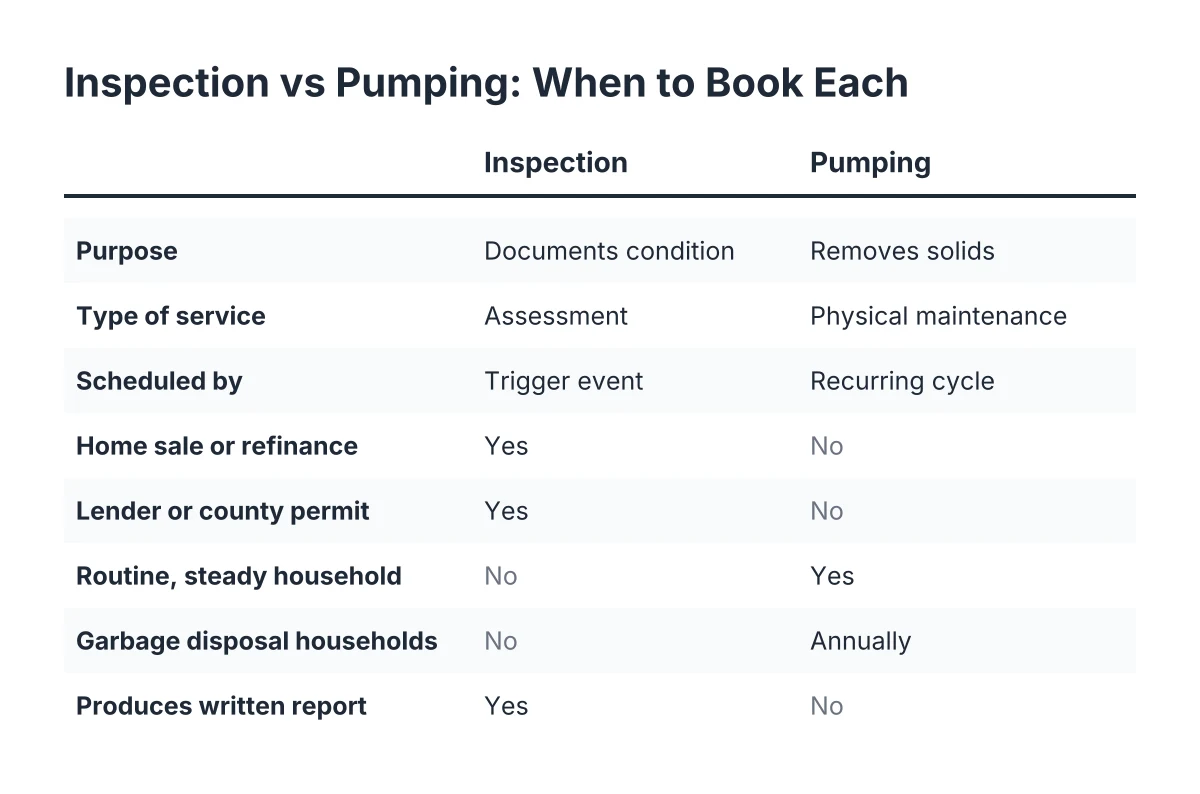
    Five-step process for building a septic pumping schedule for homeowners
    A step-by-step process for setting and maintaining a septic pumping schedule, as covered in this guide.

    If you just bought a house in Hesperia with a septic system, or you own a rental or two out here in the High Desert, the question of how often you need a septic pumping schedule probably nags at you. Nothing is wrong right now. The drains work. The yard smells fine. So it is tempting to put it off another year. The problem is that a septic tank fills whether you think about it or not, and the first obvious sign of trouble is usually the expensive one: a backup in the house or a soggy patch over the drain field.

    This guide walks you through how to build a pumping schedule you can actually stick to, step by step. No scare tactics, no pressure to buy things you do not need. Just the process a local crew that pumps tanks daily would recommend to a neighbor.

    Why Pumping Frequency Matters More Than Any Single Pump-Out

    A septic tank works by letting solids settle to the bottom as sludge while liquid flows out to the drain field. Over time the sludge layer grows. Once it gets deep enough, solids start escaping into the drain field, and that is where the real damage happens.

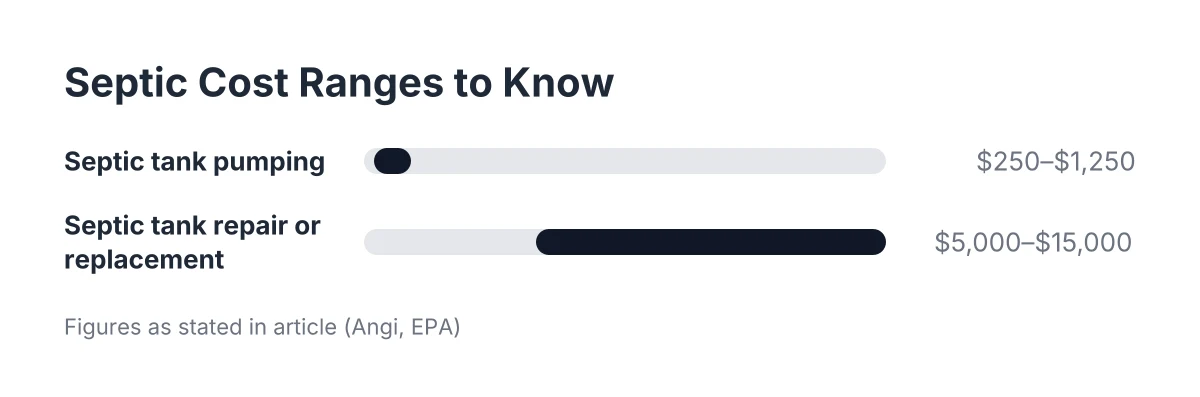
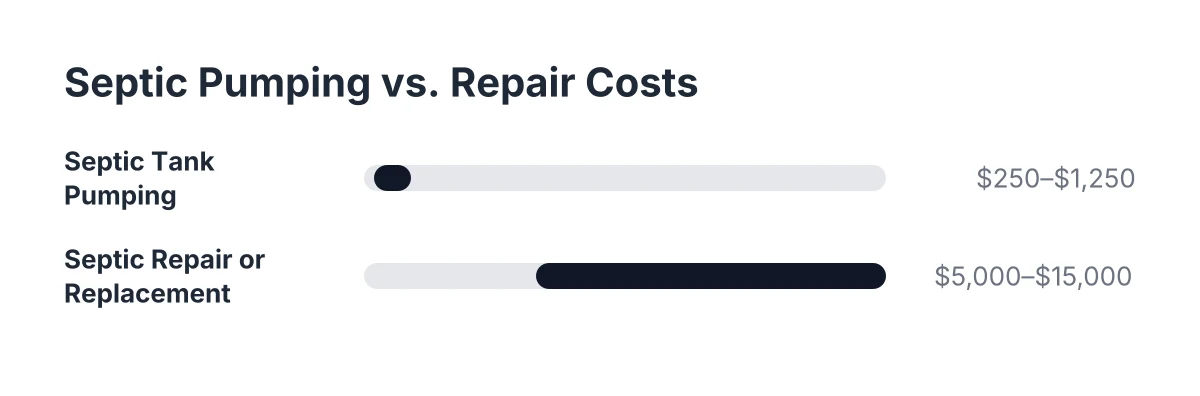
    Here is the math that should drive your decision. According to Angi, septic tank pumping averages $427, ranging from $250 to $1,250 or more depending on tank size and location. Meanwhile, the U.S. Environmental Protection Agency estimates septic repair or replacement typically costs between $5,000 and $15,000. Skipping a few hundred dollars in routine service to risk a five-figure repair is the worst trade in home ownership.

    Therefore, the goal is not to pump as rarely as possible. The goal is to pump on a schedule matched to your household, so you never find out the hard way that you waited too long.

    Step 1: Find Out When the Tank Was Last Pumped

    Start by digging up the tank's service history, because your schedule begins from the last pump-out, not from today. If you bought the house recently, check your closing documents and inspection report. Many buyers in Hesperia find a septic inspection or pumping receipt tucked into escrow paperwork and never noticed it.

    If the paperwork turns up nothing, try these in order:

    • Ask the previous owner or their agent directly; a quick email often gets an answer.
    • Call local septic companies and ask if they have a service record for the address.
    • Check with San Bernardino County for any permits or septic records on file.
    • Ask longtime neighbors; on septic streets, people remember whose truck was in whose driveway.

    If you still cannot confirm a date, treat the tank as overdue and schedule a pump-out now. That gives you a clean starting point, and the crew can tell you the tank's condition while it is open. For a landlord who inherited three rentals with zero records, this first baseline pump-out per property is the single most valuable step in this whole guide.

    Step 2: Creating Your Septic Pumping Schedule Based on Household Load

    How often should homeowners pump a septic tank? For most households, pumping every three to five years keeps sludge at a safe level, and the U.S. Environmental Protection Agency recommends a professional inspection at least once every three years. Your exact interval depends on tank size, how many people use the system, and what goes down the drains.

    Think of it as a simple ratio: more people and more water use fill the tank faster; a bigger tank buys you more time. A retired couple in a three-bedroom house fills a tank far slower than a family of six in the same house. Neither the calendar alone nor the tank alone tells the story; the combination does.

    Certain factors shorten the interval:

    • A garbage disposal. Ground-up food waste becomes sludge fast. The Massachusetts Department of Environmental Protection recommends annual pumping for homes with garbage disposals, regardless of tank size.
    • High occupancy. More people means more wastewater and more solids.
    • Heavy laundry and water use. Constant loads push water through the tank before solids fully settle.
    • An alternative system. Systems with pumps, float switches, or mechanical parts should be inspected once a year, according to the U.S. Environmental Protection Agency.

    However, do not guess in a vacuum. A crew that opens the tank can measure the actual sludge layer and tell you whether your interval should be three years, five years, or something in between. That measured answer beats any chart on the internet, including this one.

    Step 3: Adjust the Schedule for Rental Properties

    Rental properties need a tighter septic pumping schedule than owner-occupied homes, because you do not control what goes down the drains. Tenants change, occupancy shifts, and nobody calls you when the toilet gurgles until it becomes a Saturday night emergency. For a rental, plan toward the shorter end of whatever interval fits the household size.

    Consider a common Hesperia scenario. A landlord owns two septic-served rentals. One has a single tenant; the other houses a family of five with a garbage disposal. Same tank size, same street, wildly different schedules. The first property might go four or five years between pump-outs. The second may need service every year or two.

    For each rental, do three things:

    1. Get a baseline pump-out and note the sludge level the crew reports.
    2. Set the next service date based on that reading and the current occupancy.
    3. Re-check the schedule whenever tenants turn over, ideally with a pump-out or inspection between leases.

    A pump-out at turnover also protects you in a dispute. Documented septic service before a new lease makes it clear that a later clog came from use, not from a neglected system. Keep the invoices with your property records; they matter at sale time too.

    Step 4: Watch for Signs You Waited Too Long

    Warning signs mean the tank is already past due, so treat them as a trigger to act, not a reason to wait and see. Between scheduled pump-outs, you or your tenants should watch for:

    • Drains that run slow throughout the house, not just one fixture
    • Gurgling sounds from toilets or drains
    • Sewage odors inside, near the tank, or over the drain field
    • Wet, spongy, or unusually green grass above the drain field
    • Sewage backing up into tubs or floor drains, which is an emergency

    For example, a slow kitchen drain by itself is probably a plumbing clog. Slow drains in every room of the house at once point to the septic system. If you see backup or standing sewage, stop running water and call for emergency septic pumping; running more water only pushes the problem further into the house.

    One honest caveat: pumping does not fix everything. If a drain field has already failed, pumping the tank buys time but does not repair the field. That is a situation where you need a professional assessment of the whole system, not just a truck and a hose.

    Step 5: Put the Schedule on Autopilot

    The final step is removing memory from the equation, because "a few years ago" is how every overdue tank starts. Most homeowners who end up with a backup did not decide to skip pumping; they just lost track. Beat that by making the schedule automatic.

    First, write down the date of your baseline pump-out and the sludge level the crew reported. Next, set a calendar reminder for the interval they recommend, and set a second reminder six months earlier so you have time to schedule without rushing. Then ask the septic company whether they keep service records and send reminders; a local outfit that works Hesperia tanks daily usually tracks this for repeat customers.

    For landlords, add septic dates to the same system you use for lease renewals and insurance. If a property manager handles day-to-day issues, make sure they know which properties are on septic and who to call, so a tenant complaint about slow drains gets routed correctly the first time.

    Know Your Tank Before You Set the Schedule

    The interval depends on the tank itself, not just the household. If you are not sure what is buried in your yard, these guides fill in the picture:

    Fixed Intervals vs. Inspections: Which Approach Defines a Septic Pumping Schedule?

    The best answer to how often should homeowners pump is both: keep a fixed interval as your default, and let inspections fine-tune it. The interval keeps you from drifting into "we'll get to it," while a measured sludge reading every few years tells you whether your interval is right for the way the house is actually used.

    In practice, that looks like this for 2026 and beyond. Pump now if you have no record of the last service. Ask the crew for the sludge level and a recommended interval. Put that date on the calendar, and adjust when life changes: a new tenant family, a new garbage disposal, or a house that goes from two occupants to six.

    Handled this way, septic tank pumping becomes a line item you plan for, like registration on a truck, instead of a crisis you react to. You will never be the house on the street with the smell in the yard, and your rentals will never lose a tenant to a preventable backup. That is the whole point of a schedule: a few hundred dollars on your terms, instead of thousands on the tank's terms.

    If you need your septic tank serviced, Hesperia Septic can help.

    Related Reading

  • 8 Signs Your Septic Tank Needs Pumping or Emergency Service Today

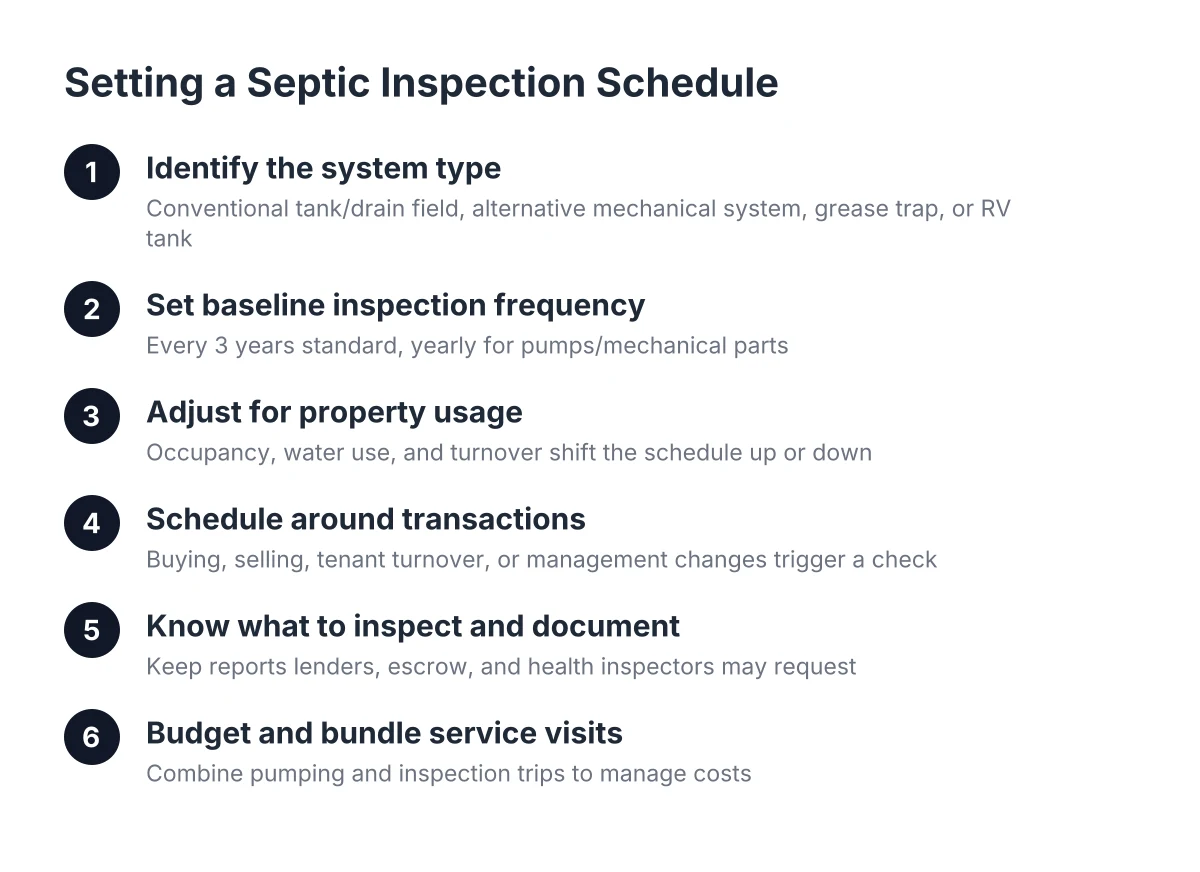
    Sequence of septic tank emergency signs from slow drains to alarm sounding
    The warning signs a septic tank needs pumping, ordered from earliest symptom to true emergency.

    A septic system rarely fails without warning. It sends up signals first, sometimes for weeks. The problem is that most people in Hesperia do not know which signals mean "schedule septic tank pumping soon" and which mean "get a crew out today before sewage ends up in the hallway." Understanding septic tank emergency signs helps you match the symptom to the likely cause and decide how fast to act. This guide walks through the signs your septic tank is full, backing up, or heading toward a bigger failure, so you can respond appropriately.

    That matters whether you live on the property or not. Homeowners usually notice trouble in the shower drain. Landlords and small business owners often hear about it secondhand, from a tenant texting about a smell or a health inspector flagging a grease trap. Either way, the symptoms below tell the same story.

    Here are the eight warning signs, roughly in order from "call soon" to "call now."

    1. Slow drains in every fixture, not just one

    One slow sink is usually a plumbing clog. Slow drains in every fixture at once, tubs, toilets, and sinks together, point to the septic system, not the pipes. When the tank fills past its working level or the outlet line clogs, the whole house drains against a backed-up tank, and everything slows down together.

    Run a quick test: flush a toilet on one end of the house while a sink drains on the other. If both struggle, the problem sits downstream of the house, in the tank or the drain field. This is one of the earliest and most reliable signs your septic tank needs to be pumped, and catching it here usually means a routine pump-out instead of an emergency call.

    2. Gurgling sounds from toilets and drains

    Gurgling is trapped air escaping through your plumbing because wastewater has nowhere to go. When the tank is full or the outlet is clogged, water pushes air back up the lines, and you hear it bubble through the toilet or a floor drain.

    Pay attention to timing. Gurgling after a laundry cycle or a long shower means the system is struggling with normal water volume. That is a full-tank symptom, and it tends to show up days or weeks before an actual backup. Treat it as your early warning, not background noise.

    3. Sewage smell in the yard or inside the house

    A septic tank smell in the yard, that rotten-egg odor near the tank lids or over the drain field, means gases or liquid are escaping where they should not. Outside, it often signals a tank at capacity or a leak at the lid or lines. Inside, odor from drains usually means gases are pushing back through the plumbing because the tank cannot vent or drain normally.

    For landlords, this is often the first septic tank emergency signs you hear about. A tenant in Hesperia reports "a sewer smell out back," and you are managing it from another city. Take that call seriously. Odor rarely resolves on its own, and it is one of the classic signs your septic tank is getting full or has a failing component. An inspection or pump-out now beats a habitability complaint later.

    4. A wet spot or extra-green grass over the tank or drain field

    In the High Desert, a soggy patch of ground that nobody is watering is hard to miss. A wet spot over the septic tank or drain field means liquid is surfacing instead of soaking into the soil. Sometimes the culprit is a tank so full that effluent escapes at the lid. Other times it is a saturated or failing drain field.

    Look for a strip of grass or weeds noticeably greener than everything around it, standing water with no irrigation source, or mushy soil near where the tank sits. These are textbook drain field failure symptoms. This one matters because pumping fixes a full tank, but a failed drain field is a different, larger project. According to the U.S. Environmental Protection Agency, septic repair or replacement typically runs $5,000 to $15,000, which is exactly why you want to catch problems while pumping can still solve them.

    5. Sewage backing up into tubs, showers, or floor drains

    Sewage in the house is the line between "schedule service" and "emergency." Wastewater always backs up at the lowest point first, usually a ground-floor tub, shower, or floor drain. If you see gray or black water rising there, the tank or main line is full and the system has nowhere left to send waste.

    Stop using water immediately. Every flush, load of laundry, and shower adds to what is already backing up. This is the point where emergency septic pumping is the right call, not a drain cleaner or a plunger. Backups are also a health issue; raw sewage indoors needs cleanup as well as pumping.

    6. Septic tank emergency signs: The alarm is going off

    If your system has an alarm, it exists for one reason: the liquid level in the tank is higher than it should be, or a pump has failed. Do not silence it and move on. An alarm gives you a short window, often less than a day of normal water use, before high water becomes a backup.

    Cut water use to the minimum and get the system looked at. Systems with pumps, float switches, or other mechanical parts also need more regular attention; the U.S. Environmental Protection Agency recommends inspecting those alternative systems once a year, compared with at least once every three years for a standard tank.

    7. You cannot remember the last pump-out, or you just took over the property

    Sometimes the biggest warning sign is not a symptom at all. It is a blank spot in the records. If you cannot answer "when was this tank last pumped," assume the answer is "too long ago." This comes up constantly with rental properties and small commercial buildings. A new owner takes over a Hesperia rental, the previous owner left no septic records, and nobody even knows where the tank is buried.

    In that situation, a septic inspection and tank locating visit answers the question directly. A crew finds the tank, checks sludge levels, and tells you whether you are due. That single visit turns an unknown into a maintenance schedule, which is exactly what an out-of-town landlord or restaurant manager wants: one less thing to babysit. Grease traps deserve the same treatment; if an inspector flagged yours, waiting only makes the citation worse.

    8. Extra water is overloading the system

    A septic tank can be "full" because of sludge, or because too much water is hitting it too fast. According to the U.S. Environmental Protection Agency, a single leaky or running toilet can send as much as 200 gallons of extra water per day into a septic system. That alone can push a marginal tank into backup territory.

    Before assuming the worst, check for these water sources:

    • A toilet that runs or hisses between flushes
    • A dripping faucet or a water softener that cycles constantly
    • Laundry habits, like running five loads back to back on a Saturday
    • Irrigation or roof runoff draining toward the tank or drain field

    Fixing the water problem sometimes buys the system relief. However, if symptoms continue after the extra water stops, sludge in the tank is the likely cause, and pumping is the fix.

    How do I know if my septic tank is full or actually failing?

    A full septic tank causes slow drains, gurgling, odors, and backups that improve immediately after septic tank pumping. A failing system shows the same symptoms, but they return within days or weeks of a pump-out, often with wet ground or sewage surfacing over the drain field. Pumping fixes full; it only postpones failing.

    That distinction is the whole point of septic system troubleshooting: match the symptom to the cause before spending money. As a rough guide, one or two early signs, slow drains and gurgling, usually mean the tank needs to be emptied. Multiple signs at once, especially odors plus wet ground plus backups, suggest the drain field or another component is involved.

    There is an honest limit to what you can diagnose from the surface, though. Sludge levels, baffle condition, and drain field saturation can only be confirmed by opening the tank. If symptoms persist after pumping, or you see sewage surfacing outdoors, bring in a professional rather than guessing. Older properties add another wrinkle; some old types of septic systems, like undersized single-compartment tanks or cesspools, fail in ways a modern tank does not, and they need an experienced eye.

    What to do when you spot the signs your septic tank is in trouble

    React based on severity, not panic. Early symptoms buy you time to schedule; backups and alarms do not.

    1. Sewage indoors or an alarm sounding: stop all water use and call for emergency septic pumping the same day.
    2. Odors, gurgling, or slow drains house-wide: cut back water use and schedule pumping within days, not weeks.
    3. Wet spots or surfacing sewage outside: keep people and pets away and request an inspection along with the pump-out.
    4. No records or a new property: schedule septic tank locating and an inspection to establish a baseline.

    Cost-wise, catching it early pays. According to Angi, septic tank pumping averages $427, typically ranging from $250 to $1,250 depending on tank size and location. Compare that with the EPA's $5,000 to $15,000 estimate for repair or replacement, and the math argues for acting on the first sign, not the fifth.

    One last note for anyone managing property with Spanish-speaking tenants: if a tenant mentions a problem with the "alcantarillado," that is sewer in Spanish, though on a septic property the complaint almost always traces back to the tank or drain field, not a city line. The signs your septic tank sends are the same in any language: slow drains, bad smells, wet ground, and backups. Read them early, and a Hesperia crew with a pump truck can usually handle the rest in a single visit.

    If you need your septic tank serviced, Hesperia Septic can help.
    Related Reading

  • Septic Tank Capacity Guide: Choosing the Right Size for Hesperia Homes

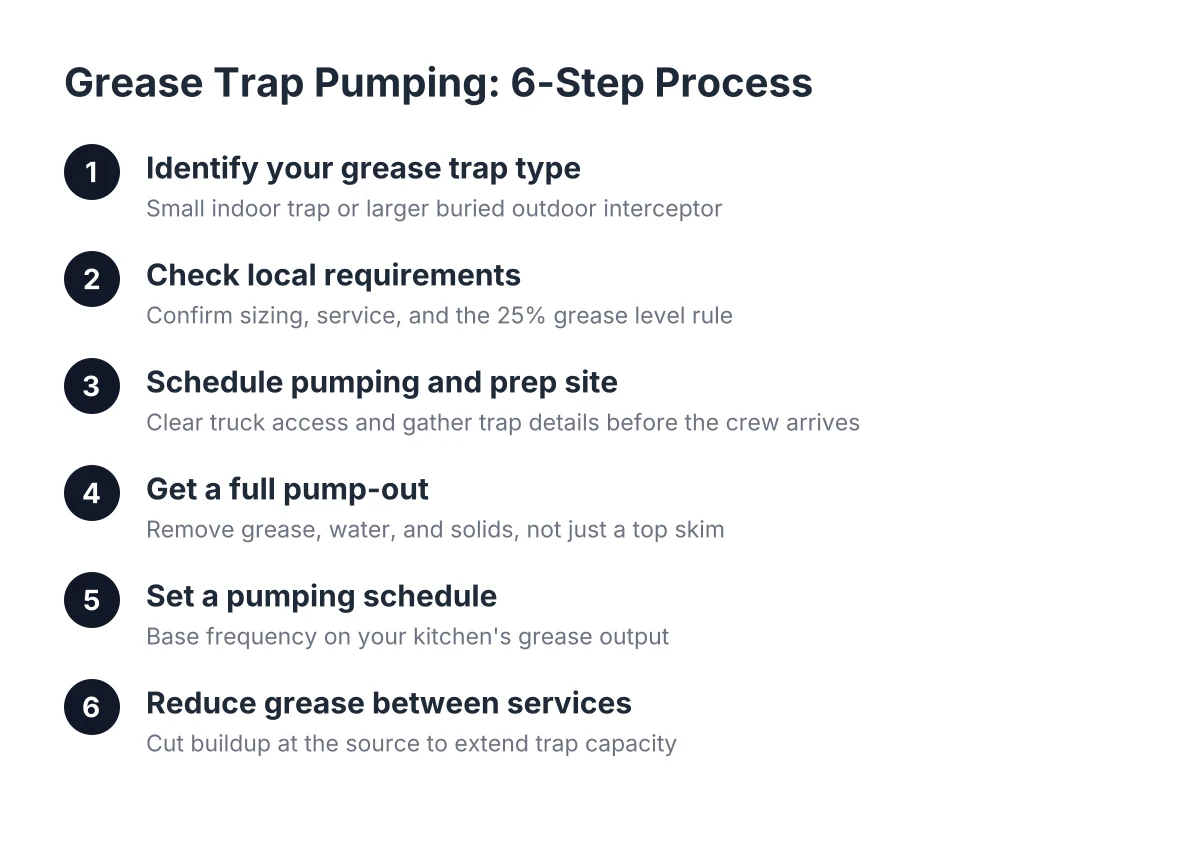
    septic tank size rental

    If you own rental property in Hesperia, or you're staring down a septic system that keeps backing up, understanding septic tank size rental options and requirements matters more than most owners realize. This septic tank capacity guide walks through how tank capacity works, how to figure out what size your property has, and how to tell whether your problems come from an undersized tank, a neglected one, or a system that has genuinely reached the end of its life. Just as important, it covers the part most articles skip: when capacity is not the problem at all, and a straightforward septic tank pumping is all you need.

    That last point deserves emphasis up front. Plenty of Hesperia property owners get told they need a bigger tank or a whole new system when the real issue is a tank that has not been pumped in years. Before you spend serious money, you should understand how capacity, usage, and maintenance fit together. This guide is written for owners who are already committed to fixing the problem and want to get it right the first time.

    Why Tank Capacity Matters More for Rental Properties

    Septic tank capacity is the working volume of the tank, measured in gallons, that holds wastewater long enough for solids to settle before liquid moves out to the drain field. When a tank is too small for the household using it, solids get pushed out to the drain field before they settle. That is how drain fields fail early.

    Here is why this hits landlords harder than owner-occupants. You do not control how many people live in the unit or how much water they use. A tank that was sized for a retired couple in 1985 may now serve a family of six. According to the U.S. Environmental Protection Agency, average indoor water use can reach up to 70 gallons per person per day, and every one of those gallons enters the septic system.

    Do the math on a four-bedroom rental. Six occupants at 70 gallons each is 420 gallons flowing into the tank every day. A small or aging tank handles that load poorly, especially if it is already half full of accumulated sludge. The result is the phone call every landlord dreads: slow drains, a smell in the yard, or sewage backing up into the tub while you are two hours away.

    Capacity also matters at turnover. If you are re-leasing a unit and the incoming tenants are a larger household than the last one, the same tank will fill faster and need pumping more often. Knowing your tank's actual capacity lets you plan service instead of reacting to emergencies.

    How Septic Tank Size Rental Requirements and Sizing Work

    Septic tank size guidelines in most jurisdictions tie minimum tank capacity to the number of bedrooms in the home, not the number of current occupants. Bedrooms are a proxy for potential occupancy. A three-bedroom house is assumed to house more people than a two-bedroom house, so it requires a larger minimum tank.

    Common residential tanks in the High Desert fall in the 1,000 to 1,500 gallon range, with smaller and larger tanks on older or unusual properties. The general pattern in septic tank size and capacity charts looks like this:

    • Smaller homes with one or two bedrooms typically sit at the lower end of tank capacity.
    • Three-bedroom homes, the most common configuration, usually require a mid-range tank, often around 1,000 gallons in many jurisdictions.
    • Four and five-bedroom homes step up from there, since more bedrooms mean more potential daily flow.
    • Adding bedrooms, an ADU, or a second unit on the parcel usually triggers a requirement for more capacity.

    Treat any generic septic tank capacity chart as a starting point, not a final answer. San Bernardino County sets its own requirements, and the county, not a chart on the internet, decides what passes inspection. If you are permitting new construction, an addition, or a septic system replacement in 2026, the county's current standards govern the design, and a qualified designer or contractor should run the numbers.

    Soil matters too. Hesperia sits on High Desert soil that ranges from fast-draining sand to compacted spots that percolate slowly. Percolation results shape the drain field design more than the tank, but the tank and field work as one system. An oversized tank paired with an undersized field still fails.

    Septic Tank Capacity Per Person: The Practical View

    Bedroom-based sizing is what the code uses, but as an owner, the per-person view is more useful day to day. Every additional occupant adds daily flow and speeds up sludge buildup. Two properties with identical 1,000 gallon tanks can need service on completely different schedules based on who lives there.

    For example, a Hesperia landlord with two rentals might pump one tank every few years and the other far more often, simply because one house has two occupants and the other has seven. Same tank capacity, different reality. This is why smart owners track occupancy alongside pumping dates for each property.

    Using This Septic Tank Size Rental Guide to Find Your Tank Size

    The fastest way to find your septic tank's capacity is to check the permit records San Bernardino County holds for your parcel, which usually list tank size and system layout. If no records exist, a service crew can locate the tank, open it, and estimate capacity from its dimensions during a pump-out.

    Start with paperwork. When you bought the property, the disclosures or inspection report may have listed the tank size. County environmental health records are the next stop; many systems in the Hesperia area were permitted, and those permits describe the installed tank.

    However, plenty of High Desert properties have no useful records at all. Older homes, owner-built systems, and parcels that changed hands several times often come with nothing but a vague wave toward the backyard. If that is your situation, septic tank locating is the first real step. A crew finds the tank, exposes the lids, and can measure the tank while pumping it.

    Measuring during a pump-out is the most reliable field method. Once the tank is empty, its length, width, and depth are visible, and capacity is simple geometry. You also learn the tank's material and condition at the same time, which matters for the replacement question covered below. Ask the crew to note the estimated capacity on your service record so you have it for every future decision.

    Keep that record. As a small landlord, your septic file for each property should include tank location, estimated capacity, pumping dates, and any problems observed. That file turns every future service call from a mystery into a routine appointment, and it gives you documentation if a tenant dispute or habitability question ever comes up.

    Is Your Tank Too Small, Too Full, or Too Far Gone?

    A backed-up septic system in Hesperia usually traces to one of three causes: a tank overdue for pumping, a tank undersized for current occupancy, or a failing drain field. Only the third typically points toward replacement. Pumping resolves the first, and management changes or added capacity address the second.

    This is the honest part of any septic tank capacity guide, and the part that protects you from unnecessary upsells. The symptoms of all three problems overlap. Slow drains, gurgling, odors, and backups can come from any of them. What separates them is what the crew finds when the tank is opened.

    Consider the difference in cost. Angi reports that septic tank pumping averages $427, ranging from $250 to $1,250 or more depending on tank size and location. The EPA estimates septic tank repair or replacement typically costs between $5,000 and $15,000. Confirming which problem you actually have is worth far more than the price of a pump-out and inspection.

    Signs the Problem Is Just an Overdue Pump-Out

    A tank that is simply full behaves badly, then behaves fine after pumping. If drains run slow across the whole house, the tank has not been pumped in years, and the crew finds heavy sludge but a structurally sound tank and a dry drain field area, you probably do not need anything more than a pumping schedule.

    The U.S. Environmental Protection Agency recommends a professional septic inspection at least once every three years for the average household. For a rental with heavy occupancy, treat that as a ceiling, not a target. Tie inspections to tenant turnover when you can; an empty unit is the easiest time to service the system without disrupting anyone.

    Signs the Tank Is Undersized for the Household

    An undersized tank fills fast and pushes solids toward the drain field. The tell is a pattern: the system works fine after pumping, then problems return within months instead of years. If the crew pumps the tank and you are calling them back the same year with the same tenants, capacity and usage are out of balance.

    You have options short of a new tank. Fixing leaking toilets and fixtures cuts daily flow. Spreading out laundry loads helps. In some cases, adding tank capacity or upgrading the system makes sense, and that is a conversation to have with a designer working under current San Bernardino County requirements.

    Signs the Drain Field Is Failing

    Drain field failure looks different. Watch for soggy or unusually green patches over the field, sewage odor outdoors that persists after pumping, or backups that return within days of a pump-out. A drain field that cannot accept water anymore will send it back toward the house or up to the surface, no matter how big the tank is.

    Therefore, if pumping buys you only days of relief, stop pumping and start evaluating. Repeated emergency pump-outs on a dead field are money spent on a symptom. At that point, a full inspection and a conversation about replacement or field repair is the responsible move, both for your budget and for your tenants.

    What Replacement Involves When Capacity or Condition Falls Short

    When inspection confirms the tank is cracked, collapsed, or badly undersized, or the drain field has failed, replacement moves from fear to project. In San Bernardino County, that means permits, a site evaluation, a system design sized to the home, installation, and final inspection before the system goes back into service.

    The permitting step is where capacity questions get settled for good. The county's environmental health process looks at bedrooms, lot conditions, and soil, then sets the required tank size and drain field dimensions. This is also where system type gets decided. Most Hesperia properties use a conventional septic system, a tank plus a gravity drain field. Where soil or site conditions rule that out, alternatives like an aerobic septic system or a mound septic system may come into play, though these are less common in High Desert conditions and cost more to install and maintain.

    For a small landlord, the practical concerns are timeline and tenant disruption. Excavation, tank setting, and field construction take days, not hours, and the yard will be torn up during the work. Plan around vacancy when possible. If the unit is occupied, coordinate portable facilities or temporary arrangements with your tenants before the backhoe arrives, not after.

    One caution: septic system design is not a do-it-yourself estimate. Soil percolation, setbacks from wells and property lines, and county code all interact, and getting it wrong means failed inspections and redone work. Use this article to understand the process and ask sharp questions, then let a qualified professional handle the design and permitting.

    It is worth remembering that septic is the norm out here, even though California overall has one of the lowest shares of homes on septic among U.S. states, at about 10 percent according to the U.S. Environmental Protection Agency. In Hesperia and the surrounding High Desert, unsewered parcels are common, so local crews deal with these systems, these soils, and this county's process constantly.

    A Working Owner's Plan: Capacity, Records, and a Service Rhythm

    Knowing your tank capacity is only useful if you act on it. The goal for a small rental owner is simple: no surprises, no emergency calls from tenants, and a paper trail for every property. Here is a plan you can run without babysitting it.

    1. Identify the tank on each property. Pull county records, or schedule septic tank locating if the records are missing.
    2. Get each tank pumped and measured. Record the estimated capacity, tank material, and condition on the invoice.
    3. Match capacity to occupancy. Note how many people live in each unit and flag any property where a small tank serves a large household.
    4. Set an inspection and pumping rhythm per property. Heavier occupancy means shorter intervals; tie service to lease turnover where you can.
    5. Keep every invoice and disposal record in the property file. Documentation of proper waste disposal protects you on compliance and habitability questions.
    6. Reassess whenever occupancy changes. New tenants with a bigger household means revisiting the schedule, not waiting for the smell.

    In addition, give your tenants one instruction that protects the system more than any other: the toilet and drains are not a trash can. Wipes, grease, and heavy garbage disposal use fill a tank with solids fast and shorten drain field life. A single paragraph in the lease about septic care costs you nothing and saves real money.

    If you also run a business out here, the same logic extends beyond houses. Grease trap pumping for a restaurant, RV and holding tank pumping for a cabin or travel trailer, and rental property septic service all follow the same principle: know the capacity, know the usage, and service on a schedule instead of in a crisis.

    The Bottom Line on Tank Size in Hesperia

    Capacity questions come down to three numbers: how big the tank is, how many people use it, and how long since it was last pumped. Most septic trouble in Hesperia traces to the third number, not the first. Pump and inspect before you assume the worst, because a $250 to $1,250 pump-out that solves the problem beats a five-figure replacement you did not need.

    At the same time, do not pump a dead system forever. When backups return within days, the field stays wet, or the tank itself is failing, replacement is the honest answer, and the county permitting process will set the right capacity for the property going forward. Either way, this septic tank capacity guide should leave you with the questions to ask and the records to keep, so the next septic decision on any of your properties is a planned one.

    If you need your septic tank serviced, Hesperia Septic can help.
    Related Reading

  • How Much Does Septic System Replacement Cost?

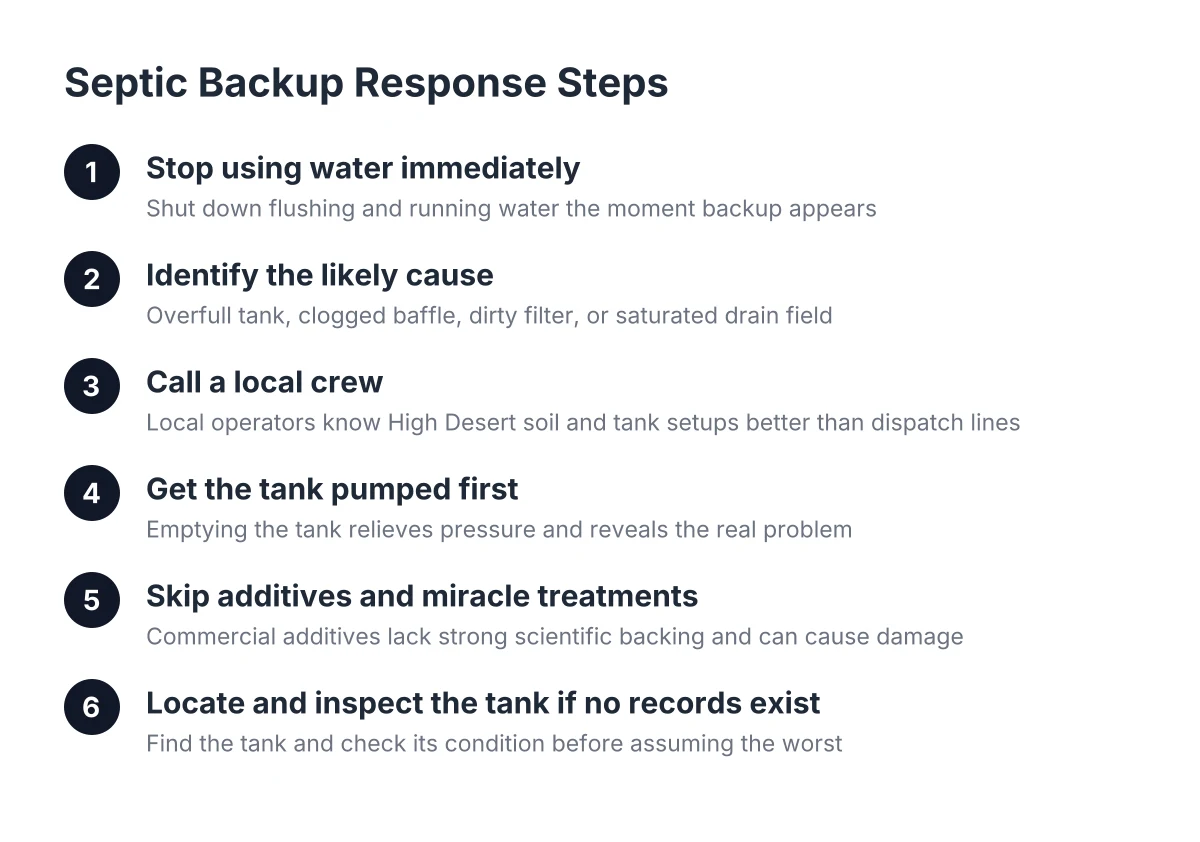
    septic system replacement cost

    Septic system replacement is one of the bigger checks a homeowner will ever write, and the honest answer is that no page on the internet can tell you your number without seeing your property. Your septic system cost hinges mostly on three things: how big the system needs to be, what kind of soil sits under your yard, and whether you need a full replacement or just a new drain field. Anyone quoting a firm price before checking those things is guessing. By the end of this guide, you will know exactly what drives the price, what a real quote should include, and how to get an accurate number for your own property.

    What Drives the Septic System Cost

    Every septic system replacement quote comes down to a handful of real, physical factors. Here are the ones that matter most.

    System size

    A septic tank and drain field are sized to the home they serve. More bedrooms and more bathrooms mean more wastewater, which means a bigger tank and a larger drain field. Bigger components mean more material, more digging, and more labor. If you live in a two-bedroom house, you are on the cheaper side of this factor. A five-bedroom home with a big family pushes the price up. Local rules usually set the minimum size based on bedroom count, so this is not something you can shrink to save money.

    Soil and site conditions

    The drain field only works if the soil can absorb water. Before a new system goes in, most areas require a soil test, often called a perc test, to measure how fast water drains through your ground. Sandy soil that drains well keeps the system simple and the price lower. Heavy clay, rock, or a high water table can force a larger drain field or a different system design, and that raises the cost. Here in the High Desert around Hesperia, soil varies from lot to lot, so a test on your property is the only way to know which side of this factor you are on.

    System type: conventional vs. aerobic

    A conventional gravity system is the simplest setup: wastewater flows from the tank to the drain field on its own. When the site allows it, this is usually the least expensive option. If your soil or lot cannot support a conventional system, you may need an aerobic septic system, which uses a motor to add air and treat wastewater more aggressively. Aerobic septic system cost runs higher because the equipment is more complex and it needs electricity and ongoing maintenance. Your soil test and local health department rules will tell you which type you need.

    Full replacement vs. partial replacement

    Sometimes the tank fails but the drain field is fine. Sometimes it is the other way around. Replacing only the failed part costs less than the cost to install septic tank and leach field together as a full system. An inspection can tell you what actually failed. A tank that is cracked or collapsing needs replacement, but a drain field that is soggy or backing up might be saturated, clogged, or truly dead. Knowing which parts still work is the difference between a partial job and a full one.

    Access and excavation

    Replacement means heavy equipment digging in your yard. An open, easy-to-reach yard keeps the work fast. A tank buried under a driveway, patio, mature landscaping, or a tight side yard adds demolition, hand digging, or specialty equipment, and every one of those adds to the bill. Walk your property and ask yourself: could an excavator drive straight to the tank and drain field area? If yes, you are on the cheaper side.

    Permits and inspections

    A septic replacement requires permits, a design that meets county health requirements, and inspections along the way. Permit costs vary by county and by system type, and an engineered design for a difficult lot costs more than a standard layout. This is not a corner to cut. A system installed without permits can block a home sale later and may have to be dug up and redone.

    Cost Factor Table

    Factor Pushes the price down when… Pushes it up when…
    System size The home has fewer bedrooms and bathrooms The home is large or household water use is heavy
    Soil conditions Soil drains well and passes the perc test easily Soil is clay, rocky, or the water table is high
    System type A conventional gravity system works on your lot The site requires an aerobic or engineered system
    Scope of work Only the tank or only the drain field needs replacing The whole system has failed and must be rebuilt
    Site access Equipment can reach the work area easily The tank sits under concrete, landscaping, or a tight yard
    Permits and design A standard design meets county requirements The lot needs an engineered plan and extra inspections

    How to Get an Accurate Septic System Cost Estimate

    The fastest way to a real number is to give an estimator real information. Before you call anyone, gather what you can:

    • Your system's history. When was the tank last pumped? Have you had backups, slow drains, or wet spots over the drain field? How old is the system, if you know?
    • Property records. Some counties keep a record of the original septic permit, which shows the tank location, tank size, and drain field layout. That saves the estimator time and guesswork.
    • What failed. If you have had an inspection or a septic tank pumping visit recently, share what the crew found. A pumped and inspected tank tells an estimator far more than a description over the phone.

    A good replacement quote should be written, not verbal, and it should spell out the tank size and material, the drain field size and layout, permit and design fees, excavation, and cleanup. If a quote is one line with one number, ask what it covers.

    Estimates differ between providers for real reasons: different assumptions about your soil, different system designs, and different levels of included work. One quote might include restoring your yard afterward while another leaves you with a dirt field. Compare the scope, not just the bottom line.

    For a quick, personalized starting point on the service side, try the Septic Tank Pumping Cost Calculator. It gives you a number based on your situation instead of a generic figure, and pumping plus inspection is often the first step in figuring out whether you need a replacement at all.

    Ways to Keep the Cost Down

    You cannot control your soil, but you can control how you approach the project.

    • Confirm the diagnosis before you commit. A septic backup does not always mean a dead system. A full tank, a clogged line, or a saturated drain field can mimic total failure. A septic tank pumping and inspection is a small expense compared to replacing a system that could have been saved.
    • Replace only what failed. If the inspection shows the tank is sound but the drain field is done, ask for a quote on the drain field alone. Do not let anyone bundle a full replacement without explaining why each part needs to go.
    • Get two or three written quotes. Prices vary between contractors, and so does what they include. Comparing detailed quotes protects you from both overpaying and from a lowball bid that grows once the digging starts.
    • Do not wait for the emergency. A system replaced on your schedule costs less stress and often less money than one replaced after sewage backs into the house. If your system is showing warning signs, start getting quotes now while you can still plan.
    • Protect the new system. Regular septic tank pumping and sensible water habits are the cheapest insurance there is. The most expensive septic system cost is the second replacement you pay for because the first system was neglected.

    Cost Questions People Ask

    Is the cost of septic tank replacement different from replacing the whole system?

    Yes. Replacing just the tank is a smaller job than replacing the tank plus the drain field. The drain field usually involves more digging and more area, so a full system replacement costs meaningfully more than a tank swap. An inspection tells you which job you are actually facing.

    Why does aerobic septic system cost more than a conventional system?

    An aerobic system uses a motor and air pump to treat wastewater, while a conventional system relies on gravity and soil. The extra equipment costs more to buy and install, needs electricity, and requires ongoing maintenance. You typically only need one if your soil or lot cannot support a conventional drain field.

    Does homeowners insurance cover septic replacement?

    Usually not for normal wear, age, or neglect, which is how most systems fail. Some policies cover sudden, specific damage, so it is worth a call to your insurer. Do not count on insurance in your budget; plan as if you are paying out of pocket, then treat any coverage as good news.

    Can I just keep pumping the tank instead of replacing the system?

    Sometimes, for a while. If the drain field is saturated but not destroyed, frequent septic tank pumping can buy time and let the field rest. But if the system has truly failed, pumping becomes a recurring band-aid, and the money adds up fast. A crew that pumps and inspects your tank can tell you which situation you are in.

    The Bottom Line

    Your septic system cost depends on your home's size, your soil, the type of system your lot requires, and how much of the old system can be saved. Nobody can give you an honest number without looking at your property, so gather your system's history, get two or three detailed written quotes, and start with the Septic Tank Pumping Cost Calculator if you want a quick read on the first step. The homeowners who pay the least are the ones who diagnose before they dig.

    If you need your septic tank serviced, Hesperia Septic can help.

    Prefer to talk it through? Call (760) 249-7872 — a quick call is usually the fastest way to get a straight answer for your situation.

    Related Reading

  • 7 Signs Your Septic System Needs Replacement, Not Just Another Pumping

    Checklist comparing signs a septic system just needs pumping versus signs it needs replacement
    Use this quick comparison to tell a routine pumping issue apart from true septic system failure.

    Nobody wants to hear that a tank pump-out will not fix the problem. However, some of the signs septic system failing are pumping problems, and some point to a system that has reached the end of its life. The difference matters, because pumping a tank runs a few hundred dollars while replacing a system runs thousands. This article lays out seven signs that separate the two, so you can push back on an unnecessary upsell or face a real replacement with your eyes open.

    Here in Hesperia and the High Desert, this question comes up constantly. More than one in five U.S. households depend on individual septic systems or small community cluster systems to treat their wastewater, according to the U.S. Environmental Protection Agency, and out here that share is higher. If you just bought land with no septic records, or you have maintained your system for years and something changed, the list below is for you.

    First, the honest baseline: most septic problems do not require replacement

    Most of what people call "septic failure" is actually a full tank, a clogged line, or a broken component. Septic tank pumping, a line clearing, or a baffle repair fixes the majority of calls a local crew runs. The U.S. Environmental Protection Agency estimates septic tank repair or replacement typically costs between $5,000 and $15,000, far more than routine pumping, so anyone telling you to replace should be able to show you evidence, not just say the word "failing."

    That is the standard to hold every recommendation against. A trustworthy crew will pump the tank, look at what happens next, and explain what they see in plain terms. If the tank fills back up from the drain field within hours or days of pumping, that is a system problem. If it takes years to fill again, pumping did its job.

    With that baseline set, here are the seven signs that point past pumping toward septic system replacement.

    1. The tank fills back up right after pumping

    This is the clearest sign on the list. A healthy tank sends liquid out to the drain field and fills gradually over years. If your tank is full again within days or weeks of a pump-out, the drain field is not accepting water, and the wastewater has nowhere to go.

    At that point, pumping is a bandage, not a fix. You can keep paying for pump-outs to buy time, but the underlying problem is septic drain field failure, and no amount of pumping repairs soil that will not drain. This is the moment to get a real inspection instead of scheduling another truck.

    2. Sewage surfaces in the yard over the drain field

    Wet, spongy ground, standing gray water, or a sewage smell over the drain field means effluent is rising instead of soaking down. In the High Desert this stands out fast; a green, lush stripe of grass in an otherwise dry Hesperia yard is a classic tell. The soil under the field has likely clogged with a black, tar-like layer called biomat.

    Occasionally, surfacing sewage traces back to a crushed pipe or a distribution box problem, which is a repair, not a replacement. However, if the whole field is soggy rather than one spot, the field itself has failed, and a new field or new system is usually the answer.

    How to know if signs septic system failing or truly a clog

    A clog shows up suddenly and usually affects the house first; drains slow down or back up all at once, often after heavy use. Failure develops gradually and shows up in the yard, with wet ground, odors, and a tank that stays full. A clog clears and stays cleared; a failing field gets worse every season no matter what you snake or pump.

    One practical test: have the tank pumped and the lines checked. If everything drains fine afterward and stays that way, you had a clog or a full tank. If symptoms return within weeks, you are looking at the system itself.

    3. Backups keep returning after every fix

    One backup after ten years is a maintenance event. Backups every few months, after you have already pumped the tank and cleared the lines, indicate signs septic system failing. Repeated septic backup means wastewater keeps hitting a wall somewhere, and pumping only resets the clock.

    For a homeowner who has kept up on maintenance for years, this pattern change is the signal to watch. Your system behaved for a decade, and now it does not. Something downstream of the tank, usually the field, has stopped doing its job.

    4. The tank itself is cracked, collapsed, or corroded

    Sometimes the field is fine and the tank is the problem. Older concrete tanks can crack or lose their baffles; steel tanks rust through; lids and risers crumble. During a pump-out, the technician can see the inside of the tank, and that view tells the story.

    A cracked tank leaks wastewater into the surrounding soil before treatment, and it can also let groundwater in, which overloads the field. Depending on the damage, this may mean replacing only the tank rather than the entire system, which is a meaningfully smaller job. Either way, patching a failing tank rarely holds.

    5. The system is past its expected lifespan and the problems are stacking up

    Septic system lifespan varies with soil, water use, and maintenance, but no system lasts forever. Drain fields in particular have a finite working life because the soil slowly clogs even with perfect care. Age alone is not a reason to replace; age plus recurring symptoms is.

    Think of it like a roof. You do not replace a 30-year-old roof that is not leaking, but you also stop paying for patches when leaks show up in three places at once. If an aging system needs a repair every year, replacement usually becomes the cheaper path over a five-year window.

    6. You bought property with no records and the inspection tells a bad story

    This scenario plays out across the High Desert every year. A buyer picks up five acres outside Hesperia, there is no visible lid or riser, the seller has no paperwork, and nobody can say when the tank was last pumped. The first step is a septic tank locating service to find and mark the tank, followed by an inspection with the tank open.

    What the inspection finds decides everything. Here is what typically separates a livable system from a replacement on a no-records property:

    • Solids near the outlet or a missing baffle: usually fixable with pumping and a repair.
    • A tank that is structurally sound but overfull: pump it and monitor.
    • Effluent standing at or above the outlet with a saturated field: the field has failed.
    • An undersized or homemade tank that never met code: plan on replacement.
    • Evidence of past surfacing, like stained soil or old repair trenches: budget for a new system.

    Therefore, if you are in escrow, get the locate and inspection done before you close, and get the findings in writing. A few hundred dollars for an inspection is cheap insurance against inheriting a five-figure problem. If the report is bad, you can renegotiate, ask for a credit, or walk.

    7. Well water tests or neighbors flag contamination

    A failing system does not just inconvenience you; it releases untreated wastewater into the soil. If a well water test shows bacteria or nitrates, or a neighbor reports odors and wet ground near your property line, take it seriously. Contamination signs mean the system is failing at its actual job, treating wastewater, even if your drains still work fine indoors.

    This is also where the county gets involved. In San Bernardino County, a failed system generally cannot be rebuilt informally; septic system permits go through the county's environmental health process, which reviews soil conditions and system design before approving a replacement. As of 2026, expect the permitting step to add time to the project, so start the paperwork early rather than after the yard floods.

    Signs your septic system just needs pumping, not replacement

    Signs your septic system needs to be pumped, rather than replaced, include slow drains throughout the house, gurgling pipes, mild odors near the tank lid, and a backup after years of no service. These symptoms come from a full tank, and a routine septic tank pumping visit resolves them. According to Angi data, the cost of septic tank pumping averages $427, ranging from $250 to $1,250 or more depending on tank size and location, which is a fraction of any replacement.

    In addition, the U.S. Environmental Protection Agency recommends the average household have its septic system inspected at least once every three years by a professional. Alternative systems with pumps or float switches should be inspected once a year, per the same EPA guidance. For a homeowner who plans ahead, that schedule catches most problems while they are still pumping problems, not replacement problems.

    Watch for these pump-it signals rather than panic signals:

    • Every drain in the house is slow, not just one fixture
    • Gurgling from toilets or drains after you run water
    • It has been years since the last pump-out, or you have no record of one
    • A single backup event with no yard symptoms afterward

    What replacement actually involves if you do need it

    The septic tank replacement process starts with a site evaluation and soil testing, then county permitting, then excavation and installation of the new tank and drain field. If you have heard the question "what are the 3 types of septic systems," it comes up here: conventional gravity systems, pressure-distribution systems, and alternative or engineered systems for difficult soils. The soil on your lot, not your preference, largely decides which type the county will approve.

    Timeline-wise, permitting and design usually take longer than the dig itself. During the work, you may need to limit water use or arrange temporary accommodations for a short stretch. It is a disruptive project, which is exactly why it should never be sold to you casually.

    One honest limitation: no article can diagnose your system from a distance. Soil conditions, tank construction, and field layout vary lot to lot across Hesperia, and a real answer requires opening the tank and looking. Use this list to ask sharper questions, not to skip the inspection.

    The bottom line for Hesperia property owners

    Learning to recognize signs septic system failing comes down to one pattern: symptoms that return after pumping point to the system, and symptoms that stay gone point to maintenance. One backup, one slow drain, or one odor near the lid is a service call. A soggy field, a tank that refills in days, and repairs stacking up year after year are the signs your septic system has run out of road.

    Either way, insist on evidence before you spend replacement money. A crew that opens the tank, shows you what it sees, and explains the difference between a pumping problem and a field problem is the crew worth listening to.

    If you need your septic tank serviced, Hesperia Septic can help.
    Related Reading

  • How Much Does Septic System Troubleshooting Cost?

    septic system cost

    There is no single honest answer to the question of septic system cost, because the price depends on what is actually wrong. A tank that just needs pumping is a different job than a drain field that has stopped taking water, and the gap between those two bills is wide. The three things that move the price most are what the problem turns out to be, how hard your tank is to reach, and whether you are calling on a normal schedule or in the middle of a backup. This guide walks through each of those factors in plain terms, so by the end you will know exactly what to tell a septic company to get a real number for your Hesperia property instead of a guess.

    What Drives the Septic System Cost of Troubleshooting

    Septic pricing is not random. When a crew quotes your job, they are weighing a handful of specific things. Here are the ones that matter.

    What the problem actually is

    This is the biggest lever by far. Slow drains and a sewage smell can mean a full tank that needs septic tank pumping, a clogged line, a failed baffle, or a drain field that is saturated and done. Pumping and cleaning sit at the low end of the scale. Repairs to tank components cost more. A full replacement of the tank or the leach field is the expensive version, and it is a different category of project entirely. You can get a rough read on which side you are on by the symptoms: if the problem started suddenly and the tank has not been pumped in years, pumping may solve it. If water pools over the drain field or the problem keeps coming back after pumping, you are likely looking at something bigger. An inspection tells you for sure, which is why troubleshooting usually starts there.

    How accessible your tank is

    Every septic job starts with finding and opening the tank. If your lids are at grade and you know where they are, the crew gets to work fast. If the tank is buried under two feet of soil, a patio, or landscaping, someone has to locate it and dig it up first, and that labor goes on the bill. Additionally, if you have no idea where your tank is, septic tank locating is its own step. Walk your yard before you call. If you can point to the lids, say so; it makes your quote tighter and cheaper.

    Emergency timing versus scheduled service

    A backup on a Saturday night costs more to fix than the same problem handled on a scheduled weekday visit. Emergency septic pumping means a crew drops what it is doing and comes out, and that urgency is priced in. You do not always get to choose; sewage backing into a tub is not a wait-until-Tuesday problem. But if your symptoms are early, slow drains, gurgling, a smell in the yard, calling before it becomes an overflow keeps you on the cheaper side of this line.

    Tank condition and how long it has been

    A tank pumped on a regular schedule empties fast. A tank that has been neglected for many years builds up a hardened layer of solids that takes extra time and effort to break up and remove, which is where septic tank cleaning goes beyond simple pumping. If you cannot remember the last time your tank was pumped, budget for the more involved version. If you have receipts from a service in recent memory, say so when you call.

    How much diagnosis the job needs

    Sometimes the problem is obvious. Sometimes it takes a septic system inspection to figure out whether the issue is in the tank, the line between the house and the tank, or the drain field. Diagnostic work adds cost up front, but it is usually money well spent because it keeps you from paying for the wrong fix. Guessing wrong on a septic problem is far more expensive than an inspection.

    Whether repair or replacement is on the table

    Queries like "cost of septic tank replacement" and "cost to install septic tank and leach field" describe a different project than troubleshooting. Replacement involves excavation, permits, materials, and sometimes soil testing, and each of those adds cost that a pump-out never touches. An aerobic septic system cost question is bigger still, since aerobic systems add mechanical components a conventional gravity system does not have. The honest news: most septic problems do not end in replacement. Get the system inspected before you assume the worst.

    Cost Factor Table

    Factor Pushes the price down when… Pushes it up when…
    Nature of the problem The tank just needs pumping or cleaning The drain field or tank itself has failed
    Tank access Lids are exposed and you know where they are The tank must be located and dug up
    Timing You schedule service before a crisis You need emergency response for a backup or overflow
    Tank condition The tank has been pumped on a regular schedule Solids have hardened after years of neglect
    Diagnosis needed Symptoms clearly point to one cause The crew must inspect and test to find the failure
    Repair vs. replacement A component fix restores the system The tank or leach field needs full replacement

    How to Get an Accurate Septic System Cost Estimate

    Phone estimates for septic work are educated guesses until someone sees your system. But you can make that guess much sharper by having the right information ready when you call.

    Before you pick up the phone, gather what you can:

    • Your symptoms, specifically. Slow drains in one bathroom is different from sewage in the yard. Describe what you see, where, and when it started.
    • Tank location, if you know it. Point to the lids or the general area. If you have no idea, say that too, so locating is quoted up front instead of appearing as a surprise line item.
    • Service history. When was the tank last pumped? Even a rough year helps.
    • Property details. Home size, number of people living there, and anything sitting on top of where the tank might be, like a deck or driveway.

    A good quote should tell you what is included and what is not. Ask whether the price covers digging to reach the lids, whether locating is extra, what happens to the price if the tank needs cleaning beyond a standard pump-out, and what an inspection costs if the pump-out does not solve the problem. A quote that answers those questions is worth more than a lower number that answers none of them.

    Estimates differ between providers for real reasons: different disposal costs, different equipment, different assumptions about your tank. That is why two or three quotes beat one. When the quotes disagree, ask each company what they assumed. The one that asked you the most questions before quoting is usually the one that priced your actual job instead of a generic one.

    Ways to Keep the Cost Down

    You cannot coupon your way out of a septic problem, but you can avoid paying the expensive version of it.

    • Call at the first symptom, not the flood. Slow drains and gurgling are your warning window. Scheduled septic tank pumping costs less than an emergency call for a backup, and it may prevent the backup entirely.
    • Keep your tank on a pumping schedule. Regular septic tank service and maintenance is the single cheapest thing in this entire guide. It prevents the hardened buildup that makes cleaning harder, and it protects the drain field, which is the part you least want to replace.
    • Know where your tank is. Mark the lids or keep a sketch of the location. Every future service call gets faster and cheaper when the crew is not hunting for your tank.
    • Get two or three quotes for anything beyond routine pumping. For a repair or replacement, quotes can vary a lot. Comparing them costs you nothing but a few phone calls.
    • Pay for an inspection before a big repair. A septic system inspection that confirms the real problem protects you from paying for a fix that does not fix anything.

    Cost Questions People Ask

    What does septic tank cost mean for pumping versus replacement?

    They are different questions with different answers. Pumping is routine service: a truck, a crew, and a few hours. Replacement means excavation, a new tank, permits, and often drain field work, so it lands in a much higher bracket. When you search "septic tank cost," decide first which problem you actually have, and let an inspection settle it if you are not sure.

    Why does the cost to install septic tank and leach field vary so much?

    Because the ground itself is part of the price. Soil type, lot layout, local permit requirements, and how well your soil absorbs water all change the design and the labor. Two neighbors in Hesperia can get different quotes for the same reason two lots can have different soil. The only accurate number comes from someone who has looked at your property.

    Is an aerobic septic system cost higher than a conventional one?

    Generally yes, because aerobic systems add mechanical parts, an air pump and treatment components, that a conventional gravity system does not have. Those parts also mean ongoing maintenance a basic tank never needs. Whether you need one usually comes down to your soil and local requirements, not preference, so ask during your site evaluation.

    Will pumping my tank fix a backup?

    Sometimes, and it is usually the right first step. If the tank was simply full, pumping solves it. If the backup returns quickly after pumping, the problem is likely downstream in the line or the drain field, and pumping alone will not cure it. A crew that pumps your tank can usually tell you a lot about what they see inside, which points to the next step.

    The Bottom Line

    The honest septic system cost picture is this: routine septic tank pumping is affordable and predictable, repairs cost more, and replacement is the expensive outcome that regular maintenance exists to prevent. You cannot know which category you are in from a search result; you know it from an inspection of your actual tank. Get two or three quotes, have your symptoms and tank location ready when you call, and act while the problem is still small.

    If you need your septic tank serviced, Hesperia Septic can help.
    Related guide: septic system troubleshooting — Complete Guide

    Related Reading

  • Concrete vs. Plastic Septic Tanks: Durability and Cost Compared for Hesperia

    Comparison checklist of concrete vs plastic septic tanks covering lifespan, cost, weight, and failure modes
    A side-by-side look at how concrete and plastic septic tanks compare, as covered in this guide.

    If your septic system is failing and a pump-out no longer fixes the problem, the next decision is what kind of tank goes in the ground. Most property owners comparing concrete plastic septic tanks want two answers: which one lasts longer, and which one costs less over time. This comparison walks through both, with an honest look at when you actually need a new tank versus when pumping or a smaller repair solves it. That matters whether you own a rental in Hesperia, run a restaurant with a grease trap, or manage an RV park with holding tanks out here in the High Desert.

    First: Do You Actually Need a New Tank?

    A new septic tank is only necessary when the tank itself has failed, meaning it is cracked, collapsed, corroded through, or leaking sewage into the soil. Backups, slow drains, and odors are usually caused by a full tank, a clogged line, or a drain field problem, none of which require replacing the tank.

    This is worth stating up front because tank replacement is expensive. According to U.S. Environmental Protection Agency estimates, septic repair or replacement typically runs $5,000 to $15,000. Routine septic tank pumping, by contrast, averages $427 according to Angi data, with a typical range of $250 to $1,250 depending on tank size and location. Nobody should pay for a new tank when a pump truck and an hour of work would have fixed it.

    Signs that point to pumping or minor repair, not replacement:

    • Drains slowed down gradually and the tank has not been pumped in years
    • Sewage odor near the tank lid but no soggy ground over the drain field
    • One backup event after heavy water use, such as holiday guests or a full RV park weekend
    • A broken baffle, riser, or lid, which can be replaced on its own

    Signs that point toward tank or system replacement:

    • The tank has visible cracks, or a pumping crew reports groundwater leaking in
    • Sewage surfaces over the tank or drain field even shortly after pumping
    • The tank is decades old concrete with corroded walls above the waterline
    • A plastic tank has deformed, shifted, or floated out of position

    An inspection settles the question. A crew that pumps the tank can look at the walls, baffles, and inlet and outlet once it is empty, which is the only reliable way to judge the tank's condition. If you are buying land in Hesperia with no septic records, that inspection is the first move, not a replacement quote.

    How Concrete Plastic Septic Tanks Differ Underground

    Concrete and plastic septic tanks do the same job in different ways. A concrete tank is a heavy precast box, usually several tons, that stays put through soil movement, traffic loads, and decades of use. A plastic tank, sometimes called a poly tank, is a molded lightweight vessel that resists corrosion but depends on correct backfill and anchoring to hold its shape.

    That difference in weight drives almost everything else in this comparison: durability, installation cost, failure modes, and how each one handles High Desert soil conditions. Here is how they stack up criterion by criterion.

    Durability: How Long Each Tank Lasts

    A well-made concrete septic tank commonly lasts 40 years or more, and many exceed that. Plastic tanks are often rated for around 30 years, though their real lifespan depends heavily on installation quality. Overall septic system lifespan is usually limited by the drain field, not the tank, for either material.

    Concrete's main enemy is the wastewater itself. Hydrogen sulfide gas above the waterline slowly eats at the concrete, and older or poorly mixed tanks can corrode, spall, and eventually crack. When a pumping crew tells you they can see rebar or daylight through the wall, that concrete tank is done.

    Plastic fails differently. The material does not corrode, but the tank can deform under soil pressure, crack if the backfill was rocky or compacted badly, or float upward when groundwater or a saturated drain field pushes on an empty tank. Floating is less common in Hesperia's dry conditions than in wet climates, but a monsoon-soaked trench during installation can still cause trouble.

    For heavy use, concrete has the edge. A restaurant grease trap or a commercial holding tank that gets pumped on a monthly or quarterly schedule takes a lot of loading and unloading. Concrete handles the repeated empty-and-fill cycle and the weight of service traffic above it better than most poly tanks do.

    Cost: What Each Option Runs in 2026

    Plastic tanks usually cost less to buy and install; concrete tanks usually cost less to own over decades. Septic tank cost breaks into three pieces: the tank itself, the excavation and delivery, and the long-term maintenance and repair picture.

    On the purchase side, a plastic tank is cheaper at the counter and far cheaper to move. One person can shift a small poly tank by hand, so delivery does not require a crane truck. Concrete tanks need heavy equipment to set, which adds to the installed price and requires clear access for the truck.

    However, the installed cost gap narrows fast. Plastic tanks need careful bedding, specific backfill material, and sometimes concrete anchors or deadman straps to prevent floating. Cutting corners on that work is the number one cause of early plastic tank failure, and doing it right costs money. Concrete goes in a plain excavated hole and sits there by its own weight.

    Over a 30 to 40 year horizon, a concrete tank that never deforms or floats often ends up the cheaper choice, because you buy it once. A plastic tank installed correctly can match that, but a plastic tank installed poorly becomes a second septic system replacement bill a decade later. Either way, the full project falls inside that EPA range of $5,000 to $15,000 for most standard systems, with drain field work driving the high end.

    Installation and Site Access in the High Desert

    Site access often decides the concrete versus plastic question before durability or price does. A concrete tank requires a boom or crane truck to get within reach of the hole. On a tight commercial lot, a fenced rental yard, or an RV park with narrow interior roads, that access may not exist.

    Plastic wins on difficult sites. Crews can carry a poly tank past a building, down a slope, or through a gate that no crane truck will ever fit through. For a cabin property or a back-lot holding tank, that flexibility can be the deciding factor.

    Hesperia's soil cuts both ways. Sandy, well-draining desert soil is forgiving for plastic tanks because groundwater pressure is rarely constant. On the other hand, caliche layers and rocky spots make proper backfill harder, and rocky backfill against a plastic tank wall is a slow-motion crack. Concrete shrugs off rough backfill.

    Permitting is the same either way. In San Bernardino County, septic work runs through county environmental health, and a new or replacement system needs a permit, a site evaluation, and often a percolation test before anything goes in the ground. Whether the design is a conventional septic system or an aerobic septic system for a tough lot, the tank material does not change the paperwork; the county cares about capacity, setbacks, and soil.

    Which Tank Fits Commercial and Rental Properties?

    For grease traps, holding tanks, and rental septic systems, concrete is usually the safer default because it tolerates heavy pumping schedules, vehicle traffic, and tenant neglect. Plastic makes sense for these properties mainly when access rules out a crane truck or when the tank sits far from anything heavy.

    Consider a realistic Hesperia example. A restaurant owner gets flagged by the health inspector because the grease trap is overdue for pumping, then learns during the pump-out that the old tank is cracked. The replacement decision happens fast and under compliance pressure. A concrete interceptor near the kitchen, where delivery trucks cross the lot, is the standard call because a plastic tank under traffic load is a liability.

    A landlord with a single rental on septic faces a different math. Tenants will not report slow drains early, so the tank needs to survive irregular maintenance. Concrete's tolerance for abuse, plus risers that bring the lid to grade so a pumping crew can service it without the landlord on site, keeps the property out of habitability disputes.

    RV parks and campgrounds split the difference. Dump station tanks and holding tanks that see constant pump-outs favor concrete for the loading cycles. Remote holding tanks at individual sites, where no truck drives overhead, are a reasonable place for plastic.

    One trade-off applies to everyone: no article can evaluate your specific soil, groundwater, or access. Before committing to either material, have the site evaluated by a septic professional and confirm requirements with San Bernardino County environmental health, because a tank that is right for the lot next door can be wrong for yours.

    Quick Side-by-Side on Concrete Plastic Septic Tanks

    Here is the short version of how concrete plastic septic tanks compare on the factors that matter most:

    • Lifespan: Concrete often 40+ years; plastic around 30 years when installed correctly
    • Upfront cost: Plastic lower to buy and deliver; concrete higher due to weight and crane placement
    • Long-term cost: Concrete usually cheaper per decade; plastic depends on installation quality
    • Failure mode: Concrete corrodes and cracks slowly; plastic deforms, cracks from bad backfill, or floats
    • Site access: Plastic fits tight lots and hand-carry sites; concrete needs truck access
    • Traffic and heavy use: Concrete handles vehicle loads and frequent pump-outs; plastic should stay away from both
    • Buoyancy: Concrete stays put empty; plastic needs anchoring in wet or saturated ground
    • Repairability: Concrete baffles and lids can often be repaired; a compromised plastic tank usually gets replaced

    How to Choose

    Start with whether you need a new tank at all. Get the tank pumped and inspected first; if the walls, baffles, and inlet are sound, maintenance is the answer, not replacement. The EPA recommends a professional inspection at least once every three years for average households, and once a year for systems with pumps or mechanical parts, which catches most problems before they become excavation projects.

    If the tank truly has failed, let three questions decide the material. First, can a crane truck reach the hole? If not, plastic may be your only practical option. Second, will anything heavy ever cross the tank, including delivery trucks, RVs, or equipment? If yes, lean concrete. Third, how long do you plan to own the property? A long hold favors concrete's lifespan; a shorter hold may not justify the higher installed cost.

    For most Hesperia commercial accounts, rentals, and long-term owners, concrete earns its price. For tight-access sites and lighter-duty holding tanks, a properly bedded and anchored plastic tank does the job. Either choice only works as long as it gets pumped on schedule, so pick the tank, then pick a local crew that will keep it on a service calendar without you having to babysit it.

    If you need your septic tank serviced, Hesperia Septic can help.

    Related Reading

  • How Much Does Septic Tank Maintenance Cost?

    septic tank pumping cost

    If you search for septic tank pumping cost, you will find pages full of made-up averages that have nothing to do with your tank or your property. The honest answer is that the price hinges on three things: the size of your tank, how easy it is to reach, and how long it has been since the last pumping. A tank that gets pumped on schedule with an accessible lid costs far less to service than a neglected tank buried under a patio. By the end of this guide, you will know exactly what drives the number and how to get a real quote for your Hesperia property instead of a guess from the internet.

    What Drives the Septic Tank Pumping Cost

    No two septic jobs price out the same. Here are the factors a crew actually looks at before they give you a number.

    Tank size

    Bigger tanks hold more waste, and more waste means more time on site and more volume to haul away. A small tank serving a two-bedroom house fills the truck less than a large tank serving a big family home. If you do not know your tank size, that is normal. Your county records may show it, a previous pumping receipt may list it, or a crew can tell you once they open the lid. If you have no records at all, septic tank locating is a service that finds the tank and answers the size question at the same time.

    How full and how neglected the tank is

    A tank pumped on a regular schedule has liquid waste that pumps out fast. A tank that has gone years too long builds up a thick, compacted layer of solids called sludge. Breaking up and removing heavy sludge takes more time, more water, and sometimes a second pass. If your drains are already slow or you have had a septic backup, expect the job to sit on the higher end. If you cannot remember your last pumping, read the signs your septic tank needs pumping now so you know what you are dealing with before you call.

    Access to the tank and lid

    The crew has to find your tank, expose the lid, and get a hose to it. A lid at grade level with a clear path from the driveway is the cheap version. A lid buried under two feet of dirt, a deck, or landscaping means digging, and digging means labor. Walk your yard before you call. If you can see your lids or risers, say so. If you have no idea where the tank is, mention that too, because locating adds a step to the job.

    Pumping only, or pumping plus cleaning and inspection

    Pumping removes the liquid and solids. Cleaning goes further, washing down the tank walls and removing the stubborn buildup pumping alone leaves behind. An inspection checks baffles, lids, and the general condition of the tank while it is open. Each added service adds cost, but skipping an inspection on an older tank can cost you more later. Our breakdown of septic tank pumping prices in Hesperia and what cleaning and inspection actually involve walks through the difference in detail.

    Emergency timing versus scheduled service

    A pumping you book a week out on a weekday costs less than a truck rolling out for a backup or overflow after hours. Emergency septic pumping exists because sewage in the house cannot wait, but urgency carries a premium with any provider. If your system is fine today, scheduling routine service on your own timeline is the single easiest way to stay on the low side of the price.

    Repairs the crew finds once the tank is open

    Pumping is the known part of the bill. The unknown part is what the open tank reveals. A cracked lid, a damaged baffle, or signs of drain field trouble turn a maintenance visit into a repair conversation. Septic system repair cost varies with what broke and how bad it is, so a good crew will show you the problem and quote the fix separately instead of folding a mystery charge into the pumping.

    Cost Factor Table

    Factor Pushes the price down when… Pushes it up when…
    Tank size The tank is small and serves a modest household The tank is large or serves a big home or property
    Tank condition Waste is mostly liquid from regular pumping Thick sludge has built up from years of neglect
    Access Lids are exposed or at grade with a clear path The lid is buried, paved over, or far from truck access
    Scope of service You need pumping only You add cleaning, inspection, or grease trap service
    Timing You schedule routine service in advance It is an emergency backup, overflow, or after-hours call
    Repairs found The tank, baffles, and lids check out fine The crew finds damage that needs separate repair work

    How to Get an Accurate Septic Tank Pumping Cost Estimate

    The fastest path to a real number is a short phone call with the right details ready. Have these on hand:

    • Your address in Hesperia or the High Desert area. Location tells the crew drive time and whether they know the soil and typical setups in your neighborhood.
    • Tank size and last pumping date, if known. Even a rough guess ("maybe five years ago") helps.
    • What you can see in the yard. Exposed lids, risers, wet spots, or nothing at all.
    • What is happening right now. Routine maintenance, slow drains, or an active septic backup. This changes both the urgency and the scope.

    A good quote spells out what is included: pumping the full tank (not just the liquid layer off the top), disposal of the waste, and whether locating, digging, cleaning, or inspection are part of the price or billed as extras. If a quote seems low, ask what it covers. Some low quotes cover a partial pump-out and leave the solids behind, which puts you right back where you started.

    Estimates differ between providers for real reasons: disposal costs, how they handle digging and locating, and whether they quote the whole job up front or itemize add-ons at the truck. Get the scope in writing, even if it is just a text message, so you can compare quotes on the same terms.

    Ways to Keep the Cost Down

    You cannot control your tank size, but you can control almost everything else.

    • Pump on a schedule, not on a symptom. Waiting for slow drains or a backup means heavier sludge, possible emergency pricing, and risk to your drain field. Drain field damage is where septic system replacement cost enters the conversation, and replacement is the expensive outcome everything else on this list helps you avoid.
    • Expose your lids before the crew arrives. If you know where the tank is, clearing dirt or planters off the lid saves the crew digging time, and time is what you pay for.
    • Keep records. A folder with your last pumping date, tank location, and any inspection notes means every future quote starts from facts instead of exploratory work.
    • Watch what goes down the drain. Grease is the big one. Fats harden in the tank and feed the sludge layer that makes pumping slower and pricier. These kitchen habits that cut septic system pumping cost are free and they work.
    • Get two or three quotes for anything beyond routine pumping. For repairs or suspected drain field trouble, comparing scopes matters as much as comparing prices.

    Cost Questions People Ask

    Why do septic tank pumping cost quotes vary so much between providers?

    Because the quotes often cover different work. One provider may include locating, digging, and full solids removal in the number; another may quote a bare pump-out and add the rest at the truck. Ask each provider to list what the price includes, then compare like for like.

    Does the cost of septic tank replacement mean I should skip pumping to save money?

    The opposite. Skipping pumping lets solids flow into the drain field, and a failed drain field is the main path to full system replacement. The cost of septic tank replacement dwarfs decades of routine pumping, so maintenance is the cheap insurance here.

    Is emergency septic pumping worth the extra cost?

    If sewage is backing up into your home or pooling in the yard, yes. Waiting risks damage to floors, fixtures, and the drain field, all of which cost more than the emergency premium. If the problem is a slow drain and nothing is overflowing, ask whether a next-day scheduled visit gets you a better price.

    How often should I budget for septic tank pumping?

    It depends on your tank size, household size, and water habits, so there is no single right interval. A crew that pumps your tank can look at the sludge level and tell you how your schedule is working. Once you know your interval, divide the septic tank pumping cost across those years and set the money aside; it becomes a small, predictable line item instead of a surprise.

    The Bottom Line

    Your septic tank pumping cost comes down to tank size, tank condition, access, scope, and timing, and every one of those is knowable before a truck shows up. Gather what you know about your tank, call for a quote with those details ready, and compare two or three written scopes if the job goes beyond routine pumping. A scheduled pumping today is the cheapest version of this service you will ever buy.

    If you need your septic tank serviced, Hesperia Septic can help.
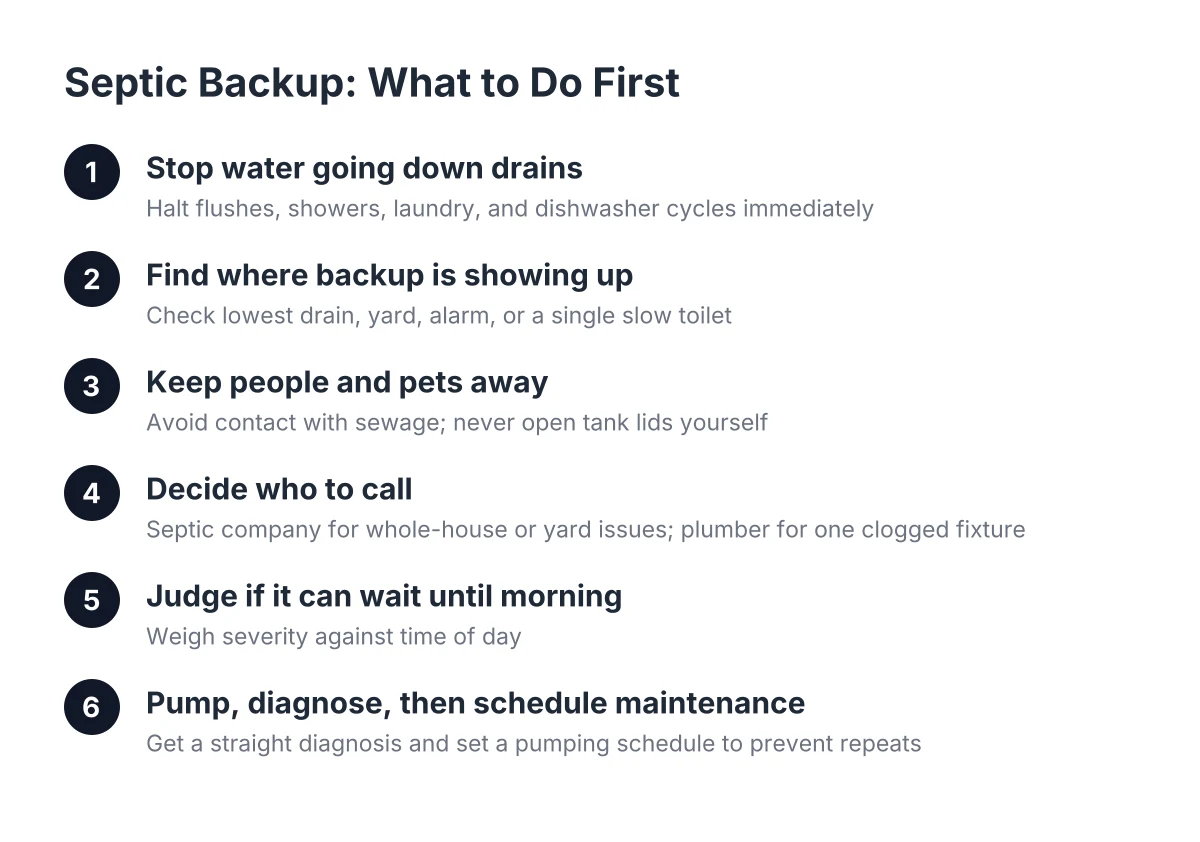
    Related guide: septic tank maintenance — Complete Guide

    Related Reading

  • Buying Property With a Concrete Septic Tank in Hesperia: The Inspection Checklist

    concrete septic tank inspection

    If you're about to close on land or a home in Hesperia with no septic records, a concrete septic tank inspection is the one step that turns the biggest unknown on the property into a number you can negotiate. The tank in the ground is almost certainly concrete: most older High Desert properties were built with concrete tanks, and knowing what that means for failure points, repairs, and lifespan changes how you budget. This guide walks through what an inspector checks (lid, baffles, walls, seams), what each finding costs to fix, how long a concrete tank should last, and how to price the results before you commit money to a property where nobody can tell you what's buried out back.

    No hidden-fee talk, no manufactured upsells. Just the numbers and trade-offs, so when a quote lands in your inbox you can tell whether it's fair.

    Why Septic Tank Concrete Dominates the High Desert

    Concrete is the default septic tank material in Hesperia and most of the High Desert for a simple reason: it holds up. A concrete tank is heavy, so it doesn't float or shift when groundwater or soil conditions change. It handles the weight of soil above it, and in many cases it can survive a vehicle accidentally driving over the area, which plastic tanks often cannot.

    For a land buyer with no records, this matters in a practical way. If the home on your new property was built decades ago, the odds are high that the tank is concrete. That tells you something about what to inspect, what parts wear out first, and roughly what a replacement would cost if the inspection turns up bad news.

    Concrete tanks are typically precast, meaning they were poured at a factory and delivered by truck. Some older rural tanks were poured in place on site. Poured-in-place tanks can be fine, but they can also be undersized, unbaffled, or built to no particular standard, which is one more reason a professional inspection matters on a property with no paperwork.

    What the Inspection Findings Cost to Fix

    Worst case first, so the rest of the numbers have context. A precast concrete septic tank itself typically runs somewhere in the range of $1,000 to $3,000 for the tank alone, depending on size and the supplier. However, the tank is the smaller part of the bill. Excavation, delivery, setting the tank with a crane truck, connecting the plumbing, permits, and backfill make up most of a full installation, which is why total project costs land far above the sticker price of the tank.

    According to the U.S. Environmental Protection Agency, septic tank repair or replacement typically costs between $5,000 and $15,000. That range covers most residential situations, and it's a useful sanity check when you're comparing quotes for the cost of septic tank replacement. If a bid comes in far outside that window, ask what's driving it. Sometimes there's a real reason, like deep burial, hard soil, or a failed drain field that also needs work. Sometimes there isn't.

    Here's how the pieces of a concrete tank project typically break down:

    • The tank itself: the precast concrete unit, priced by capacity
    • Excavation and site work: digging the hole, managing soil, and backfilling after the set
    • Delivery and placement: a boom truck or crane sets the tank, and access to your lot affects this cost
    • Plumbing connections: tying the house line and the drain field line into the tank
    • Permits and inspections: San Bernardino County requires permits for septic work, and fees vary
    • Risers and lids: a concrete septic tank riser and cover bring the access point to grade so future pumping doesn't require digging

    Compare that full-replacement picture to routine service. According to Angi, septic tank pumping averages $427, with a range of $250 to $1,250 or more depending on tank size and location. That gap between a few hundred dollars for pumping and five figures for replacement is the strongest argument for maintaining a concrete tank instead of letting it fail.

    One note on comparing quotes: septic tank cost varies with tank size, burial depth, and how easy the lid is to reach. A quote that seems high may reflect a deep tank with no riser, and a quote that seems low may not include digging to find the lid at all. Ask each company to itemize so you're comparing the same work.

    How Long Does a Concrete Septic Tank Last?

    A well-built concrete septic tank commonly lasts 40 years or more, and some last well past that with regular pumping and no structural damage. Lifespan depends on the quality of the original concrete, the soil conditions, and whether the tank was maintained or left to accumulate solids for decades. Plastic and fiberglass tanks generally have shorter expected lifespans and are more vulnerable to physical damage.

    That longevity is the core of the concrete value argument. A tank that costs more to install but lasts twice as long usually wins on total cost of ownership. However, longevity is not a guarantee. Concrete has specific failure points, and on a property with no records, those failure points are exactly what an inspection should look at.

    Where a Concrete Septic Tank Inspection Looks First

    Concrete rarely fails all at once. It degrades in predictable places:

    1. The lid and cover. The concrete septic tank lid takes the most abuse. Lids crack from age, vehicle traffic, or careless digging. A cracked concrete cover is a safety hazard, especially on land where kids or livestock roam. Lid replacement is one of the cheaper concrete repairs, often a few hundred dollars installed, and it's worth doing immediately if the lid is compromised.
    2. The baffles. Baffles direct flow inside the tank and keep solids from washing into the drain field. In older concrete tanks, baffles were often concrete themselves, and sewage gases eat away at concrete above the waterline over decades. A deteriorated baffle lets solids escape and can quietly kill a drain field, which is the expensive part of the system.
    3. The tank walls above the waterline. The same corrosive gases that destroy baffles can pit and weaken the concrete crown of the tank. An inspector checks this when the tank is pumped and empty.
    4. Seams and connections. Cracks at the inlet, outlet, or the seam between tank sections can let groundwater in or sewage out. Either one is a problem worth knowing about before closing on a property.

    Septic Tank Concrete vs. Plastic and Fiberglass

    Concrete, plastic, and fiberglass all show up in residential septic systems, and each has a real trade-off profile. Concrete costs more upfront and lasts longer. Plastic costs less and installs faster, but it can crack under weight, and an empty plastic tank can float upward in wet soil if it isn't anchored. Fiberglass sits between the two on price and resists corrosion well, but it shares plastic's vulnerability to shifting and damage during installation.

    For example, here's how the materials compare on the factors that matter most:

    • Upfront cost: plastic is usually cheapest, fiberglass is mid-range, and concrete costs the most for the tank itself
    • Installation: plastic and fiberglass tanks are light enough to place without a crane; concrete needs heavy equipment, which adds cost
    • Durability: concrete handles soil weight and surface traffic best; plastic is most vulnerable to crushing and deformation
    • Lifespan: concrete typically outlasts both alternatives when maintained
    • Repairability: cracked concrete can often be patched or fitted with new baffles; a badly cracked plastic tank usually means replacement

    In Hesperia's soil and climate, concrete remains the common choice for full-size residential tanks. That said, material is only one part of the picture. Septic system types range from standard gravity systems, which most Hesperia homes have, to alternative designs with pumps and mechanical parts. An aerobic septic system cost runs meaningfully higher than a conventional gravity system, both to install and to maintain, because it uses powered components that need attention. The EPA advises that alternative systems with electrical float switches, pumps, or mechanical components should generally be inspected once a year, versus at least once every three years for a standard system.

    If you're replacing a failed system rather than just a tank, the county's requirements and your soil conditions may dictate the system type more than your preference does. That's a conversation to have with a septic professional and the county before you assume a like-for-like swap.

    Concrete Septic Tank Inspection: The Buyer's Sequence

    If you're buying land or a home in Hesperia with no septic records, treat the septic system as an unknown expense until someone physically opens the tank. The seller may not know where the tank is. The previous owner may never have pumped it. None of that shows up in a standard home inspection, which typically doesn't open or evaluate the septic tank at all.

    Here is the practical sequence that protects you:

    1. Get the tank located. A septic tank locating service finds the tank and marks it, even when there's no visible lid or riser on the lot. On older properties, the concrete lid is often buried under a foot or more of soil.
    2. Have the tank pumped and inspected together. A concrete septic tank inspection can't be done on a full tank. Pumping it empty lets someone check the baffles, the concrete walls, the lid, and the liquid levels that hint at drain field health.
    3. Ask for a written report. For a purchase decision, you want documentation: tank material, approximate condition, lid and baffle status, and any signs of drain field failure. Lenders and escrow officers can work with a written report; they can't work with a verbal "seems fine."
    4. Price the findings before you close. If the report shows a cracked concrete septic tank cover, that's a modest fix you can negotiate. If it shows a collapsing tank or a saturated drain field, you're looking at the EPA's $5,000 to $15,000 replacement range, and that belongs in your purchase negotiation, not in your first year of ownership as a surprise.

    Consider a realistic Hesperia scenario. A buyer closes on a 1970s home on an acre lot. No septic records exist, no lid is visible, and the seller shrugs. A locate finds the tank 18 inches down under the side yard. Pumping and inspection reveal a concrete tank in decent shape, but the concrete outlet baffle has dissolved and solids have been flowing toward the drain field for years. The fix is a new outlet tee, a few hundred dollars, caught before it destroyed a drain field worth thousands. That is the entire case for inspecting before you buy.

    The trade-off is real: a locate-and-inspect job costs money on a property you might walk away from, and it can add a few days to escrow. Weigh that against the alternative, which is absorbing a five-figure replacement with no negotiating leverage after closing.

    Getting the Most Life Out of a Concrete Tank

    Once you own the property, the goal shifts from evaluating the tank to protecting it. Concrete rewards maintenance more than any other tank material, because most concrete failures build slowly and get caught during routine pumping.

    First, establish a pumping baseline. If nobody knows when the tank was last pumped, have it pumped now and note the date. The EPA recommends professional inspection at least once every three years for the average household, and pumping visits are the natural time to do it. More than one in five U.S. households rely on septic or small cluster systems, according to the EPA, so this is ordinary homeownership on septic, not an exotic burden.

    Next, add a riser if the tank doesn't have one. A concrete septic tank riser, or a plastic riser bolted to the concrete tank, brings the access lid up to ground level. Every future pumping visit gets cheaper and faster because nobody has to dig to find the lid. On a property where you just paid to locate the tank, a riser means you never pay for that again.

    In addition, protect the ground above the tank. Don't park vehicles, place sheds, or pour patios over the tank or drain field. Concrete is the toughest tank material, but repeated vehicle loads crack lids and stress tank crowns. Mark the tank location on a simple property sketch, and keep it with your house documents so the next owner isn't in your position.

    Finally, know your warning signs. Slow drains across the whole house, sewage odor in the yard, or wet ground over the drain field mean the system needs attention now, not at the next scheduled pumping. Catching a backup early is the difference between an emergency pumping visit and a sewage cleanup inside the house.

    When to Repair Concrete and When to Replace It

    Repair a concrete tank when the structure is sound and the failure is a component: a cracked lid, a deteriorated baffle, or a bad inlet connection. These fixes typically cost hundreds, not thousands, and they restore decades of remaining service life. Replace the tank when the concrete itself has failed, meaning collapsed sections, major cracks below the waterline, or a crown so deteriorated it can't safely support a lid.

    A pumped-out, visual inspection is the only honest way to make that call. Anyone quoting a full replacement without opening and emptying the tank is guessing, and you shouldn't pay five figures on a guess. Likewise, a badly failed tank patched to limp along is a liability, especially if you plan to sell or build on the property later. Structural assessments and county permit questions are where a professional's judgment matters most; this guide can frame the decision, but it can't look inside your tank.

    For most Hesperia property owners, the math favors concrete's long game. Pump on schedule, inspect when you pump, fix small concrete failures while they're small, and a concrete tank installed decades ago keeps working for decades more. For the land buyer starting with zero records, one locate, one pumping, and one written concrete septic tank inspection report turn the biggest unknown on the property into a line item you can actually plan around.

    If you're buying in Hesperia and need the tank found, pumped, and inspected before you close, Hesperia Septic can help.

    Related Reading

  • Holding Tank vs. Septic Tank: Which Is Right for You?

    Comparison chart of holding tank vs septic tank across cost, lifespan, installation, maintenance, and best use
    A side-by-side look at how holding tanks and septic tanks compare across the key decision factors covered in this guide.

    If you need a way to handle wastewater on a property without sewer access, your two main options are a holding tank or a septic tank. The short answer in the holding tank vs septic tank decision: a septic tank wins for most full-time homes because it treats waste on site and costs less to run over the years, while a holding tank wins for temporary setups, low-use properties, or lots where a drain field cannot be installed. A holding tank stores everything and must be pumped often. A septic tank separates solids and sends liquid to a drain field, so it needs pumping far less. Here in Hesperia and the High Desert, we pump both, and the right choice comes down to how you use the property.

    Criteria Holding Tank Septic Tank
    Upfront cost Lower, simpler install Higher, needs a drain field
    Long-term cost Higher, frequent pumping adds up Lower, occasional pumping and maintenance
    Lifespan Long tank life, but pumping never stops Long system life with regular care
    Maintenance Pump-outs on a tight, ongoing schedule Periodic pumping and inspections
    Best for RVs, cabins, job sites, temporary or low-use properties Full-time homes with room for a drain field

    Holding Tank vs Septic Tank: Strengths and Trade-offs

    A holding tank is exactly what it sounds like: a sealed tank that stores all the wastewater from your toilets, sinks, and drains. Nothing leaves the tank until a pump truck comes and hauls it away. There is no treatment happening and no drain field. It is a storage container, plain and simple.

    That simplicity is the strength. Installation is straightforward because you skip the drain field, which means a holding tank can work on small lots, rocky ground, or soil that fails a percolation test (the test that checks whether soil can absorb water). It is also a solid fit for places people do not live full time: RVs, cabins, seasonal properties, and construction sites. If your use is light or temporary, a holding tank keeps things simple.

    The trade-off is the pumping schedule. Because nothing drains out, the tank fills with everything you send down the pipe, and it fills fast in a household that showers, does laundry, and flushes daily. Every pump-out costs money, and those visits never stop as long as the property is in use. Let the tank get full and you risk a backup into the house. For a full-time home, that ongoing cost and constant attention usually make a holding tank the more expensive path over time.

    Septic Tank: Strengths and Trade-offs

    A septic tank is part of a system that treats wastewater on your property. Waste flows into the tank, where solids settle to the bottom and grease floats to the top. The liquid in the middle flows out to a drain field, a set of buried pipes that lets the water soak into the soil. The tank holds the solids, and that is what septic tank pumping removes.

    The strength is independence. Once installed, a septic system handles daily household wastewater on its own. You are not calling for a pump-out every few weeks. Most homes only need septic tank pumping every few years, depending on household size and tank size, and routine inspections catch small problems before they become a septic backup. Over the life of a full-time home, that adds up to lower cost and less hassle than hauling every gallon away.

    The trade-offs are upfront cost and site requirements. A septic system costs more to install because it includes the tank, the drain field, and the excavation for both. Your soil has to pass a percolation test, and you need enough space for the drain field. A septic system also depends on care. Skip pumping for too long and solids push into the drain field, which is the expensive part to fix. If your lot cannot support a drain field, a septic tank is off the table no matter how much you prefer it.

    Holding Tank vs Septic Tank: The Deciding Factors

    Cost drivers

    A holding tank costs less to install but more to own; a septic tank flips that. With a holding tank, the recurring pump-outs are the whole cost story, and in a full-time home they come often. With a septic tank, most of the money goes in at installation, and after that you pay for occasional pumping and inspections. The more wastewater your property produces, the faster the septic tank pulls ahead on total cost.

    Lifespan

    Both tanks can last for decades, but the ownership experience differs. A holding tank's life is measured in pump-outs; the tank itself holds up, but the service calls never end. A septic system, cared for with regular septic tank pumping and inspections, typically serves a home for decades. Neglect is the real lifespan killer for septic: a clogged drain field can mean digging up the yard.

    Installation

    A holding tank installs faster and works on lots where a septic system cannot. No drain field means no percolation test to pass and less excavation. A septic system needs suitable soil, enough space, and permits for the drain field layout. If your soil fails the perc test, the county may only allow a holding tank, and that decides the question for you.

    Maintenance

    A holding tank demands frequent, scheduled pump-outs; a septic tank asks for occasional pumping and a watchful eye. With a holding tank, staying on schedule is not optional, because a full tank backs up into the house. With a septic tank, maintenance means pumping every few years for most homes, plus a septic system inspection when something seems off, like slow drains or wet spots over the drain field. Either way, a local crew that pumps both makes the routine painless.

    Situational fit

    Match the tank to how you use the property, and the choice usually makes itself. Full-time family home with room for a drain field: septic tank. RV pad, weekend cabin, job site trailer, or a lot that failed its perc test: holding tank. In the High Desert, we see both all the time, and the properties that struggle are the ones where the tank type does not match the actual use.

    Which Should You Choose?

    Choose Holding Tank if:

    • The property is an RV, cabin, job site, or another low-use or temporary setup
    • Your lot failed a percolation test or lacks space for a drain field
    • You want the lowest upfront cost and can commit to a regular pump-out schedule
    • Local rules require one because a septic system is not permitted on your lot

    Choose Septic Tank if:

    • You live on the property full time and produce daily household wastewater
    • Your soil and lot can support a drain field
    • You want the lowest long-term cost and the least frequent service calls
    • You plan to stay in the home for years and want a system that works on its own

    For most Hesperia homeowners, the septic tank is the right call. The holding tank earns its place on properties where a septic system is impractical or the usage is light. Either way, the tank you choose only works as well as the pumping schedule behind it.

    Common Questions

    How often does each tank need pumping?

    A holding tank needs pumping whenever it fills, which can be every few weeks in a full-time household, since nothing drains out of it. A septic tank typically needs pumping every few years, depending on household size and tank size. If you are not sure where you stand, an inspection can tell you how full your tank is right now.

    Can I convert a holding tank to a septic system later?

    Sometimes, but it depends on your soil and your lot. A septic system needs a drain field, so your ground has to pass a percolation test and you need space for the pipes. If the county approves it, converting can cut your long-term pumping costs. Check with your local health department before you plan around it.

    Which one is cheaper overall?

    When weighing holding tank vs septic tank costs, the septic tank usually wins for a full-time home because pumping happens every few years instead of every few weeks. The holding tank costs less upfront, but the pump-out bills keep coming as long as the property is in use. For a seasonal cabin or RV pad, the math can flip, since a lightly used holding tank may only need occasional service.

    How do I know when my tank is full or having problems?

    Watch for slow drains, gurgling pipes, sewage smells near the tank, or wet spots in the yard. With a holding tank, those signs mean you need a pump-out now, before a septic backup reaches the house. With a septic tank, they can point to a full tank or a drain field problem, and an inspection can sort out which. If wastewater is already backing up, treat it as an emergency and call for pumping right away.

    If you need your septic tank serviced, Hesperia Septic can help.

    Related guide: RV holding tank pumping — Complete Guide

    Related Reading