Author: Logan Minium

  • What Septic Tank Locating Does When Your Property Has No Records

    septic tank no records

    Suppose you just bought a rental in Hesperia, the tank has never been pumped on your watch, and nobody left you a map. Before any crew can pump, inspect, or repair that system, someone has to find it. That is what septic tank locating does: it pins down exactly where your buried tank and its lid sit, so the rest of the work can happen without digging up half the yard. For High Desert properties with septic tank no records, it is often the first job, not an extra.

    This matters more than most new owners expect. More than one in five U.S. households depend on individual septic systems or small community cluster systems to treat their wastewater, according to the U.S. Environmental Protection Agency. In Hesperia and the surrounding High Desert, that share runs higher, and many of those systems went in decades ago with paperwork that never followed the property through each sale.

    Here is a step-by-step guide to how a locate actually works, what you can do yourself first, and where a professional earns their fee.

    Step 1: Understand What Septic Tank Locating Does and Why It Comes First

    Septic tank locating is the process of finding and marking a buried septic tank, its lid, and often its main sewer line when the location is unknown. A crew traces the line from the house, confirms the tank position, and marks the lid so it can be exposed for pumping, inspection, or repair.

    Why does this come before everything else? A pumping truck cannot pump what it cannot reach. An inspector cannot inspect a lid nobody can find. A remodel or addition cannot get approved if the county does not know where the system sits. Locating is the key that unlocks all of it.

    For a small landlord, the timing usually looks like one of these:

    • A tenant reports slow drains or a sewage smell, and you realize you have no idea where the tank is.
    • You are turning over a unit between leases and want the tank pumped before the next tenant moves in.
    • You are buying land or a house with a septic system and the seller has no records.
    • You are planning a remodel, a driveway, or a new structure and need the tank marked so nothing gets built over it.

    In each case, the locate is a one-time cost that pays off every time the system needs service afterward. Once the tank is found and marked, every future septic tank pumping visit gets faster and cheaper.

    Step 2: Searching for Records When You Have No Septic Tank Documentation

    Start with paper, not a shovel. San Bernardino County may have a permit or an as-built diagram on file showing where the tank was installed. Ask the county's environmental health or building department for any septic permit records tied to the parcel number.

    Next, work through these sources:

    1. The seller's disclosure packet or your closing documents, which sometimes include a septic inspection from the sale.
    2. The previous owner or their realtor, who may remember where the last pumping crew dug.
    3. Neighbors with similar-age homes, since tract-built houses in the same era often placed tanks in the same relative spot.
    4. Any old invoices from a septic company left in a kitchen drawer or garage, which sometimes sketch the tank location on the receipt.

    However, be ready for dead ends. Many High Desert homes were built before consistent record-keeping, and rural parcels changed hands with no paperwork at all. Situations where you find a septic tank with no records are common here, not a red flag about your property. If the paper trail runs out, move to the physical clues.

    Step 3: Read the Yard for Physical Clues

    Your yard often tells you where the tank sits, if you know what to look for. Walk the property, especially the area between the house and the property line on the side where the main bathroom plumbing exits.

    Look for these signs:

    • A rectangular patch of ground that settles lower or sits higher than the surrounding dirt.
    • Grass or weeds that grow greener or faster in one spot, even in dry High Desert conditions.
    • A concrete lid, a metal cap, or a white PVC pipe sticking a few inches out of the ground; that pipe may be a cleanout or an inspection port.
    • Snow or frost that melts faster over one area in winter, since tank contents run warmer than soil.

    In addition, check inside the house. Find where the main sewer line leaves the foundation, usually below the lowest bathroom or in the crawl space. The tank typically sits along that line's path, often within 10 to 25 feet of the house, though older rural installs can break that rule.

    Mark anything promising with a flag or a rock. Even a rough guess saves a professional crew time, and time is what you pay for.

    Step 4: Probe Carefully, and Know When to Stop

    If the clues point somewhere specific, you can probe by hand. Use a thin metal rod, push it into the soil at an angle, and feel for the hard, flat resistance of a concrete or fiberglass tank top. Work in a grid pattern along the suspected sewer line path.

    Stop probing if any of these apply:

    • The soil is soft, wet, or smells like sewage, which can mean a failing lid or a saturated area you should not stand on.
    • You hit anything that feels like pipe rather than tank; older clay and Orangeburg lines crack under a probe.
    • The tank might be steel, common in older installs, since a rusted steel lid can collapse under a person's weight.

    That last point is the honest limitation of every do-it-yourself method. An aging tank lid is a genuine safety hazard, and gases inside a tank can be fatal. If you have any doubt about the tank's age or material, or if probing turns up nothing after an hour, hand the job to a professional. This is one of the places where paying for expertise beats guessing.

    Step 5: What Professional Septic Tank Locating Uncovers

    A professional locate uses tools and pattern knowledge that a homeowner with a probe rod does not have. A typical crew flushes a small transmitter down a toilet, then follows its radio signal above ground with a receiver. The signal stops moving where the line enters the tank, which pins the location within inches. Crews may also use electronic line tracers or probe with experience behind every push.

    What professional septic tank locating does beyond finding the tank is the part most owners undervalue. A good locate visit should leave you with:

    • The tank position and lid marked, and usually the lid exposed for immediate pumping if you schedule both together.
    • A sense of the tank's orientation, since many tanks have separate access points over the inlet and outlet.
    • Notes on where the drain field likely runs, so you never park, build, or plant over it.
    • A record you can keep in your property file, which matters when you own two, three, or five septic-served rentals and cannot memorize every yard.

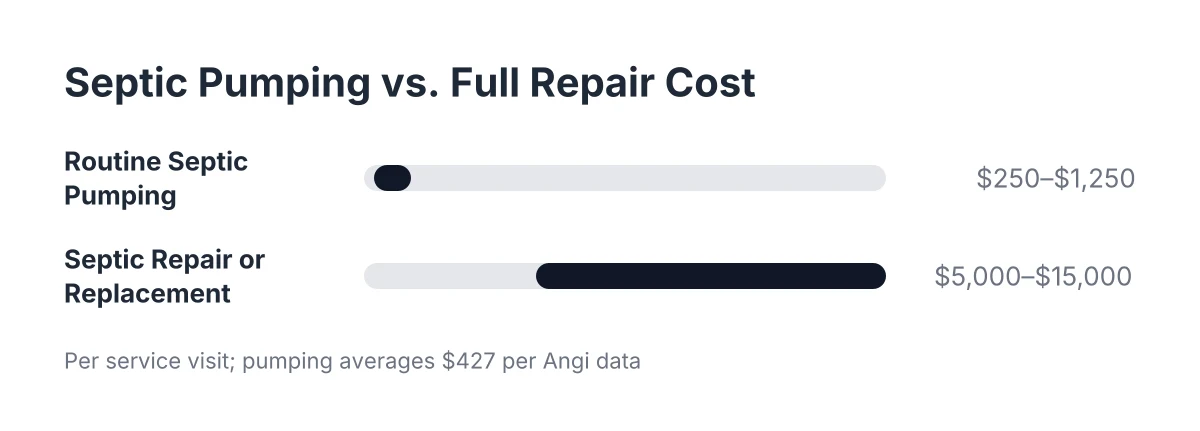
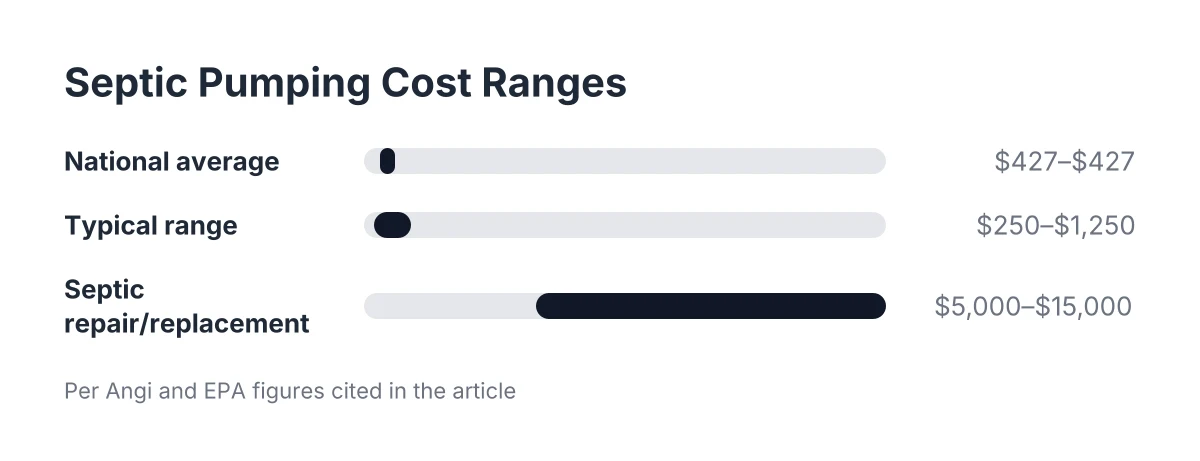
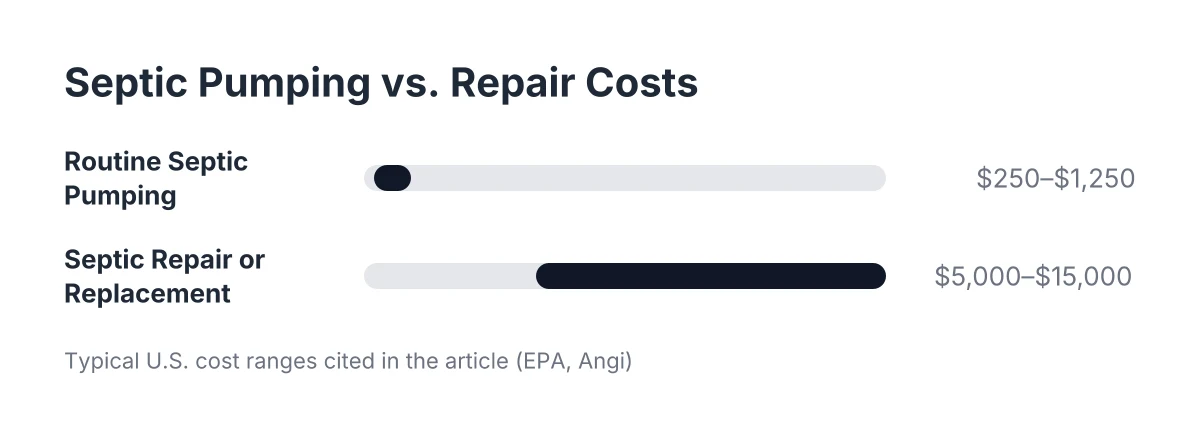
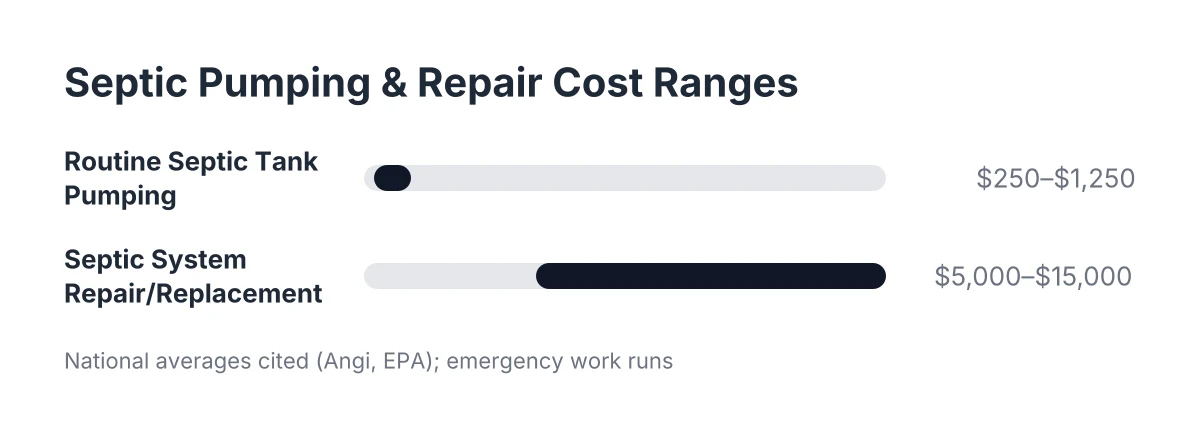
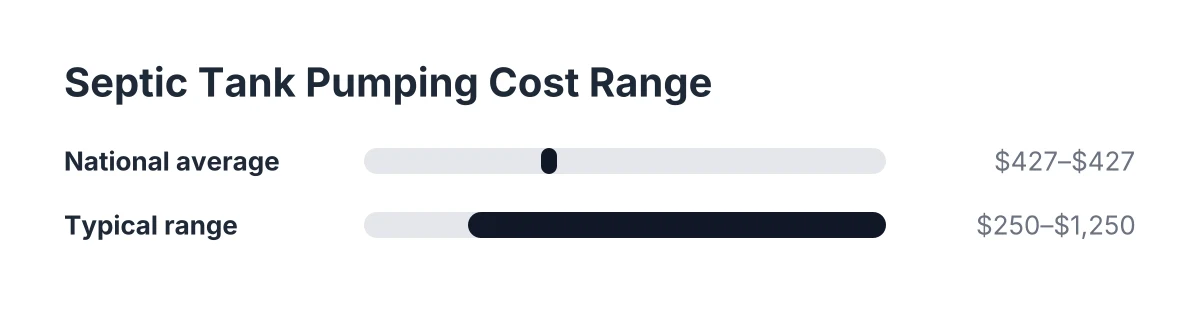
    For example, say a landlord owns a 1970s rental off Ranchero Road with a septic tank no records situation. In that hypothetical, a locate plus pumping in one visit might run a few hundred dollars total as a rough estimate, and the marked lid location cuts every future service visit down because nobody hunts for the tank again. Compare that with the alternative: pumping alone averages $427 according to Angi data, while the EPA estimates septic repair or replacement typically costs $5,000 to $15,000. Finding the tank so it can be maintained is the cheap end of that spectrum by a wide margin.

    Step 6: Mark It Permanently and Put the System on a Schedule

    Once the tank is found, never lose it again. Take photos with measurements from two fixed points, like a house corner and a fence post. Sketch the location and keep it with the property's records. Some owners set a flat paver or a discreet marker over the lid; others install a riser that brings the lid access to ground level so no digging is ever needed again.

    Therefore, the locate should flow straight into a maintenance plan. The EPA recommends a professional inspection at least once every three years for the average household, and once a year for systems with pumps, float switches, or other mechanical parts. For a rental, tie the inspection to something you already do, like lease renewal or an annual property walkthrough.

    As of 2026, there is no shortcut around this for High Desert properties with missing records. But the good news is that septic tank locating is a one-time problem. Solve it once, document it, and your septic system goes from a mystery under the dirt to a line item you manage on your own schedule, before a tenant ever calls about a backup.

    If you need your septic tank serviced, Hesperia Septic can help.


    Related Reading

  • Septic System Replacement Terms Explained: A Plain-English Glossary

    septic system replacement glossary

    If you own or are buying a home in Hesperia with a septic system, sooner or later you will hear terms that sound like another language. This article breaks down the key terminology in a septic system replacement glossary to help you understand what a contractor is proposing, ask sharper questions, and spot warning signs before they become expensive. Use it to decode the words you will see on quotes, inspection reports, and permit paperwork into plain English. Every entry stands on its own, so you can jump straight to the term that confused you.

    • Septic System
    • The 3 Types of Septic Systems
    • Septic Tank
    • Drain Field
    • Leach Line
    • Effluent
    • Septic System Inspection
    • Septic Tank Locating
    • Percolation Test (Perc Test)
    • Baffle
    • Septic Backup
    • Abandonment (Tank Abandonment)
    • Tank Capacity
    • Riser
    • Distribution Box (D-Box)
    • Septic Tank Pumping
    • Septic Tank Cleaning
    • Scum and Sludge Layers
    • Grease Trap

    System Basics

    Septic System

    A septic system is a private, on-site setup that treats your home's wastewater instead of a city sewer line. It usually has two main parts: a buried tank that catches solids and a drain field that filters the liquid into the soil. Most homes in Hesperia and the surrounding High Desert rely on one. Knowing the parts helps you understand which piece of your system a contractor is talking about, because replacing a tank and replacing a drain field are different jobs with different costs.

    The 3 Types of Septic Systems

    The three main types of septic systems are conventional gravity systems, pressure distribution systems, and alternative or engineered systems. A gravity system lets wastewater flow downhill from the tank to the drain field with no pump. A pressure distribution system uses a pump to push liquid evenly across the drain field, which helps on flat lots or shallow soil. Alternative systems, such as mound or aerobic treatment units, add extra treatment steps for difficult sites. Which type your property needs affects the price and complexity of a septic system replacement project more than almost any other factor.

    Septic Tank

    A septic tank is the buried, watertight container that receives everything that goes down your drains. Solids settle to the bottom as sludge, grease floats to the top as scum, and the liquid in the middle flows out to the drain field. Tanks are most often concrete or plastic, and each material has trade-offs covered in our concrete vs. plastic septic tank comparison. If a contractor says your tank is cracked or collapsed, that means the container itself has failed, not just filled up.

    Drain Field

    A drain field is the network of buried, perforated pipes that spreads treated liquid from the septic tank into the soil. It is also called a leach field or absorption field. The soil does the final cleaning, filtering the water before it rejoins the groundwater. Drain fields fail when soil clogs or solids escape the tank, and a failed drain field is one of the most common reasons a whole system needs replacement rather than repair.

    Leach Line

    A leach line is one of the individual perforated pipes inside a drain field. Contractors sometimes quote work by the line, such as "adding two leach lines," which means extending the field rather than replacing it. If your quote mentions leach lines, ask whether the work is an addition to the existing field or a full rebuild. That distinction changes the scope a lot.

    Effluent

    Effluent is the liquid wastewater that leaves the septic tank after solids have settled out. It is not clean water, but it has had the heavy material removed so the drain field can handle it. When an inspector says effluent is "surfacing," that means partially treated wastewater is rising into your yard, which is a serious failure sign. Our guide to signs your septic system needs replacement covers what surfacing and other red flags mean.

    Inspection and Diagnosis

    Septic System Inspection

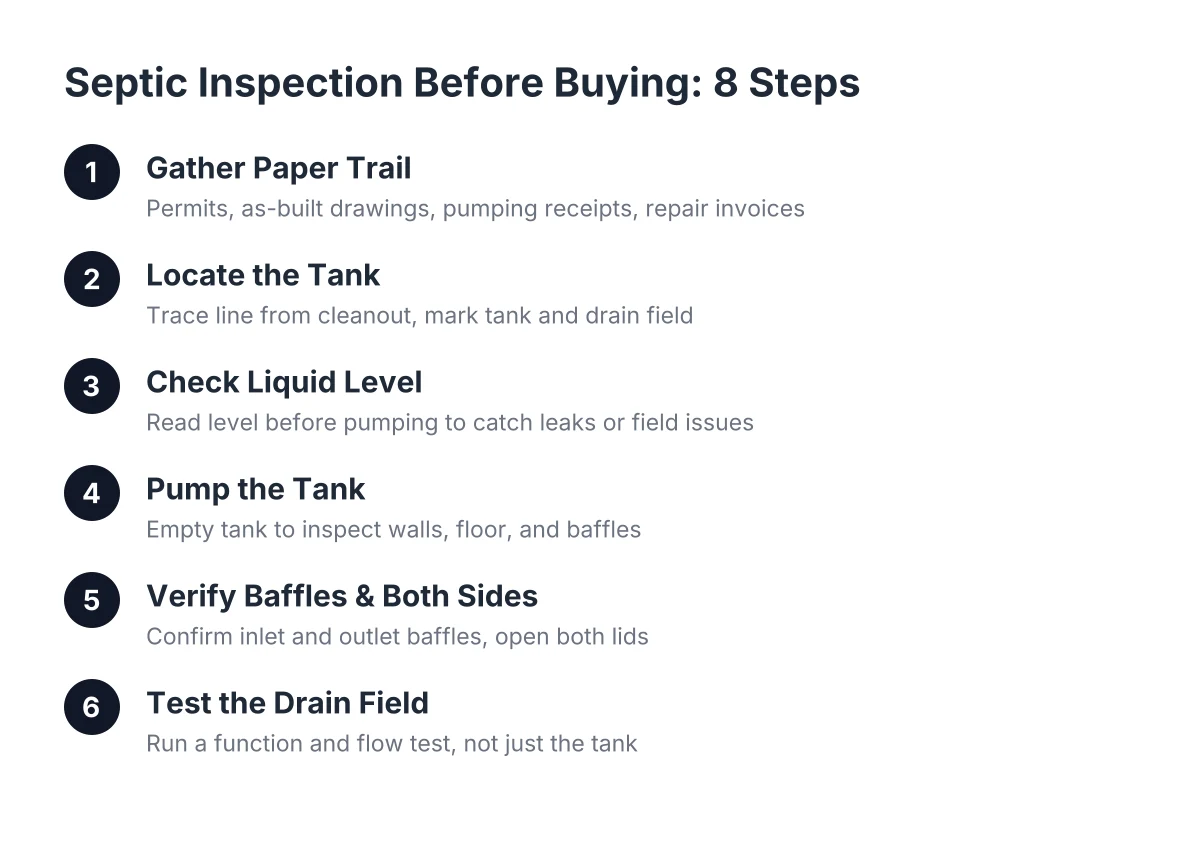
    A septic system inspection is a professional check of the tank, pipes, and drain field to find out what condition they are in. Inspectors look at liquid levels, tank structure, baffles, and how well the drain field accepts water. Buyers often order one before closing on a home. An inspection report is the document that tells you whether pumping will solve your problem or whether you are looking at a bigger project.

    Septic Tank Locating

    Septic tank locating means finding exactly where the tank and its access points sit underground. Many older Hesperia properties have no records showing where the tank is buried. Locating matters because a crew cannot pump, inspect, or replace what it cannot find, and digging in the wrong spot wastes time and tears up your yard. If a provider lists locating as a line item, that is normal for properties without site records.

    Percolation Test (Perc Test)

    A percolation test, or perc test, measures how fast water soaks into the soil on your property. A tester digs holes, fills them with water, and times how quickly the level drops. The result tells designers whether the ground can absorb wastewater and how big the drain field must be. Slow-draining soil can push you toward a larger field or an engineered system, which raises costs when a septic system replacement becomes necessary.

    Baffle

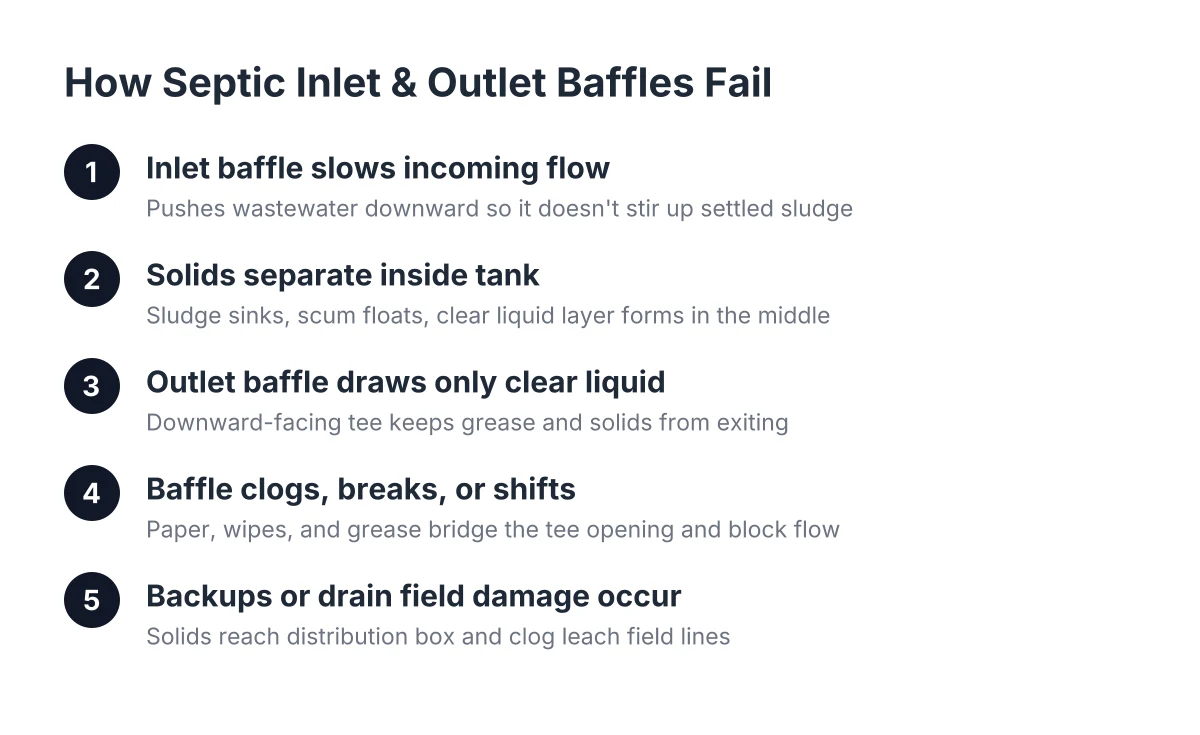
    A baffle is a barrier inside the septic tank that keeps floating scum and settled sludge from escaping into the drain field. Tanks have an inlet baffle where waste enters and an outlet baffle where liquid leaves. A broken outlet baffle lets solids flow into the drain field and clog it. Replacing a baffle is a repair; the damage a missing baffle causes over time is what leads to replacement.

    Septic Backup

    A septic backup is wastewater flowing the wrong way, coming up through drains, toilets, or tubs inside the house. It usually means the tank is full, a line is blocked, or the drain field can no longer absorb water. A backup is an urgent problem, and emergency septic tank pumping can relieve the pressure fast. But repeated backups after pumping point to a failing system, not a full one.

    Replacement and Installation Work

    Abandonment (Tank Abandonment)

    Tank abandonment is the process of taking an old septic tank permanently out of service, usually by pumping it empty, then crushing it or filling it with sand or gravel. Most areas require proper abandonment when a tank is replaced, so check your local code. An empty tank left in the ground can collapse under weight, which is a safety hazard. If a replacement quote includes abandonment, that is a sign the contractor plans to handle the old tank correctly.

    Tank Capacity

    Tank capacity is the amount of wastewater a septic tank can hold, measured in gallons. Capacity requirements are usually tied to the number of bedrooms in the home, since bedrooms predict water use. An undersized tank fills fast and sends solids to the drain field too soon. If you are sizing a new tank, our septic tank capacity guide for Hesperia homes walks through how sizing works.

    Riser

    A riser is a vertical pipe that extends the septic tank's access lid up to ground level. Without one, a crew has to dig down to the tank every time it needs pumping or inspection. Adding risers during a replacement is a small upgrade that saves digging costs on every future service visit. If your quote includes risers, that is a convenience item, not padding.

    Distribution Box (D-Box)

    A distribution box is a small buried box that splits the flow from the septic tank evenly among the drain field's leach lines. If the box tilts or clogs, one line takes all the flow and wears out early while the others sit dry. A failed distribution box can make a healthy drain field look dead. Replacing a D-box alone is far cheaper than replacing the field, so it is worth asking whether yours was checked.

    Ongoing Service Terms

    Septic Tank Pumping

    Septic tank pumping is the removal of accumulated sludge and scum from the tank using a vacuum truck. It is the core maintenance task that keeps solids from escaping into the drain field. Regular septic tank pumping is the cheapest thing you can do to delay replacement. When pumping stops solving your problems, that shift is the signal that the system itself, not the tank's contents, is the issue.

    Septic Tank Cleaning

    Septic tank cleaning means removing everything from the tank, including the compacted sludge stuck to the bottom and walls, not just the liquid a basic pump-out takes. Some providers use "pumping" and "cleaning" loosely, so ask what the quote covers. A full cleaning also gives an inspector a clear view of the tank's walls and baffles. That visibility matters when you are deciding between repair and replacement.

    Scum and Sludge Layers

    Scum and sludge layers are the two solid layers inside a working septic tank: scum is the grease and light material floating on top, and sludge is the heavy material settled on the bottom. Service techs measure both layers to judge whether the tank needs pumping. Thick layers that build back fast after pumping can point to heavy household use or an undersized tank.

    Grease Trap

    A grease trap is a container that catches fats, oils, and grease from kitchen drains before they reach the septic system. Grease is one of the fastest ways to clog a tank and drain field. Grease trap pumping keeps that material out of the system. Homes with heavy kitchen use, or properties with commercial kitchens, benefit most from having one serviced regularly.

    Using These Terms

    You now have enough vocabulary to read a septic quote line by line and know whether you are looking at a pump-out, a repair, or a full rebuild. Keep this septic system replacement glossary handy when you talk to providers, and do not hesitate to ask what a specific line item covers. If costs are your next question, our septic system replacement cost guide explains what drives the price up or down.

    If you need your septic tank serviced, Hesperia Septic can help.

    Related Reading

  • 7 Signs Your Grease Trap Is Clogged: Odors, Slow Drains, and Backup Warnings

    Sequence of signs a grease trap is clogged, from odor to overdue pumping
    These warning signs, in order of severity, show when a grease trap needs pumping.

    If you run a restaurant or commercial kitchen in Hesperia, the signs grease trap clogged issues show up before the health inspector does. Odors near the drains, water that takes too long to leave the sink, and grease showing up where it should not be are all warnings that the trap is past due for pumping. Catch these early and you protect your inspection record, your kitchen schedule, and your plumbing.

    This list covers the seven warning signs that matter most, why each one happens, and what to do when you spot it. It is written for operators who cannot afford a failed health inspection, so each item includes the compliance angle, not just the plumbing one.

    1. A Rotten or Sour Smell Near the Kitchen Drains

    Odor is the first sign most operators notice, and it is the one customers notice too. A grease trap works by holding fats, oils, and grease so they separate from wastewater. When the trap fills up, that trapped grease starts to decompose, and the smell travels back up through floor drains and sink lines.

    A faint grease smell right at the trap is normal. A sour, rotten-egg odor in the dish pit, the prep area, or worse, the dining room, means the trap is overloaded and the decomposing layer is thick. Health inspectors treat persistent sewage or grease odors as a red flag, so if your staff can smell it, assume an inspector will too.

    2. Slow Drains at the Sinks and Dish Station

    Slow drainage is the clearest mechanical sign your grease trap is losing capacity. As grease builds up inside the trap, less room is left for water to flow through. Water backs up in the line, and your three-compartment sink or dish machine drains slower every week.

    Here is the pattern to watch: one slow sink might be a clogged line at that fixture, but when every drain connected to the trap slows down at the same time, the trap itself is the bottleneck. Do not wait for a full stoppage. Slow drains during a Friday dinner rush turn into standing water in the dish pit by Saturday.

    3. Grease Backing Up Into Sinks or Floor Drains

    A backup is the sign that has already crossed the line from warning to emergency. When the trap is completely full, greasy water has nowhere to go but backward. It comes up through floor drains, sink drains, or the trap lid itself, and it brings food solids and odor with it.

    For a commercial kitchen, a grease backup during service can mean shutting down the line. It can also mean a failed inspection if it happens while an inspector is on site, since wastewater on the floor is a critical violation in most health codes. Backups also stress the wider system; according to the U.S. Environmental Protection Agency, grease is the most common cause of reported sewer blockages, responsible for 47% of cases.

    4. Visible Grease Past the 25 Percent Line

    Many jurisdictions and grease haulers use the 25 percent rule: when the combined layer of floating grease and settled solids fills a quarter of the trap's liquid depth, it is due for pumping. Past that point, the trap stops separating grease effectively and starts passing it downstream into your lines or the sewer.

    You can check this yourself between service visits. Open the trap lid and use a simple measuring stick, one of the most useful grease trap cleaning tools an operator can own. Push it to the bottom, note where the grease layer starts and stops, and log the reading. Inspectors in many areas ask for exactly this kind of log, so a weekly measurement does double duty as a compliance record.

    5. Grease Showing Up in Lines, Cleanouts, or the Parking Lot

    When a trap is full, grease escapes it and hardens wherever the water cools. Look for these secondary signs your grease trap has been passing grease downstream:

    • Grease buildup visible at cleanout openings outside the building
    • Greasy residue or staining around outdoor drain covers
    • Repeated line clogs downstream of the trap, even after snaking
    • A greasy sheen or solids near the sewer connection or, on septic properties, near the tank lids

    Any of these means the problem has moved beyond the trap. The scale is bigger than most operators expect; Wastewater Digest notes that a single restaurant can release between 800 and 17,000 pounds of grease into the sewer system each year. That is why regular grease trap pumping exists as a requirement, not a suggestion.

    6. It Has Been Longer Than Your Pumping Interval

    Sometimes the clearest sign is the calendar. Most commercial kitchens land on a pumping interval based on their volume of fried and greasy food, the size of the trap, and local requirements. If you cannot remember the last pump-out, or you have no manifest or receipt on file, treat the trap as overdue.

    This matters for inspections as much as for plumbing. Health inspectors and sewer authorities in many areas ask for proof of service, such as pumping manifests showing when the trap was serviced and where the waste went. As of 2026, documentation expectations have only tightened in most jurisdictions. A crew that provides service records after every visit gives you the paper trail that keeps an inspection from turning into a citation.

    7. Your Water or Sewer Bill Jumps Without Explanation

    A clogged trap can change how water moves through your system in ways that show up on paper before they show up on the floor. Partially blocked lines can cause fixtures to run longer, dish machines to cycle inefficiently, and in some cases slow leaks at stressed joints. A month-over-month jump in water use with no change in business volume is worth investigating.

    However, a high bill alone is not proof of a grease trap problem. Check the trap level first since it is the cheapest thing to rule out, then look at fixtures and lines if the trap checks out.

    What to Do When You Spot the Signs Your Grease Trap Is Full

    Knowing how to know if your grease trap is full is only half the job; acting on it quickly is the other half. Here is the sequence that keeps a warning sign from becoming a shutdown:

    1. Check the trap level with a measuring stick and log the reading with a date.
    2. Stop putting extra grease down the drain; scrape pans into the trash and dry-wipe before washing.
    3. Schedule a full pump-out, not a skim. A proper service removes the grease cap, the settled solids, and the water in between, then scrapes the walls and baffles.
    4. Ask for documentation. Get a service record showing the date, the volume removed, and disposal information for your compliance file.
    5. Set the next service date before the truck leaves, based on how fast your trap actually filled.

    Suppose a taco shop manager in Hesperia notices the dish sink draining slow on a Tuesday and a sour smell by Thursday. In that scenario, calling for a pump-out that week likely costs a routine service visit. Waiting until Saturday, when greasy water comes up through the floor drain mid-rush, means an emergency call, lost service hours, and a mess to document if an inspector follows up.

    How Often Should a Commercial Kitchen Pump Its Grease Trap?

    A commercial kitchen should pump its grease trap either when the grease and solids layer reaches 25 percent of the trap's depth or on the schedule its local health or sewer authority requires, whichever comes first. High-volume kitchens that fry heavily often need service far more frequently than low-grease operations.

    The honest answer is that the right interval is specific to your kitchen. A burger-and-fries operation fills a trap much faster than a coffee shop with the same size trap. That is why the measuring-stick log matters; two or three readings tell you your real fill rate, and you can set a schedule around facts instead of guesses. If your trap fills faster than seems reasonable, have a professional inspect it, since a damaged baffle or an undersized trap can look like an overuse problem when it is really an equipment problem.

    Grease traps for commercial kitchens also wear out. How long grease traps last depends on the material and how well they are maintained, but steel units can corrode and concrete interceptors can crack over years of service. If pumping no longer solves recurring grease trap issues, ask your service crew whether repair or a new grease trap installation makes more sense than another pump-out.

    Do Houses Have Grease Traps Too?

    Most single-family houses do not have a dedicated grease trap; the fixture is standard in commercial kitchens but rare in homes. A house on a septic system relies on the septic tank itself to capture grease, which is one reason kitchen habits matter so much for septic health.

    For Hesperia homeowners on septic, the same warning signs apply in a different form. Slow kitchen drains, odors near the tank, and greasy buildup at the lids are signals that the septic tank is due for pumping. Households that send heavy grease or garbage-disposal waste down the drain build sludge faster; the Massachusetts Department of Environmental Protection recommends annual pumping for homes with garbage disposals regardless of tank size. If you own both a restaurant and a home on septic, the habit is the same: watch the early signs, keep records, and pump on a schedule instead of after a backup.

    The Bottom Line for Hesperia Operators

    The signs your grease trap needs pumping follow a predictable order: odor first, slow drains next, then escaped grease, and finally a backup. Every step down that list costs more to fix and creates more compliance risk than the one before it. A measuring stick, a simple log, and a standing relationship with a local pumping crew turn grease trap care from a recurring fire drill into a line item you barely think about.

    For operators in Hesperia and the surrounding High Desert, that local relationship also matters practically. A crew that handles grease traps, septic tank pumping, and holding tanks in the same area can service a restaurant, a rental property, and an RV account without you standing on site for any of them, and can leave the service records your compliance file needs.

    If you need your septic tank serviced, Hesperia Septic can help.

    Related Reading

  • Septic System Troubleshooting Terms Explained: A Plain-English Glossary

    septic system troubleshooting glossary

    If you own a home on septic in Hesperia, or you're about to buy one, the jargon piles up fast. This septic system troubleshooting glossary breaks down the terms you'll hear from inspectors, pumpers, and real estate agents into plain English. Use it to understand a quote line by line, describe your problem clearly on the phone, and spot warning signs before they turn into a backup in your yard. Every entry here takes less than thirty seconds to read.

    • Septic Tank
    • Drain Field
    • Baffle
    • Effluent
    • Riser
    • Inlet and Outlet Pipes
    • The 3 Types of Septic Systems
    • Aerobic Treatment Unit
    • Septic Backup
    • Sludge and Scum Layers
    • Root Intrusion
    • Hydraulic Overload
    • Drain Field Failure
    • Maintenance Tasks in a Septic System Troubleshooting Plan
    • Septic Tank Cleaning
    • When a Septic System Troubleshooting Inspection Is Required
    • Tank Locating

    The Parts of Your System

    Septic Tank

    A septic tank is a buried, watertight container that holds all the wastewater leaving your house so solids can settle out before the liquid moves on. Heavy solids sink to the bottom as sludge, grease floats to the top as scum, and the liquid in the middle flows out to the drain field. The tank does not make waste disappear; it stores solids until septic tank pumping removes them. If a provider says your tank is "at capacity," they mean the solids have built up enough to push into places they should not go.

    Drain Field

    A drain field is the network of buried pipes or trenches that spreads treated liquid from your septic tank into the soil. It is also called a leach field or absorption field, and it is usually the most expensive part of the whole system to replace. Soggy grass, standing water, or a sewage smell over this area often means the field is failing or the tank is overdue for pumping. Protecting the drain field is the main reason regular septic tank pumping matters.

    Baffle

    A baffle is a fitting inside the septic tank that controls how wastewater flows in and out. The inlet baffle slows incoming water so it does not stir up settled solids, and the outlet baffle keeps floating scum from escaping into the drain field. A broken or missing outlet baffle lets solids reach the drain field, which can clog it. If an inspection report flags a damaged baffle, ask whether it can be repaired at the same visit.

    Effluent

    Effluent is the liquid wastewater that flows out of the septic tank toward the drain field after the solids have settled out. It is not clean water, but it is clear enough for the soil to finish treating it. When a pro talks about "effluent levels" or an "effluent filter," they are talking about this liquid layer in the middle of your tank. Cloudy or solid-heavy effluent is a sign the tank needs attention.

    Riser

    A riser is a pipe extension that brings the septic tank's access lid up to ground level. Without one, a crew has to dig down to the buried lid every time they pump, which adds labor to every visit. If a quote includes installing a riser, that is a one-time cost that makes every future septic tank pumping faster and cheaper to access. Many older Hesperia properties have tanks with no risers at all.

    Inlet and Outlet Pipes

    Inlet and outlet pipes are the lines that carry wastewater from your house into the septic tank and then from the tank out to the drain field. The inlet pipe is where most clogs between the house and tank happen, often from roots or flushed items that should not have been flushed. If a provider says the problem is "in the line" rather than "in the tank," pumping alone may not fix it. This distinction matters for figuring out whether you have roots, a clog, or a full tank.

    Types of Septic Systems

    The 3 Types of Septic Systems

    The three main types of septic systems are conventional gravity systems, pressure distribution systems, and alternative or advanced treatment systems. A conventional gravity system uses slope alone to move wastewater from the tank to the drain field, and it is the most common setup on residential lots. A pressure distribution system adds a pump to push effluent evenly across the drain field, which is common where the soil or lot layout does not allow gravity flow. Alternative systems add extra treatment steps, such as sand filters or aerobic units, for lots with poor soil or high groundwater. Knowing which type you have tells you what can break; a gravity system has no pump to fail, while the other two do.

    Aerobic Treatment Unit

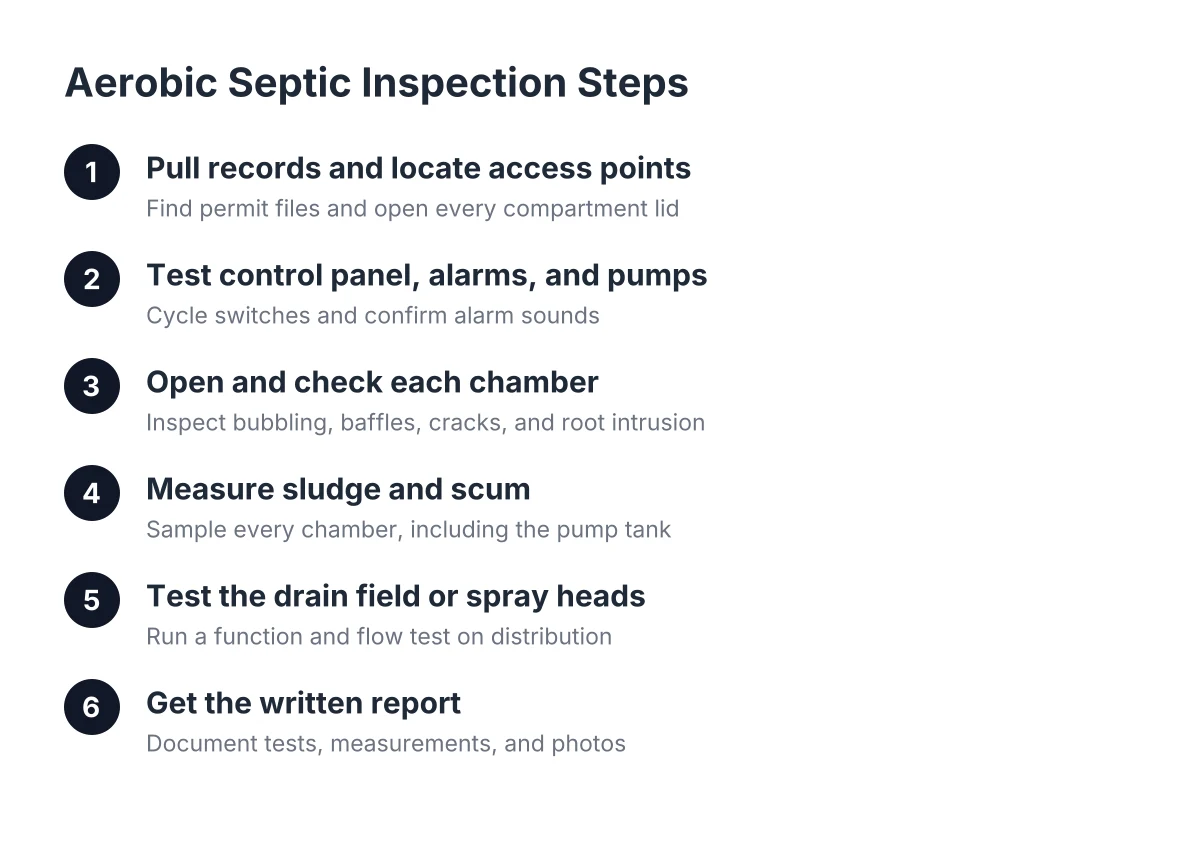
    An aerobic treatment unit is a septic system that pumps air into the tank so oxygen-loving bacteria can break down waste faster than a standard tank. These systems treat wastewater more thoroughly but have moving parts, including an air pump, that need maintenance. If you are buying a home with one, ask for its service records the same way you would ask for a car's. They still need pumping; the air does not remove settled solids.

    Problems and Warning Signs

    Septic Backup

    A septic backup is wastewater flowing the wrong way, out of drains, toilets, or the tank itself, instead of moving through the system. It usually shows up first in the lowest drains in the house, like a floor drain or a ground-floor shower. A backup is the loudest signal a septic system sends, and it means something downstream is full, blocked, or broken. If sewage is already coming up, treat it as urgent and get a backup and overflow response rather than waiting.

    Sludge and Scum Layers

    Sludge and scum are the two solid layers that build up inside every septic tank; sludge is the heavy material on the bottom, and scum is the grease and light material floating on top. Pumping removes both. When a pro measures these layers during an inspection, they are checking how close the solids are to the outlet pipe. Thick layers mean pumping is due; thin layers mean you have time.

    Root Intrusion

    Root intrusion means tree or shrub roots have grown into your septic pipes or tank through joints and cracks. Roots follow moisture, and a septic line is a steady water source, so this is a common cause of slow drains and repeat clogs. Pumping the tank will not fix roots in a line; that takes cutting or repair work. If your drains slow down every year around the same season, roots are a prime suspect.

    Hydraulic Overload

    Hydraulic overload means more water is entering the septic system than the tank and drain field can handle at once. Back-to-back laundry loads, a leaking toilet, or a houseful of holiday guests can all cause it. The symptoms look like a failing system, gurgling drains and soggy ground, but the fix may be as simple as spacing out water use. A good troubleshooter rules this out before recommending bigger work.

    Drain Field Failure

    Drain field failure means the soil around your drain field can no longer absorb effluent, so wastewater pools on the surface or backs up into the tank. It is the most serious diagnosis in septic system troubleshooting because repair often means digging and replacing part of the field. Standing water, lush green stripes of grass, and a persistent sewage odor over the field are the classic signs. Years of skipped pumping is a leading cause, which is why knowing the signs your tank needs pumping protects the most expensive part of your system.

    Service, Inspection, and Paperwork

    Maintenance Tasks in a Septic System Troubleshooting Plan

    Septic tank pumping is the removal of sludge, scum, and liquid from your tank using a vacuum truck. It is the core maintenance task for any septic system, the one that keeps solids from escaping into the drain field. A pumping visit typically includes locating the tank, opening the access lid, and pumping out the contents. If a quote calls it "pumping" versus "cleaning," ask what each includes, because the words are not always used the same way.

    Septic Tank Cleaning

    Septic tank cleaning means removing everything from the tank, including the compacted sludge on the bottom, not just the liquid on top. Some operators use "pumping" and "cleaning" interchangeably, and some charge differently for each, so it pays to ask. A tank that has gone many years without service may need cleaning rather than a quick pump. Getting the full contents out gives the pro a clear look at the tank's condition.

    When a Septic System Troubleshooting Inspection Is Required

    A septic inspection is a professional evaluation of your tank, baffles, liquid levels, and drain field condition, usually tied to a home sale or a suspected problem. It answers the questions pumping alone cannot: is the tank cracked, are the baffles intact, and is the drain field accepting water. Buyers in Hesperia should treat an inspection as standard due diligence on any septic property. The report also creates a paper trail you can use in negotiations.

    Tank Locating

    Tank locating is the process of finding a buried septic tank and its access lids when no one knows where they are. Older properties often have no records, no risers, and no visible clues. A crew may use probes, records, or electronic tools to find the tank before any pumping can happen. If your quote includes a locating charge, that is why; you cannot pump what you cannot find.

    Using These Terms

    You now know what the words on a septic quote or inspection report actually mean, so read the next one line by line and ask about anything that is not itemized. Sharper questions, like "is the problem in the tank or in the line," get you sharper answers and better pricing clarity. When you are weighing whether to handle something yourself, this septic system troubleshooting glossary pairs well with a look at when DIY makes sense and when to call a pro.

    If you need your septic tank serviced, Hesperia Septic can help.

    Related Reading

  • Grease Trap Maintenance Schedule: How Often Kitchens Need Pumping and Cleaning

    Comparison chart of grease trap vs grease interceptor size, location, and pumping frequency
    Key differences between indoor grease traps and outdoor grease interceptors, as covered in this guide.

    If a health inspector has ever flagged your grease trap, you already know the real question is not whether to pump it. The question is how often, and how to prove you did. A grease trap maintenance schedule is the answer to both. Determining the right grease trap pumping frequency tells you when the trap gets pumped, who does it, and where the paperwork lives when an inspector asks for it. This guide walks through how to build that schedule, what actually drives cleaning frequency, and what to expect from a service crew here in Hesperia and the High Desert.

    We wrote this for the person who owns the problem but is not always on-site. That might be a restaurant manager juggling a citation deadline, a landlord whose tenant just called about a smell in the kitchen, or a small business owner who inherited a grease trap with the lease and has no idea when it was last serviced.

    Why a Grease Trap Maintenance Schedule Matters More Than the Trap Itself

    A grease trap only works when it has room to work. The trap slows down kitchen wastewater so fats, oils, and grease float to the top and food solids sink to the bottom. Clean water in the middle flows out to the sewer or septic system. Once the grease layer and the solids layer get thick enough, the trap stops separating anything. Grease flows straight through to your drain line, your sewer lateral, or your septic tank.

    That is not a small problem. According to the U.S. Environmental Protection Agency, grease from restaurants, homes, and industrial sources is the most common cause of reported sewer blockages, responsible for 47% of cases. In addition, Wastewater Digest reports that a single restaurant can release between 800 and 17,000 pounds of grease into the sewer system each year. Your trap is the only thing standing between that grease and a backup.

    Therefore, the schedule matters more than the equipment. A well-sized trap that never gets pumped fails. A modest trap on a disciplined grease trap maintenance schedule keeps a kitchen running and an inspection file clean. Inspectors know this too, which is why they ask to see service records, not just the trap itself.

    How Often Should You Pump a Grease Trap?

    Most commercial kitchens need grease trap pumping somewhere between monthly and quarterly, and the most widely used trigger is the one-quarter rule: pump the trap once fats, oils, grease, and solids fill 25% of its total liquid depth. Past that point, the trap loses its ability to separate grease, and material starts passing through to your drain lines.

    The 25% benchmark, often called the 1/4 rule, shows up in grease control programs across the country because it reflects how traps actually fail. It is a capacity rule, not a calendar rule. A busy burger kitchen can hit 25% in three weeks. A coffee shop that fries nothing might take three months to get there.

    However, you still need a calendar to run a business. The practical approach is to convert the capacity rule into a schedule:

    1. Have the trap pumped and note the date.
    2. At the next service, ask the crew how full it was. A good grease trap cleaner will measure or estimate the grease and solids layers.
    3. If the trap was well past 25%, shorten the interval. If it was barely dirty, stretch it.
    4. Repeat until the interval lands where the trap hits about 25% right when the truck shows up.

    After two or three service visits, you have a grease trap maintenance schedule built on your kitchen's real output instead of a guess. Write that interval down, put it on a recurring calendar, and hand the standing appointment to a service company so it happens without you chasing it.

    What Changes the Pumping Interval

    Several factors push the schedule shorter or longer:

    • Menu. Fryers, flat-tops, and meat-heavy menus load a trap fast. Salads and espresso do not.
    • Volume. A kitchen serving 300 covers a day fills a trap faster than one serving 40.
    • Trap size. A small under-sink trap in a strip-mall kitchen may need monthly service. A large in-ground grease interceptor outside might go longer between pump-outs.
    • Dishwashing habits. Scraping plates into the trash before rinsing keeps solids out of the trap and stretches the interval.
    • Seasonality. Say a Hesperia restaurant near the freeway doubles its traffic in summer travel season. In that scenario, a quarterly winter schedule may need to tighten to every six weeks from June through August.

    Grease Trap vs. Grease Interceptor

    The terms get mixed up, and the difference affects your schedule. A grease trap is usually the smaller unit, often indoor, mounted under or near the sink, holding roughly 20 to 50 gallons. A grease interceptor is the larger in-ground tank outside the building, often 500 gallons or more, that serves the whole kitchen.

    Small indoor traps fill fast and need frequent attention, sometimes weekly skimming by staff plus regular professional pumping. Outdoor interceptors hold more but still follow the same 25% logic; they just take longer to get there. A grease interceptor cleaning schedule tends to run monthly to quarterly for most food-service operations, while a small indoor trap may need service far more often. If you are not sure which one your building has, a service crew can tell you during the first visit.

    Do Home Kitchens Need a Grease Trap Maintenance Schedule?

    Most single-family homes do not have a grease trap at all, so most homeowners do not need a grease trap maintenance schedule; their kitchen grease goes into the septic tank, which makes regular septic tank pumping the residential equivalent. Homes that do have a trap, such as properties with commercial-style kitchens or certain rentals, should follow the same 25% rule as restaurants.

    For everyone else on septic, the grease question becomes a septic question. Grease that goes down a home kitchen drain does not disappear. It cools, hardens, and joins the scum layer in the septic tank. Pour enough bacon fat and fryer oil down the sink over a few years and you shorten the life of the tank and, worse, the drain field.

    The U.S. Environmental Protection Agency recommends that the average household have its septic system inspected at least once every three years by a professional. Households with garbage disposals generate more sludge; the Massachusetts Department of Environmental Protection recommends annual pumping for homes with disposals regardless of tank size. In addition, the EPA notes that alternative septic systems with pumps, float switches, or other mechanical parts should generally be inspected once a year.

    So if you own a home in Hesperia and your kitchen drains run slow, the fix is usually not a grease trap. It is a septic inspection and, often, septic tank pumping. The grease discipline still applies, though: scrape pans into the trash, collect fryer oil in a container, and never treat the sink as a grease disposal.

    Landlords and Property Owners: Managing a Schedule You Cannot Watch

    Rental properties add a wrinkle. You own the trap or the septic system, but the tenant controls what goes down the drain. Suppose you own a small commercial building in Hesperia with a taqueria tenant. The lease says the tenant handles grease trap service, but the health inspector cites the property, and the backed-up drain line floods your building, not theirs.

    For that reason, many owners keep grease trap service in their own hands rather than leaving it to tenants. A standing arrangement with one local crew means the trap gets pumped on schedule whether or not the tenant remembers, and the service records come to you. The same logic applies to residential rentals on septic: tenants report the smell, but you own the tank, the pumping decision, and the habitability obligation.

    A few practices make remote management workable:

    • Put the service interval in writing and share it with the tenant so they expect the truck.
    • Ask the service company to invoice and report to you directly, not the tenant.
    • Keep every manifest and receipt in one folder per property.
    • Have the crew flag anything unusual, such as a trap that is suddenly filling faster, which can signal a tenant's habits have changed.

    However, know the limits of a schedule. If drains are already backing up, sewage is surfacing, or an alarm is sounding, that is an emergency call, not a calendar item. Scheduled maintenance prevents most of those calls; it does not replace them once the problem exists.

    What a Compliant Service Visit Looks Like

    Grease trap pumping done right is more than sucking out the liquid on top. A proper full pump-out removes everything: the floating grease cap, the water in the middle, and the settled solids on the bottom. The crew should also scrape the walls and baffles, check that the baffles are intact and in place, and confirm the trap refills and flows correctly before leaving.

    Watch out for partial service sometimes called skimming, where only the top grease layer is removed. It is cheaper per visit, but the solids stay behind and keep eating your trap's capacity. Most health departments and grease control programs expect full pump-outs, and inspectors can tell the difference when they open the lid.

    Documentation is the other half of compliance. As of 2026, most jurisdictions with grease control programs expect food-service operators to keep service records available for inspection, commonly covering the past one to three years. Requirements vary by city and county, so confirm the specifics with your local health department or sewer authority. At minimum, your file for each visit should show:

    • Date of service
    • Volume pumped
    • Name of the service company and the hauler
    • Where the waste was taken for disposal
    • Condition notes, such as baffle damage or unusually fast grease buildup

    Ask any commercial grease trap cleaner you are evaluating whether they provide a manifest or service record you can hand an inspector. If the answer is vague, keep looking. The paperwork is the point. A pumped trap with no record protects your plumbing; a pumped trap with a record protects your permit.

    Build a Simple Grease Trap Maintenance Checklist

    You do not need special software. A one-page grease trap maintenance checklist per location covers it:

    1. Trap or interceptor location, size, and access notes
    2. Current service interval and next scheduled date
    3. Service company contact
    4. Log of each visit with date, volume, and manifest number
    5. Staff duties between services, such as scraping plates and wiping pans before washing
    6. A note on what triggered the last interval change, so the next manager understands the history

    Post the between-service duties near the dish station. The single biggest thing kitchen staff control is how much grease and food waste reaches the trap in the first place. Dry-wiping pans and scraping plates into the trash can stretch a pumping interval meaningfully, which shows up directly in your grease trap service cost over a year.

    What Grease Trap Service Costs, and How the Schedule Affects It

    Exact pricing depends on trap size, access, and how full it is, so treat any number here as an illustrative estimate rather than a quote. As a rough frame, pumping a small indoor trap generally costs less per visit than pumping a large in-ground interceptor, and an overdue, packed trap costs more to service than one on a regular schedule. Emergency calls after a backup cost the most of all, because now you are paying for the pump-out plus the cleanup plus the lost business hours.

    That is the quiet math behind a maintenance schedule. For example, suppose a kitchen skips two quarterly services to save money, then takes a backup on a Friday night. In that scenario, the emergency service, the mess, and the closed dining room can easily cost more than a year of scheduled visits combined. The schedule is not an expense on top of the problem; it is the cheaper version of the problem.

    There is a real trade-off to weigh. Pumping more often than your trap needs wastes money on service you did not require. Pumping less often risks pass-through grease, line blockages, and inspection trouble. The 25% rule, checked and adjusted over your first few service visits, is how you find the interval that avoids both.

    Finding Grease Trap Cleaning Near Hesperia

    If you are searching for grease trap cleaning near me from a Hesperia kitchen, rental property, or commercial building, you have a few options to compare. National brokers dispatch whoever is available, which can mean a different crew and a different standard each visit. Multi-trade shops treat trap and tank work as a side job. A local septic and pumping crew treats it as the main job.

    For an operator who cannot afford a failed inspection, the questions that matter are practical ones:

    • Do you handle commercial grease traps and interceptors, not just residential septic tanks?
    • Do you do full pump-outs, including solids, rather than skimming?
    • Will you provide a manifest or service record for my compliance file?
    • Can you set a recurring schedule and service the trap without me on-site?
    • If a trap or a septic tank backs up between visits, can the same crew respond?

    A crew based in Hesperia that pumps septic tanks, grease traps, and holding tanks across the High Desert can usually answer yes to all five. That last question matters more than owners expect. The company that already knows your trap, your access panel, and your service history is the one you want answering the phone when something goes wrong at 9 p.m. on a Saturday.

    The Bottom Line

    Start with the 25% rule, convert it into a calendar interval over your first few services, and put that interval on autopilot with one local crew. Keep every manifest in a folder per location. Adjust the schedule when the menu, the volume, or the season changes.

    Do that, and the grease trap stops being a recurring fire drill. It becomes a line item that handles itself, an inspection question you can answer with paperwork instead of promises, and one less reason for a tenant or a manager to call you at a bad time.

    If you need your septic tank serviced, Hesperia Septic can help.

    Related Reading

  • Septic Tank Pumping Terms Explained: A Plain-English Glossary

    septic tank pumping glossary

    If you own a home on septic in Hesperia, sooner or later a quote or an inspection report will throw a word at you that you have never heard. This septic tank pumping glossary translates that jargon into plain English so you can read a quote line by line, ask the right questions, and spot a problem before it becomes a backup in your hallway. Each entry starts with a short, standalone definition, then explains why the term matters when you are hiring someone. Keep it open while you compare estimates or talk to a provider on the phone.

    • Septic Tank
    • Drain Field
    • Inlet and Outlet Baffles
    • Scum, Sludge, and Effluent
    • Riser
    • Grease Trap
    • What Are the 3 Types of Septic Systems
    • Conventional Gravity System
    • Aerobic Treatment Unit (ATU)
    • Mound System
    • Septic Tank Pumping vs. Cleaning
    • How to Prepare Your Tank for Vacuum Truck Service
    • Tank Locating
    • What's Involved in Backfilling and Site Restoration
    • Emergency Pumping
    • Septic Backup
    • Septic Inspection
    • Pumping Schedule

    Parts of Your Septic System

    Septic Tank

    A septic tank is a buried, watertight container that receives everything that goes down your drains and holds it so solids can separate from liquid. Heavy solids sink to the bottom, grease floats to the top, and the liquid in the middle flows out to the drain field. The tank does not make waste disappear; it only stores and separates it. That is why every tank eventually needs septic tank pumping to remove the buildup before it overflows into your yard or backs up into the house.

    Drain Field

    A drain field is the network of buried pipes or trenches that spreads the liquid leaving your septic tank into the soil, where it filters naturally. It is also called a leach field. The drain field is usually the most expensive part of a septic system to replace, so protecting it is the whole point of regular pumping. If a provider says your drain field is saturated or failing, expect the conversation to go beyond a routine pump-out.

    Inlet and Outlet Baffles

    Baffles are fittings inside the septic tank that direct incoming waste downward and keep floating scum from escaping into the drain field. The inlet baffle sits where your house pipe enters the tank; the outlet baffle sits where liquid exits. A missing or broken outlet baffle lets solids reach the drain field and clog it. A good provider checks the baffles during pumping and tells you if one needs repair.

    Scum, Sludge, and Effluent

    Scum, sludge, and effluent are the three layers inside a working septic tank: scum is the floating layer of grease and light solids, sludge is the heavy layer on the bottom, and effluent is the liquid in between. Only the effluent is supposed to leave the tank. When the scum and sludge layers grow too thick, the tank is due for pumping. If a provider measures these layers before quoting, that is a sign they are sizing the job honestly rather than guessing.

    Riser

    A riser is a pipe extension that brings the septic tank lid up to ground level so the tank can be opened without digging. If your tank has no risers, expect the crew to locate the lids and dig to reach them, which adds time to the job. Many homeowners add risers during a pump-out so the next visit is faster and cheaper. Ask whether digging is included in the quote or billed separately.

    Grease Trap

    A grease trap is a small tank that catches fats, oils, and grease from kitchen drains before they reach the septic system or sewer. Grease traps are common at restaurants but also appear on some residential properties. They need pumping on their own schedule because grease hardens and clogs lines. If you have one, mention it when you book so the crew brings what they need to pump both.

    Types of Septic Systems

    What Are the 3 Types of Septic Systems

    The three types of septic systems most people mean are conventional gravity systems, pressure distribution systems, and alternative or engineered systems. A gravity system is the classic setup: waste flows downhill from the house to the tank to the drain field with no pump. A pressure distribution system uses a pump to push effluent evenly across the drain field, common where the soil or slope will not allow gravity flow. Alternative systems, such as mound or aerobic treatment units, add extra treatment steps for difficult sites. Knowing your type matters because pumps, alarms, and extra chambers change what a service visit involves.

    Conventional Gravity System

    A conventional gravity system is a septic setup where wastewater flows from house to tank to drain field entirely by slope, with no pump. It is the simplest and most common residential design. Because there are no mechanical parts, service usually means pumping the tank and checking the baffles. If your home sits on flat or gently sloping ground, there is a good chance this is what you have.

    Aerobic Treatment Unit (ATU)

    An aerobic treatment unit is a septic system that pumps air into the waste to help bacteria break it down faster and more completely than a standard tank. ATUs have motors, air pumps, and sometimes alarms, so they need more attention than a gravity system. If your quote mentions an ATU, expect the visit to involve more than opening a lid and pumping. Tell the provider up front so they schedule the right equipment.

    Mound System

    A mound system is an alternative septic design that builds the drain field above ground level in a raised bed of sand and gravel. Mounds are used where the soil is too shallow, too dense, or too close to groundwater for a buried drain field. They rely on a pump to move effluent uphill into the mound. If you have one, the pump chamber is another component that needs checking during service.

    The Pumping Visit

    Septic Tank Pumping vs. Cleaning

    Pumping means removing the liquid and floating solids from a septic tank, while cleaning means removing everything, including the compacted sludge stuck to the bottom and walls. Providers sometimes use the words loosely, so ask which one the quote covers. A tank that has gone years without service may need full cleaning, not just a quick pump. Our breakdown of pumping versus cleaning for Hesperia homeowners walks through how to tell which service you should book.

    How to Prepare Your Tank for Vacuum Truck Service

    A vacuum truck is the tanker truck that suctions waste out of your septic tank through a large hose and hauls it to a licensed disposal site. Hose length matters: if the truck cannot park close to your tank, the crew may need extra hose or a different access plan. Mention long driveways, gates, or soft ground when you book. That one detail can prevent a wasted trip.

    Tank Locating

    Tank locating is the process of finding a buried septic tank when no one knows where the lids are. Crews use records, probes, or electronic locators to pinpoint the tank before digging. This comes up often with older homes and new buyers who inherited a system with no paperwork. If you cannot point to your lids, ask for locating as part of the visit so the quote reflects the real work.

    What's Involved in Backfilling and Site Restoration

    Backfilling means putting the soil back over the tank lids after the crew has finished pumping. If the lids had to be dug out, backfilling is the last step before the yard looks normal again. Confirm whether the quote includes digging and backfilling or just the pumping itself. It is one of the most common gaps between a low quote and the final bill.

    Emergency Pumping

    Emergency pumping is a same-day or urgent septic tank pump-out booked because sewage is backing up into the home or surfacing in the yard. It usually costs more than a scheduled visit because the crew rearranges the day to get there. Slow drains, gurgling pipes, and wet spots over the tank are the warning signs that show up first. Catching them early is how you book a routine visit instead; these signs your septic tank needs pumping now are the ones to watch.

    Septic Backup

    A septic backup is sewage flowing the wrong way, out of your drains and into the house, usually through the lowest fixtures like a shower or floor drain. Backups happen when the tank is full, a line is clogged, or the drain field cannot absorb any more liquid. Stop running water immediately and call a septic provider, not just a plumber, since the fix often starts at the tank. A full tank is the most common cause, and pumping it is often the first step in the response.

    Septic Inspection

    A septic inspection is a check of the tank, baffles, and drain field condition, often done during a home sale or alongside a pump-out. An inspection during pumping is worth asking for because the tank must be open and empty to see the baffles and walls clearly. Buyers in particular should ask for one before closing on a home with a septic system. It turns an unknown buried system into a known quantity.

    Pumping Schedule

    A pumping schedule is the interval at which a septic tank should be emptied, based on tank size, household size, and water use. There is no single right number for every home, which is why blanket rules can mislead you. A provider who asks about your household before recommending an interval is doing it right. This step-by-step pumping schedule guide shows how to work out an interval that fits your house instead of a generic rule.

    Using These Terms

    You now have enough vocabulary to read a septic quote line by line and know what each charge covers, from locating and digging to the pump-out itself. Keep this septic tank pumping glossary handy the next time a provider mentions baffles, risers, or your drain field, and ask them to point to the exact item on the quote. A homeowner who knows these terms gets clearer answers, and this glossary exists so you can be that homeowner.

    If you need your septic tank serviced, Hesperia Septic can help.

    Related guide: septic tank pumping — Complete Guide

    Related Reading

  • Concrete Septic Tank Maintenance: A Step-by-Step Guide to Cleaning and Longevity

    concrete septic tank maintenance

    Concrete septic tank maintenance comes down to a handful of steps done on a schedule: pump the tank before solids build up, remove the sludge and scum a basic pump-out can leave behind, check the concrete and baffles for wear, and keep good records so you never have to guess again. Most homeowners search for "septic tank cleaning near me" only after something goes wrong. This guide is for doing it the other way, before the yard smells and the drains slow down.

    One thing to clear up first, because it changes what you pay for. Pumping removes the liquid and whatever solids come out easily with it. Full cleaning goes further: the crew breaks up the compacted sludge layer on the bottom, removes the floating scum layer, and gets the tank interior down to where it can be inspected. If you own a concrete tank in Hesperia or the surrounding High Desert, that inspection step matters, because concrete wears in ways you can only see when the tank is empty.

    Here is the full process, step by step.

    Step 1: Find Out What You Actually Have

    Before you schedule anything, figure out where your tank is, what it is made of, and when it was last serviced. If you just bought the house, check your closing paperwork; some inspections note the tank location and condition. County permit records can also show where the system was installed.

    However, plenty of Hesperia homeowners have no records at all. In that case, a septic tank locating service can find the tank, mark the lids, and confirm whether it is concrete, plastic, or fiberglass. Concrete is the most common material in older High Desert homes, and it is durable, but it is not maintenance-free. The baffles inside a concrete tank and the concrete itself can degrade over decades, which is exactly why concrete septic tank maintenance is worth doing on purpose instead of by accident.

    Write down what you learn: tank location, lid depth, material, and last known service date. That one page of notes makes every future service visit faster and cheaper.

    Step 2: Schedule a Full Cleaning, Not Just a Pump-Out

    If you do not know when the tank was last serviced, book a full septic tank cleaning rather than a basic pump. Here is why the distinction matters for your wallet and your tank.

    A basic pump-out pulls the liquid contents through the vacuum hose. That is fine for a tank on a regular schedule. But in a tank that has gone five or ten years, the bottom sludge layer compacts into something the truck cannot pull out without extra work. Pump only the liquid and you leave that hardened layer behind, which means less working capacity and a faster return trip.

    A full cleaning includes:

    • Pumping out all liquid contents
    • Breaking up the compacted sludge layer on the tank bottom, usually with backflushing or agitation
    • Removing the floating scum layer of grease and solids
    • Rinsing the tank walls enough to see the concrete
    • A visual check of the inlet and outlet baffles

    Ask the company directly whether the quote covers sludge removal and agitation or just pumping. A straight answer to that question tells you a lot about who you are dealing with. It also protects you from paying twice, once for a pump-out that skips the sludge and again when the tank fills back up early.

    Step 3: Prepare the Site Before the Truck Arrives

    You can shave time off the visit with a little prep. First, clear a path to the tank lids. Move vehicles, trailers, and anything stored over the tank area. If the lids are buried, ask ahead whether digging is included or whether you should expose them yourself.

    Next, make sure the truck can get within hose range of the tank. Vacuum hoses have limits, and a locked gate or a parked RV between the truck and the tank slows everything down. In addition, note where your drain field is so nobody parks or drives over it; vehicle weight can crush drain field lines.

    For example, suppose a homeowner in Hesperia bought a place two years ago with no septic records. On service day, say the crew spends the first forty minutes probing for buried lids because nobody marked them. That is time and money spent on locating instead of cleaning. A homeowner who marked the lids after step one skips that cost entirely.

    Step 4: Have the Concrete Inspected While the Tank Is Empty

    This is the step that separates concrete septic tank maintenance from generic tank service, and it only takes a few extra minutes when the tank is already empty. Once the sludge and scum are out, the interior is visible. That is the only time anyone can check the things that actually end a concrete tank's life:

    • Baffle condition. Concrete baffles erode over time. A failed outlet baffle lets solids flow into the drain field, and drain field damage is the expensive failure. Concrete septic tank baffle repair is a manageable job when caught early.
    • Cracks and deterioration. Hairline cracks, spalling, or soft spots in the walls point toward concrete septic tank repair needs down the road. Small problems in concrete are fixable; ignored ones are not.
    • Root intrusion. Roots that find a crack will widen it every year.
    • Liquid level behavior. A tank that will not hold liquid, or one that was flooded above the outlet, tells the inspector something is wrong beyond the tank itself.

    The U.S. Environmental Protection Agency recommends a professional inspection at least once every three years for the average household, and once a year for systems with pumps, float switches, or other mechanical parts. Pairing the inspection with a cleaning visit is the practical way to hit that schedule, since inspection requires an empty tank anyway.

    Be aware of one trade-off: an honest inspection sometimes finds problems you were not budgeting for. That is still better than the alternative. According to the U.S. Environmental Protection Agency, septic repair or replacement typically runs $5,000 to $15,000, far more than routine service. A cracked baffle found during a cleaning is a small fix; the same baffle found after the drain field fails is not. If the inspection turns up structural cracks or a failing baffle, get a second opinion before major repair work; that is a reasonable ask and a legitimate company will not push back on it.

    Step 5: Set Your Maintenance Schedule and Frequency

    How often a septic tank needs cleaning depends on tank size, household size, and what goes down the drains. There is no single number that fits every home, which is why the visit you just completed is your best data point. Ask the crew two questions before they leave: how thick were the sludge and scum layers, and based on that, when should we come back?

    A few factors push the schedule shorter:

    • More people in the house means more solids, period.
    • Garbage disposals add sludge fast. The Massachusetts Department of Environmental Protection recommends annual pumping for households with disposals, regardless of tank size.
    • Heavy grease habits fill the scum layer sooner.
    • Commercial use is its own category. A restaurant grease trap or an RV park's holding tanks fill on a schedule measured in months, not years, and usually need a recurring service agreement rather than an as-needed call.

    Once you have a date, treat it like a smog check. Put it on the calendar, or better, ask whether the company will track it and call you. The whole point of a maintenance schedule is that you stop thinking about it.

    Step 6: Protect the Tank Between Cleanings

    Ongoing concrete septic tank maintenance is mostly about what you do not do. Between service visits, a few habits stretch the time until the next cleaning and protect the concrete itself:

    • Keep grease, wipes, coffee grounds, and harsh chemicals out of the drains. Strong chemicals kill the bacteria that break down waste, and some can attack concrete over time.
    • Spread out laundry loads instead of running four in one day; flooding the tank pushes solids toward the drain field.
    • Keep vehicles, sheds, and heavy equipment off the tank and drain field.
    • Fix running toilets and dripping faucets. Constant water flow through the tank shortens the time solids have to settle.
    • Watch for warning signs: slow drains throughout the house, gurgling, sewage odor in the yard, or wet spots over the tank or drain field. Any of those means call before the schedule says to.

    Step 7: Keep a Simple Service Record

    Finally, keep every invoice and inspection note in one folder, paper or digital. Record the date, what was done, sludge and scum levels if the crew measured them, and anything flagged for watching, like a hairline crack or a worn baffle.

    Therefore, the next visit starts from knowledge instead of guesswork, and if you ever sell the house, that folder answers the buyer's inspector before the question comes up. You bought a house with no septic history and felt the uncertainty firsthand. The record you keep now is the fix for the next owner, and for you in three years when you cannot remember whether it has been two years or four.

    A concrete tank that gets cleaned on schedule, inspected while empty, and protected between visits can serve a home for decades. The work is not complicated. It just has to happen before the problem does.

    If you need your septic tank serviced, Hesperia Septic can help.


    Related Reading

  • Septic System Inspection Terms Explained: A Plain-English Glossary

    septic system inspection glossary

    If you are buying a home in Hesperia or scheduling your first inspection, the paperwork can read like a foreign language. This septic system inspection glossary translates the terms you will hear from inspectors, sellers, and pumping crews into plain English. Use it to understand quotes line by line, ask sharper questions on the phone, and spot problems before they cost you money. Every definition stands on its own, so you can jump straight to the word that confused you.

    • Septic Tank
    • Drain Field
    • Baffles
    • Distribution Box
    • Effluent Filter
    • Riser
    • Understanding the Three Types of Septic Systems
    • Aerobic Treatment Unit (ATU)
    • Mound System
    • How to Conduct a Septic System Inspection
    • Scum and Sludge Levels
    • Hydraulic Load Test
    • Dye Test
    • Point of Sale Inspection
    • Septic Backup
    • System Failure
    • Inspection Report

    Parts of a Septic System

    Septic Tank

    A septic tank is a buried, watertight container that receives all the wastewater from your home and holds it long enough for solids to settle. Heavy solids sink to the bottom as sludge, grease floats to the top as scum, and the liquid in the middle flows out to the drain field. During an inspection, the tank is where most of the attention goes. If an inspector says your tank is "at capacity," they mean the sludge and scum layers have built up enough that septic tank pumping is due.

    Drain Field

    A drain field is the network of buried pipes or trenches that spreads treated liquid from the septic tank into the soil. It is also called a leach field or absorption field. The soil does the final cleaning work, so a healthy drain field is the most valuable part of the whole system. Soggy ground, standing water, or a sewage smell over this area are classic warning signs. Replacing a failed drain field costs far more than any inspection or pumping visit, which is why inspectors check it closely.

    Baffles

    Baffles are barriers inside the septic tank that keep floating grease and settled solids from escaping into the drain field. Most tanks have an inlet baffle where waste enters and an outlet baffle where liquid leaves. A missing or corroded outlet baffle lets solids flow out and clog the drain field over time. Inspectors check baffles every visit because a small baffle repair can prevent a drain field failure.

    Distribution Box

    A distribution box is a small buried box that splits the flow from the septic tank evenly among the drain field lines. Often called a D-box, it is a common failure point because it can crack, tilt, or fill with roots. When a D-box sends all the flow to one line, that line gets overloaded while the others sit dry. An inspector who mentions the D-box is checking whether your drain field is wearing evenly.

    Effluent Filter

    An effluent filter is a screen on the tank's outlet that catches solids before they reach the drain field. Not every tank has one, especially older systems. If yours does, it needs cleaning during routine service, and a clogged filter can slow drains throughout the house. An inspector noting a missing filter may suggest adding one as cheap insurance for the drain field.

    Riser

    A riser is a vertical pipe that extends the septic tank's access lid up to ground level. Without risers, a crew has to dig down to the tank lids every time they pump or inspect. If a quote includes digging or "locating and exposing lids," that usually means your tank has no risers. Adding them makes every future septic tank pumping and inspection faster and cheaper.

    Types of Septic Systems

    Understanding the Three Types of Septic Systems

    The three types of septic systems most people mean are conventional gravity systems, pressure distribution systems, and alternative or engineered systems. A conventional system uses gravity alone to move wastewater from the tank to the drain field, and it is the most common setup. A pressure distribution system adds a pump to push effluent evenly through the drain field, often used where the lot or soil will not allow simple gravity flow. Alternative systems, such as mound or aerobic treatment units, treat wastewater more aggressively on lots with poor soil, shallow bedrock, or high groundwater. Knowing which type you have matters because pumps and treatment units add parts that need their own inspection and maintenance.

    Aerobic Treatment Unit (ATU)

    An aerobic treatment unit is a septic system that pumps air into the tank so oxygen-loving bacteria can break down waste faster than a standard tank. ATUs treat wastewater to a higher level, which lets them work on lots where a conventional system would fail. The tradeoff is more moving parts, including an air pump that can wear out. If your property has an ATU, expect the inspection to cover the mechanical components, not just the tank and soil.

    Mound System

    A mound system is a septic setup that builds the drain field above the natural ground level using a raised bed of sand and gravel. It is used where the soil is too shallow, too dense, or too wet to absorb wastewater the normal way. Mound systems rely on a pump to lift effluent up into the mound, so the pump and its controls get inspected along with everything else. If a High Desert property has a mound, that tells you something about the soil underneath it.

    The Inspection Process

    How to Conduct a Septic System Inspection

    Tank locating is the work of finding a buried septic tank when no one knows exactly where it is. Crews use records, probes, or a flushable transmitter to pinpoint the tank and its lids. This matters most on older properties where the original drawings are long gone. Buying a High Desert property with no septic records is common enough that we wrote a guide to inspecting a septic system with no paperwork. Expect locating to add time to a first visit; after that, the position should be marked or mapped.

    Scum and Sludge Levels

    Scum and sludge levels are the measured thickness of the floating grease layer and the settled solids layer inside a septic tank. Inspectors measure both with a probe to decide whether the tank needs pumping. When the layers get too thick, solids start washing into the drain field, which is the failure everyone wants to avoid. If your report lists these measurements, the inspector did more than glance in the tank.

    Hydraulic Load Test

    A hydraulic load test means running a set amount of water into the septic system to see whether the drain field can absorb it. Inspectors use it during a prepurchase septic system inspection to test the drain field under realistic conditions, since a house that sat empty can hide a failing field. Water backing up or surfacing during the test is a serious red flag. Our prepurchase septic inspection checklist for High Desert buyers explains where this test fits in the buying timeline.

    Dye Test

    A dye test is a check where colored dye is flushed into the system to trace where wastewater actually goes. If dye surfaces in the yard, a ditch, or a nearby drain, the system is leaking or failing. It is a simpler, less thorough check than a hydraulic load test, so ask which one a provider plans to do. A dye test alone may not satisfy a lender or a careful buyer.

    Point of Sale Inspection

    A point of sale inspection is a septic evaluation done because a property is changing hands. Some areas require it before closing; in others, the buyer or lender requests it. It is more thorough than a routine service check because the buyer has no history with the system. If you are the buyer, get the written report, not just a verbal "it looked fine."

    Problems and Paperwork

    Septic Backup

    A septic backup is wastewater flowing the wrong way, coming up through drains, toilets, or tubs instead of leaving the house. It usually means the tank is full, a line is blocked, or the drain field can no longer absorb water. A backup is an emergency, not a wait-and-see problem, because raw sewage inside the home is a health hazard. Slow drains and gurgling sounds often show up first, and they are worth a call before the mess arrives.

    System Failure

    System failure means a septic system can no longer treat and absorb wastewater, so sewage backs up or surfaces in the yard. Failure is usually gradual, which is why inspections catch it early. Signs include wet spots over the drain field, strong odors, and lush green grass in a dry yard. Our rundown of red flags during a septic inspection in Hesperia covers the warning signs inspectors look for before failure becomes obvious.

    Inspection Report

    An inspection report is the written record of what an inspector found, including tank condition, measured levels, drain field observations, and any repairs recommended. For buyers, this document is negotiating leverage and a maintenance baseline. Keep every report you get; the next inspector or crew will work faster with history in hand. A provider who offers only a verbal summary is giving you less than you paid for.

    Using These Terms

    You now know enough to read a septic quote or report line by line and ask what each item covers, from baffles to load tests. Keep this septic system inspection glossary handy when you talk to any provider, and do not hesitate to ask a crew to point at the part they are describing. A good local operator will walk you through it in plain language, the same way this septic system inspection glossary just did.

    If you need your septic tank serviced, Hesperia Septic can help.

    Related Reading

  • Can You Clean a Grease Trap Yourself? A DIY Guide for Owners Who Can’t Fail Inspection

    Six numbered steps for DIY grease trap cleaning from measuring to waste disposal
    The six-step process for cleaning a small under-sink grease trap yourself, as outlined in this guide.

    If you run a restaurant, manage a commercial kitchen, or own a rental property with a shared kitchen, you have probably wondered whether you can clean a grease trap yourself. DIY grease trap cleaning is possible for small under-sink traps, but there is a line where DIY stops making sense, and crossing that line can cost you a failed health inspection, a sewer backup, or a citation for illegal grease disposal. This guide walks through the full DIY process, the tools you need, the safety rules, and the compliance traps that catch owners who thought a shop vac and a strong stomach were enough.

    We service grease traps and septic systems in Hesperia and the surrounding High Desert, so we have seen both sides of this. We have met owners who handle their own small traps just fine. Additionally, we have also pumped out kitchens where a DIY habit turned into a grease-packed line, a flooded floor drain, and a very bad week. The goal here is to help you figure out which situation you are in before the inspector or the backup decides for you.

    Why Grease Traps Fail, and Why Inspectors Care So Much

    Grease traps exist because fats, oils, and grease, what the industry calls FOG, do not stay liquid once they leave your fryer or dish sink. They cool, harden, and stick to pipe walls. According to the U.S. Environmental Protection Agency, grease from restaurants, homes, and industrial sources is the most common cause of reported sewer blockages, responsible for 47% of cases. That is why health departments and sewer districts treat grease traps as a compliance item, not a suggestion.

    The scale of the problem is bigger than most owners realize. According to Wastewater Digest, a single restaurant can release between 800 and 17,000 pounds of grease into the sewer system each year. Your trap is the only thing standing between that grease and the public line, or in septic country like Hesperia, between that grease and your drain field.

    A trap works by slowing wastewater down so grease floats to the top and food solids sink to the bottom. Cleaner water flows out the middle. The catch is that a trap only works when it has room. Once the grease layer and the solids layer together fill about a quarter of the tank, the trap starts passing grease downstream. That is the point where you are out of compliance in most jurisdictions, whether you knew it or not.

    Can You Clean a Grease Trap Yourself? The Honest Answer

    Yes, you can clean a grease trap yourself if it is a small, under-sink passive trap, usually a metal box holding somewhere in the range of 20 to 50 pounds of grease capacity. These are the traps you see under a three-compartment sink in a small kitchen. They are designed to be opened, scooped, and cleaned by hand on a regular schedule.

    However, the answer flips for large in-ground grease interceptors, the concrete or fiberglass tanks buried outside the building that hold hundreds or thousands of gallons. Those require a pump truck, proper waste manifests, and disposal at a licensed facility. No amount of buckets and determination makes a DIY interceptor cleanout legal or practical. This distinction, grease trap vs grease interceptor, is the single most important thing to sort out before you touch anything.

    Here is a quick way to tell which one you have:

    • Indoor, under or near the sink, lid you can lift by hand: small passive trap, DIY is possible
    • Outside the building, manhole-style lids, in the ground: grease interceptor, professional pumping required
    • You are not sure where it is at all: get a professional to locate and inspect it before your next health inspection, not after

    One more caveat before the how-to. Even if your trap is DIY-sized, check your local rules first. Some health departments and sewer districts require service records from a licensed hauler, period. In that case, cleaning it yourself keeps the trap working but does not keep you compliant on paper, and paper is what the inspector asks for.

    What You Need to Get Started With Grease Trap Cleaning

    Do not open the lid until you have everything staged. A half-finished grease trap cleaning is worse than none, because now the trap is open, the kitchen smells like a rendering plant, and you still have nowhere to put the waste.

    Gather these before you begin:

    1. Heavy rubber gloves that reach past your wrists. Grease trap contents can carry bacteria you do not want in a cut.
    2. Eye protection. Scraping hardened grease sends flecks flying.
    3. A pry bar or crowbar. Trap lids seal with gaskets and can stick hard. Go slow so you do not bend the lid or crack the gasket.
    4. A small bucket or scoop for pulling grease and solids out in layers.
    5. Heavy-duty trash bags, doubled, or a sealable container rated for the waste. Check what your local disposal rules allow.
    6. A shop vacuum, wet-rated, if you want to speed up removing the liquid layer. Plan on that vacuum being a grease-trap-only tool afterward.
    7. A steel scraper or putty knife for the walls, baffles, and lid underside.
    8. Dish soap, warm water, and rags for the final wash-down.
    9. A measuring stick or ruler to record the grease depth before you start. More on why that matters below.

    In addition, pick your timing. Clean the trap when the kitchen is closed and the water in the trap has cooled. Hot trap contents are a burn risk and the grease is harder to remove when it is liquid and mobile.

    How to Clean a Grease Trap Yourself, Step by Step

    Cleaning a grease trap yourself means removing all the floating grease, all the settled solids, and the buildup on the walls and baffles, then reassembling the trap with its gasket intact. Skipping any one of those steps leaves the trap partially blocked and shortens the time until it fails again. Budget 45 minutes to an hour for a small trap done right.

    Step 1: Measure before you scoop

    First, push a measuring stick straight down through the grease layer until you feel it hit the bottom solids, then to the floor of the trap. Note the grease depth. This number tells you how full the trap was, which tells you whether your cleaning schedule is right. If the combined grease and solids filled a quarter or more of the trap depth, you waited too long, and your next cleaning should come sooner.

    Write the date and the measurement down every single time. If an inspector ever questions your maintenance, a dated log with measurements is the difference between a conversation and a citation.

    Step 2: Remove the standing water

    Next, bail or vacuum the layer of water sitting between the floating grease and the bottom solids. Set it aside in a bucket. You will pour it back into the trap at the end, because a trap needs water in it to function. Refilling with the original water also avoids sending a slug of loose debris down the line when you turn the sinks back on.

    Step 3: Scoop the grease and solids

    Now remove the floating grease mat with your scoop, working in layers, and bag it. Then dig out the solids that settled on the bottom. This is the unpleasant part, and there is no shortcut. Leaving a few inches of solids because the smell got to you is how traps end up failing three weeks after a "cleaning."

    Step 4: Scrape and wash the interior

    The walls, the baffles, and the underside of the lid all collect hardened grease. Scrape them down to bare surface, then wash everything with dish soap and warm water. Vacuum or bail out the wash water and bag it with the rest of the waste. Do not rinse it down a drain; that grease just re-enters the system you are trying to protect.

    Step 5: Check the parts and reassemble

    Before you close up, look at the baffles and the gasket. Baffles direct the flow so the trap can separate grease; a loose or corroded baffle means the trap is passing grease even when clean. A cracked gasket means odors in your kitchen. Reinstall everything, seat the lid, pour the reserved water back in, and run a sink to confirm flow.

    Step 6: Dispose of the waste legally

    This step trips up more DIY owners than the cleaning itself. Grease trap waste cannot go in a dumpster in many areas, cannot go down any drain anywhere, and cannot be buried out back. Commercial kitchen grease disposal rules vary by county, so call your local waste authority and ask exactly how bagged trap waste must be handled. If the answer involves a licensed hauler, factor that into whether DIY saves you anything at all.

    The Compliance Problem With Doing It Yourself

    Here is the part most DIY guides skip. Health inspectors do not just look at your trap; they look at your records. Many jurisdictions want to see manifests or service receipts showing when the trap was cleaned, how much waste came out, and where that waste went. A licensed grease trap pumping service generates that paper trail automatically. A Saturday morning with a bucket does not.

    Suppose you own a small strip-mall unit in Hesperia leased to a taco shop, and the county inspector shows up for a routine visit. The trap is clean because your tenant scooped it last week. But when the inspector asks for disposal records, there is nothing to show. In that scenario, a clean trap can still earn you a compliance problem, because you cannot prove the grease went anywhere legal. For landlords, that risk lands on you if the lease does not clearly assign trap maintenance to the tenant, so check your lease language before assuming this is someone else's problem.

    Therefore, if you decide to clean your own small trap, build your own documentation habit. Keep a dated log with grease depth measurements, photos before and after, and receipts for any disposal. It will not carry the same weight as a hauler's manifest everywhere, but it beats a blank stare when the inspector asks.

    How Often Should You Clean or Pump a Grease Trap?

    A grease trap needs cleaning whenever grease and solids fill about 25% of its depth, which for a busy small kitchen often means every one to three months, and sometimes monthly or more. Frequency depends entirely on how much FOG your kitchen produces, so the measurement you take in Step 1 matters more than any generic schedule.

    For example, a small coffee shop with light food service might stretch to quarterly cleanings, while a fryer-heavy burger operation can fill the same trap in weeks. Many local rules use that 25% threshold as the legal trigger, so measuring regularly is not just maintenance, it is compliance.

    Watch for these signs that you are overdue, whichever schedule you follow:

    • Slow drains in the sinks connected to the trap
    • A sour or rotten smell near the trap or floor drains
    • Grease showing up in downstream cleanouts or drains
    • Water backing up when the dishwasher and sink run at the same time

    If you see any of these between cleanings, shorten your interval. A trap that overflows into the line will cost far more to fix than the cleanings you skipped, especially on a septic-served property where grease that escapes the trap heads straight for your septic tank and drain field.

    When to Stop Doing It Yourself and Call a Service

    Some situations take DIY off the table no matter how handy you are. Call a grease trap cleaning service, or a septic crew that handles traps, when any of these apply:

    • You have an in-ground interceptor. These require a vacuum truck and licensed disposal, full stop.
    • The trap connects to a septic system. Out here in the High Desert, many commercial buildings and rental properties run on septic. A trap failure on septic does not just clog a pipe; it pushes grease into a tank and drain field that cost real money to repair. The U.S. Environmental Protection Agency estimates septic repair or replacement typically runs $5,000 to $15,000, far more than routine service.
    • An inspector has already flagged you. After a citation, you need documented professional service, not a log book you started yesterday.
    • You manage the property remotely. If you own rentals in Hesperia but live an hour away, being the person who scoops the trap every six weeks is not a plan. A recurring service visit is.
    • The trap is overflowing or the line is already backed up. At that point the grease is past the trap, and clearing it is a pumping and jetting job, not a scooping job.

    There is also a plain time-value question. A small landlord juggling three or four properties has better uses for a Saturday than trap duty, and a missed cleaning during a busy stretch is how small problems become tenant complaints. The trade-off is real: DIY saves the service fee but puts the schedule, the mess, and the compliance risk entirely on you.

    What Professional Service Adds Beyond a Clean Trap

    A professional visit does three things a bucket cannot. First, the crew pumps the entire trap or interceptor, including the emulsified grease and compacted solids a hand scoop leaves behind. Second, they can look at the trap's condition, the baffles, the inlet and outlet tees, and the downstream line, and tell you about problems before they become backups. Third, they leave you documentation showing the date, the volume removed, and legal disposal, which is exactly what health inspectors and sewer districts want to see in 2026.

    For property owners running on septic, there is a fourth benefit. A crew that handles grease trap pumping alongside septic tank pumping and inspection can look at the whole system on one visit, the trap, the tank, and the flow between them. On a rental property, that single visit answers the tenant complaint, documents the service for your records, and tells you whether the septic side needs attention too, without you needing to be on site.

    The Bottom Line for Owners and Operators

    You can clean a small, indoor grease trap yourself if you have the right tools, a strong constitution, a legal disposal plan, and a written log you actually keep. For plenty of small kitchens and rental units, that DIY routine works fine between professional visits, or even instead of them where local rules allow.

    But be honest about your situation. If your trap is an in-ground interceptor, if your property runs on septic, if an inspector is already watching, or if you simply are not going to be there with a scraper every month, the DIY math does not work. The cheapest grease trap is the one that never overflows, never fails an inspection, and never sends grease into a drain field. Whether you get there with your own two hands or a scheduled service visit matters less than getting there before the backup does.

    If you need your septic tank serviced, Hesperia Septic can help.

    Related Reading

  • Septic Tank Maintenance Terms Explained: A Plain-English Glossary

    septic tank maintenance glossary

    If you own a home on septic in Hesperia, or you're buying one, the quotes and inspection reports can read like another language. This septic tank maintenance glossary breaks down the words pumpers, inspectors, and real estate agents throw around, in plain English. Use it to read a quote line by line, ask better questions on the phone, and spot a problem before it turns into a backup. Every entry stands on its own, so you can jump straight to the word that confused you.

    • Septic Tank
    • Drain Field
    • Inlet and Outlet Baffles
    • Effluent
    • Riser
    • Scum and Sludge Layers
    • Septic Tank Pumping
    • Septic Tank Cleaning and Maintenance
    • Septic Inspection
    • Septic Tank Locating
    • Grease Trap Pumping
    • Emergency Septic Pumping
    • Septic Backup
    • Drain Field Failure
    • Hydro Jetting
    • Holding Tank
    • Access Lid

    Parts of Your Septic System

    Septic Tank

    A septic tank is a buried, watertight container that catches everything that drains out of your house and holds it long enough for solids to settle. Heavy solids sink to the bottom as sludge, grease floats to the top as scum, and the liquid in the middle flows out to the drain field. The tank does not make waste disappear; it just separates it. That is why regular septic tank pumping matters. Solids build up over time, and once they fill too much of the tank, they push out into places they should never go.

    Drain Field

    A drain field is the network of buried pipes or trenches where liquid from your septic tank soaks into the soil. It is also called a leach field. The soil does the final cleaning work, filtering the water before it rejoins the ground. Drain fields are the most expensive part of a septic system to replace, so most maintenance advice, including regular pumping, exists to protect this one component. Soggy grass or wet spots over the field are a warning sign worth acting on.

    Inlet and Outlet Baffles

    A baffle is a fitting inside the septic tank that controls how wastewater enters and leaves. The inlet baffle slows incoming water so it does not stir up the tank. The outlet baffle blocks floating scum from escaping into the drain field. If an inspector says a baffle is broken or missing, take it seriously. Without a working outlet baffle, grease and solids flow straight to the drain field and shorten its life.

    Effluent

    Effluent means the liquid wastewater that leaves the septic tank after solids have settled out. It is the middle layer in the tank, below the floating scum and above the settled sludge. Effluent is what flows to your drain field. When a provider talks about effluent quality or an effluent filter, they mean keeping that liquid as free of solids as possible so the soil can handle it.

    Riser

    A riser is a pipe extension that brings your septic tank's access lid up to ground level. Without one, the crew has to dig down to the buried lid every time the tank needs pumping or inspection. If a quote includes installing a riser, that is a one-time cost that makes every future visit faster and cheaper on labor. Many older Hesperia properties have tanks with no risers at all, which is why septic tank locating is sometimes the first step of a job.

    Scum and Sludge Layers

    Scum is the layer of grease, oils, and floating debris on top of the liquid in a septic tank, and sludge is the layer of settled solids on the bottom. Together they tell a pumper how full your tank actually is. A tank can look fine from the lid while sludge quietly rises toward the outlet. Measuring these layers is how a provider decides whether you need pumping now or can wait, which is the honest core of septic tank maintenance.

    Services and What They Involve

    Septic Tank Pumping

    Septic tank pumping is the removal of sludge, scum, and liquid from your tank using a vacuum truck. It is the single most common septic service and the backbone of keeping a system healthy. Pumping resets the tank so solids have room to settle again instead of escaping to the drain field. If you have never seen the work itemized, this breakdown of septic tank pumping prices in Hesperia walks through what a pumping visit actually includes.

    Septic Tank Cleaning and Maintenance

    Septic tank cleaning means removing everything from the tank, including the compacted sludge stuck to the bottom and walls, not just the liquid on top. Some companies use "pumping" and "cleaning" interchangeably, and some charge differently for each, so ask which one a quote covers. A tank that has gone many years without service often needs a full cleaning rather than a quick pump. If a provider mentions extra time to break up hardened sludge, that is usually why.

    Septic Inspection

    A septic inspection is an evaluation of the tank, baffles, liquid levels, and often the drain field to judge the system's condition. Home buyers order inspections before closing, and owners order them when something seems off. An inspection tells you whether you are looking at routine service or a bigger repair. Getting one before you buy a property on septic can save you from inheriting someone else's failing drain field.

    Septic Tank Locating

    Septic tank locating is the process of finding a buried tank when no one knows where it is. Older homes often have no records, no risers, and no visible lids. A provider may probe the yard, follow the main drain line from the house, or use locating tools. If your quote includes a locating charge, it means the crew expects to spend time finding the tank before any pumping can start.

    Grease Trap Pumping

    Grease trap pumping is the removal of built-up fats, oils, and grease from a trap that catches them before they reach the septic system. Grease is one of the worst things for a septic tank because it does not break down and it clogs drain fields. Even without a formal trap, your kitchen habits matter. This guide on kitchen grease habits that cut septic system pumping cost covers what to keep out of the drain.

    Emergency Septic Pumping

    Emergency septic pumping is an urgent service call for a tank that is overflowing, backing up into the house, or about to. It costs more than scheduled service because the truck comes on short notice, sometimes after hours. The most reliable way to stay off the emergency list is a regular schedule, which this septic pumping maintenance plan for Hesperia lays out. A backup rarely gives much warning, so the terms in the next section help you catch trouble early.

    Problems, Warning Signs, and Quote Language

    Septic Backup

    A septic backup is wastewater flowing the wrong way, out of a full or blocked septic system and into your drains, tub, or toilet. It usually starts at the lowest drain in the house. A backup means the system has nowhere to send water, whether from a full tank, a clogged line, or a failed drain field. Slow drains and gurgling toilets often show up first. Treat those as the system asking for help, not a quirk to live with.

    Drain Field Failure

    Drain field failure means the soil around your leach field can no longer absorb wastewater, so the water surfaces in the yard or backs up into the tank. Common causes include years of solids escaping an overfull tank, grease buildup, and crushed pipes from vehicles driving over the field. Failure is the outcome every routine service is designed to prevent, because replacing a drain field costs far more than years of pumping. Sewage smell or lush, wet grass over the field are the classic signs.

    Hydro Jetting

    Hydro jetting is cleaning a clogged pipe with a high-pressure stream of water. In septic work, it usually targets the line between the house and the tank, or lines feeding the drain field. If a provider recommends jetting on top of pumping, it means the blockage is in a pipe, not just a full tank. Ask which line they plan to jet and why, so you understand what the added cost buys.

    Holding Tank

    A holding tank is a sealed tank that stores wastewater with no drain field, so everything that goes in must be pumped out. RVs, some cabins, and certain job sites use holding tanks. Unlike a septic tank, a holding tank fills fast and needs pumping on a regular basis by design. If a listing or quote says "holding tank" instead of "septic system," expect ongoing pumping as a normal cost of the property.

    Access Lid

    An access lid is the cover over the opening a crew uses to inspect and pump your septic tank. Most tanks have one or two lids, and they may sit under a foot or more of dirt. Quotes sometimes include a digging or excavation line item for exposing buried lids. Knowing where your lids are, and adding risers if you can, keeps that line item off future invoices. A full rundown of what routine visits cover is in this overview of septic tank service and maintenance in Hesperia.

    Using These Terms

    With these definitions, you can read a septic quote line by line and know whether the septic tank maintenance glossary helps you understand whether "cleaning," "locating," or "jetting" belongs on it. You can also describe a problem on the phone in the words a pumper actually uses, which gets you a straighter answer. Keep this reference handy the next time a report or estimate lands in your inbox.


    If you need your septic tank serviced, Hesperia Septic can help.

    Related Reading