Tag: septic tank locating

  • How Much Does Septic Tank Maintenance Cost?

    septic tank pumping cost

    If you search for septic tank pumping cost, you will find pages full of made-up averages that have nothing to do with your tank or your property. The honest answer is that the price hinges on three things: the size of your tank, how easy it is to reach, and how long it has been since the last pumping. A tank that gets pumped on schedule with an accessible lid costs far less to service than a neglected tank buried under a patio. By the end of this guide, you will know exactly what drives the number and how to get a real quote for your Hesperia property instead of a guess from the internet.

    What Drives the Septic Tank Pumping Cost

    No two septic jobs price out the same. Here are the factors a crew actually looks at before they give you a number.

    Tank size

    Bigger tanks hold more waste, and more waste means more time on site and more volume to haul away. A small tank serving a two-bedroom house fills the truck less than a large tank serving a big family home. If you do not know your tank size, that is normal. Your county records may show it, a previous pumping receipt may list it, or a crew can tell you once they open the lid. If you have no records at all, septic tank locating is a service that finds the tank and answers the size question at the same time.

    How full and how neglected the tank is

    A tank pumped on a regular schedule has liquid waste that pumps out fast. A tank that has gone years too long builds up a thick, compacted layer of solids called sludge. Breaking up and removing heavy sludge takes more time, more water, and sometimes a second pass. If your drains are already slow or you have had a septic backup, expect the job to sit on the higher end. If you cannot remember your last pumping, read the signs your septic tank needs pumping now so you know what you are dealing with before you call.

    Access to the tank and lid

    The crew has to find your tank, expose the lid, and get a hose to it. A lid at grade level with a clear path from the driveway is the cheap version. A lid buried under two feet of dirt, a deck, or landscaping means digging, and digging means labor. Walk your yard before you call. If you can see your lids or risers, say so. If you have no idea where the tank is, mention that too, because locating adds a step to the job.

    Pumping only, or pumping plus cleaning and inspection

    Pumping removes the liquid and solids. Cleaning goes further, washing down the tank walls and removing the stubborn buildup pumping alone leaves behind. An inspection checks baffles, lids, and the general condition of the tank while it is open. Each added service adds cost, but skipping an inspection on an older tank can cost you more later. Our breakdown of septic tank pumping prices in Hesperia and what cleaning and inspection actually involve walks through the difference in detail.

    Emergency timing versus scheduled service

    A pumping you book a week out on a weekday costs less than a truck rolling out for a backup or overflow after hours. Emergency septic pumping exists because sewage in the house cannot wait, but urgency carries a premium with any provider. If your system is fine today, scheduling routine service on your own timeline is the single easiest way to stay on the low side of the price.

    Repairs the crew finds once the tank is open

    Pumping is the known part of the bill. The unknown part is what the open tank reveals. A cracked lid, a damaged baffle, or signs of drain field trouble turn a maintenance visit into a repair conversation. Septic system repair cost varies with what broke and how bad it is, so a good crew will show you the problem and quote the fix separately instead of folding a mystery charge into the pumping.

    Cost Factor Table

    Factor Pushes the price down when… Pushes it up when…
    Tank size The tank is small and serves a modest household The tank is large or serves a big home or property
    Tank condition Waste is mostly liquid from regular pumping Thick sludge has built up from years of neglect
    Access Lids are exposed or at grade with a clear path The lid is buried, paved over, or far from truck access
    Scope of service You need pumping only You add cleaning, inspection, or grease trap service
    Timing You schedule routine service in advance It is an emergency backup, overflow, or after-hours call
    Repairs found The tank, baffles, and lids check out fine The crew finds damage that needs separate repair work

    How to Get an Accurate Septic Tank Pumping Cost Estimate

    The fastest path to a real number is a short phone call with the right details ready. Have these on hand:

    • Your address in Hesperia or the High Desert area. Location tells the crew drive time and whether they know the soil and typical setups in your neighborhood.
    • Tank size and last pumping date, if known. Even a rough guess ("maybe five years ago") helps.
    • What you can see in the yard. Exposed lids, risers, wet spots, or nothing at all.
    • What is happening right now. Routine maintenance, slow drains, or an active septic backup. This changes both the urgency and the scope.

    A good quote spells out what is included: pumping the full tank (not just the liquid layer off the top), disposal of the waste, and whether locating, digging, cleaning, or inspection are part of the price or billed as extras. If a quote seems low, ask what it covers. Some low quotes cover a partial pump-out and leave the solids behind, which puts you right back where you started.

    Estimates differ between providers for real reasons: disposal costs, how they handle digging and locating, and whether they quote the whole job up front or itemize add-ons at the truck. Get the scope in writing, even if it is just a text message, so you can compare quotes on the same terms.

    Ways to Keep the Cost Down

    You cannot control your tank size, but you can control almost everything else.

    • Pump on a schedule, not on a symptom. Waiting for slow drains or a backup means heavier sludge, possible emergency pricing, and risk to your drain field. Drain field damage is where septic system replacement cost enters the conversation, and replacement is the expensive outcome everything else on this list helps you avoid.
    • Expose your lids before the crew arrives. If you know where the tank is, clearing dirt or planters off the lid saves the crew digging time, and time is what you pay for.
    • Keep records. A folder with your last pumping date, tank location, and any inspection notes means every future quote starts from facts instead of exploratory work.
    • Watch what goes down the drain. Grease is the big one. Fats harden in the tank and feed the sludge layer that makes pumping slower and pricier. These kitchen habits that cut septic system pumping cost are free and they work.
    • Get two or three quotes for anything beyond routine pumping. For repairs or suspected drain field trouble, comparing scopes matters as much as comparing prices.

    Cost Questions People Ask

    Why do septic tank pumping cost quotes vary so much between providers?

    Because the quotes often cover different work. One provider may include locating, digging, and full solids removal in the number; another may quote a bare pump-out and add the rest at the truck. Ask each provider to list what the price includes, then compare like for like.

    Does the cost of septic tank replacement mean I should skip pumping to save money?

    The opposite. Skipping pumping lets solids flow into the drain field, and a failed drain field is the main path to full system replacement. The cost of septic tank replacement dwarfs decades of routine pumping, so maintenance is the cheap insurance here.

    Is emergency septic pumping worth the extra cost?

    If sewage is backing up into your home or pooling in the yard, yes. Waiting risks damage to floors, fixtures, and the drain field, all of which cost more than the emergency premium. If the problem is a slow drain and nothing is overflowing, ask whether a next-day scheduled visit gets you a better price.

    How often should I budget for septic tank pumping?

    It depends on your tank size, household size, and water habits, so there is no single right interval. A crew that pumps your tank can look at the sludge level and tell you how your schedule is working. Once you know your interval, divide the septic tank pumping cost across those years and set the money aside; it becomes a small, predictable line item instead of a surprise.

    The Bottom Line

    Your septic tank pumping cost comes down to tank size, tank condition, access, scope, and timing, and every one of those is knowable before a truck shows up. Gather what you know about your tank, call for a quote with those details ready, and compare two or three written scopes if the job goes beyond routine pumping. A scheduled pumping today is the cheapest version of this service you will ever buy.

    If you need your septic tank serviced, Hesperia Septic can help.

    Related guide: septic tank maintenance — Complete Guide

    Related Reading

  • How Much Does Septic Tank Pumping Cost?

    cost of septic tank replacement

    If you searched for septic tank cost or the cost of septic tank replacement, you have probably seen pages full of made-up averages. We will not do that here. What you pay for septic tank pumping in Hesperia hinges on a few real things: the size and condition of your tank, how hard it is to reach, and whether you are calling for routine service or an emergency backup. By the end of this page you will know exactly which of those factors apply to your property and how to get an accurate number from a local crew instead of guessing.

    What Drives the Cost of Septic Tank Replacement and Pumping

    No two septic calls are the same. Here are the factors that move the price on real jobs, and how to tell which side of each one you are on.

    Tank size and how full it is

    A bigger tank holds more waste, and more waste means more time on site and more volume to haul away. That raises the price. If you do not know your tank size, check your home's original permit paperwork or a past pumping receipt. If the tank is overfull or has been neglected for years, expect the job to take longer than a routine pump-out, which also pushes the cost up.

    How easy the tank is to reach

    The truck has to park close enough for the hose to reach your tank, and the crew has to get to the access lid. A tank with an exposed riser near the driveway is the cheap end of this factor. A tank buried under two feet of dirt, hidden under a deck, or sitting far from where a truck can park costs more. If nobody knows where your tank is, septic tank locating adds a step before pumping can even start. Walk your yard before you call. If you can point to the lid, you are on the low side.

    Routine service versus a septic backup

    Scheduled septic tank pumping on a system that is working is the least expensive version of this service. A septic backup or overflow is the expensive version. Emergency septic pumping often happens after hours or on weekends, the crew is working around sewage instead of a calm yard, and there may be cleanup and inspection work on top of the pumping itself. If your drains are still flowing, you are on the cheaper side. If sewage is coming up in the tub, you are not.

    Condition of the system

    Pumping empties the tank. It does not fix a cracked tank, a failed baffle, or a saturated drain field, which is the underground area where wastewater soaks into the soil. If an inspection during pumping finds damage, repairs are a separate cost. In the worst case, the conversation shifts from pumping to the cost of septic tank replacement, which is a different job entirely: excavation, a new tank, possibly a new leach field, and permits. Regular pumping is what keeps you on the cheap side of this factor.

    Extra work beyond the pump-out

    Some visits are pumping only. Others include septic tank cleaning, where the crew washes down solids stuck to the tank walls, or a full septic system inspection. Grease trap pumping and RV or holding tank pumping are separate services with their own scope. More scope means more time, and more time means a higher bill. Decide what you actually need before you call, and say so.

    Local site conditions

    Hesperia and the High Desert have their own soil, lot sizes, and driveway layouts. Long rural driveways, soft sand where a heavy truck can get stuck, and deep-set tanks all add difficulty. A local crew that works these properties can look at your setup and price it accurately instead of quoting a generic figure that falls apart on site.

    Cost Factor Table

    Factor Pushes the price down when… Pushes it up when…
    Tank size and fill level The tank is standard size and pumped on a regular schedule The tank is large, overfull, or has gone years without service
    Access The lid is exposed or shallow and the truck can park nearby The tank is deeply buried, hidden, or far from truck access
    Type of call It is scheduled, routine septic tank pumping It is an emergency backup or overflow, especially after hours
    System condition The tank and drain field are healthy Damage turns up and repairs or replacement enter the picture
    Scope of work You need a straightforward pump-out only You add cleaning, inspection, locating, or grease trap service
    Site conditions The property has firm ground and easy layout Soft sand, long driveways, or tight spots slow the crew down

    How to Get an Accurate Cost of Septic Tank Replacement Estimate

    The fastest way to a real number is a short phone call with the right details ready. Here is what to gather first:

    • Tank location. Do you know where the lid is? Is it exposed, or buried?
    • Tank size, if you know it. Check permit records or an old pumping receipt.
    • Last service date. A tank pumped three years ago prices differently than one nobody has touched in fifteen.
    • What is happening right now. Routine maintenance, slow drains, or active septic backup?
    • Property access. Can a pump truck get within hose reach of the tank?

    A good quote should tell you what is included: the pumping itself, whether disposal of the waste is covered, whether a basic inspection comes with it, and what would count as extra. Ask directly. If a company will not say what is in the price, that is your answer about how the final invoice will go.

    Estimates differ between providers for real reasons. Some quote a base price and add fees for digging, locating, or extra volume. Others build those into one number. Neither approach is wrong, but you cannot compare quotes until you know what each one covers. Get the scope in writing, even if it is just a text message or email listing what the price includes.

    Ways to Keep the Cost Down

    You cannot control your soil or your tank size, but you can control these:

    1. Pump on a schedule, not in a crisis. Routine septic tank pumping is the cheap version of this service. Emergency septic pumping after a backup is the expensive version, and it often comes with cleanup on top. Regular service is the single biggest lever you have.

    2. Know where your tank is before the truck arrives. If the crew has to spend an hour locating and digging to the lid, you pay for that hour. Find the lid, mark it, and consider installing a riser so future visits start faster.

    3. Get two or three quotes with the same scope. Tell each company the same details and ask what is included. Comparing a bare pump-out price against an all-in price tells you nothing. Comparing like for like tells you a lot.

    4. Do not put off small problems. Slow drains and wet spots over the drain field are early warnings. Catching a failing component early keeps you in repair territory. Ignoring it long enough puts you into the cost of septic tank replacement, which no amount of quote shopping makes cheap.

    5. Watch what goes down the drain. Grease, wipes, and heavy garbage disposal use fill a tank with solids faster. Slower buildup means fewer pump-outs over the life of the system.

    Cost Questions People Ask

    Why can't anyone give me a septic system cost over the phone?

    An honest company can give you a ballpark once they know your tank size, access, and situation, but the final number depends on what they find on site. A tank that turns out to be buried deeper than expected, or fuller than described, changes the work. Companies that quote one firm price sight unseen tend to make up the difference with add-on fees later.

    Is the cost to install septic tank and leach field the same as pumping?

    No, they are different jobs by an order of magnitude in scope. Pumping empties and services your existing tank. Installing a new septic tank and leach field means excavation, materials, permits, and inspections, and it is what you face when a system fails for good. Regular pumping exists to keep you away from that job for as long as possible.

    Does an aerobic septic system cost more to service?

    Aerobic systems, which use air to break down waste faster than a standard tank, have more parts: pumps, aerators, and sometimes sprinklers. More parts mean more things to inspect and maintain, so ongoing service usually costs more than a basic gravity system. If you have one, tell the company when you call so the quote reflects the right system.

    Will pumping fix my septic backup?

    Sometimes. If the backup happened because the tank is full, pumping solves it. If the real problem is a clogged line, a failed baffle, or a saturated drain field, pumping buys you time but the symptom comes back. That is why a backup call often includes an inspection, so you find out whether you are done or whether there is a repair conversation ahead.

    The Bottom Line

    Septic tank pumping prices come down to tank size, access, and whether you called before or after the backup. Skip the pages of invented averages, gather your tank details, and get two or three written quotes with the same scope so you can compare them honestly. If you are in Hesperia or the surrounding High Desert, a quick call with your property details is the fastest path to a real number.

    If you need your septic tank serviced, Hesperia Septic can help.

    Related Reading

  • Septic Tank Pumping Prices in Hesperia, CA: What Cleaning and Inspection Actually Involve

    septic tank pumping prices

    If you're standing in your Hesperia, CA yard looking at a wet spot that smells like sewage, or your toilets stopped flushing an hour ago, you want two things right now: someone who can fix it, and a straight answer on what it costs. This guide walks through what actually happens during professional septic tank pumping, cleaning, and inspection, how septic tank pumping prices are set, and what regular upkeep looks like so you never end up in this spot again. Understanding septic tank maintenance is the foundation of avoiding costly repairs. No sales pitch, just the process explained the way a local septic crew would explain it over the phone.

    Why the Process Matters More Than the Price Quote

    Most people searching for septic tank pumping near me have never watched the job get done. That makes it hard to tell a fair quote from a padded one, and it makes it easy for a bad operator to skip steps you're paying for.

    Here's the short version. A proper visit for septic tank pumping in Hesperia, CA removes everything from the tank: the liquid, the floating grease layer on top, and the settled sludge on the bottom. A rushed job pulls out the liquid and leaves the sludge behind. Your tank looks empty for a week, then the problem comes back, and you're paying twice.

    Therefore, knowing the steps below is worth more than any price list. When you can ask "are you removing the sludge layer or just pumping the liquid," you sound like someone who can't be shortchanged. That alone changes how the job goes.

    What Happens During a Professional Septic Tank Pumping Visit

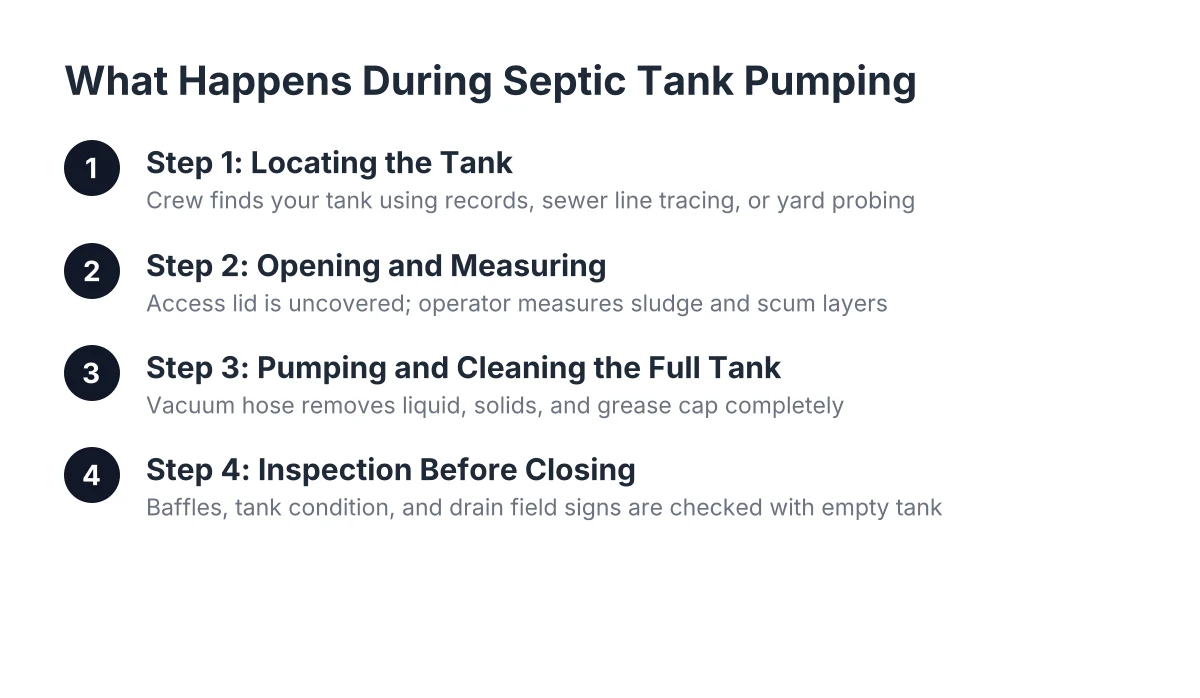
    A professional septic tank pumping visit follows a clear sequence: locate the tank, open the access lid, measure the sludge and scum layers, pump out all contents with a vacuum truck, break up and remove the settled solids, and check the tank's basic condition before closing it back up. The whole visit typically takes one to a few hours depending on tank access and condition.

    Here's each step in more detail, so you know what to expect when the truck pulls up to your Hesperia property.

    Step 1: Locating the Tank

    First, the crew has to find your tank. On newer Hesperia homes this is easy; the lid is at grade or under a few inches of soil, and county records or as-built drawings show where it sits. On older High Desert properties, the tank can be buried under decades of dirt, a patio, or landscaping nobody remembers installing.

    A septic crew that offers septic tank locating will probe the yard, follow the sewer line out from the house, or use records to narrow it down. If you've owned the home a while, sketch the tank location once it's found and keep that sketch. It saves time and money on every future visit.

    Step 2: Opening and Measuring

    Next, the crew uncovers the access lid and opens the tank. Before pumping anything, a good operator looks at what's inside. The tank holds three layers: a scum layer of grease and floating solids on top, liquid in the middle, and sludge on the bottom.

    The thickness of the sludge and scum layers tells the real story. Thick layers mean the tank was overdue; thin layers mean you're on a good schedule. This measurement is also your best evidence for how often your specific household needs pumping, which beats any generic rule of thumb.

    Step 3: Pumping and Cleaning the Full Tank

    Then the vacuum hose goes in. The truck pulls out the liquid first, but the job isn't done there. The crew uses the hose, and sometimes a tool to break up compacted sludge, to remove the solids from the bottom and the grease cap from the top.

    This is the difference between septic tank pumping and septic tank cleaning done right. Everything comes out. If someone quotes you a strangely low number and finishes in twenty minutes on a full tank, ask what they left behind.

    Step 4: The Inspection Before the Lid Goes Back On

    Finally, with the tank empty, the operator gets the only clear look anyone will have at your system for years. A basic inspection during pumping checks:

    • The inlet baffle, which keeps incoming waste from shooting across the tank
    • The outlet baffle or filter, which keeps solids from escaping into the drain field
    • Cracks, root intrusion, or signs the tank is deteriorating
    • Water flowing back into the tank from the drain field, which can signal a saturated or failing field
    • The condition of lids and risers

    For example, backflow from the outlet pipe is one of the earliest visible signs of drain field trouble. Catching it during a routine pump-out gives you options. Discovering it during a sewage backup on a Saturday night does not.

    How Septic Tank Pumping Prices Are Actually Set

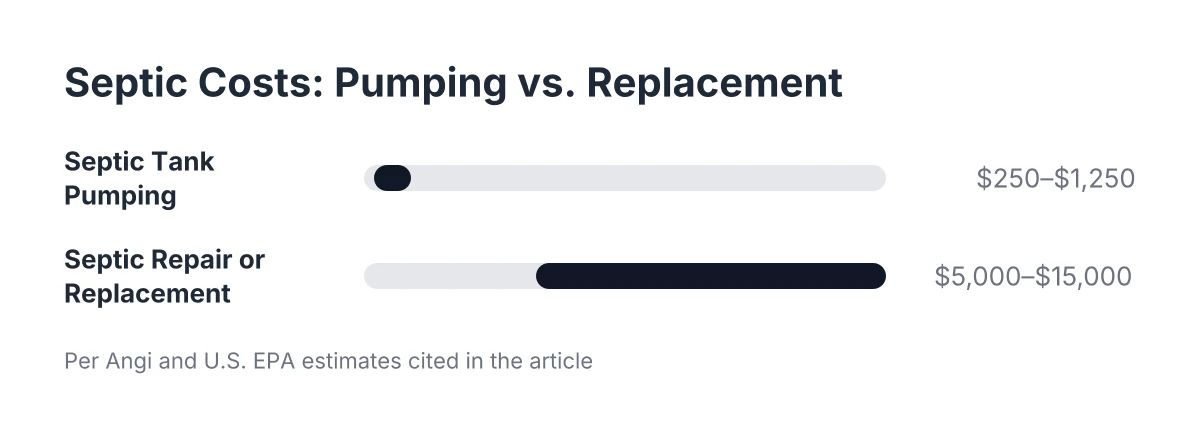
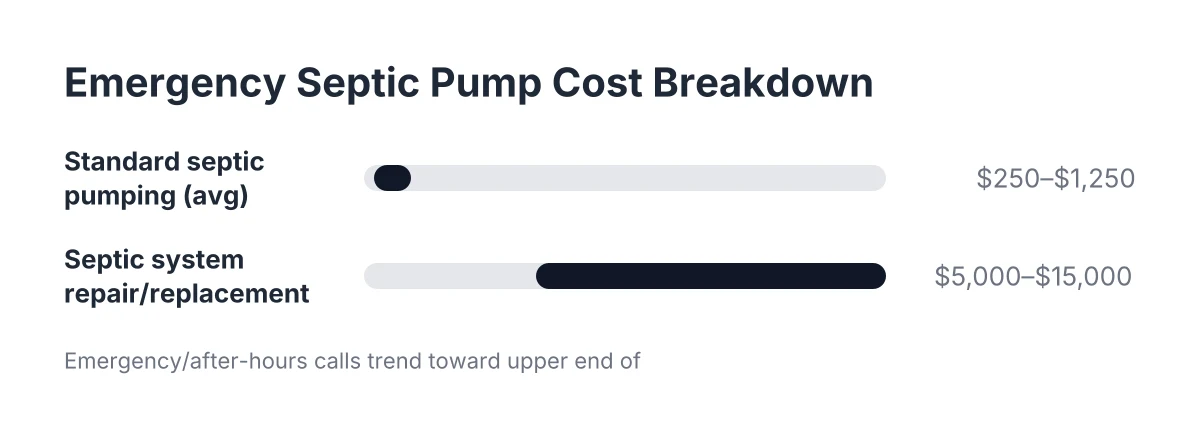
    Septic tank pumping prices depend on a handful of concrete factors: the size of your tank, how full it is, how hard the tank is to find and access, whether it's a routine visit or an emergency call, and local disposal fees for hauling the waste. According to Angi data, septic tank pumping averages $427 nationally, with a typical range of $250 to $1,250 or more depending on tank size and location.

    Let's break down what moves the number up or down in the High Desert:

    • Tank size. Bigger tanks hold more waste, take longer to pump, and fill more of the truck. Larger homes usually have larger tanks.
    • Tank condition. A tank that hasn't been pumped in ten years has thick, compacted sludge that takes longer to remove than a tank on a regular schedule.
    • Access. A lid at grade level costs less to service than a tank buried two feet down under landscaping. If the crew has to dig, expect that reflected in the price. Risers, which extend the lid to ground level, pay for themselves over a few visits.
    • Locating work. If nobody knows where the tank is, septic tank locating adds time before pumping even starts.
    • Timing. Emergency septic pumping at night or on a weekend generally costs more than a scheduled weekday visit. That's true across the industry, and it's the single best financial argument for staying on a maintenance schedule.

    However, be careful comparing quotes on price alone. A low quote that covers pumping liquid only, with sludge removal as a surprise add-on once the lid is open, often ends up costing more than an honest all-in number. Ask what the quote includes before the truck arrives.

    Septic Tank Pumping Prices vs. the Cost of Neglect

    Here's the comparison that matters more than any price list. The U.S. Environmental Protection Agency estimates that septic repair or replacement typically runs $5,000 to $15,000. Routine pumping, by contrast, sits in the hundreds. Skipping a few hundred dollars of maintenance to risk a five-figure septic system repair cost is a bad trade every time.

    Consider a scenario any Hesperia homeowner can picture. A family buys a home and never thinks about the septic tank because nothing seems wrong. Six years later, sludge has built up past the outlet, solids have been washing into the drain field the whole time, and the field soil is clogging. The first visible symptom is sewage backing up into the hall bathroom on a holiday weekend.

    At that point, the bill isn't one pump-out. It's an emergency call, plus a camera or inspection to diagnose the drain field, plus whatever repair the diagnosis shows. As a result, the cheapest septic service you will ever buy is the routine one you schedule before anything goes wrong.

    One honest caveat: pumping is maintenance, not a cure. If your drain field is already failing, pumping the tank buys you days or weeks, not a fix. A trustworthy operator will tell you that at the tank, and a drain field problem needs a professional diagnosis, not another pump-out.

    How Often Should You Pump and Inspect a Septic Tank?

    The U.S. Environmental Protection Agency recommends having the average household septic system inspected at least once every three years by a professional, and alternative systems with pumps, float switches, or other mechanical parts inspected once a year. Pumping frequency varies by household size, tank size, and water use, so let the sludge measurements from your last visit set your actual schedule.

    In addition, some households build sludge faster than average. Homes with garbage disposals send far more solids into the tank; the Massachusetts Department of Environmental Protection recommends annual pumping for households with disposals regardless of tank size. If you run a disposal daily, plan on a shorter interval than your neighbors.

    A simple septic maintenance schedule for a Hesperia home looks like this:

    1. Get the tank pumped and inspected now if you can't remember the last time it was done.
    2. Write down the date, the sludge and scum measurements, and anything the crew flagged.
    3. Set the next inspection based on those measurements, using the EPA's three-year interval as your outer limit.
    4. Keep the tank location sketch and service records with your house documents.

    That's the whole system. Four items, and it keeps most homeowners off the emergency-call list permanently.

    Daily Habits That Protect Your Tank and Drain Field

    Between pump-outs, what goes down your drains decides how fast the tank fills and how long the drain field lasts. The rules are simple, but they only work if everyone in the house follows them.

    Keep these out of a septic system:

    • Wipes of any kind, including ones labeled flushable
    • Grease, cooking oil, and fat washed down the kitchen sink
    • Paper towels, feminine products, and diapers
    • Paint, solvents, and harsh chemicals that kill the bacteria doing the work inside your tank
    • Coffee grounds and food scraps in volume

    Protect the drain field itself too. Never park or drive on it; vehicle weight compacts the soil and crushes pipes. Don't plant trees near it, since roots seek out the moisture in the lines. In addition, direct roof gutters and yard drainage away from the field, because a waterlogged field can't absorb wastewater from the house.

    Water use matters as well. Spreading laundry across the week instead of running five loads on Saturday gives the tank time to settle solids between surges. Fixing a running toilet stops hundreds of gallons a day from flooding the system for no reason.

    Warning Signs That Mean Call Someone Today

    The early signs of septic system failure are slow drains throughout the whole house, gurgling pipes, sewage odor indoors or in the yard, wet or unusually green patches over the tank or drain field, and a septic alarm sounding. Any one of these means the system needs attention; sewage backing up into tubs or floor drains means it needs attention today.

    Note the difference between one slow drain and every drain. One slow sink is usually a clog in that line, a plumber-type problem. Every fixture draining slowly at once points to the tank or the drain field, a septic problem. Many Hesperia homeowners learn this distinction the hard way after a plumber visit that couldn't fix the real issue.

    If sewage is already backing up, stop running water in the house. Every flush and every load of laundry adds to what's coming back at you. Then call a septic service, not a general plumber, and tell them what you're seeing: backup location, odors, wet spots, and whether an alarm is sounding. Those details help the crew show up ready.

    What to Ask Before You Book Septic Service in Hesperia, CA

    When you're comparing septic tank services prices from local operators, the questions you ask matter more than the number on the quote. A few minutes on the phone tells you a lot.

    Ask these before booking:

    • Does the quote cover pumping the full tank, including sludge and scum, or liquid only?
    • Is a basic inspection of baffles and tank condition included while the tank is open?
    • What do digging, locating, or extra-heavy sludge cost if they come up?
    • What are the disposal fees, and are they included?
    • For emergency calls, what's the after-hours difference, stated up front?

    A local, septic-focused crew should answer all of these plainly. Vague answers on what's included are how a $400 job becomes an $800 invoice. You're not being difficult by asking; you're being the kind of customer who gets straight treatment.

    Location matters too. A crew based in the High Desert knows Hesperia's soil, common tank setups, and local disposal requirements, and doesn't route your call through a national dispatch center that has never seen a drain field.

    The Bottom Line for Hesperia Homeowners

    Septic tank pumping prices are set by real, physical factors: tank size, sludge buildup, access, and timing. National data from Angi puts the average around $427, while the EPA pegs repair or replacement at $5,000 to $15,000. The gap between those two numbers is the entire argument for maintenance.

    A professional visit is more than emptying a tank. It's the sludge measurement that sets your real schedule, the baffle check that protects your drain field, and the early warning if something bigger is developing. Done on schedule, it's a routine expense in the hundreds. Skipped for years, it becomes an emergency in the thousands.

    So if you can't remember the last time your tank was pumped, that's your answer. Get it pumped and inspected, write down what the crew finds, and put the next date on the calendar. That one habit is what separates homeowners who never think about their septic system from homeowners searching for emergency septic pumping at 8pm on a Saturday.

    If you need your septic tank pumped, Hesperia Septic can help.

    Related Reading