When sewage is backing up into your shower at 11 p.m., understanding the emergency septic pumping cost is suddenly the most urgent number in your life. You need to know two things fast: what this is going to cost, and whether a crew will actually pick up the phone and show up tonight. This guide walks through both. It covers what drives the cost of septic tank pumping in Hesperia, CA, why emergency calls run higher than scheduled ones, and what to do while the truck is on its way.
The short version: pricing is not random. A handful of concrete factors set the number, and most of them are things you can see or figure out before the crew arrives. Knowing them puts you in a better position to compare quotes, spot padding, and avoid paying for problems you do not have.
What a Septic Tank Pumping Price Actually Covers
A pumping visit is more than a truck and a hose. When a crew pumps your tank, they drive a vacuum truck to your property, open the tank access, pump out the liquid, scum, and sludge layers, and check the tank's basic condition while it is empty. The waste does not stay on the truck forever; it gets hauled to a treatment facility for proper disposal, according to the New Hampshire Department of Environmental Services. Disposal fees are built into what you pay.
Therefore, the price on your invoice reflects the truck, the crew's time on site, the volume pumped, and the haul-and-dump cost on the back end. That baseline exists whether you scheduled the visit three weeks ago or called in a panic on a Sunday. Everything else on top of the baseline comes from the factors below.
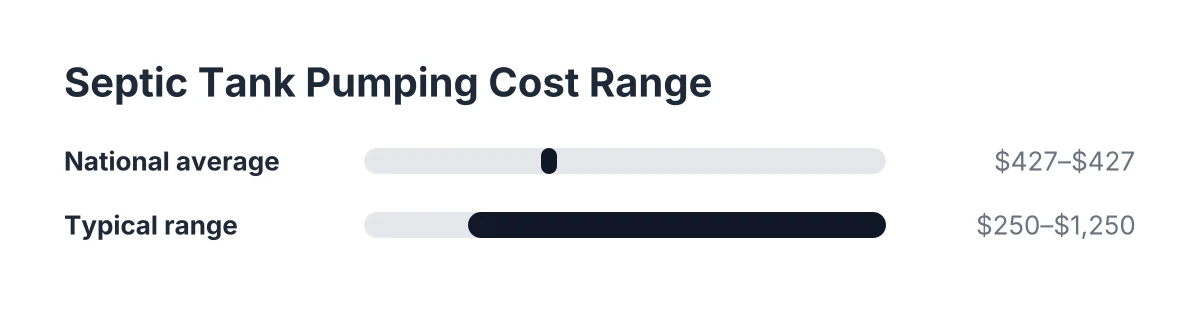
For context on the baseline itself: according to Angi, septic tank pumping averages $427 nationally, with a range from $250 to $1,250 or more depending on tank size and location. Your number in Hesperia will land somewhere in that spread based on the specifics of your property and your timing.
Factors Driving the Cost of Emergency Septic Pumping
No two pump-outs cost exactly the same, but the variables are consistent. Here are the ones that matter most, roughly in order of how much they move the number.
Tank size and how full it is
A bigger tank holds more waste, and pumping more gallons takes more time and more disposal capacity. If you search for something like "price 1000 gallon septic tank pumping cost," you are already on the right track, because gallons pumped is the core unit of the job. If you do not know your tank size, that is normal; a lot of Hesperia homeowners bought their house without ever seeing the septic paperwork. The crew can usually estimate size once the tank is open.
How full the tank is matters too. A tank that has gone years past its service interval carries a thick sludge layer that takes longer to break up and remove. In addition, most emergency backup calls trace back to exactly this: a tank left unpumped long enough that solids built up and pushed waste back toward the house. Heavier buildup means more time on site, and time is part of the price.
Access: the single biggest surprise on the invoice
The crew has to reach your tank lid to pump it. If the lid sits under two feet of dirt with no riser, someone has to dig, and digging costs money. This is the factor that catches the most homeowners off guard, and it is the one you have the most control over.
Two practical points follow from this. First, if you know where your lid is, expose it before the truck arrives; that alone can trim a meaningful digging fee off the bill. Second, if your tank is buried deep and gets pumped every few years, ask about installing risers while the tank is open. Risers bring the access point to grade level, so every future visit skips the shovel work. For a tank that is expensive to dig out, the riser often pays for itself in one or two service visits.
If you have no idea where the tank even is, that is a solvable problem too. Septic tank locating is a standard part of service in Hesperia, and finding the tank once beats guessing every time you need service.
Timing: emergency versus scheduled service
An emergency call costs more than a scheduled one. That is not a penalty; it reflects what the crew has to do to serve you. A same-day or after-hours response means rearranging routes, running a truck outside normal hours, and getting to you before the next scheduled customer. When sewage is backing up into the house, that speed is worth paying for, but it is a real cost driver.
For example, suppose a Hesperia homeowner books a routine pump-out for a Thursday morning three weeks out, with the lid already exposed. That is the cheapest version of this service. Now suppose the same homeowner instead waits until the tank overflows on a Saturday night, the lid is buried, and nobody knows where it is. Same tank, same gallons, but the second scenario adds after-hours dispatch, locating, and digging. The gap between those two invoices can be several hundred dollars, and every dollar of it is avoidable with a calendar reminder.
This is the honest math behind maintenance planning. If you are the type who wants to stay ahead of problems, scheduling routine service is the single most reliable way to keep your septic tank pumping price at the low end of the range.
Emergency Septic Pumping Cost in the High Desert
Pump-out pricing also depends on how many trucks operate in an area relative to how many septic-served homes need them. Hesperia and the surrounding High Desert have a large base of homes on septic, which supports local crews and keeps routine pricing competitive. However, when a storm or a holiday weekend spikes demand, availability tightens and emergency slots get harder to book. The emergency septic pumping cost rises noticeably when demand peaks, and searching "residential septic tank pumping near me" during a regional surge will show you that reality fast.
This is one reason a genuinely local crew matters. A national call center dispatches whoever is available, from wherever they are. A Hesperia-based crew is already in the area, knows the local soil and lot layouts, and does not bill you for a long drive from another county.
What condition the crew finds
Finally, the visit itself can reveal issues that change the scope. A cracked lid, a damaged baffle, a clogged inlet line, or signs that the drain field is not accepting water are all things a crew can spot once the tank is open. Diagnosing those is separate from pumping, and fixing them is separate again.
Here is the trade-off worth understanding: repairs cost far more than pumping. The U.S. Environmental Protection Agency estimates septic repair or replacement typically runs $5,000 to $15,000. That figure is why routine pumping is cheap insurance, and it is also why you should be cautious with any company that finds expensive problems on every single visit. A good crew shows you what they found, in the tank, before you approve anything beyond the pump-out.
Sewage Backing Up Right Now? Do This First
If you called this article up mid-crisis, here is the triage sequence while you wait for a crew. These steps limit damage; they do not fix the problem.
- Stop putting water into the system. No flushing, no showers, no laundry, no dishwasher. Every gallon you send down a drain has nowhere to go but back up.
- Check for a running toilet or dripping fixture. According to the U.S. Environmental Protection Agency, a single leaky or running toilet can push as much as 200 gallons of extra water per day into a septic system. Shut the toilet's supply valve if it is running.
- If your septic alarm is going off, silence it but do not ignore it. The alarm means the system's pump or water level needs attention. Note whether it is a steady light or flashing, and tell the crew when you call.
- Keep people and pets away from any wet or smelly area in the yard. Surfacing sewage is a health hazard, not just a smell problem.
- Find and expose the tank lid if you safely can. This speeds up the visit and can lower the bill.
- Call a local septic crew, not a general plumber. A plumber can snake a line, but a backed-up septic tank needs a vacuum truck. Calling the right trade first saves you a wasted service fee.
There is no reliable way to stop a septic backup temporarily beyond cutting water use. Chemicals and additives will not empty a full tank; commercial additives marketed to dissolve sludge lack strong scientific backing, according to Washington State University Extension. The fix is pumping, and the goal of triage is simply to buy time without making the mess worse.
Why After-Hours Availability Is a Pricing Factor Worth Paying For
When you are comparing emergency septic service options at night, the first filter is brutally simple: who answers the phone. A quote you cannot reach is not a quote. Real after-hours availability means a person picks up, asks the right questions, and gives you a straight read on timing and cost before a truck rolls.
That phone call should also calm you down, because a crew that handles septic backup and overflow response regularly has heard your exact situation before. They will ask whether sewage is coming up inside the house or pooling in the yard, whether the alarm is sounding, when the tank was last pumped, and whether you know where the lid is. Your answers shape both the urgency and the estimate, which means the price you hear reflects your actual situation rather than a generic worst case.
One more thing a calm phone conversation does: it protects you from panic pricing. Under pressure, people say yes to anything. A crew that explains what drives the number, before arriving, is showing you they have nothing to hide in the invoice.
Getting the Most Value Out of a Pump-Out Visit
If the truck is coming anyway, use the visit fully. Inspecting a tank costs close to what pumping it costs, since both require the same trip, the same access, and the same open lid. As a result, it usually makes more financial sense to pump and inspect in one visit than to pay separately for an inspection-only diagnosis. An empty tank is also the only tank a crew can inspect properly, since the walls, baffles, and inlet and outlet are visible.
The EPA recommends a professional septic inspection at least every three years for the average household, and once a year for systems with electrical float switches, pumps, or mechanical components. Pairing that inspection with your pump-out means you are not paying for two truck rolls to accomplish what one visit covers.
For pumping frequency itself, usage matters more than the calendar. Penn State Extension notes that for an active family of four, pumping every two to three years is generally advisable because of higher solids and water volume. A retired couple in the same house could go longer. If you just bought a home in Hesperia and have no service records, treat the first pump-out as your baseline: the crew can tell you how full the tank was and suggest an interval from there.
Comparing Septic Tank Pumping Prices in Hesperia Without Getting Burned
Quotes are hard to compare over the phone because so much depends on what the crew finds on site. Still, you can pressure-test any quote by asking a few pointed questions. In 2026, with prices varying widely by region and situation, these questions matter more than the headline number.
- What tank size does this quote assume, and what happens to the price if mine is bigger or smaller?
- Does the price include digging to the lid, or is that extra, and at what rate?
- Is disposal included, or billed separately?
- Is there an after-hours or emergency surcharge, and how much?
- If you find a problem in the tank, will you show it to me before quoting a repair?
A company that answers these directly is telling you they price on real factors, not on your desperation. A company that dodges them, or quotes a number too good to be true before knowing anything about your tank, is a red flag either way. Lowball phone quotes tend to grow on site; inflated ones bank on you not shopping around.
One honest limitation: no article can tell you your exact price, because access, tank condition, and timing are only knowable at your property. If your system has an aerobic unit, pumps, or other mechanical components, the service picture gets more involved than a standard pump-out, and you should have a professional evaluate it rather than guessing from general ranges.
The Cheapest Emergency Is the One You Never Have
Everything in this guide points the same direction. The high end of the septic tank pumping price range belongs to buried lids, unknown tanks, years of neglect, and midnight phone calls. The low end belongs to homeowners who know where their tank is, keep the lid accessible, and pump on a schedule tied to how their household actually uses the system.
If nothing is wrong right now, that is exactly the moment to act. Book a routine pump-out, have the crew locate and expose the tank if needed, and ask them to recommend an interval based on what they find. You will pay the calm-Tuesday price instead of the Saturday-night price, and you will know your system's condition instead of wondering. For homeowners in Hesperia, CA, that one scheduled visit is the difference between a line item on the household budget and a sewage cleanup story your neighbors tell for years.
If you need your septic tank serviced, Hesperia Septic can help.
Prefer to talk it through? Call (760) 249-7872 — a quick call is usually the fastest way to get a straight answer for your situation.
Leave a Reply