If you just bought land in Hesperia, or you are about to close on a property where the seller cannot tell you a single thing about the septic system, a septic inspection checklist is the tool that turns a mystery into a decision. There are no records. There is no visible lid. Maybe there is not even proof the tank exists where the seller thinks it does. This guide walks through what a professional inspection covers, step by step, so you know what to ask for, what the report should tell you, and how to use it before you commit money.
This is not a printable template you fill out yourself with a flashlight and hope. Plenty of those exist online. Instead, this is the working checklist a septic crew runs through on a real property, explained in plain language, so you can evaluate whether an inspection is worth it, what a thorough one includes, and what to do if the results come back bad.
Why a Checklist Matters When There Are No Records
A septic inspection with no records starts from zero. On a property with paperwork, the inspector already knows the tank size, the layout, and the last pumping date. On a High Desert lot with nothing, every one of those facts has to be discovered on site. That is why the checklist matters; it makes sure nothing gets skipped just because nothing was documented.
More than one in five U.S. households depend on individual septic systems or small community cluster systems to treat their wastewater, according to the U.S. Environmental Protection Agency. Rural and semi-rural areas like Hesperia run well above that. So the odds are high that the property you are looking at has a septic system, whether anyone can point to it or not.
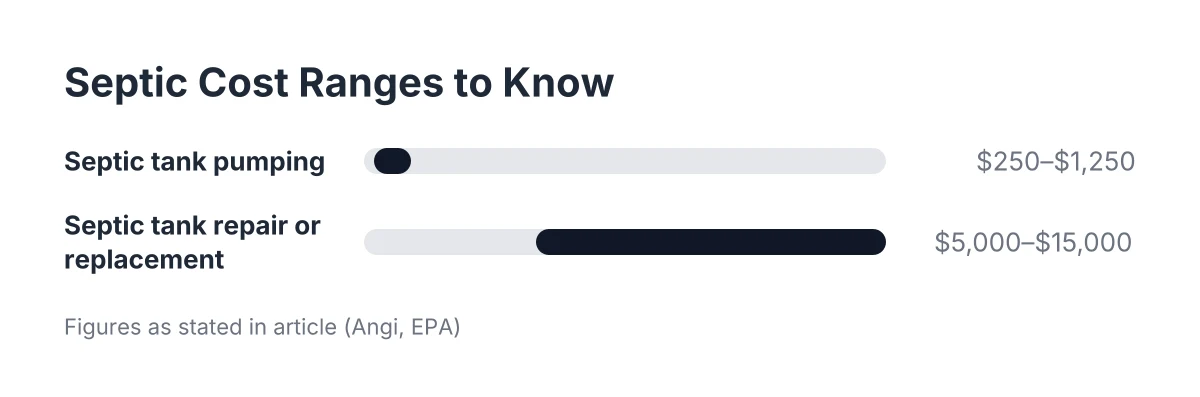
Here is the core problem for a buyer: a septic system that looks fine from the surface can be one flush away from failure. The tank could be cracked. The drain field could be saturated. Additionally, the baffles could be gone. None of that shows up when you walk the lot. The EPA estimates septic tank repair or replacement typically costs between $5,000 and $15,000, far more than routine pumping. That is the number you are protecting yourself against when you order an inspection before closing.
Step One on the Septic System Inspection Checklist: Find the Tank
Every professional septic inspection checklist starts with locating the tank, because nothing else can happen until it does. On a property with no records, this is its own job. A crew uses a combination of clues and tools to narrow the search, then confirms the location physically before any digging happens.
Here is roughly how septic tank locating works on a lot with no paperwork:
- Trace the main sewer line. The crew finds where the main drain exits the house, usually through the foundation or crawl space, and follows its direction into the yard.
- Read the ground. Slight depressions, greener or browner patches, and old disturbed soil can mark a tank or drain field, even in desert ground.
- Probe or use a locator. A soil probe or an electronic locator sent through the sewer line pinpoints the tank without tearing up the whole yard.
- Expose and mark the lid. Once found, the crew digs to the access lid and marks the spot so you never have to search again.
- Check for a second compartment or second tank. Older High Desert properties sometimes have setups that do not match modern assumptions, so the crew confirms what is actually in the ground.
For a buyer, that marked lid alone has real value. Suppose you are in escrow on five acres outside Hesperia and the seller shrugs when you ask where the tank is. A locate-and-mark visit answers the first question, and it sets up everything that follows on the inspection.
What a Professional Checks Once the Tank Is Open
With the lid exposed, the inspection moves from finding the system to judging it. This is the part most free septic tank inspection form downloads gloss over, because the meaningful checks require opening the tank and often pumping it. A tank full of wastewater hides its own condition; you cannot see a crack through three feet of sludge.
A thorough on-site inspection covers these points:
- Liquid level before pumping. A level above the outlet pipe suggests a drain field that is not accepting water. A level below normal can mean the tank is leaking into the soil.
- Scum and sludge measurement. The crew measures both layers. Heavy sludge tells you the tank went too long without septic tank pumping, which stresses the whole system.
- Inlet and outlet baffles. These parts keep solids out of the drain field. Missing or corroded baffles are a common, fixable finding that still matters for the purchase price.
- Tank walls and lid condition. After pumping, the inspector looks for cracks, root intrusion, and deterioration, especially in older concrete tanks.
- Signs of past backups. Staining above the normal water line inside the tank shows the system has backed up before, even if the seller never mentioned it.
- Flow test from the house. Running water from inside confirms wastewater actually reaches the tank and moves through it at a normal rate.
Each item earns its place on the septic inspection checklist because each one catches a different failure. A tank can pass four of these checks and fail on the fifth, and the fifth is the one that costs you after closing.
Why Pumping During the Inspection Changes What You Learn
An inspection paired with septic tank pumping tells you far more than a look through the lid. Pumping empties the tank so the inspector can see the floor, the walls, and the baffles directly. It also resets the clock on maintenance, so whatever the report says, you start ownership with an empty tank and a known baseline.
The trade-off is cost. According to Angi, septic tank pumping averages $427, ranging from $250 to $1,250 or more depending on tank size and location. On a property you might not keep, that can feel like money at risk. However, weigh it against the EPA's $5,000 to $15,000 repair figure. Paying for a pump-and-inspect that kills a bad deal is one of the cheaper outcomes available to you.
Checking the Drain Field, the Part Nobody Can See
The drain field decides whether the whole system works, and it fails more expensively than the tank. In Hesperia's soil, a drain field can look like ordinary dirt right up until it stops absorbing water. A professional checks it indirectly, since digging it up is neither practical nor necessary in most cases.
Drain field checks typically include:
- Surface conditions. Standing water, soggy ground, or sewage odor over the field area are failure signs, even in dry desert weather.
- Vegetation patterns. A stripe of unusually lush growth in an otherwise dry yard often traces the field lines and can flag saturation.
- Liquid level behavior in the tank. If the tank refills unusually fast after pumping, or the level sat above the outlet before pumping, the field may be rejecting water.
- Distribution box condition, where accessible. A tilted or clogged distribution box sends all the wastewater to one field line and wears it out early.
For example, say a buyer walks a two-acre parcel in January and everything looks dry and normal. The inspection finds the tank liquid level two inches above the outlet pipe. That single measurement points to a struggling drain field, and it changes the negotiation before a dollar changes hands. That is the kind of finding a checklist-driven inspection exists to surface.
Signs of Septic System Failure You Can Spot Yourself
Before you even order an inspection, some warning signs are visible to anyone walking the property. None of them replaces a professional inspection, but any of them should push the inspection higher on your priority list. Watch for slow drains inside the house, gurgling from fixtures, sewage smell near the yard, wet spots over the tank or field, and unusually green grass in a dry lot.
However, the absence of these signs proves nothing. A system can be months from failure and show none of them, which is exactly why buyers with no records order a full inspection rather than trusting a walk-around.
What the Written Report Should Give You
The deliverable matters as much as the inspection itself. If you are buying, you need paper you can hand to a lender, an escrow officer, or the county. A verbal "looks okay" from a crew helps nobody at the closing table. A useful written inspection report should include:
- The marked location of the tank, lids, and, where identifiable, the drain field
- Measured scum and sludge levels and the liquid level at arrival
- Condition of baffles, lids, and visible tank structure
- Whether the tank was pumped as part of the visit
- Any signs of past backup, leakage, or drain field stress
- Recommended next steps, from routine maintenance to repair evaluation
That report becomes your negotiating document. In 2026, lenders and county offices in San Bernardino County commonly want documented septic condition on properties changing hands, and a dated report with measurements carries weight that a checkbox form does not. If your transaction requires a specific county form, confirm that before booking so the inspection produces the paperwork your escrow actually needs.
One honest limitation: a standard inspection evaluates what is observable on that day. It cannot guarantee future performance, and it cannot see inside buried field lines without excavation or specialized equipment. If the inspection flags serious drain field problems, the next call is to septic system repair contractors for a repair-level evaluation, which is a separate and deeper job than an inspection.
What Happens If the Inspection Comes Back Bad
A bad report is not the end of the deal; it is information you paid for. Buyers in this spot generally have three paths, and the right one depends on how much you want the property.
First, renegotiate. A documented drain field problem with a realistic repair range gives you concrete grounds to ask for a price reduction or a seller credit. Second, require repair before closing, with a follow-up inspection to confirm the work. Third, walk away. On a property where the system needs full replacement and the lot barely supports a new field, walking is sometimes the only sane answer.
The buyers who get hurt are the ones who skip the inspection to keep escrow moving, then inherit a failed system with no recourse. A locate-and-inspect visit takes a small slice out of the timeline. A failed system after closing takes a large slice out of your savings.
After You Buy: Turning the Checklist Into a Maintenance Habit
Once you own the property, the same checklist logic becomes ongoing septic tank maintenance, and the habit is simpler than most new owners expect. The U.S. Environmental Protection Agency recommends a professional inspection at least once every three years for the average household. Systems with pumps, float switches, or other mechanical parts should be inspected once a year, per the same EPA guidance.
Between inspections, protect the system with everyday habits. Keep grease, wipes, and harsh chemicals out of the drains; grease in particular builds the scum layer faster than anything else a kitchen produces. Spread laundry loads across the week instead of running five in one day. Keep vehicles and heavy equipment off the tank and drain field area, which matters on rural lots where the driveway and the field can blur together. Skip the additive aisle too; the search for the best septic tank treatment usually ends with the boring answer that regular pumping outperforms anything poured down a drain.
The same discipline applies to commercial setups. A small restaurant or an RV park in the High Desert lives on the same principle: grease traps and holding tanks that get pumped on a recurring schedule never make the emergency list, while the ones serviced only when they smell always do. Whether the schedule is monthly, quarterly, or tied to a health code compliance date, the recurring habit is what keeps the operation open.
Using the Septic System Inspection Checklist Before You Sign Anything
For a land buyer with no records, the order of operations is simple. Locate the tank first, because nothing else can happen without it. Open and pump it so the inspection sees the real condition, not the surface of the wastewater. Check the drain field indirectly through liquid levels, surface signs, and flow. Then get everything in a written, dated report you can use in escrow.
That sequence is the whole septic system inspection checklist in one paragraph, and it is the difference between buying a property and buying a surprise. The checklist does not have to slow your purchase down; a locate, pump, and inspect visit is a single scheduled appointment on most residential properties. What it buys you is the one thing the seller could not provide: a clear, documented picture of what is actually in the ground before your money is.
If you need your septic tank serviced, Hesperia Septic can help.
Leave a Reply