Category: septic tank maintenance

  • Septic System Inspection Checklist: What Professionals Actually Look For

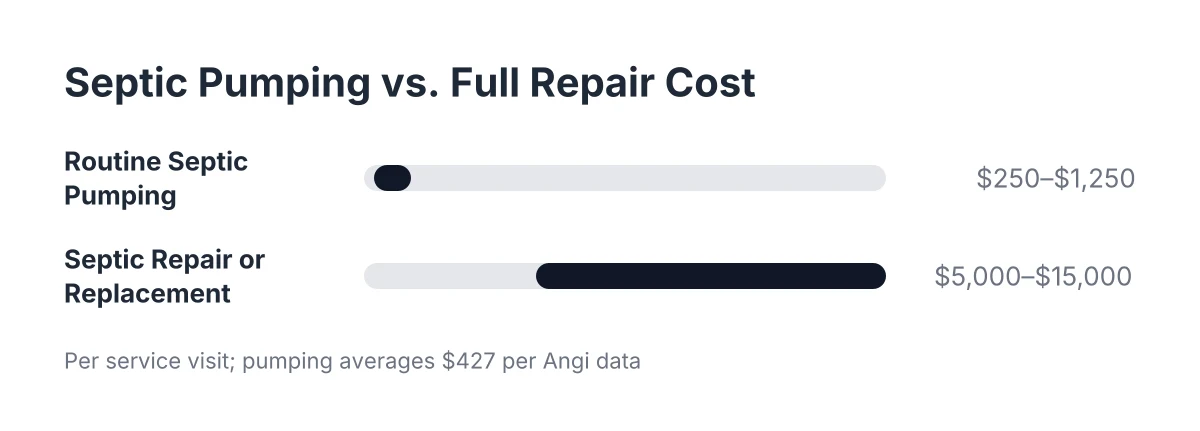
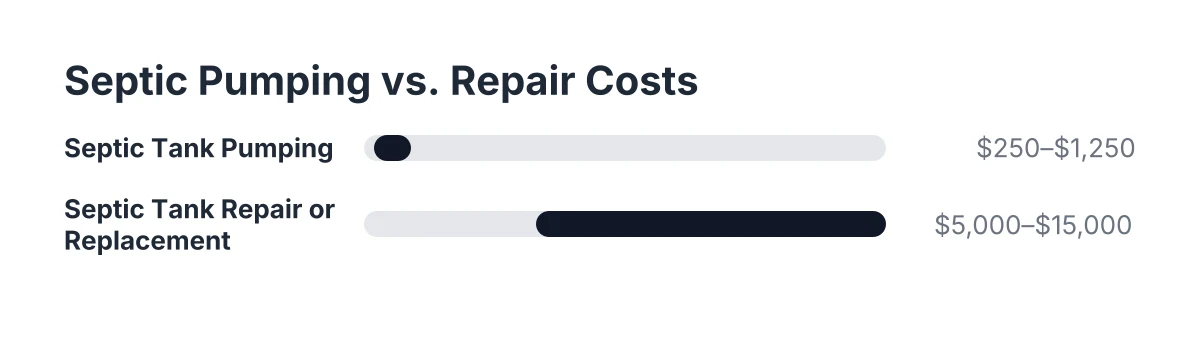
    Cost range chart for septic inspection, pumping, and repair from the checklist article
    Key septic costs cited in this guide, from routine pumping to full tank repair or replacement.

    If you just bought land in Hesperia, or you are about to close on a property where the seller cannot tell you a single thing about the septic system, a septic inspection checklist is the tool that turns a mystery into a decision. There are no records. There is no visible lid. Maybe there is not even proof the tank exists where the seller thinks it does. This guide walks through what a professional inspection covers, step by step, so you know what to ask for, what the report should tell you, and how to use it before you commit money.

    This is not a printable template you fill out yourself with a flashlight and hope. Plenty of those exist online. Instead, this is the working checklist a septic crew runs through on a real property, explained in plain language, so you can evaluate whether an inspection is worth it, what a thorough one includes, and what to do if the results come back bad.

    Why a Checklist Matters When There Are No Records

    A septic inspection with no records starts from zero. On a property with paperwork, the inspector already knows the tank size, the layout, and the last pumping date. On a High Desert lot with nothing, every one of those facts has to be discovered on site. That is why the checklist matters; it makes sure nothing gets skipped just because nothing was documented.

    More than one in five U.S. households depend on individual septic systems or small community cluster systems to treat their wastewater, according to the U.S. Environmental Protection Agency. Rural and semi-rural areas like Hesperia run well above that. So the odds are high that the property you are looking at has a septic system, whether anyone can point to it or not.

    Here is the core problem for a buyer: a septic system that looks fine from the surface can be one flush away from failure. The tank could be cracked. The drain field could be saturated. Additionally, the baffles could be gone. None of that shows up when you walk the lot. The EPA estimates septic tank repair or replacement typically costs between $5,000 and $15,000, far more than routine pumping. That is the number you are protecting yourself against when you order an inspection before closing.

    Step One on the Septic System Inspection Checklist: Find the Tank

    Every professional septic inspection checklist starts with locating the tank, because nothing else can happen until it does. On a property with no records, this is its own job. A crew uses a combination of clues and tools to narrow the search, then confirms the location physically before any digging happens.

    Here is roughly how septic tank locating works on a lot with no paperwork:

    1. Trace the main sewer line. The crew finds where the main drain exits the house, usually through the foundation or crawl space, and follows its direction into the yard.
    2. Read the ground. Slight depressions, greener or browner patches, and old disturbed soil can mark a tank or drain field, even in desert ground.
    3. Probe or use a locator. A soil probe or an electronic locator sent through the sewer line pinpoints the tank without tearing up the whole yard.
    4. Expose and mark the lid. Once found, the crew digs to the access lid and marks the spot so you never have to search again.
    5. Check for a second compartment or second tank. Older High Desert properties sometimes have setups that do not match modern assumptions, so the crew confirms what is actually in the ground.

    For a buyer, that marked lid alone has real value. Suppose you are in escrow on five acres outside Hesperia and the seller shrugs when you ask where the tank is. A locate-and-mark visit answers the first question, and it sets up everything that follows on the inspection.

    What a Professional Checks Once the Tank Is Open

    With the lid exposed, the inspection moves from finding the system to judging it. This is the part most free septic tank inspection form downloads gloss over, because the meaningful checks require opening the tank and often pumping it. A tank full of wastewater hides its own condition; you cannot see a crack through three feet of sludge.

    A thorough on-site inspection covers these points:

    • Liquid level before pumping. A level above the outlet pipe suggests a drain field that is not accepting water. A level below normal can mean the tank is leaking into the soil.
    • Scum and sludge measurement. The crew measures both layers. Heavy sludge tells you the tank went too long without septic tank pumping, which stresses the whole system.
    • Inlet and outlet baffles. These parts keep solids out of the drain field. Missing or corroded baffles are a common, fixable finding that still matters for the purchase price.
    • Tank walls and lid condition. After pumping, the inspector looks for cracks, root intrusion, and deterioration, especially in older concrete tanks.
    • Signs of past backups. Staining above the normal water line inside the tank shows the system has backed up before, even if the seller never mentioned it.
    • Flow test from the house. Running water from inside confirms wastewater actually reaches the tank and moves through it at a normal rate.

    Each item earns its place on the septic inspection checklist because each one catches a different failure. A tank can pass four of these checks and fail on the fifth, and the fifth is the one that costs you after closing.

    Why Pumping During the Inspection Changes What You Learn

    An inspection paired with septic tank pumping tells you far more than a look through the lid. Pumping empties the tank so the inspector can see the floor, the walls, and the baffles directly. It also resets the clock on maintenance, so whatever the report says, you start ownership with an empty tank and a known baseline.

    The trade-off is cost. According to Angi, septic tank pumping averages $427, ranging from $250 to $1,250 or more depending on tank size and location. On a property you might not keep, that can feel like money at risk. However, weigh it against the EPA's $5,000 to $15,000 repair figure. Paying for a pump-and-inspect that kills a bad deal is one of the cheaper outcomes available to you.

    Checking the Drain Field, the Part Nobody Can See

    The drain field decides whether the whole system works, and it fails more expensively than the tank. In Hesperia's soil, a drain field can look like ordinary dirt right up until it stops absorbing water. A professional checks it indirectly, since digging it up is neither practical nor necessary in most cases.

    Drain field checks typically include:

    • Surface conditions. Standing water, soggy ground, or sewage odor over the field area are failure signs, even in dry desert weather.
    • Vegetation patterns. A stripe of unusually lush growth in an otherwise dry yard often traces the field lines and can flag saturation.
    • Liquid level behavior in the tank. If the tank refills unusually fast after pumping, or the level sat above the outlet before pumping, the field may be rejecting water.
    • Distribution box condition, where accessible. A tilted or clogged distribution box sends all the wastewater to one field line and wears it out early.

    For example, say a buyer walks a two-acre parcel in January and everything looks dry and normal. The inspection finds the tank liquid level two inches above the outlet pipe. That single measurement points to a struggling drain field, and it changes the negotiation before a dollar changes hands. That is the kind of finding a checklist-driven inspection exists to surface.

    Signs of Septic System Failure You Can Spot Yourself

    Before you even order an inspection, some warning signs are visible to anyone walking the property. None of them replaces a professional inspection, but any of them should push the inspection higher on your priority list. Watch for slow drains inside the house, gurgling from fixtures, sewage smell near the yard, wet spots over the tank or field, and unusually green grass in a dry lot.

    However, the absence of these signs proves nothing. A system can be months from failure and show none of them, which is exactly why buyers with no records order a full inspection rather than trusting a walk-around.

    What the Written Report Should Give You

    The deliverable matters as much as the inspection itself. If you are buying, you need paper you can hand to a lender, an escrow officer, or the county. A verbal "looks okay" from a crew helps nobody at the closing table. A useful written inspection report should include:

    • The marked location of the tank, lids, and, where identifiable, the drain field
    • Measured scum and sludge levels and the liquid level at arrival
    • Condition of baffles, lids, and visible tank structure
    • Whether the tank was pumped as part of the visit
    • Any signs of past backup, leakage, or drain field stress
    • Recommended next steps, from routine maintenance to repair evaluation

    That report becomes your negotiating document. In 2026, lenders and county offices in San Bernardino County commonly want documented septic condition on properties changing hands, and a dated report with measurements carries weight that a checkbox form does not. If your transaction requires a specific county form, confirm that before booking so the inspection produces the paperwork your escrow actually needs.

    One honest limitation: a standard inspection evaluates what is observable on that day. It cannot guarantee future performance, and it cannot see inside buried field lines without excavation or specialized equipment. If the inspection flags serious drain field problems, the next call is to septic system repair contractors for a repair-level evaluation, which is a separate and deeper job than an inspection.

    What Happens If the Inspection Comes Back Bad

    A bad report is not the end of the deal; it is information you paid for. Buyers in this spot generally have three paths, and the right one depends on how much you want the property.

    First, renegotiate. A documented drain field problem with a realistic repair range gives you concrete grounds to ask for a price reduction or a seller credit. Second, require repair before closing, with a follow-up inspection to confirm the work. Third, walk away. On a property where the system needs full replacement and the lot barely supports a new field, walking is sometimes the only sane answer.

    The buyers who get hurt are the ones who skip the inspection to keep escrow moving, then inherit a failed system with no recourse. A locate-and-inspect visit takes a small slice out of the timeline. A failed system after closing takes a large slice out of your savings.

    After You Buy: Turning the Checklist Into a Maintenance Habit

    Once you own the property, the same checklist logic becomes ongoing septic tank maintenance, and the habit is simpler than most new owners expect. The U.S. Environmental Protection Agency recommends a professional inspection at least once every three years for the average household. Systems with pumps, float switches, or other mechanical parts should be inspected once a year, per the same EPA guidance.

    Between inspections, protect the system with everyday habits. Keep grease, wipes, and harsh chemicals out of the drains; grease in particular builds the scum layer faster than anything else a kitchen produces. Spread laundry loads across the week instead of running five in one day. Keep vehicles and heavy equipment off the tank and drain field area, which matters on rural lots where the driveway and the field can blur together. Skip the additive aisle too; the search for the best septic tank treatment usually ends with the boring answer that regular pumping outperforms anything poured down a drain.

    The same discipline applies to commercial setups. A small restaurant or an RV park in the High Desert lives on the same principle: grease traps and holding tanks that get pumped on a recurring schedule never make the emergency list, while the ones serviced only when they smell always do. Whether the schedule is monthly, quarterly, or tied to a health code compliance date, the recurring habit is what keeps the operation open.

    Using the Septic System Inspection Checklist Before You Sign Anything

    For a land buyer with no records, the order of operations is simple. Locate the tank first, because nothing else can happen without it. Open and pump it so the inspection sees the real condition, not the surface of the wastewater. Check the drain field indirectly through liquid levels, surface signs, and flow. Then get everything in a written, dated report you can use in escrow.

    That sequence is the whole septic system inspection checklist in one paragraph, and it is the difference between buying a property and buying a surprise. The checklist does not have to slow your purchase down; a locate, pump, and inspect visit is a single scheduled appointment on most residential properties. What it buys you is the one thing the seller could not provide: a clear, documented picture of what is actually in the ground before your money is.

    If you need your septic tank serviced, Hesperia Septic can help.

    Related Reading

  • Septic Tank Maintenance Terms Explained: A Plain-English Glossary

    septic tank maintenance glossary

    If you own a home on septic in Hesperia, or you're buying one, the quotes and inspection reports can read like another language. This septic tank maintenance glossary breaks down the words pumpers, inspectors, and real estate agents throw around, in plain English. Use it to read a quote line by line, ask better questions on the phone, and spot a problem before it turns into a backup. Every entry stands on its own, so you can jump straight to the word that confused you.

    • Septic Tank
    • Drain Field
    • Inlet and Outlet Baffles
    • Effluent
    • Riser
    • Scum and Sludge Layers
    • Septic Tank Pumping
    • Septic Tank Cleaning and Maintenance
    • Septic Inspection
    • Septic Tank Locating
    • Grease Trap Pumping
    • Emergency Septic Pumping
    • Septic Backup
    • Drain Field Failure
    • Hydro Jetting
    • Holding Tank
    • Access Lid

    Parts of Your Septic System

    Septic Tank

    A septic tank is a buried, watertight container that catches everything that drains out of your house and holds it long enough for solids to settle. Heavy solids sink to the bottom as sludge, grease floats to the top as scum, and the liquid in the middle flows out to the drain field. The tank does not make waste disappear; it just separates it. That is why regular septic tank pumping matters. Solids build up over time, and once they fill too much of the tank, they push out into places they should never go.

    Drain Field

    A drain field is the network of buried pipes or trenches where liquid from your septic tank soaks into the soil. It is also called a leach field. The soil does the final cleaning work, filtering the water before it rejoins the ground. Drain fields are the most expensive part of a septic system to replace, so most maintenance advice, including regular pumping, exists to protect this one component. Soggy grass or wet spots over the field are a warning sign worth acting on.

    Inlet and Outlet Baffles

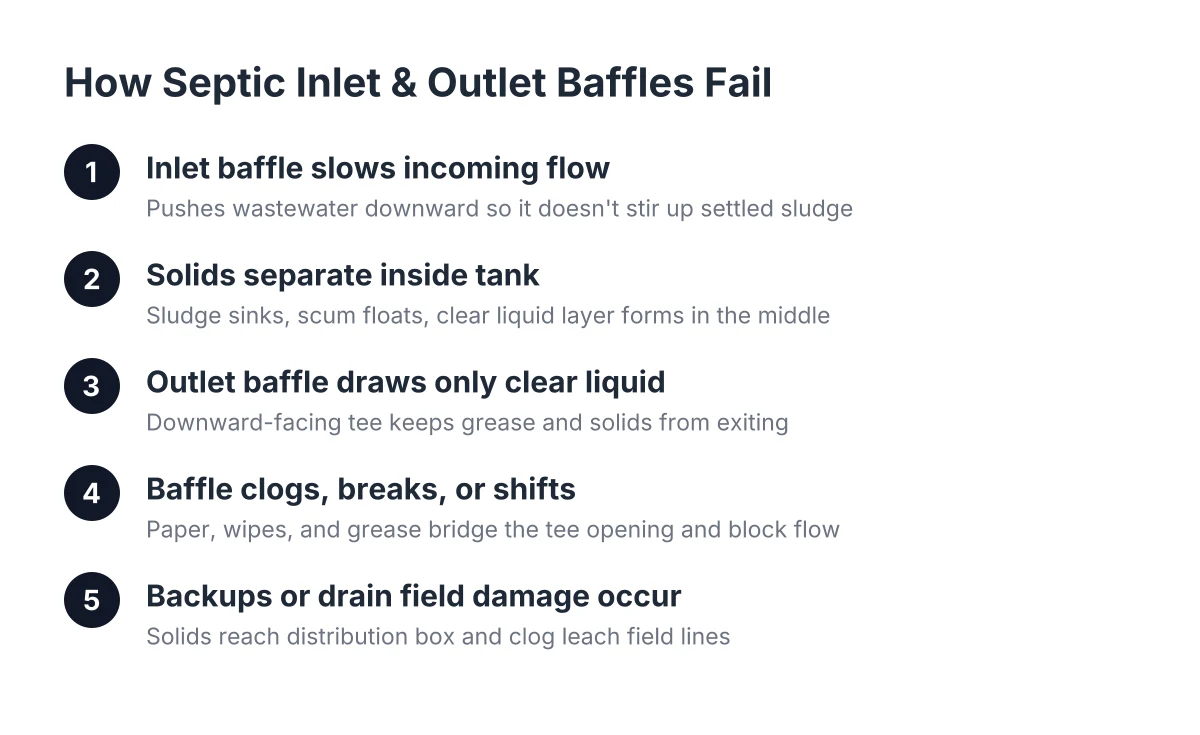
    A baffle is a fitting inside the septic tank that controls how wastewater enters and leaves. The inlet baffle slows incoming water so it does not stir up the tank. The outlet baffle blocks floating scum from escaping into the drain field. If an inspector says a baffle is broken or missing, take it seriously. Without a working outlet baffle, grease and solids flow straight to the drain field and shorten its life.

    Effluent

    Effluent means the liquid wastewater that leaves the septic tank after solids have settled out. It is the middle layer in the tank, below the floating scum and above the settled sludge. Effluent is what flows to your drain field. When a provider talks about effluent quality or an effluent filter, they mean keeping that liquid as free of solids as possible so the soil can handle it.

    Riser

    A riser is a pipe extension that brings your septic tank's access lid up to ground level. Without one, the crew has to dig down to the buried lid every time the tank needs pumping or inspection. If a quote includes installing a riser, that is a one-time cost that makes every future visit faster and cheaper on labor. Many older Hesperia properties have tanks with no risers at all, which is why septic tank locating is sometimes the first step of a job.

    Scum and Sludge Layers

    Scum is the layer of grease, oils, and floating debris on top of the liquid in a septic tank, and sludge is the layer of settled solids on the bottom. Together they tell a pumper how full your tank actually is. A tank can look fine from the lid while sludge quietly rises toward the outlet. Measuring these layers is how a provider decides whether you need pumping now or can wait, which is the honest core of septic tank maintenance.

    Services and What They Involve

    Septic Tank Pumping

    Septic tank pumping is the removal of sludge, scum, and liquid from your tank using a vacuum truck. It is the single most common septic service and the backbone of keeping a system healthy. Pumping resets the tank so solids have room to settle again instead of escaping to the drain field. If you have never seen the work itemized, this breakdown of septic tank pumping prices in Hesperia walks through what a pumping visit actually includes.

    Septic Tank Cleaning and Maintenance

    Septic tank cleaning means removing everything from the tank, including the compacted sludge stuck to the bottom and walls, not just the liquid on top. Some companies use "pumping" and "cleaning" interchangeably, and some charge differently for each, so ask which one a quote covers. A tank that has gone many years without service often needs a full cleaning rather than a quick pump. If a provider mentions extra time to break up hardened sludge, that is usually why.

    Septic Inspection

    A septic inspection is an evaluation of the tank, baffles, liquid levels, and often the drain field to judge the system's condition. Home buyers order inspections before closing, and owners order them when something seems off. An inspection tells you whether you are looking at routine service or a bigger repair. Getting one before you buy a property on septic can save you from inheriting someone else's failing drain field.

    Septic Tank Locating

    Septic tank locating is the process of finding a buried tank when no one knows where it is. Older homes often have no records, no risers, and no visible lids. A provider may probe the yard, follow the main drain line from the house, or use locating tools. If your quote includes a locating charge, it means the crew expects to spend time finding the tank before any pumping can start.

    Grease Trap Pumping

    Grease trap pumping is the removal of built-up fats, oils, and grease from a trap that catches them before they reach the septic system. Grease is one of the worst things for a septic tank because it does not break down and it clogs drain fields. Even without a formal trap, your kitchen habits matter. This guide on kitchen grease habits that cut septic system pumping cost covers what to keep out of the drain.

    Emergency Septic Pumping

    Emergency septic pumping is an urgent service call for a tank that is overflowing, backing up into the house, or about to. It costs more than scheduled service because the truck comes on short notice, sometimes after hours. The most reliable way to stay off the emergency list is a regular schedule, which this septic pumping maintenance plan for Hesperia lays out. A backup rarely gives much warning, so the terms in the next section help you catch trouble early.

    Problems, Warning Signs, and Quote Language

    Septic Backup

    A septic backup is wastewater flowing the wrong way, out of a full or blocked septic system and into your drains, tub, or toilet. It usually starts at the lowest drain in the house. A backup means the system has nowhere to send water, whether from a full tank, a clogged line, or a failed drain field. Slow drains and gurgling toilets often show up first. Treat those as the system asking for help, not a quirk to live with.

    Drain Field Failure

    Drain field failure means the soil around your leach field can no longer absorb wastewater, so the water surfaces in the yard or backs up into the tank. Common causes include years of solids escaping an overfull tank, grease buildup, and crushed pipes from vehicles driving over the field. Failure is the outcome every routine service is designed to prevent, because replacing a drain field costs far more than years of pumping. Sewage smell or lush, wet grass over the field are the classic signs.

    Hydro Jetting

    Hydro jetting is cleaning a clogged pipe with a high-pressure stream of water. In septic work, it usually targets the line between the house and the tank, or lines feeding the drain field. If a provider recommends jetting on top of pumping, it means the blockage is in a pipe, not just a full tank. Ask which line they plan to jet and why, so you understand what the added cost buys.

    Holding Tank

    A holding tank is a sealed tank that stores wastewater with no drain field, so everything that goes in must be pumped out. RVs, some cabins, and certain job sites use holding tanks. Unlike a septic tank, a holding tank fills fast and needs pumping on a regular basis by design. If a listing or quote says "holding tank" instead of "septic system," expect ongoing pumping as a normal cost of the property.

    Access Lid

    An access lid is the cover over the opening a crew uses to inspect and pump your septic tank. Most tanks have one or two lids, and they may sit under a foot or more of dirt. Quotes sometimes include a digging or excavation line item for exposing buried lids. Knowing where your lids are, and adding risers if you can, keeps that line item off future invoices. A full rundown of what routine visits cover is in this overview of septic tank service and maintenance in Hesperia.

    Using These Terms

    With these definitions, you can read a septic quote line by line and know whether the septic tank maintenance glossary helps you understand whether "cleaning," "locating," or "jetting" belongs on it. You can also describe a problem on the phone in the words a pumper actually uses, which gets you a straighter answer. Keep this reference handy the next time a report or estimate lands in your inbox.


    If you need your septic tank serviced, Hesperia Septic can help.

    Related Reading

  • How Much Does Septic Tank Maintenance Cost?

    septic tank pumping cost

    If you search for septic tank pumping cost, you will find pages full of made-up averages that have nothing to do with your tank or your property. The honest answer is that the price hinges on three things: the size of your tank, how easy it is to reach, and how long it has been since the last pumping. A tank that gets pumped on schedule with an accessible lid costs far less to service than a neglected tank buried under a patio. By the end of this guide, you will know exactly what drives the number and how to get a real quote for your Hesperia property instead of a guess from the internet.

    What Drives the Septic Tank Pumping Cost

    No two septic jobs price out the same. Here are the factors a crew actually looks at before they give you a number.

    Tank size

    Bigger tanks hold more waste, and more waste means more time on site and more volume to haul away. A small tank serving a two-bedroom house fills the truck less than a large tank serving a big family home. If you do not know your tank size, that is normal. Your county records may show it, a previous pumping receipt may list it, or a crew can tell you once they open the lid. If you have no records at all, septic tank locating is a service that finds the tank and answers the size question at the same time.

    How full and how neglected the tank is

    A tank pumped on a regular schedule has liquid waste that pumps out fast. A tank that has gone years too long builds up a thick, compacted layer of solids called sludge. Breaking up and removing heavy sludge takes more time, more water, and sometimes a second pass. If your drains are already slow or you have had a septic backup, expect the job to sit on the higher end. If you cannot remember your last pumping, read the signs your septic tank needs pumping now so you know what you are dealing with before you call.

    Access to the tank and lid

    The crew has to find your tank, expose the lid, and get a hose to it. A lid at grade level with a clear path from the driveway is the cheap version. A lid buried under two feet of dirt, a deck, or landscaping means digging, and digging means labor. Walk your yard before you call. If you can see your lids or risers, say so. If you have no idea where the tank is, mention that too, because locating adds a step to the job.

    Pumping only, or pumping plus cleaning and inspection

    Pumping removes the liquid and solids. Cleaning goes further, washing down the tank walls and removing the stubborn buildup pumping alone leaves behind. An inspection checks baffles, lids, and the general condition of the tank while it is open. Each added service adds cost, but skipping an inspection on an older tank can cost you more later. Our breakdown of septic tank pumping prices in Hesperia and what cleaning and inspection actually involve walks through the difference in detail.

    Emergency timing versus scheduled service

    A pumping you book a week out on a weekday costs less than a truck rolling out for a backup or overflow after hours. Emergency septic pumping exists because sewage in the house cannot wait, but urgency carries a premium with any provider. If your system is fine today, scheduling routine service on your own timeline is the single easiest way to stay on the low side of the price.

    Repairs the crew finds once the tank is open

    Pumping is the known part of the bill. The unknown part is what the open tank reveals. A cracked lid, a damaged baffle, or signs of drain field trouble turn a maintenance visit into a repair conversation. Septic system repair cost varies with what broke and how bad it is, so a good crew will show you the problem and quote the fix separately instead of folding a mystery charge into the pumping.

    Cost Factor Table

    Factor Pushes the price down when… Pushes it up when…
    Tank size The tank is small and serves a modest household The tank is large or serves a big home or property
    Tank condition Waste is mostly liquid from regular pumping Thick sludge has built up from years of neglect
    Access Lids are exposed or at grade with a clear path The lid is buried, paved over, or far from truck access
    Scope of service You need pumping only You add cleaning, inspection, or grease trap service
    Timing You schedule routine service in advance It is an emergency backup, overflow, or after-hours call
    Repairs found The tank, baffles, and lids check out fine The crew finds damage that needs separate repair work

    How to Get an Accurate Septic Tank Pumping Cost Estimate

    The fastest path to a real number is a short phone call with the right details ready. Have these on hand:

    • Your address in Hesperia or the High Desert area. Location tells the crew drive time and whether they know the soil and typical setups in your neighborhood.
    • Tank size and last pumping date, if known. Even a rough guess ("maybe five years ago") helps.
    • What you can see in the yard. Exposed lids, risers, wet spots, or nothing at all.
    • What is happening right now. Routine maintenance, slow drains, or an active septic backup. This changes both the urgency and the scope.

    A good quote spells out what is included: pumping the full tank (not just the liquid layer off the top), disposal of the waste, and whether locating, digging, cleaning, or inspection are part of the price or billed as extras. If a quote seems low, ask what it covers. Some low quotes cover a partial pump-out and leave the solids behind, which puts you right back where you started.

    Estimates differ between providers for real reasons: disposal costs, how they handle digging and locating, and whether they quote the whole job up front or itemize add-ons at the truck. Get the scope in writing, even if it is just a text message, so you can compare quotes on the same terms.

    Ways to Keep the Cost Down

    You cannot control your tank size, but you can control almost everything else.

    • Pump on a schedule, not on a symptom. Waiting for slow drains or a backup means heavier sludge, possible emergency pricing, and risk to your drain field. Drain field damage is where septic system replacement cost enters the conversation, and replacement is the expensive outcome everything else on this list helps you avoid.
    • Expose your lids before the crew arrives. If you know where the tank is, clearing dirt or planters off the lid saves the crew digging time, and time is what you pay for.
    • Keep records. A folder with your last pumping date, tank location, and any inspection notes means every future quote starts from facts instead of exploratory work.
    • Watch what goes down the drain. Grease is the big one. Fats harden in the tank and feed the sludge layer that makes pumping slower and pricier. These kitchen habits that cut septic system pumping cost are free and they work.
    • Get two or three quotes for anything beyond routine pumping. For repairs or suspected drain field trouble, comparing scopes matters as much as comparing prices.

    Cost Questions People Ask

    Why do septic tank pumping cost quotes vary so much between providers?

    Because the quotes often cover different work. One provider may include locating, digging, and full solids removal in the number; another may quote a bare pump-out and add the rest at the truck. Ask each provider to list what the price includes, then compare like for like.

    Does the cost of septic tank replacement mean I should skip pumping to save money?

    The opposite. Skipping pumping lets solids flow into the drain field, and a failed drain field is the main path to full system replacement. The cost of septic tank replacement dwarfs decades of routine pumping, so maintenance is the cheap insurance here.

    Is emergency septic pumping worth the extra cost?

    If sewage is backing up into your home or pooling in the yard, yes. Waiting risks damage to floors, fixtures, and the drain field, all of which cost more than the emergency premium. If the problem is a slow drain and nothing is overflowing, ask whether a next-day scheduled visit gets you a better price.

    How often should I budget for septic tank pumping?

    It depends on your tank size, household size, and water habits, so there is no single right interval. A crew that pumps your tank can look at the sludge level and tell you how your schedule is working. Once you know your interval, divide the septic tank pumping cost across those years and set the money aside; it becomes a small, predictable line item instead of a surprise.

    The Bottom Line

    Your septic tank pumping cost comes down to tank size, tank condition, access, scope, and timing, and every one of those is knowable before a truck shows up. Gather what you know about your tank, call for a quote with those details ready, and compare two or three written scopes if the job goes beyond routine pumping. A scheduled pumping today is the cheapest version of this service you will ever buy.

    If you need your septic tank serviced, Hesperia Septic can help.

    Related guide: septic tank maintenance — Complete Guide

    Related Reading

  • Septic Pumping Near Me in Hesperia: A Maintenance Plan That Keeps You Off the Emergency List

    septic pumping near me

    If you searched "septic pumping near me" after watching a tub drain slower every week, or worse, after sewage came up in the yard, you already know the lesson this article teaches. Septic problems almost never start the day you notice them. They build for months while the tank fills, the drain field struggles, and the warning signs pile up quietly. This guide is for Hesperia homeowners who want the opposite experience: a simple upkeep routine that keeps the system working, keeps costs predictable, and keeps you from ever needing an emergency truck at 8pm on a Friday.

    More than one in five U.S. households depend on individual septic systems or small community cluster systems to treat their wastewater, according to the U.S. Environmental Protection Agency. In the High Desert, that share runs higher. Large lots, older neighborhoods, and distance from municipal sewer lines mean a big portion of Hesperia homes run on septic. That makes maintenance a normal homeowner responsibility here, the same as changing furnace filters or servicing a swamp cooler before summer.

    Why Routine Care Beats Emergency Response Every Time

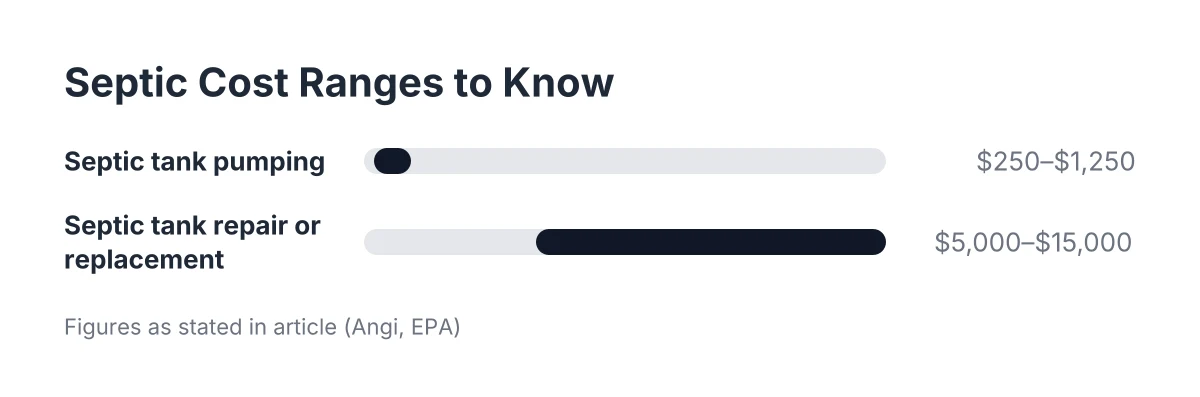
    The math on septic care is lopsided. According to Angi data, the cost of septic tank pumping averages $427, ranging from $250 to $1,250 or more depending on tank size and location. Meanwhile, the EPA estimates septic tank repair or replacement typically costs between $5,000 and $15,000. That gap is the whole argument for maintenance in one sentence.

    A tank that gets pumped on schedule protects the drain field, which is the expensive part of the system. When solids build up past a safe level, they wash out into the drain field lines and clog the soil. Once a drain field fails, no amount of pumping fixes it. Pumping is cheap insurance for the component you cannot afford to replace on short notice.

    There is a comfort factor too. Picture searching "septic pumping near me emergency" at night with water backing up into a shower: no idea who to call, no idea what it should cost, and no time to compare. A maintenance schedule means you pick your provider calmly, on your own timeline, at standard rates.

    How Often Should You Pump a Septic Tank in Hesperia?

    Most households should have the septic system inspected at least once every three years by a professional, according to the U.S. Environmental Protection Agency, with pumping performed as the inspection results recommend. Alternative systems with electrical float switches, pumps, or mechanical components should generally be inspected once a year, per the same EPA guidance. Your actual pumping interval depends on tank size, household size, and water habits.

    Here is why the interval varies so much between neighbors. A retired couple in a three-bedroom house on Sultana Street puts far less into the tank than a family of six in the same floor plan. Garbage disposal use, laundry volume, and long-term guests all speed up how fast solids accumulate. That is why the honest answer is "inspect on a schedule, pump based on what the inspection finds" rather than a single number for everyone.

    A practical approach for 2026 and beyond:

    1. Find your last pumping date. Check receipts, escrow paperwork from your home purchase, or ask the previous owner if you can.
    2. If you cannot find a record and you have owned the home five years or more, schedule an inspection and pumping now and start the clock fresh.
    3. Set a recurring reminder on your phone or calendar three years out for the next inspection.
    4. Keep a simple log: date, what was pumped, sludge levels the crew reported, and anything they flagged.
    5. Adjust the interval if your household changes. A new baby, adult kids moving home, or a rented back unit all add load.

    That log matters more than most homeowners expect. If you sell or refinance, an inspection is often required, and a documented service history makes that process faster. It also helps whichever local crew you call, because they can see how fast your tank fills and tailor the schedule instead of guessing.

    What Not to Flush With a Septic System

    The list of things that should never go into a septic system is longer than most people think, and it goes well beyond the obvious. A septic tank works because bacteria break down waste, and anything that kills those bacteria or refuses to break down works against you. Only toilet paper and human waste belong in the toilet; everything else belongs in the trash.

    Keep these out of your drains and toilets:

    • "Flushable" wipes, which do not break down and are a leading cause of clogged inlet baffles
    • Feminine hygiene products, cotton swabs, and dental floss
    • Cooking grease, fats, and oils, which coat the tank and the drain field lines
    • Coffee grounds and eggshells, which settle as solids and fill the tank faster
    • Paint, paint thinner, solvents, and motor oil, which poison the bacteria doing the work
    • Harsh drain openers and heavy bleach use, for the same reason
    • Prescription medications, which pass through the tank and into the soil
    • Cat litter, even brands labeled flushable

    Kitchen habits matter as much as bathroom habits. A garbage disposal is convenient, but every scrap it grinds becomes solids in your tank. If you rely on one heavily, expect to pump more often. Scraping plates into the trash before rinsing is the single cheapest septic habit you can build.

    Chemical additives deserve a word here. Store-bought septic tank cleaner products promise to reduce pumping needs, but no additive removes solids from a tank. Some products can stir up the sludge layer and push solids into the drain field, which is the exact damage you are trying to prevent. A healthy system does not need additives; it needs pumping on schedule and sensible habits between visits.

    Drain Field Care: Protecting the Part You Cannot See

    The drain field asks for less attention than the tank, but the rules it does have are strict. Its job is to let treated wastewater soak slowly into the soil, and anything that compacts that soil or floods it with extra water shortens its life.

    First, keep weight off it. Never park cars, RVs, or trailers over the drain field, and do not build sheds, patios, or above-ground pools on top of it. Hesperia lots are big, and it is tempting to use every square foot, but compacted soil over the lateral lines stops the field from draining. If you are not sure where your field sits, a septic tank locating service can map the tank and lines so you know exactly what ground to protect.

    Second, manage water. The drain field handles what leaves your house, so it should not also absorb runoff from gutters, French drains, or irrigation. Point downspouts away from the field and avoid heavy watering over it. Grass over the field is fine and even helpful; trees and deep-rooted shrubs are not, because roots seek out the moisture in the lines and crack them.

    In addition, spread out your water use inside the house. Running the dishwasher, three loads of laundry, and long showers in the same evening sends a surge through the tank that can push solids toward the field. Spacing laundry across the week gives the tank time to settle between loads. Fixing a running toilet matters too; a toilet leaking around the clock can send hundreds of extra gallons a day into a system sized for normal use.

    Septic Pumping Near Me: How to Pick a Local Hesperia Crew

    The best result for a "septic pumping near me" search in Hesperia is a local, septic-focused company that answers the phone, explains what the visit includes, and shows up with the right truck. That sounds basic, but a lot of what ranks in that search is national lead-generation sites that sell your phone number to whoever pays for it. You end up talking to a call center three states away instead of someone who knows High Desert soil and local tank setups.

    Here is what separates a solid local provider from a listing page:

    • Septic is the whole business, not a side service. A shop where septic pumping rides along behind plumbing and HVAC often subcontracts the actual pump-out. You want the crew that owns the truck.
    • They ask questions before quoting. Tank size, last pumping date, whether you know where the lids are, and what symptoms you are seeing. A company that quotes one flat number without asking anything is guessing.
    • They explain what pumping includes. A real service pumps both compartments, checks the baffles, and tells you the condition of the tank. Skimming liquid off the top and leaving the sludge is not a pump-out, even if it is cheap.
    • They handle the full range. Residential septic pumping, septic tank cleaning, inspections, tank locating, and backup response under one roof means one call covers whatever the visit uncovers.
    • They put findings in writing. Sludge levels, baffle condition, and any concerns about the drain field belong in your maintenance log, and a good crew gives you that information without being asked.

    Searchers often add qualifiers like "septic pumping near me within 20 mi" or "septic pumping near me open now," and those filters make sense. Distance matters because travel time is part of what you pay for, and a Hesperia-based crew reaches a Hesperia address faster than one dispatched from down the hill. Availability matters because septic problems ignore business hours; ask any provider you are considering how they handle after-hours calls before you ever need one.

    Be cautious with "septic pumping near me cheap" as a strategy. Price matters, and asking about septic system pumping cost up front is smart. But the lowest quote sometimes covers a partial pump or excludes digging to reach buried lids, and the surprise charges land after the truck is already in your driveway. Ask what the price includes, what would add to it, and get the answer before the appointment.

    Warning Signs That Mean Stop Waiting and Call

    A septic system that needs attention shows specific symptoms: slow drains throughout the house, gurgling pipes, sewage odors indoors or in the yard, standing water or lush green patches over the drain field, and sewage backing up into tubs or floor drains. Any one of these signs means schedule service now, not next month.

    The pattern matters. One slow drain is usually a plumbing clog. Every drain in the house running slow, with gurgling when the washing machine empties, points to the septic system. Odor near the tank or field, or a wet spot that never dries in a desert climate, points the same direction. Hesperia soil does not stay damp on its own; if a patch of your yard is soggy in July, the water is coming from below.

    Consider a scenario local crews see often. Imagine a family noticing the master shower gurgling when the toilet flushes. They ignore it for three weeks because everything still drains, slowly. Then relatives arrive for a long weekend, water use doubles, and by Saturday morning sewage is standing in the tub. What would have been a scheduled pump-out at a standard rate became an emergency septic pumping call with a house full of guests. The gurgle three weeks earlier was the affordable version of that problem.

    However, know the limits of what pumping can fix. If the drain field itself has failed, pumping buys time but does not solve the underlying problem, and you will need a professional assessment of the field. Likewise, if you see signs of septic system failure like sewage surfacing repeatedly after a recent pump-out, get an inspection rather than paying for pump-out after pump-out. An honest local company will tell you which situation you are in instead of selling you the same service on repeat.

    Building Your Septic Pumping Near Me Maintenance Schedule for 2026

    A septic maintenance schedule does not need to be complicated. It needs a start date, a few recurring reminders, and a single folder for records. Most Hesperia homeowners can set the whole thing up in an afternoon.

    Start with a baseline visit. If you do not know when your tank was last pumped, book an inspection and pumping together. The crew measures sludge and scum levels, checks the baffles and lids, and tells you the real condition of your system. That report is your starting point, and everything after runs on a calendar.

    Then layer in the annual habits. Once a year, walk the drain field and look for wet spots, odors, or settling. Check that downspouts and irrigation still drain away from it. Confirm your tank lids are secure and accessible, because a buried lid adds digging labor to your next service call. If your system has a pump or alarm, test that the alarm works; an alarm you have never heard is an alarm you will not recognize at 2am.

    Finally, connect the schedule to a provider before you need one. Searching septic maintenance near me while your system is healthy lets you compare calmly, ask about what a visit includes, and save the number of a Hesperia crew you trust. Routine septic tank maintenance is one of the few home systems where the disaster version and the boring version cost this differently, and the boring version is available to anyone with a calendar reminder. The homeowners who never end up frantically searching for emergency service at night are not lucky. They pumped on schedule, kept grease out of the drains, protected the drain field, and called the moment the first drain gurgled.

    If you need your septic tank serviced, Hesperia Septic can help.

    Related Reading

  • Grease Trap Pumping at Home: Kitchen Habits That Cut Septic System Pumping Cost

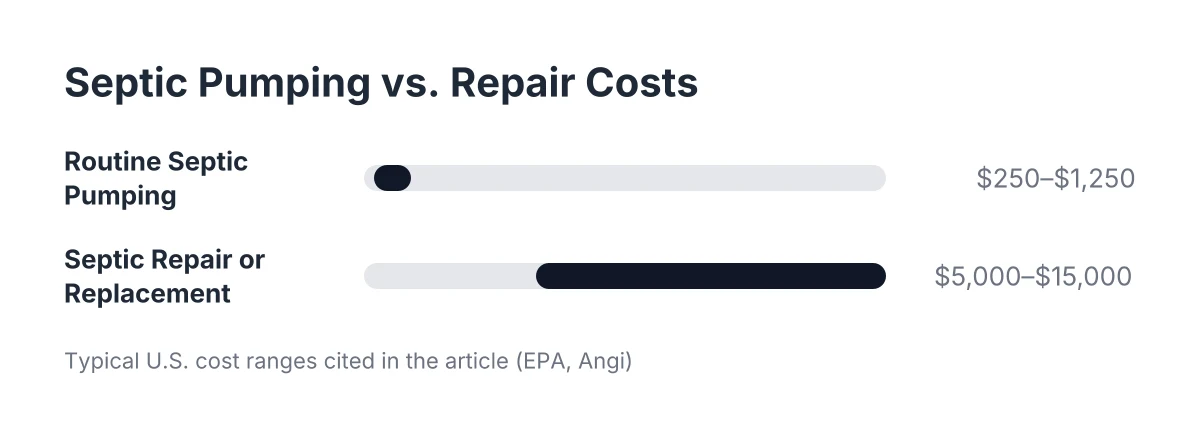
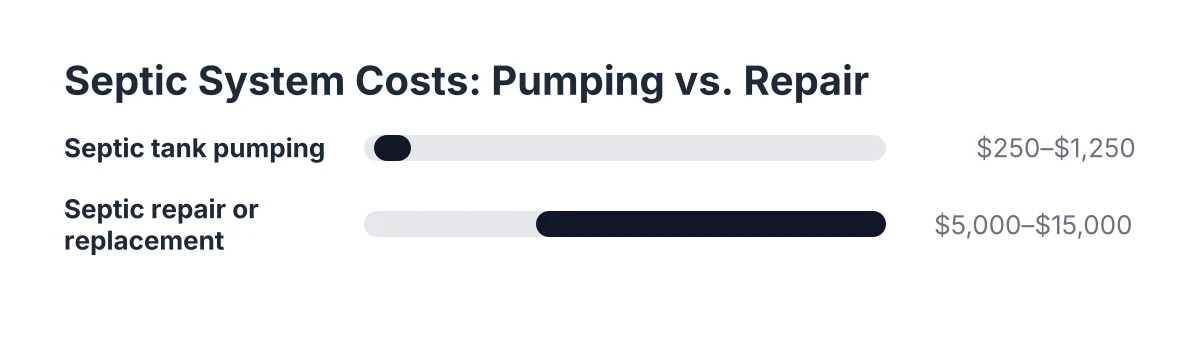
    Cost comparison chart: septic tank pumping ranges from $250–$1,250, while septic repair or replacement ranges from $5,000–$15,000.
    Routine pumping costs far less than emergency drain field repair, making kitchen grease habits a cost-effective lever for homeowners.

    If your kitchen drains through a grease trap or straight into a septic tank, the habits at your sink decide how often a pump truck shows up. Grease is the number one thing that shortens the time between pump-outs, and every extra visit adds to your septic system pumping cost over the life of the house. This guide answers the questions Hesperia homeowners and rental property owners ask most about grease, kitchen drains, and keeping a septic system out of emergency territory.

    The goal here is simple: practical upkeep that keeps you off the after-hours call list. A backed-up tub at 8pm is a bad way to learn where your grease has been going.

    What is a grease trap, and do homes in Hesperia have them?

    A grease trap is a small holding box on the kitchen drain line that catches fats, oils, and grease before they reach the septic tank or drain field. Most single-family homes in Hesperia do not have one; the septic tank itself does that job. However, some older properties, converted commercial buildings, and rental units with large kitchens do have a residential grease trap.

    If you own a rental property and you have never checked, look for a small access lid near the kitchen side of the building. A septic tank locating service can find both the tank and any trap if the property records are missing, which is common on older High Desert parcels.

    Either way, the maintenance logic is the same. Grease has to be caught, held, and pumped out before it moves downstream.

    Why does grease matter so much for a septic system?

    Grease matters because it never fully breaks down in a septic tank. Fats, oils, and grease float to the top and form a scum layer, and when that layer gets thick enough, grease escapes into the drain field and clogs the soil. A clogged drain field is the failure that turns a routine pumping bill into a major repair.

    The scale of the problem shows up clearly in commercial kitchens. According to Wastewater Digest, a single restaurant can release between 800 and 17,000 pounds of grease into the sewer system each year. A home kitchen produces far less, but a septic tank is also far smaller than a city sewer, so the grease you pour down the sink stays on your property.

    The cost gap is the reason to care. According to Angi data, septic tank pumping averages $427, ranging from $250 to $1,250 or more depending on tank size and location. The EPA estimates septic repair or replacement typically runs $5,000 to $15,000. Kitchen habits are the cheapest lever you have between those two numbers.

    How does grease affect septic system pumping cost over time?

    Grease raises your septic system pumping cost by filling the tank's scum layer faster, which shortens the interval between pump-outs. A household that pours bacon fat and fryer oil down the drain can need pumping years sooner than a neighbor with the same size tank and family. More visits per decade means more money spent on the same system.

    There is a second, bigger cost risk. Once grease pushes past the tank and into the drain field, no amount of pumping fixes the soil. At that point you are looking at drain field repair, and that is the $5,000 to $15,000 range the EPA describes, not a routine service call.

    For a small landlord with two or three septic-served rentals in Hesperia, this compounds. One tenant who treats the kitchen sink like a grease bin can quietly move a property from a predictable pumping schedule to an emergency septic pumping call during a lease turnover.

    What should never go down a kitchen drain on a septic system?

    Nothing greasy, fibrous, or chemical should go down a kitchen drain that feeds a septic tank. The tank depends on bacteria to break down waste, and grease smothers that process while solids fill the tank faster. Keep this list posted for family members or tenants:

    • Cooking oil, bacon grease, and pan drippings, even small amounts
    • Butter, shortening, mayonnaise, and salad dressing scraped from plates
    • Dairy-heavy liquids like gravy, cream sauces, and melted cheese
    • Coffee grounds and eggshells, which never break down
    • Fibrous scraps like celery, corn husks, and potato peels
    • Harsh drain cleaners and degreasers, which kill the bacteria the tank needs

    Instead, pour cooled grease into a can or jar, let it harden, and put it in the trash. Wipe greasy pans with a paper towel before washing. Scrape plates into the garbage, not the disposal.

    Garbage disposals deserve a special mention. Homes with disposals generate significantly more sludge, and the Massachusetts Department of Environmental Protection recommends annual pumping for such households regardless of tank size. If your rental has a disposal, budget for more frequent service or consider removing it at the next turnover.

    How often should a grease trap or septic tank be pumped?

    A residential grease trap needs pumping whenever grease and solids fill about a quarter of its depth, and a septic tank needs pumping on a schedule based on tank size, household size, and kitchen habits. There is no single interval that fits every Hesperia property. What matters is that someone checks the levels instead of waiting for a backup.

    A professional inspection is the honest way to set that schedule. The EPA recommends the average household have its septic system inspected at least once every three years. An inspection measures the scum and sludge layers, so you pump when the tank actually needs it, not on a guess.

    For landlords, tie the check to events you already manage: a pre-lease inspection at turnover, or a standing service visit for each property. Getting the schedule right is the core of septic tank maintenance, and it is what keeps pumping a planned line item instead of a surprise.

    What does grease trap pumping cost compared to septic system pumping cost?

    Grease trap pumping for a small residential trap generally costs less than a full septic tank pump-out because the trap holds far less volume. Septic system pumping cost is driven by tank size, how full the tank is, and how hard the lid is to access. A buried lid that needs locating and digging adds labor to any visit.

    If a crew is already on site pumping the tank, having the trap serviced in the same trip is usually cheaper than two separate visits. Ask for both when you schedule. When you search for septic tank service near me or septic maintenance near me, confirm the company handles grease trap pumping too; not every outfit does, and a plumbing generalist often will not.

    One trade-off worth naming: pumping more often than the tank needs wastes money, while stretching intervals to save on 2026 service costs risks the drain field. An inspection-based schedule beats both extremes.

    What are the warning signs that grease is winning?

    Slow kitchen drains, gurgling pipes, and a sewage smell near the sink or yard are the early signs that grease is building up in the trap, the tank, or the line between them. Wet, greasy patches over the drain field are a later and more serious sign. By the time sewage backs up into a tub, the problem has been building for months.

    Do not wait on these signs at a rental. Tenants often live with a slow drain for weeks before calling, so a "minor" complaint on the phone can mean a tank at capacity. A same-week pump and inspection is cheaper than a weekend backup response and a habitability complaint.

    If drains back up again shortly after a pumping, that points past the tank, possibly to a clogged line or a saturated drain field. That is the point to bring in a professional for a full septic system inspection rather than paying for repeat pump-outs that will not hold.

    Can I clean a residential grease trap myself?

    You can scoop a small under-sink grease trap yourself, but most homeowners and landlords should not. The work is unpleasant, the waste needs legal disposal, and a partial cleaning leaves hardened grease on the walls and baffles where clogs restart. A pump truck removes everything and can inspect the trap's condition at the same time.

    In-ground traps and septic tanks are not do-it-yourself territory at all. Tank gases are dangerous, and the waste must be hauled and disposed of properly. This is one place where searching septic repair near me and hiring a local septic crew is the safe and, over time, the cheaper move.

    The bottom line for Hesperia homeowners and landlords

    Grease control is the cheapest septic upkeep there is. A jar by the stove, a paper towel wipe before washing, and an inspection-based pumping schedule keep the scum layer thin and the drain field clean. Those habits stretch the years between pump-outs and keep your total septic system pumping cost as low as the system allows.

    Consider a real Hesperia scenario: a landlord with a three-bedroom rental pays for a routine pump-out in the $300 to $500 range at each long tenancy turnover and never hears from the tenant about drains. The same house with a fryer-happy tenant and no grease rules ends up with a Saturday backup, an emergency pumping call, and a drain field evaluation. Same tank, same soil, different kitchen habits.

    Set the schedule, post the do-not-flush list, and let a local crew measure the tank instead of guessing. That is how you stay off the emergency call list entirely.

    If you need your septic tank serviced, Hesperia Septic can help.

    Related Reading

  • Septic Tank Pumping Prices in Hesperia, CA: What Cleaning and Inspection Actually Involve

    septic tank pumping prices

    If you're standing in your Hesperia, CA yard looking at a wet spot that smells like sewage, or your toilets stopped flushing an hour ago, you want two things right now: someone who can fix it, and a straight answer on what it costs. This guide walks through what actually happens during professional septic tank pumping, cleaning, and inspection, how septic tank pumping prices are set, and what regular upkeep looks like so you never end up in this spot again. Understanding septic tank maintenance is the foundation of avoiding costly repairs. No sales pitch, just the process explained the way a local septic crew would explain it over the phone.

    Why the Process Matters More Than the Price Quote

    Most people searching for septic tank pumping near me have never watched the job get done. That makes it hard to tell a fair quote from a padded one, and it makes it easy for a bad operator to skip steps you're paying for.

    Here's the short version. A proper visit for septic tank pumping in Hesperia, CA removes everything from the tank: the liquid, the floating grease layer on top, and the settled sludge on the bottom. A rushed job pulls out the liquid and leaves the sludge behind. Your tank looks empty for a week, then the problem comes back, and you're paying twice.

    Therefore, knowing the steps below is worth more than any price list. When you can ask "are you removing the sludge layer or just pumping the liquid," you sound like someone who can't be shortchanged. That alone changes how the job goes.

    What Happens During a Professional Septic Tank Pumping Visit

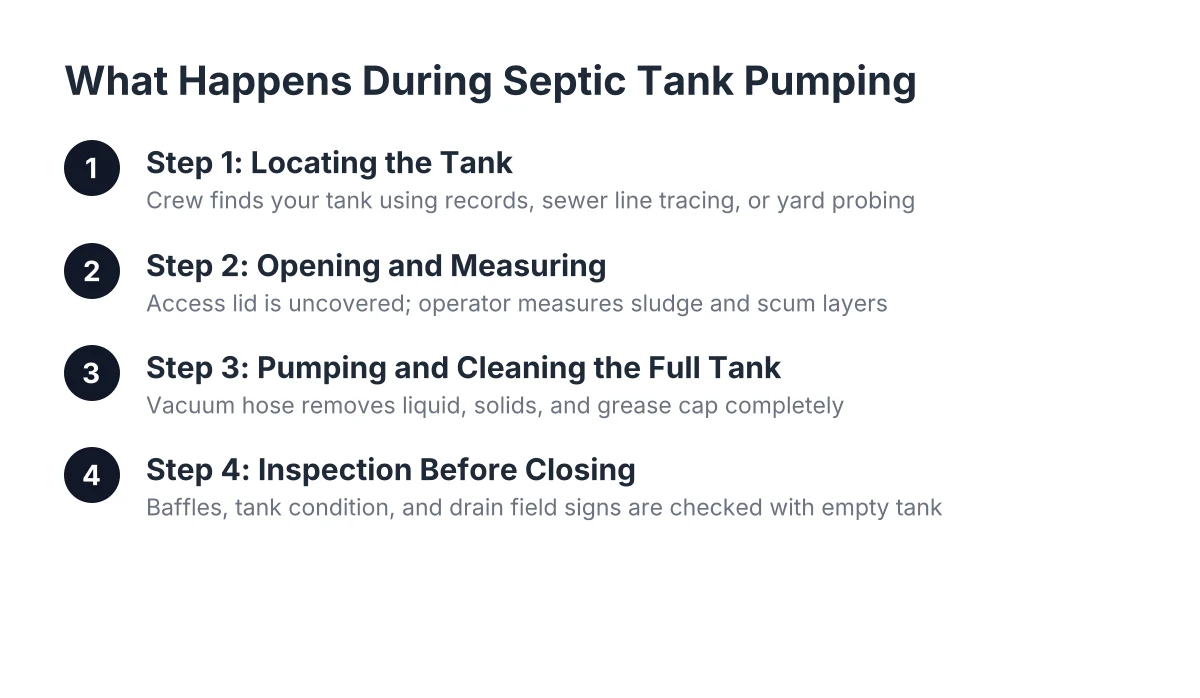
    A professional septic tank pumping visit follows a clear sequence: locate the tank, open the access lid, measure the sludge and scum layers, pump out all contents with a vacuum truck, break up and remove the settled solids, and check the tank's basic condition before closing it back up. The whole visit typically takes one to a few hours depending on tank access and condition.

    Here's each step in more detail, so you know what to expect when the truck pulls up to your Hesperia property.

    Step 1: Locating the Tank

    First, the crew has to find your tank. On newer Hesperia homes this is easy; the lid is at grade or under a few inches of soil, and county records or as-built drawings show where it sits. On older High Desert properties, the tank can be buried under decades of dirt, a patio, or landscaping nobody remembers installing.

    A septic crew that offers septic tank locating will probe the yard, follow the sewer line out from the house, or use records to narrow it down. If you've owned the home a while, sketch the tank location once it's found and keep that sketch. It saves time and money on every future visit.

    Step 2: Opening and Measuring

    Next, the crew uncovers the access lid and opens the tank. Before pumping anything, a good operator looks at what's inside. The tank holds three layers: a scum layer of grease and floating solids on top, liquid in the middle, and sludge on the bottom.

    The thickness of the sludge and scum layers tells the real story. Thick layers mean the tank was overdue; thin layers mean you're on a good schedule. This measurement is also your best evidence for how often your specific household needs pumping, which beats any generic rule of thumb.

    Step 3: Pumping and Cleaning the Full Tank

    Then the vacuum hose goes in. The truck pulls out the liquid first, but the job isn't done there. The crew uses the hose, and sometimes a tool to break up compacted sludge, to remove the solids from the bottom and the grease cap from the top.

    This is the difference between septic tank pumping and septic tank cleaning done right. Everything comes out. If someone quotes you a strangely low number and finishes in twenty minutes on a full tank, ask what they left behind.

    Step 4: The Inspection Before the Lid Goes Back On

    Finally, with the tank empty, the operator gets the only clear look anyone will have at your system for years. A basic inspection during pumping checks:

    • The inlet baffle, which keeps incoming waste from shooting across the tank
    • The outlet baffle or filter, which keeps solids from escaping into the drain field
    • Cracks, root intrusion, or signs the tank is deteriorating
    • Water flowing back into the tank from the drain field, which can signal a saturated or failing field
    • The condition of lids and risers

    For example, backflow from the outlet pipe is one of the earliest visible signs of drain field trouble. Catching it during a routine pump-out gives you options. Discovering it during a sewage backup on a Saturday night does not.

    How Septic Tank Pumping Prices Are Actually Set

    Septic tank pumping prices depend on a handful of concrete factors: the size of your tank, how full it is, how hard the tank is to find and access, whether it's a routine visit or an emergency call, and local disposal fees for hauling the waste. According to Angi data, septic tank pumping averages $427 nationally, with a typical range of $250 to $1,250 or more depending on tank size and location.

    Let's break down what moves the number up or down in the High Desert:

    • Tank size. Bigger tanks hold more waste, take longer to pump, and fill more of the truck. Larger homes usually have larger tanks.
    • Tank condition. A tank that hasn't been pumped in ten years has thick, compacted sludge that takes longer to remove than a tank on a regular schedule.
    • Access. A lid at grade level costs less to service than a tank buried two feet down under landscaping. If the crew has to dig, expect that reflected in the price. Risers, which extend the lid to ground level, pay for themselves over a few visits.
    • Locating work. If nobody knows where the tank is, septic tank locating adds time before pumping even starts.
    • Timing. Emergency septic pumping at night or on a weekend generally costs more than a scheduled weekday visit. That's true across the industry, and it's the single best financial argument for staying on a maintenance schedule.

    However, be careful comparing quotes on price alone. A low quote that covers pumping liquid only, with sludge removal as a surprise add-on once the lid is open, often ends up costing more than an honest all-in number. Ask what the quote includes before the truck arrives.

    Septic Tank Pumping Prices vs. the Cost of Neglect

    Here's the comparison that matters more than any price list. The U.S. Environmental Protection Agency estimates that septic repair or replacement typically runs $5,000 to $15,000. Routine pumping, by contrast, sits in the hundreds. Skipping a few hundred dollars of maintenance to risk a five-figure septic system repair cost is a bad trade every time.

    Consider a scenario any Hesperia homeowner can picture. A family buys a home and never thinks about the septic tank because nothing seems wrong. Six years later, sludge has built up past the outlet, solids have been washing into the drain field the whole time, and the field soil is clogging. The first visible symptom is sewage backing up into the hall bathroom on a holiday weekend.

    At that point, the bill isn't one pump-out. It's an emergency call, plus a camera or inspection to diagnose the drain field, plus whatever repair the diagnosis shows. As a result, the cheapest septic service you will ever buy is the routine one you schedule before anything goes wrong.

    One honest caveat: pumping is maintenance, not a cure. If your drain field is already failing, pumping the tank buys you days or weeks, not a fix. A trustworthy operator will tell you that at the tank, and a drain field problem needs a professional diagnosis, not another pump-out.

    How Often Should You Pump and Inspect a Septic Tank?

    The U.S. Environmental Protection Agency recommends having the average household septic system inspected at least once every three years by a professional, and alternative systems with pumps, float switches, or other mechanical parts inspected once a year. Pumping frequency varies by household size, tank size, and water use, so let the sludge measurements from your last visit set your actual schedule.

    In addition, some households build sludge faster than average. Homes with garbage disposals send far more solids into the tank; the Massachusetts Department of Environmental Protection recommends annual pumping for households with disposals regardless of tank size. If you run a disposal daily, plan on a shorter interval than your neighbors.

    A simple septic maintenance schedule for a Hesperia home looks like this:

    1. Get the tank pumped and inspected now if you can't remember the last time it was done.
    2. Write down the date, the sludge and scum measurements, and anything the crew flagged.
    3. Set the next inspection based on those measurements, using the EPA's three-year interval as your outer limit.
    4. Keep the tank location sketch and service records with your house documents.

    That's the whole system. Four items, and it keeps most homeowners off the emergency-call list permanently.

    Daily Habits That Protect Your Tank and Drain Field

    Between pump-outs, what goes down your drains decides how fast the tank fills and how long the drain field lasts. The rules are simple, but they only work if everyone in the house follows them.

    Keep these out of a septic system:

    • Wipes of any kind, including ones labeled flushable
    • Grease, cooking oil, and fat washed down the kitchen sink
    • Paper towels, feminine products, and diapers
    • Paint, solvents, and harsh chemicals that kill the bacteria doing the work inside your tank
    • Coffee grounds and food scraps in volume

    Protect the drain field itself too. Never park or drive on it; vehicle weight compacts the soil and crushes pipes. Don't plant trees near it, since roots seek out the moisture in the lines. In addition, direct roof gutters and yard drainage away from the field, because a waterlogged field can't absorb wastewater from the house.

    Water use matters as well. Spreading laundry across the week instead of running five loads on Saturday gives the tank time to settle solids between surges. Fixing a running toilet stops hundreds of gallons a day from flooding the system for no reason.

    Warning Signs That Mean Call Someone Today

    The early signs of septic system failure are slow drains throughout the whole house, gurgling pipes, sewage odor indoors or in the yard, wet or unusually green patches over the tank or drain field, and a septic alarm sounding. Any one of these means the system needs attention; sewage backing up into tubs or floor drains means it needs attention today.

    Note the difference between one slow drain and every drain. One slow sink is usually a clog in that line, a plumber-type problem. Every fixture draining slowly at once points to the tank or the drain field, a septic problem. Many Hesperia homeowners learn this distinction the hard way after a plumber visit that couldn't fix the real issue.

    If sewage is already backing up, stop running water in the house. Every flush and every load of laundry adds to what's coming back at you. Then call a septic service, not a general plumber, and tell them what you're seeing: backup location, odors, wet spots, and whether an alarm is sounding. Those details help the crew show up ready.

    What to Ask Before You Book Septic Service in Hesperia, CA

    When you're comparing septic tank services prices from local operators, the questions you ask matter more than the number on the quote. A few minutes on the phone tells you a lot.

    Ask these before booking:

    • Does the quote cover pumping the full tank, including sludge and scum, or liquid only?
    • Is a basic inspection of baffles and tank condition included while the tank is open?
    • What do digging, locating, or extra-heavy sludge cost if they come up?
    • What are the disposal fees, and are they included?
    • For emergency calls, what's the after-hours difference, stated up front?

    A local, septic-focused crew should answer all of these plainly. Vague answers on what's included are how a $400 job becomes an $800 invoice. You're not being difficult by asking; you're being the kind of customer who gets straight treatment.

    Location matters too. A crew based in the High Desert knows Hesperia's soil, common tank setups, and local disposal requirements, and doesn't route your call through a national dispatch center that has never seen a drain field.

    The Bottom Line for Hesperia Homeowners

    Septic tank pumping prices are set by real, physical factors: tank size, sludge buildup, access, and timing. National data from Angi puts the average around $427, while the EPA pegs repair or replacement at $5,000 to $15,000. The gap between those two numbers is the entire argument for maintenance.

    A professional visit is more than emptying a tank. It's the sludge measurement that sets your real schedule, the baffle check that protects your drain field, and the early warning if something bigger is developing. Done on schedule, it's a routine expense in the hundreds. Skipped for years, it becomes an emergency in the thousands.

    So if you can't remember the last time your tank was pumped, that's your answer. Get it pumped and inspected, write down what the crew finds, and put the next date on the calendar. That one habit is what separates homeowners who never think about their septic system from homeowners searching for emergency septic pumping at 8pm on a Saturday.

    If you need your septic tank pumped, Hesperia Septic can help.

    Related Reading

  • Signs Your Septic Tank Needs Pumping Now, and How to Never Get There

    septic tank cleaning

    Most septic emergencies in Hesperia do not start at 8pm on a Saturday. They start months earlier, with a slow drain nobody mentioned, a wet spot in the yard everyone stepped around, and a septic tank cleaning that kept getting pushed to next month. By the time sewage is backing up into the tub, the system has been asking for help for a long time. This guide covers both ends of that story: the warning signs that mean you need a truck out today, and the plain, practical upkeep that keeps you off the emergency-call list entirely.

    Here is the honest version of how this works. A septic system is not a mystery box. It is a tank, a set of pipes, and a drain field, and each one gives you signals before it fails. Learn the signals, keep a simple septic tank maintenance schedule, and you can go years without ever making a panicked phone call.

    The Warning Signs That Mean Your Tank Is Full or Failing

    Some septic problems can wait until Monday. Others cannot. Knowing the difference saves you money and, in the worst cases, saves your floors.

    Signs you need septic tank cleaning today

    Sewage backing up into a tub, shower, or floor drain is the clearest sign a septic tank needs emergency pumping today. Standing sewage or a strong sewage smell inside the house means waste has nowhere to go, and every flush makes it worse. Stop running water and call for emergency septic pumping.

    Here are the signs that mean same-day or next-day service, not a note on the calendar:

    • Sewage coming up in the lowest drain in the house, usually a tub or shower
    • Toilets that gurgle or refuse to flush in more than one bathroom at once
    • A wet, soggy, or foul-smelling patch of ground over the tank or drain field
    • Sewage surfacing in the yard, especially after laundry or showers
    • A septic alarm going off, if your system has one
    • Drains throughout the house running slow at the same time

    One bad drain is usually a plumbing clog. Every drain acting up at once is a septic problem. That distinction matters, because a lot of Hesperia homeowners call a regular plumber first, hear “we don’t really do septic,” and lose a day while the backup gets worse.

    Signs you have a few weeks, not a few hours

    Slow drains that improve after light water use, occasional gurgling, or a faint outdoor odor near the tank lid are early warnings, not emergencies. They usually mean the tank is filling with sludge and losing capacity. Schedule septic tank cleaning soon, before the next heavy-use weekend turns a warning into a backup.

    Grass that grows greener and faster in one strip of the yard is another quiet signal. That strip often sits over a drain field that is receiving liquid it should not be receiving. In the High Desert, where most yards run dry, an unexplained lush patch stands out fast.

    What Actually Happens Inside the Tank

    Every drop of water that leaves your house lands in the septic tank first. Solids sink to the bottom and become sludge. Grease and soap scum float to the top. The liquid in the middle flows out to the drain field, where the soil filters it.

    The problem is simple math. Sludge and scum never leave on their own. They build up until the liquid layer in the middle shrinks, and then one of two things happens. Either solids push out into the drain field and clog it, or the tank fills completely and waste backs up toward the house.

    That is why septic tank cleaning exists. Pumping removes the sludge and scum before they reach the outlet. It is the single cheapest thing you can do for the system, and skipping it is how a few hundred dollars becomes a five-figure repair.

    The cost gap is not small. According to Angi, septic tank pumping averages $427, with a typical range of $250 to $1,250 depending on tank size and location. Compare that to what happens when a neglected tank ruins the drain field: the EPA estimates septic tank repair or replacement typically costs between $5,000 and $15,000. One number is routine upkeep. The other is a construction project in your yard.

    How Often to Pump a Septic Tank

    Most households should have a professional inspect the septic system at least once every three years, according to the U.S. Environmental Protection Agency, with pumping scheduled based on what that inspection finds. Systems with pumps, float switches, or other mechanical parts should be inspected once a year, per the same EPA guidance.

    However, “how often to pump septic tank” does not have one universal answer, and anyone who gives you a single number without asking questions is guessing. The right interval depends on:

    1. Household size. More people means more water and more solids. A family of six fills a tank far faster than a retired couple.
    2. Tank size. A small tank serving a big household needs attention more often than a large tank serving a small one.
    3. Garbage disposal use. Homes with garbage disposals generate significantly more sludge; the Massachusetts Department of Environmental Protection recommends annual pumping for such households regardless of tank size.
    4. Water habits. Long showers, back-to-back laundry days, and leaky toilets all push water through the tank faster than solids can settle.

    The practical move is to have the tank pumped, ask the crew how full it was, and set your next date from there. If the tank was near capacity, shorten the interval. If it had plenty of room, you can stretch it. After two or three cycles you will know your house’s real number instead of a generic one.

    What Not to Flush With a Septic System

    A septic system can safely handle three things: human waste, toilet paper, and wastewater. Everything else either clogs the tank, kills the bacteria that break down waste, or passes through to clog the drain field. The shorter your list of exceptions, the longer your system lasts.

    The repeat offenders that fill Hesperia tanks early:

    • “Flushable” wipes, which do not break down no matter what the package says
    • Cooking grease and fats poured down the kitchen sink
    • Coffee grounds, eggshells, and food scraps through the disposal
    • Feminine hygiene products, dental floss, and cotton swabs
    • Paint, solvents, and harsh drain cleaners
    • Cat litter, even the kinds labeled flushable

    Grease deserves its own warning. It cools, hardens, and builds a scum layer that eats tank capacity and coats pipes. Restaurant kitchens have grease traps and scheduled grease trap pumping for exactly this reason; a home kitchen has neither, so the tank absorbs everything you pour. Keep a can by the stove, pour grease into it, and throw it in the trash.

    Chemical drain cleaners are the other quiet killer. The tank depends on live bacteria to digest solids. Dump enough bleach, antibacterial cleaner, or caustic drain opener down the pipes and you sterilize the tank, and then the solids stop breaking down at all.

    Septic tank cleaning products and additives: do they replace pumping?

    No septic tank cleaning product, powder, or additive removes the sludge sitting at the bottom of your tank. Additives may claim to boost bacteria or dissolve solids, but the physical waste has to be pumped out through a hose into a truck. There is no shortcut in a bottle.

    A healthy tank already contains all the bacteria it needs, supplied free of charge by everyone in the house. Some homeowners spend years buying monthly septic tank additive powder while the sludge layer keeps rising, then face a backup anyway. If you enjoy using an additive and it is septic-safe, it probably does no harm. Just never let it replace pumping on a schedule.

    Drain Field Care: Protecting the Part You Cannot Pump

    The drain field is the one part of your septic system that cannot be pumped, cleaned, or easily fixed. Once soil clogs with solids or gets crushed, the common fix is digging up the yard and building a new field. Protecting it costs nothing; replacing it costs thousands.

    Drain field maintenance is mostly about what you keep away from it:

    • Never park or drive vehicles over the drain field. This includes RVs, trailers, and delivery trucks, which are common culprits on larger High Desert lots.
    • Keep trees and deep-rooted shrubs at a distance. Roots hunt for the moisture in drain field lines and crack them open.
    • Direct rain gutters and yard drainage away from the field. Saturated soil cannot absorb wastewater.
    • Do not build sheds, patios, or paved areas over the field. The soil needs air to treat wastewater.
    • Spread out water use. Run laundry across the week instead of six loads on Sunday, so the field never gets flooded all at once.

    In addition, know where your tank and field actually are. Plenty of Hesperia homeowners bought their house without a septic map and have no idea what sits under which patch of dirt. A septic tank locating service can mark it once, and then every future pump-out, inspection, and landscaping decision gets easier.

    A Septic Maintenance Schedule You Will Actually Keep

    The best septic maintenance schedule is the one simple enough to follow for twenty years. You do not need a binder. You need a few recurring reminders and one page of records.

    Here is a realistic version for 2026:

    1. Monthly, two minutes. Walk the yard over the tank and drain field. Look for wet spots, odors, or unusually green grass. Fix any running toilets or dripping faucets, since constant water flow works the system around the clock.
    2. Every three years, or yearly with mechanical parts. Have the system professionally inspected, in line with EPA guidance. The inspector measures sludge levels and tells you whether pumping is due now or can wait.
    3. On the inspector’s recommendation. Schedule septic tank cleaning before the tank is critically full, not after. Cleaning a tank at 70 percent full is maintenance. Cleaning it after a backup is triage.
    4. Ongoing. Keep the flush list short, keep grease out of the sink, and keep vehicles off the field.
    5. Always. Write down every pump-out and inspection date, the company, and what they found. That record tells you your real pumping interval and pays for itself when you sell the house.

    For example, consider a common Hesperia scenario. A family buys a home on a half-acre lot, never gets told when the tank was last pumped, and hosts Thanksgiving three years later. Twelve guests, two days of showers and dishes, and by Friday morning sewage is standing in the hall bathtub. An emergency crew pumps the tank and finds it packed solid, with wipes matted through the outlet. The pump-out itself might have cost a few hundred dollars on a Tuesday in October. Instead they paid for emergency septic pumping on a holiday weekend, plus a follow-up visit to check whether solids had pushed into the drain field. Every part of that was avoidable with one calendar reminder.

    When Pumping Is Not Enough: Recognizing Real Failure

    Sometimes a backup returns days after the tank is pumped, and that pattern points past the tank. If the tank fills again within days, or sewage keeps surfacing over the drain field after pumping, the problem is likely a failed field, a broken line, or a collapsed baffle. That is septic tank repair territory, not a cleaning problem.

    Signs of septic system failure that pumping alone will not fix:

    • Backups that come back within days or weeks of a pump-out
    • Sewage or standing water over the drain field even in dry weather
    • Water flowing back into the tank from the field side during pumping
    • Strong sewage odors that never fully go away

    This is where you should be careful with anyone quick to sell a full replacement. A slow field is not always a dead field; sometimes a crushed pipe, root intrusion, or a failed baffle is the real issue, and those repairs cost a fraction of a new system. Ask the crew to show you what they found, in plain terms, before you agree to major work. A trustworthy local septic operator would rather explain the problem over an open tank lid than pressure you into the biggest ticket.

    One honest limitation: no article can diagnose your yard from a distance. Soil conditions, tank condition, and system age vary from lot to lot across Hesperia and the High Desert, so treat this guide as a framework and let an on-site inspection make the final call.

    The Short Version

    A septic system fails slowly, then all at once. The homeowners who never end up searching “24 hour septic service” at midnight are the ones who watch for slow drains and wet spots, keep wipes and grease out of the pipes, protect the drain field from tires and roots, and put septic tank cleaning on a schedule instead of waiting for a reason.

    Routine pumping runs a few hundred dollars. A drain field replacement runs thousands, per the EPA’s estimates, and comes with an excavator in your yard. The gap between those two outcomes is not luck. It is a calendar reminder and a short list of habits, starting today.

    If you need your septic tank serviced, Hesperia Septic can help.

    Related Reading