Tag: septic backup

  • Emergency Septic Service Terms Explained: A Plain-English Glossary

    emergency septic service glossary

    If you're dealing with a backed-up septic system in Hesperia, the last thing you need is a quote full of words you've never heard. This emergency septic service glossary breaks down the terms you'll hear on the phone, see on an estimate, or read in an inspection report. Use it to understand what a provider is actually proposing, ask sharper questions, and spot a problem before it turns into a mess in your yard. Every entry starts with a plain definition you can read in a few seconds.

    • Septic Tank
    • Drain Field
    • Baffle
    • Inlet and Outlet Pipes
    • Riser
    • Scum and Sludge
    • Septic Tank Pumping
    • Septic Tank Cleaning
    • Septic Backup
    • Septic Overflow
    • Septic Inspection
    • Hydro Jetting
    • Grease Trap Pumping
    • Vacuum Truck
    • Access Fee or Digging Fee
    • Gallons Pumped
    • Emergency Service Call
    • Septic Tank Locating

    The Parts of Your System

    Septic Tank

    A septic tank is a buried, watertight container that holds all the wastewater from your house so solids can settle out before the liquid moves on. Everything from your toilets, sinks, and showers flows into it. Solids sink to the bottom, grease floats to the top, and the water in the middle drains out to the yard. When a provider talks about septic tank pumping, this tank is what they're emptying. If you don't know where yours is, that's a common situation, and locating a tank with no records is a normal first step.

    Drain Field

    A drain field is the network of buried pipes that spreads treated liquid from your septic tank into the soil. It's also called a leach field. The soil filters the water as it soaks in. A failing drain field often shows up as soggy grass, standing water, or sewage smells in the yard. Drain field problems cost far more to fix than a routine pumping, so pay attention when a provider mentions it.

    Baffle

    A baffle is a barrier inside your septic tank that keeps solids and grease from flowing out into the drain field. Most tanks have one at the inlet and one at the outlet. A broken or missing baffle lets solids escape, and that can clog the drain field over time. If an inspector flags a damaged baffle, ask whether it can be repaired before the damage spreads downstream.

    Inlet and Outlet Pipes

    The inlet pipe carries wastewater from your house into the septic tank, and the outlet pipe carries liquid from the tank to the drain field. A clog in the inlet backs sewage up toward the house. A clog in the outlet backs the whole tank up. Knowing which pipe is blocked tells you a lot about where the real problem sits and what the fix will involve.

    Riser

    A riser is a vertical pipe that extends your septic tank's access lid up to ground level. Without one, a crew has to dig down to reach the tank every time it needs service. Adding a riser costs money once but can save digging fees on every future visit. If a quote includes digging charges, ask whether a riser makes sense for your property.

    Scum and Sludge

    Scum is the layer of grease and floating material at the top of your septic tank, and sludge is the layer of settled solids at the bottom. The clear liquid between them is called effluent. Pumping removes all three layers, not just the liquid. If a provider measures your scum and sludge levels during an inspection, they're checking how full the tank is and how urgently it needs service.

    Common Emergency Septic Service Scenarios

    Septic Tank Pumping

    Septic tank pumping is the process of removing everything inside your tank, including liquids, sludge, and scum, using a vacuum truck. It's the core maintenance task for any septic system. Regular pumping keeps solids from building up and escaping into the drain field. Most quotes you get will be built around this service, so it helps to know what pumping actually costs in Hesperia before you call.

    Septic Tank Cleaning

    Septic tank cleaning means removing the compacted sludge stuck to the bottom and walls of the tank, going beyond a standard pump-out. Some companies use pumping and cleaning to mean the same thing, and others charge them as separate line items. Ask which one a quote covers. If your tank hasn't been serviced in years, cleaning may be the honest recommendation.

    Septic Backup

    A septic backup is sewage flowing the wrong way, coming up through drains, toilets, or tubs inside your house instead of flowing out to the tank. It usually means the tank is full, a pipe is clogged, or the drain field can't accept more water. A backup is the most common reason people call for emergency septic service, because sewage inside the house can't wait for a scheduled appointment. When facing this emergency septic service situation, these seven symptoms tell you whether you're headed for one.

    Septic Overflow

    A septic overflow is sewage surfacing outside, pooling above the tank or drain field in your yard. It's the outdoor version of a backup. Overflows signal that the system can't handle the water it's receiving, and the wet spots are raw sewage, so keep kids and pets away. A provider responding to an overflow will usually pump the tank first, then figure out why it overflowed.

    Septic Inspection

    A septic inspection is a professional check of your tank, baffles, and drain field to find out what condition the system is in. Inspections matter most when you're buying a home or when a problem keeps coming back after pumping. A good inspection tells you whether you have a maintenance issue or a repair issue. That difference can mean thousands of dollars, so don't skip it on a home purchase.

    Hydro Jetting

    Hydro jetting means clearing a clogged pipe with a high-pressure stream of water. Providers use it on stubborn blockages in the line between your house and the tank. It's a pipe-clearing service, not a tank-emptying service, so it often appears as a separate charge. If a quote includes jetting, ask which pipe is clogged and why pumping alone won't fix it.

    Grease Trap Pumping

    Grease trap pumping is the removal of built-up fats and oils from a grease trap, which is a container that catches kitchen grease before it reaches the septic system or sewer. Grease traps are most common at restaurants and commercial kitchens. If you run a food business on a septic system, the trap needs its own pumping schedule separate from the tank.

    Quotes, Costs, and Paperwork

    Vacuum Truck

    A vacuum truck is the tanker truck that suctions waste out of your septic tank through a large hose. It's sometimes called a pump truck. The hose has a limited reach, so how close the truck can park to your tank affects the job. If your tank sits far from the driveway, mention that when you call so the crew brings enough hose.

    Access Fee or Digging Fee

    An access fee is a charge for the extra work of reaching your septic tank lid, usually by digging it up. Tanks without risers are often buried under one to three feet of soil. This is one of the most common surprise line items on a septic bill, so ask upfront whether digging is included in the quoted price. Cost guides like this breakdown of emergency septic pricing explain which extras tend to show up on invoices.

    Gallons Pumped

    Gallons pumped is the volume of waste removed from your tank, and many companies price the job by it. A quote might cover a set number of gallons with an added charge beyond that. Ask whether the quoted price assumes a specific tank size and what happens if yours holds more. This one question prevents most billing surprises.

    Emergency Service Call

    An emergency service call is a visit scheduled outside normal business hours or on short notice because sewage is actively backing up or overflowing. Emergency calls usually cost more than scheduled maintenance because the crew drops other work to get there. If your situation can safely wait until morning, say so, because you may pay less. If sewage is in the house, it's an emergency, and the extra cost beats water damage.

    Septic Tank Locating

    Septic tank locating is the process of finding a buried tank when no one knows where it is. Crews use records, probes, or equipment that traces the sewer line from the house. Locating matters for older Hesperia properties where paperwork got lost decades ago. Expect it as a separate line item if you can't point to your tank lid.

    Using These Terms

    You now know enough to read a septic quote line by line and ask what each charge covers. When a provider mentions a baffle, a digging fee, or gallons pumped, you'll know what they mean and what it implies for the bill. Keep this glossary of emergency septic service terms handy the next time you're on the phone with a septic company, and you won't be the one nodding along to words you don't understand.


    If you need your septic tank serviced, Hesperia Septic can help.

    Related Reading

  • How Much Does Septic Tank Maintenance Cost?

    septic tank pumping cost

    If you search for septic tank pumping cost, you will find pages full of made-up averages that have nothing to do with your tank or your property. The honest answer is that the price hinges on three things: the size of your tank, how easy it is to reach, and how long it has been since the last pumping. A tank that gets pumped on schedule with an accessible lid costs far less to service than a neglected tank buried under a patio. By the end of this guide, you will know exactly what drives the number and how to get a real quote for your Hesperia property instead of a guess from the internet.

    What Drives the Septic Tank Pumping Cost

    No two septic jobs price out the same. Here are the factors a crew actually looks at before they give you a number.

    Tank size

    Bigger tanks hold more waste, and more waste means more time on site and more volume to haul away. A small tank serving a two-bedroom house fills the truck less than a large tank serving a big family home. If you do not know your tank size, that is normal. Your county records may show it, a previous pumping receipt may list it, or a crew can tell you once they open the lid. If you have no records at all, septic tank locating is a service that finds the tank and answers the size question at the same time.

    How full and how neglected the tank is

    A tank pumped on a regular schedule has liquid waste that pumps out fast. A tank that has gone years too long builds up a thick, compacted layer of solids called sludge. Breaking up and removing heavy sludge takes more time, more water, and sometimes a second pass. If your drains are already slow or you have had a septic backup, expect the job to sit on the higher end. If you cannot remember your last pumping, read the signs your septic tank needs pumping now so you know what you are dealing with before you call.

    Access to the tank and lid

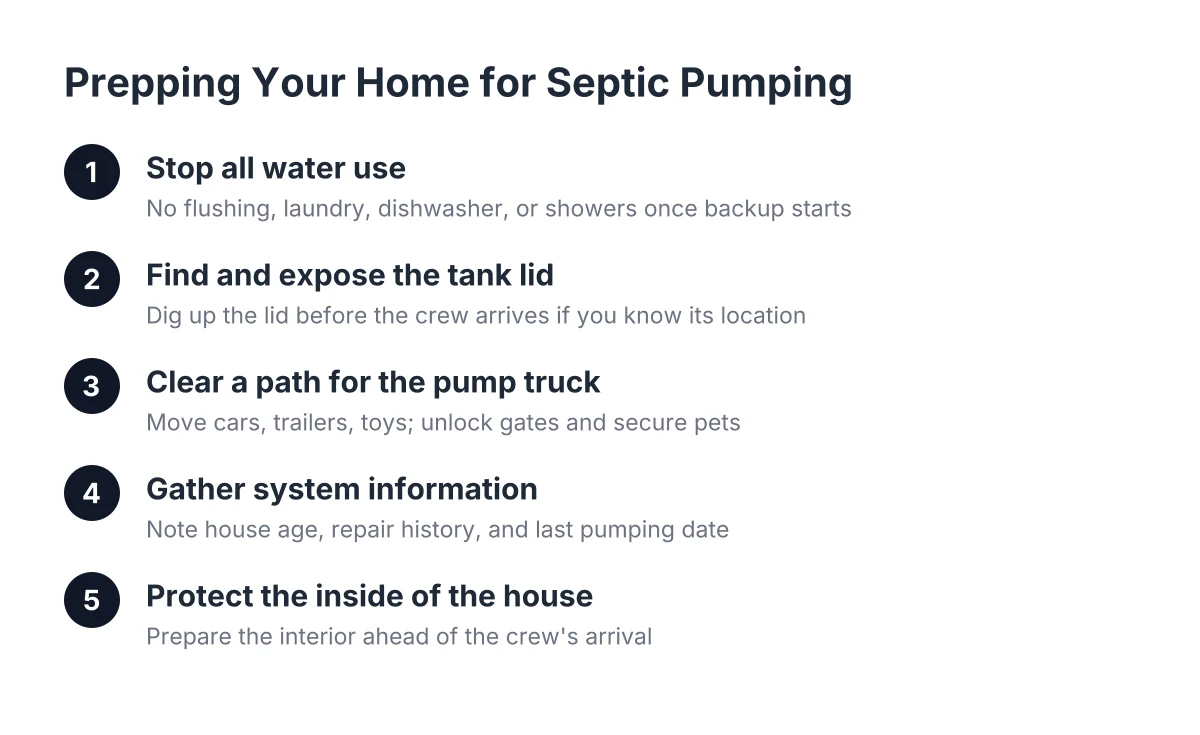
    The crew has to find your tank, expose the lid, and get a hose to it. A lid at grade level with a clear path from the driveway is the cheap version. A lid buried under two feet of dirt, a deck, or landscaping means digging, and digging means labor. Walk your yard before you call. If you can see your lids or risers, say so. If you have no idea where the tank is, mention that too, because locating adds a step to the job.

    Pumping only, or pumping plus cleaning and inspection

    Pumping removes the liquid and solids. Cleaning goes further, washing down the tank walls and removing the stubborn buildup pumping alone leaves behind. An inspection checks baffles, lids, and the general condition of the tank while it is open. Each added service adds cost, but skipping an inspection on an older tank can cost you more later. Our breakdown of septic tank pumping prices in Hesperia and what cleaning and inspection actually involve walks through the difference in detail.

    Emergency timing versus scheduled service

    A pumping you book a week out on a weekday costs less than a truck rolling out for a backup or overflow after hours. Emergency septic pumping exists because sewage in the house cannot wait, but urgency carries a premium with any provider. If your system is fine today, scheduling routine service on your own timeline is the single easiest way to stay on the low side of the price.

    Repairs the crew finds once the tank is open

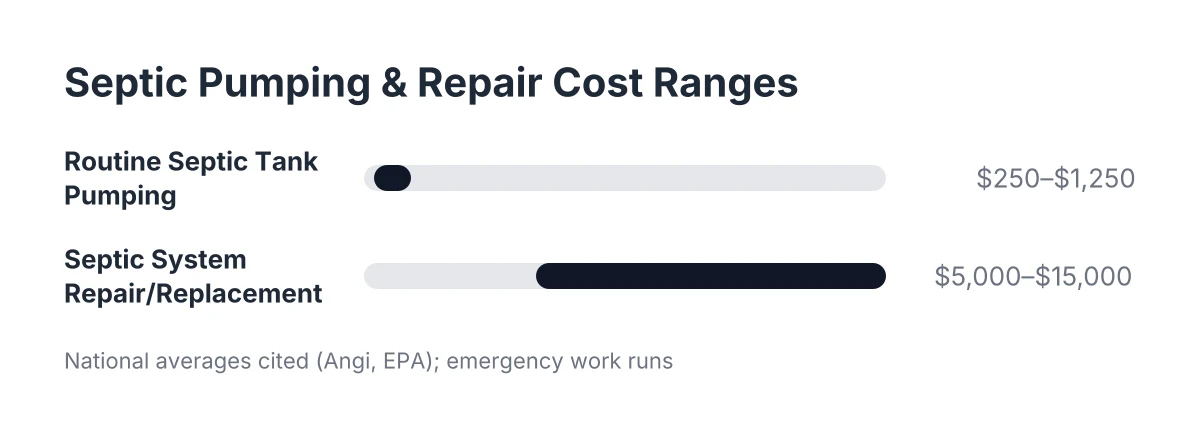
    Pumping is the known part of the bill. The unknown part is what the open tank reveals. A cracked lid, a damaged baffle, or signs of drain field trouble turn a maintenance visit into a repair conversation. Septic system repair cost varies with what broke and how bad it is, so a good crew will show you the problem and quote the fix separately instead of folding a mystery charge into the pumping.

    Cost Factor Table

    Factor Pushes the price down when… Pushes it up when…
    Tank size The tank is small and serves a modest household The tank is large or serves a big home or property
    Tank condition Waste is mostly liquid from regular pumping Thick sludge has built up from years of neglect
    Access Lids are exposed or at grade with a clear path The lid is buried, paved over, or far from truck access
    Scope of service You need pumping only You add cleaning, inspection, or grease trap service
    Timing You schedule routine service in advance It is an emergency backup, overflow, or after-hours call
    Repairs found The tank, baffles, and lids check out fine The crew finds damage that needs separate repair work

    How to Get an Accurate Septic Tank Pumping Cost Estimate

    The fastest path to a real number is a short phone call with the right details ready. Have these on hand:

    • Your address in Hesperia or the High Desert area. Location tells the crew drive time and whether they know the soil and typical setups in your neighborhood.
    • Tank size and last pumping date, if known. Even a rough guess ("maybe five years ago") helps.
    • What you can see in the yard. Exposed lids, risers, wet spots, or nothing at all.
    • What is happening right now. Routine maintenance, slow drains, or an active septic backup. This changes both the urgency and the scope.

    A good quote spells out what is included: pumping the full tank (not just the liquid layer off the top), disposal of the waste, and whether locating, digging, cleaning, or inspection are part of the price or billed as extras. If a quote seems low, ask what it covers. Some low quotes cover a partial pump-out and leave the solids behind, which puts you right back where you started.

    Estimates differ between providers for real reasons: disposal costs, how they handle digging and locating, and whether they quote the whole job up front or itemize add-ons at the truck. Get the scope in writing, even if it is just a text message, so you can compare quotes on the same terms.

    Ways to Keep the Cost Down

    You cannot control your tank size, but you can control almost everything else.

    • Pump on a schedule, not on a symptom. Waiting for slow drains or a backup means heavier sludge, possible emergency pricing, and risk to your drain field. Drain field damage is where septic system replacement cost enters the conversation, and replacement is the expensive outcome everything else on this list helps you avoid.
    • Expose your lids before the crew arrives. If you know where the tank is, clearing dirt or planters off the lid saves the crew digging time, and time is what you pay for.
    • Keep records. A folder with your last pumping date, tank location, and any inspection notes means every future quote starts from facts instead of exploratory work.
    • Watch what goes down the drain. Grease is the big one. Fats harden in the tank and feed the sludge layer that makes pumping slower and pricier. These kitchen habits that cut septic system pumping cost are free and they work.
    • Get two or three quotes for anything beyond routine pumping. For repairs or suspected drain field trouble, comparing scopes matters as much as comparing prices.

    Cost Questions People Ask

    Why do septic tank pumping cost quotes vary so much between providers?

    Because the quotes often cover different work. One provider may include locating, digging, and full solids removal in the number; another may quote a bare pump-out and add the rest at the truck. Ask each provider to list what the price includes, then compare like for like.

    Does the cost of septic tank replacement mean I should skip pumping to save money?

    The opposite. Skipping pumping lets solids flow into the drain field, and a failed drain field is the main path to full system replacement. The cost of septic tank replacement dwarfs decades of routine pumping, so maintenance is the cheap insurance here.

    Is emergency septic pumping worth the extra cost?

    If sewage is backing up into your home or pooling in the yard, yes. Waiting risks damage to floors, fixtures, and the drain field, all of which cost more than the emergency premium. If the problem is a slow drain and nothing is overflowing, ask whether a next-day scheduled visit gets you a better price.

    How often should I budget for septic tank pumping?

    It depends on your tank size, household size, and water habits, so there is no single right interval. A crew that pumps your tank can look at the sludge level and tell you how your schedule is working. Once you know your interval, divide the septic tank pumping cost across those years and set the money aside; it becomes a small, predictable line item instead of a surprise.

    The Bottom Line

    Your septic tank pumping cost comes down to tank size, tank condition, access, scope, and timing, and every one of those is knowable before a truck shows up. Gather what you know about your tank, call for a quote with those details ready, and compare two or three written scopes if the job goes beyond routine pumping. A scheduled pumping today is the cheapest version of this service you will ever buy.

    If you need your septic tank serviced, Hesperia Septic can help.

    Related guide: septic tank maintenance — Complete Guide

    Related Reading

  • How Much Does Septic Tank Pumping Cost?

    cost of septic tank replacement

    If you searched for septic tank cost or the cost of septic tank replacement, you have probably seen pages full of made-up averages. We will not do that here. What you pay for septic tank pumping in Hesperia hinges on a few real things: the size and condition of your tank, how hard it is to reach, and whether you are calling for routine service or an emergency backup. By the end of this page you will know exactly which of those factors apply to your property and how to get an accurate number from a local crew instead of guessing.

    What Drives the Cost of Septic Tank Replacement and Pumping

    No two septic calls are the same. Here are the factors that move the price on real jobs, and how to tell which side of each one you are on.

    Tank size and how full it is

    A bigger tank holds more waste, and more waste means more time on site and more volume to haul away. That raises the price. If you do not know your tank size, check your home's original permit paperwork or a past pumping receipt. If the tank is overfull or has been neglected for years, expect the job to take longer than a routine pump-out, which also pushes the cost up.

    How easy the tank is to reach

    The truck has to park close enough for the hose to reach your tank, and the crew has to get to the access lid. A tank with an exposed riser near the driveway is the cheap end of this factor. A tank buried under two feet of dirt, hidden under a deck, or sitting far from where a truck can park costs more. If nobody knows where your tank is, septic tank locating adds a step before pumping can even start. Walk your yard before you call. If you can point to the lid, you are on the low side.

    Routine service versus a septic backup

    Scheduled septic tank pumping on a system that is working is the least expensive version of this service. A septic backup or overflow is the expensive version. Emergency septic pumping often happens after hours or on weekends, the crew is working around sewage instead of a calm yard, and there may be cleanup and inspection work on top of the pumping itself. If your drains are still flowing, you are on the cheaper side. If sewage is coming up in the tub, you are not.

    Condition of the system

    Pumping empties the tank. It does not fix a cracked tank, a failed baffle, or a saturated drain field, which is the underground area where wastewater soaks into the soil. If an inspection during pumping finds damage, repairs are a separate cost. In the worst case, the conversation shifts from pumping to the cost of septic tank replacement, which is a different job entirely: excavation, a new tank, possibly a new leach field, and permits. Regular pumping is what keeps you on the cheap side of this factor.

    Extra work beyond the pump-out

    Some visits are pumping only. Others include septic tank cleaning, where the crew washes down solids stuck to the tank walls, or a full septic system inspection. Grease trap pumping and RV or holding tank pumping are separate services with their own scope. More scope means more time, and more time means a higher bill. Decide what you actually need before you call, and say so.

    Local site conditions

    Hesperia and the High Desert have their own soil, lot sizes, and driveway layouts. Long rural driveways, soft sand where a heavy truck can get stuck, and deep-set tanks all add difficulty. A local crew that works these properties can look at your setup and price it accurately instead of quoting a generic figure that falls apart on site.

    Cost Factor Table

    Factor Pushes the price down when… Pushes it up when…
    Tank size and fill level The tank is standard size and pumped on a regular schedule The tank is large, overfull, or has gone years without service
    Access The lid is exposed or shallow and the truck can park nearby The tank is deeply buried, hidden, or far from truck access
    Type of call It is scheduled, routine septic tank pumping It is an emergency backup or overflow, especially after hours
    System condition The tank and drain field are healthy Damage turns up and repairs or replacement enter the picture
    Scope of work You need a straightforward pump-out only You add cleaning, inspection, locating, or grease trap service
    Site conditions The property has firm ground and easy layout Soft sand, long driveways, or tight spots slow the crew down

    How to Get an Accurate Cost of Septic Tank Replacement Estimate

    The fastest way to a real number is a short phone call with the right details ready. Here is what to gather first:

    • Tank location. Do you know where the lid is? Is it exposed, or buried?
    • Tank size, if you know it. Check permit records or an old pumping receipt.
    • Last service date. A tank pumped three years ago prices differently than one nobody has touched in fifteen.
    • What is happening right now. Routine maintenance, slow drains, or active septic backup?
    • Property access. Can a pump truck get within hose reach of the tank?

    A good quote should tell you what is included: the pumping itself, whether disposal of the waste is covered, whether a basic inspection comes with it, and what would count as extra. Ask directly. If a company will not say what is in the price, that is your answer about how the final invoice will go.

    Estimates differ between providers for real reasons. Some quote a base price and add fees for digging, locating, or extra volume. Others build those into one number. Neither approach is wrong, but you cannot compare quotes until you know what each one covers. Get the scope in writing, even if it is just a text message or email listing what the price includes.

    Ways to Keep the Cost Down

    You cannot control your soil or your tank size, but you can control these:

    1. Pump on a schedule, not in a crisis. Routine septic tank pumping is the cheap version of this service. Emergency septic pumping after a backup is the expensive version, and it often comes with cleanup on top. Regular service is the single biggest lever you have.

    2. Know where your tank is before the truck arrives. If the crew has to spend an hour locating and digging to the lid, you pay for that hour. Find the lid, mark it, and consider installing a riser so future visits start faster.

    3. Get two or three quotes with the same scope. Tell each company the same details and ask what is included. Comparing a bare pump-out price against an all-in price tells you nothing. Comparing like for like tells you a lot.

    4. Do not put off small problems. Slow drains and wet spots over the drain field are early warnings. Catching a failing component early keeps you in repair territory. Ignoring it long enough puts you into the cost of septic tank replacement, which no amount of quote shopping makes cheap.

    5. Watch what goes down the drain. Grease, wipes, and heavy garbage disposal use fill a tank with solids faster. Slower buildup means fewer pump-outs over the life of the system.

    Cost Questions People Ask

    Why can't anyone give me a septic system cost over the phone?

    An honest company can give you a ballpark once they know your tank size, access, and situation, but the final number depends on what they find on site. A tank that turns out to be buried deeper than expected, or fuller than described, changes the work. Companies that quote one firm price sight unseen tend to make up the difference with add-on fees later.

    Is the cost to install septic tank and leach field the same as pumping?

    No, they are different jobs by an order of magnitude in scope. Pumping empties and services your existing tank. Installing a new septic tank and leach field means excavation, materials, permits, and inspections, and it is what you face when a system fails for good. Regular pumping exists to keep you away from that job for as long as possible.

    Does an aerobic septic system cost more to service?

    Aerobic systems, which use air to break down waste faster than a standard tank, have more parts: pumps, aerators, and sometimes sprinklers. More parts mean more things to inspect and maintain, so ongoing service usually costs more than a basic gravity system. If you have one, tell the company when you call so the quote reflects the right system.

    Will pumping fix my septic backup?

    Sometimes. If the backup happened because the tank is full, pumping solves it. If the real problem is a clogged line, a failed baffle, or a saturated drain field, pumping buys you time but the symptom comes back. That is why a backup call often includes an inspection, so you find out whether you are done or whether there is a repair conversation ahead.

    The Bottom Line

    Septic tank pumping prices come down to tank size, access, and whether you called before or after the backup. Skip the pages of invented averages, gather your tank details, and get two or three written quotes with the same scope so you can compare them honestly. If you are in Hesperia or the surrounding High Desert, a quick call with your property details is the fastest path to a real number.

    If you need your septic tank serviced, Hesperia Septic can help.

    Related Reading