If you just bought a house in Hesperia with a septic system, or you own a rental or two out here in the High Desert, the question of how often you need a septic pumping schedule probably nags at you. Nothing is wrong right now. The drains work. The yard smells fine. So it is tempting to put it off another year. The problem is that a septic tank fills whether you think about it or not, and the first obvious sign of trouble is usually the expensive one: a backup in the house or a soggy patch over the drain field.
This guide walks you through how to build a pumping schedule you can actually stick to, step by step. No scare tactics, no pressure to buy things you do not need. Just the process a local crew that pumps tanks daily would recommend to a neighbor.
Why Pumping Frequency Matters More Than Any Single Pump-Out
A septic tank works by letting solids settle to the bottom as sludge while liquid flows out to the drain field. Over time the sludge layer grows. Once it gets deep enough, solids start escaping into the drain field, and that is where the real damage happens.
Here is the math that should drive your decision. According to Angi, septic tank pumping averages $427, ranging from $250 to $1,250 or more depending on tank size and location. Meanwhile, the U.S. Environmental Protection Agency estimates septic repair or replacement typically costs between $5,000 and $15,000. Skipping a few hundred dollars in routine service to risk a five-figure repair is the worst trade in home ownership.
Therefore, the goal is not to pump as rarely as possible. The goal is to pump on a schedule matched to your household, so you never find out the hard way that you waited too long.
Step 1: Find Out When the Tank Was Last Pumped
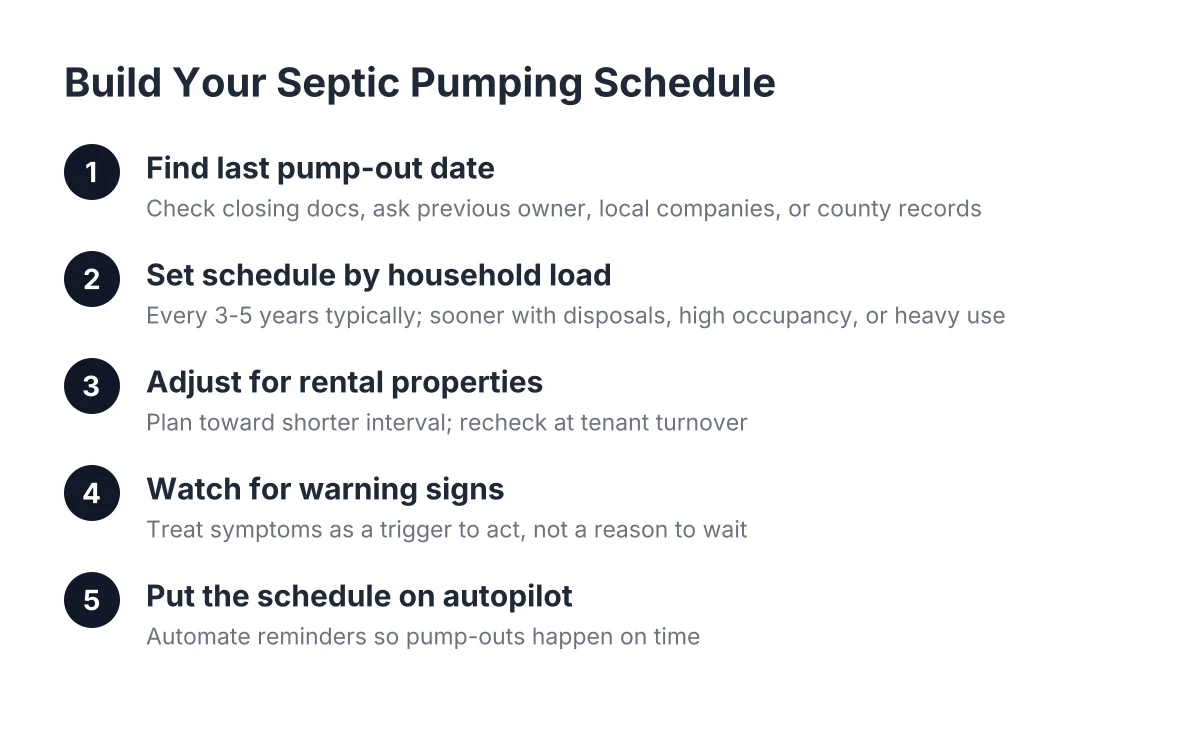
Start by digging up the tank's service history, because your schedule begins from the last pump-out, not from today. If you bought the house recently, check your closing documents and inspection report. Many buyers in Hesperia find a septic inspection or pumping receipt tucked into escrow paperwork and never noticed it.
If the paperwork turns up nothing, try these in order:
- Ask the previous owner or their agent directly; a quick email often gets an answer.
- Call local septic companies and ask if they have a service record for the address.
- Check with San Bernardino County for any permits or septic records on file.
- Ask longtime neighbors; on septic streets, people remember whose truck was in whose driveway.
If you still cannot confirm a date, treat the tank as overdue and schedule a pump-out now. That gives you a clean starting point, and the crew can tell you the tank's condition while it is open. For a landlord who inherited three rentals with zero records, this first baseline pump-out per property is the single most valuable step in this whole guide.
Step 2: Creating Your Septic Pumping Schedule Based on Household Load
How often should homeowners pump a septic tank? For most households, pumping every three to five years keeps sludge at a safe level, and the U.S. Environmental Protection Agency recommends a professional inspection at least once every three years. Your exact interval depends on tank size, how many people use the system, and what goes down the drains.
Think of it as a simple ratio: more people and more water use fill the tank faster; a bigger tank buys you more time. A retired couple in a three-bedroom house fills a tank far slower than a family of six in the same house. Neither the calendar alone nor the tank alone tells the story; the combination does.
Certain factors shorten the interval:
- A garbage disposal. Ground-up food waste becomes sludge fast. The Massachusetts Department of Environmental Protection recommends annual pumping for homes with garbage disposals, regardless of tank size.
- High occupancy. More people means more wastewater and more solids.
- Heavy laundry and water use. Constant loads push water through the tank before solids fully settle.
- An alternative system. Systems with pumps, float switches, or mechanical parts should be inspected once a year, according to the U.S. Environmental Protection Agency.
However, do not guess in a vacuum. A crew that opens the tank can measure the actual sludge layer and tell you whether your interval should be three years, five years, or something in between. That measured answer beats any chart on the internet, including this one.
Step 3: Adjust the Schedule for Rental Properties
Rental properties need a tighter septic pumping schedule than owner-occupied homes, because you do not control what goes down the drains. Tenants change, occupancy shifts, and nobody calls you when the toilet gurgles until it becomes a Saturday night emergency. For a rental, plan toward the shorter end of whatever interval fits the household size.
Consider a common Hesperia scenario. A landlord owns two septic-served rentals. One has a single tenant; the other houses a family of five with a garbage disposal. Same tank size, same street, wildly different schedules. The first property might go four or five years between pump-outs. The second may need service every year or two.
For each rental, do three things:
- Get a baseline pump-out and note the sludge level the crew reports.
- Set the next service date based on that reading and the current occupancy.
- Re-check the schedule whenever tenants turn over, ideally with a pump-out or inspection between leases.
A pump-out at turnover also protects you in a dispute. Documented septic service before a new lease makes it clear that a later clog came from use, not from a neglected system. Keep the invoices with your property records; they matter at sale time too.
Step 4: Watch for Signs You Waited Too Long
Warning signs mean the tank is already past due, so treat them as a trigger to act, not a reason to wait and see. Between scheduled pump-outs, you or your tenants should watch for:
- Drains that run slow throughout the house, not just one fixture
- Gurgling sounds from toilets or drains
- Sewage odors inside, near the tank, or over the drain field
- Wet, spongy, or unusually green grass above the drain field
- Sewage backing up into tubs or floor drains, which is an emergency
For example, a slow kitchen drain by itself is probably a plumbing clog. Slow drains in every room of the house at once point to the septic system. If you see backup or standing sewage, stop running water and call for emergency septic pumping; running more water only pushes the problem further into the house.
One honest caveat: pumping does not fix everything. If a drain field has already failed, pumping the tank buys time but does not repair the field. That is a situation where you need a professional assessment of the whole system, not just a truck and a hose.
Step 5: Put the Schedule on Autopilot
The final step is removing memory from the equation, because "a few years ago" is how every overdue tank starts. Most homeowners who end up with a backup did not decide to skip pumping; they just lost track. Beat that by making the schedule automatic.
First, write down the date of your baseline pump-out and the sludge level the crew reported. Next, set a calendar reminder for the interval they recommend, and set a second reminder six months earlier so you have time to schedule without rushing. Then ask the septic company whether they keep service records and send reminders; a local outfit that works Hesperia tanks daily usually tracks this for repeat customers.
For landlords, add septic dates to the same system you use for lease renewals and insurance. If a property manager handles day-to-day issues, make sure they know which properties are on septic and who to call, so a tenant complaint about slow drains gets routed correctly the first time.
Know Your Tank Before You Set the Schedule
The interval depends on the tank itself, not just the household. If you are not sure what is buried in your yard, these guides fill in the picture:
- Septic tank capacity guide: choosing the right size for Hesperia homes — how tank size translates into years between pump-outs, especially for rentals.
- Concrete vs. plastic septic tanks: durability and cost compared — the material differences that affect lifespan and maintenance planning.
- Septic tank concrete: cost, lifespan, and how it compares to plastic and fiberglass — what to expect from the most common tank type in the High Desert.
- Septic vs. cesspool: which is right for you? — if an older property has a cesspool instead of a true septic system, the service schedule works differently.
Fixed Intervals vs. Inspections: Which Approach Defines a Septic Pumping Schedule?
The best answer to how often should homeowners pump is both: keep a fixed interval as your default, and let inspections fine-tune it. The interval keeps you from drifting into "we'll get to it," while a measured sludge reading every few years tells you whether your interval is right for the way the house is actually used.
In practice, that looks like this for 2026 and beyond. Pump now if you have no record of the last service. Ask the crew for the sludge level and a recommended interval. Put that date on the calendar, and adjust when life changes: a new tenant family, a new garbage disposal, or a house that goes from two occupants to six.
Handled this way, septic tank pumping becomes a line item you plan for, like registration on a truck, instead of a crisis you react to. You will never be the house on the street with the smell in the yard, and your rentals will never lose a tenant to a preventable backup. That is the whole point of a schedule: a few hundred dollars on your terms, instead of thousands on the tank's terms.
If you need your septic tank serviced, Hesperia Septic can help.