Sewage in the tub at 8pm does not wait until Monday. If you are standing in your Hesperia kitchen wondering whether the gurgling drain is a fluke or the start of a mess, this list is for you. These are the signs your septic tank needs pumping soon, and the signs it needs someone out today—which is exactly when septic tank emergency triage becomes essential. Knowing the difference can save you from a flooded bathroom and a much bigger bill.
Here is the short version: slow drains and odors usually mean you have days or weeks. Sewage coming up inside the house, a screaming alarm, or standing water over the tank means you have hours. We will walk through all seven signs in order, from "schedule it this week" to "call now," so you can triage your own situation calmly.
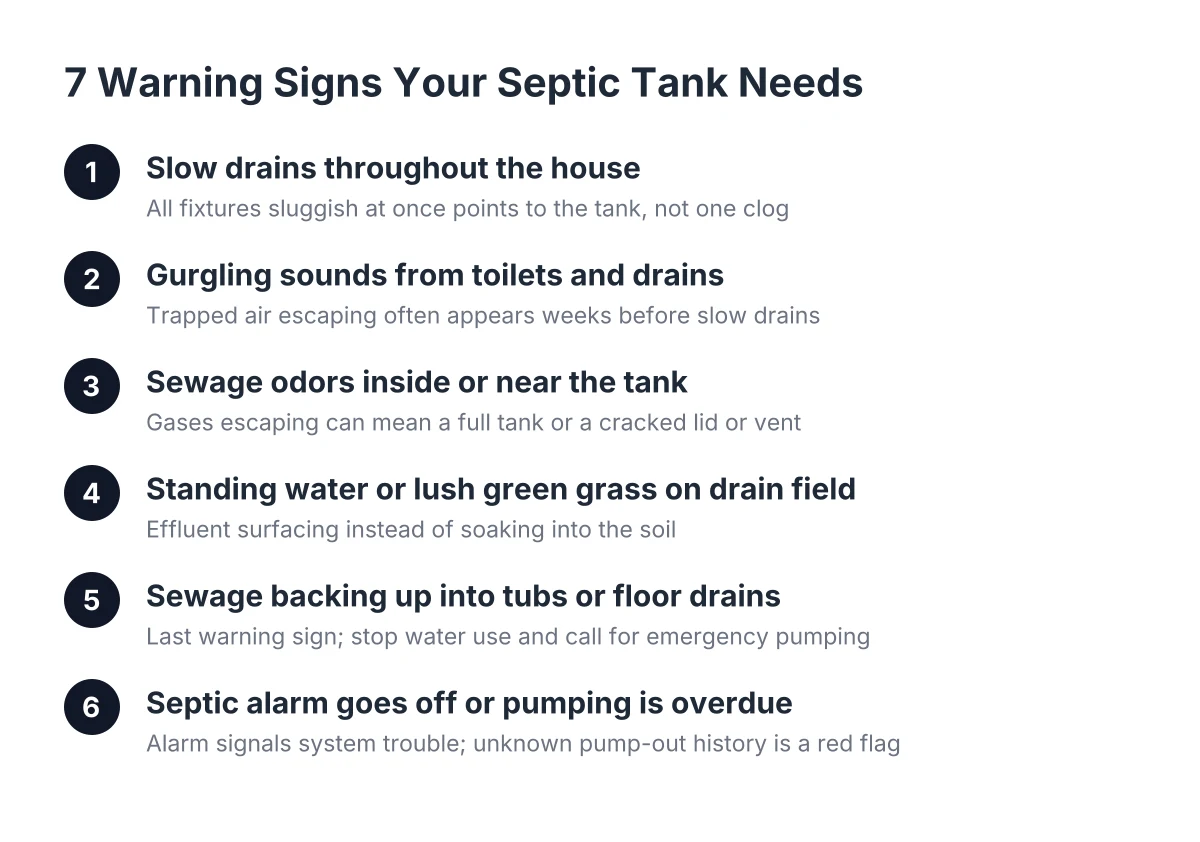
1. Drains All Over the House Are Slow at the Same Time
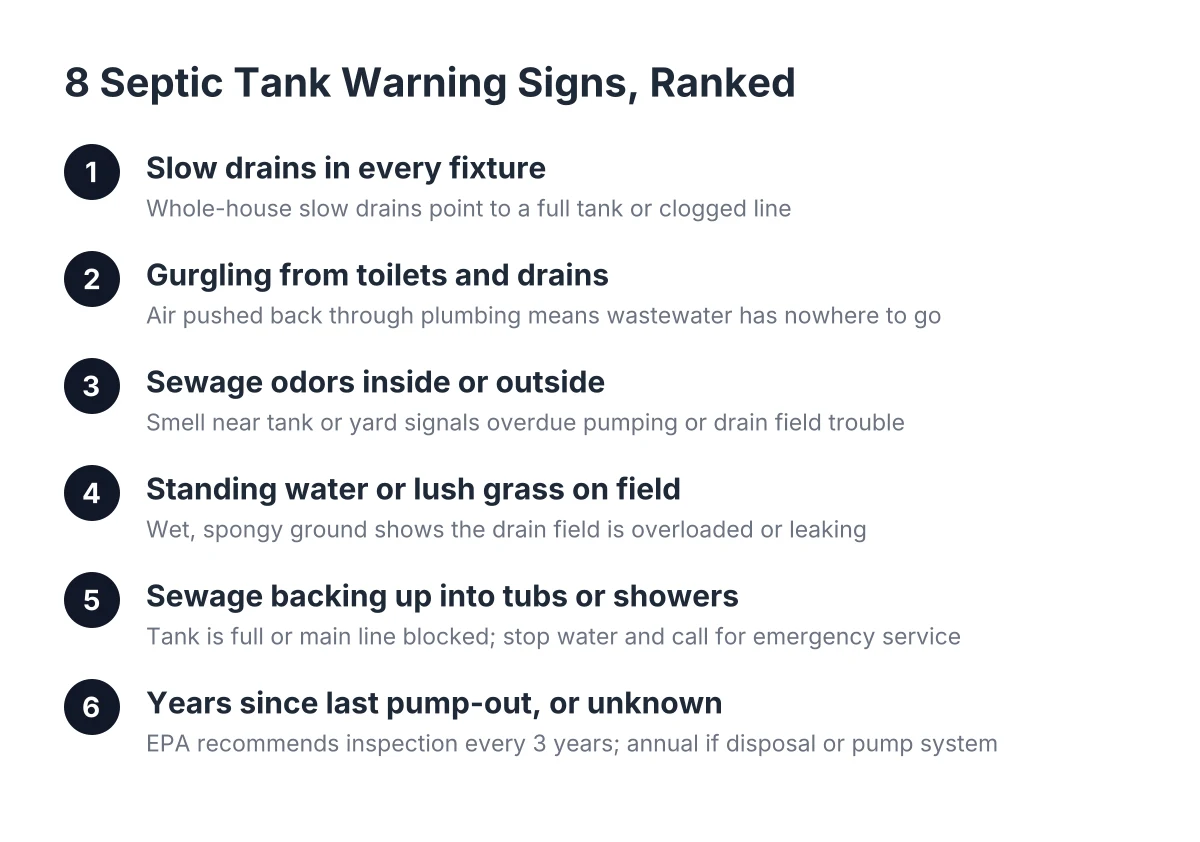
One slow drain is usually a clogged pipe. Every drain slow at once is one of the earliest signs your septic tank is getting full. The tank sits at the low point of your whole plumbing system, so when it fills past its working level, every fixture in the house feels it together.
Test it yourself: run the bathroom sink, the kitchen sink, and flush a toilet. If all three drain sluggishly, stop searching for "emergency plumber near me" and start searching for septic services near me instead. A regular plumber can snake a clogged line, but a full tank needs a pump truck, and many plumbers will tell you exactly that when they arrive.
This sign gives you time, usually days. Cut back on laundry and long showers, and get septic tank pumping scheduled before it turns into sign number five.
2. Gurgling Sounds When You Flush or Run Water
Gurgling from a toilet or drain means air is fighting its way through water where it should flow freely. Therefore, treat gurgling as your plumbing clearing its throat before it starts shouting. It often shows up before slow drains do.
Listen for it after a toilet flush or when the washing machine empties. A toilet that gurgles when the shower runs is telling you the main line to the tank is struggling, not the toilet itself.
On its own, gurgling means schedule an inspection. Combined with slow drains or odors, it moves you up the urgency ladder fast.
3. Sewage Smells Inside the House or Over the Tank
A septic system working correctly should be invisible and odorless. Persistent rotten-egg or sewage smells near drains, in the yard over the tank, or around the drain field mean gases are escaping where liquid is about to follow.
Outdoor smells in the High Desert can be tricky. Wind carries odors, and a hot Hesperia afternoon makes everything stronger. However, if the smell is consistent in one spot day after day, especially over your tank lid or drain field, that is not the wind. That is one of the classic signs your septic tank needs to be emptied.
Indoor smells are more urgent than outdoor ones. Sewer gas inside the house means the backup is close to the fixtures, and you should limit water use until a crew looks at it.
4. Septic Tank Emergency Triage: A Wet, Soggy, or Suspiciously Green Patch in the Yard
Hesperia yards are dry most of the year, which works in your favor here. A soggy patch or a stripe of bright green grass over the drain field, when nothing around it is green, means wastewater is surfacing instead of soaking down through the soil. That can point to a full tank, a clogged outlet, or a failing drain field.
Walk the area over your tank and lines. If the ground feels spongy, smells like sewage, or has standing gray water, keep kids and pets away from it. Surfacing sewage is a health issue, not just a plumbing one.
This sign sits on the border between routine and emergency. A pump-out sometimes relieves it. If water keeps surfacing after the tank is pumped, the problem is likely the drain field, and that calls for a professional septic system inspection rather than another pump truck visit.
5. Sewage Backing Up Into Tubs, Showers, or Floor Drains
This is the line between "soon" and "now." When wastewater has nowhere to go, it comes back up through the lowest fixtures in the house first, usually a tub, shower, or floor drain. If you see black or gray water rising in a tub you did not fill, your septic tank is backing up and every flush makes it worse.
Here is what to do in the next ten minutes:
- Stop all water use immediately. No flushing, no laundry, no dishwasher, no showers.
- Keep everyone away from the affected fixtures, and keep the water contained if you can.
- Do not pour chemicals or drain cleaner into anything; they will not fix a full tank and can make the mess more hazardous.
- Call for emergency septic pumping and describe exactly what you see, including which fixtures are backing up.
A real emergency septic service will walk you through this on the phone before the truck arrives. In many cases, pumping the tank stops the backup the same day. What it cannot always do is fix the reason the tank filled early, which is why a follow-up inspection matters once the crisis is over.
6. The Septic Alarm Is Going Off
If your system has a pump or an alarm and it starts sounding, do not silence it and go back to bed. The alarm means the water level in the tank or pump chamber is higher than it should be. You typically have some hours of light water use before it becomes a backup, but the clock is running.
First, press the silence button if there is one; that quiets the noise without turning off the alert. Next, cut water use to the bare minimum. Then call a septic crew and tell them the alarm is on and how long it has been sounding. According to the U.S. Environmental Protection Agency, alternative systems with float switches, pumps, or mechanical parts should generally be inspected once a year, and an alarm event is a strong sign that inspection is overdue.
Do not assume the alarm is a false alert. Sometimes it is a stuck float. Sometimes it is a failed pump with a full chamber behind it. Only someone opening the tank can tell you which.
7. It Has Been Years and You Cannot Remember the Last Pumping
The quietest warning sign is the calendar. Solids build up in the tank whether or not you see symptoms, and by the time signs your septic tank is failing show up above ground, the cheap fix may already be off the table. The EPA recommends a professional inspection at least once every three years for the average household, and pumping as the inspection results dictate.
The money math is blunt. According to Angi data, septic tank pumping averages $427, with a typical range of $250 to $1,250 depending on tank size and location. Meanwhile, the EPA estimates septic repair or replacement typically runs $5,000 to $15,000. As of 2026, that gap has not narrowed. Skipping a few hundred dollars of maintenance to risk a five-figure drain field replacement is a bad trade in any year.
In addition, watch your water habits between pumpings. The EPA notes that a single leaky or running toilet can push as much as 200 gallons of extra water per day into a septic system. That is like adding invisible occupants to your house, and it can drown a healthy drain field over time.
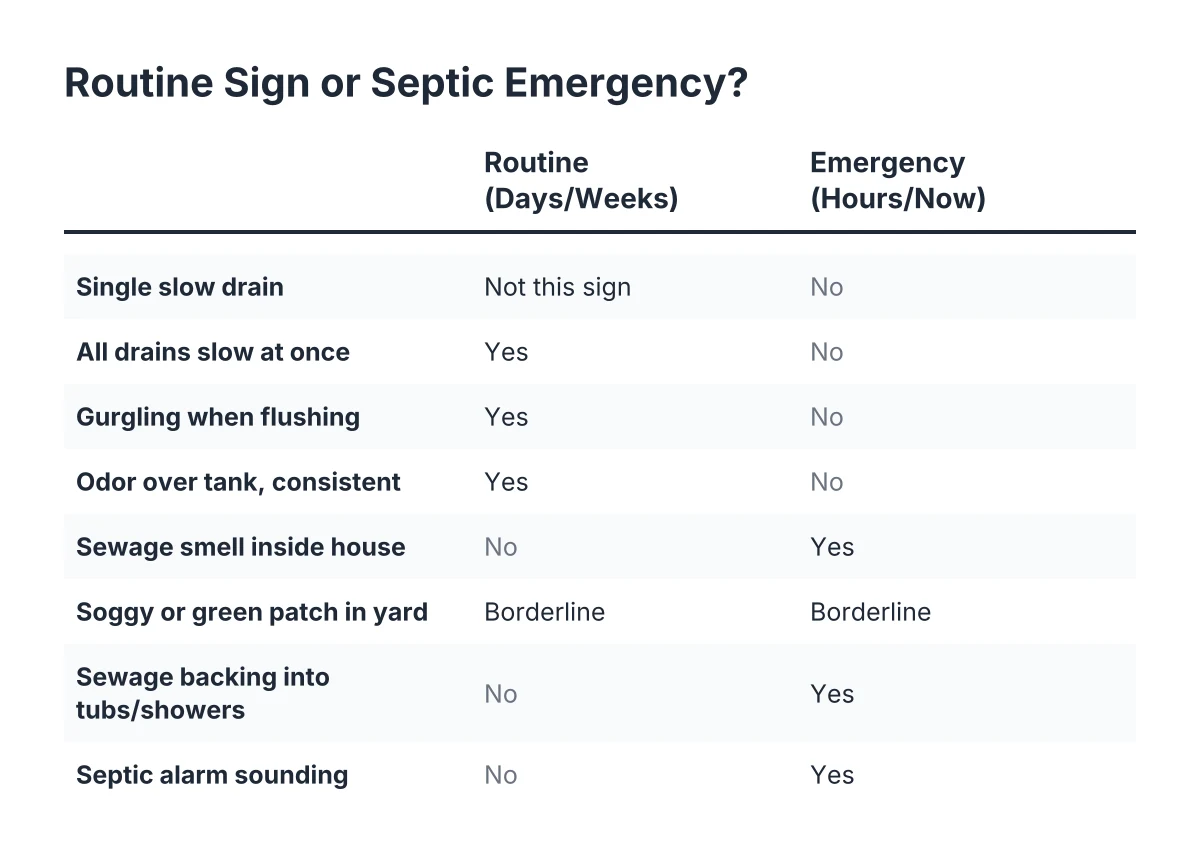
How to Tell Routine Signs Your Septic Tank Is Full From a True Emergency
Routine signs give you days: slow drains everywhere, gurgling, outdoor odors, and a long gap since your last pumping. Emergency signs give you hours: sewage inside the house, a sounding alarm, or wastewater pooling on the ground. When routine signs stack up together, treat them as one level more urgent than each looks alone.
A realistic Hesperia scenario: a homeowner notices the shower draining slowly on Thursday, hears the toilet gurgle Friday morning, and by Saturday night has gray water rising in the tub while guests are due Sunday. Each sign alone looked minor. Together, they were a tank at capacity announcing itself over 72 hours.
Use this quick triage:
- Symptoms only outside, house drains working: schedule pumping or an inspection this week.
- Slow drains plus gurgling plus odor: cut water use and get a crew out within a day or two.
- Sewage indoors, alarm sounding, or standing wastewater in the yard: stop all water use and call for emergency pumping now.
One honest caveat: pumping fixes a full tank, but it cannot fix a crushed pipe, a saturated drain field, or roots in the line. If symptoms return within weeks of a pump-out, insist on a camera or system inspection before paying for another truck. A trustworthy local crew will tell you when the answer is not another pumping, and in Hesperia and the surrounding High Desert, the crews worth calling are the ones who answer the phone at night and explain exactly what they find before they charge you for it.
If you need your septic tank serviced, Hesperia Septic can help.