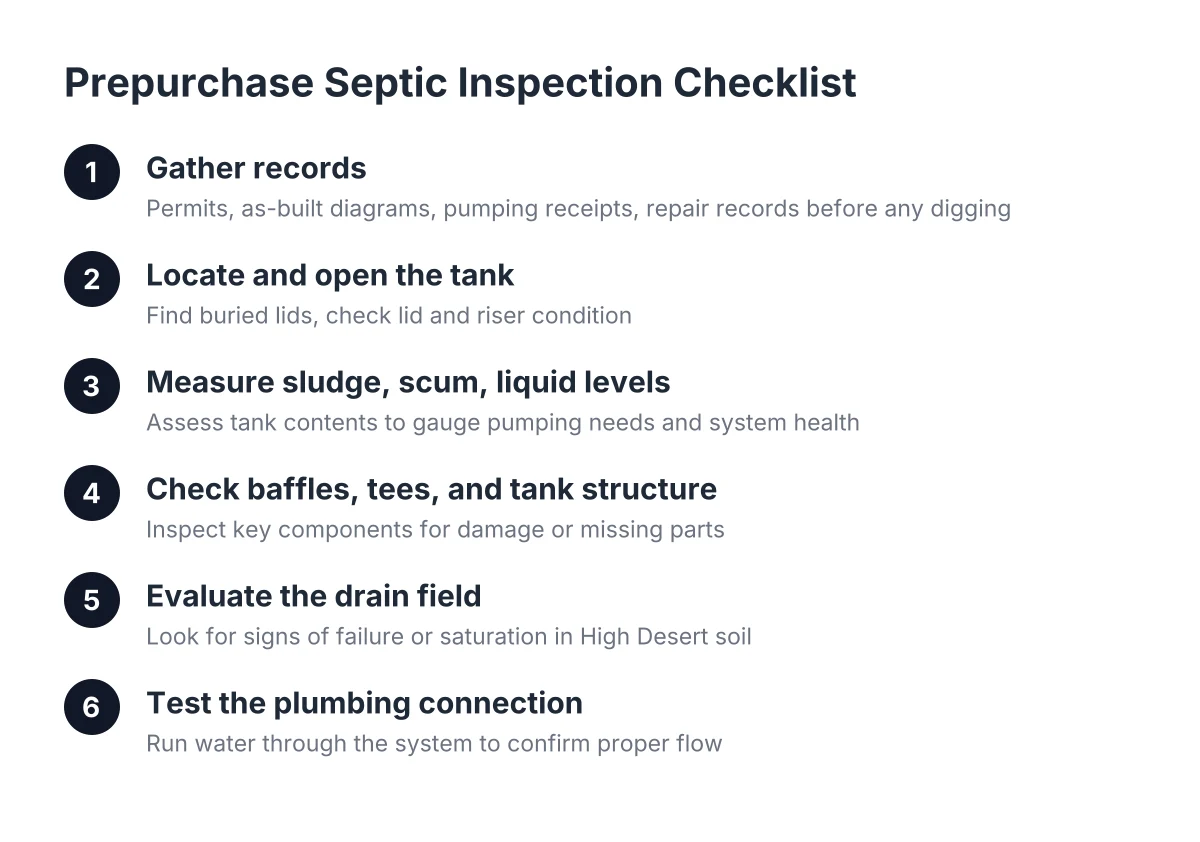
Buying property in Hesperia or anywhere in the High Desert means you might be buying a septic system too. Before you close, you need a prepurchase septic inspection checklist that produces documented, lender-ready proof of what you are getting. This guide walks through that checklist step by step, from records to tank to drain field, so buyers, sellers, and lenders can see the system's real condition before money changes hands. It is written with High Desert soil and system quirks in mind, because a checklist built for wet-climate properties misses half of what matters out here.
This matters more in California than most buyers realize. According to the U.S. Environmental Protection Agency, only about 10 percent of California homes sit on septic systems, compared with highs of 55 percent in Vermont. That means most buyers, agents, and even some lenders in this state have never dealt with one. If you are buying a rental, a small commercial site, or an RV park property out here, the burden of due diligence falls on you.
Why a Prepurchase Septic Inspection Checklist Protects the Deal
A written checklist turns a vague "the seller says it works fine" into a documented record that escrow, lenders, and future health inspectors will accept. Verbal assurances do not survive a dispute. A dated inspection report with tank measurements, component conditions, and pumping records does.
The financial stakes are lopsided. The U.S. Environmental Protection Agency estimates septic repair or replacement typically costs between $5,000 and $15,000, far more than routine pumping or an inspection. A checklist that catches a failing drain field before closing gives you leverage to negotiate the price down, require repairs, or walk away. Skip it, and that repair bill becomes yours the day escrow closes.
For non-residential buyers, the stakes stack higher. Suppose you are buying a small restaurant building in Hesperia with both a septic tank and a grease trap. A health inspector can flag that grease trap within weeks of you opening. If your prepurchase septic inspection checklist never covered it, you inherit a compliance problem along with the keys. The same logic applies to an RV park with holding tanks or a rental duplex where tenants will call you, not the seller, when drains slow down.
High Desert conditions add their own wrinkles. Sandy and rocky soil, caliche layers, wide temperature swings, and older systems installed decades ago with thin or missing paperwork all show up in this area. An inspection built around those realities looks different from a generic checklist pulled off the internet, and the report it produces holds up better when a lender asks questions.
Start With Records Before Anyone Opens a Lid
The paper trail comes first because it tells the inspector where to look and tells you what the seller actually knows. Request these documents from the seller or their agent early, ideally when you open escrow, so gaps surface while you still have time to act.
Here is what to collect:
- The original septic installation permit and as-built diagram from San Bernardino County, if one exists
- Pumping receipts from the last several service visits, with dates and the company that did the work
- Any repair records, such as a replaced baffle, new lid, riser installation, or drain field work
- Records of any septic system inspection done before, including the report itself, not just a mention of it
- For commercial properties, grease trap pumping manifests and waste disposal documentation
- Well records, if the property has a private well, since well and septic placement affect each other
Missing records are common on High Desert properties, and they are not automatically a deal-breaker. However, a property with no permit on file, no pumping history, and a seller who cannot say where the tank is deserves extra scrutiny. In that case, septic tank locating becomes the first field task; a crew traces the line from the house and finds the tank before anything else can be checked.
One note on who does the work. California does not run a single statewide septic inspection license the way some states do, so requirements vary by county and by the type of report needed. Ask any inspector directly what qualifications and permits apply to your transaction, and confirm with San Bernardino County what documentation your specific deal requires. If your lender or the county has specific requirements, get those in writing before you schedule anything.
The Field Checklist: What Gets Inspected On-Site
The on-site portion of a prepurchase septic inspection covers the tank, its components, the drain field, and the plumbing that feeds it. Expect the visit to include opening the tank, measuring what is inside, and running water through the system. A drive-by look at the yard is not an inspection, no matter what a seller offers.
Locating and Opening the Tank
First, the inspector confirms where the tank actually sits. On older Hesperia properties, lids can be buried under a foot or more of soil, a shed, a concrete patio, or landscaping added by a previous owner. A tank that cannot be accessed cannot be inspected, and access problems themselves belong in your report because you will face them at every future pumping.
Once the lids are exposed, the inspector checks their condition. Cracked concrete lids, corroded metal lids, and missing risers all get noted. These are usually modest fixes, but they matter for safety and for the cost of ongoing service.
Measuring Sludge, Scum, and Liquid Levels
With the tank open, the inspector measures the sludge layer on the bottom and the scum layer floating on top. These measurements show whether the tank has been pumped on a reasonable schedule or neglected. A tank packed with sludge suggests solids may have already pushed into the drain field, which is where the expensive damage happens.
The liquid level tells its own story. A level above the outlet pipe can signal a clogged outlet or a saturated drain field. A level below the outlet can point to a leaking tank, which in sandy High Desert soil can drain quietly for years without anyone noticing a wet spot on the surface.
Many inspections are scheduled alongside septic tank pumping, because pumping the tank empty lets the inspector see the walls, baffles, and inlet and outlet tees directly. If the tank has not been pumped recently, plan for this. As a rough national benchmark, Angi data puts the average cost of septic tank pumping at $427, with a range from $250 to $1,250 or more depending on tank size and location. Treat that as context, not a quote; your property and access conditions drive the real number.
Checking Baffles, Tees, and Tank Structure
Baffles and tees direct flow inside the tank and keep solids from escaping into the drain field. Concrete baffles in older tanks erode over time, and a missing outlet baffle is one of the most common findings on aging systems. It is also one of the cheapest problems to catch before closing and one of the most expensive to discover afterward, once the drain field has been taking solids for a few years.
The inspector also looks at the tank structure itself: cracks in concrete, root intrusion at seams, and signs of past overflow around the lids. On steel tanks, which still turn up on older desert parcels, rust and collapse risk go straight to the top of the report.
Evaluating the Drain Field
The drain field is where most septic failures live, and it is the hardest part to see. The inspector walks the field area looking for soggy ground, unusually green vegetation in an otherwise dry yard, surfacing wastewater, or odors. In the High Desert, a lush green patch over the leach lines in July is a red flag, not a landscaping win.
A load test adds more information. Running a controlled volume of water through the system shows whether the drain field accepts and disperses flow the way it should. Slow acceptance, backup at the tank, or water surfacing in the yard during the test all point to a field at or near the end of its life. Given that replacement sits in that $5,000 to $15,000 range the EPA cites, this single test can be the most valuable line on the checklist.
Testing the Plumbing Connection
Finally, the inspector runs water from inside the building: flushing toilets, running sinks, and watching how quickly everything moves. Slow drains across the whole building suggest a system problem; a single slow fixture usually points to interior plumbing instead. Distinguishing between the two keeps you from blaming the septic system for a $150 drain snake job, or worse, blaming the plumbing for a failing tank.
Extra Prepurchase Septic Inspection Checklist Items for Commercial and Rental Properties
Non-residential properties carry inspection items a house checklist never mentions. If you are buying a building with a commercial kitchen, a rental with multiple units, or land with RV hookups, add these to the standard list.
For a property with a commercial kitchen:
- Locate and open the grease trap or grease interceptor, and measure the grease layer inside.
- Confirm whether the trap discharges to the septic system or to a separate holding arrangement, since kitchen grease reaching a septic tank shortens its life.
- Ask for grease trap pumping manifests, which health inspectors expect to see; missing manifests suggest the trap has been ignored.
- Check the trap's condition and access, because a trap under a fixed prep table gets skipped, and skipped traps get cited.
For rental properties, focus on capacity and history. A duplex or triplex puts more daily flow through a system than the single-family use it may have been designed for. Ask the inspector to note tank capacity relative to the number of units and to flag any history of backups. Say you are a landlord in Riverside buying a two-unit rental in Hesperia; a documented inspection report means that when a tenant calls about a smell six months in, you know whether you are looking at a maintenance issue or a problem the seller should have disclosed.
For RV parks, campgrounds, or parcels with hookups, verify what each dump station or holding tank connects to. Holding tanks with no leach field need pumping on a schedule, and that recurring cost belongs in your operating budget from day one. Confirm the size and access of every tank on the parcel, because "there's a tank out by the back pads somewhere" is not something you want to hear after closing.
If the property also has a private well, coordinate the two evaluations. Buyers searching for well and septic inspection near me are on the right track; separation distance between the well and the septic components affects both water safety and what the county will allow if the system ever needs work. An inspector who knows local conditions can flag a separation problem that a generalist would walk right past.
Reading the Report and Using It in Escrow
A useful septic inspection report states what was found, what it means, and what it will likely take to fix. Look for tank location and access notes, sludge and scum measurements, component conditions, drain field observations, load test results, and photos. Findings should be sorted by urgency: fine as-is, monitor, repair soon, or failing.
Vague language is the warning sign. "System appeared functional at time of inspection" with no measurements behind it tells a lender nothing and gives you nothing to negotiate with. Ask questions until every line of the report is something you could explain to your lender or your own future health inspector.
Then put the report to work. Depending on findings, you can:
- Ask the seller to complete repairs before closing, with receipts
- Negotiate a credit or price reduction sized to the documented repair estimate
- Require a pump-out and reinspection as a condition of the sale
- Walk away from a system that needs full replacement the seller will not address
Timing matters here. Schedule the inspection early in your contingency period, not the week before closing. If the report turns up a failing drain field, you need time to get repair estimates, renegotiate, or exit the deal cleanly. A report delivered three days before close pressures you into accepting problems you would otherwise negotiate.
Keep the report after closing too. For a commercial buyer, it becomes the baseline for your compliance file. For a landlord, it documents system condition at the start of your ownership, which matters if habitability questions ever come up. Either way, it tells your service crew where everything is, which saves locating fees on every future visit.
What Happens After You Buy
Closing on the property starts the maintenance clock, and the inspection report is your starting map. The EPA recommends a professional inspection at least once every three years for a typical household system, and once a year for systems with pumps, float switches, or other mechanical components. Commercial use, heavy rental occupancy, or a grease trap tightens that schedule further.
Set the recurring service up front rather than waiting for a problem. A restaurant operator who puts grease trap pumping on a fixed schedule stops thinking about it until the manifest arrives for the compliance file. A landlord who schedules routine septic tank pumping based on the tank size and occupancy noted in the inspection report avoids the 9 p.m. tenant call about a backup. That is the whole point of doing the checklist right the first time; the same document that protected the transaction now runs the maintenance plan.
One honest limitation: even a thorough inspection is a snapshot. An inspector cannot see inside buried leach lines or predict exactly when a thirty-year-old drain field will quit. What the prepurchase septic inspection checklist gives you is documented current condition, known risks, and a defensible record, which is a far stronger position than hoping the seller was right. For anything the report flags as uncertain, such as suspected root intrusion or a marginal load test, bring in a local septic professional for a closer look before you sign.
Buying property on septic in the High Desert does not have to be a gamble. Work the checklist, insist on measurements instead of assurances, add the commercial items if they apply, and use the report as your negotiating document. The buyers who get burned are the ones who treated the septic system as the seller's word. The ones who do fine are the ones who made it a line item, inspected it like the five-figure asset it is, and filed the paperwork.
If you need your septic tank serviced, Hesperia Septic can help.