If you own a home on septic in Hesperia, sooner or later you will need a septic system inspection. Inspectors follow a specific checklist when they open your tank, and knowing what that checklist looks like helps you in two ways. First, you can tell a real inspection from a quick glance at a lid. Second, you can understand what the findings actually mean, so you know whether you are looking at a routine pump-out or a bigger problem with the tank or drain field. Understanding septic inspection red flags is the key to catching problems early.
This guide walks through what a thorough inspection covers, step by step, and flags the findings that should get your attention. It is written for the homeowner who just bought a house with a septic system, or who has owned one for years and honestly cannot remember when the tank was last pumped. Either way, the goal is the same: know what is happening underground before it becomes a mess above ground.
Why an Inspection Matters Even When Nothing Seems Wrong
A septic system hides its problems until they are expensive. The tank sits underground, the drain field sits underground, and everything can look fine from the lawn while sludge builds toward the outlet pipe. By the time you smell sewage in the yard or watch a toilet back up, the cheap fix window may have already closed.
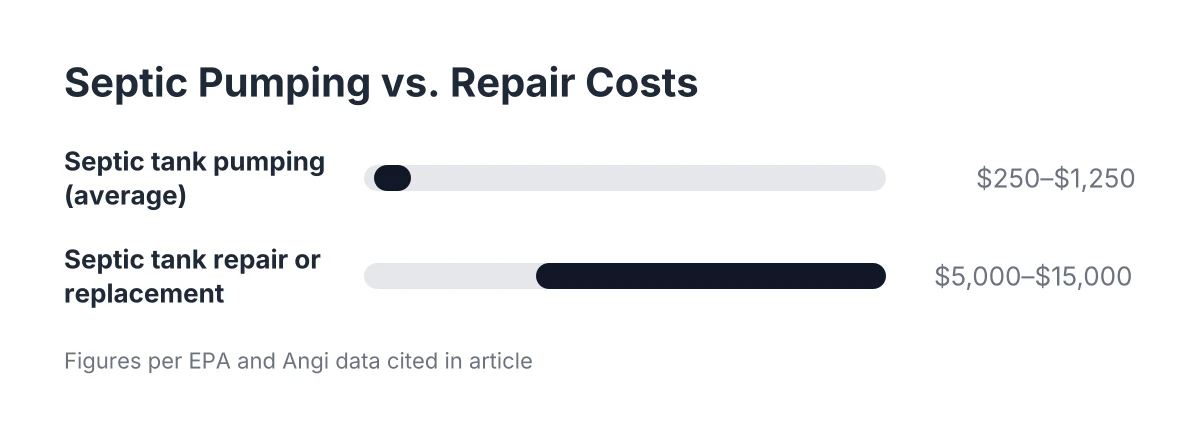
The numbers make the case better than any sales pitch. According to the U.S. Environmental Protection Agency, septic tank repair or replacement typically costs between $5,000 and $15,000, far more than routine pumping. For comparison, Angi data puts the average cost of septic tank pumping at $427, with a range of $250 to $1,250 or more depending on tank size and location. An inspection is how you stay on the $427 side of that ledger instead of the $15,000 side.
Timing matters too. The U.S. Environmental Protection Agency recommends that the average household have its septic system inspected at least once every three years by a professional. If your system has electrical float switches, pumps, or mechanical components, the EPA says those alternative systems should generally be inspected once a year. If you cannot remember the last time anyone opened your tank, you are overdue by definition.
Septic systems are also less common in California than most homeowners realize. According to the U.S. Environmental Protection Agency, only about 10 percent of California homes are on septic, compared with highs of 55 percent in Vermont. That matters in a practical way: many buyers moving to Hesperia from sewer-served neighborhoods have never owned a septic system and do not know what normal maintenance looks like. An inspection is the fastest education you can get about your own property.
What Septic System Inspection Inspectors Actually Check
A thorough septic system inspection covers the tank, the baffles, the flow into and out of the tank, and the condition of the drain field. Inspectors are looking for cracks in the tank, clogged or missing baffles, signs of past leaks or overfills, root intrusion, and evidence that water is not draining out to the soil the way it should.
That is the short version. Here is what each step looks like in practice.
Gathering the History Before Anyone Digs
A good inspection starts before a shovel touches dirt. The inspector or service company will usually ask about the age of the house, any repair history, how often the tank has been pumped, and where the property sits. A house on a hilltop drains differently than one in a low spot, and that context shapes what the inspector expects to find.
If you just bought the house and have no records, say so. That is common, and it changes the approach. Without a pumping history, the inspector treats the tank as an unknown and looks harder at sludge levels and structural condition rather than assuming recent maintenance.
Locating the Tank and Opening the Lids
Next comes finding the tank. On older Hesperia properties, the lids may be buried under a foot or more of soil, and nobody living in the house knows where they are. Septic tank locating is a normal part of the job, not a sign something is wrong. The crew finds the tank, digs down to the lids, and opens them.
For a pre-purchase inspection, this step is non-negotiable. Opening the lids lets the inspector visually check both the inlet side, where wastewater enters from the house, and the outlet side, where clarified liquid exits toward the drain field. An inspection that never opens the tank is not an inspection; it is a walk across the lawn.
Checking the Baffles and the Flow
Inside the tank, the baffles do quiet but critical work. The inlet baffle directs incoming wastewater downward so it does not stir up the surface scum. The outlet baffle keeps floating solids from escaping into the drain field. According to the Washington State Department of Health, a clogged inlet baffle is a common cause of septic backups and should be one of the first things checked when troubleshooting a blocked line into the tank.
The inspector confirms both baffles are present, intact, and clear. There is also a design detail worth knowing: according to University of Nebraska-Lincoln Extension, a properly built septic outlet must sit lower than the inlet, because solids float on top of the liquid and only liquid should exit toward the drain field. If a previous repair got that wrong, solids push into the drain field and shorten its life.
Flow gets tested too. The inspector may run water from the house and watch it arrive in the tank, then confirm liquid is leaving the tank at the expected level. Water sitting above the outlet pipe is a red flag we will cover shortly.
Pumping the Tank and Looking at the Structure
The most complete inspections include pumping the tank. There is a simple reason: you cannot see cracks, root intrusion, or deteriorating concrete through three feet of sewage. Once the tank is empty, the inspector can check the walls and bottom for cracks, look for roots that have worked their way in, and photograph the interior so there is a record of the tank's condition.
Pumping during inspection also answers the question every new owner has: how full was it? A tank with sludge packed to the outlet tells a different story than a tank pumped two years ago. The inspector notes signs the tank has ever leaked or been completely full, both of which point to problems beyond a simple pump-out.
Evaluating the Drain Field
A conventional septic system has two main components, the septic tank and the drain field, according to the U.S. Environmental Protection Agency. The tank clarifies the wastewater; the drain field disperses the clarified liquid into the soil. Inspectors evaluate the drain field by looking at the ground surface for wet spots, unusually green or lush grass, and odors, and by testing whether the field accepts water at a normal rate.
Physical defects show up here too. Root intrusion into drain field lines and crushed corrugated pipe are common problems, especially where trees grow near the lines or vehicles have driven over the field. A drain field that will not accept water is the most expensive finding an inspection can produce, which is exactly why you want to catch it early.
Septic Inspection Red Flags Inspectors Watch For
Not every finding is an emergency. Part of understanding your inspection report is knowing which items mean "pump it and move on" and which mean "budget for repairs." The most important septic inspection red flags and what they mean include:
- Sludge at or above the outlet pipe. The tank is overdue for pumping and solids may already be entering the drain field. Usually fixable with septic tank pumping, but the drain field needs a close look.
- Liquid level above the outlet. Water should sit at the outlet pipe level, not above it. A high level means the drain field is not accepting water the way it should.
- Liquid level below the outlet. A low level after normal use can mean the tank is leaking into the surrounding soil, which is a structural problem, not a pumping problem.
- Clogged or missing baffles. A clogged inlet baffle causes backups into the house. A missing outlet baffle lets solids escape and clog the drain field over time.
- Cracks in the tank. Small cracks may be monitored; large ones or a compromised tank top are safety and function issues.
- Roots in the tank or lines. Roots follow moisture. Once inside, they keep growing and keep blocking flow until removed.
- Wet spots, sewage smell, or lush green stripes over the drain field. These are classic drain field failure symptoms. The soil is saturated and effluent is surfacing instead of soaking in.
- Evidence the tank has been completely full or has overflowed before. Past overfills suggest the system has been stressed, and the inspector will look harder at everything downstream.
One honest caveat: an inspection is a snapshot, not a guarantee. A drain field can pass a flow test today and still fail in two years if the household doubles its water use or a tree root finds a pipe joint. No inspector can promise a system's future, only report its present condition.
Reading the Report: Understanding Septic Inspection Red Flags
A standard inspection report documents the basics: the property address, the date of service, the work performed, and the tank material, such as concrete. It should also state whether maintenance issues or problems were found, whether the tank showed signs of ever being full, whether any tees or baffles were clogged, and the overall condition of the tank.
When you read your report, sort every finding into one of three buckets. First, maintenance items: the tank needed pumping, and it got pumped. Second, watch items: a hairline crack, minor root presence near the tank, or a drain field that drains but slowly. Third, action items: a failed baffle, a leaking tank, or a saturated drain field.
Suppose a homeowner in Hesperia buys a 1980s house and orders an inspection during escrow. Say the crew locates the tank under 18 inches of soil, pumps it, and finds the concrete sound but the outlet baffle deteriorated and sludge higher than it should be. In that scenario, the report would flag a modest repair and a recommendation to check the drain field again after a year of normal use. That is a manageable outcome, and far better than discovering it through a sewage backup the first winter.
This is also where basic septic system troubleshooting knowledge pays off. If your report shows a healthy tank but you still have slow drains six months later, the problem is more likely a clog between the house and the tank than a system failure. Knowing what the inspection ruled out narrows down what could be wrong.
Pre-Purchase Inspections Versus Routine Checkups
Both types of inspection cover the same core ground, but the stakes differ. A pre-purchase inspection protects you from buying someone else's $10,000 problem. A routine checkup protects the system you already own.
For a home purchase in Hesperia, insist on a full inspection with the lids opened and the tank pumped. A seller's statement that the system "works fine" is not documentation. You want the interior photographed, the baffles verified, and the drain field flow-tested before you sign anything. If the seller pumped the tank right before listing, ask for the receipt; a freshly pumped tank hides sludge history, so the interior structural check becomes even more important.
For routine checkups, the EPA's schedule of at least once every three years is the baseline for standard systems. Pair the inspection with septic tank pumping when the sludge level calls for it, and keep the report. A folder of dated reports turns your next home sale from a negotiation risk into a selling point, and it means you never again have to guess when the tank was last serviced.
A Note on New Installations and County Inspections
Inspections are not only for existing systems. Before a septic system is installed, a percolation test must be dug and performed to confirm how well the soil drains, according to University of Nebraska-Lincoln Extension. After the perc test, a local health department inspection is typically required as part of the installation process, according to the Caroline County Health Department.
County inspectors then verify the installation before it is covered, typically probing the gravel depth in the leach lines and measuring line lengths before approving backfill. Placement rules apply too; the Minnesota Pollution Control Agency notes that most local regulations require at least 10 feet between a septic system and the building it serves. If you are adding a system or replacing a failed one, expect this layer of oversight on top of your own service company's work.
What to Do With What Inspectors Find in a Septic System Inspection
Turn the report into a plan the same week you receive it. Action items come first: schedule baffle repairs or drain field work before the problem grows. Watch items go on a calendar note for the next inspection. Maintenance items usually mean setting a pumping schedule so you never hit the sludge line again.
For most Hesperia households on a standard system, that plan is simple as of 2026: inspect at least every three years per EPA guidance, pump when the sludge level says to, and call sooner if you notice warning signs between visits. Those signs include slow drains across the whole house, a sewage smell in the yard, a wet spot over the septic tank or drain field, or gurgling fixtures. Any one of those between scheduled inspections is reason to get the tank opened early rather than wait for the calendar.
A few situations call for a professional immediately rather than a scheduled visit. Sewage backing up into the house, standing effluent in the yard, or an alarm on a pump system are not wait-and-see problems. Emergency septic pumping exists for exactly those moments, and the sooner the tank is opened, the more options you have.
The homeowners who avoid septic emergencies are not lucky. They know what inspectors check, they read their reports, and they act on the small findings before those findings become excavations. Now you know the checklist too.
If you need your septic tank serviced, Hesperia Septic can help.
Prefer to talk it through? Call (760) 249-7872 — a quick call is usually the fastest way to get a straight answer for your situation.