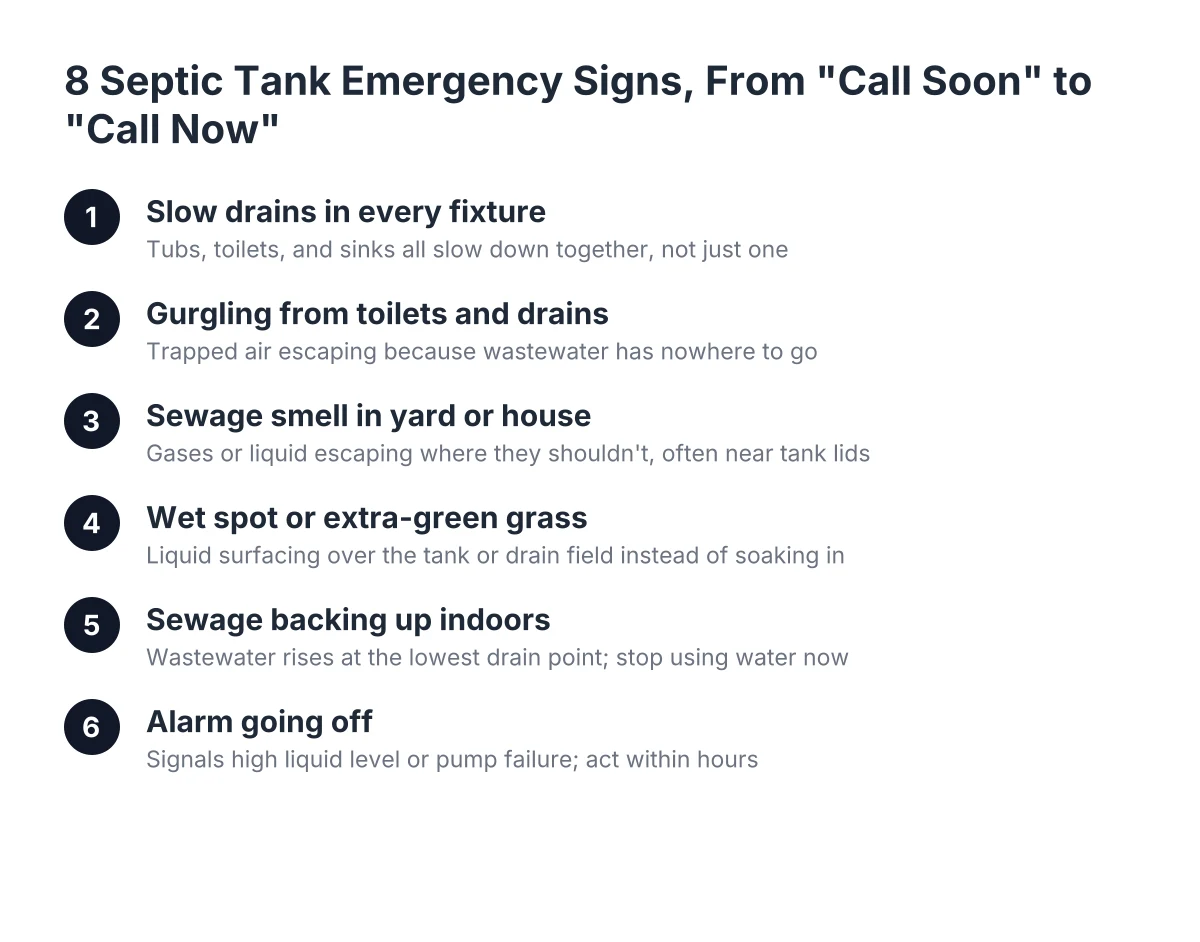
Here is the fear most homeowners have: someone shows up, looks at the yard for five minutes, and says the whole system is shot. The truth is that most septic problems do not require replacement. Reading the signs your septic system is giving you—learning to recognize the repair versus replacement signs—and matching each sign to the right fix, is how you avoid paying for a new system you did not need. This guide walks through eight warning signs, and for each one, it tells you plainly whether it usually points to pumping, a repair, or a true replacement.
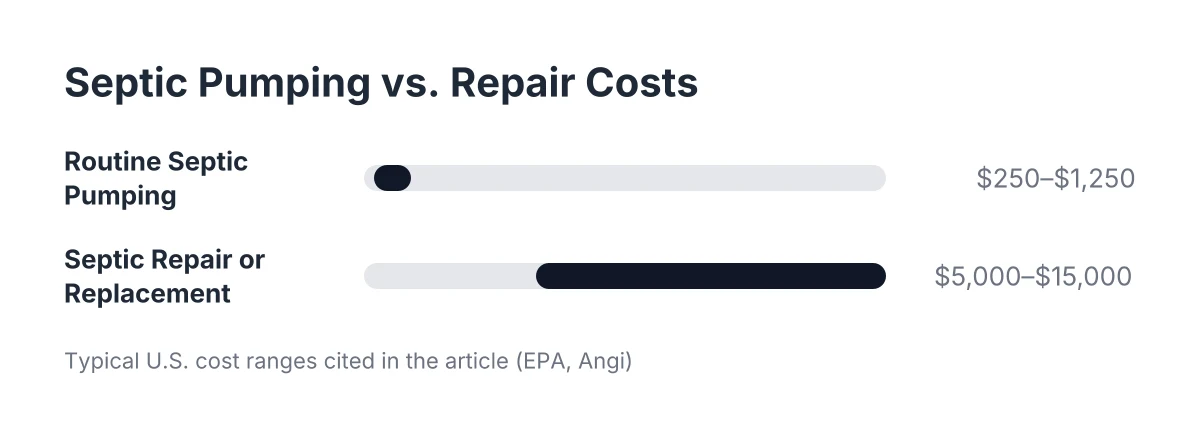
One number worth knowing up front. The EPA estimates septic tank repair or replacement typically costs between $5,000 and $15,000, far more than routine pumping, according to the U.S. Environmental Protection Agency. By comparison, the cost of septic tank pumping averages $427, ranging from $250 to $1,250 or more depending on tank size and location, according to Angi. That gap is exactly why it pays to know which problem you actually have before you agree to anything.
How a Septic System Fails, in Plain Terms
Before the list, a quick picture helps. A conventional septic system has two main parts: the septic tank and the drain field, according to the U.S. Environmental Protection Agency. A single pipe carries everything from your household drains into the tank, where solids settle out and get removed later by pumping. The remaining liquid flows out to perforated pipes in the drain field, where soil absorbs and filters it.
That split matters for your wallet. Tank-side problems are often fixable with pumping, a new baffle, or a lid or riser repair. Drain field problems are the ones that push you toward septic system replacement, because once soil stops absorbing water, there is no cheap way to force it. Keep that distinction in mind as you go through the signs below.
1. Slow Drains Across the Whole House
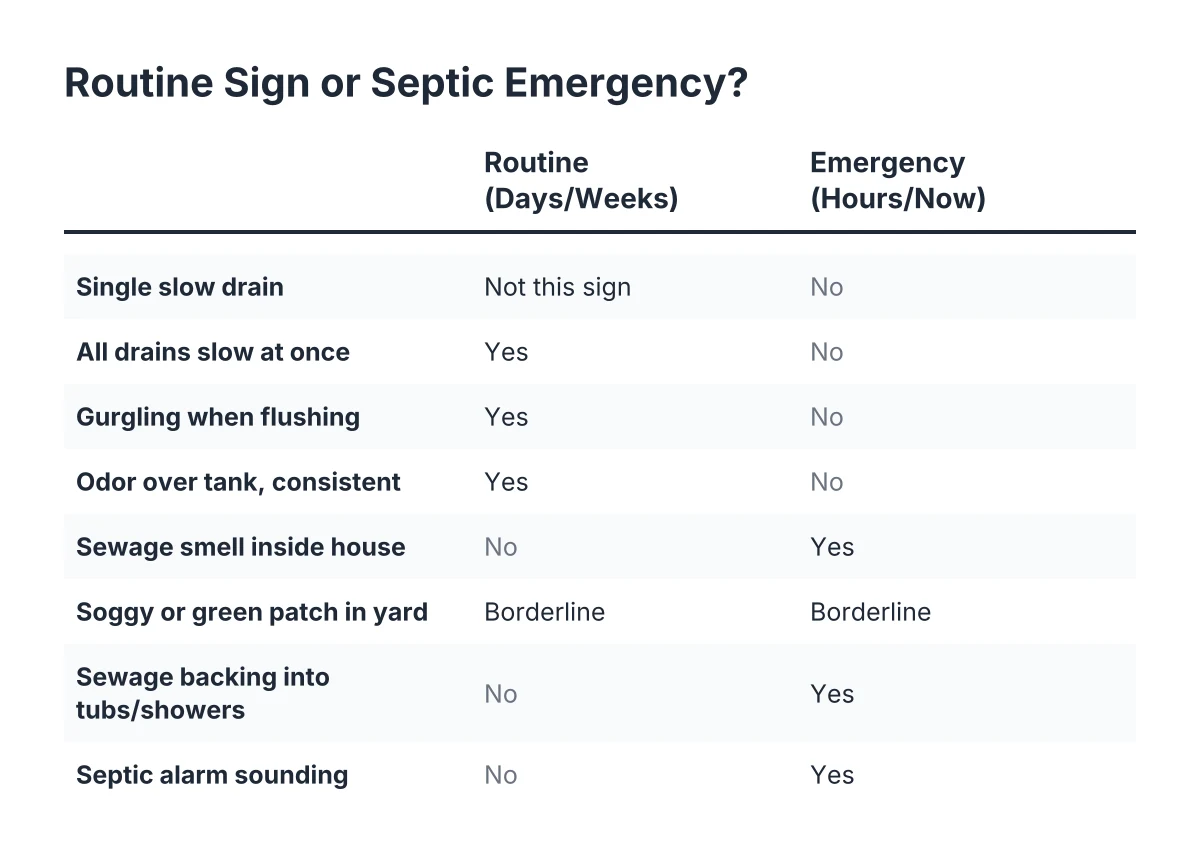
Slow drains in every fixture, not just one sink, are usually the first sign your septic tank needs to be pumped, not replaced. When the tank fills with solids, wastewater has nowhere to go and the whole house slows down at once. One slow sink is a clog; every slow drain is a septic signal.
However, here is the honest caveat. If you had the tank pumped recently and the drains slowed down again within weeks, the problem is probably past the tank. A tank that refills with backed-up water fast often means the drain field is not accepting liquid. Pumping first is still the right move, because it is the cheapest test; just pay attention to how quickly the problem returns.
2. Sewage Backing Up Into the House
A sewage backup into tubs, showers, or floor drains is an emergency, but it is not automatically a death sentence for the system. In many Hesperia homes, a backup traces to a tank that has simply gone too long between pump-outs, or to a blocked line between the house and the tank. Emergency septic pumping relieves the pressure and buys time to diagnose the real cause.
The replacement question comes afterward. If the backup happened because the drain field can no longer take water, pumping only resets the clock for a few weeks. A crew that pumps the tank and then watches how water behaves afterward can tell you which situation you are in. Be wary of anyone who quotes a full replacement during the backup itself, before the tank has even been emptied and inspected.
3. Soggy Ground or Standing Water Over the Drain Field
Wet, spongy soil or pooling water over the drain field, especially in the High Desert where the ground is normally dry, is one of the strongest signs of septic drain field failure. Clarified liquid should disperse underground. When it surfaces instead, the soil below has stopped absorbing it, often because solids escaped the tank for years and clogged the field.
Therefore, this sign deserves more weight than the others on this list. A chronically soggy drain field usually cannot be restored with pumping alone. Health departments generally require a failed absorption field to be properly replaced rather than patched with aftermarket additives sold as permanent fixes. Some operators try bacterial or enzyme treatments as a remedial step first, and that can be a reasonable conversation, but if the field keeps surfacing water, replacement is the realistic path.
4. Strong Sewage Odor in the Yard That Keeps Coming Back
A sewage smell near the tank lids is often a pumping problem; a persistent smell spread across the drain field is often a failure problem. Odor right at the tank usually means the tank is full or a lid or riser needs attention. Both are routine service calls, not replacement projects.
In contrast, an odor that hangs over the leach lines after a recent pump-out suggests effluent is sitting near the surface instead of soaking in. Combined with soggy ground, that points toward the drain field. On its own, after one hot week or one heavy laundry day, it may just mean you are due for septic tank pumping and a look at the baffles.
5. Gurgling Pipes and Toilets That Do Not Flush Right
Gurgling sounds from toilets and sinks mean air is fighting its way through water somewhere it should not be. This is one of the earliest signs your septic system is struggling, and it almost never means replacement by itself. A full tank, a partial blockage in the main line, or a venting issue can all cause it.
For example, say a homeowner in Hesperia bought the house three years ago, has no idea when the tank was last pumped, and now hears the toilet gurgle after every shower. In that scenario, the smart first step is a pump-out and inspection, which is a few hundred dollars, not a five-figure project. The gurgling is the system asking for maintenance before it becomes an emergency.
6. A Cracked or Damaged Tank
A cracked tank is one of the few tank-side problems that genuinely points to replacement rather than repair. Cracks commonly come from vehicles driving or parking over the tank, or from age as older materials turn brittle. A cracked tank can leak wastewater into the soil or let groundwater in, and neither problem stays small.
Here is the nuance worth knowing. A tank found cracked during a home inspection may still be functioning; the house drains fine and nothing smells. Even so, it typically gets replaced once discovered, because a known structural failure is not something an inspector, a lender, or a county will sign off on. If you are buying a home in Hesperia, a septic inspection before closing is how you find this out while the seller can still share the cost.
7. The System Keeps Needing Pump-Outs Far Too Often
Needing the tank pumped much more often than your household size should require is a pattern sign, not a single event. For an active family of four, pumping every two to three years is generally advisable, according to Penn State Extension. If a similar household needs pumping every few months just to keep drains moving, water is not leaving the tank the way it should.
As a result, frequent pump-outs become an expensive way to rent time on a failing drain field. Each visit works, briefly, because the tank is empty again. But the underlying absorption problem never improves. Track your pumping dates. If the interval keeps shrinking, start planning for replacement on your schedule instead of waiting for the backup that forces it on someone else's.
8. Old Age Plus No Service Records
An aging system with no maintenance history is a risk sign even when nothing is visibly wrong. Septic systems fail gradually; the warning signs usually appear well before sewage surfaces in the yard or backs up into the house. But a system that was never pumped or inspected may have been pushing solids into the drain field for decades, quietly using up its lifespan.
This matters because more than one in five U.S. households depend on individual septic systems or small community cluster systems to treat their wastewater, according to the U.S. Environmental Protection Agency, and many of those owners inherited systems with zero paperwork. The fix is not panic; it is a baseline. The average household should have its septic system inspected at least once every three years by a professional, per the U.S. Environmental Protection Agency, and systems with pumps or float switches should be checked once a year. One inspection turns an unknown system into a known one.
Signs That Point to Septic Tank Repair, Replacement, or Maintenance
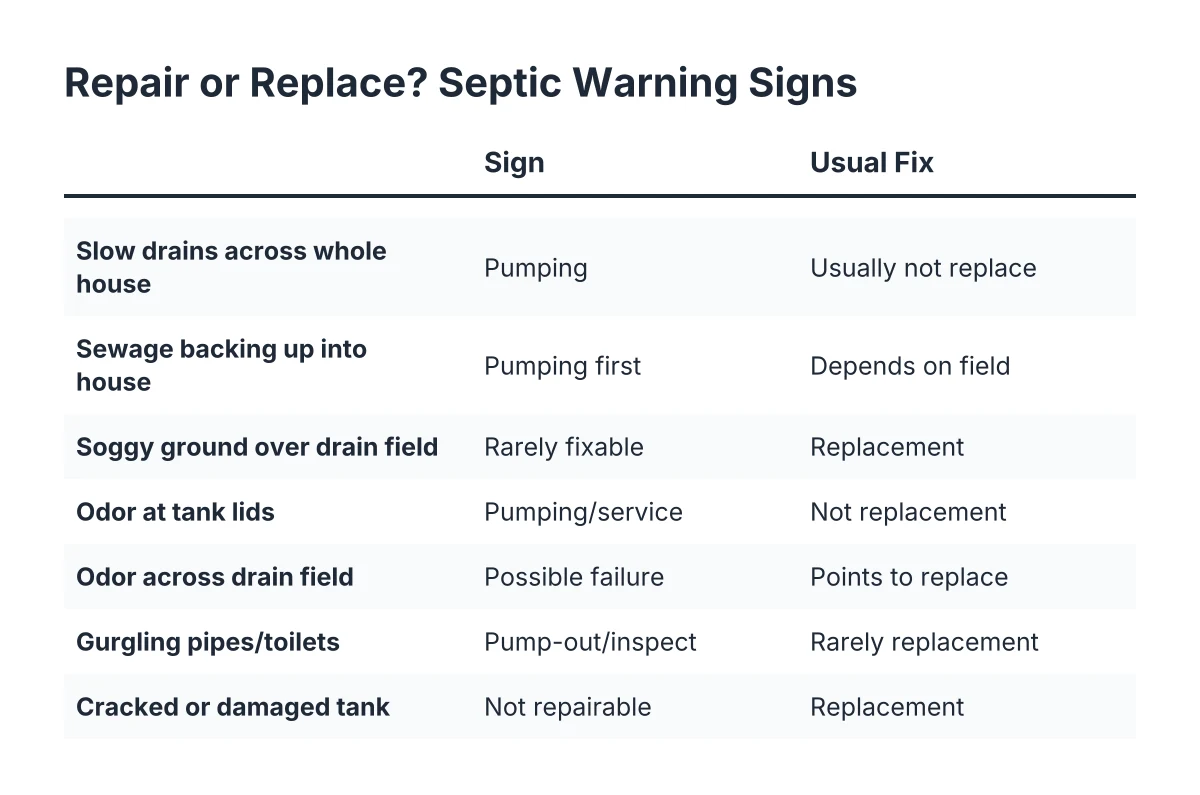
The signs your septic system shows can be sorted into three rough buckets. Use this as a sanity check before any big decision:
- Usually pumping or minor repair: slow drains house-wide, gurgling fixtures, odor at the tank lids, a first-time backup with no yard symptoms.
- Could go either way, needs diagnosis: backups that return soon after pumping, odors that persist after service, a shrinking interval between pump-outs.
- Usually replacement: standing water or soggy soil over the drain field, a cracked tank, a drain field that stays saturated after the tank is emptied and given time.
Next, insist on sequence. The honest order of operations is pump first, inspect second, and only then talk about replacement if the evidence supports it. Pumping is the cheap diagnostic; it empties the tank so someone can actually see the baffles, the liquid levels, and how fast water returns. Any replacement recommendation made without that step is a guess, and you should not pay replacement money for a guess.
One limitation to be upfront about: no article can diagnose your specific system. Soil conditions, tank condition, and drain field layout vary from one Hesperia property to the next, and a real assessment requires someone opening the tank and looking. In San Bernardino County, a septic system replacement also runs through local permitting, and new drain fields depend on a percolation test that shows how well your soil drains, a requirement noted by University of Nebraska-Lincoln Extension. Installation itself requires licensing beyond what a pumping operation carries, so expect a replacement project to involve more parties and paperwork than a service call.
The Bottom Line for Hesperia Homeowners
Most of the signs your septic system gives you point to maintenance, not replacement. Slow drains, gurgling, and tank-side odors are the system asking for a pump-out. Soggy drain fields, cracked tanks, and problems that return right after service are the signs that point to bigger work.
The homeowners who come out ahead are the ones who act on the early signs. A pumping schedule you set once and stop thinking about costs a few hundred dollars every few years. Ignoring the early signals until sewage is in the hallway is how a maintenance item turns into a five-figure replacement on an emergency timeline. If anything on this list sounds like your house in 2026, a pump-out and inspection is the low-cost way to find out which bucket you are in.
If you need your septic tank serviced, Hesperia Septic can help.
Prefer to talk it through? Call (760) 249-7872 — a quick call is usually the fastest way to get a straight answer for your situation.