Tag: septic tank pumping frequency

  • Septic System Inspection Frequency: How Often Hesperia Properties Need One

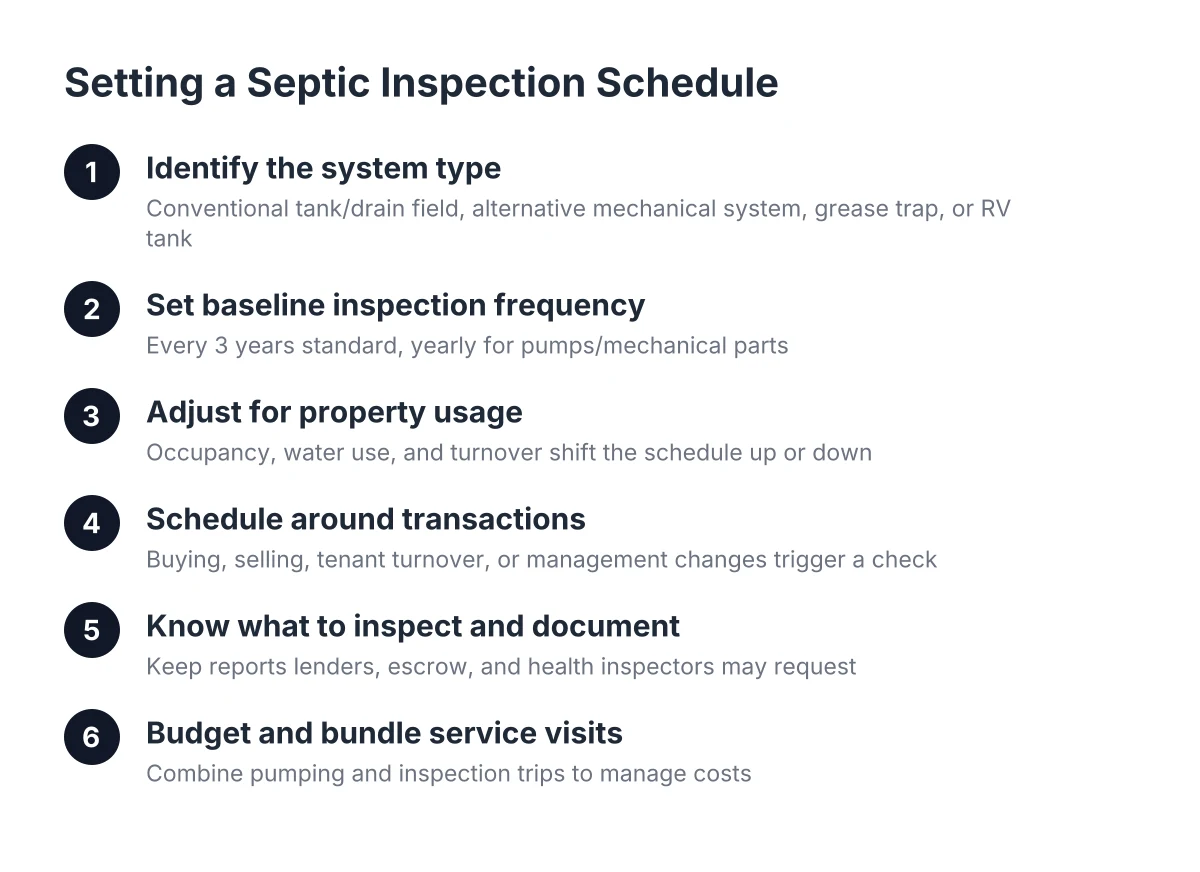
    Six-step process diagram for septic inspection schedule for rental properties in Hesperia
    The six-step process for setting a septic inspection schedule for Hesperia rental properties.

    If you own a rental, a small commercial building, or an RV property in Hesperia, septic inspection schedule rentals is not a trivia question—it decides whether you catch a $400 problem before it becomes a $10,000 one, and whether you have the documented reports a lender, escrow officer, or health inspector will ask to see. The short version: the U.S. Environmental Protection Agency recommends a professional inspection at least once every three years for a standard system, and once a year for systems with pumps or mechanical parts. This guide walks you through how to set the right schedule for your specific properties, step by step, with the High Desert's soil and usage patterns in mind.

    More than one in five U.S. households depend on individual septic systems or small community cluster systems, according to the U.S. Environmental Protection Agency. In California, only about 10 percent of homes are on septic, per the same source. That matters here because Hesperia sits in that 10 percent territory. Many local operators, lenders, and even tenants have never dealt with a septic system before, so the documentation burden falls on you as the owner.

    Step 1: Identify What Kind of System Each Property Has

    Start by figuring out what is actually in the ground, because system type sets your baseline inspection schedule. A conventional septic system has two main components: the septic tank and the drain field, according to the U.S. Environmental Protection Agency. The tank clarifies wastewater, and the drain field disperses the clarified liquid into the soil.

    However, not every property runs a conventional system. Some have alternative systems with electrical float switches, pumps, or other mechanical components. If you bought a rental without records, you may not know which one you have. Check county permit records, ask the previous owner, or have a crew do a septic tank locating visit to map what is there.

    Grease traps and RV holding tanks are separate animals. A restaurant grease trap runs on a service interval set by usage and health code, not the residential three-year rhythm. An RV or cabin holding tank has no drain field at all and needs pump outs based on fill level, not calendar inspections.

    Step 2: Set the Baseline Septic System Inspection Frequency

    Next, put a default schedule on the calendar for each system before you adjust for anything else. Use these baselines:

    • Conventional tank and drain field: professional inspection at least once every three years, per the U.S. Environmental Protection Agency.
    • Alternative systems with pumps, floats, or mechanical parts: inspection once a year, per the same source.
    • Occupied rental with a full household: pumping every two to three years is generally advisable for an active family of four, according to Penn State Extension, and the inspection rides along with the pump out.
    • Grease traps: interval driven by kitchen volume and local health code, often several times a year.
    • RV and holding tanks: pump out on fill, with a condition check at each visit.

    Treat the baseline like an oil change. It is a regular schedule you follow, not something you skip until a warning light comes on. With septic, the warning light is sewage backing up into a tenant's shower.

    Step 3: Adjust the Schedule for How Each Property Is Used

    A baseline is a starting point, not a final answer. Occupancy and usage move septic tank inspection frequency up or down more than any other factor. A four-person family in a three-bedroom rental fills a tank far faster than a part-time cabin occupant. High water use, garbage disposals, and short-term rental turnover all push solids into the tank faster. Planning a proper septic inspection schedule for rentals helps you stay ahead of capacity issues before they become emergencies.

    For example, suppose you own two rentals off Ranchero Road. One houses a family of five, and the other is a one-tenant casita. The family unit likely needs pumping and inspection every two to three years. The casita might stretch longer between pump outs, though the three-year inspection floor still applies because problems like root intrusion and corrosion do not wait for the tank to fill.

    In addition, High Desert conditions add their own wrinkles. Sandy, fast-draining soil can mask a struggling drain field longer than clay soil would, so surface symptoms show up late. Systems tend to fail gradually, then suddenly if ignored. That is why a periodic look inside the tank beats waiting for a smell complaint from a tenant.

    Step 4: Schedule Inspections Around Transactions, Not Just the Calendar

    Certain events should trigger an inspection regardless of when the last one happened. Buyers, sellers, and lenders all want to understand system condition before money changes hands, and a documented septic system inspection report is often the only proof of condition that exists for an unsewered property. Developing a systematic inspection schedule and documentation routine for your rental properties protects you during any property transaction.

    Put these trigger events on your list:

    1. Buying a septic-served property, especially one with no service records.
    2. Selling or refinancing, where escrow or the lender asks for a current report.
    3. Tenant turnover, before you re-lease a unit, so a mid-lease backup does not land on the new tenant.
    4. Taking over management of a property from another owner or manager.
    5. A health inspection citation on a grease trap, where you need a pump out plus documentation fast.
    6. Any visible symptom, such as slow drains across the unit, odors near the tank, or wet spots over the drain field.

    For transactions, timing matters. Order the inspection early in escrow, because if the report flags a failing drain field, the U.S. Environmental Protection Agency estimates repair or replacement typically runs $5,000 to $15,000. That number changes a negotiation, and you want it on the table before contingencies expire, not after.

    Step 5: Know What the Inspection Should Cover and Document

    Now make sure each inspection produces a report you can hand to a lender, escrow officer, buyer, or health inspector. As of 2026, there is no single statewide inspection form everyone uses, so the report itself is what carries the weight. A thorough visit should cover:

    • Locating and opening the tank, including finding lids on properties with no records.
    • Measuring scum and sludge layers to judge whether pumping is due.
    • Checking the tank structure for cracks, corrosion, and root intrusion.
    • Confirming baffles or tees are intact.
    • Observing the drain field for ponding, odors, or unusually lush vegetation.
    • Noting whether wastewater flows and drains normally with water running in the building.

    The written report should record what was found, what was pumped, and what needs attention. Keep every report in a file per property. Therefore, when a lender asks for system condition, or a tenant disputes a habitability issue, you have a paper trail instead of a memory.

    One honest limitation: an inspection is a snapshot, not a warranty. An inspector cannot see every foot of buried pipe, and a system that passes today can still fail if a tenant flushes wipes for six months. For drain field sizing questions, new construction, or a suspected failure, bring in a professional; percolation testing and county health department sign off are their own process, and in San Bernardino County a new or replacement septic system requires a permit and inspection through the county's environmental health division.

    Step 6: Budget Realistically and Bundle Where It Makes Sense

    Finally, put numbers to the schedule so it survives contact with your books. Costs vary by tank access, condition, and whether pumping happens on the same visit, so get a quote for your specific property rather than trusting a generic figure. As a rough illustration only, many small landlords budget a few hundred dollars per property per visit for routine septic tank pumping and inspection work, and more if lids are buried or the tank needs locating first.

    If a property is on a well too, buyers and lenders often want both systems checked in the same escrow window. Well and septic inspection costs are usually quoted separately since different specialists handle each, and well inspection cost depends on what testing the lender requires. Coordinating both early keeps escrow moving.

    For a small portfolio, the practical move is consolidation. One local crew that handles septic tank pumping, inspection, grease trap pumping, and RV holding tank service can put all your Hesperia properties on one recurring schedule with one invoice trail. That turns septic from a recurring fire drill into a line item, and it means a tenant smell complaint gets handled without you driving out to the property.

    How Septic Inspection Frequency Pays Off Over Time

    Owners who skip inspections usually find out about problems the expensive way: rising water over the tank, sewage in the house, or a strong odor a tenant reports on a Friday night. By then the options are emergency pumping and possibly major repair. Owners who keep a septic inspection schedule for rentals catch full tanks, cracked baffles, and early drain field stress while the fix is still routine.

    The math is straightforward. Routine pumping and inspection cost a few hundred dollars every few years per property. A failed system can cost $5,000 to $15,000 to repair or replace, per the U.S. Environmental Protection Agency, plus vacancy while the unit is unrentable. Getting septic system inspection frequency right is one of the cheaper insurance policies available to a High Desert landlord.

    Set the baseline, adjust for usage, inspect at every transaction, and keep the reports. Do that, and the next time a lender, buyer, or health inspector asks about system condition, you will have an answer in writing.

    If you need your septic tank serviced, Hesperia Septic can help.

    Related Reading

  • How Often Does a Residential Septic Tank Need Pumping? A Hesperia Guide

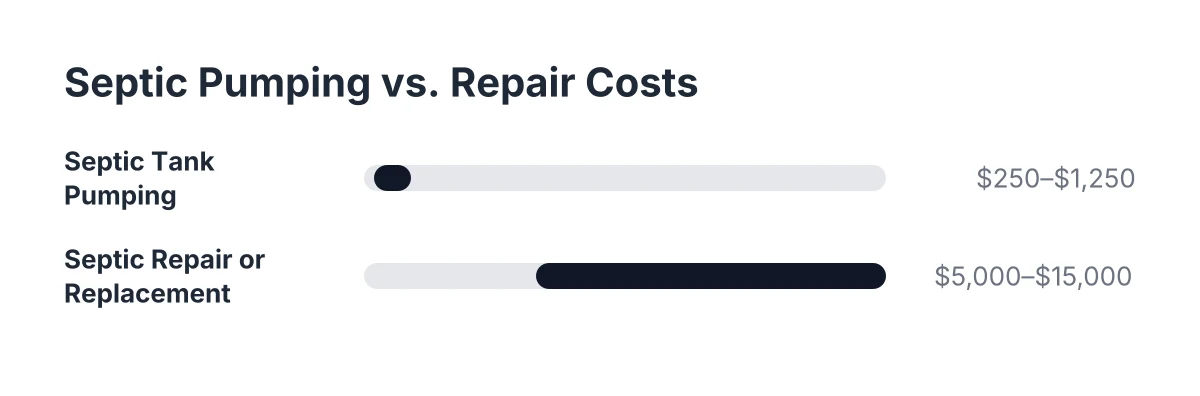
    Cost range chart comparing residential septic tank pumping to septic repair or replacement
    Routine pumping costs far less than the repair or replacement bill that follows a neglected drain field, per Angi and EPA figures cited in this guide.

    If you own a home on septic in Hesperia, or you just bought High Desert land with no records and no idea where the tank even sits, the question comes down to timing. How often does the tank need pumping, and what happens if you wait too long? This guide walks through residential septic service scheduling in plain terms: the general rules, the factors that change them, and how to build a real schedule for a property with an unknown system. It also covers what to do if you missed the window and the tank is already backing up, because that is how many Hesperia homeowners first meet their septic system.

    The Short Answer on Pumping Frequency

    Most residential septic tanks need pumping on a recurring cycle measured in years, not decades. The right interval for your home depends on tank size, how many people live there, and how much water and solid waste the household sends down the drain.

    There is no single number that fits every property, and anyone who quotes one without seeing your system is guessing. However, the U.S. Environmental Protection Agency gives a useful baseline for the inspection side of the equation: the average household should have its septic system inspected at least once every three years by a professional. Pumping happens when that inspection, or the sludge level in the tank, says it is time.

    For homes with more complex setups, the schedule tightens. According to the U.S. Environmental Protection Agency, alternative septic systems with electrical float switches, pumps, or mechanical components should generally be inspected once a year. If your Hesperia property has a pump tank or an alarm panel on the wall of the garage, you are in that category.

    The takeaway is simple. Get the system inspected on a regular cycle, and let the measured sludge and scum levels drive the pumping decision, not a calendar guess.

    Why Pumping Frequency Matters More Than Homeowners Think

    Skipping pump-outs does not save money; it moves the cost from the tank to the drain field. Solids that should stay in the tank flow out into the drain field lines, clog the soil, and shorten the life of the most expensive part of the system.

    Here is the math that makes the schedule worth keeping. According to Angi data, the cost of septic tank pumping averages $427, ranging from $250 to $1,250 or more depending on tank size and location. Compare that to the repair side: the EPA estimates septic tank repair or replacement typically costs between $5,000 and $15,000, far more than routine pumping. A missed pump-out that ruins a drain field can cost twenty times what the pump-out would have.

    This is not a rare problem. More than one in five U.S. households depend on individual septic systems or small community cluster systems to treat their wastewater, according to the U.S. Environmental Protection Agency. In Hesperia and across the High Desert, that share runs even higher, since large stretches of the area have no sewer at all. Out here, the septic tank is not backup infrastructure. It is the only infrastructure.

    What Changes the Schedule for Your Home

    Two houses on the same street in Hesperia can need pumping on completely different cycles. These are the factors that actually move the number.

    • Household size. More people means more wastewater and more solids. A family of five fills a tank far faster than a retired couple.
    • Tank size. A small tank serving a busy household fills sooner. If you do not know your tank size, an inspection can tell you.
    • Garbage disposal use. Ground food waste adds solids the tank was never sized for. Heavy disposal users often need pumping on a shorter cycle.
    • Water habits. Long showers, back-to-back laundry days, and leaky toilets push water through the tank faster than solids can settle.
    • What goes down the drain. Wipes, grease, and harsh chemicals either add solids or kill the bacteria that break waste down.
    • System age and type. Older tanks and systems with pumps or float switches need closer attention, on the once-a-year inspection cycle noted above.

    For example, suppose a family of six moves into a Hesperia home that a single previous owner lived in for a decade. The previous owner may have pumped the tank rarely and had no problems. The new family, sending three or four times the wastewater into the same tank, could hit capacity in a fraction of that time. Same tank, same soil, completely different schedule.

    Residential Septic Service for a Property With No Records

    Buying rural or High Desert property often means inheriting a septic system with zero paperwork. No pumping receipts, no as-built diagram, no county record worth much, and sometimes no visible lid or riser anywhere on the lot. You cannot build a pumping schedule for a tank you cannot find.

    The fix comes in a specific order, and it works whether you already own the property or you are still in escrow.

    1. Locate the tank. A septic tank locating service traces the sewer line from the house and finds the tank, even under dirt, gravel, or decades of landscaping. The crew marks the spot so you never have to search again.
    2. Expose and open the lid. Once the tank is found, the access lid gets uncovered. On older High Desert properties, that can mean digging through a foot or more of compacted soil.
    3. Inspect the system. A septic system inspection checks the tank's condition, the sludge and scum levels, the baffles, and how the drain field is taking water. This is the moment you learn what you actually bought.
    4. Pump if needed. If levels are high, pumping happens on the spot in most cases. An empty tank also lets the inspector see the walls and baffles clearly.
    5. Write it down. Get the tank location, size, and condition documented. That report becomes the first record the property has ever had, and it anchors every future service decision.

    If you are still deciding whether to close on the property, this same process gives you a written septic inspection for the home sale. A locate-and-inspect job feels like an added cost on a place you might not keep. Weigh it against the EPA's repair estimate above; finding a failed system before closing is the cheapest bad news you will ever get.

    One honest caveat: a locate and inspection tells you the system's condition today. It cannot guarantee how many years a drain field has left, and no honest crew will promise that. What it does is remove the biggest unknowns before your money is committed.

    Building a Residential Septic Service Schedule That Sticks

    Once you know where the tank is and what shape it is in, keeping the system healthy becomes a routine instead of a mystery. The goal is a schedule you set once and follow without thinking hard about it.

    Start with the inspection cycle. Standard gravity systems fit the EPA's guidance of a professional inspection at least once every three years. Systems with pumps, floats, or alarms should be looked at yearly. Put the next date somewhere you will see it, and keep every pumping receipt in the same folder as your locate report.

    Next, let measurements set the pumping date. During each inspection, the tech measures how much of the tank is sludge and scum versus liquid. When solids take up too much of the tank, it is time to pump. This measured approach beats guessing, because it reflects your actual household, not an average one.

    Between visits, protect the schedule with habits. Keep grease, wipes, and paint out of the drains. Spread laundry across the week instead of doing five loads on Saturday. Fix running toilets fast, since a constant trickle floods the tank around the clock. None of this replaces pumping, but all of it stretches the interval and protects the drain field.

    Finally, be careful about shopping on price alone. Searching for cheap septic tank pumping near me is understandable, but the cheapest quote sometimes means a partial pump-out that leaves solids behind, which shortens your interval and defeats the point. A full residential septic pumping that empties the tank and includes a look at the baffles is worth the difference.

    What If You Missed the Window and It's Backing Up Now?

    A septic backup means the system has run out of room and wastewater is taking the only exit it has left, usually the lowest drain in the house. Stop using water immediately, keep people away from any sewage, and call for a pump-out. Pumping the tank relieves the pressure and stops the backup in most full-tank situations.

    Many Hesperia homeowners learn their pumping schedule this way, in reverse. The tank was never pumped, or the pumping history left with the previous owner, and the first sign of trouble is a gurgling toilet at 9 p.m. or a wet, foul-smelling patch over the tank. In that moment, frequency charts do not help. Action does.

    Take these steps while you wait for a crew:

    • Stop all water use. No flushing, no laundry, no dishwasher, no showers. Every gallon you add makes the backup worse.
    • If sewage is coming up through a tub or floor drain, keep kids and pets out of that room and avoid touching the water.
    • If a septic alarm is sounding, silence it if the panel allows, but treat it as a stop-water order, not a snooze button.
    • Do not drive or park over the area where you think the tank sits. A heavy vehicle over a full, aging tank is a risk you do not need.
    • Note what happened first and when. Slow drains before the backup, odor in the yard, and alarm timing all help the crew diagnose faster.

    This is where working with a local emergency septic service matters, because a backup does not wait for business hours. A local Hesperia crew that answers the phone at night can talk you through those steps calmly and get a truck moving, instead of routing you through a national call center that has never seen High Desert soil.

    After the emergency pump-out, do not let the lesson slide. The backup told you your interval; whatever gap passed since the last pumping was too long. Cut it down, book the next inspection before the crew leaves the driveway, and the same crisis should not repeat.

    What a Full Service Visit Should Cover

    Pumping frequency only works if each visit does the whole job. When a truck comes out, whether for routine residential septic service or a same-day backup, a complete visit includes more than sticking a hose in the tank.

    Expect the crew to locate and open the access lid, measure the sludge and scum layers, and pump the tank fully, including breaking up and removing the solid layers rather than just skimming liquid. Septic tank cleaning at this level matters because leftover solids shorten your next interval. The tech should also check the inlet and outlet baffles, look for cracks or root intrusion, and note whether water is flowing back in from the drain field, which signals a saturated field.

    Ask for the findings in writing every time. Tank size, measured levels, condition notes, and a recommended next-service date turn each visit into a data point. For the land buyer who started with no records, three or four documented visits build a service history that protects the property's value and makes every future decision easier.

    Some situations still call for a specialist beyond routine pumping. If the drain field stays soggy after a pump-out, if sewage returns within days, or if the tank shows structural cracks, get a professional diagnosis before spending money on repeat pump-outs that will not hold.

    The Bottom Line for Hesperia Homeowners

    Pumping frequency is not a trivia answer; it is a schedule you build from your own tank, your own household, and a real inspection. Anchor it to the EPA's baseline of a professional inspection at least once every three years, tighter for systems with pumps and alarms. Let measured sludge levels set the pumping dates.

    If you bought property with no records, start with a locate and inspection so the schedule has a foundation. If the system is already backing up, stop the water, make the call, and treat the emergency as the start of a real maintenance routine rather than a one-time scare. As of 2026, a routine pump-out in the range Angi reports remains one of the cheapest forms of insurance a High Desert homeowner can buy, especially measured against a five-figure drain field replacement.

    If you need your septic tank serviced, Hesperia Septic can help.

    Related Reading