If you own a rental or small property in Hesperia and a tenant just called about a smell in the yard or drains that will not clear, the first number that jumps into your head is septic tank replacement cost. That fear is understandable. Replacement is the expensive outcome, and plenty of articles throw big numbers around without explaining what the number is made of or whether you even need one. This guide breaks down what a replacement actually costs in parts, what pushes the price up or down in the High Desert, and how to tell whether the symptom you are looking at points to septic replacement or pumping. Understanding the difference between septic tank replacement and pumping is essential before panic sets in.
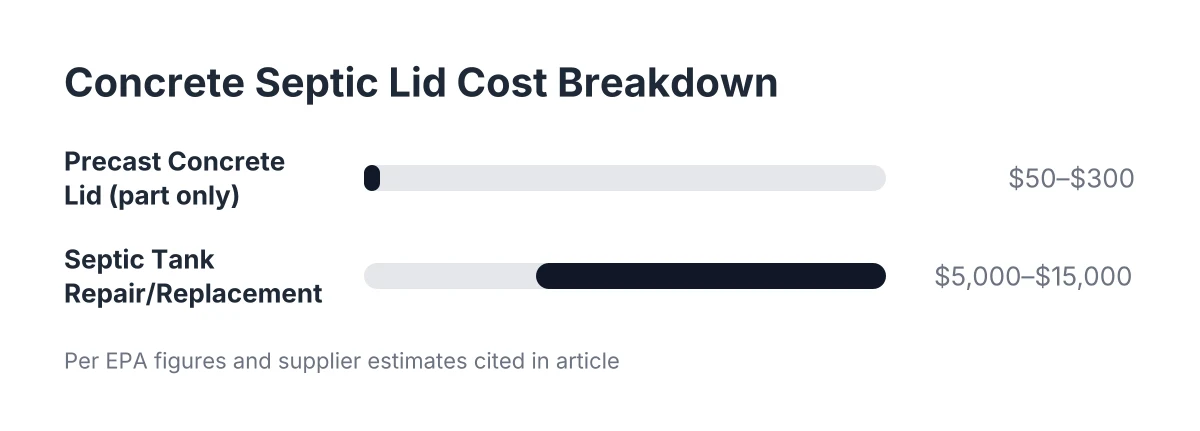
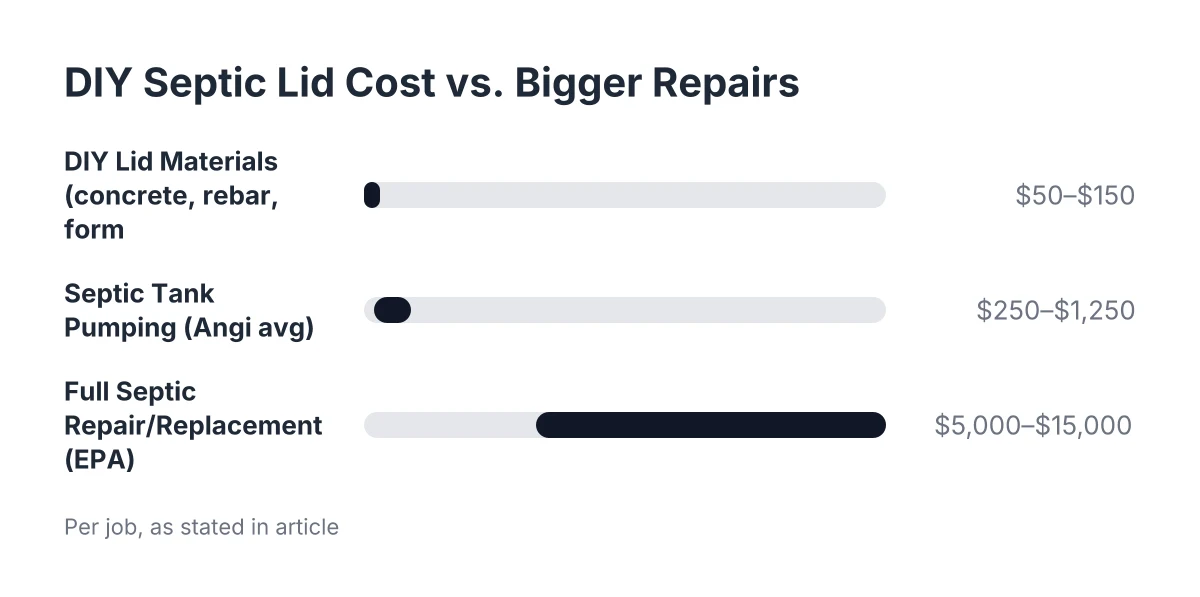
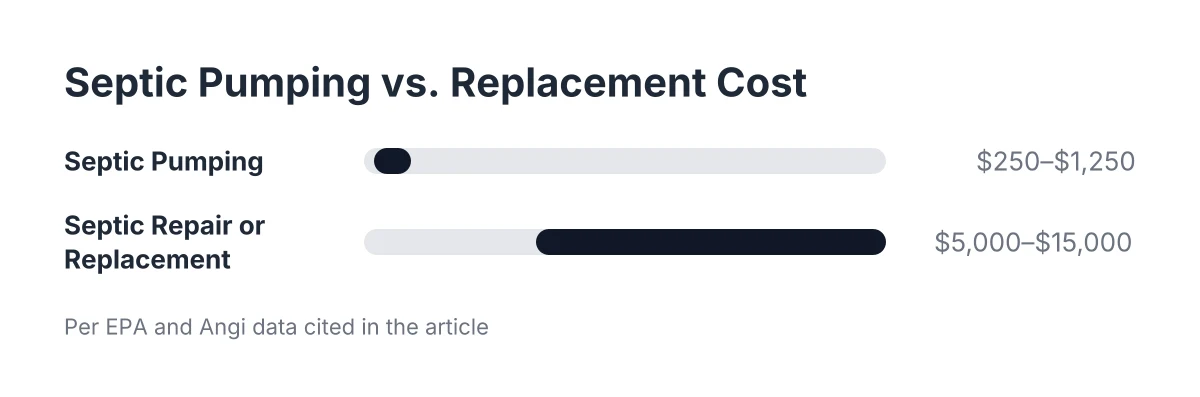
Here is the honest framing up front. Most septic complaints that land on a property owner's phone do not end in replacement. They end in septic tank pumping, a cleared line, or a repair to one component. However, some do end in replacement, and the gap between the two outcomes is large. According to the U.S. Environmental Protection Agency, septic repair or replacement typically costs between $5,000 and $15,000. Compare that to pumping, which Angi data puts at a $427 average, with a range of $250 to $1,250 or more depending on tank size and location. Knowing which side of that gap you are on, before panic sets in, is the whole game.
Why the Replacement Number Scares People, and Why It Should Not Decide Anything Yet
A septic system is simple in concept. According to the U.S. Environmental Protection Agency, a conventional system has two main components: a septic tank that lets solids settle out of wastewater, and a drain field that disperses the clarified liquid into the soil. One pipe carries everything from the house to the tank. Solids stay in the tank until a pump truck removes them. Liquid flows out to perforated pipes in the drain field.
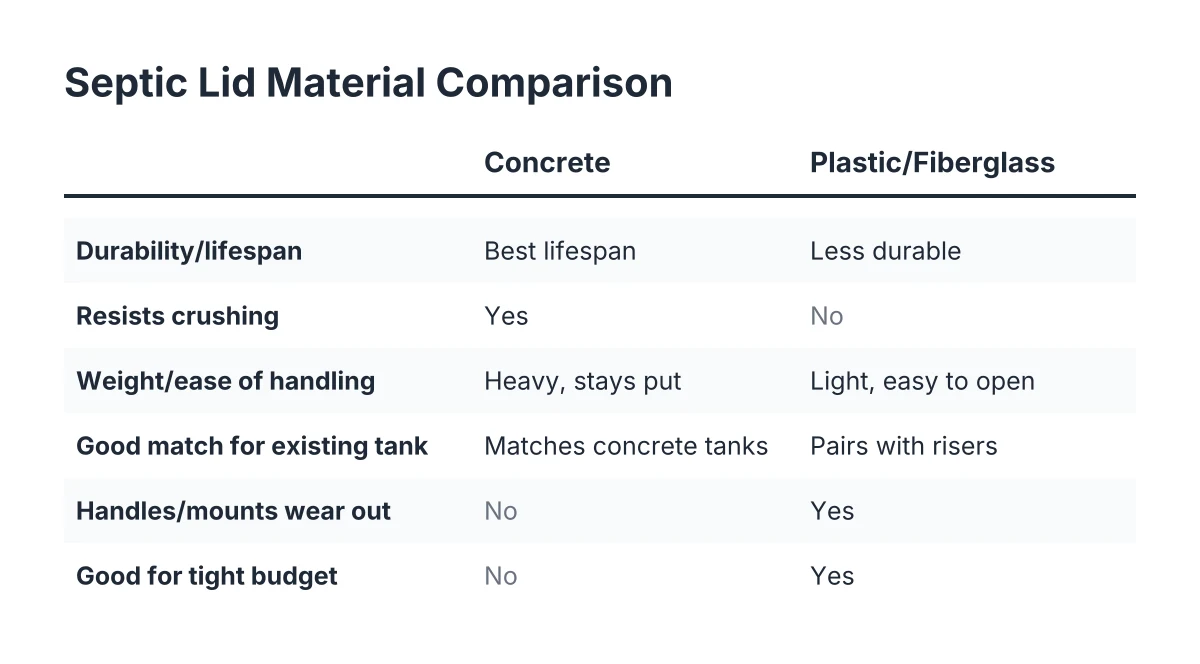
That two-part design matters for cost, because the two parts fail differently and cost different amounts to fix. A tank that is full of solids is a pumping job. A tank with a cracked lid might be a top replacement, a fraction of full replacement cost. Additionally, a drain field that has stopped absorbing water is the scenario where septic tank replacement cost estimates start climbing toward the top of the EPA range, because soil work is the expensive part.
In other words, the symptom your tenant reports does not tell you the price. The component behind the symptom does. So before you budget for the worst case, it helps to understand what the worst case is actually made of.
Cost Breakdown for Septic Replacement and Pumping Services
Replacement is not one line item. When a system genuinely needs to be replaced, the project breaks into distinct cost categories, and each one moves independently based on your property. A realistic breakdown looks like this:
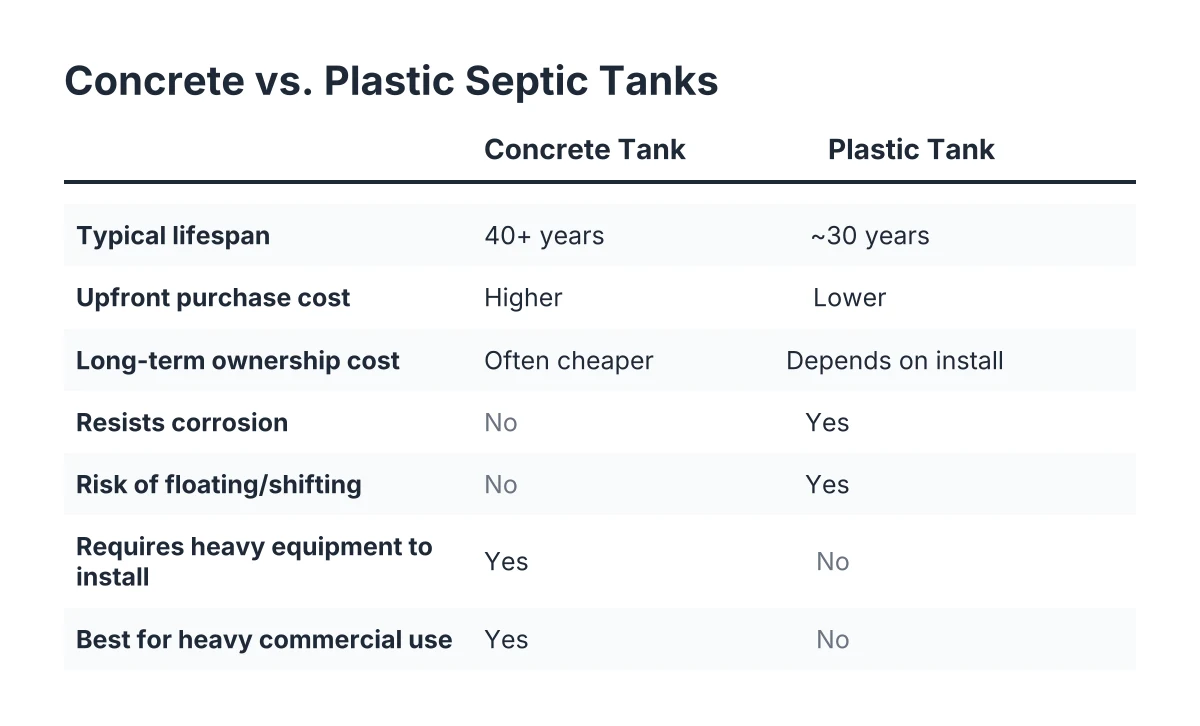
- The tank itself. Concrete, plastic, or fiberglass, sized to the home. The tank is a significant piece, but on many jobs it is not the biggest piece.
- Permits and testing. San Bernardino County requires permitting for septic work, and a percolation test is standard before a new system goes in. According to University of Nebraska-Lincoln Extension, a perc test must be performed before installing a septic system to confirm the soil drains well enough for the system to function.
- Drain field materials. Chambers or gravel and perforated pipe, a distribution or junction box, clean-outs, and risers. If the drain field is part of the replacement, this category can rival or exceed the tank.
- Excavation and equipment. Trenching, backfill, and machine time. Hesperia's soil is often forgiving to dig, but rock, caliche layers, or deep trenches add hours.
- Site-specific extras. A pump chamber and pump if gravity will not carry flow to the field, re-plumbing if the tank has to move, and hauling away the old tank if it is removed rather than abandoned in place.
That last bullet trips up a lot of owners. Suppose a landlord decides to relocate a tank to make room for a garage addition. The tank itself might be the cheapest part of that project. Re-plumbing the house connection, redesigning the drain field for the new location, and adding a pump system because the new spot sits uphill can double or triple the job compared to a straight swap in the same hole. Relocation is a redesign, not a replacement.
Removal versus abandonment also shifts the number. Pulling the old tank out of the ground costs more than pumping it dry, crushing or filling it, and leaving it buried, which is why septic tank removal and replacement cost quotes run higher than replace-in-place quotes.
How Hesperia and California Conditions Shift the Price
Septic tank replacement cost in California carries a few local wrinkles worth knowing. First, septic is less common statewide than you might guess. According to the U.S. Environmental Protection Agency, about 10 percent of California homes are on septic, one of the lowest shares in the country, compared with highs of 55 percent in Vermont. The High Desert is an exception; large lots and limited sewer reach mean septic is normal here, especially for older rentals and cabins.
Second, the regulatory layer is real. California regulates onsite wastewater through local agencies, and in Hesperia that means county-level permitting, site evaluation, and inspection before a new system is approved. Installation is also a separate trade from pumping. As the New Hampshire Department of Environmental Services notes about its own state, becoming a licensed septic installer requires certification beyond a pumping operation, including knowledge of soil types, percolation rates, and system design. The structure is similar in California: the crew that pumps your tank and the contractor that installs a new one are often different licenses doing different work. A pumping and inspection visit is how you find out whether you need the second one at all.
Third, desert soil cuts both ways. Sandy, fast-draining ground can make for straightforward drain fields. However, hardpan layers, rock, and lots with odd slopes can force deeper trenches or pump systems, and that is where High Desert quotes separate from the national averages you see in articles written for New Jersey or Florida.
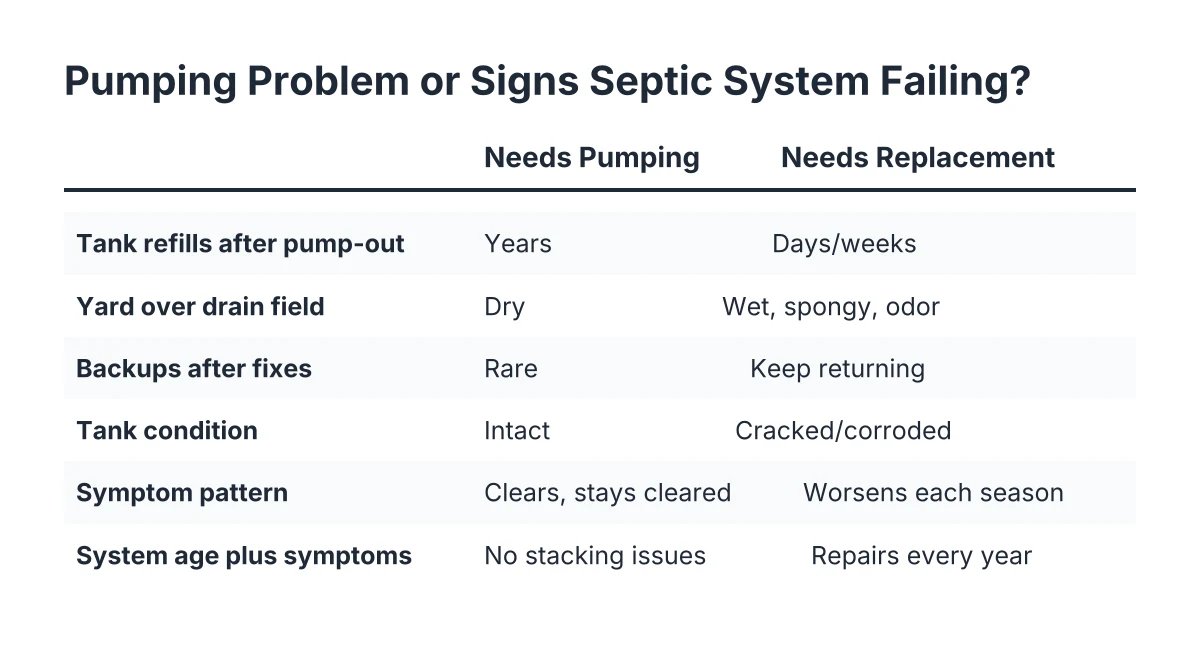
Symptom by Symptom: Pump-Out Problem or Replacement Problem?
This is the section to read before you authorize anything. Each symptom below shows up constantly on rental properties, and each one has a cheap explanation and an expensive one. The goal of septic system troubleshooting at this stage is not to fix anything yourself; it is to walk into the service call knowing which questions to ask.
Slow drains throughout the property
Slow drains across every fixture usually point to the septic side, not a single clogged pipe. The cheap explanation is a tank full of solids or a clogged outlet filter, both resolved with septic tank pumping and cleaning. The expensive explanation is a drain field that can no longer accept water, which backs flow up into the tank and then the house.
One useful clue: if drains slow down gradually over weeks, suspect the tank filling up. If the system was pumped recently and drains are already slow again, the water has nowhere to go, and that points toward the drain field. A tank that needs pumping every few months instead of every few years is a system telling you its field is failing.
Septic tank smell in the yard
A sewage smell outdoors can come from a vent, a loose riser lid, or a tank at capacity. Those are minor. A smell concentrated over the drain field, especially paired with soggy ground, suggests effluent surfacing because the soil is saturated or biologically clogged. That is a drain field failure symptom, and it is the one that moves you from pumping territory toward repair or replacement territory.
Wet spots or lush green stripes over the system
Grass that grows greener and faster in stripes over the drain field lines, or standing water over the tank or field when nothing has been irrigated, means wastewater is rising instead of absorbing. In Hesperia, where yards are dry most of the year, a persistent wet spot is hard to miss and hard to explain away. A one-time wet spot after heavy tenant use might recover after pumping and reduced water load. A wet spot that returns every week will not.
Sewage backing up into tubs or floor drains
Backups into the lowest fixtures are the urgent version of all of the above. The cause could still be simple, such as a full tank or a blocked line between house and tank, and emergency septic pumping often gets the property usable the same day. The pumping visit also doubles as diagnosis: once the tank is open, a crew can see whether the inlet is blocked, whether the tank was overfull, and whether water is flowing back in from the field, which is the red flag for field failure.
A Realistic Scenario: The Rental That Smelled on Turnover
Say a landlord owns a three-bedroom rental on a half-acre in Hesperia, bought eight years ago with the original septic system from the 1970s. During a turnover walkthrough, the landlord notices a sewage smell near the back fence and a patch of damp soil where nothing drains. The last pump-out was four years ago, under the previous tenants.
The cheap outcome in that scenario: the tank is simply full. A pumping and inspection visit, somewhere in the $250 to $1,250 range Angi reports for typical jobs, empties the tank, the crew confirms the field accepts water, and the smell disappears. The landlord puts the property back on a pumping schedule and re-leases on time.
The expensive outcome: the crew pumps the tank and watches liquid seep back in from the drain field side. The field on a 50-year-old system has reached the end of its life. Now the landlord is looking at a perc test, a county permit, and a new field or full system, landing somewhere in the EPA's $5,000 to $15,000 repair-or-replacement range, possibly higher depending on the site. The unit sits vacant during permitting and construction.
Same smell, two outcomes separated by thousands of dollars. The only way to know which one you have is to get the tank opened and inspected. This is also the point where honest limits matter: a pumping crew can tell you what the tank and field are doing, but designing and installing a replacement system is engineered, permitted work, and you should get a qualified installer and the county involved before committing to a number.
Why Pumping Is the Cheapest Line in the Whole Budget
Here is the part that matters most for anyone holding rental property on septic. The single biggest driver of premature septic replacement cost is deferred maintenance. Solids that never get pumped out of the tank eventually flow into the drain field, clog the soil, and kill the field years before its time. Additives and treatments do not remove solids; when they fail to fix a buildup problem, the endgame is often full system replacement.
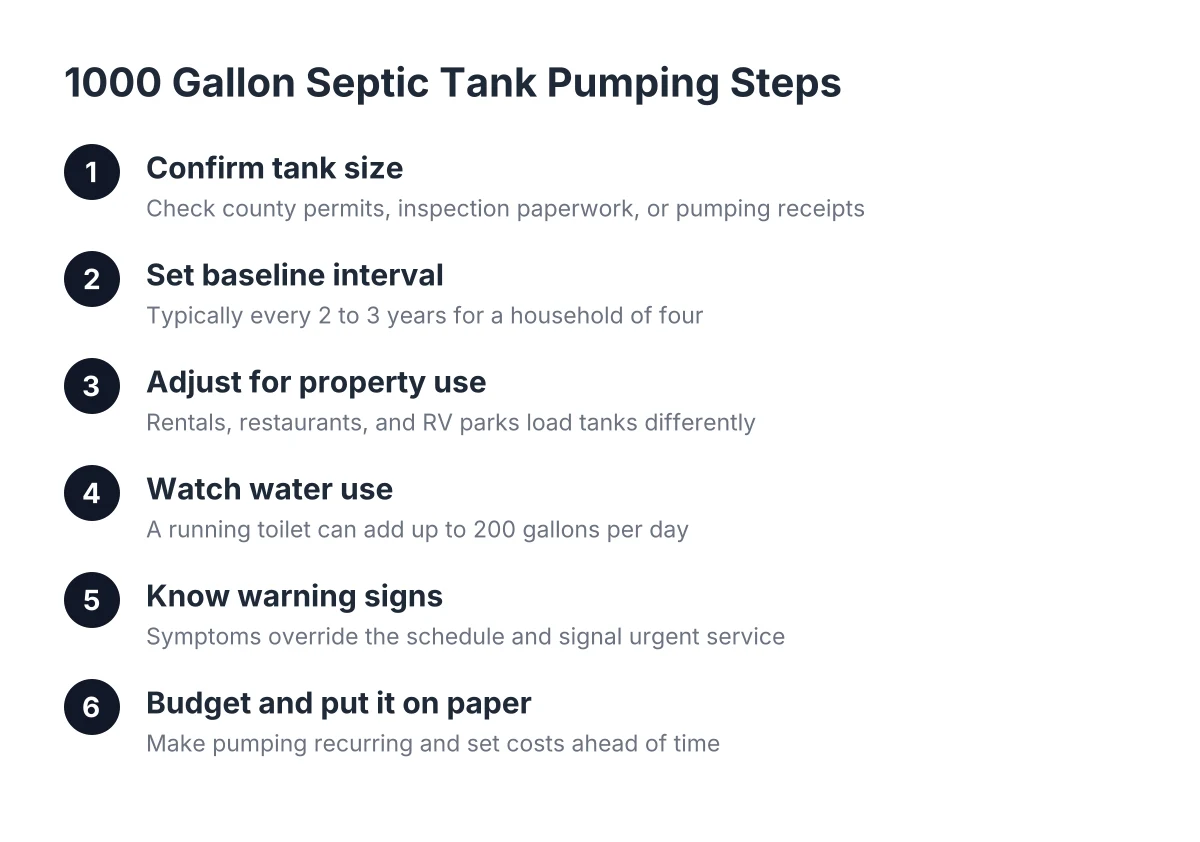
The math is lopsided. Pumping averages $427 per visit according to Angi. Replacement runs $5,000 to $15,000 according to the EPA. A rental that gets pumped on schedule for twenty years costs a fraction of one field replacement. For an active family of four, Penn State Extension advises pumping every two to three years because of higher solids and water production, and a full rental household behaves the same way whether or not the owner lives there. The EPA also recommends a professional inspection at least every three years for standard systems, and once a year for alternative systems with pumps, floats, or other mechanical parts.
For a small portfolio owner, that translates into a short checklist:
- Find out when each septic-served unit was last pumped. If no record exists, schedule a pumping and inspection and start the record now.
- Put every unit on a recurring schedule based on household size and what the crew finds in the tank, not on a guess.
- Keep the service receipts. They document habitability maintenance, support proper-disposal records, and help at sale or refinance. Waste pumped from residential tanks is hauled to a sewage treatment plant for disposal, as the New Hampshire Department of Environmental Services describes, and your receipt is the paper trail.
- Treat any repeat symptom between pump-outs, such as a returning smell or wet spot, as a field question, not a pumping question.
One more decision rule worth stealing: if you are buying an older Hesperia property with its original septic system, price the likely replacement into your offer. A system that has run for decades may have little life left, and the seller's working drains today do not promise working drains next year.
What to Do This Week If You Are Seeing Warning Signs
Start with information, not construction. If a tenant reports slow drains, a smell, or a wet spot, the first call is for septic tank pumping and inspection, not a replacement bid. Pumping is cheap relative to everything else, it often resolves the symptom outright, and it is the only way to see what the tank and field are actually doing. A local Hesperia crew can locate the tank if you do not know where it is, open it, pump it, and tell you whether water is behaving normally.
Then decide based on what the open tank shows. A full tank with a healthy field means you were one maintenance visit away from normal, and your real cost was a few hundred dollars plus a calendar reminder. Backflow from the field, repeated backups shortly after pumping, or surfacing effluent means it is time to bring in the county and a licensed installer to scope a repair or replacement, with the EPA's $5,000 to $15,000 range as your planning anchor as of 2026.
Either way, you have replaced a scary unknown number with a specific diagnosis. For a property owner who cannot be on site for every tenant call, that is the difference between managing a maintenance item and funding an emergency.
If you need your septic tank serviced, Hesperia Septic can help.
Prefer to talk it through? Call (760) 249-7872 — a quick call is usually the fastest way to get a straight answer for your situation.