If your property has an aerobic septic system, your septic system pumping schedule looks different from the one your neighbor with a standard tank follows. Aerobic systems have motors, air pumps, sprayers, and filters that need regular attention, not just a pump-out every few years. This guide walks through how aerobic systems work, how often they need pumping and cleaning, what a service visit involves, and what it tends to cost, with straight answers from the perspective of a crew that pumps tanks in Hesperia and the High Desert every day.
This matters double if you just bought land, or you are about to close on a property, and nobody handed you a single service record. Plenty of High Desert parcels change hands with no paperwork on the septic at all. You may not even know whether the system is a standard tank or an aerobic unit until someone opens a lid and looks.
What Makes an Aerobic Septic System Different
An aerobic septic system treats wastewater with oxygen. An air pump pushes air into a treatment chamber, which feeds bacteria that break down waste faster and more completely than the bacteria in a standard tank. The result is cleaner effluent, which is why counties sometimes require aerobic systems on lots with poor soil, small drain field areas, or high water tables.
Compare that to a conventional system. According to the US EPA, a typical residential septic system has two main parts: a tank that clarifies wastewater and a drain field that disperses the clarified liquid into the ground. The tank does its work passively. Solids sink, grease floats, and liquid flows out the middle toward the drain field. No motors, no electricity, no moving parts.
An aerobic system adds machinery to that picture. Most aerobic units include some mix of the following:
- A trash tank or pretreatment compartment where solids settle first
- An aeration chamber with an air compressor or blower
- A clarifier where treated water settles before leaving the system
- A pump tank with a float switch and effluent pump
- In some setups, a chlorinator or UV unit to disinfect, plus spray heads or drip lines
Every one of those parts can wear out, clog, or fail. That is the trade-off: better treatment in exchange for more maintenance. A standard tank mostly asks for pumping. An aerobic system asks for pumping plus ongoing care of its mechanical parts.
How Often an Aerobic System Needs Pumping and Inspection
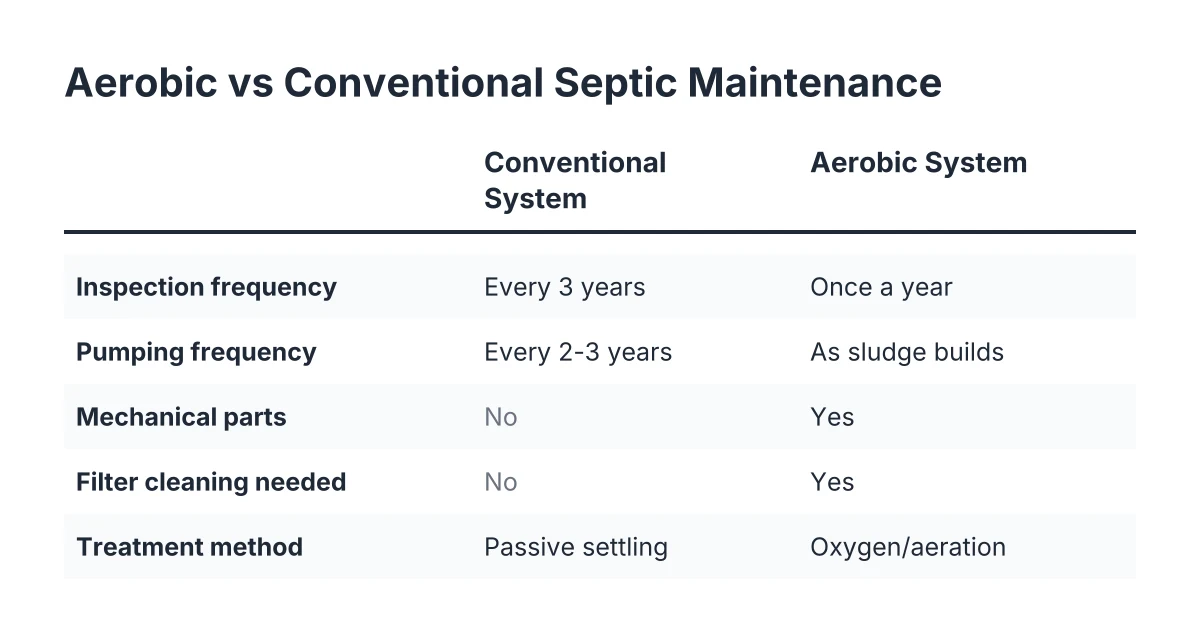
An aerobic septic system still builds up sludge, so it still needs periodic pumping, generally on a similar cycle to a conventional tank or slightly more often depending on use. The bigger difference is inspection. According to the U.S. Environmental Protection Agency, alternative septic systems with electrical float switches, pumps, or mechanical components should generally be inspected once a year.
Hold that against the baseline for conventional systems. The EPA recommends that the average household have its septic system inspected at least once every three years by a professional. In addition, Penn State Extension notes that for an active family of four, pumping the tank every two to three years is generally advisable, since more people means more solids and more water moving through the system.
So the honest comparison looks like this:
- Conventional system: professional inspection at least every three years, pumping on a cycle driven by tank size and household size, commonly every few years.
- Aerobic system: inspection once a year because of the mechanical parts, pumping as sludge accumulates, plus filter cleaning and component checks along the way.
The reason frequency is not one-size-fits-all is simple. Pump too rarely and solids build up, escape the tank, and clog the drain field or spray lines. Pump too often and you spend money removing material that was not causing a problem yet. Tank size and the number of people in the home drive the right interval, which is why a crew that opens the tank and measures the sludge layer gives you a better answer than any chart.
Building a Septic System Pumping Schedule When You Have No Records
A realistic septic system pumping schedule for a property with no history starts with a baseline visit, then sets the interval from what the crew finds. If you bought land in Hesperia and the seller could not even point to the tank, you cannot schedule maintenance for a system you cannot find. The first step is a septic tank locating service to find and mark the tank and lids.
Once the tank is open, the crew can tell you a lot fast. The depth of the sludge and scum layers hints at how long it has been since the last pump-out. The presence of an air pump, spray heads, or a control panel tells you whether you own an aerobic unit. From there, a written inspection report gives you something concrete for a purchase decision, a county permit, or your own files.
For example, suppose a buyer is in escrow on two and a half acres outside Hesperia. There is no visible lid, no riser, and the seller says the system "always worked fine." In that scenario, a locate-and-inspect visit might reveal an aerobic unit with a dead air compressor and a trash tank that has not been pumped in years. That is not a reason to panic; it is leverage. The buyer can now negotiate repairs or a price adjustment before closing instead of inheriting the bill blind.
What Happens During an Aerobic System Service Visit
A full aerobic service visit covers more than sucking liquid out of a tank. Effective septic tank pumping removes the settled sludge at the bottom and the floating scum layer at the top, because those solids, not the liquid, cause most system problems. A pump-out that only removes liquid leaves the problem behind.
On an aerobic system, a thorough visit typically includes:
- Opening all compartments, including the trash tank, aeration chamber, and pump tank
- Pumping out sludge and scum, not just the liquid in the middle
- Checking the air compressor or blower for proper operation
- Cleaning or checking the effluent filter and diffusers
- Testing float switches and the effluent pump
- Checking the chlorinator or disinfection unit if the system has one
- Looking for root intrusion, corrosion, cracks, and signs of past overflow
Afterward, the waste does not stay on your property. According to the New Hampshire Department of Environmental Services, septic waste pumped from residential tanks is hauled by truck to a sewage treatment plant for disposal. The truck leaving your driveway full is the end of your involvement.
One honest note on limits: a pumping crew can service and inspect a system, but major design changes, drain field replacement, or new installation fall under separate licensing. The New Hampshire Department of Environmental Services points out that becoming a licensed septic installer requires certification beyond a pumping operation, including exams on soil type, percolation rates, and system design. If your inspection turns up a failed drain field, you will need an installer and likely the county involved, and a good pumping crew will say so plainly.
What to Put in the Tank After Pumping
After a pump-out, the best thing to put in your septic tank is nothing. Normal household use restores the bacteria the system needs within days; flushing and running water reintroduces everything the biology requires. Additive products that promise to "recharge" or "clean" the tank are not a substitute for pumping and can disturb the balance.
This goes double for aerobic systems. The aeration chamber is a managed biological environment, and harsh chemicals, heavy bleach use, or miracle additives can knock down the bacteria doing the treatment work. The safest maintenance approach is a regular professional pumping and inspection cycle, not products poured down the drain.
Signs Your Aerobic System Needs Attention Now
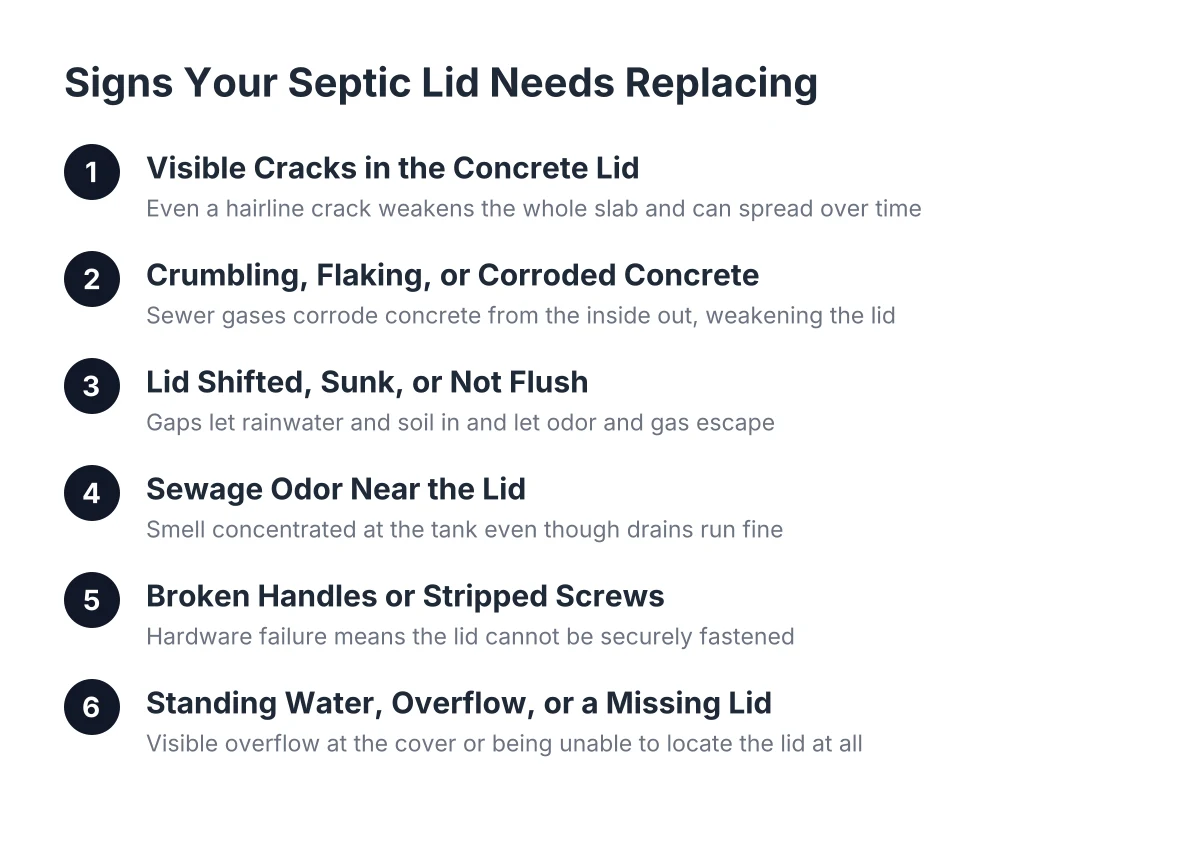
The clearest signs an aerobic septic system needs service are alarm activity, odor, surfacing water, and slow drains. Aerobic units usually have a control panel with an alarm light or buzzer, and that alarm is the system telling you a pump, float, or compressor has a problem. Do not silence it and move on.
Watch for these specific warning signs:
- The alarm light or buzzer activates. This often means a failed air pump, a stuck float, or high water in the pump tank.
- The system goes quiet. An aerobic unit makes a low hum from the compressor. Silence can mean the aerator died, and the system is now operating as a worse version of a standard tank.
- Strong sewage odor near the tank or spray area. Properly treated aerobic effluent has little odor; a strong smell suggests the treatment process has stalled.
- Gray or black water surfacing, or spray heads putting out foul water. Solids may be escaping into parts of the system meant only for treated liquid.
- Slow drains or gurgling inside the house. The classic sign of a tank full of solids or a blocked outlet.
If sewage is already backing up into the house, that has moved past maintenance into emergency septic pumping territory. A backup rarely fixes itself, and continuing to run water into a failed system pushes solids toward the drain field, where the real money gets spent.
Aerobic Maintenance Costs Compared to a Standard Pump-Out
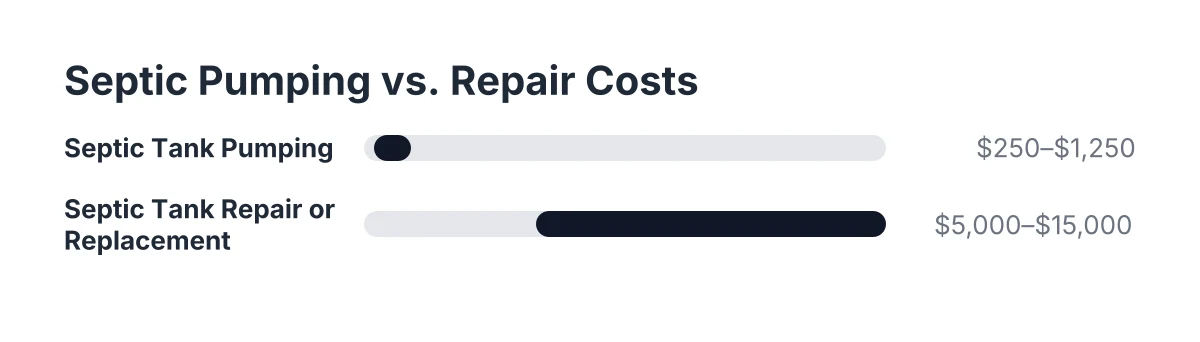
Aerobic system maintenance costs more over time than conventional tank care, because you are paying for annual inspections and occasional parts on top of pumping. For the pumping itself, according to Angi data, septic tank pumping averages $427, with a range from $250 to $1,250 or more depending on tank size and location. That figure covers the pump-out; aerobic components are a separate line.
Over a few years, the math might look like this as a rough illustration, not a quote. Say a conventional tank gets pumped once every three years. An aerobic system over the same stretch might need that same pump-out, three annual inspections, a filter cleaning or two, and eventually a replacement air compressor. Each item is modest on its own, but the total runs meaningfully higher than conventional upkeep.
However, skipping maintenance to save money is the expensive path on either system type. The EPA estimates septic repair or replacement typically costs between $5,000 and $15,000, far more than routine pumping. A dead aerator left unfixed for a year can send poorly treated water and solids into spray lines or a drain field, turning a few hundred dollars of upkeep into a five-figure replacement. This is the core reason more than one in five U.S. households that rely on septic systems, per the EPA, are told the same thing by every health department: pump on schedule, because the tank is cheap to maintain and the drain field is not.
When you compare septic tank pumping services, ask whether the crew works on aerobic units specifically. Some septic tank pumping companies near me searches surface outfits that handle standard residential septic pumping well but do not touch aerobic components, filters, or control panels. For an aerobic system, you want one crew that can pump the tank and check the machinery in the same visit.
Setting a Pumping Schedule for Your Septic System and Sticking to It
A dependable septic system pumping schedule for an aerobic unit combines annual professional inspection with pumping based on measured sludge buildup. Treat it like an oil change for the property. You would not run a truck 100,000 miles on one oil change because it "seemed fine," and the same logic applies to a tank you cannot see into.
Here is a practical framework you can set up this year and run from 2026 forward:
- Establish the baseline. If you have no records, schedule a locate, pump-out, and inspection. Get everything in writing, including tank location, system type, and condition notes.
- Put the annual inspection on the calendar. For aerobic systems, once a year, per EPA guidance for systems with pumps and mechanical parts.
- Set the pumping interval from the inspection. The crew measures sludge and scum each visit and tells you whether this is a pump year or a check year. For a busy household of four, expect the two-to-three-year range Penn State Extension describes as a starting point.
- Log everything. Dates, what was pumped, what was replaced, and sludge levels. If you ever sell the property, that folder answers the exact questions you could not get answered when you bought it.
- Respond to alarms and odors immediately. The schedule handles normal wear; the alarm handles failures. Both matter.
The payoff for a Hesperia property owner is predictability. Regular pumping is the single most effective thing you can do to extend the life of the whole system, and a known schedule turns septic care from a surprise expense into a planned one. Whether you have owned the home for fifteen years or you are still waiting on escrow paperwork for a parcel with a mystery tank, the path is the same: find the tank, learn the system, set the schedule, and keep the records the next owner will wish they had.
If you need your septic tank serviced, Hesperia Septic can help.
Prefer to talk it through? Call (760) 249-7872 — a quick call is usually the fastest way to get a straight answer for your situation.