Tag: septic tank baffles

  • Septic Tank Pumping Terms Explained: A Plain-English Glossary

    septic tank pumping glossary

    If you own a home on septic in Hesperia, sooner or later a quote or an inspection report will throw a word at you that you have never heard. This septic tank pumping glossary translates that jargon into plain English so you can read a quote line by line, ask the right questions, and spot a problem before it becomes a backup in your hallway. Each entry starts with a short, standalone definition, then explains why the term matters when you are hiring someone. Keep it open while you compare estimates or talk to a provider on the phone.

    • Septic Tank
    • Drain Field
    • Inlet and Outlet Baffles
    • Scum, Sludge, and Effluent
    • Riser
    • Grease Trap
    • What Are the 3 Types of Septic Systems
    • Conventional Gravity System
    • Aerobic Treatment Unit (ATU)
    • Mound System
    • Septic Tank Pumping vs. Cleaning
    • How to Prepare Your Tank for Vacuum Truck Service
    • Tank Locating
    • What's Involved in Backfilling and Site Restoration
    • Emergency Pumping
    • Septic Backup
    • Septic Inspection
    • Pumping Schedule

    Parts of Your Septic System

    Septic Tank

    A septic tank is a buried, watertight container that receives everything that goes down your drains and holds it so solids can separate from liquid. Heavy solids sink to the bottom, grease floats to the top, and the liquid in the middle flows out to the drain field. The tank does not make waste disappear; it only stores and separates it. That is why every tank eventually needs septic tank pumping to remove the buildup before it overflows into your yard or backs up into the house.

    Drain Field

    A drain field is the network of buried pipes or trenches that spreads the liquid leaving your septic tank into the soil, where it filters naturally. It is also called a leach field. The drain field is usually the most expensive part of a septic system to replace, so protecting it is the whole point of regular pumping. If a provider says your drain field is saturated or failing, expect the conversation to go beyond a routine pump-out.

    Inlet and Outlet Baffles

    Baffles are fittings inside the septic tank that direct incoming waste downward and keep floating scum from escaping into the drain field. The inlet baffle sits where your house pipe enters the tank; the outlet baffle sits where liquid exits. A missing or broken outlet baffle lets solids reach the drain field and clog it. A good provider checks the baffles during pumping and tells you if one needs repair.

    Scum, Sludge, and Effluent

    Scum, sludge, and effluent are the three layers inside a working septic tank: scum is the floating layer of grease and light solids, sludge is the heavy layer on the bottom, and effluent is the liquid in between. Only the effluent is supposed to leave the tank. When the scum and sludge layers grow too thick, the tank is due for pumping. If a provider measures these layers before quoting, that is a sign they are sizing the job honestly rather than guessing.

    Riser

    A riser is a pipe extension that brings the septic tank lid up to ground level so the tank can be opened without digging. If your tank has no risers, expect the crew to locate the lids and dig to reach them, which adds time to the job. Many homeowners add risers during a pump-out so the next visit is faster and cheaper. Ask whether digging is included in the quote or billed separately.

    Grease Trap

    A grease trap is a small tank that catches fats, oils, and grease from kitchen drains before they reach the septic system or sewer. Grease traps are common at restaurants but also appear on some residential properties. They need pumping on their own schedule because grease hardens and clogs lines. If you have one, mention it when you book so the crew brings what they need to pump both.

    Types of Septic Systems

    What Are the 3 Types of Septic Systems

    The three types of septic systems most people mean are conventional gravity systems, pressure distribution systems, and alternative or engineered systems. A gravity system is the classic setup: waste flows downhill from the house to the tank to the drain field with no pump. A pressure distribution system uses a pump to push effluent evenly across the drain field, common where the soil or slope will not allow gravity flow. Alternative systems, such as mound or aerobic treatment units, add extra treatment steps for difficult sites. Knowing your type matters because pumps, alarms, and extra chambers change what a service visit involves.

    Conventional Gravity System

    A conventional gravity system is a septic setup where wastewater flows from house to tank to drain field entirely by slope, with no pump. It is the simplest and most common residential design. Because there are no mechanical parts, service usually means pumping the tank and checking the baffles. If your home sits on flat or gently sloping ground, there is a good chance this is what you have.

    Aerobic Treatment Unit (ATU)

    An aerobic treatment unit is a septic system that pumps air into the waste to help bacteria break it down faster and more completely than a standard tank. ATUs have motors, air pumps, and sometimes alarms, so they need more attention than a gravity system. If your quote mentions an ATU, expect the visit to involve more than opening a lid and pumping. Tell the provider up front so they schedule the right equipment.

    Mound System

    A mound system is an alternative septic design that builds the drain field above ground level in a raised bed of sand and gravel. Mounds are used where the soil is too shallow, too dense, or too close to groundwater for a buried drain field. They rely on a pump to move effluent uphill into the mound. If you have one, the pump chamber is another component that needs checking during service.

    The Pumping Visit

    Septic Tank Pumping vs. Cleaning

    Pumping means removing the liquid and floating solids from a septic tank, while cleaning means removing everything, including the compacted sludge stuck to the bottom and walls. Providers sometimes use the words loosely, so ask which one the quote covers. A tank that has gone years without service may need full cleaning, not just a quick pump. Our breakdown of pumping versus cleaning for Hesperia homeowners walks through how to tell which service you should book.

    How to Prepare Your Tank for Vacuum Truck Service

    A vacuum truck is the tanker truck that suctions waste out of your septic tank through a large hose and hauls it to a licensed disposal site. Hose length matters: if the truck cannot park close to your tank, the crew may need extra hose or a different access plan. Mention long driveways, gates, or soft ground when you book. That one detail can prevent a wasted trip.

    Tank Locating

    Tank locating is the process of finding a buried septic tank when no one knows where the lids are. Crews use records, probes, or electronic locators to pinpoint the tank before digging. This comes up often with older homes and new buyers who inherited a system with no paperwork. If you cannot point to your lids, ask for locating as part of the visit so the quote reflects the real work.

    What's Involved in Backfilling and Site Restoration

    Backfilling means putting the soil back over the tank lids after the crew has finished pumping. If the lids had to be dug out, backfilling is the last step before the yard looks normal again. Confirm whether the quote includes digging and backfilling or just the pumping itself. It is one of the most common gaps between a low quote and the final bill.

    Emergency Pumping

    Emergency pumping is a same-day or urgent septic tank pump-out booked because sewage is backing up into the home or surfacing in the yard. It usually costs more than a scheduled visit because the crew rearranges the day to get there. Slow drains, gurgling pipes, and wet spots over the tank are the warning signs that show up first. Catching them early is how you book a routine visit instead; these signs your septic tank needs pumping now are the ones to watch.

    Septic Backup

    A septic backup is sewage flowing the wrong way, out of your drains and into the house, usually through the lowest fixtures like a shower or floor drain. Backups happen when the tank is full, a line is clogged, or the drain field cannot absorb any more liquid. Stop running water immediately and call a septic provider, not just a plumber, since the fix often starts at the tank. A full tank is the most common cause, and pumping it is often the first step in the response.

    Septic Inspection

    A septic inspection is a check of the tank, baffles, and drain field condition, often done during a home sale or alongside a pump-out. An inspection during pumping is worth asking for because the tank must be open and empty to see the baffles and walls clearly. Buyers in particular should ask for one before closing on a home with a septic system. It turns an unknown buried system into a known quantity.

    Pumping Schedule

    A pumping schedule is the interval at which a septic tank should be emptied, based on tank size, household size, and water use. There is no single right number for every home, which is why blanket rules can mislead you. A provider who asks about your household before recommending an interval is doing it right. This step-by-step pumping schedule guide shows how to work out an interval that fits your house instead of a generic rule.

    Using These Terms

    You now have enough vocabulary to read a septic quote line by line and know what each charge covers, from locating and digging to the pump-out itself. Keep this septic tank pumping glossary handy the next time a provider mentions baffles, risers, or your drain field, and ask them to point to the exact item on the quote. A homeowner who knows these terms gets clearer answers, and this glossary exists so you can be that homeowner.

    If you need your septic tank serviced, Hesperia Septic can help.

    Related guide: septic tank pumping — Complete Guide

    Related Reading

  • Septic System Inspection Terms Explained: A Plain-English Glossary

    septic system inspection glossary

    If you are buying a home in Hesperia or scheduling your first inspection, the paperwork can read like a foreign language. This septic system inspection glossary translates the terms you will hear from inspectors, sellers, and pumping crews into plain English. Use it to understand quotes line by line, ask sharper questions on the phone, and spot problems before they cost you money. Every definition stands on its own, so you can jump straight to the word that confused you.

    • Septic Tank
    • Drain Field
    • Baffles
    • Distribution Box
    • Effluent Filter
    • Riser
    • Understanding the Three Types of Septic Systems
    • Aerobic Treatment Unit (ATU)
    • Mound System
    • How to Conduct a Septic System Inspection
    • Scum and Sludge Levels
    • Hydraulic Load Test
    • Dye Test
    • Point of Sale Inspection
    • Septic Backup
    • System Failure
    • Inspection Report

    Parts of a Septic System

    Septic Tank

    A septic tank is a buried, watertight container that receives all the wastewater from your home and holds it long enough for solids to settle. Heavy solids sink to the bottom as sludge, grease floats to the top as scum, and the liquid in the middle flows out to the drain field. During an inspection, the tank is where most of the attention goes. If an inspector says your tank is "at capacity," they mean the sludge and scum layers have built up enough that septic tank pumping is due.

    Drain Field

    A drain field is the network of buried pipes or trenches that spreads treated liquid from the septic tank into the soil. It is also called a leach field or absorption field. The soil does the final cleaning work, so a healthy drain field is the most valuable part of the whole system. Soggy ground, standing water, or a sewage smell over this area are classic warning signs. Replacing a failed drain field costs far more than any inspection or pumping visit, which is why inspectors check it closely.

    Baffles

    Baffles are barriers inside the septic tank that keep floating grease and settled solids from escaping into the drain field. Most tanks have an inlet baffle where waste enters and an outlet baffle where liquid leaves. A missing or corroded outlet baffle lets solids flow out and clog the drain field over time. Inspectors check baffles every visit because a small baffle repair can prevent a drain field failure.

    Distribution Box

    A distribution box is a small buried box that splits the flow from the septic tank evenly among the drain field lines. Often called a D-box, it is a common failure point because it can crack, tilt, or fill with roots. When a D-box sends all the flow to one line, that line gets overloaded while the others sit dry. An inspector who mentions the D-box is checking whether your drain field is wearing evenly.

    Effluent Filter

    An effluent filter is a screen on the tank's outlet that catches solids before they reach the drain field. Not every tank has one, especially older systems. If yours does, it needs cleaning during routine service, and a clogged filter can slow drains throughout the house. An inspector noting a missing filter may suggest adding one as cheap insurance for the drain field.

    Riser

    A riser is a vertical pipe that extends the septic tank's access lid up to ground level. Without risers, a crew has to dig down to the tank lids every time they pump or inspect. If a quote includes digging or "locating and exposing lids," that usually means your tank has no risers. Adding them makes every future septic tank pumping and inspection faster and cheaper.

    Types of Septic Systems

    Understanding the Three Types of Septic Systems

    The three types of septic systems most people mean are conventional gravity systems, pressure distribution systems, and alternative or engineered systems. A conventional system uses gravity alone to move wastewater from the tank to the drain field, and it is the most common setup. A pressure distribution system adds a pump to push effluent evenly through the drain field, often used where the lot or soil will not allow simple gravity flow. Alternative systems, such as mound or aerobic treatment units, treat wastewater more aggressively on lots with poor soil, shallow bedrock, or high groundwater. Knowing which type you have matters because pumps and treatment units add parts that need their own inspection and maintenance.

    Aerobic Treatment Unit (ATU)

    An aerobic treatment unit is a septic system that pumps air into the tank so oxygen-loving bacteria can break down waste faster than a standard tank. ATUs treat wastewater to a higher level, which lets them work on lots where a conventional system would fail. The tradeoff is more moving parts, including an air pump that can wear out. If your property has an ATU, expect the inspection to cover the mechanical components, not just the tank and soil.

    Mound System

    A mound system is a septic setup that builds the drain field above the natural ground level using a raised bed of sand and gravel. It is used where the soil is too shallow, too dense, or too wet to absorb wastewater the normal way. Mound systems rely on a pump to lift effluent up into the mound, so the pump and its controls get inspected along with everything else. If a High Desert property has a mound, that tells you something about the soil underneath it.

    The Inspection Process

    How to Conduct a Septic System Inspection

    Tank locating is the work of finding a buried septic tank when no one knows exactly where it is. Crews use records, probes, or a flushable transmitter to pinpoint the tank and its lids. This matters most on older properties where the original drawings are long gone. Buying a High Desert property with no septic records is common enough that we wrote a guide to inspecting a septic system with no paperwork. Expect locating to add time to a first visit; after that, the position should be marked or mapped.

    Scum and Sludge Levels

    Scum and sludge levels are the measured thickness of the floating grease layer and the settled solids layer inside a septic tank. Inspectors measure both with a probe to decide whether the tank needs pumping. When the layers get too thick, solids start washing into the drain field, which is the failure everyone wants to avoid. If your report lists these measurements, the inspector did more than glance in the tank.

    Hydraulic Load Test

    A hydraulic load test means running a set amount of water into the septic system to see whether the drain field can absorb it. Inspectors use it during a prepurchase septic system inspection to test the drain field under realistic conditions, since a house that sat empty can hide a failing field. Water backing up or surfacing during the test is a serious red flag. Our prepurchase septic inspection checklist for High Desert buyers explains where this test fits in the buying timeline.

    Dye Test

    A dye test is a check where colored dye is flushed into the system to trace where wastewater actually goes. If dye surfaces in the yard, a ditch, or a nearby drain, the system is leaking or failing. It is a simpler, less thorough check than a hydraulic load test, so ask which one a provider plans to do. A dye test alone may not satisfy a lender or a careful buyer.

    Point of Sale Inspection

    A point of sale inspection is a septic evaluation done because a property is changing hands. Some areas require it before closing; in others, the buyer or lender requests it. It is more thorough than a routine service check because the buyer has no history with the system. If you are the buyer, get the written report, not just a verbal "it looked fine."

    Problems and Paperwork

    Septic Backup

    A septic backup is wastewater flowing the wrong way, coming up through drains, toilets, or tubs instead of leaving the house. It usually means the tank is full, a line is blocked, or the drain field can no longer absorb water. A backup is an emergency, not a wait-and-see problem, because raw sewage inside the home is a health hazard. Slow drains and gurgling sounds often show up first, and they are worth a call before the mess arrives.

    System Failure

    System failure means a septic system can no longer treat and absorb wastewater, so sewage backs up or surfaces in the yard. Failure is usually gradual, which is why inspections catch it early. Signs include wet spots over the drain field, strong odors, and lush green grass in a dry yard. Our rundown of red flags during a septic inspection in Hesperia covers the warning signs inspectors look for before failure becomes obvious.

    Inspection Report

    An inspection report is the written record of what an inspector found, including tank condition, measured levels, drain field observations, and any repairs recommended. For buyers, this document is negotiating leverage and a maintenance baseline. Keep every report you get; the next inspector or crew will work faster with history in hand. A provider who offers only a verbal summary is giving you less than you paid for.

    Using These Terms

    You now know enough to read a septic quote or report line by line and ask what each item covers, from baffles to load tests. Keep this septic system inspection glossary handy when you talk to any provider, and do not hesitate to ask a crew to point at the part they are describing. A good local operator will walk you through it in plain language, the same way this septic system inspection glossary just did.

    If you need your septic tank serviced, Hesperia Septic can help.

    Related Reading

  • Buying Property With a Concrete Septic Tank in Hesperia: The Inspection Checklist

    concrete septic tank inspection

    If you're about to close on land or a home in Hesperia with no septic records, a concrete septic tank inspection is the one step that turns the biggest unknown on the property into a number you can negotiate. The tank in the ground is almost certainly concrete: most older High Desert properties were built with concrete tanks, and knowing what that means for failure points, repairs, and lifespan changes how you budget. This guide walks through what an inspector checks (lid, baffles, walls, seams), what each finding costs to fix, how long a concrete tank should last, and how to price the results before you commit money to a property where nobody can tell you what's buried out back.

    No hidden-fee talk, no manufactured upsells. Just the numbers and trade-offs, so when a quote lands in your inbox you can tell whether it's fair.

    Why Septic Tank Concrete Dominates the High Desert

    Concrete is the default septic tank material in Hesperia and most of the High Desert for a simple reason: it holds up. A concrete tank is heavy, so it doesn't float or shift when groundwater or soil conditions change. It handles the weight of soil above it, and in many cases it can survive a vehicle accidentally driving over the area, which plastic tanks often cannot.

    For a land buyer with no records, this matters in a practical way. If the home on your new property was built decades ago, the odds are high that the tank is concrete. That tells you something about what to inspect, what parts wear out first, and roughly what a replacement would cost if the inspection turns up bad news.

    Concrete tanks are typically precast, meaning they were poured at a factory and delivered by truck. Some older rural tanks were poured in place on site. Poured-in-place tanks can be fine, but they can also be undersized, unbaffled, or built to no particular standard, which is one more reason a professional inspection matters on a property with no paperwork.

    What the Inspection Findings Cost to Fix

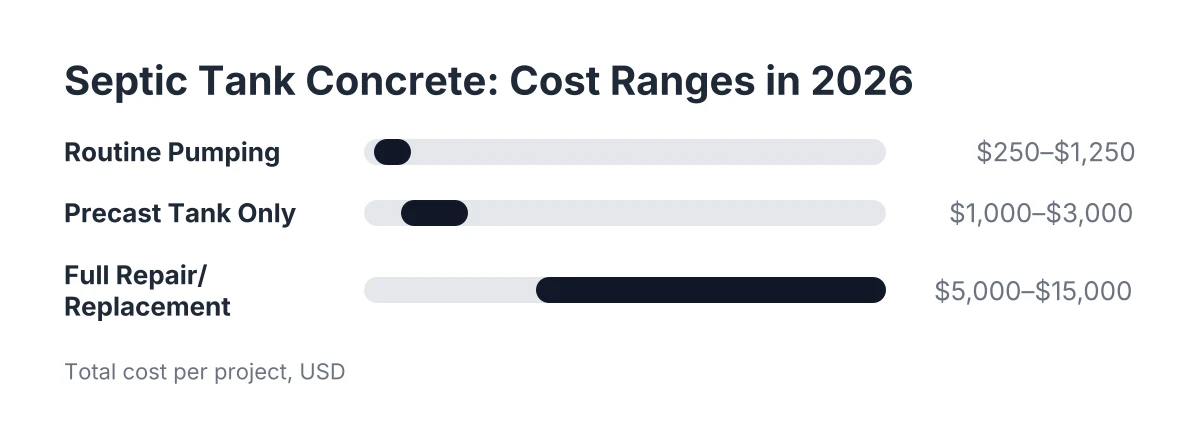
    Worst case first, so the rest of the numbers have context. A precast concrete septic tank itself typically runs somewhere in the range of $1,000 to $3,000 for the tank alone, depending on size and the supplier. However, the tank is the smaller part of the bill. Excavation, delivery, setting the tank with a crane truck, connecting the plumbing, permits, and backfill make up most of a full installation, which is why total project costs land far above the sticker price of the tank.

    According to the U.S. Environmental Protection Agency, septic tank repair or replacement typically costs between $5,000 and $15,000. That range covers most residential situations, and it's a useful sanity check when you're comparing quotes for the cost of septic tank replacement. If a bid comes in far outside that window, ask what's driving it. Sometimes there's a real reason, like deep burial, hard soil, or a failed drain field that also needs work. Sometimes there isn't.

    Here's how the pieces of a concrete tank project typically break down:

    • The tank itself: the precast concrete unit, priced by capacity
    • Excavation and site work: digging the hole, managing soil, and backfilling after the set
    • Delivery and placement: a boom truck or crane sets the tank, and access to your lot affects this cost
    • Plumbing connections: tying the house line and the drain field line into the tank
    • Permits and inspections: San Bernardino County requires permits for septic work, and fees vary
    • Risers and lids: a concrete septic tank riser and cover bring the access point to grade so future pumping doesn't require digging

    Compare that full-replacement picture to routine service. According to Angi, septic tank pumping averages $427, with a range of $250 to $1,250 or more depending on tank size and location. That gap between a few hundred dollars for pumping and five figures for replacement is the strongest argument for maintaining a concrete tank instead of letting it fail.

    One note on comparing quotes: septic tank cost varies with tank size, burial depth, and how easy the lid is to reach. A quote that seems high may reflect a deep tank with no riser, and a quote that seems low may not include digging to find the lid at all. Ask each company to itemize so you're comparing the same work.

    How Long Does a Concrete Septic Tank Last?

    A well-built concrete septic tank commonly lasts 40 years or more, and some last well past that with regular pumping and no structural damage. Lifespan depends on the quality of the original concrete, the soil conditions, and whether the tank was maintained or left to accumulate solids for decades. Plastic and fiberglass tanks generally have shorter expected lifespans and are more vulnerable to physical damage.

    That longevity is the core of the concrete value argument. A tank that costs more to install but lasts twice as long usually wins on total cost of ownership. However, longevity is not a guarantee. Concrete has specific failure points, and on a property with no records, those failure points are exactly what an inspection should look at.

    Where a Concrete Septic Tank Inspection Looks First

    Concrete rarely fails all at once. It degrades in predictable places:

    1. The lid and cover. The concrete septic tank lid takes the most abuse. Lids crack from age, vehicle traffic, or careless digging. A cracked concrete cover is a safety hazard, especially on land where kids or livestock roam. Lid replacement is one of the cheaper concrete repairs, often a few hundred dollars installed, and it's worth doing immediately if the lid is compromised.
    2. The baffles. Baffles direct flow inside the tank and keep solids from washing into the drain field. In older concrete tanks, baffles were often concrete themselves, and sewage gases eat away at concrete above the waterline over decades. A deteriorated baffle lets solids escape and can quietly kill a drain field, which is the expensive part of the system.
    3. The tank walls above the waterline. The same corrosive gases that destroy baffles can pit and weaken the concrete crown of the tank. An inspector checks this when the tank is pumped and empty.
    4. Seams and connections. Cracks at the inlet, outlet, or the seam between tank sections can let groundwater in or sewage out. Either one is a problem worth knowing about before closing on a property.

    Septic Tank Concrete vs. Plastic and Fiberglass

    Concrete, plastic, and fiberglass all show up in residential septic systems, and each has a real trade-off profile. Concrete costs more upfront and lasts longer. Plastic costs less and installs faster, but it can crack under weight, and an empty plastic tank can float upward in wet soil if it isn't anchored. Fiberglass sits between the two on price and resists corrosion well, but it shares plastic's vulnerability to shifting and damage during installation.

    For example, here's how the materials compare on the factors that matter most:

    • Upfront cost: plastic is usually cheapest, fiberglass is mid-range, and concrete costs the most for the tank itself
    • Installation: plastic and fiberglass tanks are light enough to place without a crane; concrete needs heavy equipment, which adds cost
    • Durability: concrete handles soil weight and surface traffic best; plastic is most vulnerable to crushing and deformation
    • Lifespan: concrete typically outlasts both alternatives when maintained
    • Repairability: cracked concrete can often be patched or fitted with new baffles; a badly cracked plastic tank usually means replacement

    In Hesperia's soil and climate, concrete remains the common choice for full-size residential tanks. That said, material is only one part of the picture. Septic system types range from standard gravity systems, which most Hesperia homes have, to alternative designs with pumps and mechanical parts. An aerobic septic system cost runs meaningfully higher than a conventional gravity system, both to install and to maintain, because it uses powered components that need attention. The EPA advises that alternative systems with electrical float switches, pumps, or mechanical components should generally be inspected once a year, versus at least once every three years for a standard system.

    If you're replacing a failed system rather than just a tank, the county's requirements and your soil conditions may dictate the system type more than your preference does. That's a conversation to have with a septic professional and the county before you assume a like-for-like swap.

    Concrete Septic Tank Inspection: The Buyer's Sequence

    If you're buying land or a home in Hesperia with no septic records, treat the septic system as an unknown expense until someone physically opens the tank. The seller may not know where the tank is. The previous owner may never have pumped it. None of that shows up in a standard home inspection, which typically doesn't open or evaluate the septic tank at all.

    Here is the practical sequence that protects you:

    1. Get the tank located. A septic tank locating service finds the tank and marks it, even when there's no visible lid or riser on the lot. On older properties, the concrete lid is often buried under a foot or more of soil.
    2. Have the tank pumped and inspected together. A concrete septic tank inspection can't be done on a full tank. Pumping it empty lets someone check the baffles, the concrete walls, the lid, and the liquid levels that hint at drain field health.
    3. Ask for a written report. For a purchase decision, you want documentation: tank material, approximate condition, lid and baffle status, and any signs of drain field failure. Lenders and escrow officers can work with a written report; they can't work with a verbal "seems fine."
    4. Price the findings before you close. If the report shows a cracked concrete septic tank cover, that's a modest fix you can negotiate. If it shows a collapsing tank or a saturated drain field, you're looking at the EPA's $5,000 to $15,000 replacement range, and that belongs in your purchase negotiation, not in your first year of ownership as a surprise.

    Consider a realistic Hesperia scenario. A buyer closes on a 1970s home on an acre lot. No septic records exist, no lid is visible, and the seller shrugs. A locate finds the tank 18 inches down under the side yard. Pumping and inspection reveal a concrete tank in decent shape, but the concrete outlet baffle has dissolved and solids have been flowing toward the drain field for years. The fix is a new outlet tee, a few hundred dollars, caught before it destroyed a drain field worth thousands. That is the entire case for inspecting before you buy.

    The trade-off is real: a locate-and-inspect job costs money on a property you might walk away from, and it can add a few days to escrow. Weigh that against the alternative, which is absorbing a five-figure replacement with no negotiating leverage after closing.

    Getting the Most Life Out of a Concrete Tank

    Once you own the property, the goal shifts from evaluating the tank to protecting it. Concrete rewards maintenance more than any other tank material, because most concrete failures build slowly and get caught during routine pumping.

    First, establish a pumping baseline. If nobody knows when the tank was last pumped, have it pumped now and note the date. The EPA recommends professional inspection at least once every three years for the average household, and pumping visits are the natural time to do it. More than one in five U.S. households rely on septic or small cluster systems, according to the EPA, so this is ordinary homeownership on septic, not an exotic burden.

    Next, add a riser if the tank doesn't have one. A concrete septic tank riser, or a plastic riser bolted to the concrete tank, brings the access lid up to ground level. Every future pumping visit gets cheaper and faster because nobody has to dig to find the lid. On a property where you just paid to locate the tank, a riser means you never pay for that again.

    In addition, protect the ground above the tank. Don't park vehicles, place sheds, or pour patios over the tank or drain field. Concrete is the toughest tank material, but repeated vehicle loads crack lids and stress tank crowns. Mark the tank location on a simple property sketch, and keep it with your house documents so the next owner isn't in your position.

    Finally, know your warning signs. Slow drains across the whole house, sewage odor in the yard, or wet ground over the drain field mean the system needs attention now, not at the next scheduled pumping. Catching a backup early is the difference between an emergency pumping visit and a sewage cleanup inside the house.

    When to Repair Concrete and When to Replace It

    Repair a concrete tank when the structure is sound and the failure is a component: a cracked lid, a deteriorated baffle, or a bad inlet connection. These fixes typically cost hundreds, not thousands, and they restore decades of remaining service life. Replace the tank when the concrete itself has failed, meaning collapsed sections, major cracks below the waterline, or a crown so deteriorated it can't safely support a lid.

    A pumped-out, visual inspection is the only honest way to make that call. Anyone quoting a full replacement without opening and emptying the tank is guessing, and you shouldn't pay five figures on a guess. Likewise, a badly failed tank patched to limp along is a liability, especially if you plan to sell or build on the property later. Structural assessments and county permit questions are where a professional's judgment matters most; this guide can frame the decision, but it can't look inside your tank.

    For most Hesperia property owners, the math favors concrete's long game. Pump on schedule, inspect when you pump, fix small concrete failures while they're small, and a concrete tank installed decades ago keeps working for decades more. For the land buyer starting with zero records, one locate, one pumping, and one written concrete septic tank inspection report turn the biggest unknown on the property into a line item you can actually plan around.

    If you're buying in Hesperia and need the tank found, pumped, and inspected before you close, Hesperia Septic can help.

    Related Reading