Tag: septic pumping cost

  • What to Inspect Before Buying High Desert Property With a Septic System

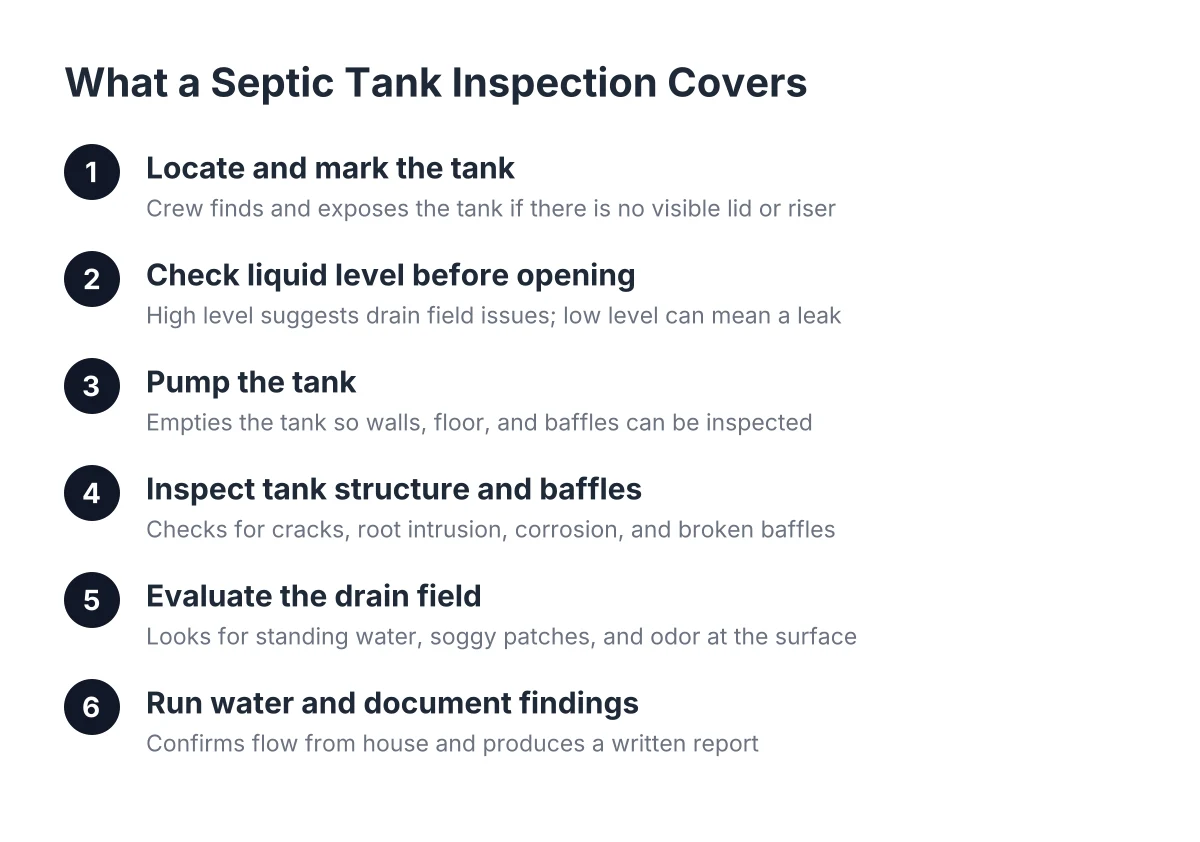
    Process diagram of septic tank inspection steps for High Desert property buyers
    The key steps a documented septic tank inspection follows before you buy High Desert property.

    You found the property. Maybe it is a house on a couple acres outside Hesperia, or a lot with a well and an old manufactured home. The seller says the septic works fine. There are no records, no permits on file, and no visible lid anywhere in the yard. Before you sign anything, you need a septic tank inspection that produces a written, documented report you can hand to your lender, your escrow officer, or the county. This guide walks through exactly what that means, what an inspector actually checks, and why High Desert soil makes some of this different than what you will read in a generic national article.

    Why "The Seller Says It Works" Is Not Enough

    A septic system is buried. That single fact explains most of the risk you are taking on. A roof with missing shingles shows itself. A furnace that will not fire shows itself. Additionally, a septic tank that is cracked, undersized, or sitting over a failing drain field can look perfectly fine from the surface for years.

    Here is the problem with taking the seller's word for it. Most sellers are not lying; they genuinely do not know. If the system has never backed up into the house while they lived there, they assume it is healthy. However, a tank can be one heavy laundry weekend away from failure and still drain normally on the day you walk the property.

    The stakes are not small. The U.S. Environmental Protection Agency estimates septic repair or replacement typically costs between $5,000 and $15,000, far more than routine pumping. On some High Desert lots with difficult access or soil that will not pass a percolation test, a full drain field replacement can run higher than that. That is the number you are gambling with when you skip the inspection to keep escrow moving.

    In California, septic-served homes are less common than in much of the country. According to the U.S. Environmental Protection Agency, only about 10 percent of California homes are on septic systems, compared with 55 percent in states like Vermont. As a result, many California buyers, agents, and even some lenders have never dealt with one. That knowledge gap is exactly where expensive surprises live, and it is why the burden of due diligence falls on you.

    The No-Records Problem, and Why It Is So Common in Hesperia

    Plenty of properties in Hesperia and the surrounding High Desert were built decades ago, sold several times, and passed along with no septic paperwork at all. The county may have a permit on file, or it may not. The original owner may have added a second tank or moved the drain field without telling anyone. Older tanks were often buried deep with no riser, so there is nothing to see at grade.

    For example, suppose a buyer is in escrow on a 1970s home on a half acre off Ranchero Road. The seller inherited the place and never lived in it. Nobody knows where the tank is. The disclosure form says "septic, condition unknown." In that scenario, the buyer has two choices: close blind and hope, or get the tank located, opened, and inspected before contingencies expire.

    Locating comes first, and it matters more than most buyers expect. A crew can find a buried tank by tracing the main sewer line from the house, probing likely spots, or running a locator device through the line from a cleanout. Once the tank is found, they mark it, dig to the lid, and open it. Only then can anyone tell you anything real about condition.

    If you are the buyer, get the locate and the inspection done as one visit. Splitting them into separate appointments burns days you do not have inside a contingency window.

    What a Septic Tank Inspection Actually Includes

    A septic tank inspection is a physical, opened-lid evaluation of the tank and the system it feeds, not a glance at the yard. The inspector locates and uncovers the tank, checks liquid levels before and after pumping, examines the tank structure and baffles, and evaluates how the drain field is accepting water. The result is a documented report on system condition.

    That last part matters. A drive-by opinion is worthless in a real estate transaction. What you need is documentation, and a proper inspection produces it.

    Here is what a thorough inspection covers, step by step:

    • Locate and mark the tank. If there is no visible lid or riser, the crew finds the tank first, then digs to expose the access.
    • Check liquid level before opening. A level above the outlet pipe suggests the drain field is not taking water. A level below normal can mean the tank is leaking.
    • Pump the tank. You cannot inspect what you cannot see. Pumping empties the tank so the inspector can look at the walls, floor, and baffles. This is why septic tank inspection and pumping are usually done together on a purchase.
    • Inspect the tank structure. Cracks, root intrusion, corroded rebar in older concrete tanks, and deteriorated baffles all show up once the tank is empty.
    • Check the inlet and outlet baffles. These direct flow and keep solids out of the drain field. Missing or broken baffles are one of the most common and most fixable findings.
    • Evaluate the drain field. The inspector looks for standing water, unusually green or soggy patches, sewage odor at the surface, and how the field responds when water runs from the house.
    • Run water from the house. Flushing toilets and running fixtures confirms the line from the house to the tank flows properly and shows how the system handles real use.
    • Document everything. Photos, measured observations, and a written report you can attach to your purchase file.

    Some systems also have an inspection port or inspection pipe near the drain field, a capped vertical pipe that lets an inspector check for liquid ponding in the field itself. If the property has one, that pipe cap gets pulled and checked. Many older High Desert systems do not have them, which makes the open-tank evaluation and the surface check of the field even more important.

    One honest caveat: no inspection can see everything. Drain field lines run underground for dozens of feet, and an inspector reports what the evidence shows on that day. A system can pass inspection and still fail years later under heavier use than the sellers ever put on it. A good report tells you condition and risk; it is not a lifetime warranty, and nobody honest will sell it as one.

    What High Desert Soil Does to Septic Systems

    Hesperia sits on a mix of sandy, fast-draining soil and pockets of harder, compacted ground, and the difference matters enormously for a septic system. Sandy soil drains quickly, which is generally good for a drain field. Compacted or clay-heavy pockets drain slowly, and a drain field built over them struggles from day one.

    An inspector who works this area every week knows the local patterns. They know which neighborhoods sit on decomposed granite that percolates well and which ones sit on caliche-like hardpan that does not. They know that older systems out here were sometimes sized for a small weekend cabin, not the four-bedroom family home that later replaced it. In addition, they know what desert heat and freeze-thaw cycles do to older concrete tanks, which can spall and crack in ways an out-of-area inspector might not recognize.

    This local knowledge changes what a report says. A generic checklist inspection might note "drain field accepting water." A local inspection can add context: this field is in fast soil and has capacity to spare, or this field is in marginal ground and is one added bathroom away from trouble. That second kind of finding is what actually helps you negotiate or walk away.

    How a Septic Tank Inspection Report Works in Escrow

    A septic tank inspection report is a written document that states where the tank is, what condition the tank and drain field are in, what was pumped and observed, and what repairs or concerns the inspector found. Lenders, escrow officers, and county offices accept it as evidence of system condition for a home sale, refinance, or permit.

    Buyers worry that ordering an inspection will delay escrow. In practice, the opposite is usually true. The delays happen when a buyer waits until the last week of contingencies, then discovers nobody knows where the tank is. Locating, digging, pumping, and inspecting can happen in a single visit once scheduled, and a written report typically follows shortly after. Ordering early in the contingency period is what keeps the timeline safe.

    The report gives you three practical levers in a transaction:

    1. A pass gives you confidence to close. You know the location of the tank, its condition, and roughly what maintenance it needs. That is worth documenting even on a clean system, because you will own that information forever.
    2. A problem finding gives you negotiating power. If the inspection turns up a cracked tank or a saturated drain field, you can ask the seller to repair it, credit you at closing, or reduce the price. Without a report, you have no standing to ask for anything.
    3. A failure finding lets you walk away with your deposit. If your contract includes an inspection contingency, a documented failed system is grounds to exit. That is the whole point of doing this before the contingency expires, not after.

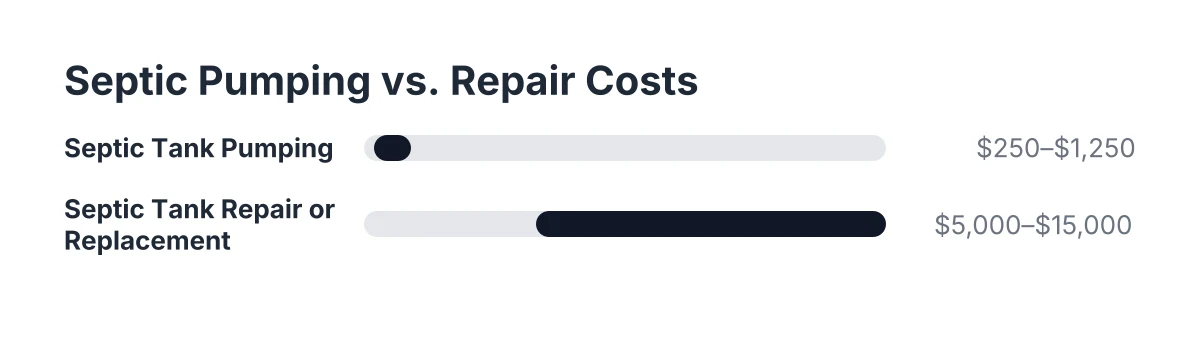
    Some buyers hesitate at the septic tank inspection cost, especially on a property they might not keep. Think of it as a fraction of a percent of the purchase price spent to rule out a five-figure liability. For scale, Angi reports that septic tank pumping alone averages $427 nationally, ranging from $250 to $1,250 or more depending on tank size and access. An inspection with locating adds to that, but it remains small money against a $5,000 to $15,000 repair you did not see coming.

    Requirements also vary by county and lender. As of 2026, some lenders require a septic evaluation before funding a loan on a septic-served property, and San Bernardino County has its own permit and records processes. Check what your specific lender and the county require early, because those requirements set your timeline, not the other way around.

    How Long Does a Septic Inspection Take?

    A full septic inspection with locating and pumping usually takes a few hours on site, though the exact time depends on how hard the tank is to find and how deep the lids are buried. A tank with an exposed riser goes fast. Furthermore, a deep tank with no records and no visible access takes longer because the crew has to locate it and dig by hand.

    Several factors stretch or shrink the visit:

    • Whether the tank location is known or has to be found from scratch
    • How deep the lids are buried, and whether there is one lid or several
    • Tank size and how full it is when the crew arrives
    • Access for the pump truck, which matters on long dirt driveways and fenced lots
    • Whether the drain field shows problems that need extra evaluation

    Plan for a half day and you will rarely be surprised. The written report follows the site visit, so build a few days of buffer between the inspection date and your contingency deadline.

    Red Flags You Can Spot Yourself Before You Pay for Anything

    You are not qualified to pass or fail a septic system from the surface, and neither is anyone else. However, you can spot warning signs on a walkthrough that tell you an inspection is not optional on this particular property. If you see any of these, do not close without a professional evaluation:

    • A patch of grass or weeds that is greener and lusher than everything around it, especially in the desert where nothing else is green
    • Soggy or spongy ground anywhere between the house and the property line
    • Sewage odor outside, near a cleanout, or inside the house
    • Slow drains in every fixture, not just one sink
    • Gurgling from toilets or drains when other fixtures run
    • A seller who cannot or will not say when the tank was last pumped
    • No visible lid, riser, or inspection port anywhere on the lot, combined with no county records

    None of these prove the system has failed. Each one raises the odds that it has, or that it is close. A do-it-yourself surface check is a screening tool, not a substitute for an opened-tank professional septic system inspection, particularly when the tank has structural issues that only show once it is pumped and the walls are visible.

    The Bottom Line for Buyers With No Records

    Buying High Desert property with an unknown septic system is not reckless if you do it in the right order. Locate the tank. Open it. Pump it. Inspect it. Get the findings in writing before your contingency period ends. That sequence turns an invisible five-figure risk into a known quantity you can price, negotiate, or reject.

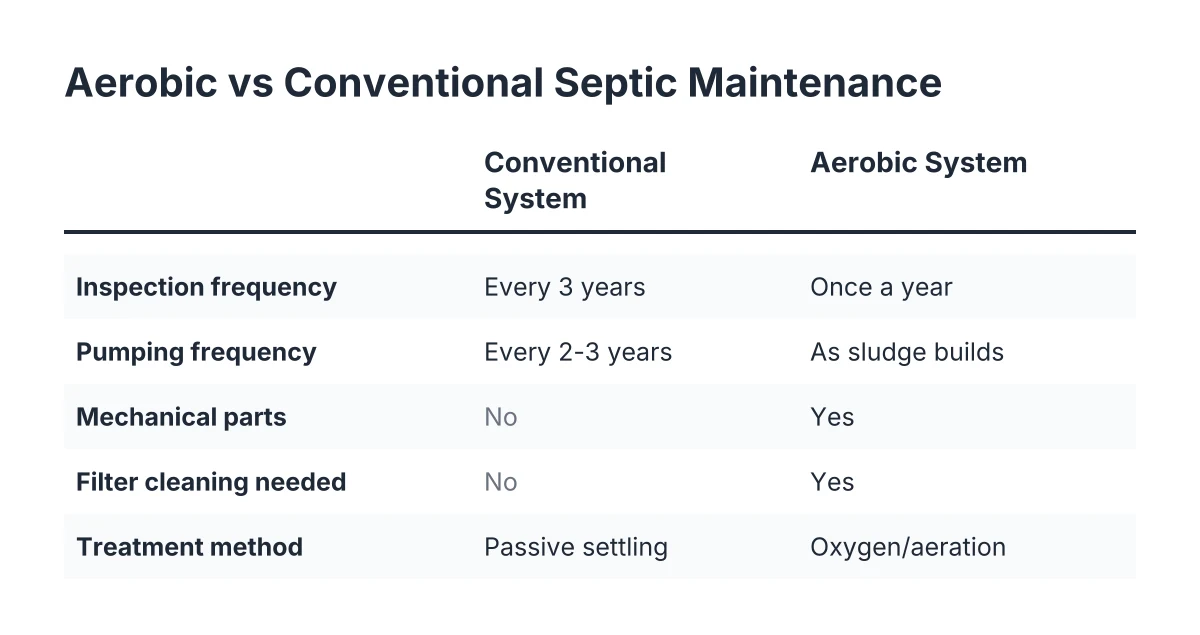
    Once you own the place, keep the habit. The U.S. Environmental Protection Agency recommends a professional inspection at least once every three years for a standard system, and once a year for alternative systems with pumps, float switches, or other mechanical parts. The inspection report from your purchase becomes the baseline record the property never had, including a marked tank location that the next owner, or the next service crew, will thank you for.

    The buyers who get burned out here are not the ones who bought properties with old systems. They are the ones who bought blind. A few hours with a local crew, a pump truck, and a shovel is what separates the two.

    If you need your septic tank serviced, Hesperia Septic can help.

    Related Reading

  • 7 Signs Your Septic Tank Needs Pumping: Backups, Odors, and Slow Drains

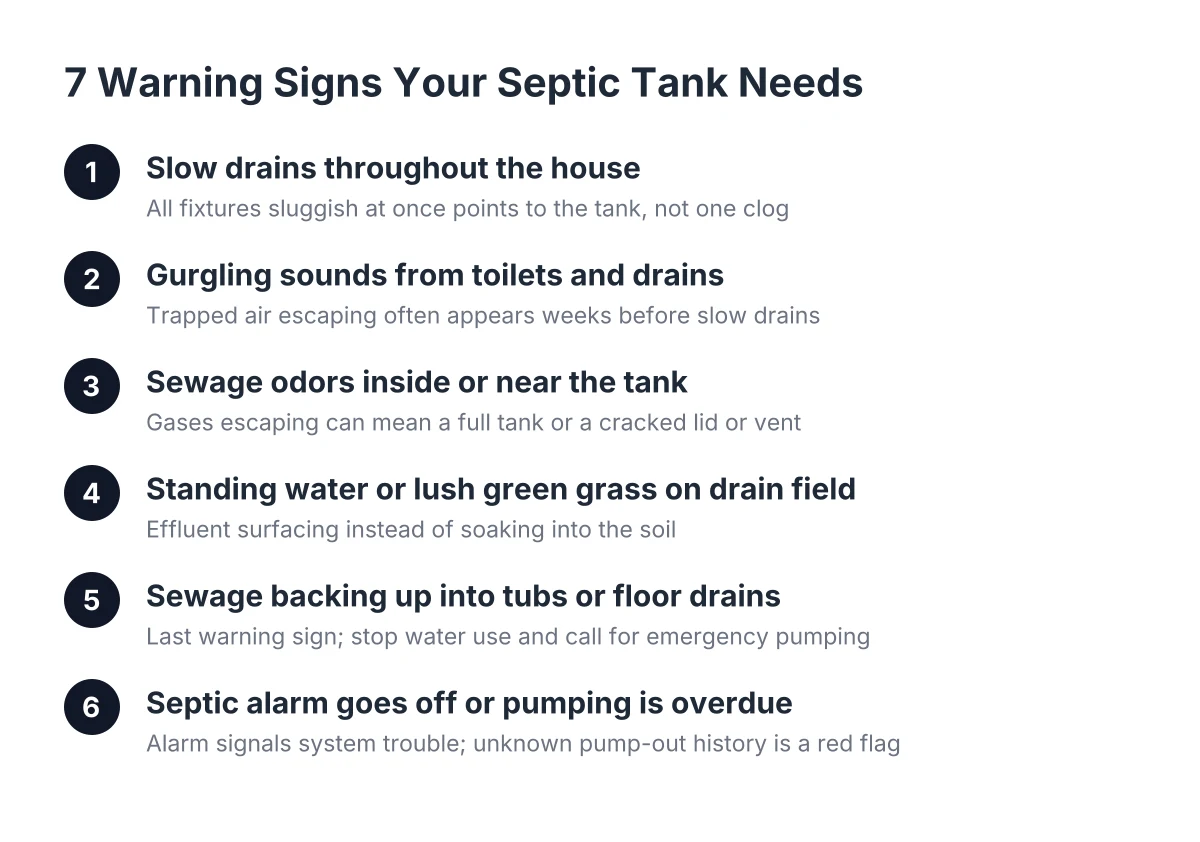
    Sequence of septic backup warning signs from slow drains to sewage backup
    The warning signs tend to appear in this order, from slow drains to a full backup.

    Most septic problems announce themselves before sewage ever reaches your tub. The signs your septic tank needs pumping usually show up in a predictable order: drains slow down, odors creep in, the yard gets wet, and then a backup hits at the worst possible time. Recognizing septic backup warning signs early is the difference between a routine septic tank pumping visit and a weekend emergency with a tenant calling you at 8pm. If you own a home or a rental in Hesperia, catching these signals early helps you act before a costly emergency develops.

    This list walks through the seven warning signs in the rough order they tend to appear, plus what each one usually means. Some point to a full tank that just needs pumping. Others point to a clog or a drain field problem that pumping alone will not fix. Knowing the difference helps you evaluate what you are actually paying for when a truck shows up.

    1. Slow Drains Throughout the House, Not Just One Fixture

    One slow sink is usually a plumbing clog. Every drain in the house running slow at the same time is one of the earliest signs your septic tank is getting full. When sludge builds up in the tank, wastewater has nowhere to go, so it backs pressure into every line connected to the system.

    Here is the quick test: if the master bathroom tub, the kitchen sink, and a toilet on the other side of the house are all sluggish, the problem is downstream of all of them. That points to the tank or the line leading to it. A landlord hearing "all the drains are slow" from a tenant should treat that differently than "the bathroom sink is slow," because the first one gets worse on its own.

    Therefore, do not spend money on drain cleaner or a plumber snaking one fixture if the whole house is affected. A regular plumber will often tell you they do not handle septic anyway. Whole-house slowness calls for a septic inspection or pumping visit first.

    2. Gurgling Sounds From Toilets and Drains

    Gurgling is trapped air escaping through your plumbing because wastewater cannot flow freely into the tank. You will hear it when a toilet finishes flushing, or from a tub drain while the washing machine empties. It sounds minor, but it is the system telling you the pipes are fighting for space.

    In addition, gurgling often shows up a week or two before slow drains become obvious. Tenants tend to ignore it, so if you own rental property, it is worth asking specifically about strange drain noises during any maintenance visit. Catching the problem at the gurgling stage usually means a straightforward pump-out instead of a backup cleanup. These early warning signs of septic backup prevent much costlier repairs.

    3. Sewage Odors Inside the House or Near the Tank

    A healthy septic system should not smell. Sewage odor near drains, around the tank lid, or drifting across the yard means gases are escaping where they should not, and often means the tank is full enough that the scum layer is pushing waste toward the outlet. Odor inside the house is the more urgent version; it usually means wastewater is sitting in the lines.

    For example, a common Hesperia scenario looks like this: a homeowner notices a faint sewage smell in the hall bathroom for a few days, assumes it is a dry trap, and pours water down the drain. The smell comes back. A week later the toilet will not flush and water is rising in the tub. The odor was the warning; the backup was the bill.

    However, odor alone does not always mean a full tank. A cracked lid, a damaged vent, or a leaking tank can also cause smells. If pumping does not resolve a persistent odor, ask the crew to inspect the tank and lids while it is open.

    4. Standing Water or Lush Green Grass Over the Drain Field

    Wet, soggy ground over the tank or drain field when it has not rained is one of the clearer signs your septic tank is either overfull or failing to drain. In the High Desert, this one stands out. Hesperia yards are dry most of the year, so a soft, muddy patch or a stripe of bright green grass in an otherwise brown yard is hard to miss.

    That green stripe happens because wastewater is surfacing and fertilizing the grass above the drain field. It looks healthy, but it means effluent is not soaking into the soil the way it should. Sometimes pumping the tank buys time. Other times the drain field itself is saturated or failing, which is a bigger conversation.

    This is the point where an honest assessment matters. According to the U.S. Environmental Protection Agency, septic repair or replacement typically costs between $5,000 and $15,000, far more than routine pumping. A crew that opens the tank and checks liquid levels can usually tell you whether you are looking at a pump-out or a drain field problem, and you should expect them to explain which one and why.

    5. Sewage Backing Up Into Tubs, Showers, or Floor Drains

    Sewage backing up into the house is the last warning, not the first. Wastewater follows gravity, so it surfaces at the lowest drains first: a ground-floor tub, a shower, or a floor drain in a laundry room. When you spot septic backup warning signs like gray or black water rising in a tub when the toilet flushes, stop running water immediately. Every gallon you use has nowhere to go but back inside.

    At this stage you need emergency septic pumping, not a drain snake. Pumping the tank relieves the pressure and stops the backup in most cases where a full tank is the cause. If the tank is not full and sewage is still backing up, the blockage is likely in the line between the house and the tank, or the drain field is refusing water. A crew that pumps tanks daily can tell the difference at the site.

    While you wait for a truck, three things help:

    • Stop all water use, including laundry, dishwashers, and showers, and ask tenants to do the same.
    • Keep people and pets away from any sewage on floors or in the yard; raw sewage carries bacteria.
    • Note where the water came up first, because that detail helps the crew find the problem faster.

    6. The Septic Alarm Is Going Off

    If your system has a pump or an alarm and it is sounding, the tank has reached a high water level and needs attention soon. Systems with float switches and pumps are designed to warn you before sewage surfaces. The alarm going off does not always mean an immediate overflow, but it does mean the normal draining process has stopped working.

    First, check whether anything obvious tripped it, such as a power outage affecting the pump. If power is fine and the alarm stays on, silence the buzzer if there is a switch, cut back water use, and get the tank checked. The U.S. Environmental Protection Agency recommends that alternative systems with float switches, pumps, or mechanical components be inspected once a year, precisely because these parts fail quietly until the alarm sounds.

    7. It Has Been Years Since the Tank Was Pumped, or You Do Not Know

    No visible symptoms does not mean an empty tank. Sludge builds up silently, and by the time you see the signs your septic tank is backing up, the cheap window has closed. If you bought a Hesperia home or rental and have no pumping records, assume the clock started before you did.

    The U.S. Environmental Protection Agency recommends a professional inspection at least once every three years for the average household. Households with garbage disposals build sludge faster; the Massachusetts Department of Environmental Protection recommends annual pumping for homes with disposals regardless of tank size. For a landlord, an inspection at tenant turnover is a cheap way to reset that clock and get documentation for your files.

    Cost is the other reason to act before symptoms appear. According to Angi data, septic tank pumping averages $427, ranging from $250 to $1,250 or more depending on tank size and location. Compare that to an after-hours backup at a rental: pumping, cleanup inside the unit, an unhappy tenant, and possibly a vacancy while you remediate. The math favors the scheduled visit every time.

    Do These Signs Mean Pumping or Full Septic Tank Cleaning?

    Pumping removes the liquid and floating waste from the tank; full cleaning also removes the compacted sludge layer from the bottom and lets the crew see the tank's interior. If your only symptom is that time has passed, routine pumping usually covers it. If you have had backups, odors, or years of neglect, ask about full septic tank cleaning so the hardened sludge does not stay behind and shorten the interval until your next problem.

    The signs on this list do not always separate the two on their own. As a result, the honest answer often comes only once the lid is open and the crew can see the sludge and scum layers. A good crew will show you what they find and explain whether the tank, the line, or the drain field is the issue, rather than defaulting to the most expensive fix. If someone recommends a full system replacement based on symptoms alone, without opening and evaluating the tank, get a second opinion.

    When to Call a Professional in Hesperia

    Any sign on this list is worth a phone call; two or more at once is worth a same-day call. Slow drains plus gurgling means the tank is likely near capacity. Odor plus a wet spot in the yard means wastewater is already escaping. Sewage in a tub or an alarm sounding means stop using water and get a truck out.

    One limitation worth stating plainly: no article can diagnose your system from a distance. Soil conditions, tank size, household habits, and system age all change the picture, and some problems, like a collapsed line or a failed drain field, require an on-site inspection to confirm. What you can do as of 2026 is know these seven signs, keep pumping records for every property you own, and call before the last warning becomes a backup in the hallway.

    If you need your septic tank serviced, Hesperia Septic can help.

    Related Reading

  • Septic Pumping Near Me in Hesperia: A Maintenance Plan That Keeps You Off the Emergency List

    septic pumping near me

    If you searched "septic pumping near me" after watching a tub drain slower every week, or worse, after sewage came up in the yard, you already know the lesson this article teaches. Septic problems almost never start the day you notice them. They build for months while the tank fills, the drain field struggles, and the warning signs pile up quietly. This guide is for Hesperia homeowners who want the opposite experience: a simple upkeep routine that keeps the system working, keeps costs predictable, and keeps you from ever needing an emergency truck at 8pm on a Friday.

    More than one in five U.S. households depend on individual septic systems or small community cluster systems to treat their wastewater, according to the U.S. Environmental Protection Agency. In the High Desert, that share runs higher. Large lots, older neighborhoods, and distance from municipal sewer lines mean a big portion of Hesperia homes run on septic. That makes maintenance a normal homeowner responsibility here, the same as changing furnace filters or servicing a swamp cooler before summer.

    Why Routine Care Beats Emergency Response Every Time

    The math on septic care is lopsided. According to Angi data, the cost of septic tank pumping averages $427, ranging from $250 to $1,250 or more depending on tank size and location. Meanwhile, the EPA estimates septic tank repair or replacement typically costs between $5,000 and $15,000. That gap is the whole argument for maintenance in one sentence.

    A tank that gets pumped on schedule protects the drain field, which is the expensive part of the system. When solids build up past a safe level, they wash out into the drain field lines and clog the soil. Once a drain field fails, no amount of pumping fixes it. Pumping is cheap insurance for the component you cannot afford to replace on short notice.

    There is a comfort factor too. Picture searching "septic pumping near me emergency" at night with water backing up into a shower: no idea who to call, no idea what it should cost, and no time to compare. A maintenance schedule means you pick your provider calmly, on your own timeline, at standard rates.

    How Often Should You Pump a Septic Tank in Hesperia?

    Most households should have the septic system inspected at least once every three years by a professional, according to the U.S. Environmental Protection Agency, with pumping performed as the inspection results recommend. Alternative systems with electrical float switches, pumps, or mechanical components should generally be inspected once a year, per the same EPA guidance. Your actual pumping interval depends on tank size, household size, and water habits.

    Here is why the interval varies so much between neighbors. A retired couple in a three-bedroom house on Sultana Street puts far less into the tank than a family of six in the same floor plan. Garbage disposal use, laundry volume, and long-term guests all speed up how fast solids accumulate. That is why the honest answer is "inspect on a schedule, pump based on what the inspection finds" rather than a single number for everyone.

    A practical approach for 2026 and beyond:

    1. Find your last pumping date. Check receipts, escrow paperwork from your home purchase, or ask the previous owner if you can.
    2. If you cannot find a record and you have owned the home five years or more, schedule an inspection and pumping now and start the clock fresh.
    3. Set a recurring reminder on your phone or calendar three years out for the next inspection.
    4. Keep a simple log: date, what was pumped, sludge levels the crew reported, and anything they flagged.
    5. Adjust the interval if your household changes. A new baby, adult kids moving home, or a rented back unit all add load.

    That log matters more than most homeowners expect. If you sell or refinance, an inspection is often required, and a documented service history makes that process faster. It also helps whichever local crew you call, because they can see how fast your tank fills and tailor the schedule instead of guessing.

    What Not to Flush With a Septic System

    The list of things that should never go into a septic system is longer than most people think, and it goes well beyond the obvious. A septic tank works because bacteria break down waste, and anything that kills those bacteria or refuses to break down works against you. Only toilet paper and human waste belong in the toilet; everything else belongs in the trash.

    Keep these out of your drains and toilets:

    • "Flushable" wipes, which do not break down and are a leading cause of clogged inlet baffles
    • Feminine hygiene products, cotton swabs, and dental floss
    • Cooking grease, fats, and oils, which coat the tank and the drain field lines
    • Coffee grounds and eggshells, which settle as solids and fill the tank faster
    • Paint, paint thinner, solvents, and motor oil, which poison the bacteria doing the work
    • Harsh drain openers and heavy bleach use, for the same reason
    • Prescription medications, which pass through the tank and into the soil
    • Cat litter, even brands labeled flushable

    Kitchen habits matter as much as bathroom habits. A garbage disposal is convenient, but every scrap it grinds becomes solids in your tank. If you rely on one heavily, expect to pump more often. Scraping plates into the trash before rinsing is the single cheapest septic habit you can build.

    Chemical additives deserve a word here. Store-bought septic tank cleaner products promise to reduce pumping needs, but no additive removes solids from a tank. Some products can stir up the sludge layer and push solids into the drain field, which is the exact damage you are trying to prevent. A healthy system does not need additives; it needs pumping on schedule and sensible habits between visits.

    Drain Field Care: Protecting the Part You Cannot See

    The drain field asks for less attention than the tank, but the rules it does have are strict. Its job is to let treated wastewater soak slowly into the soil, and anything that compacts that soil or floods it with extra water shortens its life.

    First, keep weight off it. Never park cars, RVs, or trailers over the drain field, and do not build sheds, patios, or above-ground pools on top of it. Hesperia lots are big, and it is tempting to use every square foot, but compacted soil over the lateral lines stops the field from draining. If you are not sure where your field sits, a septic tank locating service can map the tank and lines so you know exactly what ground to protect.

    Second, manage water. The drain field handles what leaves your house, so it should not also absorb runoff from gutters, French drains, or irrigation. Point downspouts away from the field and avoid heavy watering over it. Grass over the field is fine and even helpful; trees and deep-rooted shrubs are not, because roots seek out the moisture in the lines and crack them.

    In addition, spread out your water use inside the house. Running the dishwasher, three loads of laundry, and long showers in the same evening sends a surge through the tank that can push solids toward the field. Spacing laundry across the week gives the tank time to settle between loads. Fixing a running toilet matters too; a toilet leaking around the clock can send hundreds of extra gallons a day into a system sized for normal use.

    Septic Pumping Near Me: How to Pick a Local Hesperia Crew

    The best result for a "septic pumping near me" search in Hesperia is a local, septic-focused company that answers the phone, explains what the visit includes, and shows up with the right truck. That sounds basic, but a lot of what ranks in that search is national lead-generation sites that sell your phone number to whoever pays for it. You end up talking to a call center three states away instead of someone who knows High Desert soil and local tank setups.

    Here is what separates a solid local provider from a listing page:

    • Septic is the whole business, not a side service. A shop where septic pumping rides along behind plumbing and HVAC often subcontracts the actual pump-out. You want the crew that owns the truck.
    • They ask questions before quoting. Tank size, last pumping date, whether you know where the lids are, and what symptoms you are seeing. A company that quotes one flat number without asking anything is guessing.
    • They explain what pumping includes. A real service pumps both compartments, checks the baffles, and tells you the condition of the tank. Skimming liquid off the top and leaving the sludge is not a pump-out, even if it is cheap.
    • They handle the full range. Residential septic pumping, septic tank cleaning, inspections, tank locating, and backup response under one roof means one call covers whatever the visit uncovers.
    • They put findings in writing. Sludge levels, baffle condition, and any concerns about the drain field belong in your maintenance log, and a good crew gives you that information without being asked.

    Searchers often add qualifiers like "septic pumping near me within 20 mi" or "septic pumping near me open now," and those filters make sense. Distance matters because travel time is part of what you pay for, and a Hesperia-based crew reaches a Hesperia address faster than one dispatched from down the hill. Availability matters because septic problems ignore business hours; ask any provider you are considering how they handle after-hours calls before you ever need one.

    Be cautious with "septic pumping near me cheap" as a strategy. Price matters, and asking about septic system pumping cost up front is smart. But the lowest quote sometimes covers a partial pump or excludes digging to reach buried lids, and the surprise charges land after the truck is already in your driveway. Ask what the price includes, what would add to it, and get the answer before the appointment.

    Warning Signs That Mean Stop Waiting and Call

    A septic system that needs attention shows specific symptoms: slow drains throughout the house, gurgling pipes, sewage odors indoors or in the yard, standing water or lush green patches over the drain field, and sewage backing up into tubs or floor drains. Any one of these signs means schedule service now, not next month.

    The pattern matters. One slow drain is usually a plumbing clog. Every drain in the house running slow, with gurgling when the washing machine empties, points to the septic system. Odor near the tank or field, or a wet spot that never dries in a desert climate, points the same direction. Hesperia soil does not stay damp on its own; if a patch of your yard is soggy in July, the water is coming from below.

    Consider a scenario local crews see often. Imagine a family noticing the master shower gurgling when the toilet flushes. They ignore it for three weeks because everything still drains, slowly. Then relatives arrive for a long weekend, water use doubles, and by Saturday morning sewage is standing in the tub. What would have been a scheduled pump-out at a standard rate became an emergency septic pumping call with a house full of guests. The gurgle three weeks earlier was the affordable version of that problem.

    However, know the limits of what pumping can fix. If the drain field itself has failed, pumping buys time but does not solve the underlying problem, and you will need a professional assessment of the field. Likewise, if you see signs of septic system failure like sewage surfacing repeatedly after a recent pump-out, get an inspection rather than paying for pump-out after pump-out. An honest local company will tell you which situation you are in instead of selling you the same service on repeat.

    Building Your Septic Pumping Near Me Maintenance Schedule for 2026

    A septic maintenance schedule does not need to be complicated. It needs a start date, a few recurring reminders, and a single folder for records. Most Hesperia homeowners can set the whole thing up in an afternoon.

    Start with a baseline visit. If you do not know when your tank was last pumped, book an inspection and pumping together. The crew measures sludge and scum levels, checks the baffles and lids, and tells you the real condition of your system. That report is your starting point, and everything after runs on a calendar.

    Then layer in the annual habits. Once a year, walk the drain field and look for wet spots, odors, or settling. Check that downspouts and irrigation still drain away from it. Confirm your tank lids are secure and accessible, because a buried lid adds digging labor to your next service call. If your system has a pump or alarm, test that the alarm works; an alarm you have never heard is an alarm you will not recognize at 2am.

    Finally, connect the schedule to a provider before you need one. Searching septic maintenance near me while your system is healthy lets you compare calmly, ask about what a visit includes, and save the number of a Hesperia crew you trust. Routine septic tank maintenance is one of the few home systems where the disaster version and the boring version cost this differently, and the boring version is available to anyone with a calendar reminder. The homeowners who never end up frantically searching for emergency service at night are not lucky. They pumped on schedule, kept grease out of the drains, protected the drain field, and called the moment the first drain gurgled.

    If you need your septic tank serviced, Hesperia Septic can help.

    Related Reading