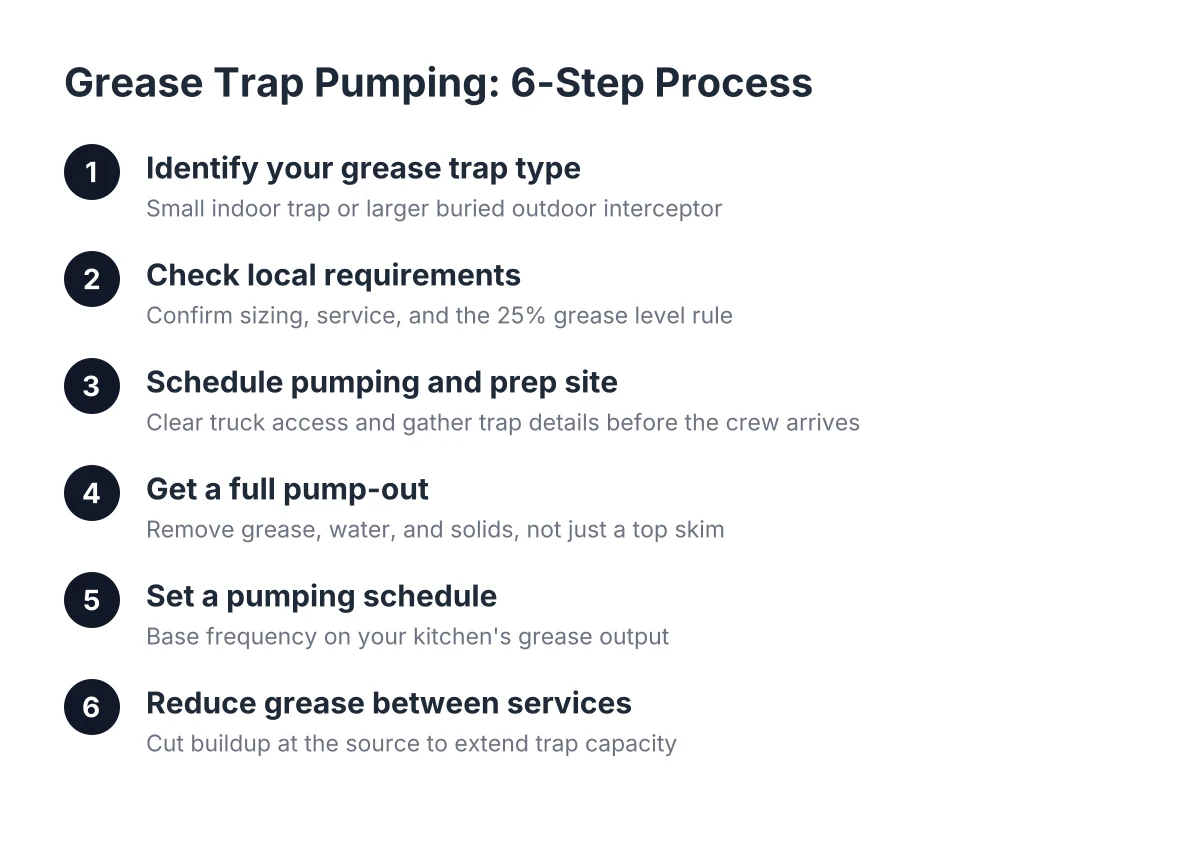
If you run a restaurant, a diner, or a commercial kitchen in Hesperia, grease trap pumping restaurants depend on is not optional. It keeps your drains flowing, keeps inspectors satisfied, and keeps grease out of the sewer or your septic system. This guide walks you through the whole process step by step, from figuring out what size trap you have to setting a pumping schedule that keeps you compliant. If you bought a commercial property with no service records, this is written for you too. The same crews that handle septic tank pumping in the High Desert also handle grease traps, and the process has a lot in common.
The stakes are real. According to the U.S. Environmental Protection Agency, grease from restaurants, homes, and industrial sources causes 47% of reported sewer blockages, making it the most common culprit. And according to Wastewater Digest, a single restaurant can send between 800 and 17,000 pounds of grease into the sewer each year. That is why regular pumping is a requirement, not a suggestion.
Step 1: What Kind of Grease Trap Your Restaurant Has
First, figure out what is actually in the ground or under your sink. Restaurants generally have one of two setups. Small indoor traps sit under or near the three-compartment sink and hold a limited amount of grease. Larger outdoor interceptors are buried in the ground, often near the back of the building or in the parking area, and hold far more.
Here is how a grease trap works in a restaurant: kitchen wastewater flows in, the water cools, and fats, oils, and grease float to the top while food solids sink to the bottom. The cleaner water in the middle flows out to the sewer or septic system. That layering is the same physics that happens inside a septic tank, where scum floats and sludge settles, as the U.S. Environmental Protection Agency describes it.
If you just bought the property and have no records, you may not even know where the interceptor is. Look for metal or concrete lids near the kitchen's exterior wall or the dumpster area. A service crew that does septic tank locating can find a buried interceptor the same way they find a hidden septic tank, so an unmarked lot is not a dead end.
Step 2: Check the Grease Trap Requirements for Restaurants in Your Area
Grease trap requirements for restaurants come from your local sewer authority, health department, or county, and they vary by location. Most jurisdictions require food service businesses to have a properly sized trap, keep it serviced, and hold onto pumping records. Many also set a maximum grease level, commonly described as the 25% rule, meaning the trap must be pumped before grease and solids fill a quarter of its capacity.
Do not assume the previous owner was compliant. Suppose you bought a small burger spot in Hesperia and the seller handed over zero paperwork. In that scenario, your first calls should be to the local sewer or health authority to ask what applies to your address, and to a pumping service to open the trap and assess where you stand. As of 2026, inspectors in most areas expect to see a service log or manifest showing when the trap was last pumped and where the grease went.
Keep in mind that if your building is on a septic system rather than city sewer, the rules can differ, and grease control matters even more. Grease that escapes the trap ends up in your septic tank and drain field, and that is an expensive place for it to go.
Step 3: Schedule Pumping and Prepare Your Site
Next, book the service. When you call, have a few details ready so the crew shows up with the right truck:
- The type of trap: small indoor unit or buried outdoor interceptor
- The trap size in gallons, if you know it
- When it was last pumped, if you have any record at all
- Where the trap or its lids are located, or whether you need help finding them
- Whether you are dealing with a backup right now or scheduling routine service
Before the truck arrives, clear vehicle access to the trap. A vacuum truck needs to park within hose range of the lids, so move dumpsters, delivery pallets, or parked cars out of the way. If your trap is indoors, clear the area around it and plan the visit for a slow period, since the kitchen drains connected to the trap should not be in heavy use while it is open.
Timing matters for your business too. Morning appointments before lunch prep, or a visit after close, keep the smell and the open lid away from customers.
Step 4: Know What Full Grease Trap Pumping Includes
Complete grease trap pumping for restaurants removes everything in the trap, not just the liquid. The crew vacuums out the floating grease layer on top, the water in the middle, and the settled food solids on the bottom. Skimming only the top layer, sometimes called a skim service, leaves solids behind that harden and cut the trap's working capacity.
This is the same distinction that matters in septic tank cleaning, where pulling liquid alone leaves the sludge and scum that cause problems. A thorough grease trap service should include:
- Opening the lids and measuring the grease and solids layers
- Vacuuming out all contents, top layer through bottom sludge
- Scraping the walls, baffles, and lids to remove hardened buildup
- Checking the inlet and outlet tees and baffles for damage or clogs
- Closing the trap and providing a service record or manifest for your files
Watch the crew work if you can, especially the first visit on a property you just took over. You will learn where the lids are, how deep the trap sits, and what condition the baffles are in. Ask for the grease depth measurement in writing; that number tells you whether your pumping interval is right.
One honest trade-off: a full pump-out costs more than a quick skim, and on a tight month the skim looks tempting. However, skims let solids accumulate until the trap stops working, and a blockage that backs sewage into your kitchen during dinner rush costs far more than the difference.
Step 5: Set a Pumping Schedule Based on Your Kitchen's Output
After the first service, set a recurring schedule instead of waiting for a problem. How often restaurants need grease trap pumping depends on trap size, menu, and volume. A fry-heavy kitchen fills a trap much faster than a coffee shop. Use the grease depth measurement from each visit to adjust: if the trap hit the 25% mark early, shorten the interval; if it was well under, you may be able to stretch it.
Watch for these signs that your trap needs pumping sooner than scheduled:
- Slow drains at the sinks connected to the trap
- Grease odors near floor drains or the trap location
- Visible grease in the trap's outlet side when the lid is opened
- Water backing up in floor sinks during dish washing
In addition, keep every service manifest in one folder. If a health or sewer inspector asks for records, you hand them the file. If you sell the business someday, that folder answers the exact question you could not answer when you bought the place.
Step 6: Reduce Grease at the Source Between Services
Finally, cut down what reaches the trap in the first place. Dry-wipe pans and plates into the trash before they hit the sink. Collect fryer oil in a separate container for recycling pickup instead of pouring it down a drain. Train staff on both habits, because one dishwasher pouring oil into the floor sink can undo everything.
Less grease into the trap means longer intervals between pump-outs and lower annual service costs. It also protects whatever is downstream. On a septic property, floating grease that gets past the trap collects in the septic tank's scum layer, and heavy grease loads there shorten the life of the whole system. The EPA estimates septic repair or replacement typically runs $5,000 to $15,000, so keeping grease out of the system is cheap insurance by comparison.
When to Bring In a Local Crew Instead of Guessing
Grease trap service for restaurants is not a do-it-yourself job. The waste has to be hauled and disposed of at an approved facility, and most jurisdictions require a licensed hauler and a paper trail. If you cannot find the trap, do not know when it was last serviced, or are seeing backups now, a local Hesperia crew that handles both grease traps and septic systems can locate the trap, pump it fully, and tell you plainly what condition it is in.
For anything involving sizing a new interceptor, repairing damaged baffles, or interpreting a specific county requirement, consult the local authority or a qualified professional directly rather than relying on general guidance. Rules change, and your address is what determines which ones apply. Get the trap found, get it pumped, get the record in your file, and put the next service on the calendar. That is the whole system, and it works.
If you need your septic tank serviced, Hesperia Septic can help.