If your kitchen drains through a grease trap or straight into a septic tank, the habits at your sink decide how often a pump truck shows up. Grease is the number one thing that shortens the time between pump-outs, and every extra visit adds to your septic system pumping cost over the life of the house. This guide answers the questions Hesperia homeowners and rental property owners ask most about grease, kitchen drains, and keeping a septic system out of emergency territory.
The goal here is simple: practical upkeep that keeps you off the after-hours call list. A backed-up tub at 8pm is a bad way to learn where your grease has been going.
What is a grease trap, and do homes in Hesperia have them?
A grease trap is a small holding box on the kitchen drain line that catches fats, oils, and grease before they reach the septic tank or drain field. Most single-family homes in Hesperia do not have one; the septic tank itself does that job. However, some older properties, converted commercial buildings, and rental units with large kitchens do have a residential grease trap.
If you own a rental property and you have never checked, look for a small access lid near the kitchen side of the building. A septic tank locating service can find both the tank and any trap if the property records are missing, which is common on older High Desert parcels.
Either way, the maintenance logic is the same. Grease has to be caught, held, and pumped out before it moves downstream.
Why does grease matter so much for a septic system?
Grease matters because it never fully breaks down in a septic tank. Fats, oils, and grease float to the top and form a scum layer, and when that layer gets thick enough, grease escapes into the drain field and clogs the soil. A clogged drain field is the failure that turns a routine pumping bill into a major repair.
The scale of the problem shows up clearly in commercial kitchens. According to Wastewater Digest, a single restaurant can release between 800 and 17,000 pounds of grease into the sewer system each year. A home kitchen produces far less, but a septic tank is also far smaller than a city sewer, so the grease you pour down the sink stays on your property.
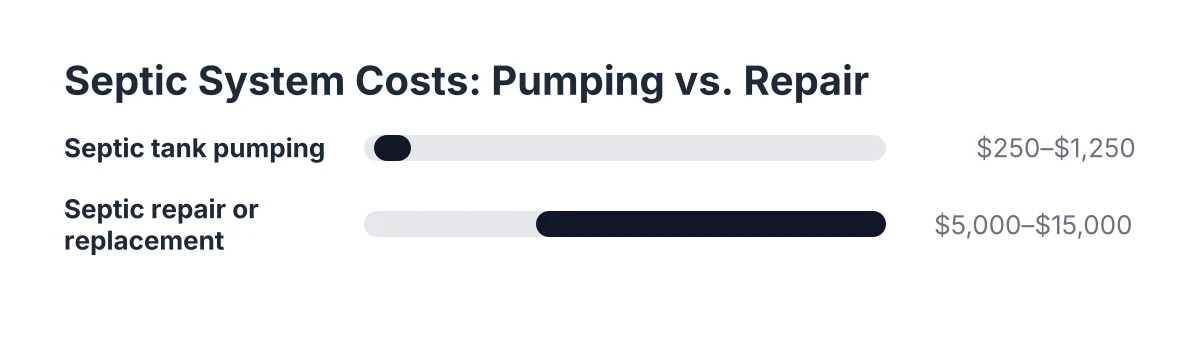
The cost gap is the reason to care. According to Angi data, septic tank pumping averages $427, ranging from $250 to $1,250 or more depending on tank size and location. The EPA estimates septic repair or replacement typically runs $5,000 to $15,000. Kitchen habits are the cheapest lever you have between those two numbers.
How does grease affect septic system pumping cost over time?
Grease raises your septic system pumping cost by filling the tank's scum layer faster, which shortens the interval between pump-outs. A household that pours bacon fat and fryer oil down the drain can need pumping years sooner than a neighbor with the same size tank and family. More visits per decade means more money spent on the same system.
There is a second, bigger cost risk. Once grease pushes past the tank and into the drain field, no amount of pumping fixes the soil. At that point you are looking at drain field repair, and that is the $5,000 to $15,000 range the EPA describes, not a routine service call.
For a small landlord with two or three septic-served rentals in Hesperia, this compounds. One tenant who treats the kitchen sink like a grease bin can quietly move a property from a predictable pumping schedule to an emergency septic pumping call during a lease turnover.
What should never go down a kitchen drain on a septic system?
Nothing greasy, fibrous, or chemical should go down a kitchen drain that feeds a septic tank. The tank depends on bacteria to break down waste, and grease smothers that process while solids fill the tank faster. Keep this list posted for family members or tenants:
- Cooking oil, bacon grease, and pan drippings, even small amounts
- Butter, shortening, mayonnaise, and salad dressing scraped from plates
- Dairy-heavy liquids like gravy, cream sauces, and melted cheese
- Coffee grounds and eggshells, which never break down
- Fibrous scraps like celery, corn husks, and potato peels
- Harsh drain cleaners and degreasers, which kill the bacteria the tank needs
Instead, pour cooled grease into a can or jar, let it harden, and put it in the trash. Wipe greasy pans with a paper towel before washing. Scrape plates into the garbage, not the disposal.
Garbage disposals deserve a special mention. Homes with disposals generate significantly more sludge, and the Massachusetts Department of Environmental Protection recommends annual pumping for such households regardless of tank size. If your rental has a disposal, budget for more frequent service or consider removing it at the next turnover.
How often should a grease trap or septic tank be pumped?
A residential grease trap needs pumping whenever grease and solids fill about a quarter of its depth, and a septic tank needs pumping on a schedule based on tank size, household size, and kitchen habits. There is no single interval that fits every Hesperia property. What matters is that someone checks the levels instead of waiting for a backup.
A professional inspection is the honest way to set that schedule. The EPA recommends the average household have its septic system inspected at least once every three years. An inspection measures the scum and sludge layers, so you pump when the tank actually needs it, not on a guess.
For landlords, tie the check to events you already manage: a pre-lease inspection at turnover, or a standing service visit for each property. Getting the schedule right is the core of septic tank maintenance, and it is what keeps pumping a planned line item instead of a surprise.
What does grease trap pumping cost compared to septic system pumping cost?
Grease trap pumping for a small residential trap generally costs less than a full septic tank pump-out because the trap holds far less volume. Septic system pumping cost is driven by tank size, how full the tank is, and how hard the lid is to access. A buried lid that needs locating and digging adds labor to any visit.
If a crew is already on site pumping the tank, having the trap serviced in the same trip is usually cheaper than two separate visits. Ask for both when you schedule. When you search for septic tank service near me or septic maintenance near me, confirm the company handles grease trap pumping too; not every outfit does, and a plumbing generalist often will not.
One trade-off worth naming: pumping more often than the tank needs wastes money, while stretching intervals to save on 2026 service costs risks the drain field. An inspection-based schedule beats both extremes.
What are the warning signs that grease is winning?
Slow kitchen drains, gurgling pipes, and a sewage smell near the sink or yard are the early signs that grease is building up in the trap, the tank, or the line between them. Wet, greasy patches over the drain field are a later and more serious sign. By the time sewage backs up into a tub, the problem has been building for months.
Do not wait on these signs at a rental. Tenants often live with a slow drain for weeks before calling, so a "minor" complaint on the phone can mean a tank at capacity. A same-week pump and inspection is cheaper than a weekend backup response and a habitability complaint.
If drains back up again shortly after a pumping, that points past the tank, possibly to a clogged line or a saturated drain field. That is the point to bring in a professional for a full septic system inspection rather than paying for repeat pump-outs that will not hold.
Can I clean a residential grease trap myself?
You can scoop a small under-sink grease trap yourself, but most homeowners and landlords should not. The work is unpleasant, the waste needs legal disposal, and a partial cleaning leaves hardened grease on the walls and baffles where clogs restart. A pump truck removes everything and can inspect the trap's condition at the same time.
In-ground traps and septic tanks are not do-it-yourself territory at all. Tank gases are dangerous, and the waste must be hauled and disposed of properly. This is one place where searching septic repair near me and hiring a local septic crew is the safe and, over time, the cheaper move.
The bottom line for Hesperia homeowners and landlords
Grease control is the cheapest septic upkeep there is. A jar by the stove, a paper towel wipe before washing, and an inspection-based pumping schedule keep the scum layer thin and the drain field clean. Those habits stretch the years between pump-outs and keep your total septic system pumping cost as low as the system allows.
Consider a real Hesperia scenario: a landlord with a three-bedroom rental pays for a routine pump-out in the $300 to $500 range at each long tenancy turnover and never hears from the tenant about drains. The same house with a fryer-happy tenant and no grease rules ends up with a Saturday backup, an emergency pumping call, and a drain field evaluation. Same tank, same soil, different kitchen habits.
Set the schedule, post the do-not-flush list, and let a local crew measure the tank instead of guessing. That is how you stay off the emergency call list entirely.
If you need your septic tank serviced, Hesperia Septic can help.