If you just bought land or a rental in Hesperia and nobody handed you septic records, you inherit whatever problems the system already has. The good news: most common septic tank problems, including overflow at the lid, backups into the house, and drain field trouble, follow patterns you can spot early and often prevent with basic upkeep. This list walks through the problems that generate the most emergency calls in the High Desert, what each one typically means, and what fixing it tends to cost compared to catching it early.
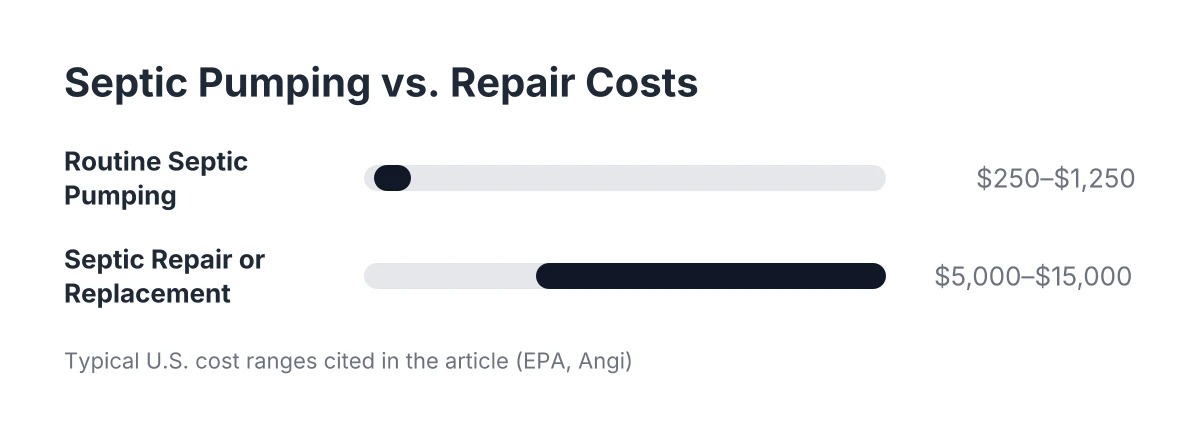
One number frames everything below. According to the U.S. Environmental Protection Agency, septic repair or replacement typically runs $5,000 to $15,000. Routine septic tank pumping, by comparison, averages $427 according to Angi data, with a range of $250 to $1,250 depending on tank size and location. Every problem on this list is cheaper on the maintenance side than the repair side.
1. Sewage Backup Into the House
A septic backup is the problem most owners meet first: slow drains, gurgling toilets, then wastewater rising in a tub or floor drain. Most backup calls trace to a tank that went unpumped far past its service interval, so sludge and scum built up until solids started plugging the lines. According to Washington State Department of Health, a clogged inlet baffle is a common cause of backups and one of the first things to check when the line into the tank is blocked.
For a landlord, a backup is also a tenant problem, not just a plumbing problem. Suppose you own a three-bedroom rental in Hesperia and the tenant reports sewage in the hall bathroom on a Friday. In that scenario, emergency septic pumping usually relieves the backup the same visit, but if the tank is fine and the blockage sits in the line or baffle, you are into repair territory. Pumping on a schedule is what keeps that Friday call from ever happening.
2. Overflow at the Tank Lid
If you open the lid and wastewater sits at or above the top of the tank, that is not normal. A working tank holds liquid below the outlet pipe; overflow at the lid means the tank cannot send water out fast enough, either because it is overdue for pumping or because the drain field is not accepting water. Treat visible overflow as a warning that the expensive part of the system may be struggling.
The distinction matters for cost. Overflow caused by a full tank is fixed with a pump-out in the range of a few hundred dollars. Overflow caused by a saturated or failing drain field points toward the EPA's $5,000 to $15,000 repair range. A crew that pumps the tank and watches how fast water flows back in can usually tell you which situation you have.
3. Drain Field Saturation and Soggy Ground
A conventional system has two main parts, the septic tank and the drain field, according to the U.S. Environmental Protection Agency. The tank settles out solids; the drain field disperses the clarified liquid into the soil. When you see standing water, mushy ground, or unusually green grass over the field, liquid is surfacing instead of soaking in.
Drain field problems develop gradually. Solids escaping an overfull tank clog the soil over years, and by the time the ground is wet, damage is often advanced. This is the single best argument for regular septic tank maintenance: the drain field is the most expensive component to replace, and pumping the tank on schedule is the main thing that protects it.
4. Clogged or Broken Baffles
Baffles are the unglamorous parts that fail quietly. According to University of Nebraska-Lincoln Extension, septic tanks use a baffle at both the inlet and outlet, a downward-facing tee that stops solids from floating out and forces them to settle. The outlet must also sit lower than the inlet, since solids float on top and only liquid should exit toward the drain field.
When an outlet baffle breaks or rots away, solids ride straight into the drain field and start clogging it. A baffle repair is typically a modest job. A drain field ruined by years of escaping solids is not. This is why a professional inspection includes checking baffle condition, not just measuring sludge.
5. Hydraulic Overload From Too Much Water
Septic systems fail when they get more water than the soil can absorb. A single leaky or running toilet can push as much as 200 extra gallons per day into the system, according to the U.S. Environmental Protection Agency. Add back-to-back laundry days and long showers, and the tank never gets the quiet time it needs to settle solids.
For rental owners this is worth building into turnover checks:
- Fix running toilets and dripping fixtures before a new tenant moves in
- Tell tenants to spread laundry loads across the week
- Route roof drains and landscape water away from the tank and drain field
- Watch water bills for a sudden jump that signals a hidden leak
6. Flushing and Draining Things the System Cannot Handle
Wipes, grease, feminine products, paper towels, and harsh chemicals cause a large share of preventable clogs. Wipes labeled flushable do not break down like toilet paper; they mat together and plug baffles and lines. Grease cools, hardens, and coats pipes and the tank.
The fix costs nothing. Only toilet paper and wastewater go down the drain. Kitchen grease goes in the trash. If you rent the property out, put this in the lease and in a one-page note on the fridge; tenants who have never lived on septic will not know unless you tell them.
7. A Tank Nobody Can Find
This one hits land buyers hardest. No records, no visible lid, no riser, and a seller who shrugs when you ask where the tank is. You cannot pump, inspect, or maintain a tank you cannot locate, and buried problems stay buried until they surface as a backup.
A septic tank locating service solves this in one visit. A typical crew traces the main drain line from the house, probes to find the tank, marks the lid location, and can open it for inspection on the spot. If you are buying High Desert property, do this before closing; a written inspection report tells you whether you are inheriting a healthy system or a five-figure repair. Yes, a locate-and-inspect job adds a step to escrow, but it is far cheaper than discovering a failed drain field after you own it.
8. Odors Around the Tank or Drains
Sewage smell in the yard, near the tank, or from drains inside usually means one of three things: the tank is full, a vent is blocked, or wastewater is surfacing. Occasional faint odor after heavy use can be minor. Persistent smell is an early symptom worth acting on, because foul odors, slow drains, and repeated backups together point to a developing clog or an overloaded system.
Do not mask odor with additives. There is no additive that replaces pumping, and money spent on treatments is better spent on a scheduled pump-out and inspection.
9. Skipped Pumping and No Maintenance Schedule
Almost every problem above traces back to the same root cause: the tank sat too long between pump-outs. The U.S. Environmental Protection Agency recommends a professional inspection at least every three years for the average household, and once a year for alternative systems with pumps, floats, or other mechanical parts. Penn State Extension notes that an active family of four generally does well pumping every two to three years because of higher solids and water use.
However, the right interval depends on tank size, occupancy, and habits, so let an inspection set your schedule rather than a rule of thumb. For a small portfolio owner, a simple system works:
- Get every septic property located, opened, and inspected once, so you have a baseline
- Record tank location, lid depth, and last pump date for each address
- Set a pump-out reminder based on what the inspection found
- Re-check whenever occupancy changes, such as a family of five replacing a single tenant
What Common Problems Affect Septic Tank Systems in 2026
Common septic tank problems fall into two cost tiers. Maintenance-level fixes, such as pumping, clearing an inlet baffle, or repairing a baffle tee, generally land in the hundreds of dollars. Failure-level fixes, primarily drain field repair or full system replacement, run $5,000 to $15,000 per the EPA's estimate. The gap between those tiers is the entire financial case for upkeep.
Here is the pattern to remember. Septic failures develop gradually through small, cheap issues; they become expensive only when early warnings get ignored. A slow drain this month becomes a backup next quarter and a saturated drain field in three years. Every item on this list is a chance to spend hundreds now instead of thousands later.
One honest caveat: not every problem is preventable. Tanks occasionally leak, pipes settle and crack, and an older system can fail even with good care. When you see surfacing sewage, repeated backups after a recent pump-out, or overflow that returns quickly, bring in a professional rather than guessing; diagnosing whether the tank or the drain field is at fault is not a do-it-yourself call.
If you own or are buying septic property in Hesperia without records, start with a locate and an inspection, then put pumping on a calendar. That single habit removes you from the emergency-call list and keeps the most common septic tank problems from ever reaching the expensive tier.
If you need your septic tank serviced, Hesperia Septic can help.
Prefer to talk it through? Call (760) 249-7872 — a quick call is usually the fastest way to get a straight answer for your situation.