If your septic system is failing and pumping no longer solves the problem, the next question is what replacement will actually cost. Understanding the septic replacement cost factors affecting the project is essential; they come down to tank size, soil conditions, where the system sits on your property, and local permitting. This guide walks through each one so you can read a bid, spot an upsell, and know when replacement is truly necessary versus when a pump-out or minor repair gets you years more service.
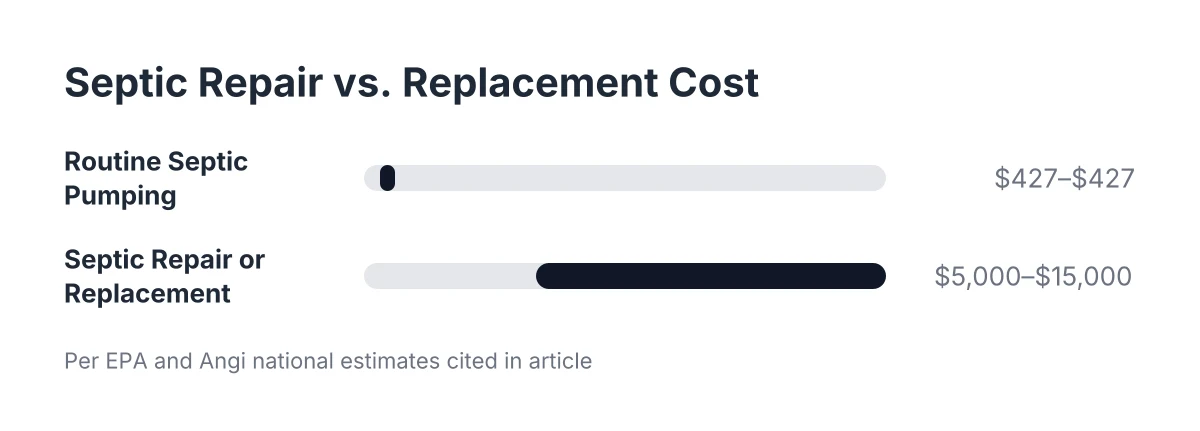
One honest point before the list: most septic problems do not require replacement. A full tank, a clogged inlet baffle, or a backed-up line often gets resolved with septic tank pumping and a careful inspection. Replacement enters the picture when the tank is cracked beyond repair or the drain field has failed, which no amount of pumping can fix. The U.S. Environmental Protection Agency estimates septic repair or replacement typically costs $5,000 to $15,000, while routine pumping averages $427 according to Angi data. That gap is exactly why you should confirm failure before anyone talks replacement.
Here are the eight biggest factors affecting septic replacement pricing for Hesperia, CA homeowners, in roughly the order they shape the bid.
1. Tank Size and Bedroom Count: Core Septic Replacement Cost Factors
Tank size is the first line item on any replacement bid. Larger households produce more wastewater, so counties size replacement tanks based on the home, usually by bedroom count rather than by what the old tank happened to be. A bigger tank means more material, a bigger excavation, and heavier equipment to set it.
This is one place an older Hesperia home can surprise you. Suppose a homeowner bought a three-bedroom house with a tank installed decades ago when the home had two bedrooms. The county may require the replacement tank to be sized for the home as it stands today, not as it was built. That is not an upsell; it is a sizing rule, and a legitimate installer will show you the requirement in writing.
2. Soil Conditions and the Percolation Test
Soil is the single biggest wildcard in High Desert replacement pricing. Before a new system goes in, a percolation test must be dug and performed to measure how well the soil drains water, which ensures the system will function properly, according to University of Nebraska-Lincoln Extension. In Hesperia, that test can come back anywhere from fast-draining sand to tight, compacted layers or caliche-like hardpan that barely absorbs anything.
Soil that drains poorly means a larger drain field, deeper trenches, or in some cases an engineered system instead of a conventional one. Each of those moves the price up. Site-specific soil and depth conditions, not labor or the tank itself, are usually what push a replacement from the low end of the range toward the high end.
3. Drain Field Size and Condition: Key Septic Replacement Cost Factors
A conventional septic system has two main components: the septic tank and the drain field, according to the U.S. Environmental Protection Agency. The drain field is often the more expensive half to replace. If your tank cracked but the drain field still percolates, you may only need a new tank. If the drain field itself has failed, saturated soil and sewage odors in the yard are the usual giveaways, and the field has to be rebuilt or relocated.
Drain field costs scale with trench footage, gravel or chamber materials, piping, junction boxes, and clean-outs. Therefore, two neighbors on the same street can get bids thousands of dollars apart simply because one needs a tank swap and the other needs a full field.
4. Where the System Sits on Your Property
Location on the lot drives equipment time and sometimes the whole design. A tank near the driveway with clear access costs less to replace than one behind a block wall, under mature landscaping, or beneath a patio poured by a previous owner. Crews may need smaller equipment, hand digging, or demolition and restoration, and all of that shows up on the bid.
In addition, if you are planning an addition or a garage that overlaps the existing system, the county can require the system to move. The costs and factors governing septic replacement grow significantly when relocation is needed, since moving a septic tank usually means redesigning the whole system and re-plumbing the line from the house, and county approval is not guaranteed. Homeowners regularly underestimate this, so get the septic question answered before you finalize construction plans.
5. Gravity Flow vs. a Pump System
If the new drain field has to sit uphill from the tank or farther away than gravity can carry wastewater, the design needs a pump chamber and pump. Adding a pump system meaningfully increases cost over a straightforward gravity-fed replacement, between the extra tank or chamber, the pump itself, electrical work, and controls.
Pump systems also change your maintenance picture. The U.S. Environmental Protection Agency advises that alternative systems with pumps, float switches, or mechanical components should be inspected once a year, versus at least every three years for a standard system. For a planner who wants a maintenance schedule they do not have to think about, that difference is worth weighing when comparing design options.
6. Permits and San Bernardino County Requirements
Replacement in Hesperia runs through San Bernardino County permitting, and the permit process shapes both cost and timeline. Expect the permit fee itself, plus the cost of the percolation test, any required site plans, and inspections at set stages of the work. As of 2026, no reputable installer will set a tank without the permit in hand, because the county inspects the work before it gets buried.
Permitting is also your protection against unnecessary work. The county reviews the design, so a system that is oversized or relocated without reason has to be justified on paper. If a bid skips permitting to save money, walk away; an unpermitted system can stall a future home sale or refinance inspection cold.
7. Tank Material and What Gets Hauled Away
Concrete and plastic tanks price differently, and the right choice depends on site access and soil. Tank shapes and configurations also vary by region, with some areas using rectangular concrete tanks and others circular designs, according to the International Code Council. Your installer should explain why they are quoting one material over another, not just hand you a number.
Demolition and disposal matter too. The old tank has to be pumped out, then crushed in place or removed, and the waste is trucked to a sewage treatment plant for disposal rather than handled on site, according to New Hampshire Department of Environmental Services. Backfill, compaction around the pipe penetrations, and grading all take time. Fill around pipe connections needs thorough compaction to prevent settling that damages the line later, so a careful crew spends longer on this step than a cheap bid allows for.
8. How Failure Shows Up: Replacement vs. a Pump-Out
Before you accept any replacement bid, confirm the system has actually failed. These signs point toward replacement rather than routine septic tank pumping:
- Sewage backing up into drains shortly after the tank was pumped
- Standing water or persistent wet, smelly spots over the drain field
- A tank with visible cracks, often from vehicles driving over it or age-related brittleness
- Drain field soil that fails a percolation test
- Repeated backups over months despite pumping and line clearing
However, if the only symptom is slow drains or a tank that has not been pumped in years, start with pumping and a septic system inspection. More than one in five U.S. households rely on septic systems, according to the U.S. Environmental Protection Agency, and most of them never need early replacement because routine pumping keeps solids out of the drain field. For an active family of four, Penn State Extension notes that pumping every two to three years is generally advisable.
What a Realistic Hesperia Replacement Scenario Looks Like
Say a homeowner in Hesperia, CA bought a 1980s house five years ago with no septic records. Backups keep returning even after pumping, and an inspection finds the drain field saturated. In that scenario, the bid would cover a percolation test, San Bernardino County permits, a new properly sized tank, a new drain field matched to the soil results, excavation, disposal of the old tank, and final grading. If the soil drains well and gravity flow works, the project lands toward the lower end of the EPA's $5,000 to $15,000 range; tight soil or a required pump system pushes it higher.
Every lot is different, and no article can price your specific site. A percolation test and an in-person evaluation are the only honest way to quote a septic system replacement, so treat any firm number given over the phone with suspicion. That said, knowing the factors affecting septic replacement cost puts you in a strong position: you can ask why the drain field is sized the way it is, whether gravity flow is possible, and what the permit covers. Those three questions alone will tell you whether you are dealing with a straight shooter.
If you are not sure your system has failed, start smaller. Schedule septic tank pumping and an inspection first, get the tank's condition and the drain field's performance in writing, and make the repair-or-replace decision with facts instead of fear.
If you need your septic tank serviced, Hesperia Septic can help.
Prefer to talk it through? Call (760) 249-7872 — a quick call is usually the fastest way to get a straight answer for your situation.