Tag: drain field repair

  • How Often Does a Residential Septic Tank Need Pumping? A Hesperia Guide

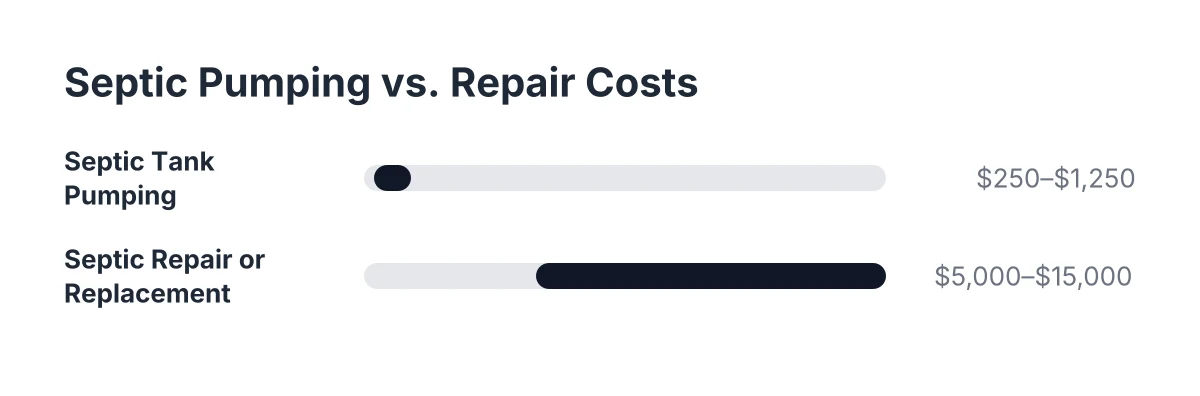
    Cost range chart comparing residential septic tank pumping to septic repair or replacement
    Routine pumping costs far less than the repair or replacement bill that follows a neglected drain field, per Angi and EPA figures cited in this guide.

    If you own a home on septic in Hesperia, or you just bought High Desert land with no records and no idea where the tank even sits, the question comes down to timing. How often does the tank need pumping, and what happens if you wait too long? This guide walks through residential septic service scheduling in plain terms: the general rules, the factors that change them, and how to build a real schedule for a property with an unknown system. It also covers what to do if you missed the window and the tank is already backing up, because that is how many Hesperia homeowners first meet their septic system.

    The Short Answer on Pumping Frequency

    Most residential septic tanks need pumping on a recurring cycle measured in years, not decades. The right interval for your home depends on tank size, how many people live there, and how much water and solid waste the household sends down the drain.

    There is no single number that fits every property, and anyone who quotes one without seeing your system is guessing. However, the U.S. Environmental Protection Agency gives a useful baseline for the inspection side of the equation: the average household should have its septic system inspected at least once every three years by a professional. Pumping happens when that inspection, or the sludge level in the tank, says it is time.

    For homes with more complex setups, the schedule tightens. According to the U.S. Environmental Protection Agency, alternative septic systems with electrical float switches, pumps, or mechanical components should generally be inspected once a year. If your Hesperia property has a pump tank or an alarm panel on the wall of the garage, you are in that category.

    The takeaway is simple. Get the system inspected on a regular cycle, and let the measured sludge and scum levels drive the pumping decision, not a calendar guess.

    Why Pumping Frequency Matters More Than Homeowners Think

    Skipping pump-outs does not save money; it moves the cost from the tank to the drain field. Solids that should stay in the tank flow out into the drain field lines, clog the soil, and shorten the life of the most expensive part of the system.

    Here is the math that makes the schedule worth keeping. According to Angi data, the cost of septic tank pumping averages $427, ranging from $250 to $1,250 or more depending on tank size and location. Compare that to the repair side: the EPA estimates septic tank repair or replacement typically costs between $5,000 and $15,000, far more than routine pumping. A missed pump-out that ruins a drain field can cost twenty times what the pump-out would have.

    This is not a rare problem. More than one in five U.S. households depend on individual septic systems or small community cluster systems to treat their wastewater, according to the U.S. Environmental Protection Agency. In Hesperia and across the High Desert, that share runs even higher, since large stretches of the area have no sewer at all. Out here, the septic tank is not backup infrastructure. It is the only infrastructure.

    What Changes the Schedule for Your Home

    Two houses on the same street in Hesperia can need pumping on completely different cycles. These are the factors that actually move the number.

    • Household size. More people means more wastewater and more solids. A family of five fills a tank far faster than a retired couple.
    • Tank size. A small tank serving a busy household fills sooner. If you do not know your tank size, an inspection can tell you.
    • Garbage disposal use. Ground food waste adds solids the tank was never sized for. Heavy disposal users often need pumping on a shorter cycle.
    • Water habits. Long showers, back-to-back laundry days, and leaky toilets push water through the tank faster than solids can settle.
    • What goes down the drain. Wipes, grease, and harsh chemicals either add solids or kill the bacteria that break waste down.
    • System age and type. Older tanks and systems with pumps or float switches need closer attention, on the once-a-year inspection cycle noted above.

    For example, suppose a family of six moves into a Hesperia home that a single previous owner lived in for a decade. The previous owner may have pumped the tank rarely and had no problems. The new family, sending three or four times the wastewater into the same tank, could hit capacity in a fraction of that time. Same tank, same soil, completely different schedule.

    Residential Septic Service for a Property With No Records

    Buying rural or High Desert property often means inheriting a septic system with zero paperwork. No pumping receipts, no as-built diagram, no county record worth much, and sometimes no visible lid or riser anywhere on the lot. You cannot build a pumping schedule for a tank you cannot find.

    The fix comes in a specific order, and it works whether you already own the property or you are still in escrow.

    1. Locate the tank. A septic tank locating service traces the sewer line from the house and finds the tank, even under dirt, gravel, or decades of landscaping. The crew marks the spot so you never have to search again.
    2. Expose and open the lid. Once the tank is found, the access lid gets uncovered. On older High Desert properties, that can mean digging through a foot or more of compacted soil.
    3. Inspect the system. A septic system inspection checks the tank's condition, the sludge and scum levels, the baffles, and how the drain field is taking water. This is the moment you learn what you actually bought.
    4. Pump if needed. If levels are high, pumping happens on the spot in most cases. An empty tank also lets the inspector see the walls and baffles clearly.
    5. Write it down. Get the tank location, size, and condition documented. That report becomes the first record the property has ever had, and it anchors every future service decision.

    If you are still deciding whether to close on the property, this same process gives you a written septic inspection for the home sale. A locate-and-inspect job feels like an added cost on a place you might not keep. Weigh it against the EPA's repair estimate above; finding a failed system before closing is the cheapest bad news you will ever get.

    One honest caveat: a locate and inspection tells you the system's condition today. It cannot guarantee how many years a drain field has left, and no honest crew will promise that. What it does is remove the biggest unknowns before your money is committed.

    Building a Residential Septic Service Schedule That Sticks

    Once you know where the tank is and what shape it is in, keeping the system healthy becomes a routine instead of a mystery. The goal is a schedule you set once and follow without thinking hard about it.

    Start with the inspection cycle. Standard gravity systems fit the EPA's guidance of a professional inspection at least once every three years. Systems with pumps, floats, or alarms should be looked at yearly. Put the next date somewhere you will see it, and keep every pumping receipt in the same folder as your locate report.

    Next, let measurements set the pumping date. During each inspection, the tech measures how much of the tank is sludge and scum versus liquid. When solids take up too much of the tank, it is time to pump. This measured approach beats guessing, because it reflects your actual household, not an average one.

    Between visits, protect the schedule with habits. Keep grease, wipes, and paint out of the drains. Spread laundry across the week instead of doing five loads on Saturday. Fix running toilets fast, since a constant trickle floods the tank around the clock. None of this replaces pumping, but all of it stretches the interval and protects the drain field.

    Finally, be careful about shopping on price alone. Searching for cheap septic tank pumping near me is understandable, but the cheapest quote sometimes means a partial pump-out that leaves solids behind, which shortens your interval and defeats the point. A full residential septic pumping that empties the tank and includes a look at the baffles is worth the difference.

    What If You Missed the Window and It's Backing Up Now?

    A septic backup means the system has run out of room and wastewater is taking the only exit it has left, usually the lowest drain in the house. Stop using water immediately, keep people away from any sewage, and call for a pump-out. Pumping the tank relieves the pressure and stops the backup in most full-tank situations.

    Many Hesperia homeowners learn their pumping schedule this way, in reverse. The tank was never pumped, or the pumping history left with the previous owner, and the first sign of trouble is a gurgling toilet at 9 p.m. or a wet, foul-smelling patch over the tank. In that moment, frequency charts do not help. Action does.

    Take these steps while you wait for a crew:

    • Stop all water use. No flushing, no laundry, no dishwasher, no showers. Every gallon you add makes the backup worse.
    • If sewage is coming up through a tub or floor drain, keep kids and pets out of that room and avoid touching the water.
    • If a septic alarm is sounding, silence it if the panel allows, but treat it as a stop-water order, not a snooze button.
    • Do not drive or park over the area where you think the tank sits. A heavy vehicle over a full, aging tank is a risk you do not need.
    • Note what happened first and when. Slow drains before the backup, odor in the yard, and alarm timing all help the crew diagnose faster.

    This is where working with a local emergency septic service matters, because a backup does not wait for business hours. A local Hesperia crew that answers the phone at night can talk you through those steps calmly and get a truck moving, instead of routing you through a national call center that has never seen High Desert soil.

    After the emergency pump-out, do not let the lesson slide. The backup told you your interval; whatever gap passed since the last pumping was too long. Cut it down, book the next inspection before the crew leaves the driveway, and the same crisis should not repeat.

    What a Full Service Visit Should Cover

    Pumping frequency only works if each visit does the whole job. When a truck comes out, whether for routine residential septic service or a same-day backup, a complete visit includes more than sticking a hose in the tank.

    Expect the crew to locate and open the access lid, measure the sludge and scum layers, and pump the tank fully, including breaking up and removing the solid layers rather than just skimming liquid. Septic tank cleaning at this level matters because leftover solids shorten your next interval. The tech should also check the inlet and outlet baffles, look for cracks or root intrusion, and note whether water is flowing back in from the drain field, which signals a saturated field.

    Ask for the findings in writing every time. Tank size, measured levels, condition notes, and a recommended next-service date turn each visit into a data point. For the land buyer who started with no records, three or four documented visits build a service history that protects the property's value and makes every future decision easier.

    Some situations still call for a specialist beyond routine pumping. If the drain field stays soggy after a pump-out, if sewage returns within days, or if the tank shows structural cracks, get a professional diagnosis before spending money on repeat pump-outs that will not hold.

    The Bottom Line for Hesperia Homeowners

    Pumping frequency is not a trivia answer; it is a schedule you build from your own tank, your own household, and a real inspection. Anchor it to the EPA's baseline of a professional inspection at least once every three years, tighter for systems with pumps and alarms. Let measured sludge levels set the pumping dates.

    If you bought property with no records, start with a locate and inspection so the schedule has a foundation. If the system is already backing up, stop the water, make the call, and treat the emergency as the start of a real maintenance routine rather than a one-time scare. As of 2026, a routine pump-out in the range Angi reports remains one of the cheapest forms of insurance a High Desert homeowner can buy, especially measured against a five-figure drain field replacement.

    If you need your septic tank serviced, Hesperia Septic can help.

    Related Reading

  • How Much Does Emergency Septic Service Cost?

    emergency septic service cost

    How much does emergency septic service cost? The honest answer depends on three things: how much waste is in your tank, how hard the tank is to reach, and whether the problem is a full tank or something bigger like a failing drain field. Anyone who quotes you a firm septic pump cost before knowing those three things is guessing. This guide walks through each factor in plain terms so you can tell which ones apply to your property. By the end, you will know exactly what to have ready to get a real number for your Hesperia home.

    What Drives the Cost of Emergency Septic Service

    Septic pricing is not random. A handful of factors decide most of the bill, and you can figure out where you stand on each one before you call anyone.

    Tank size and how full it is

    The bigger the tank, the more waste the truck has to haul away, and hauling is a large part of what you pay for. A small tank that is only half full takes less time and less disposal capacity than a large tank that is packed to the lid. You may not know your exact tank size, and that is fine. If you know how many bedrooms your home has, or if you have paperwork from a past pumping, that gives a provider enough to work with. More volume means a higher price. Less volume means a lower one.

    How hard the tank is to reach

    If your tank lids are exposed and the truck can park close, the crew gets right to work. If the lids are buried under two feet of dirt, hidden under a deck, or nobody knows where the tank is, someone has to find it and dig before pumping can start. That is labor, and labor raises the price. Walk your yard before you call. If you can see the lids or you know where they are, say so. If you have no idea, ask about septic tank locating, since finding the tank is a service in itself.

    Emergency timing versus scheduled service

    A backup at 7 p.m. on a Sunday costs more to handle than the same job booked for a weekday morning. After-hours and same-day calls pull a crew and a truck outside normal routing, and that shows up in the price. This is the trade-off at the heart of every emergency septic service call: you pay for speed. If sewage is coming up in your tub, speed is worth it. If the tank is full but nothing is backing up yet, you may be able to schedule for a regular slot and pay less.

    What the problem actually is

    Septic tank pumping fixes a full tank. It does not fix a crushed pipe, a clogged inlet baffle, or a drain field that has stopped absorbing water. If pumping alone solves your problem, you are on the low end of the range. If the crew pumps the tank and the backup returns in days, something else is wrong, and diagnosing and fixing it costs more. A septic system inspection can tell you which situation you are in before you spend money on repeat pumping that will not hold.

    How tank condition affects what you'll pay

    A tank that gets pumped on a regular schedule has manageable sludge. A tank that has been ignored for many years can have a thick, compacted layer of solids that takes extra time, water, and effort to break up and remove. Some jobs need septic tank cleaning, which goes beyond a standard pump-out to clear the buildup on the walls and floor of the tank. If you cannot remember the last time your tank was pumped, plan for the higher side.

    Local disposal and travel

    Every gallon pumped out of your tank has to go to a licensed disposal facility, and those facilities charge by volume. Distance matters too. A property in Hesperia near main roads is a shorter trip than a remote parcel out in the High Desert with a long dirt driveway. Local crews with nearby disposal options keep this part of the cost lower than an outfit trucking in from far away.

    Cost Factor Table

    Factor Pushes the price down when… Pushes it up when…
    Tank size and volume The tank is smaller or not completely full The tank is large or packed to the lid
    Access to the tank Lids are exposed and the truck can park close Lids are buried, under structures, or the tank must be located
    Timing You can schedule during regular weekday hours You need same-day or after-hours emergency response
    Scope of the problem Pumping alone solves it The drain field, pipes, or baffles also need work
    Tank condition The tank has been pumped on a regular schedule Years of buildup require full cleaning, not just pumping
    Location and disposal The property is close to main roads and disposal sites The property is remote with long travel each way

    How to Get an Accurate Septic Pumping Estimate

    You can turn a vague ballpark into a real quote with one short phone call, if you have the right details ready. Gather these before you dial:

    • What you are seeing. Slow drains, gurgling, sewage backing up inside, or standing water in the yard. Symptoms tell the crew whether this is a pump-out or a bigger repair.
    • Tank details, if you have them. Size, age, and the date of the last pumping. No paperwork? The number of bedrooms in your home is a useful stand-in.
    • Access information. Whether the lids are exposed, where the tank sits on the property, and how close a truck can get.
    • Timing. Whether you need someone now or can wait for a scheduled slot.

    A good quote spells out what is included: pumping the full tank, disposal fees, any digging to expose lids, and whether an inspection comes with the visit. If a quote is one flat number with no detail, ask what happens when the crew finds buried lids or a tank that needs cleaning instead of a simple pump-out. That is where surprise charges live.

    Estimates differ between providers for real reasons: disposal costs, travel distance, crew availability, and how each company handles digging and locating. That is why two quotes for the same tank can land far apart, and why comparing them line by line matters more than comparing the bottom numbers.

    The fastest way to a personalized number for your situation is the Septic Tank Pumping Cost Calculator. Plug in what you know about your tank and property and get an estimate built on your details, not a generic figure.

    Ways to Keep the Cost Down

    You cannot control tank size, but you can control several things that move the price.

    • Do not wait for the backup. The cost of septic tank pumping on a schedule is a fraction of what an overflow costs once sewage is in the house and you are paying emergency rates plus cleanup.
    • Expose your own lids. If you know where the tank is and the lids are shallow, digging them out yourself before the crew arrives can remove a labor charge from the bill. Skip this if you are unsure where to dig.
    • Schedule during regular hours when you can. If drains are slow but nothing is overflowing, booking a weekday slot instead of a night call keeps emergency pricing off the invoice.
    • Get two or three itemized quotes. For non-emergency work, comparing detailed quotes shows you which charges are standard and which are padding. In a true emergency, at least ask each provider what the total covers.
    • Pair pumping with an inspection. If something deeper is wrong, finding it during the same visit beats paying for a second pump-out in three months when the symptom comes back.

    Cost Questions People Ask

    What goes into septic pump replacement cost?

    If your system uses an effluent pump or lift pump to move wastewater, replacing that pump is a repair job separate from tank pumping. The price depends on the pump type, how hard it is to access, and whether wiring or floats also need work. An inspection identifies whether the pump is the actual problem before you pay to replace it. Get that diagnosis first, because a dead pump and a full tank can produce the same backup symptoms.

    Why do septic services near me show such different prices?

    Because the companies behind them have different costs. Disposal fees, travel distance from their yard to your property, and whether they handle digging and locating in-house all shape the quote. A local Hesperia crew has shorter travel and local disposal options, which is one reason local pricing can beat an outfit driving in from outside the High Desert. Compare what each quote includes, not just the final number.

    Does emergency pumping cost more than scheduled pumping?

    Usually, yes. Same-day and after-hours calls pull a truck outside its normal route, and that premium ends up on your bill. The work itself is the same. If your situation allows a scheduled visit, that is the cheaper path; if sewage is backing up into your home, the premium buys you a stopped emergency, which is what matters in the moment. You can read more about what an urgent call involves in our guide to emergency septic pumping in Hesperia.

    Will pumping the tank fix my septic backup for good?

    Only if a full tank caused the backup. If the drain field is saturated or a pipe is broken, the tank will fill again fast and the symptoms will return. That is why pairing pumping with an inspection is worth it when backups keep happening. Paying once to find the real cause beats paying for pump-out after pump-out.

    The Bottom Line

    Your price comes down to tank volume, access, timing, and whether pumping alone fixes the problem, and no one can give you an honest number without those details. Gather what you know about your tank, get two or three itemized quotes, and use the Septic Tank Pumping Cost Calculator for a fast estimate built on your property. If sewage is already backing up, skip the research and call now; the cheapest emergency is the one that ends quickly.

    If you need your septic tank serviced, Hesperia Septic can help.
    Related Reading

  • Grease Trap Pumping at Home: Kitchen Habits That Cut Septic System Pumping Cost

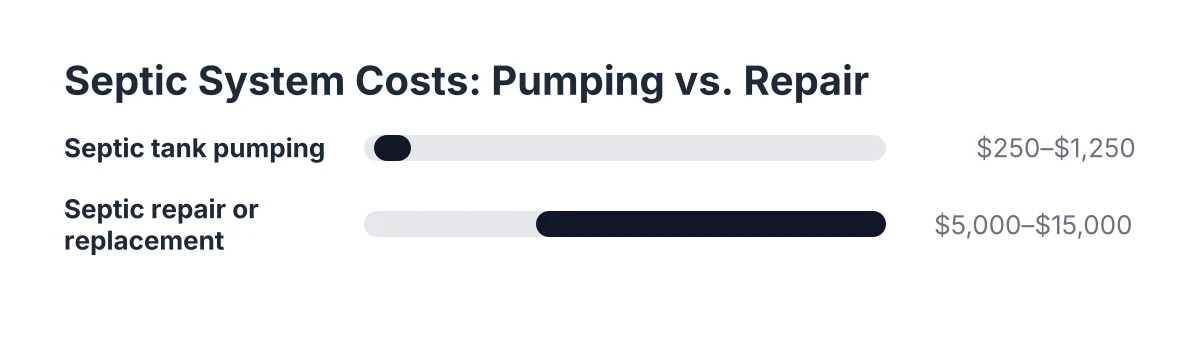
    Cost comparison chart: septic tank pumping ranges from $250–$1,250, while septic repair or replacement ranges from $5,000–$15,000.
    Routine pumping costs far less than emergency drain field repair, making kitchen grease habits a cost-effective lever for homeowners.

    If your kitchen drains through a grease trap or straight into a septic tank, the habits at your sink decide how often a pump truck shows up. Grease is the number one thing that shortens the time between pump-outs, and every extra visit adds to your septic system pumping cost over the life of the house. This guide answers the questions Hesperia homeowners and rental property owners ask most about grease, kitchen drains, and keeping a septic system out of emergency territory.

    The goal here is simple: practical upkeep that keeps you off the after-hours call list. A backed-up tub at 8pm is a bad way to learn where your grease has been going.

    What is a grease trap, and do homes in Hesperia have them?

    A grease trap is a small holding box on the kitchen drain line that catches fats, oils, and grease before they reach the septic tank or drain field. Most single-family homes in Hesperia do not have one; the septic tank itself does that job. However, some older properties, converted commercial buildings, and rental units with large kitchens do have a residential grease trap.

    If you own a rental property and you have never checked, look for a small access lid near the kitchen side of the building. A septic tank locating service can find both the tank and any trap if the property records are missing, which is common on older High Desert parcels.

    Either way, the maintenance logic is the same. Grease has to be caught, held, and pumped out before it moves downstream.

    Why does grease matter so much for a septic system?

    Grease matters because it never fully breaks down in a septic tank. Fats, oils, and grease float to the top and form a scum layer, and when that layer gets thick enough, grease escapes into the drain field and clogs the soil. A clogged drain field is the failure that turns a routine pumping bill into a major repair.

    The scale of the problem shows up clearly in commercial kitchens. According to Wastewater Digest, a single restaurant can release between 800 and 17,000 pounds of grease into the sewer system each year. A home kitchen produces far less, but a septic tank is also far smaller than a city sewer, so the grease you pour down the sink stays on your property.

    The cost gap is the reason to care. According to Angi data, septic tank pumping averages $427, ranging from $250 to $1,250 or more depending on tank size and location. The EPA estimates septic repair or replacement typically runs $5,000 to $15,000. Kitchen habits are the cheapest lever you have between those two numbers.

    How does grease affect septic system pumping cost over time?

    Grease raises your septic system pumping cost by filling the tank's scum layer faster, which shortens the interval between pump-outs. A household that pours bacon fat and fryer oil down the drain can need pumping years sooner than a neighbor with the same size tank and family. More visits per decade means more money spent on the same system.

    There is a second, bigger cost risk. Once grease pushes past the tank and into the drain field, no amount of pumping fixes the soil. At that point you are looking at drain field repair, and that is the $5,000 to $15,000 range the EPA describes, not a routine service call.

    For a small landlord with two or three septic-served rentals in Hesperia, this compounds. One tenant who treats the kitchen sink like a grease bin can quietly move a property from a predictable pumping schedule to an emergency septic pumping call during a lease turnover.

    What should never go down a kitchen drain on a septic system?

    Nothing greasy, fibrous, or chemical should go down a kitchen drain that feeds a septic tank. The tank depends on bacteria to break down waste, and grease smothers that process while solids fill the tank faster. Keep this list posted for family members or tenants:

    • Cooking oil, bacon grease, and pan drippings, even small amounts
    • Butter, shortening, mayonnaise, and salad dressing scraped from plates
    • Dairy-heavy liquids like gravy, cream sauces, and melted cheese
    • Coffee grounds and eggshells, which never break down
    • Fibrous scraps like celery, corn husks, and potato peels
    • Harsh drain cleaners and degreasers, which kill the bacteria the tank needs

    Instead, pour cooled grease into a can or jar, let it harden, and put it in the trash. Wipe greasy pans with a paper towel before washing. Scrape plates into the garbage, not the disposal.

    Garbage disposals deserve a special mention. Homes with disposals generate significantly more sludge, and the Massachusetts Department of Environmental Protection recommends annual pumping for such households regardless of tank size. If your rental has a disposal, budget for more frequent service or consider removing it at the next turnover.

    How often should a grease trap or septic tank be pumped?

    A residential grease trap needs pumping whenever grease and solids fill about a quarter of its depth, and a septic tank needs pumping on a schedule based on tank size, household size, and kitchen habits. There is no single interval that fits every Hesperia property. What matters is that someone checks the levels instead of waiting for a backup.

    A professional inspection is the honest way to set that schedule. The EPA recommends the average household have its septic system inspected at least once every three years. An inspection measures the scum and sludge layers, so you pump when the tank actually needs it, not on a guess.

    For landlords, tie the check to events you already manage: a pre-lease inspection at turnover, or a standing service visit for each property. Getting the schedule right is the core of septic tank maintenance, and it is what keeps pumping a planned line item instead of a surprise.

    What does grease trap pumping cost compared to septic system pumping cost?

    Grease trap pumping for a small residential trap generally costs less than a full septic tank pump-out because the trap holds far less volume. Septic system pumping cost is driven by tank size, how full the tank is, and how hard the lid is to access. A buried lid that needs locating and digging adds labor to any visit.

    If a crew is already on site pumping the tank, having the trap serviced in the same trip is usually cheaper than two separate visits. Ask for both when you schedule. When you search for septic tank service near me or septic maintenance near me, confirm the company handles grease trap pumping too; not every outfit does, and a plumbing generalist often will not.

    One trade-off worth naming: pumping more often than the tank needs wastes money, while stretching intervals to save on 2026 service costs risks the drain field. An inspection-based schedule beats both extremes.

    What are the warning signs that grease is winning?

    Slow kitchen drains, gurgling pipes, and a sewage smell near the sink or yard are the early signs that grease is building up in the trap, the tank, or the line between them. Wet, greasy patches over the drain field are a later and more serious sign. By the time sewage backs up into a tub, the problem has been building for months.

    Do not wait on these signs at a rental. Tenants often live with a slow drain for weeks before calling, so a "minor" complaint on the phone can mean a tank at capacity. A same-week pump and inspection is cheaper than a weekend backup response and a habitability complaint.

    If drains back up again shortly after a pumping, that points past the tank, possibly to a clogged line or a saturated drain field. That is the point to bring in a professional for a full septic system inspection rather than paying for repeat pump-outs that will not hold.

    Can I clean a residential grease trap myself?

    You can scoop a small under-sink grease trap yourself, but most homeowners and landlords should not. The work is unpleasant, the waste needs legal disposal, and a partial cleaning leaves hardened grease on the walls and baffles where clogs restart. A pump truck removes everything and can inspect the trap's condition at the same time.

    In-ground traps and septic tanks are not do-it-yourself territory at all. Tank gases are dangerous, and the waste must be hauled and disposed of properly. This is one place where searching septic repair near me and hiring a local septic crew is the safe and, over time, the cheaper move.

    The bottom line for Hesperia homeowners and landlords

    Grease control is the cheapest septic upkeep there is. A jar by the stove, a paper towel wipe before washing, and an inspection-based pumping schedule keep the scum layer thin and the drain field clean. Those habits stretch the years between pump-outs and keep your total septic system pumping cost as low as the system allows.

    Consider a real Hesperia scenario: a landlord with a three-bedroom rental pays for a routine pump-out in the $300 to $500 range at each long tenancy turnover and never hears from the tenant about drains. The same house with a fryer-happy tenant and no grease rules ends up with a Saturday backup, an emergency pumping call, and a drain field evaluation. Same tank, same soil, different kitchen habits.

    Set the schedule, post the do-not-flush list, and let a local crew measure the tank instead of guessing. That is how you stay off the emergency call list entirely.

    If you need your septic tank serviced, Hesperia Septic can help.

    Related Reading