If sewage is backing up into your tub, or there's a wet, smelly spot spreading in your yard, you need to understand one thing fast: the septic pumping process steps and whether they will fix your problem. Most backups in Hesperia homes trace back to a tank that filled up with solids nobody removed. The fix is usually a pump truck, not a whole new system. This guide walks through the process step by step, from the moment the truck pulls up to what happens after the tank is empty, so you know exactly what you're paying for and what to expect.
According to the U.S. Environmental Protection Agency, more than one in five U.S. households depend on individual septic systems or small community cluster systems to treat their wastewater. If you're on septic in the High Desert, this process applies to you.
First, Understand What's Actually Happening in Your Tank
Before the steps, you need the 60-second version of how your system works. Everything that goes down your drains flows into a buried concrete or plastic tank in your yard. Inside, the waste separates into three layers.
- Scum floats on top. This is grease, soap residue, and anything lighter than water.
- Effluent sits in the middle. This is the liquid that flows out to your drain field.
- Sludge settles on the bottom. These are the solids that never break down.
The liquid layer drains out to the drain field on its own. The sludge and scum do not. They build up year after year until they take up so much space that solids start pushing out into the drain field lines, or wastewater has nowhere to go and backs up into the house. That's the moment most people meet their septic system for the first time, at 8pm on a Friday with a toilet that won't flush.
Pumping removes those built-up layers. Now here's how the process actually goes.
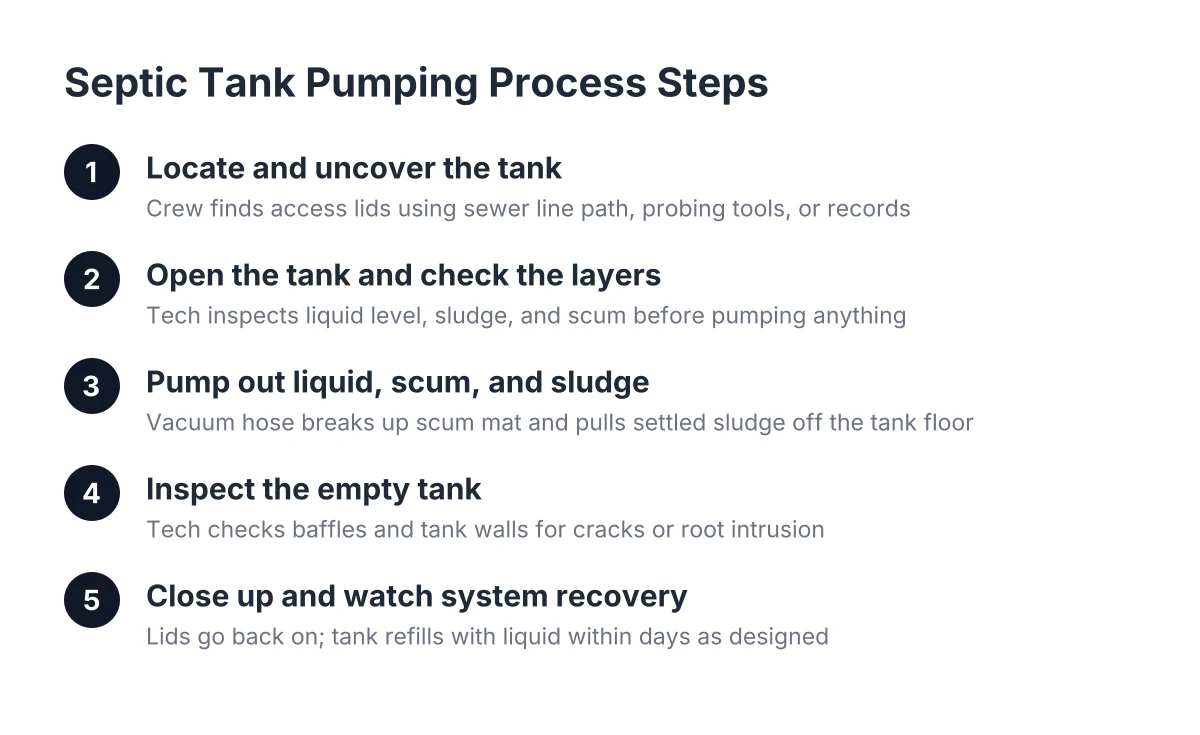
Step 1: Locate and Uncover the Tank
The crew can't pump what they can't reach. If you know where your tank lids are, point them out. Many Hesperia homeowners don't, especially if they bought the house recently, and that's normal. A crew that offers septic tank locating can find the tank using the sewer line's path from the house, probing tools, or records if they exist.
Once found, the access lids get uncovered. On older properties this can mean digging down a foot or two of dirt. If your lids are buried deep, ask about adding risers after the pump-out; they bring the access up to ground level so the next service is faster and cheaper.
Step 2: Open the Tank and Check the Layers
Next, the technician opens the lid and looks before pumping anything. This quick inspection tells the real story of your system.
A liquid level sitting above the outlet pipe suggests the drain field isn't taking water. A low liquid level can point to a leak or a crack in the tank. Thick sludge and a heavy scum mat mean the tank was overdue. This is also when a tech measures how much of the tank is solids, which tells you whether your pumping schedule needs to change.
Therefore, don't skip this part or rush the crew past it. Two minutes of looking can be the difference between "you just needed a pump" and catching a drain field problem early.
The Core Steps of the Septic Pumping Process
Here's where the actual work happens. The technician runs a large vacuum hose from the truck to the tank and pulls out the contents: liquid, floating scum, and bottom sludge. A good operator doesn't just skim the liquid. They work the hose to break up the scum mat and pull the settled sludge off the floor of the tank, sometimes using the liquid itself to stir and loosen compacted solids.
This distinction matters. A quick liquid-only pump-out leaves the hardened sludge behind, and that's the stuff causing your problem. When people search for septic tank cleaning versus pumping, this is the difference they're asking about: full cleaning means getting the solids out and the tank interior cleared, not just draining the water. If you're paying for service, confirm the solids are coming out, not just the liquid.
For cost context, Angi reports septic tank pumping averages $427, with a range of $250 to $1,250 or more depending on tank size and location. Emergency or after-hours work can run higher, but a pump-out is still a fraction of major repair costs.
Step 4: Inspect the Empty Tank
Once the tank is empty, the technician can see things that were hidden under three feet of wastewater. They check the baffles, which are the fittings that keep solids from escaping into the drain field, and look at the tank walls for cracks or root intrusion.
An empty tank is the only time this inspection is possible, so it should happen at every pump-out. The EPA recommends the average household have its septic system inspected at least once every three years, and systems with pumps or float switches inspected once a year. Pairing inspection with pumping is the practical way to hit that schedule. If your system has an alarm or an effluent pump and the alarm is going off, that pump may have stopped working; that's an electrical and mechanical issue a septic professional should diagnose, not something to troubleshoot from a blog post.
Step 5: Close Up and Watch How the System Recovers
After pumping, the lids go back on and the dirt goes back over them, unless you added risers. Then comes the part homeowners always ask about: what to do after the septic tank is pumped.
The honest answer is simple. Use water normally but don't flood the system the first day or two. The tank refills with liquid within days, and that's normal; a septic tank is designed to be full of liquid. What you're watching for is whether drains run freely and the yard stays dry. If sewage backs up again within days of a full pump-out, the problem is downstream, usually a clogged line or a failing drain field, and that needs a professional diagnosis.
Here's a scenario we see in Hesperia all the time. A homeowner has guests arriving Saturday, and Thursday night the shower starts backing up when the washing machine drains. The tank hasn't been pumped since they bought the house six years ago. A pump-out Friday morning removes the sludge, the drains clear, and the weekend is saved. The follow-up conversation is about getting on a schedule so it never gets to that point again.
How Often You Need to Schedule Septic Tank Pumping
There's no single answer for every home, because frequency depends on tank size, household size, and habits. A house with two people produces far less sludge than a house with six. Garbage disposals speed up sludge buildup. So do heavy grease and "flushable" wipes, which are not flushable in a septic system.
The reliable approach is measurement, not guessing. Have the tank checked, and let the actual sludge level set your schedule. Once you've done that twice, you'll know your home's real interval.
The same logic applies to businesses. A restaurant grease trap or an RV park's holding tanks fill on a predictable cycle, and recurring scheduled pump-outs keep a kitchen out of health code trouble and keep odors away from paying customers. Waiting for a backup is the expensive version of the same service.
Why Skipping the Pump-Out Costs More Than the Pump-Out
Is septic tank pumping necessary? Yes, because a septic tank has no other way to get rid of solids. Skip it long enough and solids flow into the drain field, where they clog the soil that treats your wastewater. Pumping is routine maintenance; a drain field is not.
The EPA estimates septic repair or replacement typically costs $5,000 to $15,000, far more than routine pumping. As of 2026, that gap is the whole argument for staying on a schedule. A few hundred dollars every few years protects a five-figure system buried in your yard.
Plan Your Pump-Out: Costs, Fees, and When Pumping Isn't Enough
Before you book, a few more resources answer the questions that usually come next:
- What will it cost for my tank? Run your numbers through our septic tank pumping cost calculator to see how tank size and condition change the price.
- What surprises show up on the bill? Our guide to hidden fees septic tank companies charge in Hesperia covers digging charges, locating fees, and how to ask about them up front.
- What if pumping doesn't fix it? Read septic tank pumping vs. repair costs to understand when a pump-out solves the problem and when a repair conversation is coming.
- Ready to schedule? Our septic tank pumping service in Hesperia page explains exactly what's included in a visit.
The Bottom Line for Hesperia Homeowners
Septic tank pumping works by vacuuming out the sludge and scum your tank has no way to remove on its own, and a proper service includes locating the tank, checking the layers, removing the solids, and inspecting the empty tank before closing it up. If you're in a backup right now, a pump-out is the first move and often the only one needed. If you're not in a backup, the cheapest septic service you'll ever buy is the one you schedule before the toilet stops flushing.
If you need your septic tank serviced, Hesperia Septic can help.