Tag: distribution box

  • Septic Tank Locating Terms Explained: A Plain-English Glossary

    septic tank locating glossary

    If you're trying to find a buried septic tank on your Hesperia property, the quotes and articles you read are full of terms nobody explains. This septic tank locating glossary breaks each one down in plain English so you can read an estimate line by line, ask sharper questions, and spot when a provider is talking about real work versus filler. Every definition stands on its own, so skim to the term you got stuck on and keep moving. Whether you just bought a home with no records or you need septic tank pumping and can't find the lid, these are the words you'll meet.

    • Flushable Transmitter
    • Pipe Locator (Receiver)
    • Soil Probe
    • Ground Penetrating Radar (GPR)
    • Cleanout
    • Septic Tank
    • Riser
    • Access Lid
    • Baffle
    • Drain Field (Leach Field)
    • Distribution Box (D-Box)
    • As-Built Drawing
    • Septic Permit Records
    • Probing and Exposing
    • Camera Inspection (Sewer Camera)
    • Locating Fee
    • Marking and Mapping

    Locating Equipment and Tools

    Flushable Transmitter

    A flushable transmitter is a small electronic device that gets flushed down a toilet and sends out a radio signal a technician can follow above ground. It rides the wastewater through your pipes and settles in the septic tank, and a handheld receiver traces its path across your yard. If a provider mentions one, it usually means your property has no records and no visible clues, so they need to follow the plumbing itself. It is one of the most reliable ways to find a tank under decades of landscaping. You can see how it compares to other tools in this guide to professional septic locating equipment.

    Pipe Locator (Receiver)

    A pipe locator is the handheld above-ground device that picks up the signal from a transmitter inside your pipes. The technician walks your yard with it, watching signal strength to map where the sewer line runs and where it ends at the tank. When a quote lists "electronic locating," this is usually the tool involved. It matters because electronic locating finds the tank without digging exploratory holes all over your lawn.

    Soil Probe

    A soil probe is a long metal rod a technician pushes into the ground to feel for the hard top of a buried tank or its lids. It is the simplest locating tool, and it works well once the search area is narrowed down. Probing confirms exactly where to dig before anyone puts a shovel in the ground. If a provider says they will "probe to confirm," that is a good sign they plan to dig one small hole instead of several.

    Ground Penetrating Radar (GPR)

    Ground penetrating radar is a machine that sends radio waves into the soil and reads the reflections to show buried objects like tanks, pipes, and lids. It looks like a push mower and builds a picture of what sits under your yard without breaking ground. GPR usually comes up on hard cases: concrete or paved-over yards, deep tanks, or properties where a flushed transmitter can't be used. Because it takes special equipment and training, a quote that includes GPR often signals a tougher, and typically pricier, search.

    Cleanout

    A cleanout is a capped pipe, usually near your house or in the yard, that gives direct access to your main sewer line. Locators love cleanouts because they can insert a transmitter or camera there instead of going through a toilet. If you can point a technician to your cleanout, you can shorten the job. Not every home has one that's easy to find, and some are buried too.

    Parts of the System They're Looking For

    Septic Tank

    A septic tank is a buried, watertight container, usually concrete, fiberglass, or plastic, that collects all the wastewater from your home. Solids settle to the bottom, and liquid flows out the other end to the drain field. Everything in a locating job aims at finding this tank and its access lids, because you can't pump or inspect what you can't reach. In the High Desert, tanks often sit under years of blown sand and landscaping, which is why locating is a service in the first place.

    Riser

    A riser is a vertical pipe that extends the tank's access opening up to ground level, capped with a lid you can see. If your tank has risers, future septic tank pumping visits skip the digging entirely. If it doesn't, expect the crew to dig down to the buried lids each time. Many homeowners add risers right after a locating job so they never have to pay to find the tank again.

    Access Lid

    An access lid is the removable cover on top of the septic tank that a crew opens to pump, clean, or inspect it. Many tanks have two or more lids, one over each compartment. Finding the tank is only half the job; the crew also needs to find and expose the lids. A quote that says "locate and expose lids" includes the digging, which is worth confirming before work starts.

    Baffle

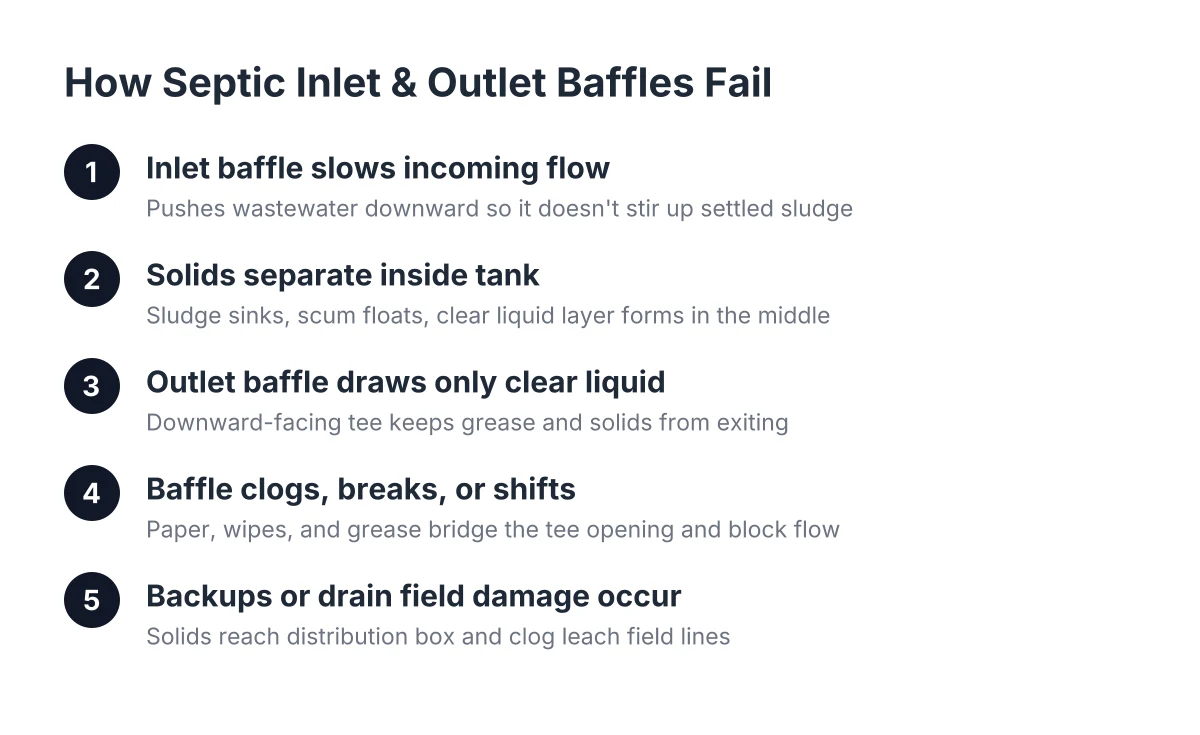
    A baffle is a fitting inside the tank, at the inlet and outlet, that keeps floating solids from escaping into your pipes or drain field. Locators don't hunt for baffles, but inspectors check them once the tank is open. If a provider mentions a damaged baffle after opening your tank, that is a repair conversation, not a scare tactic. Broken baffles let solids clog the drain field, which is a far more expensive fix.

    Drain Field (Leach Field)

    A drain field is the network of buried, perforated pipes that spreads the liquid leaving your septic tank into the soil, where it filters naturally. You may also hear "leach field" or "leach lines," which mean the same thing. Locating jobs sometimes map the drain field too, since knowing where it sits keeps you from driving or building over it. Soggy grass or odors over this area often point to a septic backup building underground.

    Distribution Box (D-Box)

    A distribution box is a small buried box between the tank and the drain field that splits the outgoing water evenly among the leach lines. It is a common failure point, so inspectors often want to find it along with the tank. If a locating quote includes the D-box, the provider is mapping your whole system, not just the tank. That broader map costs more effort but saves guesswork later.

    The Process, Records, and Paperwork

    As-Built Drawing

    An as-built drawing is the diagram filed with the county when a septic system was installed, showing where the tank and drain field sit on the lot. It is the first thing worth checking before paying anyone to search, because a good as-built can turn a locating job into a five-minute walk. Many older Hesperia properties have no as-built on file, or the drawing no longer matches reality after remodels. When records are missing, professional locating serves as the practical fallback, and this article explains what locating does when your property has no records.

    Septic Permit Records

    Septic permit records are the county or health department files created when a system was permitted, installed, or repaired. They can include the as-built drawing, tank size, and installer notes. Ask your local records office before you book a search; even a partial record narrows where a crew has to look. No records at all is common on older rural properties, and it changes both the method and the cost of the job.

    Probing and Exposing

    Probing and exposing means confirming the tank's exact spot with a soil probe, then digging down by hand or machine to uncover the lids. Some quotes separate "locate" from "expose," and the digging can be its own line item. Depth matters here: a lid one foot down is a quick shovel job, while a lid three or four feet down takes real labor. Ask how deep they expect to dig and whether that digging is included in the price.

    Camera Inspection (Sewer Camera)

    A camera inspection means running a small waterproof camera through your sewer line to see the pipe's condition and, often, where it enters the tank. Paired with a locator, the camera head itself can be traced from above ground. Providers may suggest a camera when the line might be broken, root-clogged, or routed in an odd direction. It adds cost but answers two questions at once: where the tank is, and whether the pipe to it is sound.

    Locating Fee

    A locating fee is the charge for finding the tank, separate from the cost of pumping or repairs. Some companies fold it into a pumping visit; others bill it on its own, especially for hard searches involving GPR or long dig times. Ask up front whether the fee is credited toward septic tank pumping if you book both. For a fuller breakdown of what drives the price, see this septic tank locating cost guide.

    Marking and Mapping

    Marking and mapping means the technician flags the tank, lids, and lines with paint or stakes and gives you a simple sketch of where everything sits. This is the deliverable you should walk away with. Keep the sketch with your house papers; it saves the next crew, and your wallet, from repeating the search. If a provider doesn't offer any marking, ask for it before they leave.

    Key Terms in Septic Tank Locating and System Mapping

    Now a quote that says "electronically locate tank, probe and expose two lids, mark lines" reads as three concrete tasks instead of mystery jargon. You can ask what tool they'll use, how deep they expect the lids to be, and whether you'll get a sketch when they're done. That is usually the difference between a fair price and a confusing one.

    If you need your septic tank serviced, Hesperia Septic can help.

    Related guide: septic tank locating — Complete Guide

    Related Reading

  • Septic System Replacement Terms Explained: A Plain-English Glossary

    septic system replacement glossary

    If you own or are buying a home in Hesperia with a septic system, sooner or later you will hear terms that sound like another language. This article breaks down the key terminology in a septic system replacement glossary to help you understand what a contractor is proposing, ask sharper questions, and spot warning signs before they become expensive. Use it to decode the words you will see on quotes, inspection reports, and permit paperwork into plain English. Every entry stands on its own, so you can jump straight to the term that confused you.

    • Septic System
    • The 3 Types of Septic Systems
    • Septic Tank
    • Drain Field
    • Leach Line
    • Effluent
    • Septic System Inspection
    • Septic Tank Locating
    • Percolation Test (Perc Test)
    • Baffle
    • Septic Backup
    • Abandonment (Tank Abandonment)
    • Tank Capacity
    • Riser
    • Distribution Box (D-Box)
    • Septic Tank Pumping
    • Septic Tank Cleaning
    • Scum and Sludge Layers
    • Grease Trap

    System Basics

    Septic System

    A septic system is a private, on-site setup that treats your home's wastewater instead of a city sewer line. It usually has two main parts: a buried tank that catches solids and a drain field that filters the liquid into the soil. Most homes in Hesperia and the surrounding High Desert rely on one. Knowing the parts helps you understand which piece of your system a contractor is talking about, because replacing a tank and replacing a drain field are different jobs with different costs.

    The 3 Types of Septic Systems

    The three main types of septic systems are conventional gravity systems, pressure distribution systems, and alternative or engineered systems. A gravity system lets wastewater flow downhill from the tank to the drain field with no pump. A pressure distribution system uses a pump to push liquid evenly across the drain field, which helps on flat lots or shallow soil. Alternative systems, such as mound or aerobic treatment units, add extra treatment steps for difficult sites. Which type your property needs affects the price and complexity of a septic system replacement project more than almost any other factor.

    Septic Tank

    A septic tank is the buried, watertight container that receives everything that goes down your drains. Solids settle to the bottom as sludge, grease floats to the top as scum, and the liquid in the middle flows out to the drain field. Tanks are most often concrete or plastic, and each material has trade-offs covered in our concrete vs. plastic septic tank comparison. If a contractor says your tank is cracked or collapsed, that means the container itself has failed, not just filled up.

    Drain Field

    A drain field is the network of buried, perforated pipes that spreads treated liquid from the septic tank into the soil. It is also called a leach field or absorption field. The soil does the final cleaning, filtering the water before it rejoins the groundwater. Drain fields fail when soil clogs or solids escape the tank, and a failed drain field is one of the most common reasons a whole system needs replacement rather than repair.

    Leach Line

    A leach line is one of the individual perforated pipes inside a drain field. Contractors sometimes quote work by the line, such as "adding two leach lines," which means extending the field rather than replacing it. If your quote mentions leach lines, ask whether the work is an addition to the existing field or a full rebuild. That distinction changes the scope a lot.

    Effluent

    Effluent is the liquid wastewater that leaves the septic tank after solids have settled out. It is not clean water, but it has had the heavy material removed so the drain field can handle it. When an inspector says effluent is "surfacing," that means partially treated wastewater is rising into your yard, which is a serious failure sign. Our guide to signs your septic system needs replacement covers what surfacing and other red flags mean.

    Inspection and Diagnosis

    Septic System Inspection

    A septic system inspection is a professional check of the tank, pipes, and drain field to find out what condition they are in. Inspectors look at liquid levels, tank structure, baffles, and how well the drain field accepts water. Buyers often order one before closing on a home. An inspection report is the document that tells you whether pumping will solve your problem or whether you are looking at a bigger project.

    Septic Tank Locating

    Septic tank locating means finding exactly where the tank and its access points sit underground. Many older Hesperia properties have no records showing where the tank is buried. Locating matters because a crew cannot pump, inspect, or replace what it cannot find, and digging in the wrong spot wastes time and tears up your yard. If a provider lists locating as a line item, that is normal for properties without site records.

    Percolation Test (Perc Test)

    A percolation test, or perc test, measures how fast water soaks into the soil on your property. A tester digs holes, fills them with water, and times how quickly the level drops. The result tells designers whether the ground can absorb wastewater and how big the drain field must be. Slow-draining soil can push you toward a larger field or an engineered system, which raises costs when a septic system replacement becomes necessary.

    Baffle

    A baffle is a barrier inside the septic tank that keeps floating scum and settled sludge from escaping into the drain field. Tanks have an inlet baffle where waste enters and an outlet baffle where liquid leaves. A broken outlet baffle lets solids flow into the drain field and clog it. Replacing a baffle is a repair; the damage a missing baffle causes over time is what leads to replacement.

    Septic Backup

    A septic backup is wastewater flowing the wrong way, coming up through drains, toilets, or tubs inside the house. It usually means the tank is full, a line is blocked, or the drain field can no longer absorb water. A backup is an urgent problem, and emergency septic tank pumping can relieve the pressure fast. But repeated backups after pumping point to a failing system, not a full one.

    Replacement and Installation Work

    Abandonment (Tank Abandonment)

    Tank abandonment is the process of taking an old septic tank permanently out of service, usually by pumping it empty, then crushing it or filling it with sand or gravel. Most areas require proper abandonment when a tank is replaced, so check your local code. An empty tank left in the ground can collapse under weight, which is a safety hazard. If a replacement quote includes abandonment, that is a sign the contractor plans to handle the old tank correctly.

    Tank Capacity

    Tank capacity is the amount of wastewater a septic tank can hold, measured in gallons. Capacity requirements are usually tied to the number of bedrooms in the home, since bedrooms predict water use. An undersized tank fills fast and sends solids to the drain field too soon. If you are sizing a new tank, our septic tank capacity guide for Hesperia homes walks through how sizing works.

    Riser

    A riser is a vertical pipe that extends the septic tank's access lid up to ground level. Without one, a crew has to dig down to the tank every time it needs pumping or inspection. Adding risers during a replacement is a small upgrade that saves digging costs on every future service visit. If your quote includes risers, that is a convenience item, not padding.

    Distribution Box (D-Box)

    A distribution box is a small buried box that splits the flow from the septic tank evenly among the drain field's leach lines. If the box tilts or clogs, one line takes all the flow and wears out early while the others sit dry. A failed distribution box can make a healthy drain field look dead. Replacing a D-box alone is far cheaper than replacing the field, so it is worth asking whether yours was checked.

    Ongoing Service Terms

    Septic Tank Pumping

    Septic tank pumping is the removal of accumulated sludge and scum from the tank using a vacuum truck. It is the core maintenance task that keeps solids from escaping into the drain field. Regular septic tank pumping is the cheapest thing you can do to delay replacement. When pumping stops solving your problems, that shift is the signal that the system itself, not the tank's contents, is the issue.

    Septic Tank Cleaning

    Septic tank cleaning means removing everything from the tank, including the compacted sludge stuck to the bottom and walls, not just the liquid a basic pump-out takes. Some providers use "pumping" and "cleaning" loosely, so ask what the quote covers. A full cleaning also gives an inspector a clear view of the tank's walls and baffles. That visibility matters when you are deciding between repair and replacement.

    Scum and Sludge Layers

    Scum and sludge layers are the two solid layers inside a working septic tank: scum is the grease and light material floating on top, and sludge is the heavy material settled on the bottom. Service techs measure both layers to judge whether the tank needs pumping. Thick layers that build back fast after pumping can point to heavy household use or an undersized tank.

    Grease Trap

    A grease trap is a container that catches fats, oils, and grease from kitchen drains before they reach the septic system. Grease is one of the fastest ways to clog a tank and drain field. Grease trap pumping keeps that material out of the system. Homes with heavy kitchen use, or properties with commercial kitchens, benefit most from having one serviced regularly.

    Using These Terms

    You now have enough vocabulary to read a septic quote line by line and know whether you are looking at a pump-out, a repair, or a full rebuild. Keep this septic system replacement glossary handy when you talk to providers, and do not hesitate to ask what a specific line item covers. If costs are your next question, our septic system replacement cost guide explains what drives the price up or down.

    If you need your septic tank serviced, Hesperia Septic can help.

    Related Reading

  • Septic System Inspection Terms Explained: A Plain-English Glossary

    septic system inspection glossary

    If you are buying a home in Hesperia or scheduling your first inspection, the paperwork can read like a foreign language. This septic system inspection glossary translates the terms you will hear from inspectors, sellers, and pumping crews into plain English. Use it to understand quotes line by line, ask sharper questions on the phone, and spot problems before they cost you money. Every definition stands on its own, so you can jump straight to the word that confused you.

    • Septic Tank
    • Drain Field
    • Baffles
    • Distribution Box
    • Effluent Filter
    • Riser
    • Understanding the Three Types of Septic Systems
    • Aerobic Treatment Unit (ATU)
    • Mound System
    • How to Conduct a Septic System Inspection
    • Scum and Sludge Levels
    • Hydraulic Load Test
    • Dye Test
    • Point of Sale Inspection
    • Septic Backup
    • System Failure
    • Inspection Report

    Parts of a Septic System

    Septic Tank

    A septic tank is a buried, watertight container that receives all the wastewater from your home and holds it long enough for solids to settle. Heavy solids sink to the bottom as sludge, grease floats to the top as scum, and the liquid in the middle flows out to the drain field. During an inspection, the tank is where most of the attention goes. If an inspector says your tank is "at capacity," they mean the sludge and scum layers have built up enough that septic tank pumping is due.

    Drain Field

    A drain field is the network of buried pipes or trenches that spreads treated liquid from the septic tank into the soil. It is also called a leach field or absorption field. The soil does the final cleaning work, so a healthy drain field is the most valuable part of the whole system. Soggy ground, standing water, or a sewage smell over this area are classic warning signs. Replacing a failed drain field costs far more than any inspection or pumping visit, which is why inspectors check it closely.

    Baffles

    Baffles are barriers inside the septic tank that keep floating grease and settled solids from escaping into the drain field. Most tanks have an inlet baffle where waste enters and an outlet baffle where liquid leaves. A missing or corroded outlet baffle lets solids flow out and clog the drain field over time. Inspectors check baffles every visit because a small baffle repair can prevent a drain field failure.

    Distribution Box

    A distribution box is a small buried box that splits the flow from the septic tank evenly among the drain field lines. Often called a D-box, it is a common failure point because it can crack, tilt, or fill with roots. When a D-box sends all the flow to one line, that line gets overloaded while the others sit dry. An inspector who mentions the D-box is checking whether your drain field is wearing evenly.

    Effluent Filter

    An effluent filter is a screen on the tank's outlet that catches solids before they reach the drain field. Not every tank has one, especially older systems. If yours does, it needs cleaning during routine service, and a clogged filter can slow drains throughout the house. An inspector noting a missing filter may suggest adding one as cheap insurance for the drain field.

    Riser

    A riser is a vertical pipe that extends the septic tank's access lid up to ground level. Without risers, a crew has to dig down to the tank lids every time they pump or inspect. If a quote includes digging or "locating and exposing lids," that usually means your tank has no risers. Adding them makes every future septic tank pumping and inspection faster and cheaper.

    Types of Septic Systems

    Understanding the Three Types of Septic Systems

    The three types of septic systems most people mean are conventional gravity systems, pressure distribution systems, and alternative or engineered systems. A conventional system uses gravity alone to move wastewater from the tank to the drain field, and it is the most common setup. A pressure distribution system adds a pump to push effluent evenly through the drain field, often used where the lot or soil will not allow simple gravity flow. Alternative systems, such as mound or aerobic treatment units, treat wastewater more aggressively on lots with poor soil, shallow bedrock, or high groundwater. Knowing which type you have matters because pumps and treatment units add parts that need their own inspection and maintenance.

    Aerobic Treatment Unit (ATU)

    An aerobic treatment unit is a septic system that pumps air into the tank so oxygen-loving bacteria can break down waste faster than a standard tank. ATUs treat wastewater to a higher level, which lets them work on lots where a conventional system would fail. The tradeoff is more moving parts, including an air pump that can wear out. If your property has an ATU, expect the inspection to cover the mechanical components, not just the tank and soil.

    Mound System

    A mound system is a septic setup that builds the drain field above the natural ground level using a raised bed of sand and gravel. It is used where the soil is too shallow, too dense, or too wet to absorb wastewater the normal way. Mound systems rely on a pump to lift effluent up into the mound, so the pump and its controls get inspected along with everything else. If a High Desert property has a mound, that tells you something about the soil underneath it.

    The Inspection Process

    How to Conduct a Septic System Inspection

    Tank locating is the work of finding a buried septic tank when no one knows exactly where it is. Crews use records, probes, or a flushable transmitter to pinpoint the tank and its lids. This matters most on older properties where the original drawings are long gone. Buying a High Desert property with no septic records is common enough that we wrote a guide to inspecting a septic system with no paperwork. Expect locating to add time to a first visit; after that, the position should be marked or mapped.

    Scum and Sludge Levels

    Scum and sludge levels are the measured thickness of the floating grease layer and the settled solids layer inside a septic tank. Inspectors measure both with a probe to decide whether the tank needs pumping. When the layers get too thick, solids start washing into the drain field, which is the failure everyone wants to avoid. If your report lists these measurements, the inspector did more than glance in the tank.

    Hydraulic Load Test

    A hydraulic load test means running a set amount of water into the septic system to see whether the drain field can absorb it. Inspectors use it during a prepurchase septic system inspection to test the drain field under realistic conditions, since a house that sat empty can hide a failing field. Water backing up or surfacing during the test is a serious red flag. Our prepurchase septic inspection checklist for High Desert buyers explains where this test fits in the buying timeline.

    Dye Test

    A dye test is a check where colored dye is flushed into the system to trace where wastewater actually goes. If dye surfaces in the yard, a ditch, or a nearby drain, the system is leaking or failing. It is a simpler, less thorough check than a hydraulic load test, so ask which one a provider plans to do. A dye test alone may not satisfy a lender or a careful buyer.

    Point of Sale Inspection

    A point of sale inspection is a septic evaluation done because a property is changing hands. Some areas require it before closing; in others, the buyer or lender requests it. It is more thorough than a routine service check because the buyer has no history with the system. If you are the buyer, get the written report, not just a verbal "it looked fine."

    Problems and Paperwork

    Septic Backup

    A septic backup is wastewater flowing the wrong way, coming up through drains, toilets, or tubs instead of leaving the house. It usually means the tank is full, a line is blocked, or the drain field can no longer absorb water. A backup is an emergency, not a wait-and-see problem, because raw sewage inside the home is a health hazard. Slow drains and gurgling sounds often show up first, and they are worth a call before the mess arrives.

    System Failure

    System failure means a septic system can no longer treat and absorb wastewater, so sewage backs up or surfaces in the yard. Failure is usually gradual, which is why inspections catch it early. Signs include wet spots over the drain field, strong odors, and lush green grass in a dry yard. Our rundown of red flags during a septic inspection in Hesperia covers the warning signs inspectors look for before failure becomes obvious.

    Inspection Report

    An inspection report is the written record of what an inspector found, including tank condition, measured levels, drain field observations, and any repairs recommended. For buyers, this document is negotiating leverage and a maintenance baseline. Keep every report you get; the next inspector or crew will work faster with history in hand. A provider who offers only a verbal summary is giving you less than you paid for.

    Using These Terms

    You now know enough to read a septic quote or report line by line and ask what each item covers, from baffles to load tests. Keep this septic system inspection glossary handy when you talk to any provider, and do not hesitate to ask a crew to point at the part they are describing. A good local operator will walk you through it in plain language, the same way this septic system inspection glossary just did.

    If you need your septic tank serviced, Hesperia Septic can help.

    Related Reading