Category: septic tank pumping

  • DIY Septic Tank Maintenance vs. Professional Pumping: What Hesperia Homeowners Can Do

    Steps comparing DIY septic tank maintenance tasks to professional pumping needs
    The path from everyday DIY habits to the point where professional septic service becomes essential.

    If you own a home in Hesperia on a septic system, you have probably wondered how much diy septic tank maintenance you can handle yourself and where a professional crew has to take over. The honest answer sits in the middle. You can do real, useful work between service visits. But when the tank fills with solids, no amount of do it yourself effort replaces septic tank pumping by a truck built for the job. This guide walks through the steps in order, so you know exactly what to do yourself, what to leave alone, and how to decide when to pick up the phone.

    Step 1: Understand What Your Septic System Actually Does

    Before you touch anything, know what you are maintaining. According to the US EPA, a typical residential septic system has two main components: a tank that clarifies wastewater and a drain field that disperses the clarified liquid into the ground. A single pipe carries everything from your household drains to the tank, where solids settle out. The liquid then flows out through perforated pipes surrounded by gravel in the drain field.

    That matters for one reason. The solids that settle in the tank never leave on their own. Bacteria break some material down, but sludge builds up over time no matter what you pour in. This is why every septic system eventually needs professional pumping, and why diy septic tank maintenance is about slowing that buildup, not eliminating it.

    Homes in Hesperia and the surrounding High Desert rely on septic because there is no centralized sewer line to connect to in many areas. According to the Environmental Finance Center Network, homes in cities typically connect to municipal treatment systems, while septic tanks serve areas without that service. Out here, the tank in your yard is the whole system. Treat it that way.

    Step 2: Find and Mark Your Tank and Drain Field

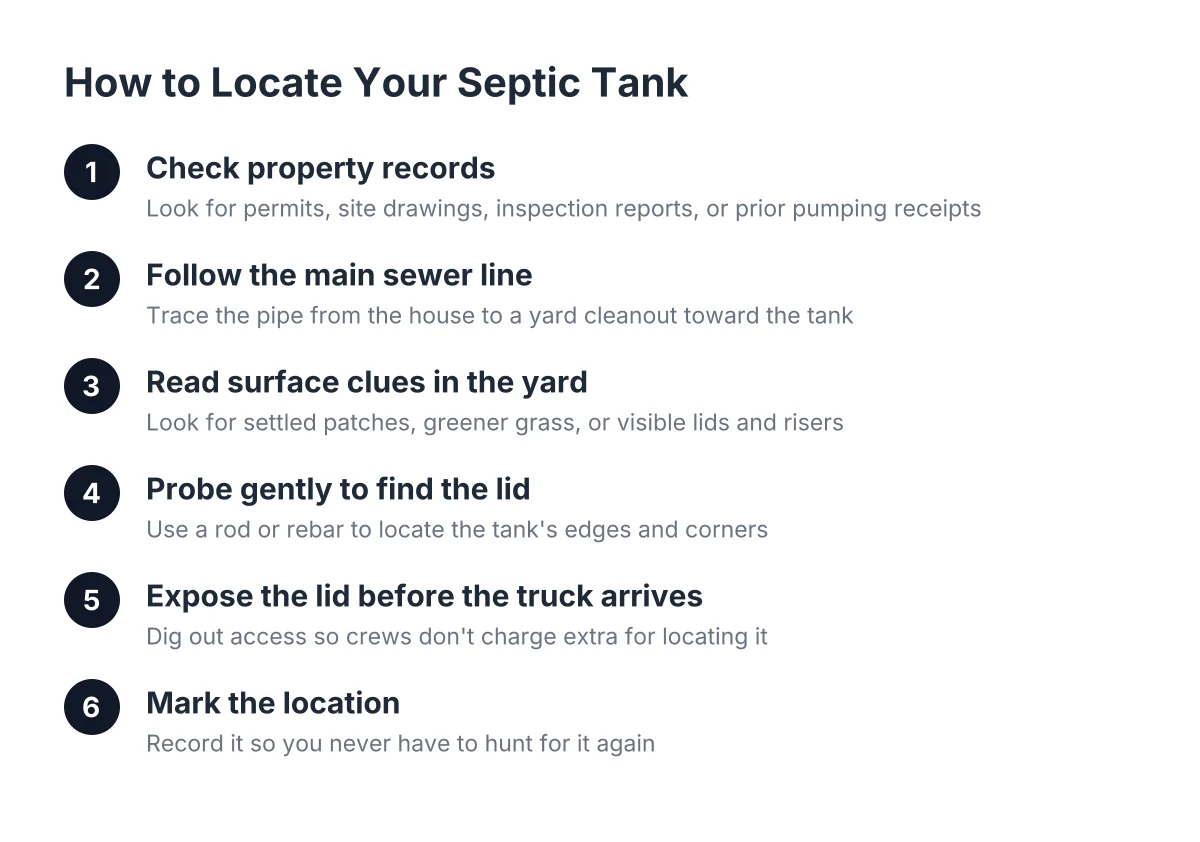
    You cannot maintain what you cannot find. Locate your septic tank lids and the boundaries of your drain field, then mark them. If you bought the home without records, check your county permit file, look for inspection risers in the yard, or have a septic tank locating service find it for you.

    Once you know where everything sits, protect it:

    • Keep vehicles, trailers, and RVs off the tank and drain field; the weight can crush pipes and compact soil.
    • Do not build sheds, patios, or concrete pads over the tank lids.
    • Keep deep-rooted trees and shrubs away from the drain field; roots seek out those perforated pipes.
    • Direct roof gutters and yard drainage away from the drain field so it does not get waterlogged.

    This step costs nothing and prevents some of the most expensive septic failures a homeowner can face.

    Step 3: Do the DIY Septic Tank Maintenance That Actually Works

    The most effective diy septic tank maintenance happens at your drains, not at your tank. Everything you flush or rinse either settles as sludge, floats as scum, or flows to your drain field. Control what goes in, and you stretch the time between pump-outs.

    Follow these habits daily:

    1. Flush only human waste and toilet paper. Wipes, even the ones labeled flushable, do not break down.
    2. Keep grease, cooking oil, and coffee grounds out of the kitchen sink.
    3. Go easy on the garbage disposal, or skip it. The Massachusetts Department of Environmental Protection recommends annual pumping for homes with garbage disposals because they generate significantly more sludge.
    4. Spread laundry loads across the week instead of running five loads on Saturday. Big surges of water push solids toward the drain field.
    5. Avoid pouring harsh chemicals, paint, or solvents down any drain. They kill the bacteria your tank depends on.

    One more thing worth saying plainly: skip the additives. Products that claim to dissolve sludge or make pumping unnecessary lack strong scientific backing, according to research from Washington State University Extension. Your money goes further on a scheduled pump-out than on a monthly packet of powder.

    Step 4: Learn What DIY Septic Tank Maintenance Cannot Do

    Here is the hard line. You cannot pump your own tank. Do it yourself septic tank pumping is not a realistic project, and the reasons go beyond effort. A residential tank holds hundreds of gallons of raw sewage and sludge. The gases inside, including hydrogen sulfide and methane, can knock a person unconscious in seconds. People die every year climbing into septic tanks.

    Even if you could get the waste out, you have nowhere legal to put it. According to the New Hampshire Department of Environmental Services, septic waste pumped from residential tanks travels by truck to a sewage treatment plant for disposal. It is not processed on site, and it cannot go in your trash, your yard, or a storm drain. Legal disposal requires a licensed hauler with a vacuum truck.

    The same limits apply to diy septic tank cleaning and repairs. Rinsing out a tank, replacing baffles, or adjusting pipes requires knowing details like outlet height. The University of Nebraska-Lincoln Extension notes that the outlet pipe must sit lower than the inlet, since solids float on the liquid and only clarified liquid should exit toward the drain field. Get that wrong and you send solids straight into your drain field, which is the most expensive part of the system to ruin.

    Step 5: Set a Pumping and Inspection Schedule

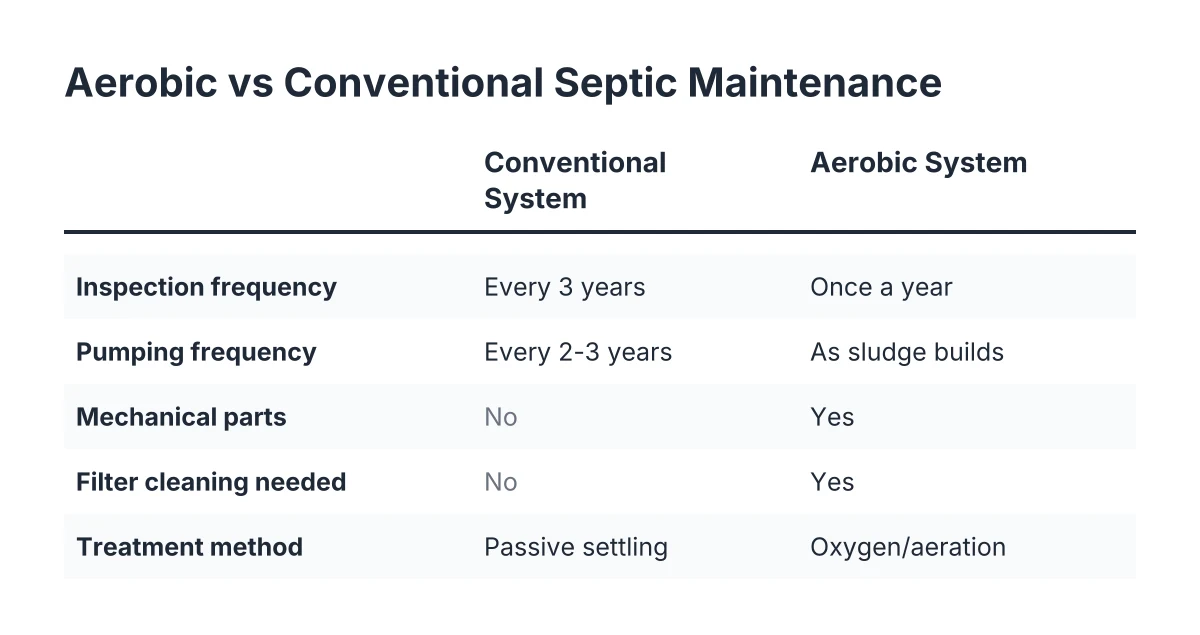
    Now put the professional side on the calendar, because waiting for symptoms means waiting for damage. The U.S. Environmental Protection Agency recommends a professional inspection at least once every three years for the average household, and once a year for systems with pumps, float switches, or other mechanical parts. Penn State Extension advises that an active family of four generally benefits from pumping every two to three years.

    Since an inspection often costs close to a pump-out, many Hesperia homeowners simply schedule septic tank pumping on that cycle and get the look-over as part of the visit. The crew measures sludge and scum layers, checks the baffles and lids, and tells you how your usage compares to your tank size. That reading, not a guess, sets your next pumping date.

    What Does Professional Septic Pumping Cost in 2026?

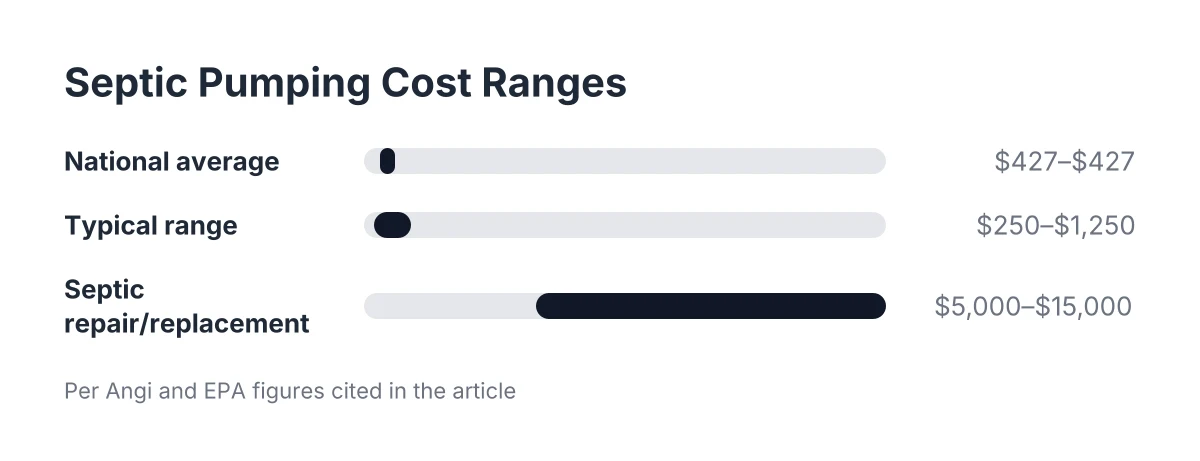
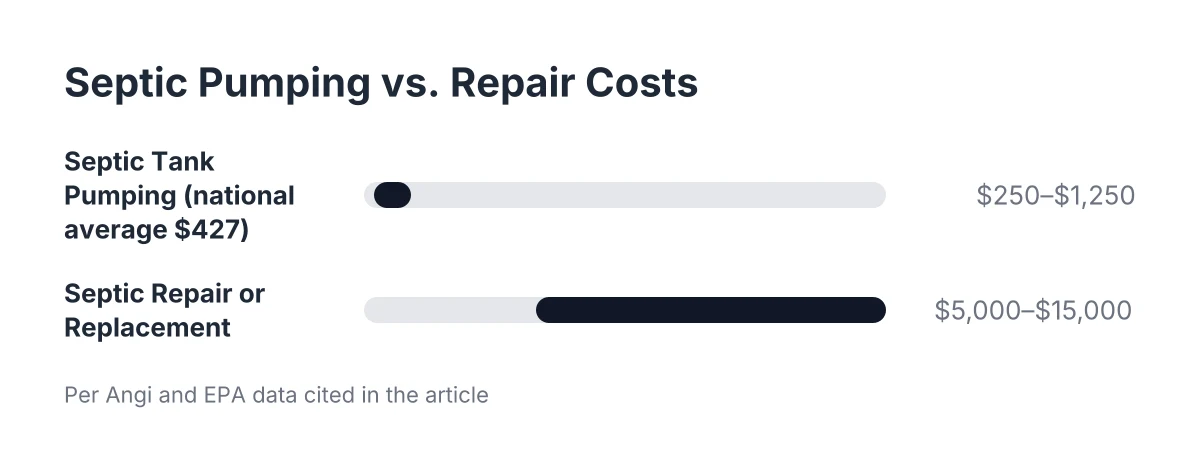
    Professional septic tank pumping averages $427, with a typical range of $250 to $1,250 or more depending on tank size and location, according to Angi data. For most single-family homes on a routine schedule, that works out to a few hundred dollars every few years. Compare that to the alternative: the EPA estimates septic repair or replacement typically costs $5,000 to $15,000.

    That gap is the whole argument for a schedule. Suppose a Hesperia homeowner skips pumping for a decade to save a few hundred dollars per visit. In that scenario, solids eventually pass the outlet and clog the drain field, and the repair bill can erase twenty years of pumping savings in one job. Routine pumping is the single most important thing you can do to extend the life of the system.

    Step 6: Know the Warning Signs That End the DIY Conversation

    Some situations skip the schedule entirely. Watch for these, and treat them as a call, not a project:

    • Sewage backing up into tubs, showers, or floor drains
    • Toilets that gurgle or flush slowly throughout the house
    • Wet, soggy, or unusually green patches over the tank or drain field
    • Sewage odor in the yard or inside the home
    • A septic alarm going off, if your system has one

    If sewage is already coming up in your house or yard at 8pm on a Friday, do not try to snake it or chemical-treat it yourself. A backup usually means the tank is full or the drain field is struggling, and neither responds to drain cleaner. An emergency septic pumping visit removes the immediate pressure, and a straight assessment tells you whether you had a one-time full tank or a bigger drain field problem. A crew that pumps tanks daily can usually tell you which one you are dealing with while the truck is still in your driveway.

    One honest limitation: pumping does not fix a failed drain field. If your drain field is saturated or clogged, a pump-out buys time, and you will need a qualified professional to evaluate repair or replacement options. Anyone who quotes a full system replacement without inspecting the tank and field first deserves a second opinion.

    Step 7: Keep Records and Split the Work Going Forward

    Finish by starting a simple septic file. Note the tank location, lid depth, date of each pumping, sludge levels the crew reported, and any repairs. When you sell or refinance the home, that file answers the inspection questions before they get asked. It also keeps your schedule honest.

    From here, the division of labor stays the same. You handle the daily habits, water management, and yard protection. A local crew handles the pumping, inspections, and anything involving an open tank. Do it yourself septic care and professional service are not competing options; they are two halves of the same maintenance plan, and homeowners who run both rarely end up with a truck in the driveway at midnight.

    If you need your septic tank serviced, Hesperia Septic can help.


    Related Reading

  • Septic Tank Pumping Terms Explained: A Plain-English Glossary

    septic tank pumping glossary

    If you own a home on septic in Hesperia, sooner or later a quote or an inspection report will throw a word at you that you have never heard. This septic tank pumping glossary translates that jargon into plain English so you can read a quote line by line, ask the right questions, and spot a problem before it becomes a backup in your hallway. Each entry starts with a short, standalone definition, then explains why the term matters when you are hiring someone. Keep it open while you compare estimates or talk to a provider on the phone.

    • Septic Tank
    • Drain Field
    • Inlet and Outlet Baffles
    • Scum, Sludge, and Effluent
    • Riser
    • Grease Trap
    • What Are the 3 Types of Septic Systems
    • Conventional Gravity System
    • Aerobic Treatment Unit (ATU)
    • Mound System
    • Septic Tank Pumping vs. Cleaning
    • How to Prepare Your Tank for Vacuum Truck Service
    • Tank Locating
    • What's Involved in Backfilling and Site Restoration
    • Emergency Pumping
    • Septic Backup
    • Septic Inspection
    • Pumping Schedule

    Parts of Your Septic System

    Septic Tank

    A septic tank is a buried, watertight container that receives everything that goes down your drains and holds it so solids can separate from liquid. Heavy solids sink to the bottom, grease floats to the top, and the liquid in the middle flows out to the drain field. The tank does not make waste disappear; it only stores and separates it. That is why every tank eventually needs septic tank pumping to remove the buildup before it overflows into your yard or backs up into the house.

    Drain Field

    A drain field is the network of buried pipes or trenches that spreads the liquid leaving your septic tank into the soil, where it filters naturally. It is also called a leach field. The drain field is usually the most expensive part of a septic system to replace, so protecting it is the whole point of regular pumping. If a provider says your drain field is saturated or failing, expect the conversation to go beyond a routine pump-out.

    Inlet and Outlet Baffles

    Baffles are fittings inside the septic tank that direct incoming waste downward and keep floating scum from escaping into the drain field. The inlet baffle sits where your house pipe enters the tank; the outlet baffle sits where liquid exits. A missing or broken outlet baffle lets solids reach the drain field and clog it. A good provider checks the baffles during pumping and tells you if one needs repair.

    Scum, Sludge, and Effluent

    Scum, sludge, and effluent are the three layers inside a working septic tank: scum is the floating layer of grease and light solids, sludge is the heavy layer on the bottom, and effluent is the liquid in between. Only the effluent is supposed to leave the tank. When the scum and sludge layers grow too thick, the tank is due for pumping. If a provider measures these layers before quoting, that is a sign they are sizing the job honestly rather than guessing.

    Riser

    A riser is a pipe extension that brings the septic tank lid up to ground level so the tank can be opened without digging. If your tank has no risers, expect the crew to locate the lids and dig to reach them, which adds time to the job. Many homeowners add risers during a pump-out so the next visit is faster and cheaper. Ask whether digging is included in the quote or billed separately.

    Grease Trap

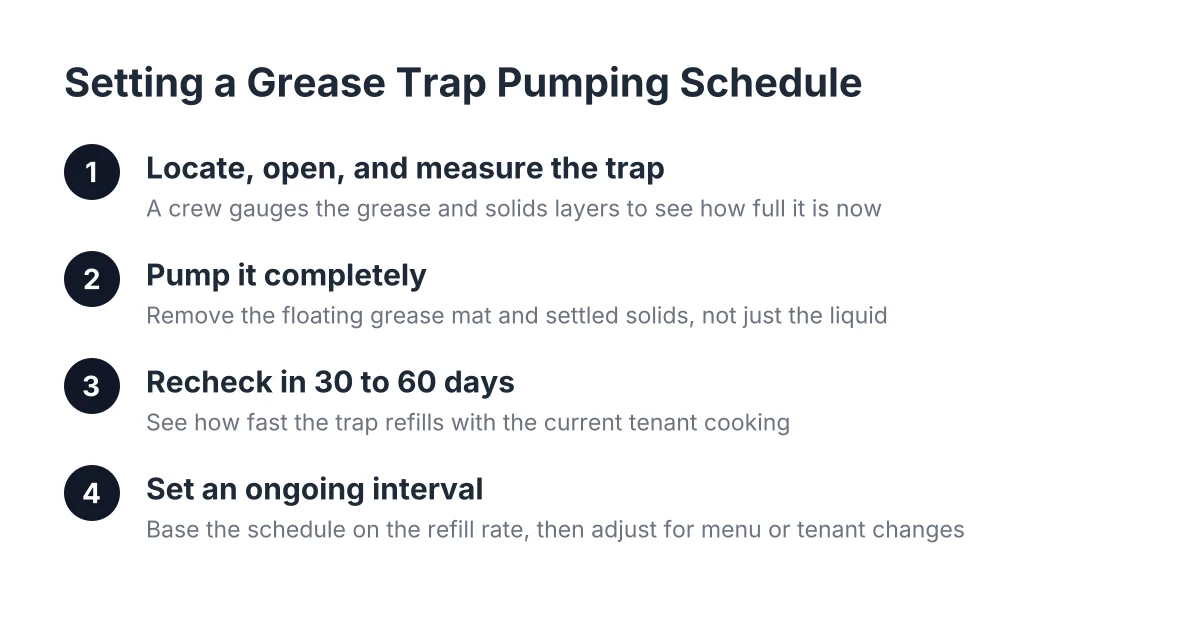
    A grease trap is a small tank that catches fats, oils, and grease from kitchen drains before they reach the septic system or sewer. Grease traps are common at restaurants but also appear on some residential properties. They need pumping on their own schedule because grease hardens and clogs lines. If you have one, mention it when you book so the crew brings what they need to pump both.

    Types of Septic Systems

    What Are the 3 Types of Septic Systems

    The three types of septic systems most people mean are conventional gravity systems, pressure distribution systems, and alternative or engineered systems. A gravity system is the classic setup: waste flows downhill from the house to the tank to the drain field with no pump. A pressure distribution system uses a pump to push effluent evenly across the drain field, common where the soil or slope will not allow gravity flow. Alternative systems, such as mound or aerobic treatment units, add extra treatment steps for difficult sites. Knowing your type matters because pumps, alarms, and extra chambers change what a service visit involves.

    Conventional Gravity System

    A conventional gravity system is a septic setup where wastewater flows from house to tank to drain field entirely by slope, with no pump. It is the simplest and most common residential design. Because there are no mechanical parts, service usually means pumping the tank and checking the baffles. If your home sits on flat or gently sloping ground, there is a good chance this is what you have.

    Aerobic Treatment Unit (ATU)

    An aerobic treatment unit is a septic system that pumps air into the waste to help bacteria break it down faster and more completely than a standard tank. ATUs have motors, air pumps, and sometimes alarms, so they need more attention than a gravity system. If your quote mentions an ATU, expect the visit to involve more than opening a lid and pumping. Tell the provider up front so they schedule the right equipment.

    Mound System

    A mound system is an alternative septic design that builds the drain field above ground level in a raised bed of sand and gravel. Mounds are used where the soil is too shallow, too dense, or too close to groundwater for a buried drain field. They rely on a pump to move effluent uphill into the mound. If you have one, the pump chamber is another component that needs checking during service.

    The Pumping Visit

    Septic Tank Pumping vs. Cleaning

    Pumping means removing the liquid and floating solids from a septic tank, while cleaning means removing everything, including the compacted sludge stuck to the bottom and walls. Providers sometimes use the words loosely, so ask which one the quote covers. A tank that has gone years without service may need full cleaning, not just a quick pump. Our breakdown of pumping versus cleaning for Hesperia homeowners walks through how to tell which service you should book.

    How to Prepare Your Tank for Vacuum Truck Service

    A vacuum truck is the tanker truck that suctions waste out of your septic tank through a large hose and hauls it to a licensed disposal site. Hose length matters: if the truck cannot park close to your tank, the crew may need extra hose or a different access plan. Mention long driveways, gates, or soft ground when you book. That one detail can prevent a wasted trip.

    Tank Locating

    Tank locating is the process of finding a buried septic tank when no one knows where the lids are. Crews use records, probes, or electronic locators to pinpoint the tank before digging. This comes up often with older homes and new buyers who inherited a system with no paperwork. If you cannot point to your lids, ask for locating as part of the visit so the quote reflects the real work.

    What's Involved in Backfilling and Site Restoration

    Backfilling means putting the soil back over the tank lids after the crew has finished pumping. If the lids had to be dug out, backfilling is the last step before the yard looks normal again. Confirm whether the quote includes digging and backfilling or just the pumping itself. It is one of the most common gaps between a low quote and the final bill.

    Emergency Pumping

    Emergency pumping is a same-day or urgent septic tank pump-out booked because sewage is backing up into the home or surfacing in the yard. It usually costs more than a scheduled visit because the crew rearranges the day to get there. Slow drains, gurgling pipes, and wet spots over the tank are the warning signs that show up first. Catching them early is how you book a routine visit instead; these signs your septic tank needs pumping now are the ones to watch.

    Septic Backup

    A septic backup is sewage flowing the wrong way, out of your drains and into the house, usually through the lowest fixtures like a shower or floor drain. Backups happen when the tank is full, a line is clogged, or the drain field cannot absorb any more liquid. Stop running water immediately and call a septic provider, not just a plumber, since the fix often starts at the tank. A full tank is the most common cause, and pumping it is often the first step in the response.

    Septic Inspection

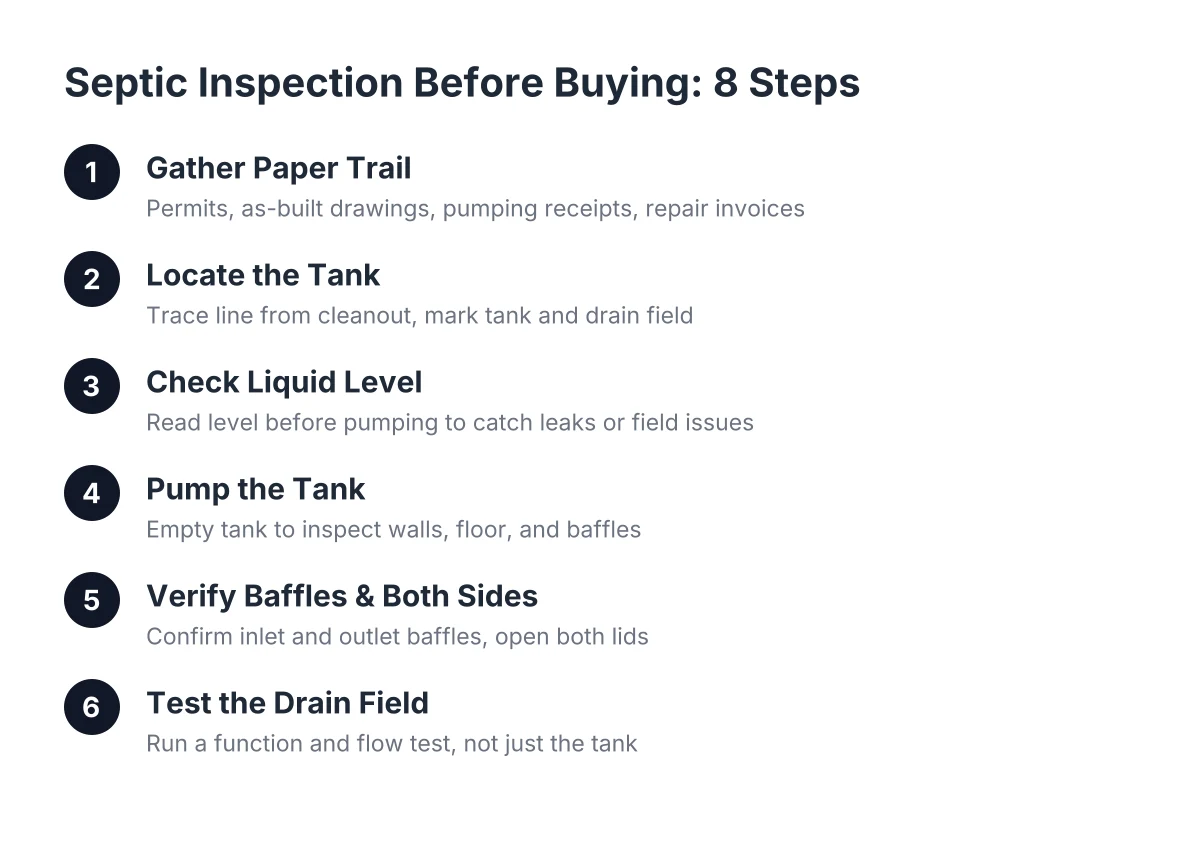
    A septic inspection is a check of the tank, baffles, and drain field condition, often done during a home sale or alongside a pump-out. An inspection during pumping is worth asking for because the tank must be open and empty to see the baffles and walls clearly. Buyers in particular should ask for one before closing on a home with a septic system. It turns an unknown buried system into a known quantity.

    Pumping Schedule

    A pumping schedule is the interval at which a septic tank should be emptied, based on tank size, household size, and water use. There is no single right number for every home, which is why blanket rules can mislead you. A provider who asks about your household before recommending an interval is doing it right. This step-by-step pumping schedule guide shows how to work out an interval that fits your house instead of a generic rule.

    Using These Terms

    You now have enough vocabulary to read a septic quote line by line and know what each charge covers, from locating and digging to the pump-out itself. Keep this septic tank pumping glossary handy the next time a provider mentions baffles, risers, or your drain field, and ask them to point to the exact item on the quote. A homeowner who knows these terms gets clearer answers, and this glossary exists so you can be that homeowner.

    If you need your septic tank serviced, Hesperia Septic can help.

    Related guide: septic tank pumping — Complete Guide

    Related Reading

  • Septic Tank Pumping vs. Cleaning: What Hesperia Homeowners Should Book

    pumping vs cleaning cost

    If you just bought a house in Hesperia with a septic system, or you can't remember the last time your tank was serviced, you've probably hit the same confusing wall: some companies advertise septic tank pumping, cleaning, or both, and nobody explains the difference before quoting you. This guide breaks down what each service actually is, what happens during the visit, what each one costs, and how to know which one your tank needs. Understanding the pumping vs cleaning cost difference is essential before calling contractors. No upsell pressure, just the straight answer a crew that pumps tanks every day would give you over the phone.

    The Short Answer

    Pumping removes the liquid and floating layers from your tank. Cleaning removes everything, including the compacted sludge stuck to the bottom and walls. Pumping is the routine service most Hesperia homeowners need every few years. Cleaning is the deeper service for tanks that have gone too long between visits or have heavy sludge buildup.

    Here's the catch: plenty of companies use the two words interchangeably. That's why it matters more to ask what the crew will actually do than to fixate on which word appears on the invoice. The sections below give you the questions to ask.

    What Septic Tank Pumping Involves

    Septic tank pumping means a vacuum truck removes the wastewater, floating scum layer, and loose solids from your tank through the access lid. A standard visit looks like this:

    1. The crew locates your tank and uncovers the access lid. If you don't know where your tank is, septic tank locating is usually the first step; this is common for new homeowners in Hesperia's older neighborhoods.
    2. The technician opens the lid and checks the liquid level before pumping. A level that's too high or too low tells them something about how the system is working.
    3. The vacuum hose pulls out the liquid, scum, and whatever solids come up with it.
    4. The technician takes a quick look at the tank's condition, baffles, and inlet and outlet before closing it up.

    For most households, this is the service that keeps the system healthy. Solids settle in the tank over time, and if they build up too high, they flow out to the drain field and clog it. Routine septic tank pumping in Hesperia prevents that, and preventing drain field damage is the entire financial point. According to the U.S. Environmental Protection Agency, septic repair or replacement typically runs $5,000 to $15,000, far more than a routine pump-out.

    What Septic Tank Cleaning Involves

    Septic tank cleaning goes further than pumping. After the liquid comes out, the crew works on the compacted sludge layer at the bottom of the tank. This often means backflushing, which is spraying liquid back into the tank to break up hardened sludge, then vacuuming again. On a neglected tank, the crew may repeat this cycle several times.

    Cleaning takes longer than a straight pump-out and usually costs more because of the extra time and effort. However, it's the right call in specific situations:

    • The tank hasn't been serviced in many years, or you have no service history at all
    • Sludge has hardened into a thick layer the vacuum alone can't lift
    • You're seeing repeat backups even though the tank was recently pumped
    • A home sale inspection flagged heavy solids buildup

    A common Hesperia scenario: you bought your house four years ago, the seller couldn't produce any septic records, and now the master bathroom drains are slow. When the crew opens the lid on a tank like that, they often find sludge occupying a large share of the tank's working volume. That tank needs a full septic tank pumping cleaning, not just a quick pump of the liquid on top.

    Comparing Costs: Pumping vs. Cleaning

    The cost of septic tank pumping and cleaning depends on tank size, how full it is, how hard the tank is to access, and how much sludge has compacted at the bottom. According to Angi data, septic tank pumping averages $427 nationally, with a range from $250 to $1,250 or more depending on tank size and location.

    Cleaning generally lands at the higher end of that range or above it, because the crew spends more time on-site breaking up and removing hardened sludge. A few cost factors worth knowing before you call anyone in 2026:

    • Tank size. A larger tank holds more volume, and disposal is priced partly by volume.
    • Access. A buried lid that needs digging adds labor. Installing a riser during the visit makes every future service faster and cheaper.
    • Condition. A tank pumped on schedule is a straightforward job. A tank with years of compacted sludge takes longer.
    • Emergency timing. A planned weekday visit costs less than an emergency septic backup response on a weekend.

    Here's the honest comparison for a planner like you: a routine pumping every few years costs a few hundred dollars per visit. Skipping those visits until the tank needs a heavy cleaning, or worse, until the drain field fails, costs far more. Staying on a schedule is the cheapest way to own a septic system.

    Be cautious with any quote given sight unseen as a firm final price. An honest company gives you a base price for a standard pump-out, then tells you upfront what would change it, like digging to reach the lid or extra sludge removal. That transparency is your best defense against the fake-problem upsell homeowners worry about.

    How to Tell Which Service Your Tank Needs

    Your tank needs pumping if it has been three to five years since the last service and the system is working normally. Your tank likely needs cleaning if it has never been serviced under your ownership, has a long gap in its history, or shows warning signs even after a recent pump-out.

    Watch for these signs that your septic tank needs attention soon, whichever service ends up being right:

    • Slow drains throughout the house, not just one fixture
    • Gurgling sounds from toilets or drains
    • Sewage odors in the yard or near the tank area
    • Wet, spongy, or unusually green grass over the drain field
    • Sewage backing up into tubs or floor drains, which is an emergency

    If you're seeing none of these and you're just planning ahead, good. That's the position you want to be in. Schedule a standard pump-out, and let the technician tell you what they find when the lid comes off. The liquid level and sludge depth inside the tank answer the pumping-versus-cleaning question definitively; no phone quote can.

    One honest limitation: even a thorough pumping and cleaning can't fix a cracked tank, failed baffles, or a saturated drain field. If the technician finds structural damage, that's a repair conversation, and it's worth getting a second opinion on any major repair recommendation.

    Where Inspection Fits In

    A septic system inspection answers the question before problems start. The EPA recommends that the average household have its septic system inspected at least every three years by a professional. Alternative systems with pumps, float switches, or other mechanical parts should be checked once a year, per the same EPA guidance.

    For a new homeowner in Hesperia with zero records, pairing an inspection with the first pump-out is the smart move. The tank has to be opened for pumping anyway, so the technician can measure sludge, check the baffles, and give you a real baseline. That baseline is what lets you set a maintenance schedule you don't have to think about again.

    Does the Pumping vs. Cleaning Label Even Matter?

    The label matters less than what the crew actually removes from your tank. Some companies say pumping when they mean a full clean-out. Others say cleaning when they only pump the liquid. The words on the ad don't tell you what the truck will do in your driveway.

    Therefore, ask these questions when you call, whether the company advertises septic tank pumping, cleaning, or both:

    1. Will you remove the sludge layer from the bottom, or only the liquid?
    2. Do you backflush or agitate the tank to break up compacted solids?
    3. Is locating and uncovering the lid included, or is digging extra?
    4. Will you check the baffles and tank condition while it's open?
    5. What would make the final price different from the quote?

    A local crew that services septic tanks daily can answer all five without hesitation. Vague answers, or pressure to commit before anyone has looked at your tank, are your cue to keep calling around.

    One more habit worth adopting: household choices change how fast sludge builds. For example, homes with garbage disposals generate significantly more sludge, and the Massachusetts Department of Environmental Protection recommends annual pumping for those households regardless of tank size. If you run a disposal daily, mention it when you schedule; it changes the right interval for your house.

    How to Choose

    Match the service to your tank's history, not to the word in the ad. Use this quick guide:

    • Serviced within the last three to five years, no symptoms: book a routine septic tank pumping and ask the technician to note the sludge level for your records.
    • No service history, new-to-you home, or many years since the last visit: plan for a full septic tank pumping cleaning, and pair it with an inspection to set your baseline.
    • Symptoms after a recent pump-out: ask for an inspection first; the problem may be the drain field or baffles, and more pumping alone won't fix it.
    • Active backup into the house: call for emergency septic pumping now and sort out the maintenance plan after.

    Then put the next service date on your calendar based on what the technician found. That single habit, a reminder set the day the truck leaves, is what separates homeowners who spend a few hundred dollars every few years from the ones facing a five-figure drain field replacement. In the High Desert, where many homes run on septic, being the planner pays off.

    If you need your septic tank serviced, Hesperia Septic can help.

    Related Reading

  • 8 Signs Your Septic Tank Needs Pumping Now, Not Next Year

    septic tank warning signs

    If you own a home on septic in Hesperia and you can't remember the last time the tank was pumped, you're not alone. Most calls we take start the same way: something in the house changed, and the homeowner wants a straight answer, not a sales pitch. This guide covers the septic tank warning signs you should never ignore, ranked roughly from "schedule it soon" to "stop running water and call today." Knowing the difference can save you real money; according to the U.S. Environmental Protection Agency, septic repair or replacement typically costs $5,000 to $15,000, while a routine pump-out is a few hundred dollars.

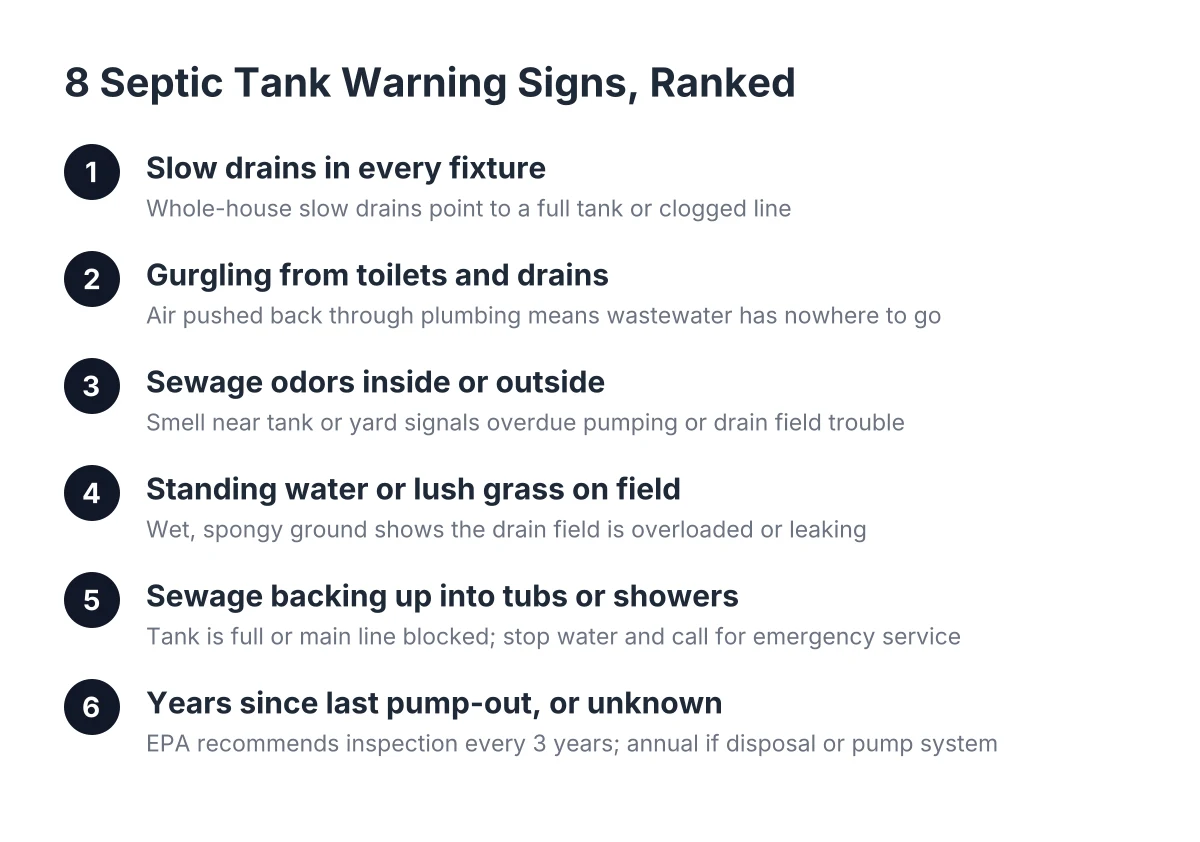
    Here are the eight warning signs, in order.

    1. Slow Drains in Every Fixture, Not Just One

    One slow sink is usually a clogged pipe. Slow drains across the whole house, especially in the lowest fixtures like a ground-floor shower or toilet, point to a full septic tank or a clogged line between the house and the tank.

    Watch what happens when you run the washing machine. If the toilet gurgles or the shower drain backs up while the washer empties, the system can't take water as fast as your house sends it. That pattern is one of the most reliable early warning signs when a septic tank is getting full.

    2. Gurgling Sounds From Toilets and Drains

    Gurgling means air is being pushed back through your plumbing because wastewater has nowhere to go. It often shows up before any visible backup, which makes it a useful early warning.

    For example, a homeowner near Main Street and Escondido Avenue might notice the hall bathroom toilet bubbling every time someone showers. Nothing has overflowed yet, so it's easy to ignore. That gurgle is the system telling you the tank is near capacity or the outlet is clogging. Booking a pump-out at this stage usually means a routine visit instead of an emergency one.

    3. Sewage Odors in the House or Yard

    A healthy septic system should not smell. If you catch a rotten-egg or sewage odor near drains inside, or around the tank lid and drain field outside, gases and wastewater are escaping where they shouldn't.

    Odor near the tank often means it's overdue for pumping. Odor spread across the yard, especially with damp ground, can mean the drain field is struggling. In Hesperia's dry climate, a persistent sewage smell outside stands out; our soil doesn't stay wet on its own, so a smelly, soggy patch deserves attention fast.

    4. Standing Water or Lush Grass Over the Drain Field

    Wet, spongy ground over the tank or drain field is one of the clearest septic tank warning signs that something is leaking or overloaded. When the tank fills past its working level, wastewater pushes out to the drain field faster than the soil can absorb it, and it surfaces.

    In the High Desert, this sign is hard to miss. A bright green strip of weeds or grass in an otherwise brown yard, with no irrigation to explain it, usually sits right over the drain field. That greenery is being fed by effluent. Pumping the tank relieves the pressure, but if the drain field is already saturated, an inspection should come with it.

    5. Sewage Backing Up Into Tubs, Showers, or Floor Drains

    This is the sign that skips the warning stage. When dark water or sewage comes up through the lowest drains in the house, the tank is full or the main line is blocked, and every flush makes it worse.

    If this is happening now, do three things:

    • Stop running water. No flushing, no laundry, no dishwasher.
    • Keep people and pets away from any backup inside or pooling outside.
    • Call for emergency septic pumping rather than waiting to see if it drains on its own.

    A backup rarely fixes itself. Pumping the tank is usually the first step, and it also lets a crew see whether the problem is the tank, the inlet line, or the drain field.

    6. It's Been Years Since the Last Pump-Out, or You Don't Know

    You don't need a visible symptom to be overdue. Solids build up in the tank whether or not anything smells. Once the sludge layer gets deep enough, solids flow into the drain field, and that's how a cheap maintenance task turns into a five-figure repair.

    The EPA recommends a professional inspection at least once every three years for the average household, and once a year for alternative systems with pumps or float switches. In addition, households with garbage disposals produce far more sludge; the Massachusetts Department of Environmental Protection recommends annual pumping for those homes regardless of tank size.

    If you just bought a house in Hesperia and the seller couldn't tell you when the tank was last serviced, treat that as a sign in itself. A pump-out with an inspection gives you a clean baseline and a record to plan from.

    7. The Septic Alarm Is Going Off

    Not every system has one, but if yours does, take it seriously. Systems with pumps or float switches use an alarm to signal high water in the tank, a failed pump, or a power issue. It's the one part of a septic system designed to warn you before sewage reaches your floor.

    However, an alarm doesn't tell you which problem you have. Silencing it and hoping is how a high-water warning becomes a backup by the weekend. A pump-out plus an inspection of the floats and pump usually sorts out whether you had a one-time overload or a component that needs repair.

    8. Nitrate or Bacteria Problems in a Nearby Well

    This one matters for rural Hesperia properties on well water. A failing or leaking septic system can send bacteria and nitrates into the groundwater your well draws from. If a water test comes back with elevated nitrates or coliform bacteria, the septic system is a prime suspect.

    This is also the sign where you should bring in a professional rather than troubleshoot alone. Pumping may be part of the fix, but tracing contamination to a leaking tank or failed drain field takes an inspection, and sometimes county involvement. No article can diagnose that from your kitchen table.

    How to Tell a Full Tank From a Failing System

    A full tank needs pumping. A failing system needs pumping plus diagnosis, and the signs overlap, which is why homeowners get nervous about upsells. Here's a practical way to sort them.

    Signs that usually mean the tank is full and pumping alone will fix it:

    • Slow drains and gurgling that started gradually
    • Odor near the tank lid, not spread across the yard
    • No service history for three or more years

    Signs your septic tank warning signs may indicate failing, where pumping is step one but not the whole answer:

    • Standing water or sewage surfacing over the drain field
    • Backups that return within weeks of a pump-out
    • Contamination showing up in well water tests

    The honest trade-off: pumping a failing system buys time, but it doesn't repair a crushed line or a saturated drain field. A crew that pumps your tank should be able to tell you what they see at the inlet, outlet, and baffles, and whether liquid flows back from the drain field into the tank. Flowback during pumping is a strong indicator the field is the problem, not the tank.

    If several of the "failing" signs sound familiar, two resources will help you decide the next move. Our guide to 7 signs your septic system needs replacement, not just another pumping walks through when a tank is genuinely at the end of its life. And a professional septic system inspection in Hesperia gives you a measured answer — sludge depth, baffle condition, and drain field health — instead of a guess.

    What Acting Early Actually Saves You

    The gap between routine service and emergency repair is the whole argument for acting on early signs. According to Angi data, septic tank pumping averages $427, with a typical range of $250 to $1,250 depending on tank size and location. Compare that to the EPA's estimate of $5,000 to $15,000 for repair or replacement, and the math settles itself.

    There's a practical difference too. A scheduled pump-out happens on your calendar, in daylight, with the lids located ahead of time. An emergency call happens with sewage in your shower, often after hours, sometimes with a tank nobody can find because it was buried decades ago. If you don't know where your tank is, septic tank locating is worth doing before you ever need it urgently.

    What to Expect When You Call a Local Crew in 2026

    Knowing what a normal visit looks like makes it easier to compare quotes and spot padding. A straightforward septic tank pump-out in the Hesperia area generally includes:

    1. Locating and uncovering the tank access lids
    2. Pumping out liquids, sludge, and scum, not just the liquid layer
    3. A visual check of the tank, baffles, and inlet and outlet as it empties
    4. Telling you what they found, in plain language, before recommending anything else

    Ask any company you call whether the quote covers digging to reach the lids, and whether they pump the full tank or skim it. Those two questions expose most of the pricing surprises homeowners run into. A local, septic-focused crew should answer both without hesitation.

    The Bottom Line for Hesperia Homeowners

    Slow drains, gurgling, and odors are your cheap warnings; backups, surfacing sewage, and alarms are the expensive ones. If you've noticed any of the early septic tank warning signs or backing up or filling, scheduling a pump-out now is the difference between a routine service call and a weekend you'll be telling neighbors about for years. And if you've hit the later signs, stop running water and get a crew out; the tank isn't going to un-fill itself.

    If you need your septic tank serviced, Hesperia Septic can help.

    Related Reading

  • How Often Should Homeowners Pump a Septic Tank? A Step-by-Step Schedule

    Five-step process for building a septic pumping schedule for homeowners
    A step-by-step process for setting and maintaining a septic pumping schedule, as covered in this guide.

    If you just bought a house in Hesperia with a septic system, or you own a rental or two out here in the High Desert, the question of how often you need a septic pumping schedule probably nags at you. Nothing is wrong right now. The drains work. The yard smells fine. So it is tempting to put it off another year. The problem is that a septic tank fills whether you think about it or not, and the first obvious sign of trouble is usually the expensive one: a backup in the house or a soggy patch over the drain field.

    This guide walks you through how to build a pumping schedule you can actually stick to, step by step. No scare tactics, no pressure to buy things you do not need. Just the process a local crew that pumps tanks daily would recommend to a neighbor.

    Why Pumping Frequency Matters More Than Any Single Pump-Out

    A septic tank works by letting solids settle to the bottom as sludge while liquid flows out to the drain field. Over time the sludge layer grows. Once it gets deep enough, solids start escaping into the drain field, and that is where the real damage happens.

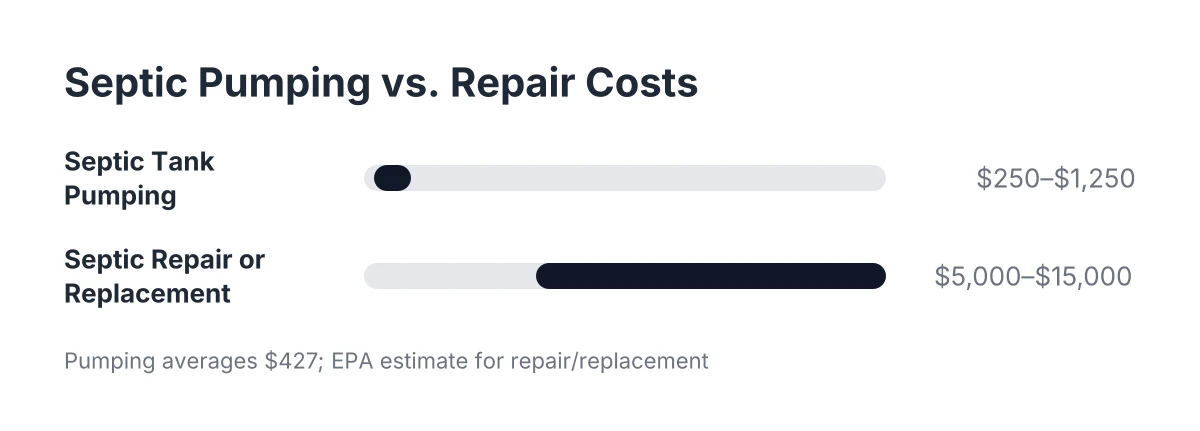
    Here is the math that should drive your decision. According to Angi, septic tank pumping averages $427, ranging from $250 to $1,250 or more depending on tank size and location. Meanwhile, the U.S. Environmental Protection Agency estimates septic repair or replacement typically costs between $5,000 and $15,000. Skipping a few hundred dollars in routine service to risk a five-figure repair is the worst trade in home ownership.

    Therefore, the goal is not to pump as rarely as possible. The goal is to pump on a schedule matched to your household, so you never find out the hard way that you waited too long.

    Step 1: Find Out When the Tank Was Last Pumped

    Start by digging up the tank's service history, because your schedule begins from the last pump-out, not from today. If you bought the house recently, check your closing documents and inspection report. Many buyers in Hesperia find a septic inspection or pumping receipt tucked into escrow paperwork and never noticed it.

    If the paperwork turns up nothing, try these in order:

    • Ask the previous owner or their agent directly; a quick email often gets an answer.
    • Call local septic companies and ask if they have a service record for the address.
    • Check with San Bernardino County for any permits or septic records on file.
    • Ask longtime neighbors; on septic streets, people remember whose truck was in whose driveway.

    If you still cannot confirm a date, treat the tank as overdue and schedule a pump-out now. That gives you a clean starting point, and the crew can tell you the tank's condition while it is open. For a landlord who inherited three rentals with zero records, this first baseline pump-out per property is the single most valuable step in this whole guide.

    Step 2: Creating Your Septic Pumping Schedule Based on Household Load

    How often should homeowners pump a septic tank? For most households, pumping every three to five years keeps sludge at a safe level, and the U.S. Environmental Protection Agency recommends a professional inspection at least once every three years. Your exact interval depends on tank size, how many people use the system, and what goes down the drains.

    Think of it as a simple ratio: more people and more water use fill the tank faster; a bigger tank buys you more time. A retired couple in a three-bedroom house fills a tank far slower than a family of six in the same house. Neither the calendar alone nor the tank alone tells the story; the combination does.

    Certain factors shorten the interval:

    • A garbage disposal. Ground-up food waste becomes sludge fast. The Massachusetts Department of Environmental Protection recommends annual pumping for homes with garbage disposals, regardless of tank size.
    • High occupancy. More people means more wastewater and more solids.
    • Heavy laundry and water use. Constant loads push water through the tank before solids fully settle.
    • An alternative system. Systems with pumps, float switches, or mechanical parts should be inspected once a year, according to the U.S. Environmental Protection Agency.

    However, do not guess in a vacuum. A crew that opens the tank can measure the actual sludge layer and tell you whether your interval should be three years, five years, or something in between. That measured answer beats any chart on the internet, including this one.

    Step 3: Adjust the Schedule for Rental Properties

    Rental properties need a tighter septic pumping schedule than owner-occupied homes, because you do not control what goes down the drains. Tenants change, occupancy shifts, and nobody calls you when the toilet gurgles until it becomes a Saturday night emergency. For a rental, plan toward the shorter end of whatever interval fits the household size.

    Consider a common Hesperia scenario. A landlord owns two septic-served rentals. One has a single tenant; the other houses a family of five with a garbage disposal. Same tank size, same street, wildly different schedules. The first property might go four or five years between pump-outs. The second may need service every year or two.

    For each rental, do three things:

    1. Get a baseline pump-out and note the sludge level the crew reports.
    2. Set the next service date based on that reading and the current occupancy.
    3. Re-check the schedule whenever tenants turn over, ideally with a pump-out or inspection between leases.

    A pump-out at turnover also protects you in a dispute. Documented septic service before a new lease makes it clear that a later clog came from use, not from a neglected system. Keep the invoices with your property records; they matter at sale time too.

    Step 4: Watch for Signs You Waited Too Long

    Warning signs mean the tank is already past due, so treat them as a trigger to act, not a reason to wait and see. Between scheduled pump-outs, you or your tenants should watch for:

    • Drains that run slow throughout the house, not just one fixture
    • Gurgling sounds from toilets or drains
    • Sewage odors inside, near the tank, or over the drain field
    • Wet, spongy, or unusually green grass above the drain field
    • Sewage backing up into tubs or floor drains, which is an emergency

    For example, a slow kitchen drain by itself is probably a plumbing clog. Slow drains in every room of the house at once point to the septic system. If you see backup or standing sewage, stop running water and call for emergency septic pumping; running more water only pushes the problem further into the house.

    One honest caveat: pumping does not fix everything. If a drain field has already failed, pumping the tank buys time but does not repair the field. That is a situation where you need a professional assessment of the whole system, not just a truck and a hose.

    Step 5: Put the Schedule on Autopilot

    The final step is removing memory from the equation, because "a few years ago" is how every overdue tank starts. Most homeowners who end up with a backup did not decide to skip pumping; they just lost track. Beat that by making the schedule automatic.

    First, write down the date of your baseline pump-out and the sludge level the crew reported. Next, set a calendar reminder for the interval they recommend, and set a second reminder six months earlier so you have time to schedule without rushing. Then ask the septic company whether they keep service records and send reminders; a local outfit that works Hesperia tanks daily usually tracks this for repeat customers.

    For landlords, add septic dates to the same system you use for lease renewals and insurance. If a property manager handles day-to-day issues, make sure they know which properties are on septic and who to call, so a tenant complaint about slow drains gets routed correctly the first time.

    Know Your Tank Before You Set the Schedule

    The interval depends on the tank itself, not just the household. If you are not sure what is buried in your yard, these guides fill in the picture:

    Fixed Intervals vs. Inspections: Which Approach Defines a Septic Pumping Schedule?

    The best answer to how often should homeowners pump is both: keep a fixed interval as your default, and let inspections fine-tune it. The interval keeps you from drifting into "we'll get to it," while a measured sludge reading every few years tells you whether your interval is right for the way the house is actually used.

    In practice, that looks like this for 2026 and beyond. Pump now if you have no record of the last service. Ask the crew for the sludge level and a recommended interval. Put that date on the calendar, and adjust when life changes: a new tenant family, a new garbage disposal, or a house that goes from two occupants to six.

    Handled this way, septic tank pumping becomes a line item you plan for, like registration on a truck, instead of a crisis you react to. You will never be the house on the street with the smell in the yard, and your rentals will never lose a tenant to a preventable backup. That is the whole point of a schedule: a few hundred dollars on your terms, instead of thousands on the tank's terms.

    If you need your septic tank serviced, Hesperia Septic can help.


    Related Reading

  • How Much Does Septic Tank Pumping Cost?

    cost of septic tank replacement

    If you searched for septic tank cost or the cost of septic tank replacement, you have probably seen pages full of made-up averages. We will not do that here. What you pay for septic tank pumping in Hesperia hinges on a few real things: the size and condition of your tank, how hard it is to reach, and whether you are calling for routine service or an emergency backup. By the end of this page you will know exactly which of those factors apply to your property and how to get an accurate number from a local crew instead of guessing.

    What Drives the Cost of Septic Tank Replacement and Pumping

    No two septic calls are the same. Here are the factors that move the price on real jobs, and how to tell which side of each one you are on.

    Tank size and how full it is

    A bigger tank holds more waste, and more waste means more time on site and more volume to haul away. That raises the price. If you do not know your tank size, check your home's original permit paperwork or a past pumping receipt. If the tank is overfull or has been neglected for years, expect the job to take longer than a routine pump-out, which also pushes the cost up.

    How easy the tank is to reach

    The truck has to park close enough for the hose to reach your tank, and the crew has to get to the access lid. A tank with an exposed riser near the driveway is the cheap end of this factor. A tank buried under two feet of dirt, hidden under a deck, or sitting far from where a truck can park costs more. If nobody knows where your tank is, septic tank locating adds a step before pumping can even start. Walk your yard before you call. If you can point to the lid, you are on the low side.

    Routine service versus a septic backup

    Scheduled septic tank pumping on a system that is working is the least expensive version of this service. A septic backup or overflow is the expensive version. Emergency septic pumping often happens after hours or on weekends, the crew is working around sewage instead of a calm yard, and there may be cleanup and inspection work on top of the pumping itself. If your drains are still flowing, you are on the cheaper side. If sewage is coming up in the tub, you are not.

    Condition of the system

    Pumping empties the tank. It does not fix a cracked tank, a failed baffle, or a saturated drain field, which is the underground area where wastewater soaks into the soil. If an inspection during pumping finds damage, repairs are a separate cost. In the worst case, the conversation shifts from pumping to the cost of septic tank replacement, which is a different job entirely: excavation, a new tank, possibly a new leach field, and permits. Regular pumping is what keeps you on the cheap side of this factor.

    Extra work beyond the pump-out

    Some visits are pumping only. Others include septic tank cleaning, where the crew washes down solids stuck to the tank walls, or a full septic system inspection. Grease trap pumping and RV or holding tank pumping are separate services with their own scope. More scope means more time, and more time means a higher bill. Decide what you actually need before you call, and say so.

    Local site conditions

    Hesperia and the High Desert have their own soil, lot sizes, and driveway layouts. Long rural driveways, soft sand where a heavy truck can get stuck, and deep-set tanks all add difficulty. A local crew that works these properties can look at your setup and price it accurately instead of quoting a generic figure that falls apart on site.

    Cost Factor Table

    Factor Pushes the price down when… Pushes it up when…
    Tank size and fill level The tank is standard size and pumped on a regular schedule The tank is large, overfull, or has gone years without service
    Access The lid is exposed or shallow and the truck can park nearby The tank is deeply buried, hidden, or far from truck access
    Type of call It is scheduled, routine septic tank pumping It is an emergency backup or overflow, especially after hours
    System condition The tank and drain field are healthy Damage turns up and repairs or replacement enter the picture
    Scope of work You need a straightforward pump-out only You add cleaning, inspection, locating, or grease trap service
    Site conditions The property has firm ground and easy layout Soft sand, long driveways, or tight spots slow the crew down

    How to Get an Accurate Cost of Septic Tank Replacement Estimate

    The fastest way to a real number is a short phone call with the right details ready. Here is what to gather first:

    • Tank location. Do you know where the lid is? Is it exposed, or buried?
    • Tank size, if you know it. Check permit records or an old pumping receipt.
    • Last service date. A tank pumped three years ago prices differently than one nobody has touched in fifteen.
    • What is happening right now. Routine maintenance, slow drains, or active septic backup?
    • Property access. Can a pump truck get within hose reach of the tank?

    A good quote should tell you what is included: the pumping itself, whether disposal of the waste is covered, whether a basic inspection comes with it, and what would count as extra. Ask directly. If a company will not say what is in the price, that is your answer about how the final invoice will go.

    Estimates differ between providers for real reasons. Some quote a base price and add fees for digging, locating, or extra volume. Others build those into one number. Neither approach is wrong, but you cannot compare quotes until you know what each one covers. Get the scope in writing, even if it is just a text message or email listing what the price includes.

    Ways to Keep the Cost Down

    You cannot control your soil or your tank size, but you can control these:

    1. Pump on a schedule, not in a crisis. Routine septic tank pumping is the cheap version of this service. Emergency septic pumping after a backup is the expensive version, and it often comes with cleanup on top. Regular service is the single biggest lever you have.

    2. Know where your tank is before the truck arrives. If the crew has to spend an hour locating and digging to the lid, you pay for that hour. Find the lid, mark it, and consider installing a riser so future visits start faster.

    3. Get two or three quotes with the same scope. Tell each company the same details and ask what is included. Comparing a bare pump-out price against an all-in price tells you nothing. Comparing like for like tells you a lot.

    4. Do not put off small problems. Slow drains and wet spots over the drain field are early warnings. Catching a failing component early keeps you in repair territory. Ignoring it long enough puts you into the cost of septic tank replacement, which no amount of quote shopping makes cheap.

    5. Watch what goes down the drain. Grease, wipes, and heavy garbage disposal use fill a tank with solids faster. Slower buildup means fewer pump-outs over the life of the system.

    Cost Questions People Ask

    Why can't anyone give me a septic system cost over the phone?

    An honest company can give you a ballpark once they know your tank size, access, and situation, but the final number depends on what they find on site. A tank that turns out to be buried deeper than expected, or fuller than described, changes the work. Companies that quote one firm price sight unseen tend to make up the difference with add-on fees later.

    Is the cost to install septic tank and leach field the same as pumping?

    No, they are different jobs by an order of magnitude in scope. Pumping empties and services your existing tank. Installing a new septic tank and leach field means excavation, materials, permits, and inspections, and it is what you face when a system fails for good. Regular pumping exists to keep you away from that job for as long as possible.

    Does an aerobic septic system cost more to service?

    Aerobic systems, which use air to break down waste faster than a standard tank, have more parts: pumps, aerators, and sometimes sprinklers. More parts mean more things to inspect and maintain, so ongoing service usually costs more than a basic gravity system. If you have one, tell the company when you call so the quote reflects the right system.

    Will pumping fix my septic backup?

    Sometimes. If the backup happened because the tank is full, pumping solves it. If the real problem is a clogged line, a failed baffle, or a saturated drain field, pumping buys you time but the symptom comes back. That is why a backup call often includes an inspection, so you find out whether you are done or whether there is a repair conversation ahead.

    The Bottom Line

    Septic tank pumping prices come down to tank size, access, and whether you called before or after the backup. Skip the pages of invented averages, gather your tank details, and get two or three written quotes with the same scope so you can compare them honestly. If you are in Hesperia or the surrounding High Desert, a quick call with your property details is the fastest path to a real number.

    If you need your septic tank serviced, Hesperia Septic can help.

    Related Reading