If you are buying High Desert property with no septic records, or you are a homeowner scheduling a routine checkup, understanding septic inspection red flags matters more than anything else in the report. A tank can look fine from the surface and still be one wet winter away from failure. This guide walks through the specific warning signs inspectors look for, what each one means for the system's future, and how to weigh them when you are making a purchase decision or planning maintenance. The goal is a documented, lender-ready picture of the system before money changes hands, written by people who know how Hesperia soil and older High Desert systems behave.
Why Septic Condition Matters Before You Buy or Refinance
More than one in five U.S. households depend on individual septic systems or small community cluster systems to treat their wastewater, according to U.S. Environmental Protection Agency. In California the share is lower, about 10 percent statewide per the same source, compared with highs of 55 percent in Vermont, but out here in the High Desert, septic is the norm rather than the exception. Rural parcels around Hesperia often run on systems that are decades old, and many changed hands without a single service record following them. Many buyers moving to Hesperia from sewer-served neighborhoods have never owned a septic system and do not know what normal maintenance looks like; an inspection is the fastest education you can get about your own property.
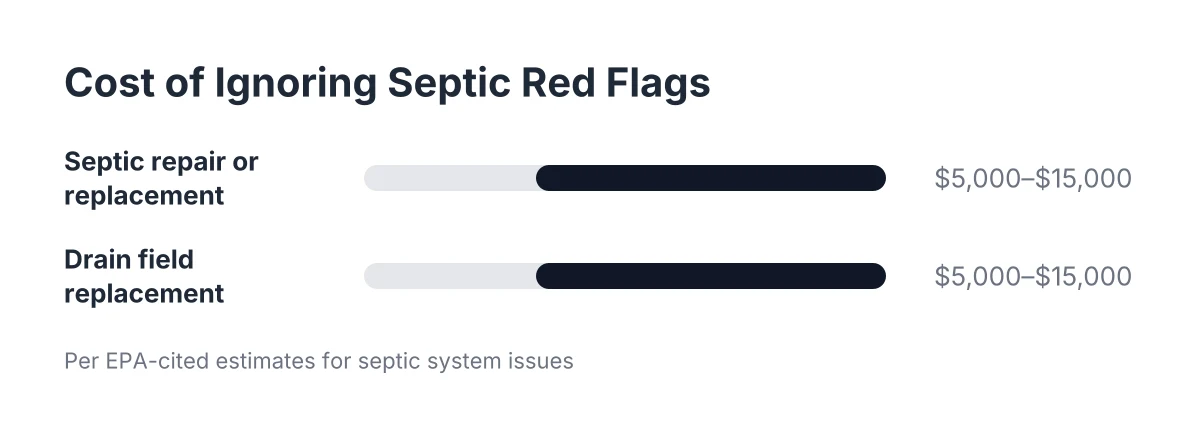
That gap in paperwork is exactly why an inspection exists. Lenders and escrow officers want documented condition, not the seller's word. Buyers want to know whether the $5,000 to $15,000 repair-or-replacement range the U.S. Environmental Protection Agency estimates for septic systems is a risk they are inheriting. For comparison, Angi data puts the average cost of septic tank pumping at $427, with a range of $250 to $1,250 or more depending on tank size and location; an inspection is how you stay on the $427 side of that ledger instead of the $15,000 side. A written septic system inspection report answers that question in a form a lender, a county office, or your own file cabinet can use.
For routine maintainers, the stakes are smaller but the logic is the same. The U.S. Environmental Protection Agency recommends the average household have its system inspected at least once every three years, and alternative systems with pumps or float switches once a year. Catching a warning sign at year three is a service call. Catching it at year eight can be an excavation. If you cannot remember the last time anyone opened your tank, you are overdue by definition.
What a Septic Inspection Actually Covers
A full septic system inspection covers more than lifting a lid. Before an inspector can flag anything, they have to find the system, open it, and see it working. On a property with no records, that first step is often the hardest part of the job.
A good inspection actually starts before a shovel touches dirt. The inspector or service company will usually ask about the age of the house, any repair history, how often the tank has been pumped, and where the property sits. A house on a hilltop drains differently than one in a low spot, and that context shapes what the inspector expects to find. If you just bought the house and have no records, say so. That is common, and it changes the approach: without a pumping history, the inspector treats the tank as an unknown and looks harder at sludge levels and structural condition rather than assuming recent maintenance.
A thorough inspection in the Hesperia area typically includes:
- Locating the tank and marking its position, along with the lid or riser
- Uncovering and opening the access lids
- Measuring the scum and sludge layers inside the tank
- Checking the inlet and outlet baffles or tees for damage
- Inspecting the tank walls for cracks, corrosion, and root intrusion
- Running water in the house to confirm flow into the tank
- Evaluating the drain field area for wet spots, odors, or unusually green growth
- Documenting everything in a written report with findings and photos
On older Hesperia properties, the lids may be buried under a foot or more of soil, and nobody living in the house knows where they are. Septic tank locating is a normal part of the job, not a sign something is wrong. For a pre-purchase inspection, opening the lids is non-negotiable: it lets the inspector visually check both the inlet side, where wastewater enters from the house, and the outlet side, where clarified liquid exits toward the drain field. An inspection that never opens the tank is not an inspection; it is a walk across the lawn.
Some inspections happen alongside septic tank pumping, and there is a good reason for that. An inspector cannot see cracks in a tank wall or a failed baffle through three feet of sludge. Pumping the tank first gives a clear view of the structure, which is why many buyers schedule locate, pump, and inspect as one visit rather than three. Pumping during inspection also answers the question every new owner has: how full was it? A tank with sludge packed to the outlet tells a different story than a tank pumped two years ago.
If you are buying a property on a private well, the septic and well inspection cost is often quoted together during escrow. The two systems get inspected separately, but coordinating them saves time when a closing date is bearing down on you.
The Biggest Warning Signs in Septic Inspection
The most serious red flags during a septic inspection are sewage backing up into the home, standing water or sewage odor over the drain field, a tank that will not hold liquid at its normal level, and damaged baffles that let solids escape into the field. Any one of these points toward failure risk rather than routine wear.
Below is what each major warning sign means and why inspectors treat it seriously.
Standing Water or Odor Over the Drain Field
Soggy ground, sewage smell, or a stripe of lush green grass over the drain field in an otherwise dry Hesperia yard is one of the clearest failure signals there is. Our soil out here drains fast when it is healthy. When wastewater surfaces instead of soaking in, the field is no longer treating effluent, and that is the expensive half of the system.
Drain field failure is the finding that most often lands in the $5,000 to $15,000 replacement range the U.S. Environmental Protection Agency cites. On a purchase, this red flag alone can justify renegotiating price or walking away.
Physical defects show up in the field too. Root intrusion into drain field lines and crushed corrugated pipe are common problems, especially where trees grow near the lines or vehicles have driven over the field.
Liquid Level That Is Too High or Too Low
Inside the tank, the liquid should sit at the level of the outlet pipe. If the inspector opens the lid and finds liquid above the outlet, the drain field is not accepting water the way it should. That backup pressure is an early sign of a saturated or failing field, even when the yard above still looks dry.
The opposite finding matters too. If the level sits well below the outlet, the tank may be leaking wastewater into the surrounding soil through a crack or a failed seam. Either direction, an abnormal level is a structural question that a quick glance would never catch.
Backup or Slow Drainage Inside the House
Slow drains, gurgling toilets, or wastewater backing up into a tub during the water test point to a blockage or a system that cannot keep up. Sometimes the cause is simple, such as a full tank that just needs septic tank pumping. Other times the line between house and tank is broken or root-choked. According to the Washington State Department of Health, a clogged inlet baffle is a common cause of septic backups and should be one of the first things checked when troubleshooting a blocked line into the tank.
An inspector's job is to tell those cases apart, because the fix ranges from a routine pump-out to trenching and pipe replacement. A backup during inspection should never be waved off as a one-time clog.
Damaged or Missing Baffles
The baffles, or tees, at the tank's inlet and outlet keep floating scum inside the tank and direct flow correctly. The inlet baffle directs incoming wastewater downward so it does not stir up the surface scum; the outlet baffle keeps floating solids from escaping into the drain field. When the outlet baffle rusts away or breaks off, solids flow straight into the drain field and clog it from the inside. Older concrete tanks in the High Desert commonly show corroded baffles, and it is a cheap fix if caught early. Left alone, it quietly destroys the field.
There is also a design detail worth knowing: according to University of Nebraska-Lincoln Extension, a properly built septic outlet must sit lower than the inlet, because solids float on top of the liquid and only liquid should exit toward the drain field. If a previous repair got that wrong, solids push into the drain field and shorten its life.
Cracks, Root Intrusion, or a Deteriorating Tank
Once the tank is pumped, the inspector can see the walls. Cracks in concrete, corrosion holes in steel, and roots pushing through seams all mean the tank itself is compromised. Roots are a common finding on older Hesperia parcels where trees were planted years ago without anyone knowing where the tank sat. Roots follow moisture, and once inside, they keep growing and keep blocking flow until removed. A cracked tank can sometimes be repaired; a collapsing one cannot.
Sludge Levels That Say the System Was Neglected
Sludge depth tells a story that no seller disclosure will. A tank that measures nearly full of solids has gone years without service, and a neglected tank usually means a stressed drain field. For a buyer with no records, sludge measurement is the closest thing to a maintenance history you will ever get on that property.
Evidence of Past Overfills
The inspector also notes signs the tank has ever leaked or been completely full. Past overfills suggest the system has been stressed, and the inspector will look harder at everything downstream, starting with the drain field.
One honest caveat about all of these findings: an inspection is a snapshot, not a guarantee. A drain field can pass a flow test today and still fail in two years if the household doubles its water use or a tree root finds a pipe joint. No inspector can promise a system's future, only report its present condition.
Red Flags During Septic Checks on Land With No Records
On a parcel with no septic paperwork, the red flags during septic evaluation start before the lid ever comes off. The absence of any visible lid, riser, or cleanout is itself a caution sign. It usually means the system has not been serviced in a long time, because a pumping crew would have needed access.
Suppose you are in escrow on a two-acre Hesperia parcel. The seller says the septic "works fine" but cannot point to the tank, and there is no permit on file with the county. In that scenario, a septic tank locating service comes out first, traces the line from the house, probes, and marks the tank position. Then the crew uncovers the lid, pumps the tank so the structure is visible, and performs the inspection. What might have been three mysteries, where is it, when was it serviced, and does it work, becomes one written report you can hand to your lender.
Watch for these record-gap warning signs during a purchase:
- No visible lids, risers, or cleanouts anywhere on the lot
- A seller who cannot say when the tank was last pumped
- No county permit or as-built diagram on file
- Additions or extra bathrooms built after the original system, which may mean the tank is undersized for the home
- An old cesspool or homemade system rather than a permitted tank and drain field
One more purchase-specific caution: if the seller pumped the tank right before listing, ask for the receipt. A freshly pumped tank hides sludge history, so the interior structural check becomes even more important. A seller's statement that the system "works fine" is not documentation. You want the interior photographed, the baffles verified, and the drain field flow-tested before you sign anything.
None of these findings automatically kills a deal. However, each one shifts risk toward the buyer, and together they are the strongest argument for getting a professional inspection before closing rather than after.
One honest trade-off: a locate-and-inspect visit costs money on a property you might not end up buying, and it can add a few days to escrow. Weigh that against the repair figures above. Spending a few hundred dollars to avoid inheriting a five-figure drain field replacement is the kind of math that favors the inspection almost every time. Septic inspection cost varies with access, tank condition, and whether pumping is included, so get a clear scope when you call.
What Belongs in a Lender-Ready Inspection Report
A useful report does more than say pass or fail. Escrow officers, lenders, and county offices in San Bernardino County want documented specifics they can file. When you schedule an inspection for a home sale or refinance in 2026, ask what the written report will include before you book.
A solid report should contain:
- The tank's located position, marked on the property
- Tank material and observed structural condition
- Measured sludge and scum levels
- Condition of inlet and outlet baffles
- Liquid level relative to the outlet
- Drain field observations, including any surfacing or odor
- Whether the tank was pumped during the visit
- Photos of the open tank and any problem areas
- Clear notes on repairs needed or recommended
If a report you are handed during a sale lacks these basics, treat the thin report itself as a red flag. A one-line "system operational" note tells a lender almost nothing and tells you even less.
When you read your own report, sort every finding into one of three buckets. First, maintenance items: the tank needed pumping, and it got pumped. Second, watch items: a hairline crack, minor root presence near the tank, or a drain field that drains but slowly. Third, action items: a failed baffle, a leaking tank, or a saturated drain field. Turn the report into a plan the same week you receive it: schedule action items before the problem grows, put watch items on a calendar note for the next inspection, and set a pumping schedule for maintenance items so you never hit the sludge line again.
Also confirm local requirements early. County septic inspection requirements can apply to certain transactions, permits, or remodels, and rules change. Your escrow officer or the county environmental health office can confirm what applies to your specific transaction; an inspection crew can meet the requirement, but the county defines it.
A Note on New Installations and County Inspections
Inspections are not only for existing systems. Before a septic system is installed, a percolation test must be dug and performed to confirm how well the soil drains, according to University of Nebraska-Lincoln Extension. After the perc test, a local health department inspection is typically required as part of the installation process, according to the Caroline County Health Department. County inspectors then verify the installation before it is covered, typically probing the gravel depth in the leach lines and measuring line lengths before approving backfill. Placement rules apply too; the Minnesota Pollution Control Agency notes that most local regulations require at least 10 feet between a septic system and the building it serves. If you are adding a system or replacing a failed one, expect this layer of oversight on top of your own service company's work.
When a Red Flag Means Repair, and When It Means Walk Away
Not every warning sign carries the same weight, and this is where a balanced read of the report protects you from both overreacting and underreacting.
Findings that are usually fixable at reasonable cost include a full tank that needs pumping, a broken lid, a damaged baffle, and minor root intrusion at a pipe joint. For a routine maintainer, these are exactly the problems a three-year inspection cycle is designed to catch while they are still small.
Findings that signal real failure risk include a saturated drain field, sewage surfacing in the yard, a structurally cracked or collapsing tank, and an unpermitted homemade system. For a buyer, these justify a price renegotiation, a seller-funded repair before closing, or walking away. For an owner, they mean it is time to plan and budget rather than wait for a backup on a holiday weekend.
Here is an illustrative example of how the same red flag reads differently by situation. Say an inspection finds a corroded outlet baffle. For a homeowner who pumps on schedule, that is a straightforward repair and the drain field is likely still healthy. For a buyer looking at a tank that also measures packed with sludge, that same baffle finding suggests solids have been washing into the field for years, and the field's condition becomes the real question. Context decides what a finding costs.
This is also where basic septic system troubleshooting knowledge pays off. If your report shows a healthy tank but you still have slow drains six months later, the problem is more likely a clog between the house and the tank than a system failure. Knowing what the inspection ruled out narrows down what could be wrong.
Interpreting borderline findings is where professional judgment earns its keep. Soil conditions, system age, and household size all change what a given measurement means, so put marginal calls in front of an inspector who works these systems locally rather than guessing from a checklist.
How Often to Inspect So Red Flags Never Surprise You
Most households should have a septic system inspected at least once every three years, according to U.S. Environmental Protection Agency, and systems with pumps, float switches, or other mechanical parts about once a year. Pairing that schedule with septic tank pumping as needed keeps the tank visible, the records current, and the surprises rare.
Between scheduled inspections, call sooner if you notice warning signs: slow drains across the whole house, a sewage smell in the yard, a wet spot over the septic tank or drain field, or gurgling fixtures. Any one of those is reason to get the tank opened early rather than wait for the calendar. A few situations call for a professional immediately rather than a scheduled visit. Sewage backing up into the house, standing effluent in the yard, or an alarm on a pump system are not wait-and-see problems. Emergency septic pumping exists for exactly those moments, and the sooner the tank is opened, the more options you have.
Regular inspection also builds the paper trail that today's land buyers wish they had. Every documented visit becomes part of the property's history. When you eventually sell or refinance, a folder of dated reports answers the questions a buyer's lender will ask before they are asked, and turns your next home sale from a negotiation risk into a selling point.
Searching for septic inspection near me works, but for High Desert properties, local matters more than proximity alone. Hesperia's sandy soil, older tanks, and rural parcels with no records create failure patterns that differ from systems in wetter climates. An inspector who sees these systems every week knows which red flags during septic visits out here are routine wear and which ones mean the drain field is on borrowed time. That judgment, written into a report you can hand to a lender, is what you are actually paying for.
If you need your septic tank serviced, Hesperia Septic can help.
Prefer to talk it through? Call (760) 249-7872 — a quick call is usually the fastest way to get a straight answer for your situation.
Leave a Reply